Below is the chapter draft. It is written in English, uses only ASCII characters, avoids formulas and tables, and stays within the requested length. It begins with a short summary, then gives numbered sections with many industry examples, and ends with a detailed summary. |
Chapter 43: World Models and Physical AI |
1. Short Summary |
For most of the past decade, the most visible advances in artificial intelligence came from language models. These systems learned to predict the next word in a sentence, and in doing so they acquired remarkable abilities to summarize, translate, write code, answer questions, and converse. But language alone is not enough for intelligence that must act in the physical world. A robot cannot repair a pipe, a surgeon cannot rely on a chatbot alone, and an autonomous vehicle cannot safely navigate a city by predicting the next word. The next frontier is the world model: an AI system that learns to predict the next state of the world, not just the next token in a text sequence. This chapter explains what world models are, why they matter, how they differ from large language models, and how they are beginning to appear across industries. It focuses on practical applications in manufacturing, robotics, healthcare, transportation, agriculture, energy, construction, retail, education, entertainment, defense, space, and more. The chapter concludes with a detailed summary of the trajectory from language models to physical AI, the key challenges, and the likely path ahead. |
|
2. From Next-Word Prediction to Next-State Prediction |
The dominant paradigm of the early 2020s was next-word prediction. Given a sequence of words, a model estimates the probability of the next word. Scale this up with enough data and computation, and the model develops broad linguistic and reasoning skills. This approach powers chatbots, search assistants, coding tools, and document summarizers. It is powerful, but it has a fundamental limitation: it learns from text and images that have been captured by humans, not from the continuous, causal, physical world. |
A world model shifts the target. Instead of predicting the next word, it predicts the next state of the world. A state can include the position and velocity of objects, the temperature of a room, the pressure in a pipe, the flow of traffic, the movement of a person, or the deformation of a material. The model learns how the world changes over time. It learns that objects persist, that gravity pulls things down, that collisions transfer momentum, that liquids flow, that people have intentions, and that actions have consequences. This is sometimes called next-state prediction, or predictive world modeling. |
The difference is not merely technical. It changes what the AI can do. A language model can describe how to ride a bicycle. A world model can simulate the bicycle, the rider, the road, and the balance required to stay upright. A language model can write a recipe. A world model can predict how a cake will rise in a specific oven. A language model can explain traffic rules. A world model can anticipate that a pedestrian will step into the street because she is looking at her phone and walking toward a crosswalk. |
World models are often multimodal. They combine vision, audio, touch, proprioception, and other sensor data. They may also incorporate language as one modality among many. The goal is a unified representation of the world that supports prediction, planning, and control. This is the foundation of physical AI: AI that perceives, reasons, and acts in the real world. |
|
3. Why Large Language Models Are Not Enough |
Large language models have three important limitations when it comes to physical tasks. |
First, they lack grounding. A language model knows the word 'heavy' but does not feel weight. It knows the word 'slippery' but does not experience friction. It can describe a staircase but cannot judge whether a robot can climb it. Grounding requires sensory experience and interaction with the physical world. |
Second, they lack causal understanding. Language models learn correlations in text. They can say that ice cream sales and drowning incidents both rise in summer, but they do not necessarily understand that heat causes both. In physical settings, causal reasoning is essential. A robot must know that pushing a glass will make it fall, not merely that the words 'push' and 'fall' often appear together. |
Third, they lack continuous spatial and temporal reasoning. Language is discrete and symbolic. The physical world is continuous and dynamic. A language model can output a sequence of waypoints for a robot, but it cannot smoothly control motors, balance a walking machine, or predict the trajectory of a bouncing ball. World models are designed to handle continuous state, time, and space. |
These limitations do not make language models useless. They make them incomplete. The future of physical AI will likely combine language models for high-level reasoning and communication with world models for low-level prediction and control. |
|
4. What a World Model Actually Does |
A world model typically performs several functions. |
It encodes the current state of the world from sensor data. This is perception. |
It predicts future states given possible actions. This is simulation. |
It evaluates which actions lead to desirable outcomes. This is planning. |
It updates its internal representation as new data arrives. This is learning. |
It may also generate imagined rollouts, sometimes called dreams, to train policies without risking real-world damage. |
In practice, a world model can be thought of as a learned simulator. Classical simulators are built by humans using physics equations. World models learn the simulator from data. They can capture effects that are hard to model analytically, such as soft body deformation, friction, crowd behavior, and human intention. They can also adapt to new environments more easily than hand-coded simulators. |

|
5. The Key Ingredients |
Several ingredients make world models possible. |
Large-scale multimodal data. Video, audio, depth, tactile, and motion data are now abundant. Robots, cars, drones, and phones collect vast amounts of sensory experience. |
Self-supervised learning. Models can learn to predict future frames, missing modalities, or masked states without human labels. This allows them to learn from unlabeled video and sensor streams. |
Latent representations. Instead of predicting every pixel, models learn compact latent states that capture the essential structure of the world. This makes prediction and planning more efficient. |
Action-conditioned prediction. The model learns how its own actions change the world. This is essential for control. |
Memory and attention. Long-horizon tasks require remembering past events and attending to relevant parts of the scene. |
Differentiable simulation. Some systems combine neural networks with differentiable physics, allowing gradients to flow through the simulator for learning and control. |
Compute and scale. Training world models requires significant computation, but costs are falling and architectures are improving. |
|
6. How World Models Differ from Other AI Approaches |
It is useful to compare world models with related ideas. |
Reinforcement learning agents learn policies by trial and error. World models can accelerate reinforcement learning by providing a learned simulator for imagined experience. |
Computer vision systems recognize objects and scenes. World models go further by predicting how those objects and scenes will evolve. |
Classical robotics uses control theory and physics-based models. World models complement these by learning residual dynamics and handling unstructured environments. |
Digital twins are virtual replicas of physical assets. World models can power digital twins by learning from data and predicting future behavior. |
Generative AI creates images, videos, and text. World models are generative in the sense that they generate future states, but they are also predictive and action-oriented. |
|
7. Manufacturing and Industrial Automation |
Manufacturing is one of the first industries to benefit from world models. |
In a factory, a world model can learn the dynamics of a production line. It can predict when a machine will overheat, when a conveyor belt will jam, or when a robot arm will collide with a part. It can simulate changes in production speed and schedule, helping managers optimize throughput without stopping the line. |
Predictive maintenance is a natural application. Sensors on motors, pumps, and compressors provide vibration, temperature, and pressure data. A world model learns the normal patterns of the machine and predicts deviations before failure. This reduces downtime and maintenance costs. |
Quality control is another example. A world model can predict how variations in raw materials, temperature, and humidity will affect the final product. It can adjust process parameters in real time to reduce defects. |
Robotic assembly is a third example. A robot must predict how parts will move as it grasps them. A world model allows the robot to simulate different grasp strategies and choose the one that is most likely to succeed. This is especially important for flexible parts, cables, and fabrics, which are hard to model with classical physics. |
Human-robot collaboration is a fourth example. A world model can predict human motion and intention, allowing a robot to hand over a tool safely or avoid a collision. This makes factories safer and more efficient. |
|
8. Robotics and Service Robots |
Robotics is the native domain of world models. |
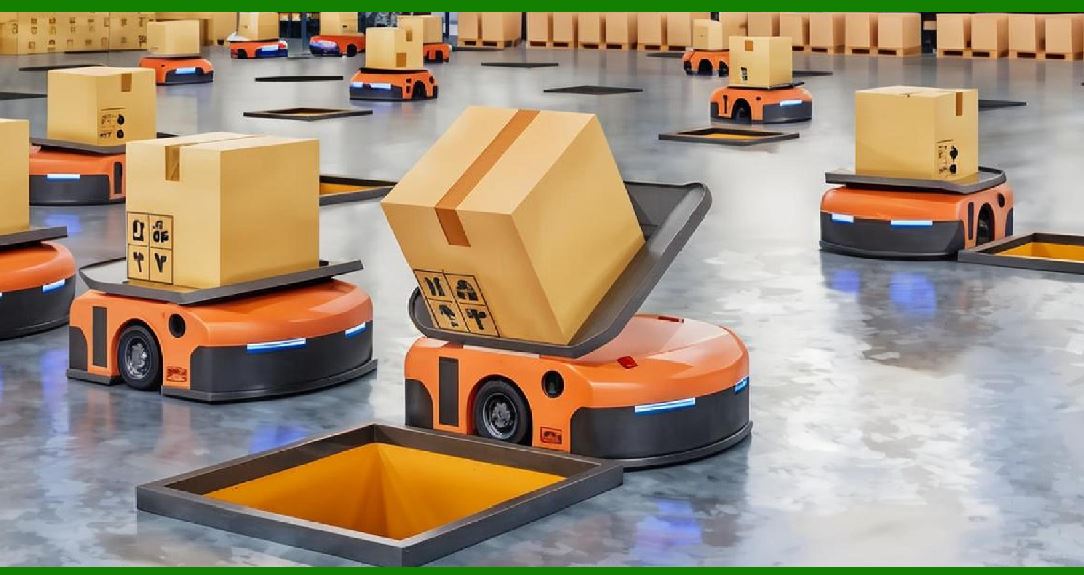
Mobile robots in warehouses use world models to predict the movement of people, carts, and other robots. They plan paths that avoid congestion and reduce travel time. |
Humanoid robots use world models to maintain balance, walk over uneven terrain, and recover from pushes. They predict the next state of their body and the ground, and they adjust their joints accordingly. |
Service robots in hotels, hospitals, and restaurants use world models to navigate crowded spaces, open doors, and manipulate objects. They can predict how a tray will tilt, how a door will swing, and how a person will react. |
Agricultural robots use world models to pick fruit without bruising it, to weed without damaging crops, and to navigate fields with changing lighting and weather. |
Construction robots use world models to place bricks, weld beams, and inspect structures. They predict the stability of materials and the effects of wind and vibration. |
Underwater robots use world models to handle currents, visibility, and fragile ecosystems. They predict how their thrusters and manipulators will affect the surrounding water and objects. |
Space robots use world models to capture satellites, assemble structures, and explore planets. They must handle delay, low gravity, and unknown terrain. A world model can simulate these conditions and help the robot plan safely. |
|
9. Healthcare and Medicine |
Healthcare is a high-stakes domain where prediction and causality matter. |
Surgical robots use world models to predict the deformation of tissue as they cut and suture. They can simulate the effects of different instruments and choose motions that minimize damage. |
Rehabilitation robots use world models to predict a patient's movement and provide appropriate assistance. They adapt to the patient's strength, range of motion, and progress over time. |
Diagnostic imaging can benefit from world models that predict how a disease will progress. For example, a model can simulate the growth of a tumor or the spread of an infection under different treatments. |
Drug discovery uses world models to simulate how molecules interact with proteins and cells. This is a form of physical AI at the molecular scale. It can reduce the need for expensive laboratory experiments. |
Personalized medicine uses world models to predict how a patient will respond to a drug based on their physiology, genetics, and lifestyle. This is a step toward digital patients and virtual clinical trials. |
Medical training uses world models to create realistic simulations for surgeons and nurses. Trainees can practice rare procedures and receive feedback without risking patient safety. |
Wearable devices and smart homes use world models to predict falls, heart attacks, and other emergencies. They can alert caregivers and summon help. |

|
10. Transportation and Mobility |
Transportation is a classic domain for world models. |
Autonomous vehicles use world models to predict the future positions of cars, pedestrians, cyclists, and obstacles. They simulate possible trajectories and choose safe actions. They also predict the behavior of traffic lights, road conditions, and weather. |
Drones use world models to navigate urban canyons, avoid birds and buildings, and deliver packages. They predict wind gusts and battery life. |
Trains and metros use world models to predict delays, optimize schedules, and detect track anomalies. They can simulate the effects of speed changes and passenger loads. |
Maritime shipping uses world models to predict waves, currents, and fuel consumption. They can optimize routes and reduce emissions. |
Air traffic control uses world models to predict aircraft trajectories and detect conflicts. They can simulate the effects of weather and runway closures. |
Logistics and supply chains use world models to predict demand, inventory, and transportation times. They can simulate disruptions and plan alternatives. |

|
11. Agriculture and Food Systems |
Agriculture is increasingly data-rich and automation-friendly. |
Precision farming uses world models to predict soil moisture, nutrient levels, and pest outbreaks. They can guide irrigation, fertilization, and pesticide application. |
Autonomous tractors and harvesters use world models to navigate fields, avoid obstacles, and optimize routes. They predict crop yield and quality. |
Greenhouses use world models to control temperature, humidity, light, and carbon dioxide. They simulate plant growth and adjust conditions for optimal yield. |
Livestock monitoring uses world models to predict animal health, behavior, and growth. They can detect lameness, disease, and stress. |
Fisheries and aquaculture use world models to predict water quality, fish behavior, and disease. They can optimize feeding and harvesting. |
Food processing uses world models to predict spoilage, contamination, and shelf life. They can adjust packaging and storage conditions. |
|
12. Energy and Utilities |
Energy systems are complex, dynamic, and safety-critical. |
Power grids use world models to predict demand, supply, and failures. They simulate the effects of weather, outages, and renewable generation. They can balance load and prevent blackouts. |
Wind farms use world models to predict wind speed and direction, optimize turbine orientation, and forecast output. |
Solar farms use world models to predict cloud cover, panel temperature, and energy production. They can schedule maintenance and storage. |
Nuclear plants use world models to simulate reactor behavior, detect anomalies, and train operators. Safety is paramount. |
Oil and gas use world models to predict reservoir behavior, pipeline integrity, and equipment failure. They can optimize extraction and reduce environmental risk. |
Water utilities use world models to predict demand, leakage, and contamination. They can manage pressure and quality. |
|
13. Construction and Infrastructure |
Construction is project-based, risky, and physically complex. |
Building information modeling can be enhanced with world models that predict construction progress, delays, and costs. They simulate the sequence of tasks and resource allocation. |
Autonomous construction equipment uses world models to dig, lift, and place materials. They predict soil stability, load capacity, and collision risk. |
Structural health monitoring uses world models to predict the remaining life of bridges, tunnels, and buildings. They analyze vibration, strain, and corrosion data. |
Disaster response uses world models to predict the spread of fire, flood, and earthquake damage. They help first responders plan routes and allocate resources. |
Urban planning uses world models to simulate traffic, pollution, and energy use. They evaluate the impact of new developments. |
|
14. Retail and Warehousing |
Retail and warehousing are fast-moving and customer-centric. |
Warehouse robots use world models to pick, pack, and sort items. They predict item shapes, weights, and stability. |
Inventory management uses world models to predict demand, stockouts, and spoilage. They optimize reordering and storage. |
Checkout-free stores use world models to track shoppers and items. They predict what a person will pick up and whether they will pay. |
Delivery robots use world models to navigate sidewalks, avoid pedestrians, and deliver packages. They predict door positions and weather. |
Customer behavior modeling uses world models to predict how shoppers will move through a store and what they will buy. This raises privacy concerns that must be addressed. |
|
15. Education and Training |
Education is increasingly interactive and personalized. |
Virtual laboratories use world models to simulate chemistry, physics, and biology experiments. Students can explore safely and receive feedback. |
Robotics education uses world models to teach programming, mechanics, and control. Students can test their code in simulation before deploying to real robots. |
Medical and nursing education uses world models to simulate patient scenarios. Students practice decision-making and communication. |
Vocational training uses world models to simulate welding, plumbing, and electrical work. Trainees can practice dangerous tasks without risk. |
Sports training uses world models to predict ball trajectories, player movements, and injury risk. Athletes can optimize technique and strategy. |

|
16. Entertainment and Media |
Entertainment is a creative domain where world models enable new experiences. |
Video games use world models to create dynamic, responsive environments. Non-player characters can behave more realistically and adapt to player actions. |
Virtual and augmented reality use world models to blend digital and physical worlds. They predict user motion and render consistent scenes. |
Film and animation use world models to simulate crowds, fluids, and destruction. They reduce the need for manual animation. |
Sports broadcasting uses world models to predict plays and provide augmented replays. They can also generate alternative camera angles. |
Theme parks and museums use world models to create interactive exhibits and robots that respond to visitors. |

|
17. Defense and Security |
Defense and security are sensitive domains with high stakes. |
Surveillance systems use world models to predict crowd behavior, detect anomalies, and track threats. They must balance security with privacy and civil liberties. |
Autonomous vehicles and drones use world models for reconnaissance, logistics, and search and rescue. They predict terrain, weather, and adversary behavior. |
Cybersecurity uses world models to predict attacks, detect intrusions, and simulate defenses. They can model the behavior of malware and attackers. |
Emergency response uses world models to predict the spread of hazards and coordinate teams. They can simulate evacuations and resource allocation. |
Border security uses world models to predict smuggling routes and detect anomalies. They must be used responsibly and lawfully. |
|
18. Space and Extreme Environments |
Space and extreme environments are unforgiving and remote. |
Planetary rovers use world models to navigate unknown terrain, avoid hazards, and collect samples. They predict wheel slip, slope stability, and dust storms. |
Satellite servicing uses world models to predict the motion of target satellites and plan capture. They handle uncertainty and delay. |
Space stations use world models to manage life support, power, and thermal systems. They predict failures and optimize resources. |
Deep-sea exploration uses world models to handle pressure, currents, and fragile life. They predict vehicle behavior and sample collection. |
Mining uses world models to predict rock stability, ventilation, and equipment failure. They improve safety and productivity. |
|
19. Cross-Cutting Themes |
Several themes appear across industries. |
Safety. World models must be robust to rare events and adversarial conditions. They must know when they are uncertain and ask for help. |
Uncertainty. Physical systems are noisy and unpredictable. World models should represent uncertainty and plan conservatively. |
Data efficiency. Collecting physical data is expensive and slow. World models should learn from simulation, transfer learning, and few-shot examples. |
Generalization. A world model trained in one factory or city should adapt to another. This requires transfer and continual learning. |
Interpretability. Engineers and operators need to understand why a world model makes a prediction. This is essential for trust and debugging. |
Human oversight. Physical AI should keep humans in the loop for high-stakes decisions. This includes clear interfaces, alarms, and overrides. |
Ethics and regulation. Physical AI can cause harm. It must be developed and deployed responsibly, with standards for safety, privacy, and accountability. |
|
20. Technical Challenges |
World models face significant technical challenges. |
Long-horizon prediction. Small errors compound over time. Predicting the next second is easier than predicting the next hour. |
Partial observability. Sensors do not see everything. The model must infer hidden states. |
Multi-agent interaction. Other agents are unpredictable and strategic. Modeling them requires theory of mind. |
Sim-to-real transfer. A model trained in simulation may fail in the real world due to differences in physics, lighting, and noise. |
Compute and memory. World models are large and must run in real time on robots with limited power. |
Data collection. Real-world data is costly, messy, and biased. It must be collected safely and ethically. |
Evaluation. It is hard to measure whether a world model is good. Metrics must reflect downstream task performance and safety. |
|
21. The Role of Language Models in Physical AI |
Language models will not disappear. They will play complementary roles. |
High-level planning. A language model can translate a human goal into a sequence of subgoals. A world model then executes and refines them. |
Human-robot interaction. A language model can understand commands, ask clarifying questions, and explain decisions. |
Knowledge retrieval. A language model can provide facts, procedures, and safety rules. A world model provides physical prediction. |
Code generation. A language model can write control code, simulation scripts, and test cases. A world model can validate them in simulation. |
Multi-modal reasoning. Combining language, vision, and action allows richer understanding and communication. |
The most capable systems will be hybrids: language models for symbols and communication, world models for perception and control. |

|
22. Industry Adoption Path |
Adoption will vary by industry. |
Early adopters are likely to be manufacturing, logistics, and robotics, where the return on investment is clear and environments are somewhat controlled. |
Healthcare, transportation, and energy will follow as safety and regulatory frameworks mature. |
Agriculture, construction, and retail will adopt where labor shortages and cost pressures are high. |
Defense, space, and extreme environments will adopt where human presence is dangerous or impossible. |
Education and entertainment will adopt as tools become cheaper and easier to use. |

|
23. Economic and Social Implications |
World models and physical AI will reshape economies and societies. |
Productivity. Automation of physical tasks can increase output and reduce costs. It can also displace workers. Retraining and social safety nets will be important. |
Safety. Physical AI can reduce accidents in factories, roads, and mines. It can also create new risks if poorly designed. |
Accessibility. Robots and world models can help people with disabilities, the elderly, and those in remote areas. |
Inequality. The benefits may accrue to those who own the technology. Policy choices will matter. |
Privacy. World models that observe people raise surveillance concerns. Rules for data collection and use are needed. |
Autonomy. As machines make more decisions, questions of responsibility and control arise. Legal frameworks must adapt. |

|
24. Environmental Impact |
World models can help the environment. |
Energy efficiency. They can optimize buildings, factories, and transportation. |
Renewable energy. They can integrate solar and wind into grids. |
Conservation. They can monitor wildlife, forests, and oceans. |
Climate modeling. They can simulate climate scenarios and inform policy. |
Waste reduction. They can optimize supply chains and manufacturing to reduce waste. |
However, training and running large models consume energy. The net impact depends on how they are used and powered. |
|
25. Security and Robustness |
Physical AI must be secure and robust. |
Adversarial attacks. Small changes in sensor input can fool a world model. Defenses include robust training and anomaly detection. |
Sensor failures. A model must detect and compensate for broken or degraded sensors. |
Cyberattacks. A compromised world model could cause physical harm. Security must be built in from the start. |
Fail-safe design. When uncertain, a system should slow down, stop, or hand control to a human. |
Redundancy. Multiple sensors and models can cross-check each other. |
Testing and certification. Physical AI must be tested extensively before deployment. Standards and certification bodies are needed. |
|
26. Regulation and Standards |
Regulation will shape the adoption of physical AI. |
Safety standards. Industries such as aviation, medical devices, and nuclear power have strict standards. Physical AI must meet them. |
Liability. Who is responsible when a robot causes harmManufacturers, operators, and software providers must be clear. |
Data protection. World models collect sensitive data. Privacy laws such as GDPR apply. |
Export controls. Some physical AI technologies have national security implications. Export controls may limit their spread. |
International cooperation. Global standards can help ensure safety and interoperability. |
|
27. The Path to General Physical Intelligence |
The long-term goal is general physical intelligence: an AI that can perceive, reason, and act in any physical environment, like a human or animal. |
This will require advances in several areas. |
Unified world models. A single model that can handle vision, touch, audio, and action across domains. |
Continual learning. A model that learns from experience without forgetting. |
Causal reasoning. A model that understands why things happen, not just what happens. |
Social intelligence. A model that understands people, intentions, and norms. |
Embodiment. A model that is tightly coupled to a body and its sensors and actuators. |
Energy efficiency. A model that runs on low power, like a brain. |
Safety and alignment. A model that pursues goals in ways that are safe and aligned with human values. |
This is a multi-decade journey. Progress will be uneven, with breakthroughs and setbacks. But the direction is clear. |
|
28. Detailed Summary |
This chapter has argued that the AI frontier is shifting from language models to world models and physical AI. The next-state prediction paradigm moves beyond predicting the next word to predicting the next state of the world. This enables AI to grasp spatial continuity, causality, and the consequences of action. World models are expected to overcome the limitations of large language models, which lack grounding, causal understanding, and continuous spatial and temporal reasoning. World models are learned simulators that encode the current state, predict future states, evaluate actions, and update their representations as new data arrives. They are powered by large-scale multimodal data, self-supervised learning, latent representations, action-conditioned prediction, memory, and differentiable simulation. |
The chapter surveyed applications across many industries. In manufacturing, world models support predictive maintenance, quality control, robotic assembly, and human-robot collaboration. In robotics, they enable mobile robots, humanoids, service robots, agricultural robots, construction robots, underwater robots, and space robots. In healthcare, they improve surgical robots, rehabilitation, diagnostic imaging, drug discovery, personalized medicine, medical training, and emergency prediction. In transportation, they power autonomous vehicles, drones, trains, maritime shipping, air traffic control, and logistics. In agriculture, they support precision farming, autonomous tractors, greenhouses, livestock monitoring, fisheries, and food processing. In energy, they optimize power grids, wind farms, solar farms, nuclear plants, oil and gas, and water utilities. In construction, they enhance building information modeling, autonomous equipment, structural health monitoring, disaster response, and urban planning. In retail and warehousing, they enable warehouse robots, inventory management, checkout-free stores, delivery robots, and customer behavior modeling. In education, they support virtual laboratories, robotics education, medical training, vocational training, and sports training. In entertainment, they create video games, virtual and augmented reality, film and animation, sports broadcasting, and interactive exhibits. In defense and security, they support surveillance, autonomous vehicles, cybersecurity, emergency response, and border security. In space and extreme environments, they enable planetary rovers, satellite servicing, space stations, deep-sea exploration, and mining. |
Across these industries, several cross-cutting themes emerge: safety, uncertainty, data efficiency, generalization, interpretability, human oversight, and ethics and regulation. Technical challenges include long-horizon prediction, partial observability, multi-agent interaction, sim-to-real transfer, compute and memory, data collection, and evaluation. Language models will remain important for high-level planning, human-robot interaction, knowledge retrieval, code generation, and multimodal reasoning, but they will be complemented by world models for perception and control. |
Adoption will vary by industry. Manufacturing, logistics, and robotics are likely to lead, followed by healthcare, transportation, and energy. Agriculture, construction, and retail will adopt where labor shortages and cost pressures are high. Defense, space, and extreme environments will adopt where human presence is dangerous or impossible. Education and entertainment will adopt as tools become cheaper and easier to use. |
The economic and social implications are profound. World models and physical AI can increase productivity, improve safety, and expand accessibility. They can also displace workers, raise privacy concerns, and create new risks. Policy choices will determine how the benefits are shared. Environmental impacts can be positive through energy efficiency, renewable integration, conservation, climate modeling, and waste reduction, but training and running large models consume energy. Security and robustness are essential, including defenses against adversarial attacks, sensor failures, cyberattacks, and a focus on fail-safe design, redundancy, testing, and certification. Regulation and standards will shape adoption, covering safety, liability, data protection, export controls, and international cooperation. |
The long-term goal is general physical intelligence: an AI that can perceive, reason, and act in any physical environment. This will require unified world models, continual learning, causal reasoning, social intelligence, embodiment, energy efficiency, and safety and alignment. The journey will take decades and will be uneven, but the direction is clear. The shift from next-word prediction to next-state prediction is not just a technical change. It is a change in what AI can do and where it can go. Language models gave AI a voice. World models will give AI a body, a sense of space, and an understanding of cause and effect. That is the future of physical AI, and it is already beginning to take shape across industries. |
|
29. Final Thoughts |
The transition from language models to world models is one of the most important trends in AI. It will not happen overnight, and it will not replace language models. Instead, it will extend AI into the physical world, where most of human life and work takes place. The industries that embrace world models early will gain advantages in safety, efficiency, and innovation. Those that ignore them may fall behind. The challenges are significant, but so are the opportunities. By combining the communicative power of language models with the predictive power of world models, we can build AI that is not only articulate but also capable, grounded, and useful in the real world. This is the promise of physical AI, and it is the trajectory that will define the next chapter of the field. |
 cs@easiersoft.com