Chapter 45: AI Scientists and Autonomous Research |
1. Introduction and Chapter Overview |
Artificial intelligence has moved from the periphery of scientific research to its center. For decades, computation served as a tool: researchers wrote simulations, ran statistical tests, and visualized data. Today, AI systems are not merely tools but increasingly active participants in the scientific process. They propose hypotheses, design experiments, interpret results, and even decide what to investigate next. This chapter examines the rise of AI scientists and autonomous research, exploring how science foundation models and automated laboratories are transforming discovery across materials science, drug development, biology, chemistry, physics, and beyond. We will look at real applications, compare approaches, and consider the future trajectory, including the ambitious vision of AI co-scientists capable of Nobel Prize worthy work, alongside the serious challenges of validation and reproducibility. |
A short summary up front: AI is shifting from assisting human scientists to collaborating with them and, in some narrow domains, operating autonomously. Science foundation models, trained on vast corpora of scientific literature, data, and simulations, provide a general purpose reasoning engine for scientific problems. Automated laboratories, often called self driving labs, execute experiments robotically and feed results back to AI systems in closed loops. Together, these technologies accelerate materials and drug discovery, improve reproducibility when designed well, and open new fields of inquiry. Yet major hurdles remain: verifying AI generated hypotheses, ensuring experiments are reproducible, handling noisy real world data, and integrating human judgment and ethics. The coming decade will likely see hybrid teams of humans and AI co-scientists, with autonomy increasing gradually rather than suddenly. |
|
2. From Tool to Collaborator: The Evolution of AI in Science |
2.1 Early computational science |
In the late twentieth century, computers became essential for solving equations, running Monte Carlo simulations, and analyzing large datasets. Scientists used software like molecular dynamics packages, finite element analysis, and statistical tools. These were passive instruments: they did exactly what they were programmed to do. The human scientist framed the question, chose the method, and interpreted the output. |
2.2 Machine learning as a pattern finder |
The first wave of modern AI in science, roughly from 2010 onward, used machine learning to find patterns in data. Examples include predicting protein structures from sequences, classifying galaxy images, and identifying potential drug candidates from chemical libraries. These models were powerful but narrow. They excelled at interpolation within their training distribution but struggled with novelty and causal reasoning. |
2.3 Large language models and science foundation models |
The arrival of large language models and, more recently, science foundation models changed the landscape. A science foundation model is trained on a broad mixture of scientific text, code, numeric data, and sometimes simulation outputs. It can answer questions, summarize literature, generate hypotheses, write code, and propose experimental protocols. Unlike earlier narrow models, it can transfer knowledge across domains. For example, a model trained on physics papers, chemistry data, and biology texts can suggest analogies between seemingly unrelated fields. |
2.4 The collaborator stage |
Today, AI systems are becoming collaborators. They do not just answer questions; they engage in iterative dialogue. A researcher might ask an AI to propose a set of experiments to test a hypothesis. The AI suggests protocols, predicts outcomes, and flags potential pitfalls. The researcher then refines the plan. In some cases, the AI runs the experiments through a robotic lab and analyzes the results, proposing next steps. This is the essence of the AI co-scientist: a partner that shares cognitive load. |
2.5 Toward autonomy |
Full autonomy means an AI system can define its own research goals, design experiments, execute them, interpret results, and decide what to do next without human intervention. This is still rare and limited to narrow domains. But partial autonomy, where AI handles routine parts of the loop while humans oversee, is already here. The trajectory is clear: increasing autonomy in well defined, data rich, and safely contained environments. |

|
3. Science Foundation Models: The Engine of AI Driven Discovery |
3.1 What are science foundation models |
Science foundation models are large neural networks trained on massive, diverse scientific datasets. They often combine multiple modalities: text from journals, numeric data from experiments and simulations, images from microscopy, and sequences from genomics. They may be pretrained on general text and then fine tuned on scientific corpora, or trained from scratch on domain specific data. The key is scale and breadth, which enable emergent capabilities such as reasoning about experimental design or generating novel hypotheses. |
3.2 Examples across domains |
In biology, models like protein structure predictors have revolutionized structural biology. They predict three dimensional shapes of proteins from amino acid sequences with accuracy rivaling experimental methods. This accelerates drug design, enzyme engineering, and understanding of disease mechanisms. |
In chemistry, foundation models learn representations of molecules and reactions. They can predict reaction outcomes, suggest synthetic routes, and design new molecules with desired properties. This is used in pharmaceuticals, agrochemicals, and materials. |
In materials science, models predict properties of hypothetical materials, such as conductivity, strength, or stability. They screen vast spaces of possible compositions and structures, guiding experimentalists to the most promising candidates. |
In physics, foundation models help analyze data from particle colliders, gravitational wave detectors, and telescopes. They can identify rare events, denoise signals, and even propose new physical theories by finding patterns in data that humans miss. |
In earth and climate science, models integrate satellite data, sensor networks, and simulations to predict weather, climate change, and natural disasters. |
3.3 How they accelerate discovery |
The main acceleration comes from reducing the search space. In materials discovery, the number of possible compounds is astronomically large. Testing all of them experimentally is impossible. AI models predict which candidates are worth testing, cutting years off discovery timelines. In drug discovery, AI narrows the field of potential drug molecules and predicts toxicity and efficacy, reducing costly late stage failures. In genomics, AI identifies disease associated genes and variants, speeding up target identification. |
3.4 Limitations and challenges |
Science foundation models are not oracles. They can hallucinate, produce plausible but false statements, and struggle with causality. They are only as good as their training data, which may be biased, incomplete, or noisy. They often lack an understanding of physical constraints unless explicitly trained. Validation is a major issue: a hypothesis generated by AI must be tested experimentally, and the experiment must be reproducible. |

|
4. Automated Laboratories and Self Driving Labs |
4.1 What is an automated laboratory |
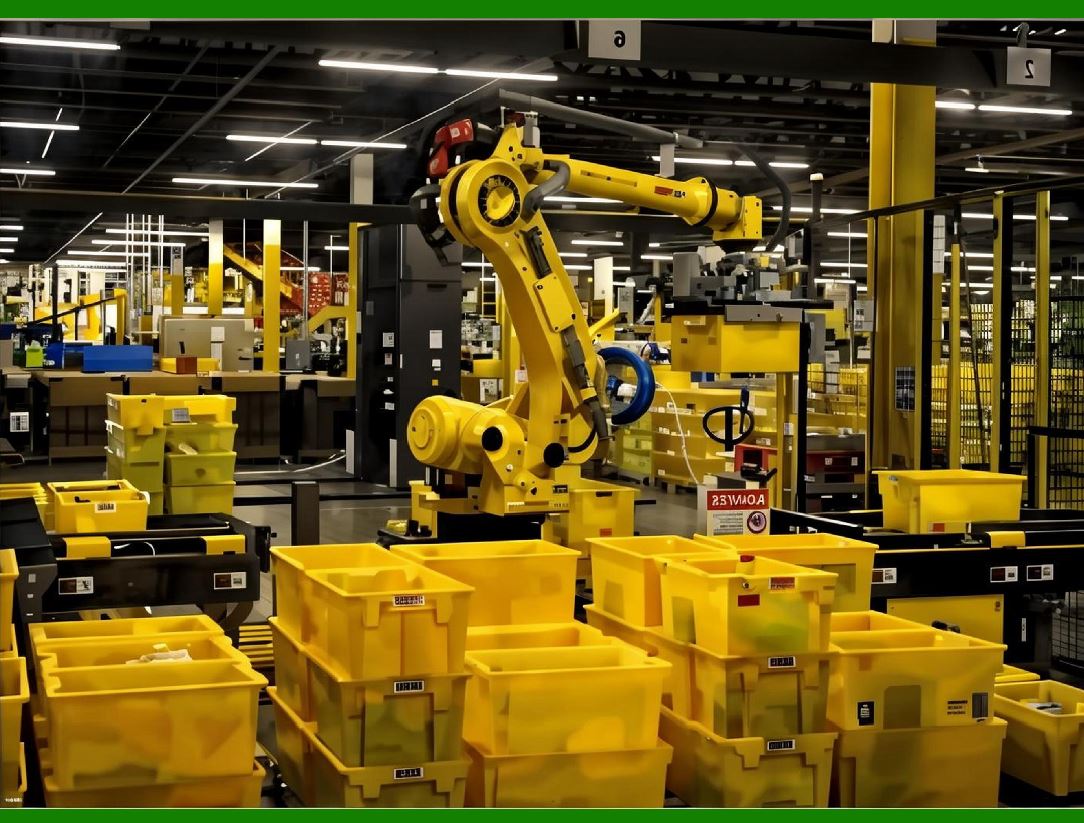
An automated laboratory uses robots to perform experiments. Liquid handling robots, robotic arms, automated microscopes, and environmental controls allow experiments to run without human hands. The key advance is integration with AI: the AI designs the experiment, the robots execute it, and the results are fed back to the AI. This closed loop enables rapid iteration. |
4.2 Self driving labs |
A self driving lab is an automated laboratory controlled by an AI system that decides what experiments to run next. It operates in a loop: hypothesize, design, execute, analyze, learn, and repeat. The AI may use Bayesian optimization, reinforcement learning, or other strategies to explore the experimental space efficiently. The goal is to discover optimal conditions, materials, or drugs with minimal human intervention. |
4.3 Examples in materials science |
Several self driving labs have been built for materials discovery. They search for new catalysts, batteries, solar cells, and superconductors. For example, a lab might be tasked with finding a new solid state electrolyte for batteries. The AI proposes compositions, the robot synthesizes and tests them, and the AI updates its model. Over hundreds or thousands of cycles, the lab homes in on promising materials. |
4.4 Examples in drug discovery |
In drug discovery, self driving labs can screen compounds for activity against a target, optimize synthesis routes, and even test formulations. They can run assays, analyze images of cells, and decide which compounds to pursue. This reduces the time and cost of preclinical testing. |
4.5 Examples in biology and chemistry |
In biology, automated labs can perform genetic screens, study gene function, and map metabolic pathways. In chemistry, they can discover new reactions, optimize yields, and explore reaction conditions. Some labs are designed to be general purpose, handling a wide range of experiments. |
4.6 Benefits and risks |
Benefits include speed, reproducibility, and the ability to run experiments around the clock. Robots do not get tired or make pipetting errors. Risks include high upfront cost, complexity of integration, and the danger of optimizing for the wrong metric. If the AI's objective function is flawed, the lab may produce impressive but useless results. There is also the risk of hardware failures or contamination going undetected. |

|
5. AI Co-Scientists: The Vision and the Reality |
5.1 What is an AI co-scientist |
An AI co-scientist is an AI system that collaborates with human scientists on research projects. It can read literature, generate hypotheses, design experiments, analyze data, and write papers. It can also critique human ideas and suggest alternatives. The vision is a partnership where the AI handles the heavy lifting of data analysis and routine design, while humans provide creativity, intuition, and ethical judgment. |
5.2 Examples of co-scientist systems |
Several research groups have built prototype co-scientist systems. One approach uses a large language model to generate research proposals, then simulates peer review to select the best ones. Another uses a multi agent system where different AI agents play roles such as hypothesizer, critic, and experimentalist. These systems have been tested on problems in biology, chemistry, and materials science. |
5.3 Success stories |
There are early success stories. AI co-scientists have helped discover new antibiotics, identify drug repurposing candidates, and propose new materials for carbon capture. In some cases, the AI suggested experiments that human scientists had overlooked. In others, the AI found patterns in existing data that led to new insights. |
5.4 Limitations |
Current co-scientist systems are limited. They lack true understanding of physics and chemistry. They can be biased by their training data. They often struggle with common sense and real world constraints. They cannot physically manipulate the world, though they can control robots. They also raise questions about credit and authorship. |

|
6. Applications Across Industries |
6.1 Pharmaceuticals and medicine |
AI is used to discover new drugs, repurpose existing drugs, and design personalized treatments. It predicts drug target interactions, toxicity, and patient responses. It analyzes electronic health records and genomic data to find new disease subtypes. It designs clinical trials and monitors patient outcomes. Companies use AI to screen billions of compounds in silico before testing in labs. |
6.2 Materials science and manufacturing |
AI discovers new materials for batteries, solar cells, semiconductors, and catalysts. It optimizes manufacturing processes, predicts failures, and designs new alloys. It is used in aerospace, automotive, and construction. Self driving labs accelerate the discovery of materials with desired properties. |
6.3 Biology and genomics |
AI annotates genomes, predicts gene function, and identifies disease genes. It analyzes single cell data to understand cell types and states. It designs CRISPR guides and predicts off target effects. It models ecosystems and predicts the impact of climate change on biodiversity. |
6.4 Chemistry and chemical engineering |
AI predicts reaction outcomes, designs synthetic routes, and discovers new reactions. It optimizes reaction conditions and scale up. It is used in fine chemicals, petrochemicals, and agrochemicals. It helps design safer and greener chemistry. |
6.5 Physics and astronomy |
AI analyzes data from particle accelerators, telescopes, and gravitational wave detectors. It identifies new particles, classifies galaxies, and detects exoplanets. It helps model complex physical systems and proposes new experiments. |
6.6 Energy and environment |
AI optimizes energy grids, predicts demand, and integrates renewable sources. It discovers new materials for batteries and solar cells. It monitors pollution, predicts wildfires, and models climate change. It helps design carbon capture and storage systems. |
6.7 Agriculture and food science |
AI predicts crop yields, detects pests and diseases, and optimizes irrigation and fertilization. It designs new plant varieties and improves food safety. It analyzes soil and weather data to guide farming decisions. |
6.8 Neuroscience and psychology |
AI analyzes brain imaging data, predicts mental health outcomes, and models cognitive processes. It helps design experiments and interpret neural activity. It is used in brain computer interfaces and neuroprosthetics. |
6.9 Social sciences and economics |
AI analyzes social media, economic indicators, and survey data. It predicts market trends, election outcomes, and social unrest. It helps design policies and evaluate their impact. It raises ethical concerns about privacy and manipulation. |
6.10 Engineering and robotics |
AI designs robots, optimizes control systems, and predicts failures. It is used in autonomous vehicles, drones, and manufacturing robots. It helps design structures and materials for extreme conditions. |

|
7. Case Studies of AI Driven Discovery |
7.1 New antibiotics |
Researchers used AI to screen thousands of compounds for antibacterial activity. The AI predicted which molecules were likely to work against drug resistant bacteria. The predictions were tested in the lab, and several new antibiotics were discovered. This is a classic example of AI narrowing the search space and accelerating discovery. |
7.2 Drug repurposing for rare diseases |
AI analyzed existing drugs and genetic data to find new uses for old drugs. For example, a drug approved for one disease was found to be effective against a rare genetic disorder. This saved years of development time and millions of dollars. |
7.3 New materials for batteries |
Self driving labs discovered new solid state electrolytes for lithium batteries. The AI explored compositions that humans had not considered. The best candidates were synthesized and tested, leading to batteries with higher energy density and better safety. |
7.4 Carbon capture materials |
AI discovered metal organic frameworks that capture carbon dioxide efficiently. It screened millions of hypothetical structures and identified the most promising ones. Experimentalists then synthesized and tested them, confirming the predictions. |
7.5 Protein structure prediction |
AI predicted the structures of millions of proteins, including many that had never been solved experimentally. This opened new avenues for drug design and understanding of disease. It also helped solve the protein folding problem, a grand challenge in biology. |
7.6 Fusion energy |
AI controls plasma in fusion reactors, predicting instabilities and adjusting magnetic fields in real time. It helps design new reactor components and optimize operation. This brings fusion energy closer to practicality. |
7.7 Astrophysics and gravitational waves |
AI detects gravitational wave signals from noisy detector data. It classifies them and estimates parameters such as mass and distance. It also helps identify electromagnetic counterparts, such as kilonovas. |
7.8 Genomics and personalized medicine |
AI analyzes genomic data to predict disease risk and drug response. It helps design personalized treatments for cancer and rare diseases. It also identifies new drug targets. |
7.9 Chemistry and reaction discovery |
AI discovered new reactions by analyzing millions of published experiments. It predicted conditions for reactions that had never been tried. Experimentalists confirmed the predictions, leading to new synthetic methods. |
7.10 Climate modeling |
AI improves climate models by learning from satellite data and simulations. It predicts regional climate impacts, such as droughts and floods. It helps design adaptation strategies. |
|
8. Validation and Reproducibility Challenges |
8.1 The validation gap |
AI can generate hypotheses faster than humans can test them. This creates a validation gap: a backlog of untested predictions. Many AI generated hypotheses are wrong or trivial. Testing them all is expensive and time consuming. Better methods for prioritizing and automating validation are needed. |
8.2 Reproducibility crisis |
Science already faces a reproducibility crisis: many published results cannot be reproduced. AI can worsen this if models are not transparent, data is not shared, and experiments are not documented. Conversely, AI can improve reproducibility by automating experiments and recording every step. The key is to design systems that are transparent and auditable. |
8.3 Bias and fairness |
AI models are biased by their training data. If the data overrepresents certain diseases, populations, or experimental conditions, the AI will make biased predictions. This can lead to inequities in drug discovery and healthcare. Addressing bias requires diverse data, careful validation, and ongoing monitoring. |
8.4 Hallucination and error |
Large language models can hallucinate: they generate plausible but false statements. In science, this is dangerous. An AI might propose an experiment that is impossible or unsafe. It might cite non existent papers. Human oversight is essential to catch these errors. |
8.5 Security and dual use |
AI in science can be used for good or harm. It could help design new drugs, but also new toxins. It could help build better batteries, but also better weapons. Governance and ethical guidelines are needed to prevent misuse. |
8.6 Ethical and social issues |
Who gets credit for AI assisted discoveriesHow do we ensure equitable access to AI toolsWhat happens to scientists whose skills become obsoleteThese questions need broad discussion. |

|
9. The Path to Nobel Prize Worthy AI Co-Scientists |
9.1 What would it take |
For an AI to win a Nobel Prize, it would need to make a fundamental discovery that changes our understanding of the world. This requires creativity, deep reasoning, and the ability to connect disparate fields. Current AI systems are far from this. They excel at pattern recognition but struggle with true conceptual innovation. |
9.2 Milestones on the way |
Milestones might include: AI that generates a novel hypothesis that is experimentally confirmed; AI that designs a new class of materials with unprecedented properties; AI that discovers a new drug that saves lives; AI that solves a long standing puzzle in physics or biology. Each milestone would build confidence and capability. |
9.3 Human AI collaboration |
The most likely path is collaboration. Humans and AI together achieve what neither could alone. The Nobel Prize might be awarded to a human AI team, or to a human who used AI as a key tool. The committee would need to decide how to recognize AI contributions. |
9.4 Timeline |
Predictions vary. Some experts believe AI co-scientists will make major discoveries within a decade. Others think it will take much longer. The pace depends on advances in reasoning, robotics, and validation. |

|
10. Future Trajectories |
10.1 Increasing autonomy |
We will see more autonomous systems in narrow domains. Self driving labs will become more common. AI co-scientists will handle more of the research process. Humans will shift to higher level oversight and creative direction. |
10.2 Integration of multiple modalities |
Future AI systems will integrate text, images, sequences, and simulations seamlessly. They will reason across scales, from atoms to ecosystems. They will use tools like robots and databases as naturally as humans use their hands and eyes. |
10.3 Democratization of science |
AI tools will lower the barrier to entry for scientific research. Small labs and citizen scientists will be able to tackle problems that previously required huge resources. This could accelerate discovery and make science more inclusive. |
10.4 New scientific fields |
AI will enable new fields that we cannot yet imagine. Just as computers enabled computational biology, AI will enable new ways of doing science. We may see AI designed experiments, AI generated theories, and AI discovered laws of nature. |
10.5 Governance and ethics |
As AI becomes more autonomous, governance becomes more important. We need rules for safety, transparency, and accountability. We need to ensure that AI benefits all of humanity, not just a few. |

|
11. Detailed Summary |
This chapter has explored the emergence of AI scientists and autonomous research. We began by tracing the evolution of AI in science from a passive tool to an active collaborator. We introduced science foundation models, which are large neural networks trained on diverse scientific data, and explained how they accelerate discovery by narrowing search spaces and generating hypotheses. We described automated laboratories and self driving labs, where robots execute experiments designed by AI in closed loops, and gave examples in materials science, drug discovery, biology, and chemistry. We examined the vision of AI co-scientists, systems that collaborate with humans on research projects, and reviewed early success stories as well as limitations. We surveyed applications across industries, including pharmaceuticals, materials, biology, chemistry, physics, energy, agriculture, neuroscience, social sciences, and engineering. We presented case studies of AI driven discovery, such as new antibiotics, drug repurposing, battery materials, carbon capture, protein structure prediction, fusion energy, gravitational waves, personalized medicine, reaction discovery, and climate modeling. We discussed validation and reproducibility challenges, including the validation gap, the reproducibility crisis, bias, hallucination, security, and ethical issues. We considered the path to Nobel Prize worthy AI co-scientists, outlining what it would take, milestones, human AI collaboration, and timelines. Finally, we looked at future trajectories: increasing autonomy, integration of multiple modalities, democratization of science, new scientific fields, and governance and ethics. The overarching message is that AI is transforming science from a human only endeavor to a human AI partnership. The pace of change is rapid, but challenges are significant. By addressing validation, reproducibility, bias, and ethics, we can harness AI to accelerate discovery and improve lives. The future of science will be shaped by how well we integrate AI into the scientific process, not just as a tool, but as a collaborator and, in some domains, an autonomous explorer. |
 cs@easiersoft.com