Chapter 46: The Disillusionment Trough and Recovery |
1. Chapter Overview |
Enterprise artificial intelligence has passed through a familiar pattern. The first phase was enthusiasm. Companies launched pilots, held demonstrations, and celebrated small wins. The second phase is now arriving: a period of frustration, budget scrutiny, and quiet retreat. This chapter explains why enterprise AI is entering a disillusionment trough after the initial proof-of-concept enthusiasm. It examines the three main causes: data problems, cost problems, and integration problems. It then explains why a recovery is likely in the second half of 2026, driven by maturing data governance and toolchains. Finally, it surveys practical examples across many industries where minimum viable products are already showing measurable value. The chapter closes with a detailed summary of the forces that will shape the recovery. |
|
2. What the Disillusionment Trough Means |
The term disillusionment trough describes the gap between early excitement and lasting value. In the first stage, a new technology seems to solve everything. Leaders approve pilots. Teams produce impressive demos. Then reality sets in. The pilot does not scale. The data is messy. The costs are higher than expected. The system does not fit existing workflows. Executives ask for return on investment. The answer is not yet clear. |
This pattern is not unique to AI. It happened with enterprise resource planning, with cloud computing, with big data, and with the internet of things. The difference for AI is speed. Generative AI and large language models reached wide enterprise awareness in a very short time. Expectations rose faster than the supporting infrastructure could mature. That gap is the trough. |
The trough is not a failure. It is a filtering period. It separates narrow demonstrations from real products. It forces vendors and enterprises to focus on measurable outcomes. It rewards organizations that fix their data and integration foundations. It punishes those that treat AI as a magic layer on top of broken processes. |

|
3. Why the Trough Arrived After the Proof-of-Concept Phase |
3.1 The Proof-of-Concept Trap |
A proof of concept is designed to prove that something can work. It is not designed to prove that something will work reliably, at scale, within budget, and under real operating conditions. Many enterprise AI pilots were built with small, clean, carefully selected data sets. They were tested by enthusiastic early adopters. They were not tested by busy frontline workers. They were not integrated with legacy systems. They were not measured against hard business metrics. |
When these pilots moved toward production, the hidden work appeared. Data had to be cleaned. Access controls had to be applied. Models had to be monitored. Costs had to be controlled. Workflows had to be redesigned. The proof of concept had answered the wrong question. It had answered 'Can this work' instead of 'Will this work here, at scale, and at a acceptable cost' |
3.2 The Three Core Challenges: Data, Cost, and Integration |
The trough has three main causes. The first is data. Enterprise data is often fragmented, duplicated, inconsistent, and poorly documented. AI systems need reliable data. They need context. They need permissions. They need lineage. Many organizations discovered that their data foundations were weaker than they believed. |
The second cause is cost. Early pilots often used generous cloud credits or special pricing. In production, inference costs, storage costs, human review costs, and maintenance costs accumulate. A model that costs a few cents per query in a demo can cost millions per year at enterprise scale. The economics of AI are not just about training. They are about running, monitoring, and improving the system every day. |
The third cause is integration. AI does not live in isolation. It must connect to customer relationship management systems, enterprise resource planning systems, databases, document repositories, ticketing systems, and communication tools. Integration is slow, expensive, and often underestimated. It also raises security and compliance questions. Who can see whatWhere does data resideHow is it auditedThese questions do not disappear when a model is added. |
3.3 Organizational and Cultural Friction |
Technology is only part of the story. People and processes matter. Employees may distrust AI. Managers may fear job displacement. Legal teams may worry about liability. Compliance teams may worry about regulation. IT teams may worry about shadow AI. These concerns are legitimate. They slow adoption. They also create a need for governance, training, and change management. Organizations that ignore these factors often see pilots stall even when the technology works. |

|
4. The Shape of the Trough: What Enterprises Are Experiencing Now |
4.1 Pilot Fatigue |
Many enterprises have run dozens of AI pilots. Some produced useful lessons. Few produced scaled production systems. Leaders are now asking harder questions. They want to know which pilots will become products. They want to know the total cost of ownership. They want to know the risks. Pilot fatigue is real. It leads to budget cuts, consolidation, and a focus on fewer, more strategic projects. |
4.2 The Move from Experimentation to Evaluation |
The trough is not a period of inactivity. It is a period of evaluation. Enterprises are building AI centers of excellence. They are creating model inventories. They are defining use case scoring criteria. They are measuring accuracy, latency, cost, and business impact. They are learning to say no to low-value projects. This discipline is painful but necessary. It is the foundation of the recovery. |
4.3 Vendor Consolidation and Realism |
Vendors are also adjusting. The market has too many tools, too many platforms, and too many promises. Buyers are consolidating around a smaller number of trusted vendors. They are demanding clearer pricing, better security, and proven integrations. Vendors that cannot demonstrate measurable value are being dropped. This consolidation is healthy. It reduces confusion and speeds adoption. |

|
5. Why a Recovery Is Expected in the Second Half of 2026 |
5.1 Maturing Data Governance |
Data governance is the set of policies, roles, and processes that ensure data is accurate, secure, and usable. In the early AI rush, governance was often an afterthought. That is changing. Enterprises are investing in data catalogs, data lineage, quality monitoring, access control, and privacy management. These investments take time, but they pay off. Better governance makes AI projects faster, cheaper, and safer. It reduces the risk of embarrassing errors and regulatory penalties. By the second half of 2026, many large organizations will have enough governance in place to support production AI at scale. |
5.2 Maturing Toolchains |
The AI toolchain is also maturing. A toolchain includes everything needed to build, deploy, monitor, and improve AI systems. It includes data preparation tools, model training platforms, evaluation frameworks, deployment pipelines, observability tools, and security controls. In the early days, teams assembled these pieces by hand. Now, integrated platforms are emerging. They reduce engineering effort. They improve reliability. They make it easier to compare models and switch vendors. This maturity lowers the cost and risk of production AI. It is a key driver of the recovery. |
5.3 The Rise of Minimum Viable Products |
A minimum viable product, or MVP, is a small but complete product that delivers real value to real users. In the trough, many enterprises abandon grand visions and focus on MVPs. This is a positive shift. MVPs are easier to build, test, and improve. They generate concrete evidence. They win internal support. They can be expanded over time. By the second half of 2026, many vertical industries will have MVPs that demonstrate measurable value. These successes will restore confidence and attract further investment. |
5.4 Better Cost Management and Smaller Models |
The economics of AI are improving. Smaller, specialized models can often match larger models on specific tasks at a fraction of the cost. Quantization, distillation, and efficient serving techniques reduce compute requirements. Cloud providers are offering more flexible pricing. Enterprises are learning to route simple tasks to cheap models and complex tasks to expensive ones. These practices make AI more affordable. They also reduce latency and improve user experience. |
5.5 Regulatory Clarity |
Regulation is another factor. In the early period, uncertainty slowed adoption. As rules become clearer, enterprises can plan with more confidence. They can invest in compliance once and reuse it across projects. Clear rules also build public trust. Trust is essential for adoption in sensitive sectors such as healthcare, finance, and public services. |
|
6. Industry Examples: Where MVPs Are Already Showing Measurable Value |
This section surveys practical examples across many industries. The goal is not to list every possible use case. It is to show that value is already appearing in narrow, measurable, production-oriented projects. These examples are the seeds of the recovery. |
6.1 Healthcare and Life Sciences |
6.1.1 Clinical Documentation |
Doctors spend a large portion of their time writing notes. AI-powered documentation tools listen to patient visits and draft clinical notes. The doctor reviews and edits the draft. Early implementations show reduced documentation time and improved note completeness. The measurable value is time saved per visit and better records for downstream care. |
6.1.2 Medical Coding and Billing |
Medical coding is complex and error-prone. AI systems suggest codes based on clinical notes and historical patterns. Human coders review the suggestions. This reduces denials and speeds reimbursement. The measurable value is fewer claim rejections and faster revenue cycles. |
6.1.3 Drug Discovery Support |
AI helps researchers search scientific literature, identify promising compounds, and design experiments. It does not replace scientists. It accelerates the early, information-heavy stages of discovery. The measurable value is faster hypothesis generation and better use of expensive laboratory time. |
6.1.4 Patient Triage and Follow-Up |
AI chatbots and voice agents handle routine patient questions, schedule appointments, and follow up after discharge. They free clinical staff for higher-value work. The measurable value is reduced call volume, shorter wait times, and better patient adherence. |

|
6.2 Financial Services |
6.2.1 Fraud Detection and Anti-Money Laundering |
Banks use AI to detect suspicious transactions and patterns. Modern systems combine rules, machine learning, and human review. They reduce false positives and catch more real fraud. The measurable value is lower fraud losses and less time wasted on false alerts. |
6.2.2 Customer Service and Virtual Assistants |
Financial institutions use AI assistants to answer common questions, guide customers through processes, and route complex issues to humans. The measurable value is lower cost per interaction and higher customer satisfaction. |
6.2.3 Credit Underwriting and Risk Assessment |
AI models analyze financial statements, transaction histories, and alternative data to support credit decisions. They help lenders serve thin-file customers and small businesses. The measurable value is faster decisions, broader access, and better risk pricing. |
6.2.4 Regulatory Compliance and Reporting |
AI helps banks monitor communications, detect policy violations, and prepare regulatory reports. The measurable value is reduced compliance costs and fewer penalties. |

|
6.3 Retail and E-Commerce |
6.3.1 Demand Forecasting and Inventory Management |
AI forecasts demand at the store and SKU level. It accounts for seasonality, promotions, weather, and local events. The measurable value is lower stockouts, less excess inventory, and higher margins. |
6.3.2 Personalized Recommendations |
Recommendation engines suggest products based on browsing and purchase history. Modern systems use embeddings and real-time signals. The measurable value is higher conversion rates and larger basket sizes. |
6.3.3 Customer Support and Returns |
AI agents handle order status questions, returns, and exchanges. They reduce wait times and free human agents for complex cases. The measurable value is lower support costs and higher customer retention. |
6.3.4 Visual Search and Virtual Try-On |
Shoppers use images to search for products. Virtual try-on helps them visualize fit and style. The measurable value is lower return rates and higher confidence in online purchases. |

|
6.4 Manufacturing and Industrial Operations |
6.4.1 Predictive Maintenance |
Sensors on machines generate data. AI models detect early signs of failure. Maintenance is scheduled before breakdowns occur. The measurable value is less unplanned downtime and lower repair costs. |
6.4.2 Quality Inspection |
Computer vision inspects products for defects on the production line. It works faster and more consistently than human inspectors for certain tasks. The measurable value is higher yield and fewer recalls. |
6.4.3 Supply Chain Optimization |
AI predicts disruptions, suggests alternative suppliers, and optimizes logistics. The measurable value is lower inventory costs and more reliable delivery. |
6.4.4 Energy Management |
AI optimizes energy use in factories and data centers. It adjusts cooling, lighting, and production schedules. The measurable value is lower energy bills and reduced carbon emissions. |

|
6.5 Transportation and Logistics |
6.5.1 Route Optimization |
AI plans delivery routes considering traffic, weather, and time windows. The measurable value is lower fuel costs and faster deliveries. |
6.5.2 Fleet Maintenance |
AI predicts vehicle maintenance needs. The measurable value is fewer roadside breakdowns and lower maintenance costs. |
6.5.3 Warehouse Robotics |
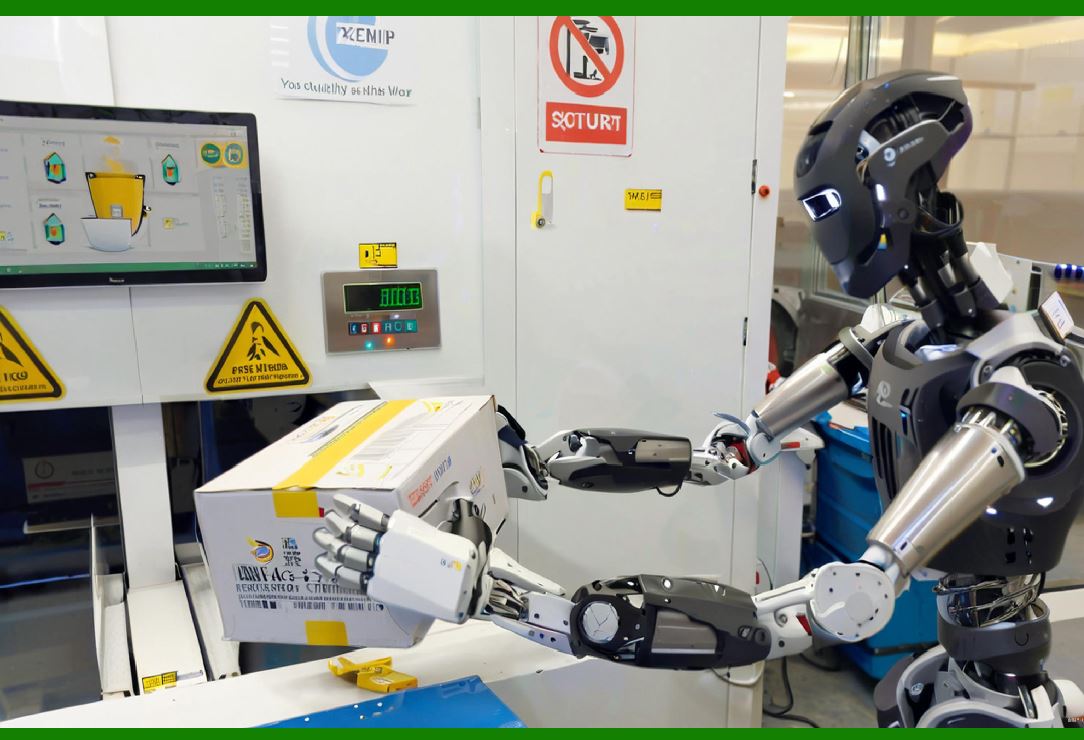
AI coordinates robots for picking, packing, and sorting. The measurable value is higher throughput and lower labor costs in repetitive tasks. |
6.5.4 Customer Communication |
AI informs customers about delays and delivery windows. The measurable value is fewer support calls and higher satisfaction. |
|
6.6 Agriculture and Food Systems |
6.6.1 Precision Agriculture |
AI analyzes satellite and drone imagery to detect crop stress, pests, and disease. Farmers apply water, fertilizer, and pesticides only where needed. The measurable value is higher yields and lower input costs. |
6.6.2 Livestock Monitoring |
Sensors and cameras monitor animal health and behavior. AI alerts farmers to illness or distress. The measurable value is lower mortality and better productivity. |
6.6.3 Food Quality and Safety |
AI inspects food products for contamination and defects. The measurable value is safer products and fewer recalls. |
6.6.4 Supply Chain Transparency |
AI tracks food from farm to table. The measurable value is faster recalls and better compliance with regulations. |

|
6.7 Energy and Utilities |
6.7.1 Grid Management |
AI balances supply and demand across the power grid. It integrates renewable sources and predicts outages. The measurable value is lower costs and higher reliability. |
6.7.2 Asset Inspection |
Drones and AI inspect power lines, pipelines, and wind turbines. The measurable value is lower inspection costs and fewer accidents. |
6.7.3 Customer Service |
AI handles billing questions, outage reports, and energy-saving advice. The measurable value is lower call center costs and higher customer satisfaction. |
6.7.4 Predictive Maintenance |
AI predicts failures in transformers, pumps, and turbines. The measurable value is less downtime and longer asset life. |

|
6.8 Education and Training |
6.8.1 Personalized Learning |
AI adapts lessons to each student's pace and style. The measurable value is improved test scores and higher engagement. |
6.8.2 Tutoring and Homework Help |
AI tutors answer questions and explain concepts. The measurable value is more practice time and better understanding. |
6.8.3 Administrative Automation |
AI handles scheduling, grading, and communication. The measurable value is less teacher burnout and more time for instruction. |
6.8.4 Corporate Training |
AI creates and delivers personalized training for employees. The measurable value is faster onboarding and better skill development. |

|
6.9 Government and Public Services |
6.9.1 Citizen Services |
AI chatbots answer common questions about permits, licenses, and benefits. The measurable value is shorter wait times and lower service costs. |
6.9.2 Document Processing |
AI extracts data from forms and documents. The measurable value is faster processing and fewer errors. |
6.9.3 Public Safety |
AI analyzes data to allocate resources and predict hotspots. The measurable value is faster response times and better use of limited budgets. |
6.9.4 Environmental Monitoring |
AI analyzes sensor data to detect pollution, wildfires, and floods. The measurable value is earlier warnings and better protection. |

|
6.10 Media, Entertainment, and Marketing |
6.10.1 Content Creation |
AI drafts articles, scripts, and social media posts. Humans edit and refine. The measurable value is faster production and lower costs. |
6.10.2 Personalization |
AI recommends content and advertisements. The measurable value is higher engagement and better conversion. |
6.10.3 Moderation |
AI flags harmful content for human review. The measurable value is safer platforms and lower moderation costs. |
6.10.4 Analytics |
AI analyzes audience behavior and campaign performance. The measurable value is better decisions and higher return on marketing spend. |

|
6.11 Legal and Professional Services |
6.11.1 Document Review |
AI reviews contracts and legal documents for key clauses and risks. The measurable value is faster review and lower costs. |
6.11.2 Legal Research |
AI searches case law and statutes. The measurable value is faster research and better preparation. |
6.11.3 Client Intake |
AI collects information from clients and routes matters. The measurable value is faster intake and better client experience. |
6.11.4 Compliance Monitoring |
AI monitors communications and transactions for compliance. The measurable value is lower risk and fewer penalties. |

|
6.12 Construction and Real Estate |
6.12.1 Project Planning |
AI analyzes drawings, schedules, and costs. The measurable value is fewer delays and better budget control. |
6.12.2 Site Safety |
AI monitors cameras for unsafe behavior. The measurable value is fewer accidents and lower insurance costs. |
6.12.3 Property Valuation |
AI estimates property values using market and location data. The measurable value is faster appraisals and better pricing. |
6.12.4 Tenant Services |
AI handles maintenance requests and leasing questions. The measurable value is higher occupancy and lower management costs. |

|
6.13 Telecommunications |
6.13.1 Network Optimization |
AI predicts traffic and adjusts capacity. The measurable value is better performance and lower costs. |
6.13.2 Customer Support |
AI handles billing and technical questions. The measurable value is lower call volume and higher satisfaction. |
6.13.3 Fraud Detection |
AI detects subscription fraud and SIM box fraud. The measurable value is lower revenue loss. |
6.13.4 Field Service |
AI schedules technicians and predicts parts needs. The measurable value is faster repairs and lower costs. |

|
6.14 Hospitality and Travel |
6.14.1 Booking and Pricing |
AI sets prices based on demand and competition. The measurable value is higher revenue per room or seat. |
6.14.2 Guest Services |
AI concierges answer questions and make recommendations. The measurable value is higher guest satisfaction and lower staff workload. |
6.14.3 Operations |
AI forecasts staffing needs and optimizes schedules. The measurable value is lower labor costs and better service. |
6.14.4 Reviews and Reputation |
AI analyzes reviews and suggests responses. The measurable value is better online reputation and more bookings. |

|
6.15 Cross-Industry Patterns |
Across all these industries, several patterns appear. The most successful projects are narrow. They solve a specific problem for a specific user. They have clear metrics. They combine AI with human review. They start small and expand. They invest in data quality and integration. They treat AI as a product, not a project. These patterns are the blueprint for the recovery. |

|
7. What Enterprises Should Do During the Trough |
7.1 Focus on Fewer, Better Use Cases |
Do not spread resources across dozens of pilots. Choose a small number of use cases with clear business value, available data, and willing users. Kill projects that cannot show progress. Double down on those that can. |
7.2 Invest in Data Foundations |
Data quality, governance, and access are not optional. They are the foundation of production AI. Invest in catalogs, lineage, quality monitoring, and security. This work is unglamorous but essential. |
7.3 Build Reusable Integration Layers |
Do not build one-off integrations for every project. Build reusable connectors, APIs, and data pipelines. This reduces cost and speeds future projects. |
7.4 Measure Total Cost of Ownership |
Include inference, storage, human review, maintenance, and compliance in your cost calculations. Compare AI costs to the current process. Be honest about hidden costs. |
7.5 Design for Human-in-the-Loop |
Most valuable enterprise AI systems include human review. Design workflows that make review easy and efficient. Use human feedback to improve models. |
7.6 Plan for Governance and Compliance |
Define who is responsible for AI risks. Create policies for data use, model selection, monitoring, and incident response. Train employees on responsible use. |
7.7 Communicate Realistically |
Avoid hype. Share both successes and failures. Explain what AI can and cannot do. Manage expectations. Build trust. |

|
8. What Vendors Should Do During the Trough |
8.1 Prove Measurable Value |
Customers are tired of demos. Show production results. Provide references. Share metrics. Be specific about costs and benefits. |
8.2 Simplify Pricing |
Complex pricing slows adoption. Offer clear, predictable pricing. Include the cost of support, monitoring, and updates. |
8.3 Improve Integration |
Make it easy to connect to common enterprise systems. Provide pre-built connectors. Document APIs. Support security and compliance requirements. |
8.4 Support Smaller Models |
Not every task needs a giant model. Offer smaller, efficient models for common tasks. Help customers route tasks to the right model. |
8.5 Build Trust |
Be transparent about data use, security, and limitations. Support audits. Provide tools for governance and monitoring. |

|
9. The Recovery: What It Will Look Like in the Second Half of 2026 |
9.1 From Pilots to Products |
Enterprises will move from endless pilots to a portfolio of production products. Some will be small. Some will be large. All will have clear owners, metrics, and budgets. |
9.2 From General Models to Specialized Systems |
The market will shift from general-purpose models to specialized systems that combine models, data, tools, and workflows. These systems will be easier to evaluate and integrate. |
9.3 From Cost Center to Value Driver |
AI will move from a cost center to a value driver. It will be measured by revenue growth, cost reduction, risk reduction, and customer satisfaction. |
9.4 From Hype to Discipline |
The culture around AI will mature. Hype will still exist, but it will be balanced by discipline. Enterprises will have playbooks for selecting, building, and scaling AI. |
9.5 From Isolated Tools to Platforms |
Tools will consolidate into platforms. These platforms will handle data, models, deployment, monitoring, governance, and security. They will make AI easier to manage at scale. |

|
10. Risks and Uncertainties on the Path to Recovery |
10.1 Data Breaches and Privacy Incidents |
A major AI-related data breach could slow adoption. Enterprises must invest in security and privacy from the start. |
10.2 Regulatory Changes |
New regulations could change the rules. Enterprises should build flexible governance that can adapt. |
10.3 Economic Downturns |
A recession could cut AI budgets. The best defense is to focus on projects with clear, fast return on investment. |
10.4 Talent Shortages |
Skilled AI engineers, data engineers, and product managers are scarce. Enterprises should invest in training and retention. |
10.5 Overreliance on Vendors |
Vendors can fail, change pricing, or discontinue products. Enterprises should avoid lock-in and keep options open. |

|
11. Detailed Summary |
11.1 The Trough Is Real but Temporary |
Enterprise AI is in a disillusionment trough. The initial proof-of-concept enthusiasm has faded. Data, cost, and integration challenges have slowed progress. Many pilots have stalled. Budgets are under scrutiny. Leaders are asking hard questions. This period is painful, but it is not permanent. It is a necessary filtering stage. |
11.2 The Causes Are Understandable |
The trough has three main causes. First, data is often fragmented, inconsistent, and poorly governed. Second, costs are higher in production than in pilots. Third, integration with legacy systems is slow and expensive. Organizational and cultural friction makes these challenges harder. None of these causes are mysterious. They are the normal difficulties of deploying complex technology in large organizations. |
11.3 The Recovery Is Already Visible |
The recovery is already visible in narrow, measurable projects. Healthcare uses AI to reduce documentation time and improve coding. Financial services uses AI to detect fraud and improve customer service. Retail uses AI to forecast demand and personalize recommendations. Manufacturing uses AI for predictive maintenance and quality inspection. Transportation uses AI for route optimization and fleet maintenance. Agriculture uses AI for precision farming. Energy uses AI for grid management. Education uses AI for personalized learning. Government uses AI for citizen services. Media uses AI for content creation and moderation. Legal uses AI for document review. Construction uses AI for project planning and safety. Telecommunications uses AI for network optimization. Hospitality uses AI for pricing and guest services. These are not grand visions. They are practical products with clear value. |
11.4 The Recovery Will Be Driven by Maturing Foundations |
The recovery will be driven by maturing data governance and toolchains. Better governance makes data reliable, secure, and usable. Better toolchains make it easier to build, deploy, monitor, and improve AI systems. Smaller, cheaper models improve economics. Clearer regulations reduce uncertainty. These forces will converge in the second half of 2026. Enterprises that invest in foundations now will be ready to scale. |
11.5 The Recovery Will Be Led by MVPs |
The recovery will be led by minimum viable products. These are small, complete products that deliver real value to real users. They are easier to build and test than grand platforms. They generate evidence. They win support. They can be expanded over time. Enterprises that focus on MVPs will recover faster than those that chase large, risky transformations. |
11.6 The Recovery Will Require Discipline |
The recovery will require discipline. Enterprises must focus on fewer, better use cases. They must invest in data foundations and reusable integration layers. They must measure total cost of ownership. They must design for human-in-the-loop. They must plan for governance and compliance. They must communicate realistically. Vendors must prove measurable value, simplify pricing, improve integration, support smaller models, and build trust. These practices are not glamorous, but they work. |
11.7 The Recovery Will Change the Market |
The recovery will change the market. General-purpose models will give way to specialized systems. Isolated tools will consolidate into platforms. AI will move from a cost center to a value driver. Hype will be balanced by discipline. The market will be smaller, quieter, and more valuable. |
11.8 Risks Remain |
Risks remain. Data breaches, regulatory changes, economic downturns, talent shortages, and vendor failures could slow the recovery. Enterprises should build flexible governance, avoid lock-in, and focus on projects with clear return on investment. The path will not be smooth, but the direction is clear. |
11.9 The Long View |
The long view is optimistic. AI is not a fad. It is a general-purpose technology that will reshape many industries. The disillusionment trough is a normal part of that journey. It is the bridge between early enthusiasm and lasting value. Enterprises that learn from the trough will emerge stronger. They will build AI systems that are reliable, affordable, and useful. They will create measurable value in vertical industries. They will turn the promise of AI into practice. |

|
12. Conclusion |
The disillusionment trough is not the end of enterprise AI. It is the beginning of its maturity. The early proof-of-concept phase proved that AI can work. The trough is proving what it takes to make AI work in the real world. Data governance, cost management, and integration are the hard parts. They cannot be skipped. The recovery in the second half of 2026 will be built on these foundations. It will be led by minimum viable products that demonstrate measurable value in vertical industries. It will be quieter than the early hype, but it will be more durable. Enterprises that focus on narrow, measurable, human-centered products will thrive. Vendors that prove value and simplify adoption will thrive. The future of enterprise AI is not a single breakthrough. It is a long series of practical improvements. The trough is where those improvements are made. The recovery is where they pay off. |
 cs@easiersoft.com