Chapter 47: Synthetic Data as Training Fuel | 47.1 Chapter Overview | This chapter examines one of the most consequential shifts in the modern artificial intelligence pipeline: the transition from a world in which training data was assumed to be an abundant natural resource to one in which it must be deliberately manufactured. For roughly the first two decades of the deep learning era, progress was driven by the steady accumulation of real-world data. Cameras became cheaper, sensors became more ubiquitous, the internet generated endless streams of text and images, and organizations built vast warehouses of labeled examples. The implicit assumption was that data was effectively infinite and that the main constraint was compute and algorithmic ingenuity. That assumption is now being tested. In many of the domains that matter most for the next wave of AI, high-quality real-world data is approaching exhaustion, and in some cases it has already been exhausted. | Synthetic data is the response to this constraint. It refers to data that is generated artificially, typically by a computer program, a simulation, or a generative model, rather than collected from the physical world. The idea itself is not new. Flight simulators trained pilots for decades before anyone spoke of synthetic data as a machine learning strategy. What is new is the scale, realism, and controllability of synthetic generation, and the recognition that for a growing number of applications, synthetic data is not merely a supplement to real data but the primary training fuel. | This chapter is organized around several themes. First, it explains why real-world data is running out, distinguishing between different kinds of scarcity. Second, it introduces the core mechanisms of synthetic data generation, including simulation, procedural generation, and generative models such as diffusion and large language models. Third, and most importantly, it surveys concrete applications across many industries, including autonomous driving, robotics, healthcare, finance, manufacturing, agriculture, security, retail, and scientific research. Fourth, it discusses the challenges and risks of synthetic data, including bias, distribution shift, evaluation difficulty, and legal uncertainty. Fifth, it looks at the economic and strategic implications, including the emerging market for synthetic data and the competitive dynamics it creates. Finally, it offers a detailed summary of the chapter's main points. | Throughout, the goal is to be accessible rather than mathematical. No formulas or tables are used. The emphasis is on practical examples and on the intuition behind why synthetic data works, when it fails, and how organizations are using it today. | 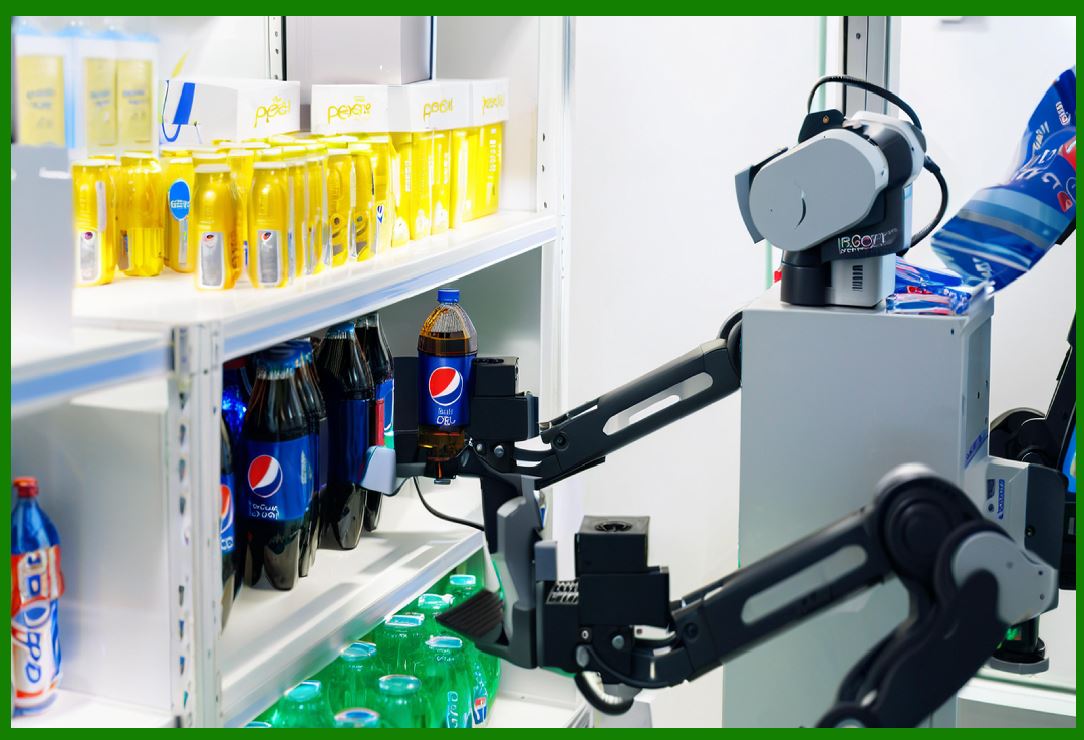
| 47.2 Why Real-World Data Is Running Out | The claim that high-quality real-world data is approaching exhaustion deserves scrutiny, because data scarcity takes several distinct forms. It is not simply that there is less data in the world. In fact, the total volume of digital data continues to grow explosively. The problem is that the specific kind of data needed for frontier AI systems is becoming harder and more expensive to obtain. Four forms of scarcity are particularly important. | The first is scarcity of rare events. Many of the most valuable training examples are, by definition, uncommon. A self-driving car needs to learn how to handle a child running into the street, a cyclist swerving suddenly, or a mattress falling off a truck. These events are extremely rare in ordinary driving. Collecting enough of them from real-world driving would require billions of miles, and even then some critical scenarios might never be observed. The same logic applies to industrial accidents, medical emergencies, and financial crises. Rare events are precisely the events that matter most, and they are precisely the events that real-world data collection captures least efficiently. | The second is scarcity of labeled data. Raw data is often plentiful, but labels are expensive. A single hour of expert medical annotation can cost hundreds of dollars. Labeling a large image dataset for a specialized industrial inspection task may require trained engineers. In domains like radiology, pathology, and genomics, the bottleneck is not the images or sequences themselves but the expert time required to interpret them. This creates a situation in which unlabeled data is abundant while labeled data is scarce, which is exactly the condition under which synthetic data becomes attractive. | The third is scarcity of diverse data. Real-world datasets often over-represent the conditions that are easy to collect. A fleet of autonomous vehicles operating in Phoenix will collect far more data about clear, dry, sunny conditions than about snow, fog, or heavy rain. A medical dataset from one hospital system may under-represent patients from other regions, ethnicities, or socioeconomic backgrounds. This lack of diversity produces models that perform well on average but fail in the tail, which is often where safety and fairness matter most. | The fourth is scarcity driven by privacy, regulation, and competition. Much of the most valuable data is locked away. Medical records are protected by privacy laws. Financial transactions are subject to strict regulation. Companies treat their proprietary data as a competitive asset and rarely share it. Even when data can be legally used, the process of obtaining consent, anonymizing records, and navigating compliance can be slow and costly. The result is that a great deal of potentially useful data is effectively unavailable for training. | Taken together, these four forms of scarcity explain why the field is turning to synthetic data. It is not that real data has disappeared. It is that the marginal real example is becoming more expensive, harder to obtain, and less representative of the situations that matter most. Synthetic data offers a way to fill the gaps, to target rare events deliberately, to generate labels automatically, to diversify coverage, and to sidestep some privacy and competitive constraints. | 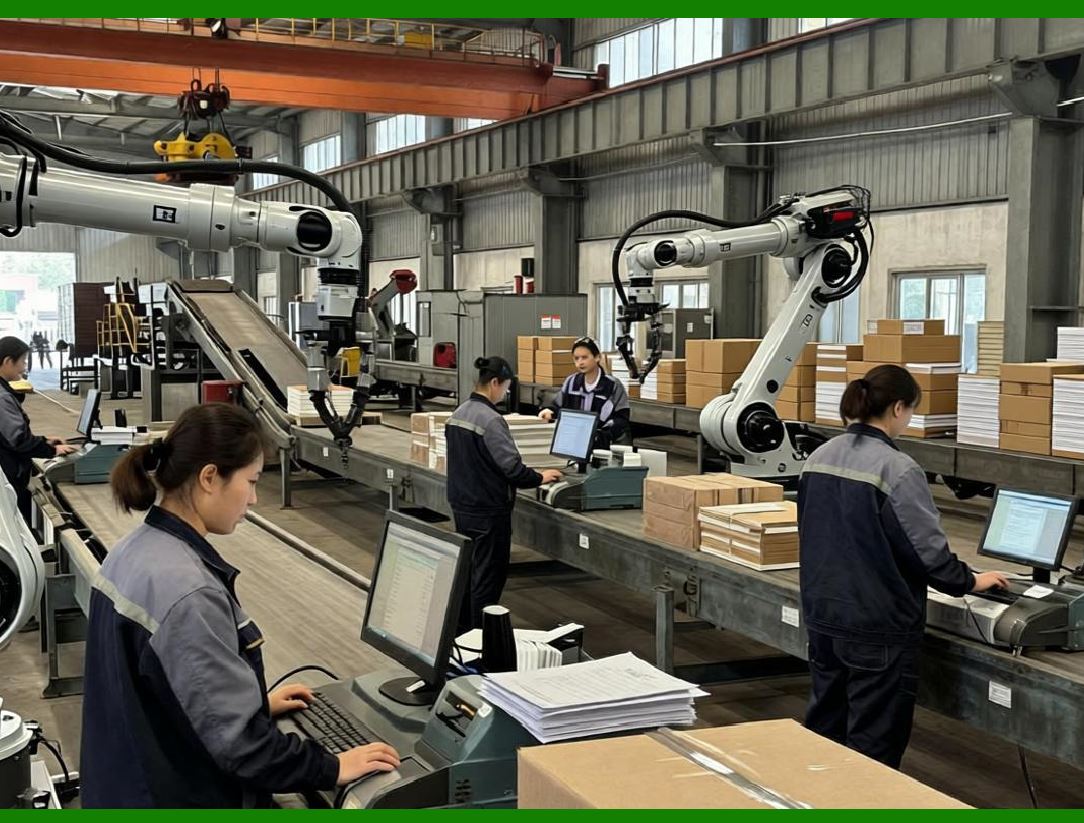
| 47.3 What Synthetic Data Is and How It Is Generated | Synthetic data is best understood as data that is created rather than observed. It can take many forms: images, video, text, audio, sensor readings, tabular records, three-dimensional scenes, and even entire interactive environments. The common thread is that the data is produced by a process that the creator controls, which means the creator can, in principle, decide what the data contains. | There are three broad families of synthetic data generation. The first is simulation. In simulation, a model of the world is constructed, often using physics engines and three-dimensional graphics, and data is generated by running that model. A driving simulator, for example, can place a virtual car in a virtual city and render what its cameras and lidar would see. A robotics simulator can compute how a virtual arm would move and what forces it would experience. Simulation is particularly powerful for physical systems because the underlying physics can be programmed, which means the data can be physically consistent and the labels can be known exactly. | The second family is procedural generation. Here, data is created by algorithms that follow rules or grammars rather than by simulating physics. Procedural generation is widely used to create textures, terrain, city layouts, and game levels. It is also used to generate synthetic tabular data, where statistical properties of a real dataset are learned and then used to produce new records that resemble the original without containing any actual individual's information. Procedural methods are often faster and cheaper than full simulation, though they may sacrifice physical realism. | The third family is generative modeling. This is the newest and fastest-growing approach. Generative models, including diffusion models, generative adversarial networks, and large language models, learn the patterns of real data and then produce new samples that resemble it. A diffusion model trained on photographs can generate novel photorealistic images. A large language model trained on text can generate new documents, dialogues, and code. Generative models are attractive because they can capture the messy, high-dimensional statistics of real data without requiring an explicit hand-built simulator. However, they are also the hardest to control and the hardest to evaluate, because it is not always clear what they have learned and what they have invented. | In practice, these three families are often combined. A driving dataset might use a hand-built city layout, procedurally generated traffic, and a generative model to synthesize realistic weather effects. A medical dataset might use a simulator to model anatomy and a generative model to add realistic texture and noise. The boundaries between the families are blurry, and the most effective systems tend to blend them. | 
| 47.4 Why Synthetic Data Works: The Core Intuition | The intuition behind synthetic data is straightforward. A machine learning model learns patterns from examples. If the examples are limited, the model's understanding is limited. If the examples are biased, the model's understanding is biased. If the examples are scarce in the situations that matter, the model will be unprepared for those situations. Synthetic data addresses all three problems by allowing the creator to decide what examples to produce. | There is a second, subtler intuition. In many domains, the goal of training is not to memorize the real world but to learn the underlying structure of a task. A model that learns to recognize pedestrians should learn the concept of a pedestrian, not the specific pedestrians in a particular dataset. Synthetic data can be designed to vary the irrelevant details, such as clothing, lighting, and background, while holding the relevant concept constant. This encourages the model to learn the concept rather than the incidental features of the training set. In this sense, synthetic data is a form of data augmentation taken to its logical extreme. | A third intuition concerns labels. In real-world data, labels are often noisy, incomplete, or expensive. In synthetic data, labels are free and exact. If a simulator places a virtual car at a known position, the position is known perfectly. If a generative model is asked to produce an image of a cat, the label cat is known by construction. This is a profound advantage. Much of the cost and error in modern machine learning comes from labeling, and synthetic data eliminates much of that cost and error at the source. | These intuitions explain why synthetic data has moved from a niche technique to a central strategy. It is not a magic solution, and it introduces its own problems, which are discussed later. But it directly addresses the fundamental constraints that are now limiting progress in many domains. | 
| 47.5 Autonomous Driving: The Flagship Application | Autonomous driving is the domain where synthetic data has attracted the most attention and investment, and for good reason. A self-driving system must handle an enormous range of situations, many of which are rare, dangerous, and expensive to reproduce. Real-world driving data is collected by fleets of vehicles equipped with cameras, radar, lidar, and other sensors. This data is valuable, but it is also limited. It over-represents routine driving and under-represents the edge cases that determine safety. It is expensive to collect, because it requires vehicles, drivers, fuel, maintenance, and data storage. It is slow to accumulate, because rare events occur rarely. And it is difficult to label, because accurate annotation of a three-dimensional scene requires significant human effort. | Synthetic data addresses each of these problems. Driving simulators can generate millions of scenarios in a fraction of the time and cost of real-world collection. They can deliberately place pedestrians, cyclists, and other vehicles in dangerous configurations. They can vary weather, lighting, road conditions, and sensor characteristics. They can generate labels automatically, because the simulator knows exactly where every object is. And they can be run in parallel on large compute clusters, producing data far faster than any fleet could. | Several concrete examples illustrate the range of approaches. Waymo has publicly discussed the use of simulation to test and train its systems, including the generation of synthetic scenes and the replay of real-world scenarios with variations. Tesla has emphasized the role of simulation in its autonomy stack, including the use of a learned world model to generate plausible futures. NVIDIA has built a simulation platform, often described as an omniverse for physical AI, that allows developers to construct virtual environments, populate them with agents, and render sensor data. Startups such as Applied Intuition and Parallel Domain focus specifically on synthetic data and simulation for autonomy. Academic and open-source efforts, including the CARLA simulator, have become standard tools for research. | The specific uses of synthetic data in autonomous driving fall into several categories. The first is perception training. Synthetic images and lidar point clouds can be used to train object detectors, semantic segmentation models, and depth estimators. The second is scenario testing. Simulated scenarios can be used to evaluate how a system behaves in dangerous or unusual situations, without putting anyone at risk. The third is end-to-end training. Some teams train entire driving policies in simulation and then transfer them to the real world, a process known as sim-to-real transfer. The fourth is data augmentation. Real data can be modified synthetically, for example by changing the weather or adding virtual objects, to increase its diversity. | The results have been significant. Synthetic data has helped reduce the cost of perception training, improve performance on rare events, and accelerate the development cycle. It has also revealed limitations. The gap between simulation and reality, often called the reality gap, remains a central challenge. A model trained purely in simulation may fail in the real world because the simulator does not capture every detail of physics, sensor noise, or human behavior. Closing this gap is an active area of research, and most practical systems use a combination of real and synthetic data rather than relying on either alone. | 
| 47.6 Robotics: Learning to Act in the Physical World | Robotics shares many characteristics with autonomous driving, but it adds the challenge of manipulation. A robot must not only perceive the world but also act on it, which means it must learn the consequences of its actions. Real-world robot data is even scarcer than driving data, because robots are expensive, slow, and difficult to operate. Collecting a large dataset of robot manipulation typically requires many hours of human teleoperation or many trials of autonomous operation, both of which are costly. | Synthetic data and simulation are central to modern robotics. Simulators such as MuJoCo, Isaac Sim, and PyBullet allow researchers to create virtual robots, virtual objects, and virtual environments, and to run millions of trials at high speed. Because the simulator controls everything, it can generate perfectly labeled data about object positions, contact forces, and action outcomes. It can also randomize the environment extensively, varying object shapes, textures, lighting, and physics parameters, to encourage robust learning. | The most important idea in this area is domain randomization. Rather than trying to make the simulator perfectly realistic, researchers deliberately randomize the simulation so that the real world appears to the model as just another variation. If the model learns to succeed across a wide range of simulated conditions, it is more likely to succeed in the real world, because the real world is within the range it has seen. Domain randomization has been used successfully for tasks such as grasping, in-hand manipulation, locomotion, and navigation. It is a powerful illustration of the broader principle that synthetic data does not need to be perfectly realistic to be useful. It needs to be diverse enough to cover the conditions the model will encounter. | Beyond manipulation, synthetic data is used in robotics for locomotion, where simulated terrains and disturbances help robots learn to walk and run, and for navigation, where simulated buildings and streets help robots learn to move through space. It is also used for multi-robot systems, where simulation allows the study of coordination and communication without the cost and risk of physical experiments. | The limitations are similar to those in driving. The reality gap persists, especially for contact-rich tasks where friction, deformation, and wear are hard to model. Sim-to-real transfer often requires fine-tuning on real data, and the amount of real data needed varies by task. Nevertheless, simulation and synthetic data have become indispensable tools in robotics, and the trend is toward larger, more realistic, and more learnable simulators. | 
| 47.7 Healthcare and Medicine: Privacy, Scarcity, and Rare Diseases | Healthcare is a domain where synthetic data offers benefits that go beyond cost and speed. Medical data is highly sensitive, heavily regulated, and often siloed. Sharing patient data across institutions is difficult, and even within an institution, using data for research requires careful governance. Synthetic data offers a way to create datasets that preserve the statistical properties of real data without containing identifiable information, which can ease privacy concerns and enable broader collaboration. | There are several distinct uses of synthetic data in healthcare. The first is medical imaging. Generative models can produce synthetic images of tumors, lesions, and other pathologies, which can be used to augment training sets, especially for rare conditions. For example, a dataset of lung scans may contain very few examples of a particular rare cancer, which makes it hard to train a reliable detector. Synthetic images can fill that gap, though care must be taken to ensure that the synthetic images are clinically meaningful and not merely realistic-looking artifacts. | The second is electronic health records. Synthetic patient records can be generated to resemble real populations, including demographics, diagnoses, medications, and lab results. These records can be used to develop and test algorithms, to simulate clinical trials, and to train staff, without exposing real patients. The challenge is ensuring that the synthetic records capture the complex correlations and temporal patterns of real data, which is difficult because medical data is noisy, sparse, and full of confounding factors. | The third is drug discovery. Synthetic data is used to generate candidate molecules, predict their properties, and simulate their interactions with biological targets. Generative models can propose novel compounds that satisfy multiple constraints, and simulations can estimate how those compounds might behave. This accelerates the early stages of drug discovery, where the space of possible molecules is astronomically large and experimental testing is slow and expensive. | The fourth is clinical trial simulation. Synthetic patients can be used to simulate how a trial might unfold, to estimate the required sample size, and to explore subgroup effects. This can help design more efficient trials and reduce the risk of failure. It is not a replacement for real trials, but it can improve their design and increase the chance of success. | The limitations in healthcare are serious. Synthetic data can introduce biases if the generative model learns and amplifies patterns from unrepresentative real data. It can miss rare but important correlations. It can be difficult to validate, because there is no ground truth for a synthetic patient. And it raises regulatory questions, because it is not always clear how regulators should treat models trained on synthetic data. Despite these challenges, the direction of travel is clear. Synthetic data is becoming a standard tool in medical AI, especially where privacy and scarcity are binding constraints. | 
| 47.8 Finance: Fraud, Risk, and Market Simulation | Finance is another domain where synthetic data is finding widespread use, driven by a combination of scarcity, privacy, and the importance of rare events. Financial fraud is rare relative to legitimate transactions, which means that fraud datasets are highly imbalanced. A model trained on real data may see millions of legitimate transactions and only a handful of fraudulent ones, which makes it hard to learn the patterns of fraud. Synthetic fraud data can be generated to balance the dataset, to explore new fraud tactics, and to test detection systems. | Risk management is a second area. Financial institutions need to estimate the probability and impact of extreme events, such as market crashes, liquidity crises, and counterparty defaults. These events are rare, which makes them hard to study from historical data alone. Synthetic market simulations can generate many plausible scenarios, including extreme ones, which helps institutions stress-test their portfolios and improve their resilience. | Algorithmic trading is a third area. Trading strategies are often developed and tested on historical data, but historical data is limited and may not reflect current market conditions. Synthetic market data can be generated to simulate different regimes, including high volatility, low liquidity, and correlated moves across assets. This allows traders to test strategies under conditions that may not appear in the historical record. | Privacy is a fourth area. Financial data is sensitive, and sharing it across institutions or with researchers is difficult. Synthetic transaction data can be generated to preserve the statistical properties of real data while protecting individual privacy. This can enable collaboration, research, and innovation without compromising confidentiality. | The challenges in finance are significant. Financial markets are complex, adaptive, and reflexive, which means that synthetic data may not capture the ways in which market participants respond to each other. A synthetic market may be internally consistent but still fail to reproduce the dynamics of a real market. There is also a risk that synthetic data could be used to manipulate markets or to disguise fraudulent activity, which raises regulatory and ethical concerns. As a result, synthetic data in finance is often used alongside real data rather than as a replacement, and its outputs are treated with caution. | 
| 47.9 Manufacturing and Industrial Inspection | Manufacturing is a domain where synthetic data has clear and immediate value. Modern factories use computer vision for quality inspection, defect detection, and process monitoring. These systems need to recognize defects, but defects are rare by design. A well-run production line produces mostly good parts, which means that defect images are scarce. Collecting enough defect images to train a reliable detector can take months or years, and some defects may never occur in sufficient numbers. | Synthetic data solves this problem by generating images of defects on demand. A generative model can produce images of scratches, cracks, discolorations, and other defects on a variety of surfaces. A simulator can place virtual defects on virtual parts and render them under different lighting and camera angles. This allows manufacturers to train inspection systems quickly and to cover defect types that are rare or even hypothetical. | Beyond defect detection, synthetic data is used in manufacturing for layout planning, where simulated factories help optimize the placement of machines and the flow of materials, and for robot programming, where simulated robots learn tasks before being deployed on the line. It is also used for predictive maintenance, where synthetic sensor data can simulate the evolution of wear and tear, helping models learn to predict failures before they occur. | The advantages are substantial. Synthetic data reduces the need for expensive and time-consuming real-world data collection, accelerates deployment, and allows manufacturers to address rare defects that would otherwise be impossible to learn. The limitations include the reality gap, especially for subtle defects that depend on fine surface details, and the need to validate that synthetic defects are representative of real ones. In practice, manufacturers often combine a small amount of real defect data with a large amount of synthetic data, using the real data to calibrate and validate the synthetic. | 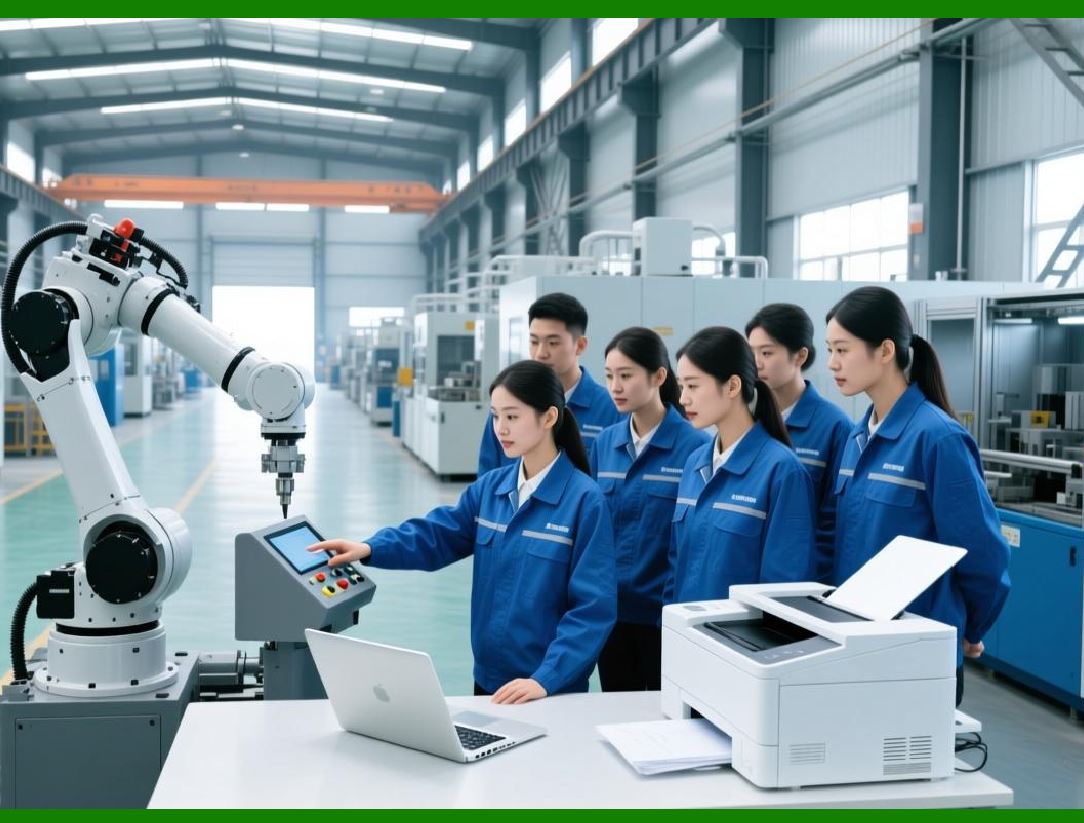
| 47.10 Agriculture and Environmental Monitoring | Agriculture and environmental monitoring are increasingly data-driven, and synthetic data is playing a growing role. Farming involves a wide range of conditions, including different crops, soils, weather patterns, and pest pressures. Real-world data collection is expensive and seasonal, which means that datasets are often limited to specific regions and times. Synthetic data can generate images of crops under different conditions, simulate the spread of pests and diseases, and model the effects of weather and management practices. | One important application is crop yield prediction. Synthetic data can simulate how crops grow under different combinations of rainfall, temperature, soil quality, and fertilizer use. This helps train models that predict yields and guide decisions about planting, irrigation, and harvesting. Another application is pest and disease detection. Synthetic images of infested plants can be generated to augment limited real datasets, helping models learn to recognize problems early. A third application is autonomous farming equipment, where simulators help train tractors and drones to navigate fields and perform tasks. | Environmental monitoring shares similar characteristics. Satellite imagery is abundant but often unlabeled, and rare events such as oil spills, wildfires, and illegal logging are hard to capture. Synthetic data can simulate these events and generate labeled examples, helping models learn to detect them. It can also be used to simulate the effects of climate change, land use change, and pollution, supporting research and policy analysis. | The challenges are similar to those in other physical domains. The reality gap matters, especially because agricultural and environmental systems are complex and variable. Synthetic data may not capture the full range of natural variation, and models trained on synthetic data may fail in the field. As in other domains, the most effective approach is usually a combination of real and synthetic data, with careful validation. | 
| 47.11 Security, Surveillance, and Defense | Security and defense applications present some of the most compelling use cases for synthetic data, as well as some of the most serious ethical concerns. Security systems need to detect threats, which are rare and often deliberately concealed. Synthetic data can generate images and videos of potential threats, such as weapons, intruders, and suspicious behavior, allowing systems to be trained without exposing real people or revealing real vulnerabilities. | In surveillance, synthetic data can be used to train person detection, tracking, and re-identification systems. It can also be used to simulate crowds and traffic flows, helping to design safer public spaces and to plan emergency responses. In defense, synthetic data is used for training pilots, soldiers, and autonomous systems, and for testing equipment and strategies in simulated environments. Flight simulators, tank simulators, and war games are all examples of synthetic environments that have been used for decades. | The benefits are clear. Synthetic data allows security and defense organizations to train for scenarios that are too dangerous, too rare, or too sensitive to reproduce in reality. It reduces costs, protects personnel, and enables rapid iteration. The risks are equally clear. Synthetic data can be used to develop surveillance systems that violate privacy, to train autonomous weapons, and to create deepfakes and disinformation. It can also be used to test and improve cyberattacks, because synthetic network data can simulate vulnerabilities and attack paths. These dual-use concerns mean that synthetic data in security and defense requires strong governance, transparency, and ethical oversight. | 
| 47.12 Retail, E-Commerce, and Recommendation | Retail and e-commerce are data-rich domains, but they still face scarcity in important areas. New products, new markets, and new customer segments often lack historical data, which makes it hard to train recommendation systems, demand forecasts, and pricing models. Synthetic data can fill these gaps by generating plausible customer behavior, product attributes, and market conditions. | One application is cold-start recommendation. When a new product or a new user appears, there is little or no interaction data to learn from. Synthetic data can simulate how similar users might interact with similar products, providing a starting point for recommendations. Another application is demand forecasting. Synthetic data can simulate demand under different pricing, promotion, and seasonality scenarios, helping retailers plan inventory and optimize pricing. A third application is store layout and visual merchandising. Synthetic images and three-dimensional models can simulate how customers might perceive different layouts, helping retailers design more effective stores. | The challenges in retail are related to the complexity of human behavior. Synthetic data may not capture the full range of customer preferences, and models trained on synthetic data may not generalize to real customers. There is also a risk of feedback loops, where synthetic data reinforces existing biases and reduces diversity. As in other domains, the most effective approach is to use synthetic data to augment real data, not to replace it. | 
| 47.13 Scientific Research and Discovery | Scientific research is increasingly reliant on synthetic data, both as a tool for training models and as a way to explore hypotheses. In physics, simulations of particle collisions, gravitational waves, and cosmological evolution generate enormous datasets that are used to train models and to test theories. In chemistry, synthetic molecules and reactions are used to explore chemical space and to predict properties. In biology, synthetic genomes, proteins, and cells are used to study biological systems and to design new therapies. | One of the most exciting developments is the use of generative models to propose new scientific hypotheses. A model trained on scientific literature can generate plausible new compounds, materials, or experiments. These proposals can then be tested in simulation or in the lab. This creates a virtuous cycle in which synthetic data helps generate hypotheses, simulations help test them, and real experiments help validate them. | Synthetic data is also used to train models that analyze scientific data. For example, models that detect gravitational waves or classify galaxies need large labeled datasets, which are hard to obtain from real observations. Synthetic data can generate such datasets, allowing models to be trained before real data is available. This is particularly valuable for new instruments and new observatories, where real data may not arrive for years. | The challenges in scientific research include the difficulty of ensuring that synthetic data is physically or biologically valid, and the risk that models trained on synthetic data may learn artifacts of the simulation rather than genuine scientific principles. Careful validation against real data is essential, and the most successful projects combine simulation, synthetic data, and real observations in an iterative loop. | 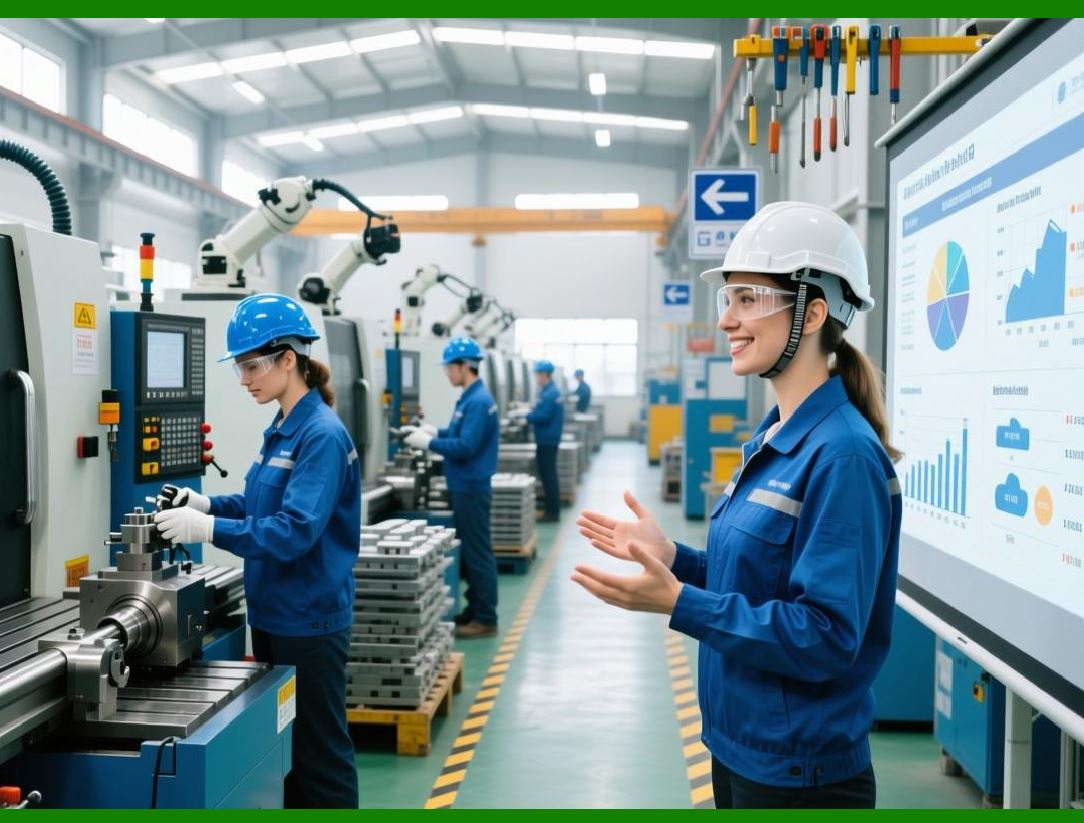
| 47.14 The Reality Gap and Sim-to-Real Transfer | The reality gap is the difference between the simulated or synthetic world and the real world. It is the central challenge of synthetic data, and it appears in every domain. A model trained in simulation may fail in reality because the simulation does not capture every detail of physics, sensor noise, lighting, texture, or human behavior. Closing the reality gap is an active area of research, and several strategies have emerged. | The first strategy is domain randomization, discussed earlier. By randomizing the simulation extensively, researchers make the real world appear as just another variation, which improves transfer. The second strategy is domain adaptation, in which a model trained in simulation is fine-tuned on a small amount of real data. The third strategy is system identification, in which the simulator is calibrated to match real-world measurements. The fourth strategy is to use generative models to make synthetic data more realistic, for example by translating simulated images into photorealistic ones. The fifth strategy is to combine simulation with real data in a single training pipeline, so that the model learns from both. | No single strategy is sufficient. In practice, successful sim-to-real transfer usually involves a combination of approaches, along with careful evaluation and iteration. The reality gap is not a reason to abandon synthetic data. It is a reason to use it thoughtfully, to validate it against real data, and to treat it as one tool among many. | 
| 47.15 Bias, Fairness, and Representation | Synthetic data can help address bias by generating examples that are under-represented in real data. If a real dataset lacks images of people with darker skin tones, synthetic data can generate them. If a real dataset lacks examples of women in certain roles, synthetic data can generate them. This is a genuine benefit, and it is one of the reasons synthetic data is attractive for fairness work. | However, synthetic data can also introduce and amplify bias. If the generative model is trained on biased real data, it may learn and reproduce those biases. If the synthetic data is generated by a simulator designed by a homogenous team, it may reflect their assumptions and blind spots. If the synthetic data is used to train a model without careful validation, the model may perform poorly on groups that were not well represented in the synthetic data. Bias in synthetic data is often harder to detect than bias in real data, because there is no ground truth to compare against. | Addressing bias in synthetic data requires deliberate effort. Teams should audit their generative models and simulators for bias, ensure that synthetic datasets are diverse and representative, validate models on real data from multiple groups, and involve diverse stakeholders in the design process. There is no purely technical fix. Bias is a sociotechnical problem, and synthetic data is not exempt from it. | 
| 47.16 Evaluation and Validation | Evaluating models trained on synthetic data is difficult. In real data, there is a ground truth, even if it is noisy. In synthetic data, the ground truth is defined by the generator, which means that a model can achieve perfect performance in simulation while failing in reality. This is sometimes called the evaluation gap, and it is one of the most important practical challenges in the field. | Several approaches can help. The first is to hold out real data for evaluation, even if it is not used for training. The second is to use multiple simulators and generators, and to check whether results are consistent across them. The third is to test in the real world, ideally in a controlled and safe way, to measure the actual performance of the model. The fourth is to use domain experts to review synthetic data and model outputs, to catch errors that automated metrics might miss. The fifth is to track performance over time, because the real world changes and a model that works today may fail tomorrow. | Validation is not a one-time activity. It is an ongoing process that continues throughout the lifecycle of a model. Organizations that use synthetic data successfully treat validation as a first-class concern, and they invest in the infrastructure and expertise needed to do it well. | 
| 47.17 Legal, Regulatory, and Ethical Considerations | Synthetic data raises a range of legal, regulatory, and ethical questions. On the legal side, it is not always clear who owns synthetic data, whether it can be copyrighted, and how it should be treated under privacy laws. If a synthetic dataset is generated from real data, does it inherit the privacy obligations of the real dataIf a generative model is trained on copyrighted material, does it infringeThese questions are being tested in courts and regulators around the world, and the answers are still evolving. | On the regulatory side, agencies that oversee healthcare, finance, and transportation are grappling with how to treat models trained on synthetic data. Do such models need to be validated on real dataWhat level of realism is requiredHow should synthetic data be documented and auditedThese questions matter because they determine whether synthetic data can be used in safety-critical applications. | On the ethical side, synthetic data raises concerns about consent, transparency, and misuse. If a person's data is used to train a generative model, do they knowDo they consentIf synthetic data is used to create deepfakes, who is responsibleIf synthetic data is used to train autonomous weapons or surveillance systems, what limits should applyThese are not purely technical questions. They require input from ethicists, policymakers, and the public. | The responsible use of synthetic data requires governance. Organizations should have clear policies about when and how synthetic data is used, how it is documented, how it is validated, and how it is audited. They should be transparent with stakeholders, and they should be prepared to explain and justify their choices. Synthetic data is a powerful tool, and like all powerful tools, it requires care. | 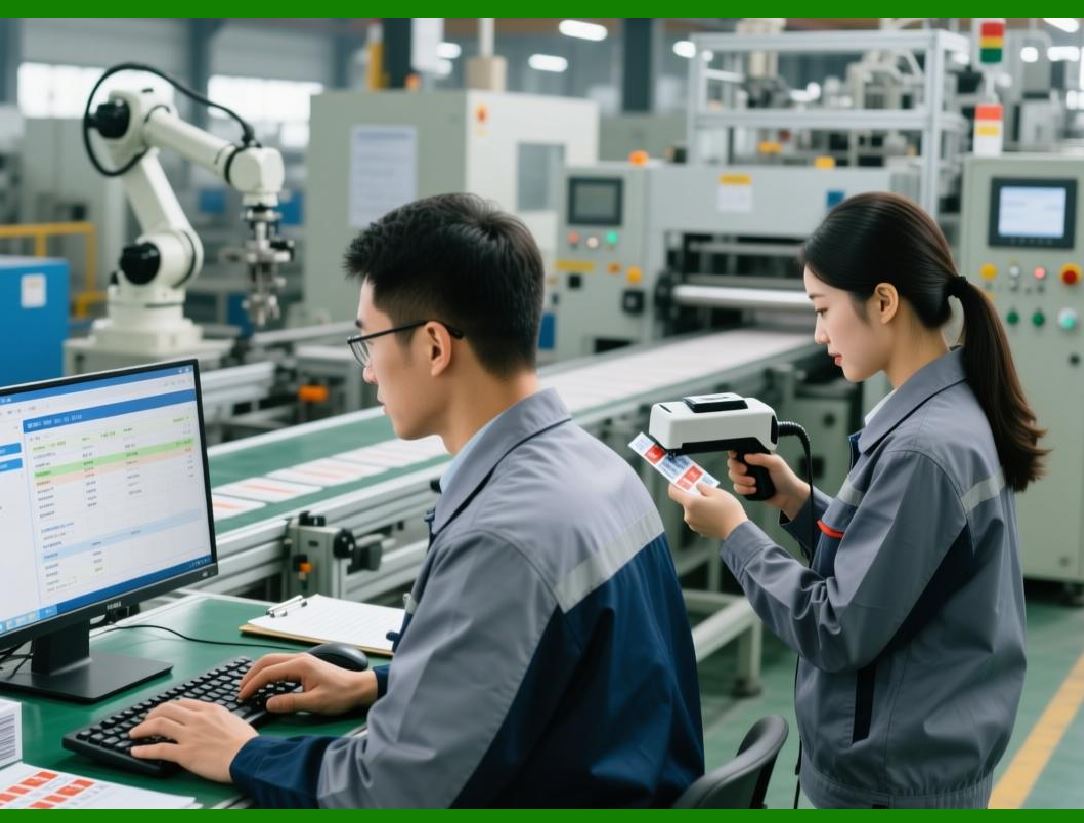
| 47.18 Economic and Strategic Implications | Synthetic data is reshaping the economics of AI. In the past, the cost of training a model was dominated by compute and by the cost of collecting and labeling real data. Synthetic data changes that equation. It can reduce the cost of data collection, eliminate the cost of labeling, and accelerate the development cycle. This makes it possible for smaller organizations to compete with larger ones, because they no longer need vast fleets or huge annotation budgets. | At the same time, synthetic data creates new sources of advantage. Organizations that build high-quality simulators, generative models, and data pipelines can generate data at scale, which gives them a significant edge. The market for synthetic data tools and services is growing rapidly, with companies offering simulation platforms, generative models, data generation services, and validation tools. This market is likely to become a major part of the AI ecosystem. | There are also strategic risks. If synthetic data becomes the primary training fuel, then control over the generators becomes control over the data supply. Organizations that depend on a small number of external generators may find themselves in a vulnerable position. There is also a risk of homogenization, where everyone trains on similar synthetic data and models become less diverse. And there is a risk of over-reliance, where organizations neglect real data and lose the ability to validate their models. Managing these risks requires a deliberate strategy that balances synthetic and real data, invests in validation, and maintains diversity in data sources. | 
| 47.19 The Future of Synthetic Data | The future of synthetic data is likely to be characterized by several trends. The first is increasing realism. Generative models and simulators are becoming more realistic, which will reduce the reality gap and make synthetic data more useful. The second is increasing controllability. New techniques allow creators to specify exactly what they want in the generated data, which makes it easier to target rare events, balance datasets, and enforce constraints. The third is increasing integration. Synthetic data will be integrated into more parts of the AI pipeline, from pre-training to fine-tuning to evaluation. The fourth is increasing regulation. As synthetic data becomes more common, regulators will develop rules for its use, especially in safety-critical domains. The fifth is increasing competition. The market for synthetic data tools and services will continue to grow, and new entrants will challenge established players. | There is also a deeper question about the relationship between synthetic data and real data. In the long run, it may be that the distinction becomes less important. The goal is not to use synthetic data or real data but to use whatever data best helps the model learn. In this view, synthetic data is not a replacement for real data but a complement, and the most successful systems will use both, in a continuous loop of generation, training, validation, and refinement. | 
| 47.20 Detailed Summary | This chapter has examined synthetic data as a core training fuel for modern AI, with a focus on why it matters, how it is generated, where it is used, and what challenges it presents. | The chapter began by explaining why real-world data is approaching exhaustion. Four forms of scarcity are particularly important: scarcity of rare events, scarcity of labeled data, scarcity of diverse data, and scarcity driven by privacy, regulation, and competition. Together, these forms of scarcity explain why the marginal real example is becoming more expensive, harder to obtain, and less representative of the situations that matter most. | The chapter then introduced synthetic data and its three main families of generation: simulation, procedural generation, and generative modeling. Simulation uses explicit models of the world, often with physics engines, and is particularly powerful for physical systems. Procedural generation uses algorithms and rules to create data, and is often faster and cheaper. Generative modeling uses learned models, such as diffusion models and large language models, to produce data that resembles real data. In practice, these families are often combined. | The core intuition behind synthetic data is that it allows creators to decide what examples to produce. This addresses scarcity, bias, and coverage. It also provides free and exact labels, which reduces cost and error. Synthetic data is not magic, but it directly addresses the constraints that limit progress in many domains. | The chapter surveyed applications across many industries. In autonomous driving, synthetic data is used for perception training, scenario testing, end-to-end training, and data augmentation, with simulation platforms and generative models playing central roles. In robotics, simulation and domain randomization are used for manipulation, locomotion, and navigation, with sim-to-real transfer as a key challenge. In healthcare, synthetic data is used for medical imaging, electronic health records, drug discovery, and clinical trial simulation, with privacy and scarcity as the main drivers. In finance, it is used for fraud detection, risk management, algorithmic trading, and privacy-preserving data sharing. In manufacturing, it is used for defect detection, layout planning, robot programming, and predictive maintenance. In agriculture and environmental monitoring, it is used for crop yield prediction, pest and disease detection, autonomous equipment, and rare event detection. In security and defense, it is used for threat detection, surveillance, training, and testing, with significant ethical concerns. In retail and e-commerce, it is used for cold-start recommendation, demand forecasting, and store design. In scientific research, it is used for simulation, hypothesis generation, and training models on synthetic observations. | The chapter discussed the reality gap and sim-to-real transfer, noting that the gap is the central challenge of synthetic data and that successful transfer usually involves a combination of domain randomization, domain adaptation, system identification, realistic generation, and mixed training. It discussed bias, fairness, and representation, noting that synthetic data can both help and harm, and that addressing bias requires deliberate effort and diverse stakeholders. It discussed evaluation and validation, noting that the evaluation gap is a serious practical challenge and that validation must be ongoing. It discussed legal, regulatory, and ethical considerations, noting that the rules are still evolving and that responsible use requires governance. It discussed economic and strategic implications, noting that synthetic data is reshaping the economics of AI and creating new sources of advantage and risk. Finally, it discussed the future of synthetic data, noting trends toward increasing realism, controllability, integration, regulation, and competition, and suggesting that the distinction between synthetic and real data may become less important over time. | 
| The central message of this chapter is that synthetic data is not a passing trend. It is a response to a fundamental constraint, and it is becoming a core part of the AI pipeline. It is most powerful when used thoughtfully, in combination with real data, with careful validation and strong governance. Organizations that master synthetic data will be better positioned to build AI systems that are capable, robust, and fair. Organizations that ignore it will increasingly find themselves limited by the scarcity of real-world data. The future of AI training will be synthetic, real, and everything in between, and the most successful practitioners will be those who can navigate that spectrum with skill and integrity. |
|
 cs@easiersoft.com