Chapter 50: Edge AI and On-Device Inference |
Summary |
Generative AI is undergoing a fundamental architectural shift. After several years of centralized cloud-based model computation, the industry is witnessing a rapid migration of inference workloads to end-user devices---smartphones, personal computers, vehicles, industrial equipment, and an expanding array of embedded systems. This transition is not merely a technical optimization; it represents a structural realignment of where intelligence lives, who controls it, and how it is governed. |
The drivers are well established. Privacy concerns have moved from a compliance footnote to a board-level priority, particularly as regulatory frameworks such as the EU AI Act, GDPR, and a growing patchwork of data localization mandates impose hard constraints on cross-border data flows. Latency requirements for real-time applications---autonomous driving, augmented reality, industrial control---render round-trip cloud communication impractical or impossible. And the demand for offline inference, whether in rural retail locations, airborne aircraft, or intermittently connected industrial environments, has made local processing a functional necessity rather than a convenience. |
The hardware industry has responded with unprecedented velocity. Qualcomm, MediaTek, Apple, Google, Samsung, and a cohort of specialized chipmakers have launched platforms explicitly designed for local large language model computation. The AI PC category, barely a concept two years ago, now ships tens of millions of units annually with neural processing units as standard equipment. Smartphone chipsets have crossed the threshold from supporting simple voice assistants to running agentic AI workloads that reason, plan, and execute multi-step tasks entirely on-device. |
This chapter examines the implications of this transition across multiple dimensions. We begin by tracing the technical foundations that made on-device inference feasible at scale. We then survey industry-specific applications, from consumer electronics to healthcare, manufacturing, transportation, and public infrastructure. The chapter concludes with an analysis of the governance questions that edge AI raises---questions that existing regulatory frameworks were not designed to answer---and a detailed summary of the trajectories that will shape the next phase of this evolution. |
|
1. The Technical Foundations of On-Device Intelligence |
1.1 From Cloud Dependency to Local Autonomy |
For most of the generative AI era, the model lived in the cloud. A user typed a prompt, the request traveled to a data center, a model with hundreds of billions of parameters processed it, and the response returned. This architecture had the virtue of simplicity: the model could be as large as economics allowed, updates were centralized, and the user's device needed only a browser or a thin client. |
It also had fundamental limitations. Every interaction required connectivity. Sensitive data left the device and entered a third-party infrastructure. Latency, while often acceptable for text generation, became prohibitive for applications requiring sub-100-millisecond response times. And the cost of inference, measured in tokens processed, accumulated relentlessly for organizations operating at scale. |
The migration to on-device inference addresses each of these limitations. A model running locally on a smartphone, laptop, or embedded controller processes data where it is generated. Nothing leaves the device unless the user explicitly chooses to share it. Response times are bounded by local compute, not network conditions. And the marginal cost of each inference, after the hardware is purchased, approaches zero. |
1.2 The Hardware Revolution |
The enabling condition for this shift is a generation of processors designed from the ground up for neural network inference. The neural processing unit, or NPU, has become as standard in modern system-on-chip designs as the CPU and GPU. |
Qualcomm's Snapdragon platforms, particularly the X2 Elite for personal computers and the 8-series for smartphones, integrate dedicated AI acceleration that distributes workloads across CPU, GPU, and NPU according to their computational characteristics . MediaTek's Dimensity series was the first to commercialize agentic AI capabilities at the chipset level, with its 9400 and subsequent 8400/8500 series pushing advanced AI features into mid-tier price segments . Apple's custom silicon, combined with its Neural Engine and unified memory architecture, provides a tightly integrated environment for on-device inference, though the company has been notably more conservative in marketing agentic capabilities than its competitors . |
The performance envelope has expanded dramatically. Where early AI PCs offered NPUs measured in tens of trillions of operations per second, current platforms achieve hundreds of TOPS while maintaining power envelopes compatible with fanless designs. Lenovo's Yoga Pro 9n, developed in partnership with NVIDIA, packs a Grace CPU and Blackwell RTX GPU into a laptop chassis capable of running 120-billion-parameter models locally with 1 million tokens of context . The implications for professional workflows---legal document analysis, medical record review, financial modeling---are substantial. |

|
1.3 Model Efficiency and Compression |
Hardware alone does not explain the transition. The models themselves have become dramatically more efficient. A generation ago, a useful language model required billions of parameters and gigabytes of memory. Today, models in the 1-4 billion parameter range deliver capabilities that were once the exclusive province of much larger systems. |
Google's Gemma family exemplifies this trend. Gemma 3 270M is a hyper-efficient model designed for task-specific fine-tuning on constrained devices. Gemma 3 1B balances compact size with strong generative capabilities. The Gemma 4 E2B and E4B models are specifically tailored for mobile and edge environments, with memory-mapped embeddings and optimizations that reduce RAM requirements to levels manageable on devices like the Raspberry Pi 5 . |
The techniques enabling this compression are now well established: quantization reduces numerical precision without significant quality loss; pruning removes redundant parameters; knowledge distillation trains smaller models to imitate larger ones. What has changed is the sophistication of their application. Modern compression pipelines are hardware-aware, optimizing for the specific memory hierarchies and compute characteristics of target devices rather than applying generic reduction techniques . |
1.4 The Role of Inference Frameworks |
The software layer connecting models to hardware has matured alongside the silicon. Google's LiteRT-LM provides a production-ready orchestration layer that runs models across Android, iOS, web, desktop, and IoT platforms, leveraging GPU and NPU acceleration where available . The framework supports function calling for agentic workflows, multimodal inputs including vision and audio, and a range of model families from Gemma to Llama, Phi-4, and Qwen . |
On the Raspberry Pi 5, LiteRT-LM achieves decode speeds of approximately 9 tokens per second for Gemma 4 E2B, with a peak memory footprint of just over 1.4 gigabytes. For a device costing less than a hundred dollars, this represents a genuine general-purpose intelligence capability . |

|
2. Industry Applications: A Cross-Sector Survey |
The transition to edge inference is not uniform across industries. Different sectors face different constraints---regulatory, operational, economic---and therefore adopt on-device AI at different rates and for different reasons. The following sections examine the most significant deployment contexts. |
2.1 Consumer Electronics: Smartphones and Personal Computing |
The smartphone is the most widely deployed edge AI platform in history. More than a billion devices ship annually, each containing a system-on-chip with increasingly capable neural processing. Counterpoint Research projects that by 2027, approximately one in three smartphones sold will support agentic AI capabilities, with penetration exceeding 80 percent in the premium segment . |
What distinguishes agentic AI from earlier smartphone intelligence is the shift from reactive assistance to proactive execution. An agentic smartphone can understand context across applications, plan multi-step workflows, and execute tasks on the user's behalf. A user might ask the device to find a suitable restaurant for a business dinner, cross-reference it against calendar availability, check dietary restrictions stored in a health application, make a reservation, and add the confirmation to the appropriate calendar---all without the user touching the screen. |
The competitive dynamics in this space are intensifying. Qualcomm established early scale advantages through partnerships with Samsung and major Chinese Android manufacturers. MediaTek was first to commercialize agentic capabilities and is aggressively pushing advanced AI features into the $250-$600 price band, where the volume opportunity lies . Apple, with its integrated silicon and ecosystem control, remains a wildcard; Counterpoint notes that the company's eventual full embrace of agentic AI could 'significantly reshape the market' . |
The personal computer market is undergoing a parallel transformation. The AI PC category, defined by the presence of a dedicated NPU capable of accelerating AI workloads, has moved from concept to mainstream in under two years. Microsoft's Surface lineup, running on Intel Core Ultra and Snapdragon processors, integrates AI features throughout the Windows experience: live captions, real-time translation, meeting transcription, and contextual actions that analyze on-screen content and suggest relevant operations . |
Lenovo's partnership with NVIDIA represents a more aggressive push into high-end AI computing. The Yoga Pro 9n, with its 128 gigabytes of unified memory, can run models that were previously the exclusive province of server-class hardware. This is not a niche capability. For legal professionals reviewing thousands of pages of discovery, for medical researchers analyzing patient records, for financial analysts working with proprietary data that cannot leave the device, local inference of large models is not a convenience---it is a requirement . |

|
2.2 Retail, Logistics, and Manufacturing |
For frontline operations---retail floors, warehouse aisles, delivery routes, factory floors---on-device AI offers advantages that cloud-based systems cannot match. |
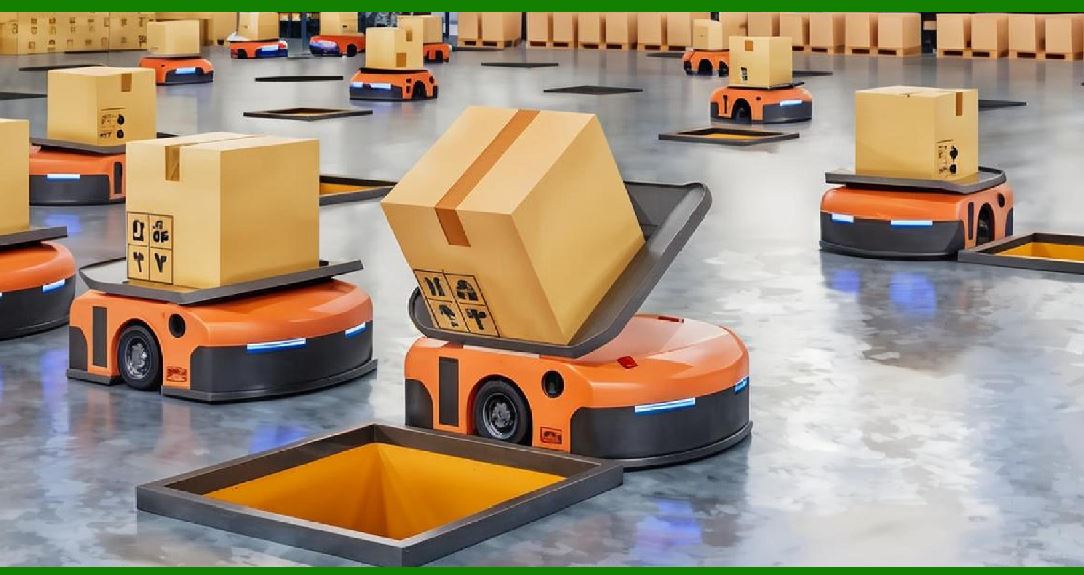
In retail, store associates equipped with AI-ready mobile computers can perform inventory checks, price verification, and planogram compliance without connectivity. Computer vision models running locally can identify products, read labels, and detect shelf gaps in real time. Language models provide instant translation for multilingual staff and customers. And because no data leaves the device, the retailer avoids the complexity of managing PCI compliance for payment-adjacent information . |
The cost implications are significant. Cloud-based inference at scale means paying per token, per API call, or per minute of compute. For a retail chain running vision models across thousands of stores, continuously streaming video to the cloud for analysis, these costs accumulate rapidly. On-device inference eliminates the marginal cost entirely. As Stuart Hubbard of Zebra Technologies notes, businesses 'can save on token APIs' because 'on-device AI means no data needs to leave the device' . |
In manufacturing, the applications extend beyond vision to control systems. Intel's Physical AI Studio demonstrates robotic arm control that learns from collected motion data on an independent GPU and deploys the resulting inference model to a small PC running Core Ultra Series 3. The system adapts to different objects without manual reprogramming---a capability that would be impossible with cloud round-trip latency . |
Quality inspection represents another high-value application. A camera-equipped device with an NPU can run defect detection models locally, flagging anomalies in real time without transmitting proprietary manufacturing data to external servers. The economic case is straightforward: every defective unit that passes inspection represents warranty cost, customer dissatisfaction, and brand damage. Local AI makes the inspection fast enough to catch problems at the point of occurrence rather than after the fact. |

|
2.3 Healthcare and Medical Devices |
Healthcare may be the sector where on-device AI has the most profound implications---both technically and ethically. |
The privacy case is overwhelming. Medical data is among the most sensitive categories of personal information, subject to strict regulation in virtually every jurisdiction. A diagnostic AI that requires transmitting patient images, genetic data, or clinical notes to a cloud service creates a permanent chain of custody that must be audited, secured, and defended. An on-device system that processes the data locally and transmits only the diagnosis eliminates much of that risk surface. |
The clinical case is equally compelling. Emergency response scenarios---ambulances, field hospitals, disaster zones---often lack reliable connectivity. A portable ultrasound device with on-device inference can analyze images and flag abnormalities without any network connection. A wearable monitor can detect arrhythmias in real time, alerting the patient or a caregiver immediately rather than after a round trip to a cloud server. |
The technical challenges are substantial. Medical AI models must meet accuracy standards that leave little room for the quality degradation that can accompany aggressive compression. They must be validated for the specific hardware on which they run, because a model that performs well on one NPU may behave differently on another. And they must be integrated into clinical workflows in ways that augment rather than disrupt the judgment of healthcare professionals. |
|
2.4 Automotive and Smart Cockpit Systems |
The automobile has become one of the most sophisticated edge computing platforms in consumer hands. A modern vehicle contains dozens of electronic control units, multiple cameras, radar and lidar sensors, and increasingly, a central compute platform capable of running AI workloads. |
Privacy and connectivity constraints are driving automakers toward on-device inference. Vehicle data---location history, driving patterns, in-cabin conversations---is among the most sensitive data a person generates. Sending it to a cloud service creates both privacy exposure and regulatory complexity, particularly when vehicles cross jurisdictional boundaries. An on-device system that processes data locally and transmits only aggregated, anonymized telemetry addresses both concerns . |
The smart cockpit represents the most visible consumer-facing application. Voice assistants that run locally can respond instantly to commands without the latency of cloud round trips. Natural language understanding models can parse complex requests and control vehicle functions. And as models become more capable, the cockpit assistant can evolve from a command interpreter to a proactive agent that anticipates needs based on context. |
Chinese automakers have been particularly aggressive in adopting on-device AI, driven by the combination of privacy regulation, network variability across geographies, and consumer expectation of instant response . |

|
2.5 Smart Home and Consumer IoT |
The smart home has long promised ambient intelligence but struggled to deliver it. Early systems relied on cloud processing, which introduced latency, created privacy concerns, and failed entirely when connectivity was interrupted. |
On-device AI changes the calculus. A security camera with a local NPU can distinguish between a person, a pet, and a passing car without transmitting video to the cloud. A voice assistant can process commands locally, eliminating the 'always listening' concern that has dogged cloud-based systems. A thermostat can learn occupancy patterns without uploading detailed presence data. |
The technical enabler is the availability of models small enough to run on inexpensive hardware but capable enough to perform useful tasks. Qualcomm's Dragonwing Q-6690 processor, designed for enterprise mobile computing, brings NPU acceleration to devices that cost far less than a smartphone . For the smart home, this means that intelligence can be distributed across many devices rather than concentrated in a single hub. |

|
2.6 Robotics and Embodied Intelligence |
Robotics is the frontier where edge inference transitions from convenience to necessity. A robot that must wait for a cloud response before moving is not a robot; it is a remote-controlled puppet. |
The challenges are formidable. Robotic systems must process multiple sensor streams---vision, depth, audio, proprioception---in real time, fuse them into a coherent model of the environment, plan actions, and execute them with precision. The computational demands are orders of magnitude beyond what a smartphone or laptop requires. |
Current approaches distribute intelligence across multiple processors. Vision models run on GPUs or NPUs optimized for convolutional operations. Language understanding runs on NPUs designed for transformer architectures. Motion planning executes on real-time CPUs. The orchestration challenge---coordinating these heterogeneous components under strict latency and power constraints---is an active area of research . |
Google's demonstration of the Reachy Mini robot running Gemma and LiteRT on a Raspberry Pi 5 illustrates the trajectory. The robot perceives its environment and reacts in real time, entirely locally, using models that fit in a few gigabytes of memory and run on a device costing a few hundred dollars . This is not a research curiosity; it is a preview of where consumer and industrial robotics are heading. |
|
2.7 Public Infrastructure and Government Services |
Governments and public agencies face a distinctive set of constraints that make on-device AI attractive. Data sovereignty requirements often prohibit transmitting citizen data to foreign cloud providers. Procurement processes may favor domestically produced hardware and software. And the consequences of system failure---for traffic management, emergency response, or border control---are measured in human lives. |
The sovereignty argument is particularly salient. As one analysis in Communications of the ACM argues, 'the driver for running inference at the edge is not to reduce milliseconds. It is because the data cannot legally leave the building, the country, or the jurisdiction' . For telecommunications operators handling subscriber metadata, for financial institutions processing transaction records, for healthcare providers managing patient data, the edge is not a performance tier---it is a compliance requirement. |

|
3. The Governance Challenge at the Edge |
The migration of inference to the edge does not eliminate governance questions. It transforms them. The regulatory frameworks that emerged to govern cloud-based AI---data protection laws, model audit requirements, content moderation regimes---were designed for a world in which models live in data centers, subject to the jurisdiction of the countries where those data centers are located. Edge AI disrupts these assumptions in fundamental ways. |
3.1 The Sovereignty Problem |
When a model runs on a user's device, which jurisdiction's law appliesIf a German user runs a model developed by an American company on a smartphone manufactured in China, and the model generates content that violates Indian law while the user is traveling in India, who is liable |
The current answer, unsatisfying as it is, is that no one knows. The EU AI Act, which comes into full force in August 2026, requires auditability and traceability for high-risk AI systems. But how does one audit a model that ran on a device that has since been reset, with no central log recording the eventThe Act's framers envisioned a system of notified bodies and conformity assessments, not a world of billions of independently operating inference agents . |
Data localization requirements compound the problem. India's Digital Personal Data Protection Act, China's PIPL, Brazil's LGPD, and the U.S. Department of Justice's bulk data rule all impose constraints on where data can go and who can access it. On-device inference helps with compliance---the data never leaves the device, so there is no cross-border transfer to regulate. But it also creates enforcement gaps: if a model on a device in one jurisdiction generates an output that violates the law in another, the regulatory apparatus has no visibility into the transaction . |
3.2 Model Integrity and Verification |
A model running on a user's device is, in an important sense, outside the control of its developer. Once the model is downloaded and installed, the developer cannot observe its behavior, cannot update it in real time, and cannot prevent the user from modifying it. |
This creates several risks. A corrupted or tampered model can produce erroneous inferences that, in embodied systems, translate directly into physical actions. In the AIoT context---autonomous vehicles, industrial robots, medical devices---the consequences can be severe . Collaborative assurance mechanisms, in which devices verify each other's models against trusted references, represent one emerging response. But such mechanisms add complexity and overhead, and they assume a level of device-to-device trust that may not exist in heterogeneous deployments . |
Version skew is a related concern. Running the same model across thousands of devices in dozens of jurisdictions, each with its own compliance review process, produces a situation in which different devices are running different versions of the model at any given time. When outcome consistency is auditable---when a regulator or a court asks why two users received different recommendations from what is nominally the same system---version skew becomes a first-order legal problem . |

|
3.3 The Privacy Paradox |
On-device inference is often framed as a privacy solution: data stays local, nothing is transmitted to the cloud. But this framing obscures a more complex reality. |
Models themselves can encode or leak information. A language model fine-tuned on sensitive data may memorize specific facts and reproduce them in responses. A vision model trained on proprietary images may be vulnerable to membership inference attacks that reveal whether a particular image was in the training set. And even on-device, the data processed by the model exists in memory, in caches, and potentially in logs. A device that is lost, stolen, or compromised can expose everything the model has processed. |
The governance challenge is compounded by the fact that on-device models are often personalized. A model that adapts to the user's writing style, health data, or communication patterns contains a rich representation of that person's life. The distinction between 'model parameters' and 'personal data' becomes blurry, and with it, the applicability of privacy regulations designed around the former concept . |
3.4 Permission and Control |
Agentic AI introduces a new dimension to the governance challenge: the delegation of action. When a user asks an on-device agent to 'book a flight' or 'send this document,' the agent must exercise judgment about which services to access, what information to share, and what actions to take. The user cannot specify every detail in advance; the entire value of an agent is its ability to fill in the gaps. |
This creates a permission problem. How much authority should a user delegate to an agentUnder what circumstances should the agent pause and seek confirmationWhat happens when the agent makes a mistake---who is responsible |
Existing frameworks offer limited guidance. Contract law addresses agency relationships between humans. Data protection law addresses processing of personal data. Neither was designed for a system that autonomously navigates the boundary between the two, making decisions about when to act and when to ask. One proposal suggests a layered approach: data-layer regulation that adapts minimization principles to edge contexts, model-layer regulation that establishes lifecycle assessment mechanisms, and application-layer regulation that implements graded authorization based on the agent's action capabilities . |

|
4. Detailed Summary and Future Trajectories |
4.1 The Trajectory of Capability |
The past two years have demonstrated that on-device inference is technically feasible. The next two will demonstrate what it is practically capable of. |
Model capabilities will continue to improve within fixed resource envelopes. The compression techniques that currently reduce a 7-billion-parameter model to something that runs on a smartphone will improve, and the base models will become more capable. We can expect 1-2 billion parameter models that match the quality of today's 7-billion-parameter models, and 7-billion-parameter models that match today's 30-billion-parameter models. |
Hardware will continue its rapid evolution. NPU performance in the 100-200 TOPS range will become standard in premium smartphones and PCs. Power efficiency will improve to the point where always-on inference---models that continuously process sensor data, looking for patterns or anomalies---becomes practical without unacceptable battery drain. |
The combination of these trends will enable new application categories. Continuous health monitoring via wearable devices, with on-device models detecting early warning signs of cardiac events, infections, or neurological changes. Real-time language translation that runs entirely on earbuds, with no connectivity required. Autonomous agents that manage complex workflows---scheduling, procurement, travel---across multiple applications and services. |
4.2 The Trajectory of Governance |
The governance frameworks that will shape edge AI are still forming. Several principles are emerging. |
First, the distinction between cloud and edge governance is likely to persist. The regulatory apparatus for cloud AI---model registration, conformity assessment, audit requirements---does not translate directly to edge deployments. New mechanisms are needed for verifying model behavior on devices that are outside the developer's control, for maintaining audit trails across distributed inference events, and for enforcing compliance when the relevant data never leaves the user's device. |
Second, hardware and software will need to co-evolve with governance requirements. If regulators require tamper-evident logging of inference events, chips will need to provide secure enclaves for that logging. If they require the ability to disable specific model versions, the update infrastructure must support that capability. Governance cannot be bolted on after the fact; it must be designed into the platform. |
Third, the principle of subsidiarity---that decisions should be made at the most local level possible---may find new application. On-device inference is, in a sense, the ultimate expression of subsidiarity: intelligence at the point of use, under the control of the person using it. But subsidiarity without accountability is anarchy. The challenge is to design governance mechanisms that preserve local autonomy while ensuring that the system as a whole remains within acceptable bounds. |

|
4.3 The Trajectory of Industry Structure |
The migration to edge inference will reshape the competitive landscape. |
Chipmakers will be the primary beneficiaries in the near term. Qualcomm, MediaTek, Apple, and a cohort of specialized silicon companies will compete on NPU performance, power efficiency, and developer ecosystem support. The company that provides the best platform for running models---not just the fastest chip, but the easiest to develop for, the most reliable, the best supported---will capture disproportionate value. |
Model developers will face new challenges. The economics of on-device models differ fundamentally from cloud models. There is no per-token revenue; the model is a product that is sold once and then runs indefinitely on the user's hardware. This shifts the business model toward licensing, bundling with hardware, or providing premium features that unlock additional capabilities. |
Device manufacturers will need to make difficult decisions about differentiation. If every flagship phone has a capable NPU and can run similar models, what distinguishes one from anotherThe answer may lie in software: the quality of the agent experience, the breadth of application integration, the seamlessness of cloud-edge collaboration. |
4.4 The Trajectory of Risk |
Optimism about edge AI must be tempered by recognition of the risks. |
The concentration of intelligence in devices that are outside institutional control creates new attack surfaces. A compromised on-device model can be used to manipulate the user, extract sensitive information, or execute actions that benefit the attacker. The defense mechanisms for detecting and responding to such compromises are still immature . |
The fragmentation of the edge landscape---heterogeneous hardware, diverse model formats, inconsistent update mechanisms---creates systemic fragility. A vulnerability in one widely used inference framework or model format could affect millions of devices. The absence of centralized visibility makes detecting and responding to such events more difficult. |
The governance gap between cloud and edge will persist for some time. Regulators move slowly; technology moves quickly. The result will likely be a period of uncertainty, in which edge AI operates in a partially governed space, with the rules clarified only after problems emerge. |

|
4.5 The Trajectory of Value |
Despite these challenges, the trajectory is clear. The value of AI is migrating from the cloud to the edge, from centralized models to distributed intelligence, from institutional control to individual agency. |
For enterprises, edge AI offers a path to scaling AI adoption that addresses the primary barriers---cost, privacy, and latency---that have slowed deployment. For consumers, it offers intelligence that is available always and everywhere, not just when connectivity permits. For society, it offers the possibility of AI that enhances human capability without requiring the surrender of data sovereignty. |
The transition will not be complete or uniform. Cloud inference will remain appropriate for the most computationally intensive tasks, for training, and for applications where centralization provides clear benefits. But the center of gravity is shifting. The future of AI is increasingly an edge future, and the choices made in the next few years---by chipmakers, by model developers, by policymakers, by users---will determine whether that future delivers on its promise. |
 cs@easiersoft.com