Chapter 52: Human-in-the-Loop as Non-Negotiable |
1. Introduction: The Central Lesson from Across Industries |
Across the many industries examined in this book, one lesson stands out with unusual clarity. The most successful artificial intelligence deployments do not remove humans from the decision-making process. Instead, they place humans at the center of that process, using AI as a powerful assistant, analyst, and accelerator. The human remains the final decision-maker. This pattern appears in healthcare, manufacturing, education, finance, transportation, agriculture, customer service, cybersecurity, retail, energy, and public administration. It is not a temporary compromise caused by imperfect technology. It is a durable design principle that reflects both the strengths and the limitations of AI systems. |
The TrustedMDT system in healthcare keeps what its designers call the human as the final decision-maker. Via Co-Pilot in industrial operations builds operator confidence through explainable diagnostics and collaborative workflows. Educational AI emphasizes teacher-led activities and treats the teacher as the instructional authority. These are not isolated examples. They are expressions of a broader rule: AI performs best when it enhances human judgment rather than replacing it. This chapter explains why this rule holds, how it appears in practical deployments across many sectors, what risks arise when it is ignored, and how organizations can implement human-in-the-loop designs effectively. The chapter closes with a detailed summary of the main points. |
|
2. What Human-in-the-Loop Means in Practice |
Human-in-the-loop, often shortened to HITL, is a design approach in which an AI system produces recommendations, predictions, classifications, or draft outputs, and a human being reviews, adjusts, approves, or rejects those outputs before they take effect. The human is not a passive observer. The human is an active participant with authority and accountability. |
There are several common patterns of human-in-the-loop design. In the reviewer pattern, the AI generates a recommendation and a human approves or rejects it. In the editor pattern, the AI produces a draft and a human revises it. In the collaborator pattern, the human and AI work together in real time, each contributing different strengths. In the escalation pattern, the AI handles routine cases and routes unusual or high-stakes cases to a human. In the teacher pattern, the human uses AI-generated insights to guide decisions while retaining full control over the final action. Many real systems combine several of these patterns. |
The opposite of human-in-the-loop is often called human-out-of-the-loop, where the AI acts autonomously without meaningful human review. A middle ground is human-on-the-loop, where a human monitors the system and can intervene but does not approve each action. The evidence from the industries studied in this book suggests that full autonomy is appropriate only in narrow, low-stakes, well-bounded situations. For high-stakes decisions, human-in-the-loop remains non-negotiable. |

|
3. Why Humans Remain Essential: Six Enduring Reasons |
3.1 Accountability and Responsibility |
Organizations and professionals are accountable for outcomes. A doctor is responsible for a diagnosis. An engineer is responsible for a safety decision. A teacher is responsible for a student's learning. An AI system cannot bear legal, ethical, or professional responsibility. When something goes wrong, a human must be able to explain what happened and why. Human-in-the-loop design ensures that a responsible person is always in a position to accept ownership of the decision. |
3.2 Context and Common Sense |
AI systems are trained on historical data and operate within the boundaries of that data. They often miss context that a human immediately understands. A factory operator may know that a machine is vibrating unusually because a nearby construction project started that morning. A nurse may know that a patient's reported pain level is influenced by a recent family crisis. A teacher may know that a student's sudden drop in performance is related to a change in home circumstances. AI can flag anomalies, but humans supply the context that turns a flag into a correct decision. |
3.3 Ethical Judgment and Values |
Many decisions involve trade-offs that cannot be reduced to a single metric. Is it better to optimize for speed or for safetyFor cost or for fairnessFor individual benefit or for community well-beingThese are ethical questions. AI can quantify options, but it cannot decide which values should take priority. Human-in-the-loop design keeps ethical judgment where it belongs: with people who can be held accountable to shared values. |
3.4 Novel and Rare Situations |
AI systems perform well on patterns they have seen before. They struggle with genuinely novel situations. The first time a new type of failure occurs, the first time a new regulation takes effect, the first time a new social condition arises, the AI may have no relevant training data. Humans are far better at improvising, reasoning by analogy, and making decisions under uncertainty. Keeping humans in the loop ensures that rare and novel events are handled with appropriate care. |
3.5 Trust and Adoption |
People trust systems they understand and can influence. When users feel that an AI system is making decisions about them without any human involvement, they often resist, circumvent, or distrust the system. When users see that a human professional remains involved and accountable, trust increases. This is true for patients, customers, employees, and citizens. Human-in-the-loop design is not only an ethical choice; it is a practical strategy for adoption. |
3.6 Continuous Improvement |
Humans provide feedback that helps AI systems improve. When a human corrects an AI recommendation, that correction becomes valuable data. When a human explains why a recommendation was wrong, that explanation can guide model updates. When a human identifies a new pattern, that insight can be incorporated into future training. A human-in-the-loop system is a learning system. A fully autonomous system may improve only through periodic retraining, but a human-in-the-loop system improves continuously through daily interaction. |
|
4. Healthcare: The Human as Final Decision-Maker |
4.1 TrustedMDT and Multidisciplinary Decision-Making |
The TrustedMDT system is a clear example of human-in-the-loop design in healthcare. It supports multidisciplinary team meetings, where doctors from different specialties discuss complex cases. The AI gathers patient data, summarizes medical history, highlights relevant research, and suggests possible diagnoses or treatment options. But the system explicitly keeps the human as the final decision-maker. The AI does not diagnose. The AI does not prescribe. The AI prepares information so that the human team can make a better-informed decision. |
This design reflects the reality of medicine. Every patient is different. Every case has nuances that no dataset fully captures. The consequences of error are severe. TrustedMDT therefore positions AI as a preparation and analysis tool, not as an authority. The result is faster meetings, more consistent consideration of evidence, and better documentation, while responsibility remains with the clinical team. |
4.2 Diagnostic Support in Radiology |
In radiology, AI systems can detect potential abnormalities in medical images with impressive accuracy. However, leading deployments do not allow the AI to issue final reports. Instead, the AI prioritizes cases, highlights suspicious areas, and provides a second opinion. The radiologist reviews the images, considers the AI's suggestions, and makes the final call. Studies have found that this collaborative approach often outperforms either the AI alone or the radiologist alone. The human benefits from the AI's ability to scan thousands of images without fatigue, and the AI benefits from the human's ability to interpret context and resolve ambiguity. |
4.3 Sepsis and Early Warning Systems |
Hospitals use AI-based early warning systems to identify patients at risk of sepsis, a life-threatening condition that requires rapid treatment. These systems analyze vital signs, lab results, and nursing notes to generate alerts. But the alert is not a diagnosis. It is a prompt for a human clinician to evaluate the patient. The clinician decides whether to order tests, start antibiotics, or take another course of action. This design reduces missed cases while avoiding unnecessary treatment driven by false alarms. The human remains the decision-maker, and the AI remains the safety net. |
4.4 Mental Health and Triage |
In mental health care, AI tools can help triage patients, assess risk, and recommend resources. But ethical guidelines consistently emphasize that AI should not replace human clinicians in diagnosis or crisis intervention. A human counselor or psychiatrist reviews the AI's assessment and makes the final decision about care. This is especially important because mental health decisions involve deep personal context, cultural factors, and ethical sensitivities that AI cannot fully grasp. |
4.5 Why Healthcare Embraces Human-in-the-Loop |
Healthcare embraces human-in-the-loop for several reasons. First, the stakes are extremely high. Second, regulation and professional standards require human accountability. Third, patients expect a human to be involved in their care. Fourth, medical knowledge evolves rapidly, and human clinicians are better at integrating new evidence. Fifth, the doctor-patient relationship depends on trust, empathy, and communication, which are human strengths. For all these reasons, AI in healthcare is almost always augmentative rather than autonomous. |
|
5. Manufacturing and Industrial Operations: Operator Confidence Through Collaboration |
5.1 Via Co-Pilot and Explainable Diagnostics |
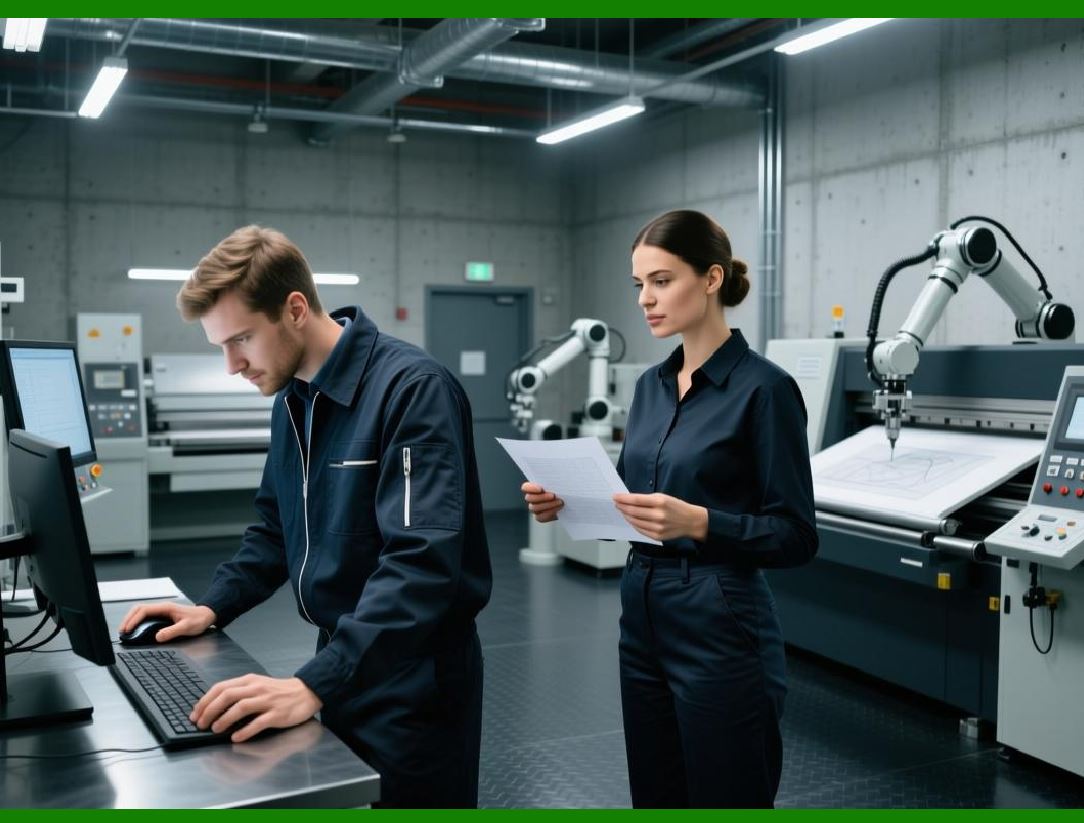
Via Co-Pilot is an industrial AI system designed to support operators in complex manufacturing environments. It provides explainable diagnostics, meaning it does not simply say that something is wrong. It explains why it believes something is wrong, what evidence supports the conclusion, and what options might be considered. This transparency builds operator confidence. The operator can evaluate the AI's reasoning, compare it with personal experience, and decide what to do. The AI does not shut down the line or change settings on its own. The human remains in control. |
5.2 Predictive Maintenance |
In predictive maintenance, AI analyzes sensor data from machines to predict when a component might fail. The output is a recommendation: inspect this bearing, replace this valve, schedule maintenance for this pump. Maintenance planners and engineers review these recommendations and decide how to act. They consider production schedules, spare parts availability, safety requirements, and their own knowledge of the equipment. The AI narrows the field of possibilities; the human chooses the action. |
5.3 Quality Control on Production Lines |
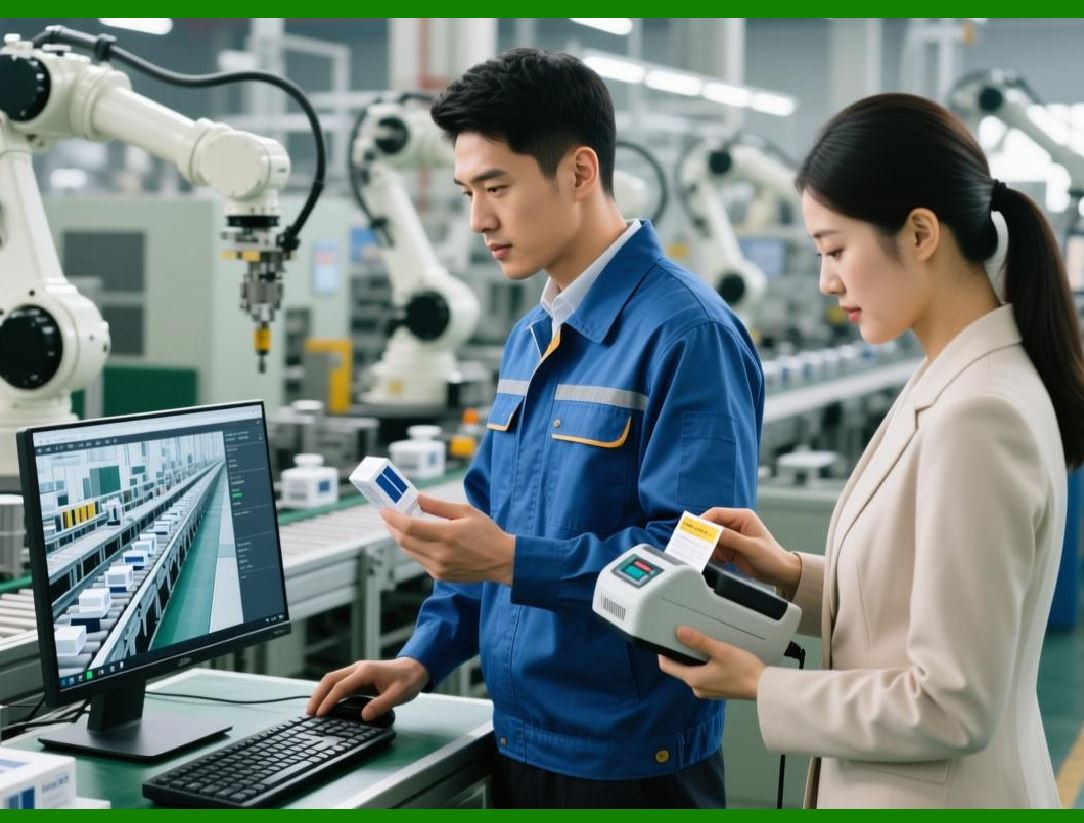
AI vision systems can inspect products at high speed and flag defects. In many factories, the AI flags items for human review rather than automatically rejecting them. A human inspector examines the flagged items and makes the final decision. This approach reduces the risk of rejecting good products due to false positives and ensures that unusual defects are handled with human judgment. Over time, the human's decisions provide feedback that improves the AI's accuracy. |
5.4 Collaborative Robots |
Collaborative robots, often called cobots, are designed to work alongside humans rather than replace them. They handle repetitive, strenuous, or dangerous tasks while humans handle tasks requiring judgment, dexterity, and adaptability. The human can override the robot, adjust its behavior, or stop it at any time. This is human-in-the-loop design in physical form. It improves productivity while keeping humans safe and in control. |
5.5 Why Manufacturing Embraces Human-in-the-Loop |
Manufacturing embraces human-in-the-loop because operational decisions have immediate physical consequences. A wrong action can damage equipment, injure workers, or disrupt production. Experienced operators possess tacit knowledge that is difficult to encode in AI systems. Regulations and safety standards often require human oversight. And perhaps most importantly, operators are more likely to use a system they trust, and they trust systems that explain themselves and respect their authority. |

|
6. Education: Teacher-Led AI |
6.1 AI as a Teaching Assistant |
In education, the most successful AI deployments emphasize teacher-led activities. AI tools help teachers create lesson plans, generate practice problems, grade routine assignments, and identify students who need extra help. But the teacher remains the instructional authority. The teacher decides what to teach, how to teach it, and how to assess learning. The AI handles time-consuming tasks so the teacher can focus on interaction, motivation, and deeper learning. |
6.2 Personalized Learning |
AI can personalize learning by adjusting the difficulty of exercises, recommending resources, and providing immediate feedback. But personalized learning works best when a teacher reviews the AI's recommendations and integrates them into a broader instructional plan. The teacher knows the student as a person. The teacher understands the classroom dynamics. The teacher can provide encouragement, address emotional needs, and make ethical judgments about what is appropriate for each student. |
6.3 Early Warning and Student Support |
Schools use AI to identify students at risk of falling behind or dropping out. The AI analyzes attendance, grades, and engagement data to generate alerts. But the response is human. A teacher, counselor, or administrator reaches out to the student, investigates the situation, and decides what support to provide. The AI identifies a signal; the human provides the intervention. |
6.4 Assessment and Integrity |
AI can help grade essays and exams, but many educators insist on human review for high-stakes assessments. This is partly about accuracy and partly about fairness. Human graders can recognize creativity, original thinking, and unusual approaches that AI might penalize. They can also consider context and circumstance. Human-in-the-loop assessment protects both students and the integrity of the educational process. |
6.5 Why Education Embraces Human-in-the-Loop |
Education embraces human-in-the-loop because learning is fundamentally a human relationship. Teachers do more than deliver content. They inspire, mentor, and care. They model curiosity and resilience. They create safe environments for risk-taking and growth. AI can support these activities, but it cannot replace them. The teacher remains the heart of the educational process. |

|
7. Finance: AI as Analyst, Human as Decision-Maker |
7.1 Credit Scoring and Loan Decisions |
In finance, AI is widely used to assess credit risk. It analyzes income, employment history, transaction data, and other factors to predict the likelihood of repayment. But in many jurisdictions and institutions, a human loan officer reviews the AI's recommendation before a final decision is made. This is especially important for borderline cases and for applicants who may be unfairly disadvantaged by historical biases in the data. The human can consider circumstances that the AI does not capture, such as a recent job change or a medical emergency. |
7.2 Fraud Detection |
AI systems monitor transactions in real time and flag suspicious activity. But flagged transactions are typically reviewed by human analysts before accounts are frozen or transactions are blocked. The human investigates the context, contacts the customer if necessary, and decides whether fraud has actually occurred. This reduces false positives, which can be extremely disruptive for customers, and ensures that genuine fraud is handled appropriately. |
7.3 Investment and Trading |
AI plays a growing role in investment analysis and algorithmic trading. But in many firms, humans set the overall strategy, define risk limits, and monitor the AI's behavior. When markets behave unusually, humans can intervene to prevent cascading losses. The AI executes; the human governs. This division of labor reflects the reality that financial markets are complex, adaptive systems where past patterns do not always predict future behavior. |
7.4 Regulatory Compliance |
Financial institutions use AI to detect money laundering, sanctions violations, and other compliance risks. But compliance officers review the AI's alerts and make the final decision about whether to report suspicious activity. This is required by regulation in many countries, and it reflects a broader principle: decisions with legal consequences require human accountability. |
7.5 Why Finance Embraces Human-in-the-Loop |
Finance embraces human-in-the-loop because financial decisions affect people's lives in profound ways. Access to credit, protection from fraud, and fair treatment are not just technical matters; they are ethical and legal matters. Regulators expect human oversight. Customers expect a human to be available when something goes wrong. And firms themselves benefit from human judgment in unusual market conditions. |
|
8. Transportation: Assistance, Not Autonomy |
8.1 Advanced Driver Assistance Systems |
In transportation, the most widely deployed AI systems are driver assistance technologies. They help with lane keeping, adaptive cruise control, automatic braking, and parking. But the driver remains responsible for the vehicle. The driver monitors the road, makes decisions, and can override the system at any time. This is human-in-the-loop design, and it reflects both technical limitations and regulatory requirements. |
8.2 Autonomous Vehicles and Safety Drivers |
Even in autonomous vehicle development, many companies use safety drivers who monitor the system and can take control if necessary. This is a form of human-in-the-loop testing. As the technology matures, the role of the safety driver may diminish, but for now, human oversight remains essential. The reason is simple: rare and unpredictable events are exactly where AI struggles most, and those events can be catastrophic. |
8.3 Rail and Aviation |
In rail and aviation, AI supports scheduling, routing, and maintenance. But safety-critical decisions remain with human controllers and pilots. Air traffic controllers use AI-generated information to manage traffic, but they make the final decisions about separation and sequencing. Pilots use automated systems for routine flight, but they remain in command and can take manual control at any time. This layered approach ensures that human judgment is available when it is most needed. |
8.4 Logistics and Fleet Management |
In logistics, AI optimizes routes, predicts delivery times, and manages inventory. But dispatchers and fleet managers review the AI's recommendations and make adjustments based on weather, traffic, driver availability, and customer needs. The AI provides efficiency; the human provides flexibility and judgment. |
8.5 Why Transportation Embraces Human-in-the-Loop |
Transportation embraces human-in-the-loop because safety is paramount. The consequences of error can be immediate and severe. Regulations require human responsibility. The public is skeptical of fully autonomous systems, especially in the early stages of deployment. And the complexity of real-world environments means that human judgment is often necessary to handle unexpected situations. |
|
9. Customer Service: AI Assists, Humans Resolve |
9.1 Chatbots and Virtual Assistants |
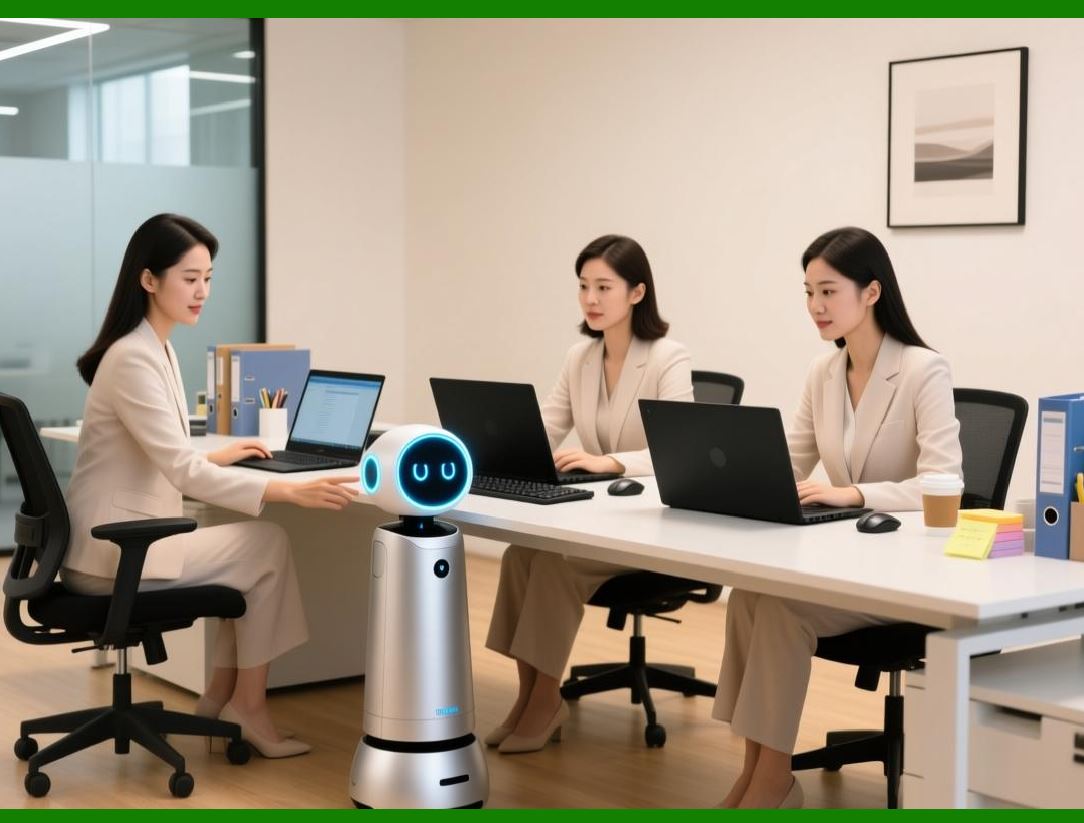
In customer service, AI-powered chatbots handle routine inquiries, provide information, and route complex issues to human agents. The chatbot does not replace the human; it frees the human to focus on cases that require empathy, negotiation, and creative problem-solving. When a customer asks for a human, the system transfers the conversation. This is human-in-the-loop design in action. |
9.2 Sentiment Analysis and Escalation |
AI can analyze customer sentiment in real time and flag conversations that are becoming negative or heated. The system can then escalate the conversation to a human supervisor or specialist. The human takes over and resolves the issue. The AI acts as an early warning system, not as the final authority. |
9.3 Knowledge Management |
AI helps human agents by surfacing relevant knowledge articles, suggesting responses, and summarizing customer history. But the human agent decides what to say and how to say it. The human builds rapport, demonstrates empathy, and makes judgment calls about exceptions and compromises. The AI makes the human more effective; it does not make the human unnecessary. |
9.4 Quality Assurance |
AI can monitor customer service interactions and flag ones that may need review. But human quality assurance specialists evaluate the interactions and provide coaching. The AI identifies patterns; the human provides context and feedback. This collaborative approach improves both agent performance and customer satisfaction. |
9.5 Why Customer Service Embraces Human-in-the-Loop |
Customer service embraces human-in-the-loop because customers are people, and people want to be treated as people. They want empathy, understanding, and flexibility. They want to feel heard. AI can handle routine tasks, but it cannot build relationships. The human agent remains essential for complex, emotional, and high-stakes interactions. |
|
10. Agriculture: AI Advises, Farmers Decide |
10.1 Precision Agriculture |
In agriculture, AI analyzes satellite imagery, weather data, and soil sensors to recommend when to plant, irrigate, and harvest. But farmers make the final decisions. They consider factors that AI may not capture, such as local market conditions, labor availability, equipment constraints, and personal experience with their land. The AI provides information; the farmer provides judgment. |
10.2 Pest and Disease Detection |
AI can identify pests and diseases from images of crops. But farmers decide whether and how to treat the problem. They consider the stage of growth, the weather forecast, the cost of treatment, and the risk of resistance. The AI detects; the farmer decides. |
10.3 Livestock Management |
AI monitors livestock health, behavior, and productivity. It can alert farmers to signs of illness or stress. But farmers and veterinarians make the final decisions about treatment and care. The AI provides early warning; the human provides intervention. |
10.4 Why Agriculture Embraces Human-in-the-Loop |
Agriculture embraces human-in-the-loop because farming is deeply context-dependent. Every field, every season, and every farm is different. Farmers possess knowledge that cannot be fully captured in data. And the consequences of decisions are long-lasting and sometimes irreversible. Human judgment remains essential. |
|
11. Cybersecurity: AI Detects, Humans Respond |
11.1 Threat Detection |
AI systems monitor networks for signs of intrusion, malware, and unusual behavior. They generate alerts when something suspicious is detected. But human security analysts investigate the alerts, determine whether they represent genuine threats, and decide how to respond. The AI narrows the field; the human makes the call. |
11.2 Incident Response |
When a security incident occurs, AI can help analyze the scope and impact. But the response is led by humans. They decide whether to isolate systems, notify authorities, contact customers, or take other actions. These decisions have legal, operational, and reputational consequences that require human judgment. |
11.3 Vulnerability Management |
AI can scan for vulnerabilities and prioritize them based on severity and exploitability. But human security teams decide which vulnerabilities to patch first, balancing risk against operational disruption. The AI provides analysis; the human provides strategy. |
11.4 Why Cybersecurity Embraces Human-in-the-Loop |
Cybersecurity embraces human-in-the-loop because attackers are creative and adaptive. They constantly change tactics to evade detection. AI can recognize known patterns, but humans are better at recognizing novel attacks and responding to evolving threats. And the consequences of a wrong decision can be severe, making human accountability essential. |

|
12. Retail and E-Commerce: AI Recommends, Humans Curate |
12.1 Product Recommendations |
AI recommends products based on browsing history, purchase behavior, and similar users. But human merchandisers and curators often review and adjust these recommendations to ensure they align with brand values and business strategy. The AI personalizes; the human curates. |
12.2 Inventory and Supply Chain |
AI forecasts demand and recommends inventory levels. But human planners review these recommendations and adjust for promotions, seasonality, and supplier reliability. The AI predicts; the human plans. |
12.3 Pricing |
AI can recommend prices based on demand, competition, and inventory. But human pricing managers review these recommendations and consider factors such as brand positioning, customer perception, and legal constraints. The AI optimizes; the human governs. |
12.4 Why Retail Embraces Human-in-the-Loop |
Retail embraces human-in-the-loop because retail is about relationships and brand trust. Decisions about what to sell, how to price it, and how to present it affect customer perception and loyalty. Human judgment ensures that AI-driven decisions align with broader business goals and values. |

|
13. Energy and Utilities: AI Optimizes, Humans Govern |
13.1 Grid Management |
AI helps manage electricity grids by forecasting demand, integrating renewable sources, and optimizing distribution. But human operators monitor the grid and make final decisions about load balancing, outages, and emergencies. The AI optimizes; the human governs. |
13.2 Predictive Maintenance |
AI predicts when equipment such as transformers and turbines may fail. But human engineers decide when and how to perform maintenance, balancing cost, risk, and operational needs. The AI predicts; the human prioritizes. |
13.3 Safety and Environmental Compliance |
AI monitors emissions, safety systems, and environmental conditions. But human specialists decide how to respond to anomalies and how to report to regulators. The AI monitors; the human complies. |
13.4 Why Energy Embraces Human-in-the-Loop |
Energy embraces human-in-the-loop because the consequences of failure can be catastrophic. Power outages, equipment failures, and environmental incidents affect millions of people. Human judgment and accountability are essential for managing these risks. |

|
14. Public Administration: AI Supports, Humans Decide |
14.1 Benefits and Eligibility |
AI can help determine eligibility for public benefits by analyzing data and applying rules. But human caseworkers review decisions, especially those that deny benefits or affect vulnerable people. The AI screens; the human decides. |
14.2 Policing and Public Safety |
AI can analyze crime data and predict hotspots. But human commanders decide how to deploy resources, and human officers make decisions in the field. The AI informs; the human acts. |
14.3 Emergency Response |
AI can help prioritize emergency calls and allocate resources. But human dispatchers and responders make the final decisions. The AI supports; the human saves lives. |
14.4 Why Public Administration Embraces Human-in-the-Loop |
Public administration embraces human-in-the-loop because government decisions affect people's rights and well-being. Fairness, transparency, and accountability are essential. Citizens expect human officials to be responsible for decisions that affect them. |

|
15. Risks of Removing Humans from the Loop |
15.1 Errors Without Recourse |
When AI acts autonomously, errors can occur without anyone noticing until damage is done. A wrong diagnosis, a wrong trade, a wrong denial of benefits, or a wrong safety decision can have serious consequences. Human-in-the-loop design provides a check against such errors. |
15.2 Bias and Discrimination |
AI systems can perpetuate or amplify biases present in their training data. Without human review, biased decisions can go unchallenged. Human-in-the-loop design allows people to notice and correct unfair outcomes. |
15.3 Loss of Skills |
If humans are removed from decision-making, they may lose the skills needed to intervene when something goes wrong. Pilots who rely too much on automation may struggle to take manual control in an emergency. Clinicians who defer too much to AI may lose diagnostic skills. Human-in-the-loop design keeps skills sharp. |
15.4 Accountability Gaps |
When AI makes decisions autonomously, it can be difficult to determine who is responsible when something goes wrong. Human-in-the-loop design ensures that a responsible person is always identifiable. |
15.5 Erosion of Trust |
People are less likely to trust systems that make decisions without human involvement, especially when those decisions affect their lives. Human-in-the-loop design builds and maintains trust. |

|
16. Designing Effective Human-in-the-Loop Systems |
16.1 Clear Roles and Responsibilities |
Effective human-in-the-loop systems define exactly what the AI does and what the human does. The human knows when to review, when to approve, and when to override. The AI knows what information to provide and when to escalate. |
16.2 Explainability |
The AI should explain its recommendations in terms that humans can understand. This includes the evidence it used, the reasoning it followed, and the confidence it has. Explainability builds trust and enables effective review. |
16.3 Appropriate Timing |
The human should be involved at the right time. Too early, and the human lacks information. Too late, and the decision is already made. Effective systems provide information when the human needs it and allow enough time for review. |
16.4 Feedback Mechanisms |
The system should make it easy for humans to provide feedback. Corrections, overrides, and comments should be captured and used to improve the AI. This creates a learning loop that benefits both the human and the AI. |
16.5 Training and Support |
Humans need training to work effectively with AI. They need to understand what the AI can and cannot do, how to interpret its outputs, and when to override it. They also need organizational support to make decisions that may go against the AI's recommendations. |
16.6 Monitoring and Evaluation |
Organizations should monitor human-in-the-loop systems to ensure they are working as intended. This includes tracking how often humans override the AI, how often they agree, and what outcomes result. This data can guide improvements. |
|
17. Industry Comparisons: Common Patterns and Differences |
17.1 Common Patterns |
Across industries, several patterns appear consistently. First, AI is used for analysis, prediction, and recommendation, while humans make final decisions. Second, explainability is valued because it builds trust and enables effective review. Third, humans are kept in the loop for high-stakes, novel, and ethical decisions. Fourth, feedback from humans is used to improve AI systems. Fifth, regulation and professional standards often require human accountability. |
17.2 Differences |
There are also differences. In healthcare, the emphasis is on patient safety and professional accountability. In manufacturing, the emphasis is on operational reliability and worker safety. In education, the emphasis is on student development and teacher authority. In finance, the emphasis is on regulatory compliance and fairness. In transportation, the emphasis is on safety and public trust. In customer service, the emphasis is on empathy and customer satisfaction. In agriculture, the emphasis is on local context and long-term sustainability. In cybersecurity, the emphasis is on adaptability and rapid response. In retail, the emphasis is on brand trust and customer loyalty. In energy, the emphasis is on reliability and environmental responsibility. In public administration, the emphasis is on fairness and democratic accountability. |
17.3 What These Differences Teach |
These differences show that human-in-the-loop design is not a one-size-fits-all solution. It must be tailored to the values, risks, and requirements of each industry. But the underlying principle remains the same: AI should enhance human judgment, not replace it. |

|
18. The Future of Human-in-the-Loop |
18.1 Increasing Capability, Increasing Responsibility |
As AI becomes more capable, the temptation to remove humans from the loop will grow. But increasing capability also brings increasing responsibility. The more powerful the AI, the more important it is to have human oversight. The goal is not to limit AI but to use it wisely. |
18.2 New Forms of Collaboration |
The future may bring new forms of human-AI collaboration. Instead of reviewing AI outputs, humans may work alongside AI in real time, each contributing different strengths. Interfaces may become more natural, allowing humans and AI to communicate more effectively. The boundary between human and AI decision-making may become more fluid, but the human must always retain ultimate authority. |
18.3 Regulation and Standards |
Governments and professional bodies are developing regulations and standards for AI. Many of these emphasize human oversight, transparency, and accountability. These regulations will shape how human-in-the-loop design is implemented in practice. |
18.4 Education and Workforce Development |
As AI becomes more prevalent, education and workforce development must adapt. People need to learn how to work with AI, how to evaluate its outputs, and how to make decisions that combine human judgment with AI insights. This is a new kind of literacy, and it will be essential in almost every field. |
18.5 Ethical and Social Considerations |
The future of human-in-the-loop design is not just a technical matter. It is an ethical and social matter. How much autonomy should AI haveWho decidesHow do we ensure that AI benefits everyone, not just a fewThese questions require public discussion and democratic decision-making. Human-in-the-loop design is one way to ensure that these decisions remain in human hands. |
|
19. Detailed Summary |
This chapter has argued that human-in-the-loop design is non-negotiable for successful AI deployment across industries. The evidence from healthcare, manufacturing, education, finance, transportation, customer service, agriculture, cybersecurity, retail, energy, and public administration consistently shows that AI performs best when it enhances human judgment rather than replacing it. |
In healthcare, systems like TrustedMDT keep the human as the final decision-maker. AI supports diagnosis, treatment planning, and early warning, but clinicians remain responsible for patient care. In manufacturing, Via Co-Pilot builds operator confidence through explainable diagnostics and collaborative workflows. AI predicts maintenance needs and flags quality issues, but operators and engineers decide what to do. In education, AI assists teachers with planning, grading, and personalized learning, but teachers remain the instructional authority. In finance, AI analyzes credit risk, detects fraud, and supports investment decisions, but humans make the final calls. In transportation, AI assists drivers and operators, but humans remain responsible for safety-critical decisions. In customer service, AI handles routine inquiries and routes complex issues to human agents, who provide empathy and resolution. In agriculture, AI advises on planting, irrigation, and pest control, but farmers make the decisions. In cybersecurity, AI detects threats, but human analysts investigate and respond. In retail, AI recommends products and prices, but human curators ensure alignment with brand values. In energy, AI optimizes grid management and predicts maintenance, but human operators govern. In public administration, AI supports eligibility decisions and emergency response, but humans remain accountable. |
The reasons humans remain essential are enduring. Humans provide accountability, context, common sense, ethical judgment, adaptability in novel situations, trust, and continuous improvement through feedback. Removing humans from the loop creates risks of errors without recourse, bias and discrimination, loss of skills, accountability gaps, and erosion of trust. |
Effective human-in-the-loop systems require clear roles, explainability, appropriate timing, feedback mechanisms, training, and monitoring. They must be tailored to the values and risks of each industry. And they must be supported by regulation, education, and public discussion. |
The future of AI is not a choice between human and machine. It is a collaboration. The most successful deployments will be those that combine the speed, scale, and consistency of AI with the judgment, empathy, and accountability of humans. Human-in-the-loop is not a temporary compromise. It is a permanent principle. It is non-negotiable. |
 cs@easiersoft.com