Chapter 55: The Multi-Agent Future |
A Brief Summary |
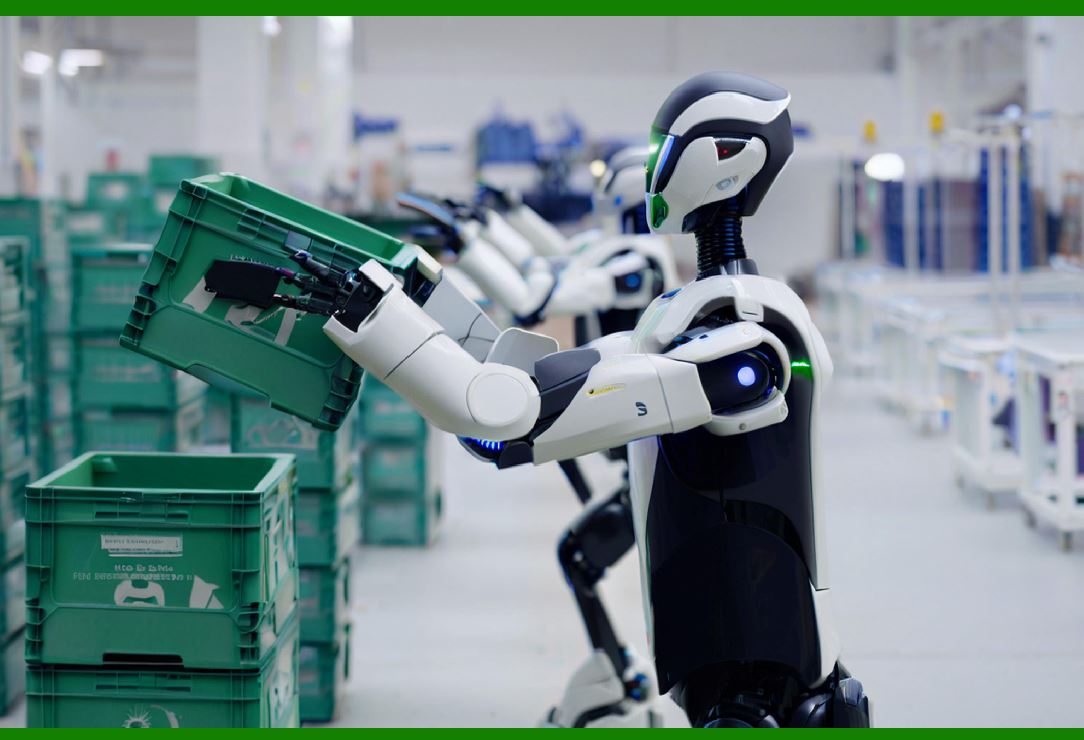
For most of the short history of practical artificial intelligence, the dominant metaphor has been the single, brilliant assistant. You ask a question, it answers. You give it a task, it attempts the task. This model has produced remarkable tools, but it is also hitting a ceiling. The most valuable problems in business, science, and medicine are rarely solved by a single generalist working alone in isolation. They are solved by teams. A cancer treatment plan emerges from a tumor board of radiologists, pathologists, surgeons, and oncologists. A major financial proposal is assembled by researchers, strategists, and compliance officers. A factory floor runs because schedulers, machine operators, and logistics coordinators negotiate constantly. |
The next architectural shift in enterprise AI is the transition from single agents to orchestrated teams of specialized agents. This chapter examines that shift. It looks at how multi-agent systems are already being deployed in healthcare, finance, manufacturing, supply chain operations, cybersecurity, and customer service. It explores the technical standards that are making these systems interoperable. And it concludes with a detailed synthesis of what this means for the competitive landscape of enterprise AI. |
|
1. The Limits of the Single-Agent Paradigm |
1.1 Why One Model Is Rarely Enough |
A single large language model, no matter how capable, faces inherent constraints when applied to complex, multi-step, high-stakes workflows. The first is context. Every model has a finite context window, and as an agent accumulates information, the window fills. Performance degrades. The model begins to lose track of earlier instructions, forgets constraints, and hallucinates details that were never present . |
The second constraint is depth. A single agent must be a generalist. It cannot simultaneously possess the deep domain expertise of a radiologist, the procedural knowledge of a surgeon, and the regulatory awareness of a hospital administrator. When forced to handle all three roles, it performs each of them adequately at best. The system may guess when it should reason, and approximate when it should cross-check . |
The third constraint is reliability. In high-stakes environments, a single point of failure is unacceptable. If one model hallucinates, the entire workflow is compromised. There is no redundancy, no cross-validation, no mechanism for one part of the system to catch the errors of another. |
1.2 The Team as the Natural Unit of Work |
Human organizations solved these problems long ago by dividing labor. Specialists develop deep expertise in narrow domains. Teams coordinate through structured communication protocols. Checks and balances exist to catch errors before they propagate. The multi-agent architecture for AI is a direct translation of this organizational insight into software. |
A multi-agent system consists of multiple autonomous or semi-autonomous AI agents, each with its own specialized role, knowledge base, and set of tools. These agents communicate, negotiate, and coordinate to accomplish tasks that no single agent could handle alone . |

|
2. Healthcare: The TrustedMDT Example |
2.1 The Problem of the Tumor Board |
Multidisciplinary tumor board meetings are the gold standard for cancer treatment planning in the United Kingdom and increasingly worldwide. These meetings bring together radiologists, pathologists, surgeons, and oncologists to review diagnostic results and formulate treatment recommendations. The challenge is capacity. A review by Cancer Research UK found that teams often have less than two minutes of discussion time per patient. Critical information gaps lead to postponements in seven percent of cases. The result is treatment delays, missed research opportunities, and clinician burnout . |
2.2 Three Agents in Concert |
TrustedMDT, developed by researchers at the University of Oxford in collaboration with Microsoft, is one of the earliest deployments of agentic AI within a clinically realistic tumor board setting. The system comprises three specialized agents working in concert . |
The Clinical Summarization Agent analyzes electronic health records, including radiology, pathology, and biomarker tests, to produce concise, tumor-specific summaries. The Cancer Staging Agent applies international standards to determine disease stage. The Treatment Planning Agent drafts evidence-based recommendations aligned with professional guidelines . |
This is a hierarchical architecture. Each agent contains a dedicated team of sub-agents grounded in specific data with access to tools. As Dr. Andrew Soltan, the lead investigator, explains: 'This granular approach reduces the risk of guessing because the system is required to reason through guidelines and explicitly cross-check its work against the patient's history' . |
2.3 Integration into Clinical Workflow |
The technology was embedded directly into Microsoft Teams, the environment already used in tumor boards at Oxford University Hospitals. This positions the AI as a digital collaborator rather than a disruptive new interface. Clinicians can provide new information in real time and probe the rationale of recommendations. The human remains the final decision-maker . |
A two-phase evaluation is underway. Phase One validates the tool using anonymous cancer cases, benchmarking AI outputs against expert decisions. Phase Two deploys the system in simulated tumor boards with clinicians to assess user experience and workflow integration . |
2.4 Broader Clinical Multi-Agent Research |
The TrustedMDT model is part of a wider movement. Researchers have proposed hierarchical multi-agent systems that dynamically orchestrate clinical workflows, routing requests either to an operational pipeline for patient triage or to a retrieval-augmented generation pipeline for disease-specific reports . Other work has introduced the concept of 'Vibe Medicine,' a self-evolving multi-agent framework that breaks clinical decisions into diagnostic reasoning, treatment planning, and continuous optimization roles, with a safety sandbox to constrain model updates . |
|
3. Finance: Multi-Agent Systems in Banking and Capital Markets |
3.1 The Shift Toward Autonomous Financial Intelligence |
The financial sector has consistently embraced computing technologies as an early adopter. Traditional AI in finance, including credit scoring, fraud detection, algorithmic trading, and robo-advisory platforms, has primarily been sophisticated decision-support systems requiring substantial human input and intervention . |
The new paradigm is different. Agentic AI in banking and capital markets is moving from decision-support to autonomous systems capable of self-directing optimization in rapidly changing markets. Multi-agent collaboration architectures are central to this shift, enabling specialized agents to handle algorithmic execution, risk hedging, fraud detection, and regulatory oversight in coordination . |
3.2 Japan's Financial Multi-Agent Deployments |
Japan has emerged as a notable testbed for multi-agent financial systems. At Bloomberg's Code Crunch Japan event, seven of Japan's leading financial institutions demonstrated proprietary applications that move beyond theoretical models. Among the featured applications was a multi-agent system that integrates internal and Bloomberg data and uses AI to automate information search, summarization, and visualization . |
More recently, Sumitomo Mitsui Banking Corporation and Sakana AI announced the development of a multi-agent application for automated proposal generation. The system autonomously coordinates research and strategy formulation for large corporate proposals. A quality evaluation and fact-checking agent operates independently to verify generated content against primary sources, suppressing hallucinations and automatically citing sources to support human final judgment . |
The efficiency gains are substantial. Proposal creation that previously required one to two weeks is expected to be reduced to tens of minutes or a few hours. The bank positions this as a first step toward an 'Agentic AI Fabric' that will coordinate across business domains . |
3.3 Transparent Investment Analysis |
Academic work has also advanced multi-agent architectures for financial analysis. Researchers have proposed intelligent multi-agent systems that automate equity research, which traditionally relies on heavy manual labor and subjective judgment. These systems use specialized agents for collecting and evaluating financial data, earnings reports, and market sentiment, acting as teams to accomplish discrete problems in the research pipeline . |
The key advantage in finance is not just speed but auditability. In regulated environments, the ability to trace how a recommendation was generated, which data sources were consulted, and which reasoning steps were followed is as important as the recommendation itself. |

|
4. Manufacturing and Industry: Agents on the Shop Floor |
4.1 The Digital Twin Shop Floor |
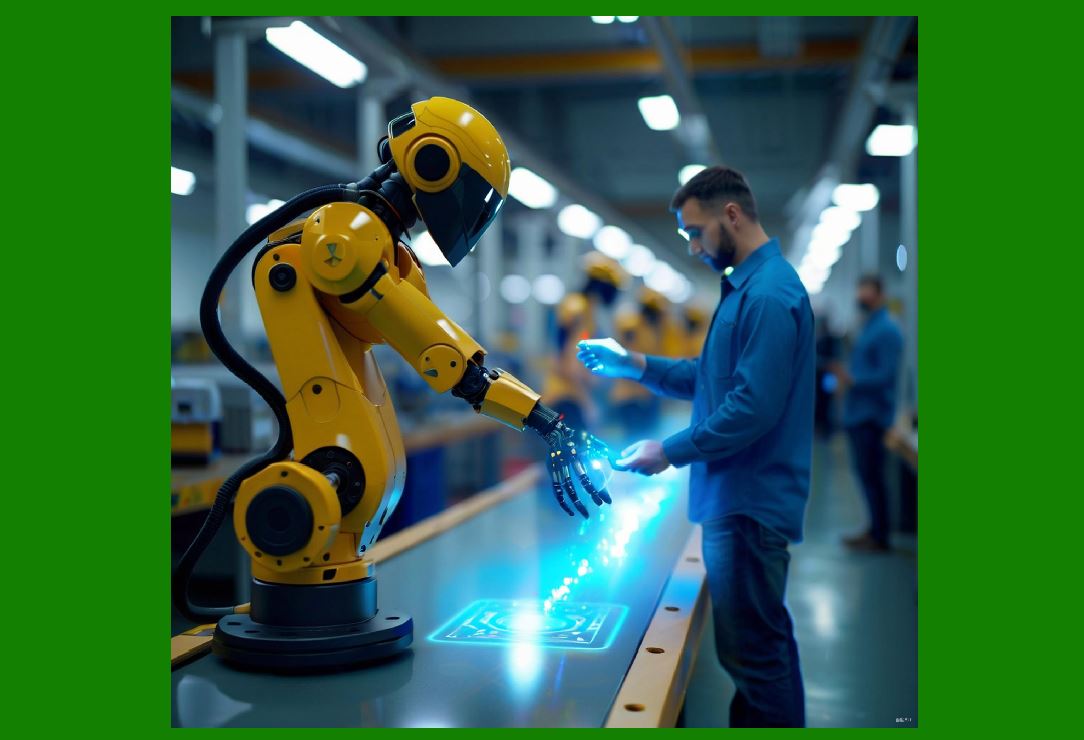
Manufacturing, particularly as it moves toward the Industry 5.0 paradigm, faces a dual challenge: increasing complexity of production systems and the need for human-machine symbiosis. Multi-agent systems integrated with digital twins are emerging as a solution. |
A digital twin is a virtual representation of a physical shop floor, synchronized with real-time data. When AI agents are deployed within the digital twin, they can make production decisions autonomously while keeping human workers focused on high-value creative and supervisory activities . |
4.2 Vision-Language Agents for Production Control |
One framework proposes a multi-agent system where diverse agents are enabled by vision-language models. These agents are compatible with intelligent equipment within the digital twin shop floor. A self-organized negotiation mechanism allows agents to engage in inter-agent negotiation for job assignment. Real-time status data from manufacturing resources is collected and fed into deployed agents, which execute manufacturing operations . |
The vision-language capability is significant. Agents can analyze multimodal shop floor information, including visual data and textual instructions, and formulate context-aware, task-adaptive decisions. By automating routine decision-making tasks, the framework reduces human cognitive load and aligns with Industry 5.0's vision of human-machine collaboration . |
4.3 Adaptive Task Planning |
Other research has focused on adaptive task planning and coordination in multi-agent manufacturing systems using large language models. The challenge here is dynamic environments. Production schedules change. Machines break down. Orders arrive unexpectedly. A multi-agent system with LLM-powered reasoning can adapt more fluidly than traditional rule-based scheduling systems . |
|
5. Supply Chain: Consensus-Seeking Among Autonomous Agents |
5.1 The Historical Barrier to Multi-Agent Supply Chains |
Supply chain management has long been recognized as a domain where multi-agent systems could theoretically add value. The global supply chain ecosystem is complex, characterized by multiple types of relationships and network flows. A supply chain is a system where no single entity has full visibility or control. Consensus must be negotiated among parties with partially aligned and partially conflicting interests . |
Yet multi-agent systems were historically deemed practically infeasible to implement and run, especially for small and medium-sized enterprises with limited resource budgets. The complexity of building and maintaining coordinated agent systems was too high . |
5.2 LLM Agents Change the Calculus |
Recent developments in large language models have changed this calculus. Researchers have proposed modular consensus-seeking frameworks for LLM agents in sequential supply chain settings. These frameworks define both the agent-level architecture, including perception, memory, and decision-making, and the inter-agent communication protocols for information sharing and negotiation . |
The key insight is that LLM agents can engage in consensus-seeking not only with each other but also with humans. This is critical because not all companies will have LLM agents. A firm with advanced agent capabilities must still be able to interact with human counterparts at partner organizations. The flexibility of LLMs enables this mixed human-agent negotiation . |
5.3 Empirical Validation |
Researchers have conducted empirical case studies using sequential supply chain inventory replenishment tasks. The results highlight under which circumstances using tools within the agent framework achieves significant performance enhancements, and in which cases it is best to prioritize sophisticated multi-agent communication over tool usage . |
This is a nuanced finding. It suggests that the optimal architecture for a multi-agent supply chain system depends on the specific context. Sometimes agents need better tools. Sometimes they need better communication with each other. |

|
6. Cybersecurity: Orchestrated Red Teaming |
6.1 The Limits of Single-Model Security Analysis |
Cybersecurity is a domain where the stakes of AI performance are exceptionally high. Existing approaches using large language models for vulnerability discovery have shown promise but struggle with realistic security analysis. The reasons are structural: limited interaction, weak execution grounding, and a lack of experience reuse . |
Cybersecurity requires much more than generating text. Agents must reason about code, interact with tools, execute actions, analyze feedback, and iteratively refine strategies. This is inherently a multi-step, multi-role process. |
6.2 Co-RedTeam: A Multi-Agent Security Framework |
Co-RedTeam is a security-aware multi-agent framework designed to mirror real-world red-teaming workflows. It integrates security-domain knowledge, code-aware analysis, execution-grounded iterative reasoning, and long-term memory. The system decomposes vulnerability analysis into coordinated discovery and exploitation stages . |
Agents in this framework plan, execute, validate, and refine actions based on real execution feedback. They learn from prior trajectories. Evaluations on challenging security benchmarks demonstrate over sixty percent success rate in vulnerability exploitation and more than ten percent absolute improvement in vulnerability detection compared to strong baselines . |
The ablation studies confirm the critical role of execution feedback, structured interaction, and memory for building robust and generalizable cybersecurity agents. These are precisely the capabilities that a multi-agent architecture provides and a single model cannot . |

|
7. Customer Service: Modular Ticket Automation |
7.1 The Volume and Complexity Problem |
Customer service operations increasingly struggle with rising volume and complexity of support tickets. Traditional rule-based workflows and static machine learning models lack contextual adaptability. A ticket about a billing issue is different from a ticket about a technical incident, and the response strategies are different . |
7.2 Specialized Agents for Ticket Workflows |
A modular architecture integrating multi-agent systems orchestrated by large language models has been proposed and evaluated. The system leverages specialized agents for data ingestion, ticket classification into categories such as incident, request, change, and problem, and the generation of contextually appropriate responses . |
Experimental evaluations on technical support ticket datasets demonstrate an average classification accuracy of eighty-five percent and a mean cosine similarity of seventy-five percent, capturing semantic alignment beyond lexical overlap. These results highlight the effectiveness of combining LLM-driven reasoning with multi-agent coordination to automate customer support workflows . |

|
8. The Standardization Layer: MCP and A2A |
8.1 The Interoperability Problem |
Multi-agent systems are only as valuable as their ability to communicate. If agents from different vendors cannot exchange information or delegate tasks, the architecture fragments into isolated islands of automation. This is the classic integration problem, and it is being addressed through two complementary protocols. |
8.2 Model Context Protocol (MCP) |
The Model Context Protocol is an open protocol that enables seamless integration between LLM applications and external data sources and tools. MCP provides a standardized way for applications to share contextual information with language models, expose tools and capabilities to AI systems, and build composable integrations and workflows . |
The protocol uses JSON-RPC messages to establish communication between hosts, clients, and servers. Servers offer resources, prompts, and tools to clients. Extensions add capabilities such as asynchronous task execution and rich, structured instructions for agent workflows . |
Security is a first-class concern. MCP emphasizes user consent and control, data privacy, and tool safety. Users must explicitly consent to data access and operations. Tools represent arbitrary code execution and must be treated with appropriate caution. Hosts must obtain explicit user consent before invoking any tool . |
8.3 Agent2Agent Protocol (A2A) |
While MCP focuses on connecting models to tools and data, the Agent2Agent protocol focuses on agent-to-agent collaboration. A2A was designed specifically for the era of generative AI, addressing architectural challenges that standard APIs cannot handle . |
The first challenge is the secure boundary. In enterprise scenarios, agents often need to leverage sensitive data or proprietary processes that cannot be exposed to external systems. A2A facilitates a 'black box' handoff where a specialized internal agent maintains its own secure environment. The requesting agent gets the output it needs, while proprietary data and logic remain encapsulated . |
The second challenge is context pollution. If a primary agent must handle complex multi-step dependencies, its context window fills, leading to degraded performance. With A2A, specialized peer agents handle their own dependencies without cluttering the primary agent's memory . |
The third challenge is dynamic autonomy. When you call an API, it returns data or fails. When an agent calls an A2A peer, it initiates a collaboration. The receiving agent can understand intent, refine the plan, push back on incomplete requests, and ask clarifying questions . |
8.4 Ecosystem Adoption |
A2A has attracted support from a broad ecosystem of enterprise technology providers, including Salesforce, SAP, ServiceNow, PayPal, MongoDB, and many others. The protocol enables what Google describes as a 'collaborative agentic ecosystem' where agents built by different teams, vendors, or managed services can interoperate . |
A practical example is FoldRun, a standalone agentic interface for protein structure prediction. Researchers can hand off a protein sequence to FoldRun from any A2A-compliant environment. FoldRun manages the long-running, autonomous tasks, choosing between different prediction models based on confidence and molecule type. The primary agent remains free to manage the rest of the research pipeline . |

|
9. Orchestration as the Competitive Frontier |
9.1 The Emerging Enterprise Pattern |
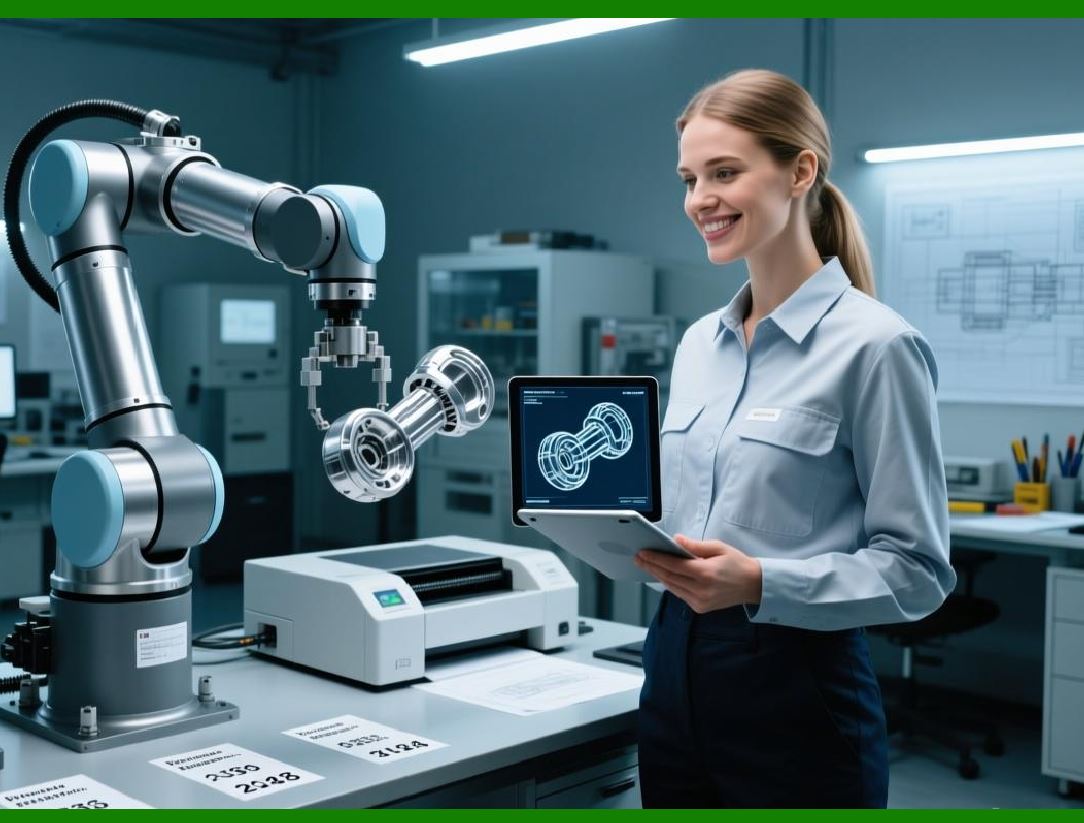
Gartner has identified 'universal orchestration' as an emerging architectural pattern in enterprise automation. The core insight is that the real risk is not that agents fail, but that without orchestration, enterprises hard-code agent logic into specific applications, creating 'agent monoliths' that are impossible to upgrade or swap later . |
A universal orchestrator acts as a control plane for multi-agent, human, and bot automation within shared workflows. It enables AI agents to operate within defined governance, security, and escalation boundaries. It provides centralized visibility into automation performance, exceptions, and outcomes . |
9.2 Separation of Orchestration from Execution |
The architectural principle is separation. By separating orchestration from execution, enterprises gain flexibility to evolve automation technologies without rearchitecting end-to-end processes. This separation reduces automation lock-in, improves resilience to vendor change, and enables more controlled adoption of autonomous agents as enterprise risk tolerances evolve . |
Early enterprise patterns illustrate this shift. In financial services, teams piloting AI agents for claims or servicing workflows rely on a separate orchestration layer to sequence agent actions, invoke RPA bots for legacy systems, and route exceptions to human reviewers. In large enterprises with multiple automation platforms, orchestration coordinates workflows across business units without forcing migration to a single technology . |
9.3 Governance and Auditability |
In regulated industries, orchestration layers are emerging as the mechanism to impose auditability and policy controls across otherwise independent automation assets. Research on normative multi-agent systems has formalized how governance can be embedded in agent architectures. Concepts from institutional economics, such as Elinor Ostrom's design principles for governing shared resources, have been translated into agent system requirements . |
These include clearly defined boundaries for agent authority, graduated sanctions for boundary violations, and conflict resolution mechanisms that are rapid and locally accessible. In practice, this means an orchestration layer that can escalate decisions to human reviewers with a structured dossier when an agent's justification gap falls in an intermediate range, while automatically approving routine cases . |
|
10. Detailed Summary: The Multi-Agent Future in Synthesis |
The transition from single-agent AI to orchestrated multi-agent systems is not a speculative future. It is happening now, across industries, in production environments where the stakes are real. |
10.1 The Architectural Shift |
The fundamental insight driving this shift is that complex problems require teams. A single model, no matter how capable, faces inherent constraints in context capacity, domain depth, and reliability. Multi-agent architectures address these constraints by decomposing complex tasks into specialized roles, each handled by an agent with focused expertise, appropriate tools, and bounded authority. Coordination protocols enable these agents to communicate, negotiate, and cross-check each other's work. |
10.2 Cross-Industry Evidence |
The evidence for this shift spans multiple industries. In healthcare, Oxford's TrustedMDT demonstrates how three specialized agents can support tumor boards by summarizing clinical records, staging cancer, and drafting treatment recommendations, all integrated into the existing clinical workflow with humans retaining final decision authority. In finance, Japanese institutions have deployed multi-agent systems for automated proposal generation and investment research, with independent fact-checking agents ensuring accuracy. In manufacturing, vision-language agents negotiate job assignments on digital twin shop floors. In supply chain, LLM agents engage in consensus-seeking across organizational boundaries. In cybersecurity, multi-agent red teams orchestrate vulnerability discovery and exploitation with execution-grounded reasoning. In customer service, specialized agents classify tickets and generate contextually appropriate responses. |
10.3 The Standardization Foundation |
The emergence of MCP and A2A as open protocols provides the interoperability layer that makes multi-agent ecosystems feasible. MCP standardizes how models connect to data and tools. A2A standardizes how agents collaborate with each other, with secure boundaries, zero context pollution, and dynamic autonomy. Together, these protocols enable a modular architecture where specialized agents from different vendors can be composed into workflows without custom integration for every pair. |
10.4 The Orchestration Imperative |
The competitive frontier in enterprise AI is shifting from model capability to orchestration capability. Building a better single model is increasingly a commodity exercise. Building a system that can reliably orchestrate dozens of specialized agents, invoke human review at the right moments, maintain audit trails for regulatory compliance, and evolve without rearchitecting is where durable advantage lies. |
Gartner's analysis of universal orchestration points to a future where orchestration is separated from execution, providing flexibility, governance, and visibility across a heterogeneous landscape of agents, bots, and human tasks . The organizations that master this layer will be able to adopt new agent capabilities as they emerge, swap out underperforming components, and maintain control over costs and risks. Those that do not will find themselves locked into brittle agent monoliths that cannot adapt. |
10.5 The Human Role |
A consistent theme across all deployments is that the human role does not disappear. It changes. In the tumor board, the human clinician remains the final decision-maker, with the AI providing summaries, staging, and draft recommendations. In financial proposals, the human banker reviews AI-generated content that has been fact-checked and cited. In manufacturing, automation frees workers for creative and supervisory activities. |
The multi-agent future is not a future without humans. It is a future where humans work with teams of specialized AI agents, each contributing its capabilities, under human oversight and governance. |
10.6 Implications for Enterprise Strategy |
For enterprise leaders, the implications are several. First, the unit of AI adoption is shifting from the single model or application to the orchestrated system. Procurement and architecture decisions must account for how agents will communicate and be coordinated, not just what each agent can do in isolation. |
Second, governance and auditability are not afterthoughts. They are architectural requirements. In regulated industries, the ability to trace decisions, explain reasoning, and demonstrate compliance is as important as the decisions themselves. |
Third, the technology stack is maturing rapidly. Protocols like MCP and A2A provide the plumbing. Orchestration platforms provide the control plane. The organizations that invest in understanding and shaping this architecture now will be positioned to capture value as the ecosystem matures. |
The multi-agent future is not a distant horizon. It is the present trajectory of enterprise AI. The organizations that recognize this and build accordingly will define the next competitive frontier. |
|
Chapter Summary |
This chapter has examined the multi-agent future of enterprise AI. It began by identifying the limits of single-agent systems in complex, high-stakes domains. It surveyed concrete deployments across healthcare, finance, manufacturing, supply chain, cybersecurity, and customer service. It explained how MCP and A2A protocols provide the interoperability foundation for agent ecosystems. It analyzed orchestration as the emerging competitive frontier, drawing on Gartner's research and academic work on normative multi-agent governance. Finally, it synthesized these threads into a strategic picture: the organizations that master the design, deployment, and governance of cooperating agent systems will hold a durable advantage in the coming era of enterprise AI. The technology is ready. The protocols are standardizing. The question is which enterprises will move first. |
 cs@easiersoft.com