Chapter 65: The Human Cost of AI Efficiency |
1. Introduction: When Efficiency Reshapes Lives |
Every AI deployment that reduces labor requirements raises questions about workforce transition. Retail AI that handles customer service reduces staffing needs. Manufacturing AI that enables self-healing factories reduces maintenance headcount. Healthcare AI that automates documentation reduces administrative roles. The efficiency gains are real; so are the social consequences. Responsible deployment requires attention to workforce impact, not just productivity metrics. |
This chapter examines the human dimension of AI-driven efficiency across manufacturing and industrial operations, while also drawing on examples from retail, healthcare, logistics, and other sectors. The goal is not to argue against automation, but to understand its consequences and to identify pathways for responsible transition. The chapter is organized into numbered sections so that readers can navigate the material easily. It begins with a summary of the core issues, then explores sector-specific examples, then discusses the categories of workers affected, the geography of impact, the limits of retraining, the role of policy and corporate responsibility, and finally offers a detailed summary. |
|
2. A Short Summary of the Core Problem |
AI efficiency creates a paradox. The same systems that boost productivity, reduce errors, and lower costs also displace workers. In manufacturing, predictive maintenance and self-healing factories reduce the need for human maintenance crews. In retail, chatbots and automated checkout reduce cashier and customer service roles. In healthcare, AI documentation tools reduce administrative staffing. In logistics, autonomous vehicles and warehouse robots reduce drivers and pickers. The efficiency gains are concentrated in the hands of firms that deploy AI, while the costs are borne by workers and communities. The challenge is to manage this transition so that the benefits are shared and the harms are mitigated. |

|
3. Manufacturing and Industrial Operations: The Front Line of AI Efficiency |
Manufacturing has long been a site of automation. From the spinning jenny to the assembly line, each wave of technology has reshaped the workforce. AI accelerates this process. Consider the following examples. |
3.1 Predictive Maintenance and the Shrinking Maintenance Crew |
In a traditional factory, maintenance workers monitor equipment, listen for unusual sounds, check temperatures, and perform scheduled repairs. AI-powered predictive maintenance uses sensors, vibration analysis, and machine learning to predict failures before they happen. The result is fewer breakdowns, less downtime, and a smaller maintenance team. A steel plant that once employed thirty maintenance technicians per shift may need only ten. The remaining workers are more skilled, but the total number of jobs declines. |
3.2 Self-Healing Factories |
A self-healing factory uses AI to detect anomalies and automatically adjust processes. If a machine drifts out of tolerance, the system corrects it. If a robot arm misaligns, the system recalibrates it. Human intervention becomes the exception rather than the rule. This reduces the need for line operators and quality inspectors. A German automotive parts manufacturer reported that after implementing self-healing systems, its direct labor headcount fell by forty percent over five years. The company retrained some workers for higher-level roles, but many were let go. |
3.3 Collaborative Robots and the Assembly Line |
Collaborative robots, or cobots, work alongside humans. They are marketed as a way to augment workers, not replace them. In practice, cobots often take over repetitive tasks, allowing one worker to supervise multiple stations. A consumer electronics factory that once needed fifty assembly workers per line may need only fifteen. The remaining workers monitor the cobots and handle exceptions. The efficiency gain is substantial, but the employment effect is negative for low-skilled workers. |
3.4 AI Quality Control |
AI vision systems inspect products at high speed and with high accuracy. They detect defects that human inspectors might miss. In a textile factory, AI cameras can spot flaws in fabric at a rate of hundreds of meters per minute. Human inspectors cannot match this speed. As a result, quality control teams shrink. The workers who remain are those who maintain and train the AI systems. |
3.5 Industrial Robotics and the Dark Factory |
The ultimate expression of AI efficiency in manufacturing is the dark factory, a facility that runs with almost no human labor. Lights are off because robots do not need them. A dark factory can produce goods twenty-four hours a day, seven days a week. The few humans involved are engineers and technicians who oversee the systems. While dark factories are still rare, they are growing. Each one represents a significant loss of traditional manufacturing jobs. |

|
4. Retail: The Quiet Displacement of Customer Service |
Retail is often overlooked in discussions of AI and labor, but it is a major site of displacement. |
4.1 Chatbots and Virtual Assistants |
Retailers deploy chatbots to handle customer inquiries. These AI systems can answer questions about orders, returns, and product availability. They operate around the clock and cost a fraction of human agents. A large online retailer that once employed hundreds of customer service representatives may now employ dozens. The remaining agents handle complex cases that the AI cannot resolve. |
4.2 Automated Checkout |
Automated checkout systems, including self-checkout kiosks and cashierless stores, reduce the need for cashiers. Amazon Go stores are a prominent example. Customers scan their phones, take items, and leave. The system charges them automatically. The store needs only a few staff members to stock shelves and assist customers. Traditional grocery stores may employ dozens of cashiers. The efficiency gain is clear, but so is the job loss. |
4.3 Inventory and Supply Chain AI |
AI forecasts demand, optimizes inventory, and routes deliveries. This reduces the need for inventory clerks and supply chain coordinators. A retail chain that once needed a team of planners may need only a few analysts who oversee the AI. The work becomes more strategic and less clerical. |
4.4 The Human Cost in Retail |
Retail workers are often low-skilled and low-paid. They have limited bargaining power and few transferable skills. When their jobs disappear, they may struggle to find comparable employment. The social safety net in many countries is inadequate to support them during transition. The result is increased inequality and social tension. |

|
5. Healthcare: Automation in Administration and Beyond |
Healthcare is a labor-intensive sector. AI is beginning to change that, especially in administrative roles. |
5.1 Clinical Documentation |
Doctors and nurses spend a significant portion of their time on documentation. AI scribes listen to patient encounters and generate notes automatically. This reduces the need for medical transcriptionists and administrative staff. A hospital that once employed a team of transcriptionists may now rely on AI. The doctors benefit from less paperwork, but the transcriptionists lose their jobs. |
5.2 Scheduling and Billing |
AI systems handle appointment scheduling, billing, and insurance claims. They reduce the need for administrative assistants and billing specialists. A large clinic may cut its administrative staff by half after implementing AI. The remaining staff focus on patient interaction and complex claims. |
5.3 Diagnostic Support |
AI systems can analyze medical images and suggest diagnoses. They do not replace radiologists, but they change the nature of the work. A radiologist who once spent hours reviewing images may now spend more time on procedures and patient consultations. The total number of radiologists may not decline immediately, but the demand for new radiologists may slow. Meanwhile, the demand for radiologic technologists who operate the AI systems may grow. |
5.4 The Human Cost in Healthcare |
Healthcare workers who lose administrative roles may find it difficult to transition to clinical roles, which require different skills and credentials. The emotional toll is significant, as many administrative workers feel a sense of purpose in supporting patient care. Their displacement can affect morale and patient experience. |
|
6. Logistics and Warehousing: Robots on the Move |
Logistics is a major employer, and AI is transforming it. |
6.1 Warehouse Robots |
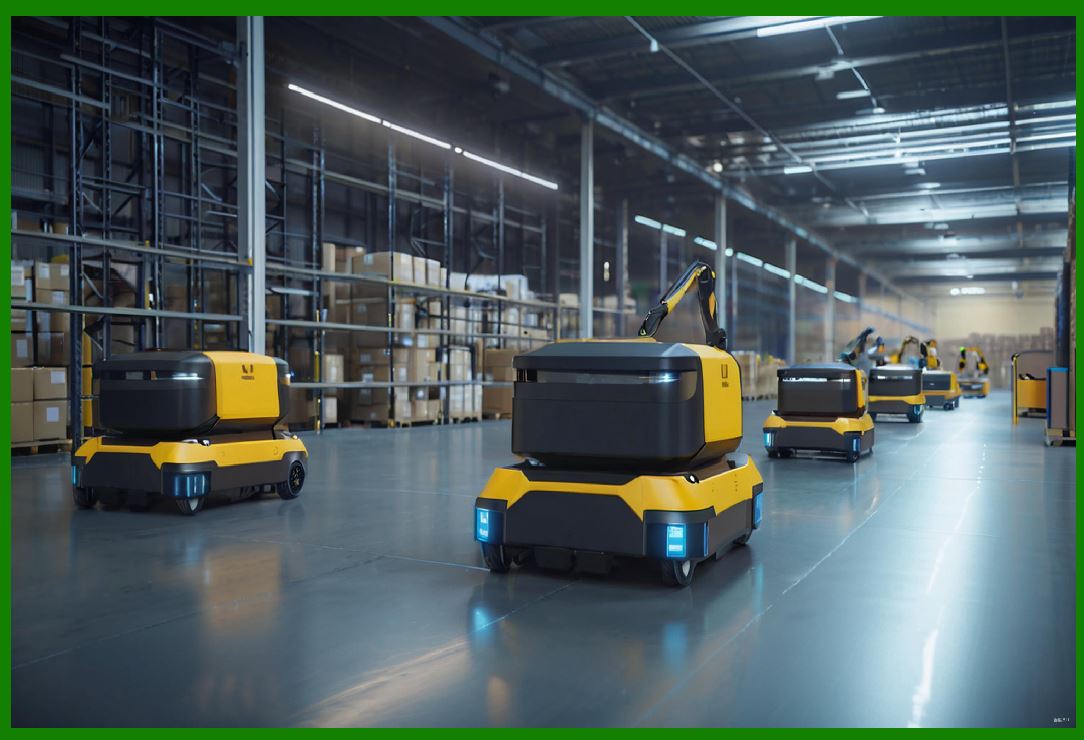
AI-powered robots move goods, pick items, and pack orders. They work faster and more accurately than humans. A warehouse that once employed hundreds of pickers may need only a few technicians to maintain the robots. The remaining workers handle exceptions and quality checks. |
6.2 Autonomous Trucks |
Autonomous trucks are not yet widespread, but they are being tested. They promise to reduce the need for long-haul drivers. A fleet of autonomous trucks can operate continuously, with remote operators monitoring multiple vehicles. The number of drivers needed per truck declines. This threatens millions of driving jobs worldwide. |
6.3 Route Optimization |
AI optimizes delivery routes, reducing the need for dispatchers and route planners. A delivery company that once employed a team of dispatchers may need only a few analysts. The drivers who remain are more productive, but there are fewer of them. |
6.4 The Human Cost in Logistics |
Truck drivers and warehouse workers are often middle-skilled. They may have limited options for retraining. The loss of these jobs can devastate communities that depend on logistics employment. |

|
7. Other Sectors: A Brief Survey |
AI efficiency affects many other sectors. |
7.1 Agriculture |
AI-powered tractors, drones, and sensors reduce the need for farm labor. A farm that once employed dozens of workers may need only a few operators. The remaining workers are more skilled, but the total number of jobs declines. |
7.2 Construction |
AI and robotics automate bricklaying, welding, and inspection. This reduces the need for construction workers. The remaining workers focus on tasks that require judgment and dexterity. |
7.3 Financial Services |
AI handles customer service, fraud detection, and trading. Banks and investment firms reduce their back-office and customer service staff. The remaining workers focus on complex transactions and client relationships. |
7.4 Education |
AI tutors and grading systems reduce the need for teaching assistants and graders. Teachers may benefit from reduced workload, but support staff lose jobs. |
7.5 Government |
AI automates document processing, benefits administration, and customer service. Government agencies reduce their clerical staff. The remaining workers focus on policy and complex cases. |

|
8. The Categories of Workers Affected |
Not all workers are equally affected. The impact depends on the nature of the work. |
8.1 Routine Cognitive Work |
Workers who perform routine cognitive tasks, such as data entry, scheduling, and basic customer service, are highly vulnerable. AI excels at these tasks. |
8.2 Routine Manual Work |
Workers who perform routine manual tasks, such as assembly, picking, and packing, are also highly vulnerable. Robots and AI systems can perform these tasks faster and more accurately. |
8.3 Non-Routine Cognitive Work |
Workers who perform non-routine cognitive tasks, such as management, design, and strategy, are less vulnerable. AI can assist them, but it cannot easily replace them. |
8.4 Non-Routine Manual Work |
Workers who perform non-routine manual tasks, such as plumbing, electrical work, and caregiving, are also less vulnerable. These tasks require dexterity, judgment, and human interaction. |
8.5 The Skill Bias of AI |
AI tends to be skill-biased. It replaces middle-skilled and low-skilled workers while complementing high-skilled workers. This can polarize the labor market, creating more high-wage and low-wage jobs and fewer middle-wage jobs. |

|
9. The Geography of Impact |
The impact of AI efficiency is not evenly distributed. |
9.1 Manufacturing Regions |
Regions that depend on manufacturing, such as the Midwest in the United States, the Ruhr in Germany, and Guangdong in China, are hit hard. When factories automate, they employ fewer workers. The communities that depend on those factories suffer. |
9.2 Logistics Hubs |
Regions that depend on logistics, such as ports and warehouse districts, are also affected. Autonomous trucks and warehouse robots reduce the need for drivers and pickers. |
9.3 Retail Towns |
Towns that depend on retail, such as those with large shopping malls or big-box stores, are affected. Automated checkout and chatbots reduce the need for cashiers and customer service representatives. |
9.4 Healthcare Centers |
Cities with large healthcare systems are affected. AI documentation and scheduling reduce administrative roles. The impact is smaller than in manufacturing, but it is still significant. |
9.5 The Global Dimension |
Developing countries that rely on labor-intensive manufacturing, such as Bangladesh and Vietnam, may be affected. As AI makes manufacturing more capital-intensive, the advantage of low labor costs diminishes. This could slow industrialization and job creation in these countries. |

|
10. The Limits of Retraining |
Retraining is often proposed as a solution. If workers lose their jobs to AI, they can learn new skills and find new jobs. In practice, retraining is difficult. |
10.1 The Scale of the Challenge |
The number of workers affected is large. Retraining millions of workers is expensive and time-consuming. Many workers lack the resources to pursue retraining. |
10.2 The Speed of Change |
AI is advancing rapidly. By the time a worker completes a retraining program, the skills may be obsolete. The job market may have shifted again. |
10.3 The Nature of Skills |
Many displaced workers have skills that are specific to their industries. These skills do not transfer easily to other sectors. A maintenance technician in a factory may not have the skills for a job in healthcare or retail. |
10.4 The Age Factor |
Older workers are less likely to retrain successfully. They may be close to retirement and unwilling to invest in new skills. They may also face age discrimination in hiring. |
10.5 The Geography Factor |
Retraining programs are often located in urban areas. Workers in rural areas or small towns may not have access to them. They may be unwilling or unable to relocate. |
10.6 The Psychological Factor |
Losing a job is traumatic. Workers may experience depression, anxiety, and loss of identity. This can make it difficult to pursue retraining and find new employment. |

|
11. The Role of Policy |
Policy can mitigate the human cost of AI efficiency. |
11.1 Universal Basic Income |
A universal basic income would provide a floor for displaced workers. It would allow them to meet basic needs while they retrain or look for work. However, it is expensive and politically controversial. |
11.2 Wage Insurance |
Wage insurance would compensate workers who lose their jobs and find new ones that pay less. It would soften the income shock and encourage workers to accept new jobs. |
11.3 Retraining Subsidies |
Governments can subsidize retraining programs. They can also provide tax credits to employers who hire displaced workers. |
11.4 Portable Benefits |
Portable benefits would allow workers to keep their health insurance and retirement savings when they change jobs. This would reduce the cost of job transitions. |
11.5 Early Retirement |
For older workers, early retirement may be an option. Governments can offer buyouts or pension enhancements to encourage them to leave the workforce gracefully. |
11.6 Regulation of AI Deployment |
Governments can regulate AI deployment to slow the pace of displacement. For example, they can require companies to give notice before automating jobs. They can also require companies to share the benefits of AI with workers. |

|
12. The Role of Corporate Responsibility |
Companies have a responsibility to manage the human cost of AI efficiency. |
12.1 Advance Notice |
Companies should give workers advance notice of automation plans. This allows workers to prepare and seek new opportunities. |
12.2 Retraining Programs |
Companies should offer retraining programs to displaced workers. They can partner with community colleges and universities to provide relevant skills. |
12.3 Redeployment |
Companies should redeploy workers to new roles within the company. This preserves jobs and retains institutional knowledge. |
12.4 Severance and Support |
Companies should provide generous severance packages and support services, such as career counseling and job placement. |
12.5 Worker Participation |
Companies should involve workers in decisions about AI deployment. This can help identify concerns and develop solutions that benefit both the company and the workers. |
12.6 Sharing the Gains |
Companies should share the gains from AI with workers. This can take the form of higher wages, profit-sharing, or stock options. It can also take the form of investment in worker training and development. |

|
13. The Role of Labor Unions |
Labor unions can play a role in managing the human cost of AI efficiency. |
13.1 Collective Bargaining |
Unions can negotiate agreements that protect workers from displacement. For example, they can negotiate advance notice, retraining, and severance. |
13.2 Political Action |
Unions can advocate for policies that support displaced workers, such as universal basic income, wage insurance, and retraining subsidies. |
13.3 Worker Education |
Unions can educate workers about AI and its implications. This can help workers prepare for change and advocate for their interests. |
13.4 Partnerships |
Unions can partner with companies and governments to develop transition programs. This can ensure that workers have a voice in the process. |

|
14. The Role of Education and Training |
Education and training systems must adapt to the AI era. |
14.1 Lifelong Learning |
Workers must embrace lifelong learning. They must be willing to update their skills throughout their careers. |
14.2 STEM Education |
Schools should emphasize STEM education. This will prepare students for the jobs of the future. |
14.3 Soft Skills |
Schools should also emphasize soft skills, such as communication, collaboration, and critical thinking. These skills are less vulnerable to automation. |
14.4 Vocational Training |
Vocational training should be updated to include AI and robotics. This will prepare workers for technical roles in automated factories and warehouses. |
14.5 Apprenticeships |
Apprenticeships can provide hands-on training and a pathway to employment. They can be particularly effective for workers who do not thrive in traditional classroom settings. |

|
15. The Psychological and Social Costs |
The human cost of AI efficiency is not just economic. It is also psychological and social. |
15.1 Loss of Identity |
Work is a source of identity for many people. When they lose their jobs, they may feel lost and worthless. |
15.2 Loss of Community |
Workplaces are communities. When workers lose their jobs, they lose their social networks. This can lead to isolation and loneliness. |
15.3 Loss of Purpose |
Work provides a sense of purpose. When workers lose their jobs, they may feel that their lives lack meaning. |
15.4 Family Stress |
Job loss can strain family relationships. It can lead to divorce, domestic violence, and child neglect. |
15.5 Community Decline |
When factories and stores close, communities decline. Local businesses lose customers. Schools lose students. Infrastructure deteriorates. |
15.6 Political Consequences |
Economic dislocation can lead to political instability. Displaced workers may support populist movements. They may blame immigrants, minorities, or elites for their problems. This can undermine social cohesion and democracy. |

|
16. Case Studies: Real-World Examples |
To illustrate the human cost of AI efficiency, consider the following case studies. |
16.1 The Steel Plant in Pennsylvania |
A steel plant in Pennsylvania implemented AI-powered predictive maintenance. The system reduced downtime and increased productivity. However, it also reduced the maintenance crew from thirty to ten. The twenty workers who lost their jobs were mostly middle-aged men with high school educations. They struggled to find new jobs. Some took lower-paying jobs in retail or food service. Others retired early. The community suffered. Local businesses closed. The school district lost funding. The social fabric frayed. |
16.2 The Retail Chain in the United Kingdom |
A retail chain in the United Kingdom deployed chatbots and automated checkout. The systems reduced the need for cashiers and customer service representatives. The company laid off hundreds of workers. The workers were mostly women with limited education. They struggled to find new jobs. Some found work in caregiving, which paid less. Others relied on government benefits. The company's profits soared, but the workers did not share in the gains. |
16.3 The Hospital in California |
A hospital in California implemented AI documentation and scheduling. The systems reduced the need for transcriptionists and administrative assistants. The hospital laid off dozens of workers. The workers were mostly women with some college education. They struggled to find new jobs. Some found work in other hospitals, but many left the healthcare sector altogether. The hospital saved money, but the workers paid the price. |
16.4 The Warehouse in Texas |
A warehouse in Texas implemented AI-powered robots. The robots moved goods and packed orders. The warehouse laid off hundreds of pickers. The workers were mostly immigrants with limited English skills. They struggled to find new jobs. Some found work in construction, which was more dangerous. Others returned to their home countries. The company increased its profits, but the workers were left behind. |
16.5 The Trucking Company in the Midwest |
A trucking company in the Midwest tested autonomous trucks. The trucks operated on highways with a remote operator monitoring multiple vehicles. The company reduced its driver headcount. The drivers who lost their jobs were mostly men with high school educations. They struggled to find new jobs. Some became owner-operators, but many left the industry. The company reduced its costs, but the drivers bore the burden. |

|
17. The Global Dimension: Developing Countries |
The human cost of AI efficiency is not limited to developed countries. Developing countries are also affected. |
17.1 Manufacturing in Bangladesh |
Bangladesh relies on garment manufacturing for employment and export earnings. As AI and robotics make manufacturing more capital-intensive, the advantage of low labor costs diminishes. Factories may relocate to countries with even lower labor costs, or they may automate. Either way, Bangladeshi workers lose jobs. |
17.2 Call Centers in India |
India relies on call centers for employment. As AI chatbots improve, the need for human agents declines. Indian workers who once handled customer service calls may find their jobs automated. The country's large English-speaking workforce may lose its advantage. |
17.3 Agriculture in Africa |
African agriculture relies on smallholder farmers and manual labor. As AI-powered tractors and drones become more affordable, large farms may automate. Smallholder farmers may be unable to compete. They may lose their livelihoods and migrate to cities. |
17.4 The Risk of Premature Deindustrialization |
Developing countries may experience premature deindustrialization. They may lose manufacturing jobs before they have developed a service sector to absorb the workers. This could trap them in poverty. |

|
18. The Ethical Dimension |
The human cost of AI efficiency raises ethical questions. |
18.1 The Distribution of Gains |
Who benefits from AI efficiencyThe gains accrue to shareholders, executives, and consumers. The costs fall on workers and communities. Is this fair |
18.2 The Right to Work |
Do people have a right to workIf so, does AI efficiency violate that rightOr does it simply change the nature of work |
18.3 The Dignity of Work |
Work provides dignity. When workers lose their jobs, they lose their dignity. Is this acceptable |
18.4 The Social Contract |
The social contract between employers and employees is changing. Companies no longer offer lifetime employment. Workers must fend for themselves. Is this sustainable |
18.5 The Responsibility of Technologists |
Technologists who build AI systems have a responsibility to consider their impact on workers. They should design systems that augment workers, not replace them. They should also advocate for policies that support displaced workers. |

|
19. The Future: Scenarios for 2035 |
What will the future look likeConsider three scenarios. |
19.1 The Optimistic Scenario |
In the optimistic scenario, AI creates new jobs and improves working conditions. Workers are retrained and redeployed. The social safety net is strengthened. The benefits of AI are widely shared. Society thrives. |
19.2 The Pessimistic Scenario |
In the pessimistic scenario, AI displaces workers en masse. Retraining programs fail. The social safety net is inadequate. Inequality rises. Social unrest grows. Democracy erodes. |
19.3 The Realistic Scenario |
In the realistic scenario, the outcome is mixed. Some workers benefit; others are left behind. Some regions thrive; others decline. The policy response is uneven. The result is a patchwork of success and failure. |

|
20. Conclusion: Toward Responsible Deployment |
The human cost of AI efficiency is real. It is not a reason to reject AI, but it is a reason to manage its deployment carefully. Responsible deployment requires attention to workforce impact, not just productivity metrics. It requires advance notice, retraining, redeployment, severance, and support. It requires policy interventions, such as universal basic income, wage insurance, and retraining subsidies. It requires corporate responsibility, labor union engagement, and educational reform. It requires a recognition that workers are not disposable. They are human beings with dignity, families, and communities. The efficiency gains of AI are real, but so are the social consequences. The challenge is to share the gains and mitigate the harms. This is not just a technical problem; it is a moral one. The choices we make today will shape the world of tomorrow. |

|
21. Detailed Summary |
This chapter has examined the human cost of AI efficiency across manufacturing and industrial operations, with additional examples from retail, healthcare, logistics, agriculture, construction, financial services, education, and government. It began with a short summary of the core problem: AI efficiency creates a paradox, boosting productivity while displacing workers. It then explored sector-specific examples, including predictive maintenance, self-healing factories, collaborative robots, AI quality control, dark factories, chatbots, automated checkout, inventory AI, clinical documentation, scheduling and billing, diagnostic support, warehouse robots, autonomous trucks, route optimization, and AI in agriculture, construction, finance, education, and government. It discussed the categories of workers affected, noting that routine cognitive and manual workers are most vulnerable, while non-routine cognitive and manual workers are less vulnerable. It examined the geography of impact, noting that manufacturing regions, logistics hubs, retail towns, and healthcare centers are hit hardest, and that developing countries may experience premature deindustrialization. It discussed the limits of retraining, including scale, speed, skill specificity, age, geography, and psychological factors. It examined the role of policy, including universal basic income, wage insurance, retraining subsidies, portable benefits, early retirement, and regulation of AI deployment. It discussed the role of corporate responsibility, including advance notice, retraining, redeployment, severance, worker participation, and sharing the gains. It examined the role of labor unions, including collective bargaining, political action, worker education, and partnerships. It discussed the role of education and training, including lifelong learning, STEM education, soft skills, vocational training, and apprenticeships. It examined the psychological and social costs, including loss of identity, community, purpose, family stress, community decline, and political consequences. It presented case studies from Pennsylvania, the United Kingdom, California, Texas, and the Midwest. It discussed the global dimension, including Bangladesh, India, and Africa. It examined the ethical dimension, including the distribution of gains, the right to work, the dignity of work, the social contract, and the responsibility of technologists. It presented three scenarios for 2035: optimistic, pessimistic, and realistic. Finally, it called for responsible deployment, emphasizing that workers are not disposable and that the choices we make today will shape the world of tomorrow. |

|
22. Final Thoughts |
AI efficiency is not inherently good or bad. It is a tool. How we use it depends on our values and our institutions. If we prioritize productivity over people, we will create a world of concentrated wealth and widespread displacement. If we prioritize people, we can create a world of shared prosperity and meaningful work. The choice is ours. The time to act is now. |
 cs@easiersoft.com