Chapter 66: The Open-Source vs. Proprietary Divide |
A Brief Summary at the Start |
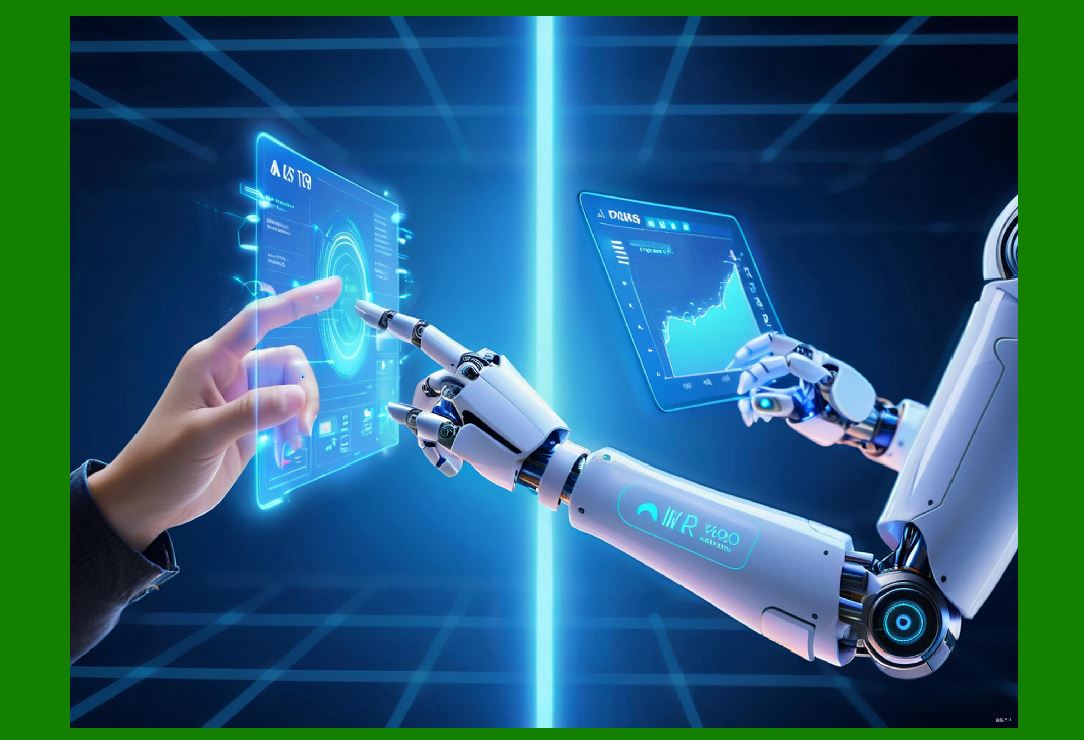
Manufacturing and industrial operations have become one of the most important testing grounds for artificial intelligence. In this chapter, we examine a choice that every plant manager, operations director, and technology leader eventually faces: should the AI systems that run, monitor, and optimize industrial processes be built on open-source models or proprietary onesOpen-source models, such as Mixtral and DeepSeek, offer adaptability, auditability, and low cost of experimentation. Proprietary models, such as those from OpenAI and Anthropic (the maker of Claude), offer polished performance, enterprise support, and predictable behavior. In practice, most industrial organizations will not choose one side exclusively. They will operate in hybrid mode, using proprietary models for high-stakes tasks and open-source models for experimentation and cost-sensitive applications. This chapter explains the trade-offs, then walks through real-world examples across many industries, and closes with a detailed summary of best practices. |
|
1. Why This Choice Matters More in Manufacturing Than Almost Anywhere Else |
In a software company, a bad AI recommendation might produce an awkward email or a poorly worded support reply. In a factory, a bad AI recommendation can stop a production line, damage a machine, injure a worker, or create a safety incident that regulators will investigate for months. |
That difference in consequence changes the entire calculus of open versus proprietary. Manufacturing and industrial operations are physical, capital-intensive, and unforgiving. Downtime is measured in dollars per minute. Quality defects are measured in lost contracts. Safety failures are measured in human harm. |
At the same time, industrial data is often sensitive. Production recipes, tolerances, supplier pricing, and equipment failure histories are competitive secrets. Sending that data to a third-party proprietary model raises legal, contractual, and security questions that many manufacturers are not comfortable answering. |
So the open versus proprietary question in industry is not merely a technical preference. It is a decision about risk, control, cost, and speed. This chapter gives you the vocabulary and the real examples to make that decision well. |
|
2. What 'Open-Source' Actually Means in the AI Context |
The term open-source in AI is used loosely, so it helps to be precise. When people say an AI model is open-source, they usually mean one or more of the following: |
2.1. The model weights are publicly downloadable, so anyone can run the model on their own hardware. |
2.2. The training code or fine-tuning code is published, so others can reproduce or modify the training process. |
2.3. The training data is described, though rarely fully released. |
2.4. The license permits commercial use, modification, and redistribution, sometimes with restrictions. |
Models like Mixtral and DeepSeek are widely described as open because their weights are available and can be run inside a company's own data center or private cloud. That last point is crucial for manufacturers. If the model runs inside your firewall, your production data never leaves your premises. |
Not all open models are equally open. Some are released under licenses that restrict certain uses. Some publish weights but not training data. Some are free for research but paid for large-scale commercial deployment. A careful industrial buyer should read the license, not just the marketing page. |
|
3. What 'Proprietary' Actually Means in the AI Context |
Proprietary models are accessed through an API or a licensed product. The company that built the model controls the weights, the training pipeline, and the update schedule. You typically pay per use, per seat, or per subscription. |
Examples include the models from OpenAI and Anthropic's Claude family. These systems are known for strong general reasoning, careful instruction-following, and safety tuning. They also come with enterprise agreements, service-level commitments, compliance documentation, and support channels. |
For a manufacturer, the appeal is simple. You do not need a team of machine learning engineers to get started. You call an API, integrate it into your maintenance or quality system, and you get a capable assistant within weeks. The trade-off is that your data leaves your environment unless you negotiate a private deployment, and you depend on a vendor's pricing, uptime, and roadmap. |
|
4. The Core Trade-Offs, Explained Plainly |
4.1. Transparency and Auditability |
Open models can be inspected, tested, and audited by your own team or a third party. In regulated industries such as aerospace, pharmaceuticals, and nuclear power, this matters enormously. If an AI system influences a safety decision, regulators may ask how it works. With an open model, you can at least examine the weights, run your own evaluations, and document behavior. With a proprietary model, you often must rely on the vendor's documentation and assurances. |
4.2. Cost Structure |
Open models shift cost from per-call fees to infrastructure and people. You pay for GPUs, electricity, cooling, and engineers. Proprietary models shift cost to usage fees and subscriptions. For low-volume, high-value tasks, proprietary is often cheaper. For high-volume, repetitive tasks such as scanning thousands of sensor readings per minute, open models running on your own hardware can be far cheaper at scale. |
4.3. Capability and Performance |
Proprietary models generally lead on broad reasoning, multi-step planning, and polished language tasks. Open models have closed much of the gap, and in narrow industrial tasks they can match or exceed proprietary performance after fine-tuning. The key insight is that a smaller open model fine-tuned on your own maintenance logs can outperform a giant general model on your specific task. |
4.4. Support and Reliability |
Proprietary vendors offer enterprise support, uptime guarantees, security reviews, and compliance certifications. Open models rely on community support or paid support from a vendor that packages the open model. A factory running three shifts cannot afford to wait for a volunteer forum answer at 2 a.m. This is why many industrial firms pay for supported distributions of open models. |
4.5. Data Control and Privacy |
Open models can run entirely on-premises. Proprietary models usually require data to travel to a vendor cloud, though private and on-premises options exist at higher cost. For manufacturers with trade secrets embedded in process data, on-premises open models are often the only acceptable path. |
4.6. Speed of Innovation |
Proprietary vendors release frequent improvements, and you get them automatically. Open models improve through community contributions and new releases, but you must manage upgrades yourself. Some industrial firms prefer the predictability of a slower, controlled upgrade cycle. |
4.7. Vendor Lock-In |
Proprietary APIs create dependency. Switching costs can be high if you have built workflows around a specific model's behavior. Open models reduce lock-in because you can move the same weights to a different vendor's hardware or cloud. |

|
5. Why Hybrid Is the Realistic Answer |
Pure open or pure proprietary is rare in serious industrial deployments. The typical pattern looks like this: |
5.1. Proprietary models handle high-stakes, low-volume tasks: interpreting a complex engineering change request, drafting a regulatory submission, or reasoning through an unusual failure that does not match any known pattern. |
5.2. Open models handle high-volume, cost-sensitive tasks: continuous anomaly detection on sensor streams, first-pass defect classification on images, or generating routine maintenance summaries. |
5.3. A routing layer decides which model handles which request, based on sensitivity, cost, and required capability. |
5.4. Data governance rules ensure that sensitive data never leaves the premises unless a specific exception is approved. |
This hybrid architecture is becoming the default in manufacturing because it captures the strengths of both worlds while limiting the weaknesses of each. |
|
6. Real Applications in Discrete Manufacturing |
6.1. Automotive Assembly |
A large automaker uses open-source vision models running on edge devices to inspect welds and paint finishes in real time. The models are fine-tuned on thousands of images from the plant's own cameras. Because the data never leaves the plant, the company avoids sharing proprietary process details. For complex root-cause analysis of a new defect pattern, engineers query a proprietary model that can reason across maintenance logs, supplier reports, and engineering drawings. |
6.2. Electronics and Semiconductor Fabrication |
Semiconductor fabs are among the most data-rich environments on earth. An open-source model monitors thousands of sensor channels for subtle drift that precedes equipment failure. The model runs on-premises because the process recipes are extremely sensitive. When a rare defect appears, a proprietary model helps engineers search patent literature and internal reports to form hypotheses. |
6.3. Heavy Machinery |
A maker of construction equipment deploys an open-source model on machines in the field to detect early signs of hydraulic failure from vibration and temperature data. The model runs locally, so it works even with poor connectivity. A proprietary model in the cloud analyzes aggregated fleet data to recommend design improvements for the next generation. |
6.4. Aerospace Components |
An aerospace supplier uses an open-source model to audit its own quality documentation before submission, catching inconsistencies that regulators might flag. Because the model is open, the supplier can show auditors exactly how the checks work. For drafting responses to regulatory questions, the team uses a proprietary model known for careful, conservative language. |

|
7. Real Applications in Process Manufacturing |
7.1. Chemicals |
A chemical plant uses an open-source model to predict when a catalyst bed will need replacement, based on temperature and pressure trends. The model runs inside the plant network. For analyzing a sudden, unexplained yield drop, a proprietary model helps engineers reason across years of batch records and research notes. |
7.2. Pharmaceuticals |
A drug manufacturer uses an open-source model to monitor bioreactor conditions and flag deviations. Data integrity rules require that the model and its inputs be fully auditable, which favors open weights. For preparing regulatory filings, the company uses a proprietary model with strong document-handling capabilities and enterprise compliance commitments. |
7.3. Food and Beverage |
A beverage producer uses an open-source model to classify bottle defects on a high-speed line, processing hundreds of images per second on local hardware. The cost of sending that volume to a cloud API would be prohibitive. For demand forecasting and supplier communication, the company uses proprietary models where volume is lower and language quality matters more. |
7.4. Pulp and Paper |
A paper mill uses an open-source model to detect web breaks before they happen, based on tension and moisture sensors. The model must respond in milliseconds, so it runs on edge hardware. For optimizing energy contracts and writing supplier emails, the mill uses a proprietary assistant. |
|
8. Real Applications in Energy and Utilities |
8.1. Power Generation |
A utility uses an open-source model to monitor turbine vibration and predict maintenance windows. Because the grid is critical infrastructure, the utility insists on on-premises deployment and full auditability. For drafting outage communication to regulators and the public, it uses a proprietary model with strong writing and compliance features. |
8.2. Oil and Gas |
An offshore platform uses an open-source model to detect anomalies in pipeline pressure, running locally because connectivity is intermittent and data is sensitive. Onshore, a proprietary model analyzes seismic and drilling reports to help geologists form exploration hypotheses. |
8.3. Renewable Energy |
A wind farm operator uses an open-source model to predict turbine failures from SCADA data, running across thousands of turbines at low cost. For negotiating power purchase agreements, the operator uses a proprietary model to draft and review contract language. |
|
9. Real Applications in Logistics and Warehousing |
9.1. Warehouse Robotics |
A major retailer uses open-source models on warehouse robots to recognize and grasp unfamiliar items. The models run on the robots themselves, so latency is low and data stays local. For optimizing warehouse layout and labor scheduling, the company uses a proprietary model that reasons across many variables. |
9.2. Freight and Shipping |
A logistics firm uses an open-source model to read and classify shipping documents at high volume. The cost per document with a proprietary API would be too high. For handling unusual customs disputes, the firm uses a proprietary model with strong reasoning and up-to-date regulatory knowledge. |
9.3. Last-Mile Delivery |
A delivery company uses an open-source model on drivers' devices to optimize routes in areas with poor connectivity. For customer service messages and exception handling, it uses a proprietary model to generate clear, polite communication. |
|
10. Real Applications in Mining and Metals |
10.1. Mining |
A mining company uses an open-source model to analyze drill core images and classify ore grade, running on-site because the data is highly valuable. For planning and environmental reporting, it uses a proprietary model to synthesize large documents. |
10.2. Steel |
A steel mill uses an open-source model to predict furnace lining wear from temperature and acoustic data. The model runs in the plant because a failure would be catastrophic and the data is proprietary. For analyzing market trends and drafting customer proposals, the mill uses a proprietary model. |
|
11. Real Applications in Construction and Infrastructure |
11.1. Construction Sites |
A construction firm uses an open-source model on cameras to detect workers without safety gear, running on-site to protect privacy and reduce bandwidth. For bidding on projects and drafting safety plans, it uses a proprietary model with strong document generation. |
11.2. Infrastructure Inspection |
A bridge inspection company uses an open-source model to classify cracks in images taken by drones, processing thousands of images offline. For writing detailed inspection reports, it uses a proprietary model to produce clear, consistent language. |

|
12. Real Applications in Textiles, Apparel, and Consumer Goods |
12.1. Textiles |
A textile mill uses an open-source model to detect fabric defects at high speed on the production line. The volume of images makes cloud APIs too expensive. For trend analysis and supplier negotiation, it uses a proprietary model. |
12.2. Apparel |
A clothing brand uses an open-source model to forecast demand at the SKU level, running on its own servers to protect sales data. For marketing copy and customer support, it uses a proprietary model known for strong language quality. |
12.3. Consumer Electronics |
A device maker uses an open-source model to triage customer support tickets, routing urgent safety issues to humans immediately. For writing user manuals and legal disclosures, it uses a proprietary model with careful language control. |
|
13. Real Applications in Agriculture and Food Processing |
13.1. Precision Agriculture |
A farming cooperative uses an open-source model on tractors to identify weeds and pests from camera images, running locally because fields often lack connectivity. For advisory reports to farmers, it uses a proprietary model to generate readable summaries. |
13.2. Food Processing |
A meat processing plant uses an open-source model to inspect products for foreign objects at high speed. For compliance documentation and recall communication, it uses a proprietary model with strong drafting and compliance features. |
|
14. The Engineering Reality: How Hybrid Systems Are Built |
14.1. A Routing Layer |
A small classifier or rule set decides whether a request goes to an open model on-premises or a proprietary model in the cloud. Rules can be based on data sensitivity, required latency, cost budget, and task complexity. |
14.2. A Data Governance Layer |
This layer enforces which data can leave the premises. It may redact sensitive fields, or it may block certain requests entirely. |
14.3. An Evaluation Layer |
Both open and proprietary models are continuously tested against a shared benchmark of real industrial tasks. This prevents drift and catches regressions when either side is updated. |
14.4. A Fallback Path |
If the proprietary API is unavailable, the system falls back to an open model with reduced capability but guaranteed availability. This is essential for plants that run around the clock. |
14.5. A Cost Monitor |
The system tracks spend per task and per model, so managers can see whether the hybrid split is delivering the expected savings. |
|
15. Common Mistakes and How to Avoid Them |
15.1. Assuming Open Always Means Cheaper |
Open models require hardware, electricity, cooling, and skilled staff. For low-volume tasks, a proprietary API is often cheaper. Do the math for your actual volume. |
15.2. Assuming Proprietary Always Means Better |
On narrow, well-defined industrial tasks, a fine-tuned open model often beats a general proprietary model. Test on your own data. |
15.3. Ignoring License Terms |
Some open models have restrictions on commercial use or require attribution. Read the license before deploying. |
15.4. Forgetting About Updates |
Open models do not update themselves. Plan a maintenance schedule, or you will run outdated software with known issues. |
15.5. Underestimating Integration Cost |
Both paths require integration work. The hidden cost is often in connecting the model to existing control systems, historians, and databases. |
15.6. Neglecting Security |
An open model running on-premises still needs security hardening. A proprietary API still needs key management and access control. |
15.7. Skipping Human Oversight |
In safety-critical tasks, a human must remain in the loop. Neither open nor proprietary models should be given unchecked authority over physical systems. |

|
16. Regulatory and Compliance Considerations |
16.1. Traceability |
Regulators increasingly ask how an AI system reached a decision. Open models make traceability easier because you can inspect and version the weights. |
16.2. Data Residency |
Some jurisdictions require data to stay within borders. On-premises open models simplify compliance. |
16.3. Change Control |
In regulated industries, any change to a validated system must be documented and re-validated. Proprietary models that update automatically can complicate this. Open models let you freeze a version and control upgrades. |
16.4. Liability |
If an AI system causes harm, liability questions arise. Contracts with proprietary vendors often address this. With open models, the deploying organization bears more responsibility. |
16.5. Documentation |
Both paths require documentation. Open models require you to document your own evaluations. Proprietary vendors provide documentation, but you must still verify it fits your use case. |

|
17. Cost Modeling in Plain Terms |
17.1. Proprietary Cost Drivers |
Per-token or per-call fees, subscription seats, data egress charges, and integration costs. These scale with usage. |
17.2. Open Cost Drivers |
Hardware purchase or rental, electricity, cooling, facilities, engineering salaries, and support contracts. These are largely fixed and scale with capacity, not usage. |
17.3. The Crossover Point |
There is a volume of usage above which open models become cheaper. The exact point depends on your task, hardware prices, and labor costs. Many industrial firms find the crossover is lower than they expect for high-volume vision and sensor tasks, and higher than they expect for low-volume language tasks. |
17.4. Total Cost of Ownership |
Include maintenance, upgrades, security, and training. The cheapest option at purchase is rarely the cheapest over five years. |

|
18. Talent and Organizational Factors |
18.1. Open Models Need ML Engineers |
Running open models well requires people who understand fine-tuning, evaluation, and deployment. If you lack them, a proprietary API may be the faster path. |
18.2. Proprietary Models Need Integrators |
Even with an API, you need people who can connect it to your systems and manage it over time. |
18.3. The Hybrid Skill Set |
The most valuable industrial AI teams combine domain knowledge of the factory with practical machine learning skills. They know which tasks are safety-critical and which are routine. |
18.4. Building vs. Buying |
Some firms build an internal platform for open models. Others buy a supported distribution. Both are valid. The key is to be honest about your team's capacity. |
|
19. Security and Privacy in Industrial Settings |
19.1. On-Premises Advantages |
Data never leaves the plant. This reduces the attack surface and simplifies compliance. |
19.2. On-Premises Responsibilities |
You are responsible for patching, access control, and physical security of the hardware. |
19.3. Cloud Advantages |
Vendors handle security patching and often have strong certifications. |
19.4. Cloud Responsibilities |
You must manage API keys, monitor usage, and ensure contractual protections for your data. |
19.5. A Practical Rule |
If the data would hurt you if it appeared in a competitor's hands, keep it on-premises with an open model. If the data is generic or already public, a proprietary API is usually fine. |
|
20. Performance Benchmarks That Matter in Industry |
20.1. Latency |
Vision and control tasks need millisecond responses. Edge open models win here. |
20.2. Throughput |
High-volume document processing needs many requests per second. Open models on your own hardware can be scaled without per-call fees. |
20.3. Accuracy on Your Task |
General benchmarks matter less than performance on your own data. Always test on your own examples. |
20.4. Robustness |
Industrial environments are noisy. Test models with degraded sensors, poor lighting, and unusual inputs. |
20.5. Explainability |
Some tasks require an explanation. Open models allow deeper inspection, though not all open models are equally interpretable. |
|
21. Case Study: A Fictional but Realistic Automotive Plant |
21.1. The Situation |
A plant produces 800 vehicles per day. It has 12 years of maintenance logs, 4 million inspection images, and a mandate to reduce unplanned downtime by 30 percent. |
21.2. The Open-Source Deployment |
An open-source vision model runs on edge servers to inspect welds. It was fine-tuned on 200,000 plant images. It flags 0.3 percent of parts for human review. The data never leaves the plant. |
21.3. The Proprietary Deployment |
A proprietary model helps engineers analyze recurring defects. It reads maintenance logs, supplier reports, and engineering drawings, then proposes hypotheses. Engineers review and test each hypothesis. |
21.4. The Results |
Unplanned downtime fell by 22 percent in the first year. Inspection cost per vehicle fell by 40 percent. The plant plans to expand open models to paint inspection and proprietary models to supplier quality analysis. |
21.5. The Lessons |
Start with a narrow, high-volume task for open models. Use proprietary models where reasoning and language quality matter. Keep humans in the loop for safety decisions. |
|
22. Case Study: A Fictional but Realistic Pharmaceutical Plant |
22.1. The Situation |
A plant produces a biologic drug in bioreactors. It must comply with strict data integrity rules. Any AI system that influences a batch decision must be fully auditable. |
22.2. The Open-Source Deployment |
An open-source model monitors bioreactor sensors and flags deviations. The model and its inputs are versioned and logged. Auditors can inspect the model's behavior. |
22.3. The Proprietary Deployment |
A proprietary model drafts deviation reports and regulatory responses. The company reviews and edits every draft. The vendor provides compliance documentation. |
22.4. The Results |
Deviation detection improved by 15 percent. Report drafting time fell by 30 percent. No audit findings related to AI systems. |
22.5. The Lessons |
In regulated industries, auditability favors open models for decision-influencing tasks. Proprietary models are useful for drafting, where humans review the output. |
|
23. Case Study: A Fictional but Realistic Mining Operation |
23.1. The Situation |
A copper mine processes 50,000 tons of ore per day. It wants to predict equipment failures and classify ore grade from drill core images. |
23.2. The Open-Source Deployment |
An open-source model runs on-site to classify ore grade from drill core images. The data is too valuable to send to a cloud API. |
23.3. The Proprietary Deployment |
A proprietary model helps planners synthesize geological reports and draft environmental submissions. |
23.4. The Results |
Ore grade classification accuracy improved by 12 percent. Environmental reporting time fell by 25 percent. |
23.5. The Lessons |
High-value data favors on-premises open models. Document-heavy tasks favor proprietary models. |
|
24. Decision Framework: Choosing for a Specific Task |
24.1. Step One: Classify the Task |
Is it safety-criticalIs it high-volumeIs the data sensitiveDoes it require complex reasoning |
24.2. Step Two: Estimate Volume and Cost |
Calculate the cost of a proprietary API at your expected volume. Calculate the cost of open model infrastructure and staff. |
24.3. Step Three: Assess Auditability Needs |
If regulators or auditors must inspect the system, open models have an advantage. |
24.4. Step Four: Assess Language Quality Needs |
If the output is customer-facing or regulatory, proprietary models often have an edge. |
24.5. Step Five: Assess Latency Needs |
If the task requires millisecond responses, edge open models are usually required. |
24.6. Step Six: Pilot Both |
Run a small pilot with both options on real data. Measure accuracy, latency, cost, and user satisfaction. |
24.7. Step Seven: Decide and Document |
Choose the option that fits, document the rationale, and plan a review in six to twelve months. |

|
25. Future Trajectories |
25.1. Open Models Will Keep Improving |
The gap between open and proprietary models is narrowing. In narrow industrial tasks, open models are already competitive. |
25.2. Proprietary Vendors Will Offer More Private Options |
Vendors are responding to industrial concerns with private deployments, on-premises options, and stronger data commitments. |
25.3. Hybrid Tooling Will Mature |
Routing, governance, and evaluation tools for hybrid systems are becoming standard products. |
25.4. Regulation Will Increase |
Expect more rules about AI in safety-critical industrial systems. Open models may benefit from easier auditability, but they also bring more responsibility. |
25.5. Edge AI Will Grow |
As edge hardware improves, more open models will run directly on machines, robots, and sensors. |
25.6. Specialized Industrial Models Will Emerge |
Expect open and proprietary models trained specifically on industrial data, such as vibration, thermal, and acoustic signals. |
25.7. The Human Role Will Remain Central |
In safety-critical operations, humans will remain in the loop. The question is not whether to replace them, but how to give them better tools. |
|
26. Detailed Summary at the End |
26.1. The Core Choice |
The open-source versus proprietary divide is a trade-off among transparency, cost, support, capability, data control, and lock-in. There is no universally correct answer. The right answer depends on the task, the data, the regulator, and the organization. |
26.2. Open-Source Strengths |
Open models such as Mixtral and DeepSeek offer adaptability through fine-tuning, auditability through inspectable weights, on-premises deployment for sensitive data, and low marginal cost at high volume. They are ideal for high-volume vision, sensor, and classification tasks where latency and data control matter. |
26.3. Open-Source Weaknesses |
Open models require infrastructure, skilled staff, maintenance, and security hardening. They lack the polished enterprise support and automatic updates of proprietary offerings. License terms vary and must be read carefully. |
26.4. Proprietary Strengths |
Proprietary models such as those from OpenAI and Anthropic's Claude offer strong general reasoning, polished language, enterprise support, compliance documentation, and predictable service levels. They are ideal for low-volume, high-stakes tasks such as regulatory drafting, complex root-cause analysis, and customer-facing communication. |
26.5. Proprietary Weaknesses |
Proprietary models create vendor dependency, raise data residency concerns, and charge per use, which can become expensive at high volume. They offer less transparency and auditability than open models. |
|
26.6. The Hybrid Default |
Most industrial organizations will operate in hybrid mode. Proprietary models handle high-stakes, low-volume reasoning and language tasks. Open models handle high-volume, cost-sensitive, latency-sensitive, and data-sensitive tasks. A routing layer, governance layer, evaluation layer, fallback path, and cost monitor make the hybrid system work. |
26.7. Industry Patterns |
Across automotive, electronics, heavy machinery, aerospace, chemicals, pharmaceuticals, food and beverage, pulp and paper, energy, oil and gas, renewables, logistics, warehousing, mining, steel, construction, infrastructure, textiles, apparel, consumer goods, agriculture, and food processing, the same pattern appears. Open models run close to the physical process, where data is sensitive and volume is high. Proprietary models handle reasoning, drafting, and communication, where language quality and compliance matter. |
26.8. Cost Reality |
Open models are not automatically cheaper. They shift cost from usage fees to infrastructure and people. Proprietary models are not automatically more expensive. For low-volume tasks, they are often cheaper. Calculate total cost of ownership over several years, not just the purchase price. |
26.9. Compliance Reality |
Regulated industries favor open models for decision-influencing tasks because they are easier to audit and version. Proprietary models are useful for drafting and communication, where humans review the output. Data residency rules often push sensitive workloads on-premises. |
26.10. Security Reality |
If data would harm the company if leaked, keep it on-premises with an open model. If data is generic or public, a proprietary API is usually acceptable. Both paths require security hardening and access control. |
|
26.11. Talent Reality |
Open models need machine learning engineers who can fine-tune, evaluate, and deploy. Proprietary models need integrators who can connect APIs to existing systems. The best teams combine industrial domain knowledge with practical AI skills. |
26.12. Common Mistakes |
Do not assume open is always cheaper or proprietary is always better. Do not ignore license terms, updates, integration costs, security, or human oversight. Do not skip pilot testing on your own data. |
26.13. Decision Framework |
Classify the task, estimate volume and cost, assess auditability, language quality, and latency needs, pilot both options, then decide and document. Review the decision regularly as models and prices change. |
26.14. Future Outlook |
Open models will keep improving. Proprietary vendors will offer more private options. Hybrid tooling will mature. Regulation will increase. Edge AI will grow. Specialized industrial models will emerge. Humans will remain central in safety-critical operations. |
26.15. The Bottom Line |
The open-source versus proprietary divide is not a war to be won. It is a design choice to be managed. In manufacturing and industrial operations, the winning strategy is almost always hybrid: open models where data control, latency, and volume dominate; proprietary models where reasoning, language, and support dominate; and a governance framework that keeps both safe, auditable, and aligned with the needs of the plant, the worker, and the regulator. Organizations that master this hybrid approach will be the ones that turn AI from a promising experiment into a reliable engine of industrial performance. |
 cs@easiersoft.com