Chapter 69: The Path to 2030 |
1. Introduction: A Decade of Transition |
The next five years will see continued expansion of AI capabilitiesworld models, embodied intelligence, autonomous researchalongside growing scrutiny and regulation. The organizations that thrive will be those that master the integration challenge: embedding AI within workflows, grounding outputs in trusted data, maintaining human oversight, and continuously learning from deployment experience. The technology will evolve; the principles of effective deploymentdata quality, explainability, human-centered designwill endure. |
This chapter looks ahead to 2030. It is not a forecast of specific products or vendors. It is a practical map of the forces that will shape manufacturing and industrial operations over the next five years, and a guide to the decisions that leaders can make today to prepare for them. The focus is on application: what AI will actually do on the factory floor, in the warehouse, in the supply chain, and in the engineering office. The chapter draws on examples from many industriesautomotive, aerospace, electronics, chemicals, food processing, pharmaceuticals, heavy machinery, textiles, energy, and constructionto show how the same underlying capabilities are being adapted to very different environments. |
The central argument is simple. The next five years will not be defined by a single breakthrough. They will be defined by integration. The organizations that succeed will be those that treat AI as a normal part of operations rather than a special project. They will connect models to trusted data, keep humans in the loop where it matters, and learn from every deployment. The technology will keep changing. The principles of good deployment will not. |
|
2. The State of Play in 2025 |
Before looking forward, it is useful to look at where manufacturing and industrial operations stand today. AI is already present in many factories, but its use is uneven. Some plants run advanced vision systems for quality inspection. Others still rely on manual checks and paper logs. Some supply chains use machine learning for demand forecasting. Others use spreadsheets and experience. |
The reasons for this unevenness are rarely about the technology itself. They are about data, skills, processes, and trust. A vision system is only as good as the images it is trained on. A forecasting model is only as good as the data pipeline that feeds it. A robot is only as useful as the workflow it is embedded in. And a recommendation is only as trustworthy as the human who can understand and act on it. |
Three trends have defined the period up to 2025. First, the cost of sensing has fallen. Cameras, vibration sensors, temperature probes, and power meters are now cheap enough to install widely. Second, the cost of computing has fallen. Cloud platforms and edge devices can run sophisticated models at low cost. Third, the cost of software development has fallen for certain tasks. Open-source libraries and pre-trained models have made it easier to build applications. |
These trends will continue. But they will not be enough on their own. The next phase will be about putting these tools to work in a reliable, safe, and scalable way. That is the integration challenge. |

|
3. The Core Capabilities Driving Change |
To understand where manufacturing is going, it helps to separate the underlying capabilities from the applications. Four capabilities will matter most over the next five years. |
3.1 World Models |
A world model is a system that learns how an environment behaves. It can predict what will happen next given a current state and a possible action. In manufacturing, world models can simulate a production line, a warehouse, or a supply network. They can answer questions like: If we increase speed on this machine, what happens to defect rates downstreamIf we reroute this shipment, what happens to inventory levels next week |
World models are not new. Simulation has been used in engineering for decades. What is new is that these models can be learned from data rather than hand-coded. This makes them faster to build and easier to update. It also makes them more accessible to smaller firms. |
3.2 Embodied Intelligence |
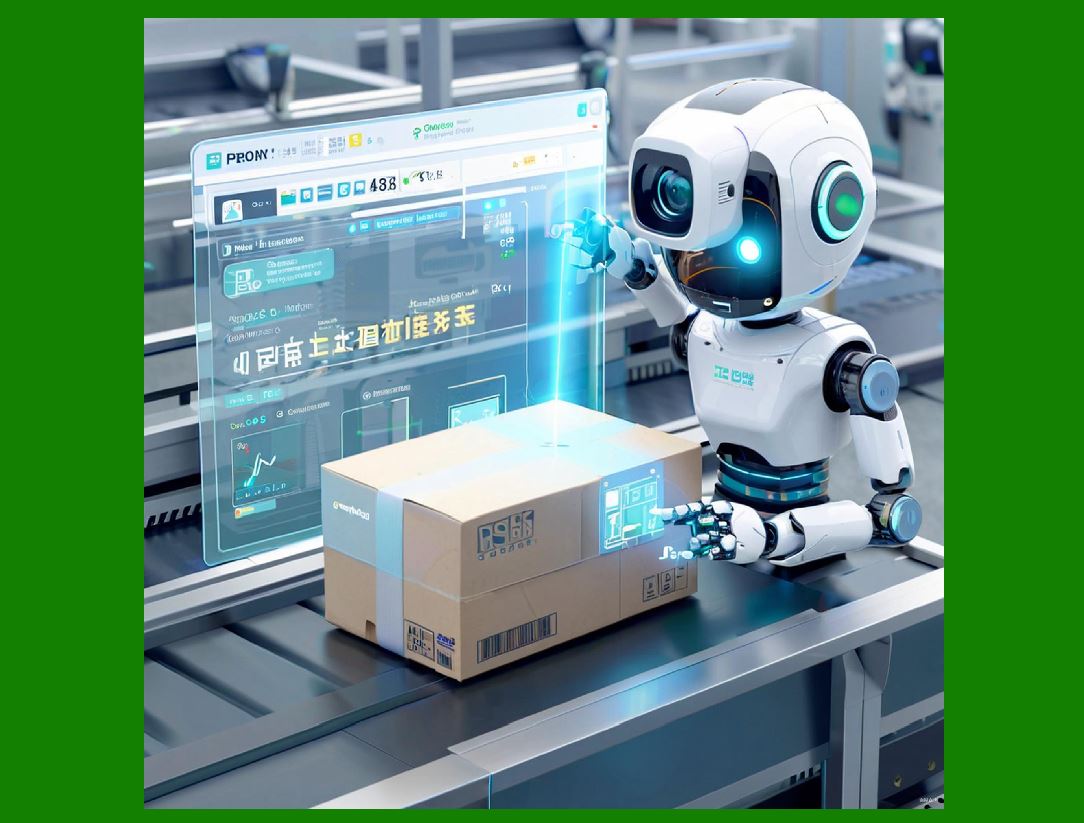
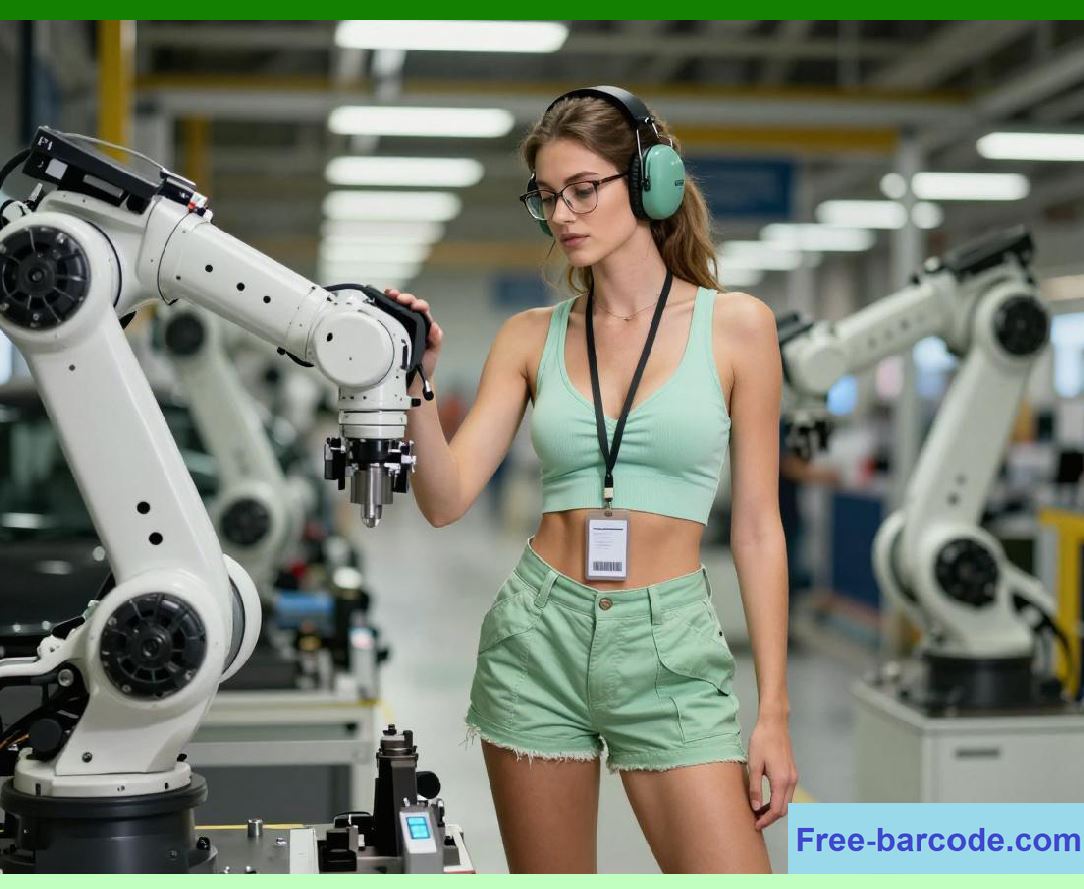
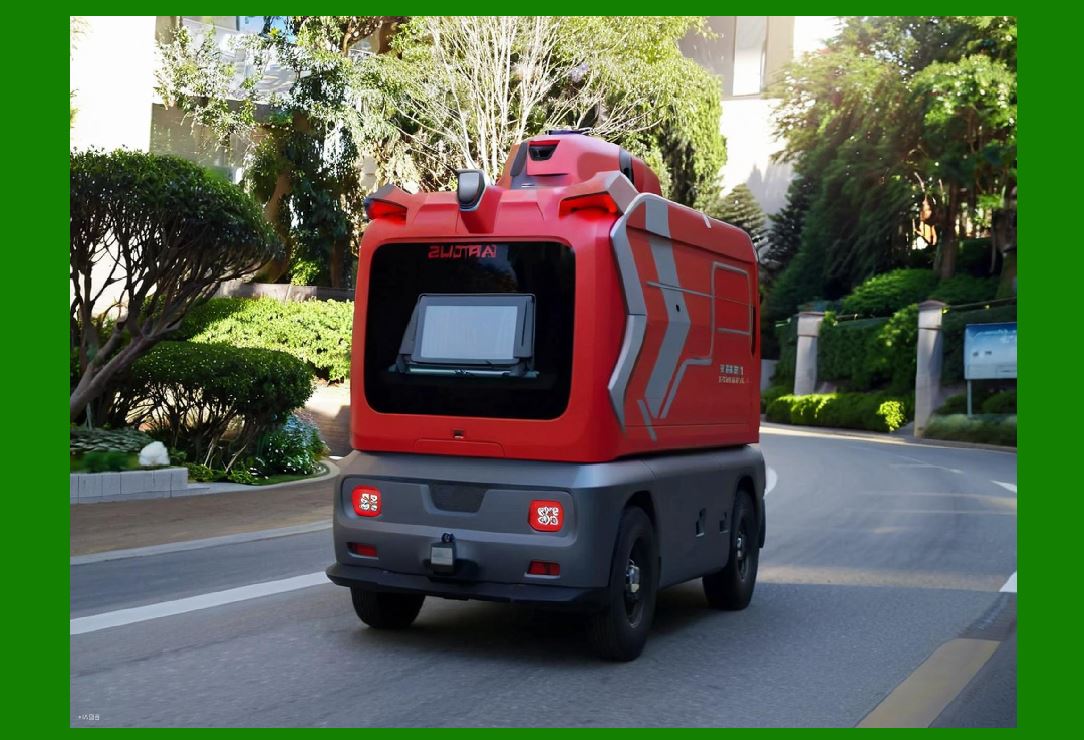
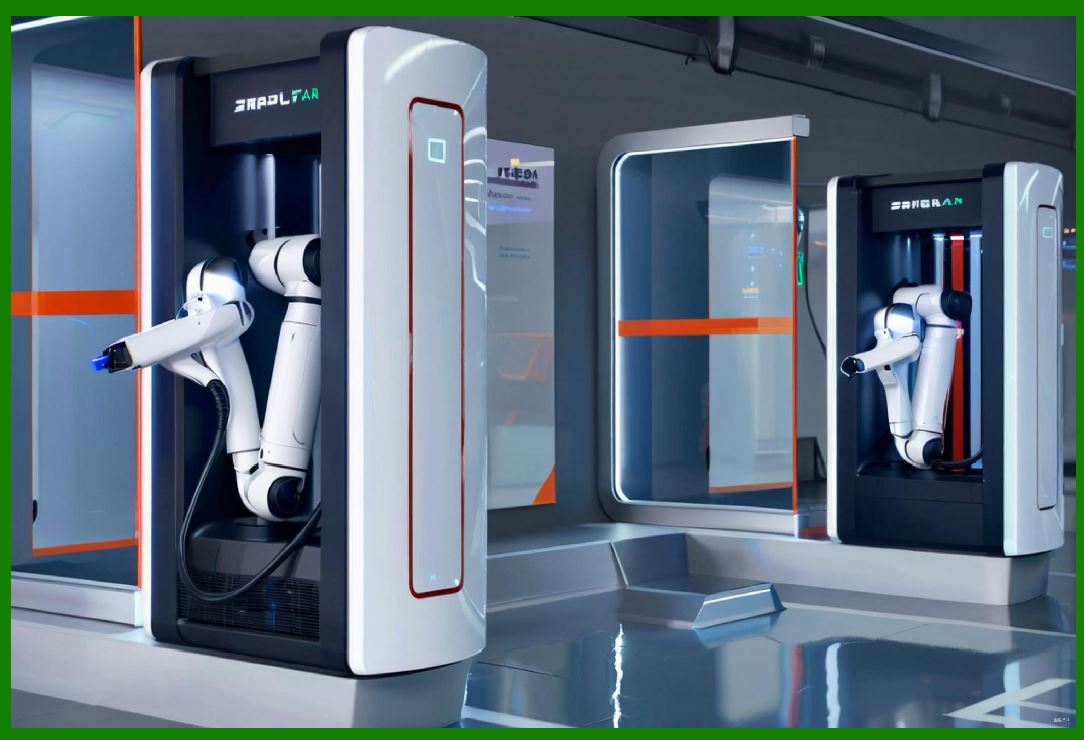
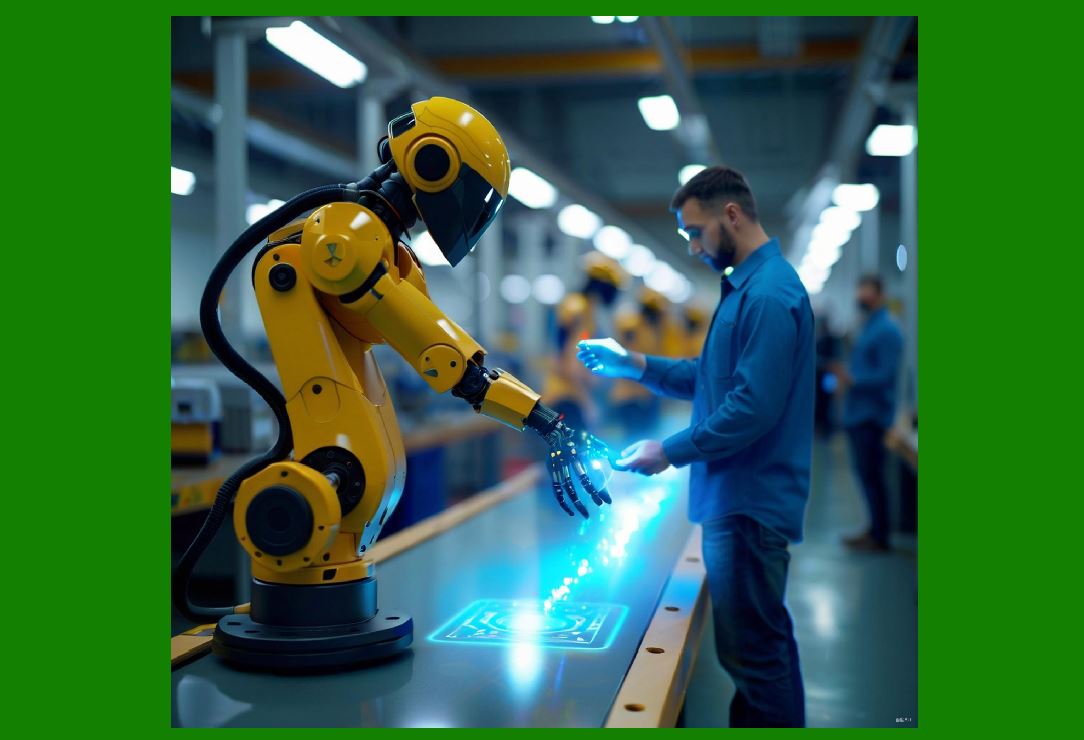
Embodied intelligence means AI that acts in the physical world. This includes robots, autonomous vehicles, drones, and automated guided vehicles. It also includes softer forms, such as augmented reality systems that guide a worker through a complex assembly task. |
The key advance here is not just better hardware. It is better perception and control. A robot that can see, grasp, and place a wide variety of objects without precise programming is far more useful than one that can only repeat a fixed motion. This flexibility will open up new tasks to automation, especially in high-mix, low-volume production. |
3.3 Autonomous Research |
Autonomous research means using AI to design experiments, analyze results, and propose new hypotheses. In manufacturing, this can mean discovering new materials, optimizing chemical processes, or finding better parameters for a production line. It can also mean automating the search for root causes when something goes wrong. |
This capability is still early. But it is advancing quickly. In the next five years, it will move from a few advanced labs into more mainstream industrial research and development. |
3.4 Generative and Predictive Systems |
Generative systems create content: text, images, code, and designs. Predictive systems forecast outcomes: demand, failures, quality, and energy use. In manufacturing, these two are often used together. A generative system might propose a new factory layout. A predictive system might estimate its throughput and cost. A human then reviews and refines the proposal. |
These capabilities are already being used in many industries. The challenge is to connect them to real data and real workflows. That is where most of the work will be. |

|
4. The Integration Challenge |
The integration challenge has four parts. Each is simple to state and hard to do well. |
4.1 Embedding AI Within Workflows |
AI does not create value in isolation. It creates value when it is part of a workflow. A quality inspection model is useful when it is connected to a conveyor belt and a rejection mechanism. A demand forecast is useful when it is connected to a planning system and a purchasing process. A maintenance prediction is useful when it is connected to a work order system and a spare parts inventory. |
Embedding AI means changing processes. It means deciding who acts on the output, when they act, and what they do if the AI is wrong. It means designing the human-machine interface so that the output is easy to understand and act on. It means training people on the new process. This is often the slowest part of deployment, and the part most likely to be underestimated. |
4.2 Grounding Outputs in Trusted Data |
AI models are only as good as the data they are trained on and the data they use at runtime. In manufacturing, data is often messy. Sensors drift. Labels are inconsistent. Systems are not connected. Historical records may be incomplete or biased. |
Grounding outputs in trusted data means building a data foundation. This includes data collection, cleaning, labeling, storage, and governance. It includes defining who owns data, who can access it, and how it is used. It includes monitoring data quality over time. Without this foundation, AI outputs will be unreliable, and trust will be lost. |
4.3 Maintaining Human Oversight |
Human oversight does not mean reviewing every decision. It means designing the system so that humans can intervene when needed and can understand what the system is doing. This requires explainability. It also requires clear boundaries: what the AI can decide on its own, what it can recommend, and what requires human approval. |
In manufacturing, safety is a primary concern. Any AI that controls physical equipment must be designed with safety in mind. This may mean limits on speed or force, redundant sensors, or emergency stop mechanisms. It also means clear procedures for when the AI fails or behaves unexpectedly. |
4.4 Continuously Learning from Deployment |
Deployment is not the end. It is the beginning of a learning process. Models drift as conditions change. New products are introduced. New failure modes appear. The organizations that succeed will be those that treat deployment as a source of data and feedback. They will monitor performance, collect errors, and update models. They will also learn from the people who use the systems every day. |
This requires a culture of continuous improvement. It requires processes for collecting feedback and acting on it. It requires metrics that go beyond accuracy to include business impact, user satisfaction, and safety. |
|
5. Application Examples Across Industries |
The following sections provide examples of how these capabilities are being applied in different industries. The examples are illustrative, not exhaustive. They are chosen to show the range of applications and the common patterns that emerge. |
5.1 Automotive Manufacturing |
Automotive manufacturing has been a leader in automation for decades. AI is now being used in several ways. In quality inspection, vision systems check welds, paint, and assemblies for defects. These systems can detect flaws that are hard for humans to see, such as tiny cracks or uneven paint. They can also adapt to new models faster than traditional rule-based systems. |
In predictive maintenance, sensors on robots and conveyors collect vibration, temperature, and power data. Machine learning models use this data to predict when a component will fail. This allows maintenance to be scheduled before a breakdown occurs, reducing downtime. |
In supply chain, AI is used to forecast demand for parts and vehicles. This is especially important as the industry shifts toward electric vehicles, which have different supply chains and different demand patterns. AI is also used to optimize logistics, such as routing trucks and managing inventory. |
In design, generative systems are used to propose lightweight structures and optimized components. These designs are then checked by engineers and tested in simulation. This can reduce weight, improve fuel efficiency, and speed up development. |

|
5.2 Aerospace and Defense |
Aerospace manufacturing involves complex, high-value products with strict safety requirements. AI is used in several areas. In inspection, vision systems check composite parts, turbine blades, and airframes for defects. These systems can detect delamination, cracks, and voids. They can also document their findings for traceability. |
In predictive maintenance, AI is used to monitor engines, landing gear, and other critical systems. Data from sensors is used to predict remaining useful life and to schedule maintenance. This is important for both safety and cost. |
In supply chain, AI is used to manage complex networks of suppliers. It can predict delays, identify risks, and suggest alternative sources. This is especially important for parts that have long lead times or limited suppliers. |
In design and testing, AI is used to simulate aerodynamic performance, structural integrity, and thermal behavior. This reduces the need for physical prototypes and speeds up certification. |

|
5.3 Electronics Manufacturing |
Electronics manufacturing is fast-moving and highly competitive. AI is used in several ways. In quality inspection, vision systems check printed circuit boards, solder joints, and displays. These systems can detect defects at high speed and with high accuracy. They can also be used for process control, such as adjusting soldering parameters in real time. |
In predictive maintenance, AI is used to monitor equipment such as pick-and-place machines and reflow ovens. This helps prevent downtime and reduce scrap. |
In supply chain, AI is used to manage the flow of components, which often come from many suppliers around the world. It can predict shortages, suggest alternatives, and optimize inventory levels. |
In design, AI is used to optimize chip layouts, reduce power consumption, and improve performance. Generative systems can propose new designs that are then verified by engineers. |

|
5.4 Chemicals and Pharmaceuticals |
Chemicals and pharmaceuticals involve complex processes and strict regulatory requirements. AI is used in several areas. In process optimization, models are used to predict yield, purity, and energy consumption. They can suggest changes to temperature, pressure, and flow rates. This can improve efficiency and reduce waste. |
In quality control, AI is used to analyze spectra, images, and other data to detect impurities or deviations. This is important for product safety and regulatory compliance. |
In research and development, autonomous research systems are used to design experiments and analyze results. This can speed up the discovery of new molecules, materials, and formulations. |
In supply chain, AI is used to manage the flow of raw materials and finished products. It can predict demand, manage inventory, and ensure compliance with regulations. |
|
5.5 Food and Beverage |
Food and beverage manufacturing involves perishable products and strict safety standards. AI is used in several ways. In quality inspection, vision systems check products for color, size, shape, and defects. They can also detect foreign objects. This is important for food safety and brand reputation. |
In process control, AI is used to monitor and adjust cooking, cooling, and packaging processes. This can improve consistency and reduce waste. |
In supply chain, AI is used to forecast demand, manage inventory, and optimize logistics. It can also be used to monitor temperature and humidity during transport to ensure food safety. |
In agriculture, AI is used to monitor crops, predict yields, and optimize irrigation and fertilization. This can improve sustainability and reduce costs. |

|
5.6 Heavy Machinery and Industrial Equipment |
Heavy machinery manufacturing involves large, complex products with long lifecycles. AI is used in several areas. In design, AI is used to optimize structures, reduce weight, and improve durability. It can also be used to simulate performance under different conditions. |
In manufacturing, AI is used for quality inspection, predictive maintenance, and process control. It can also be used to optimize scheduling and resource allocation. |
In after-sales service, AI is used to monitor equipment in the field. Data from sensors is used to predict failures and schedule maintenance. This can reduce downtime for customers and create new service opportunities for manufacturers. |

|
5.7 Textiles and Apparel |
Textiles and apparel manufacturing is often labor-intensive and subject to fast-changing fashion trends. AI is used in several ways. In quality inspection, vision systems check fabric for defects such as holes, stains, and weaving errors. This can improve quality and reduce waste. |
In design, generative systems are used to propose new patterns, colors, and styles. These designs are then reviewed by human designers and tested with customers. |
In supply chain, AI is used to forecast demand, manage inventory, and optimize production schedules. This is important because fashion trends can change quickly, and excess inventory is costly. |
In sustainability, AI is used to optimize water and energy use, reduce waste, and improve recycling. This is increasingly important as consumers and regulators demand more sustainable products. |

|
5.8 Energy and Utilities |
Energy and utilities involve large, complex systems with strict safety and reliability requirements. AI is used in several areas. In predictive maintenance, AI is used to monitor power plants, wind turbines, and transmission lines. This helps prevent outages and reduce maintenance costs. |
In grid management, AI is used to balance supply and demand, integrate renewable energy, and manage outages. This is becoming more important as the share of renewable energy grows. |
In energy efficiency, AI is used to optimize building systems, industrial processes, and data centers. This can reduce costs and emissions. |
In safety, AI is used to monitor equipment and detect anomalies that could lead to accidents. This is important in industries such as oil and gas, where safety is a top priority. |
|
5.9 Construction and Infrastructure |
Construction and infrastructure involve complex projects with many stakeholders and tight timelines. AI is used in several ways. In design, AI is used to optimize building layouts, structural systems, and energy performance. It can also be used to simulate construction sequences and identify potential conflicts. |
In project management, AI is used to forecast schedules, manage resources, and identify risks. This can help keep projects on time and on budget. |
In safety, AI is used to monitor construction sites for hazards, such as workers without protective equipment or unsafe conditions. This can reduce accidents and improve compliance. |
In operations, AI is used to monitor bridges, roads, and buildings for signs of wear or damage. This can help prioritize maintenance and prevent failures. |

|
6. Cross-Cutting Themes |
Several themes appear across all these industries. These themes will shape the path to 2030. |
6.1 Data Quality Is the Foundation |
Every application depends on data. Without good data, models will be unreliable. With good data, even simple models can be useful. Organizations that invest in data collection, cleaning, labeling, and governance will be better positioned to adopt AI. Those that do not will struggle, no matter how advanced their algorithms. |
6.2 Explainability Builds Trust |
In manufacturing, trust is essential. Workers need to understand why a system is recommending a certain action. Engineers need to understand why a model is predicting a failure. Managers need to understand why a forecast is changing. Explainability is not just a technical requirement. It is a social and organizational one. Systems that cannot be explained will not be adopted, even if they are accurate. |
6.3 Human-Centered Design Improves Adoption |
AI systems are used by people. If they are hard to use, they will not be used. Human-centered design means involving users in the design process, understanding their needs, and designing interfaces that are clear and helpful. It means providing training and support. It means treating users as partners, not as obstacles. |
6.4 Safety and Regulation Are Growing |
As AI becomes more capable, scrutiny will grow. Regulators will demand evidence that AI systems are safe, fair, and reliable. This is especially true in industries such as healthcare, transportation, and energy. Organizations that build safety and compliance into their systems from the start will be better prepared. Those that treat regulation as an afterthought will face delays and costs. |
6.5 Continuous Learning Is Essential |
Deployment is not a one-time event. Conditions change. Models drift. New products are introduced. Organizations that monitor performance, collect feedback, and update models will get better over time. Those that do not will see performance degrade. Continuous learning is both a technical process and a cultural one. It requires curiosity, humility, and a willingness to learn from mistakes. |

|
7. The Role of Standards and Regulation |
Standards and regulation will play a growing role in the path to 2030. They provide a common language for safety, performance, and interoperability. They also create obligations for organizations that use AI. |
In manufacturing, standards are already important for quality, safety, and environmental performance. AI will add new dimensions. For example, standards may be needed for how AI systems are validated, how they are monitored, and how they are updated. Standards may also be needed for data sharing and interoperability, so that different systems can work together. |
Regulation will vary by region and industry. Some regions will take a strict approach, requiring risk assessments and audits. Others will take a more flexible approach, encouraging innovation while setting basic safeguards. Organizations that operate across borders will need to navigate this complexity. Those that engage with regulators and standards bodies will be better positioned to shape the rules and to adapt to them. |

|
8. Workforce and Skills |
The workforce will change. Some tasks will be automated. Others will be augmented. New roles will emerge. The path to 2030 will require investment in skills. |
For operators, this means training on how to work with AI systems. This includes understanding what the system does, how to interpret its output, and what to do when it fails. It also includes basic data skills, such as how to label data and how to report issues. |
For engineers and technicians, this means training on how to build, deploy, and maintain AI systems. This includes data engineering, model development, and system integration. It also includes domain knowledge, so that AI systems are designed with an understanding of the physical process. |
For managers, this means training on how to lead AI projects. This includes setting goals, managing risks, and measuring impact. It also includes understanding the limitations of AI and knowing when to rely on human judgment. |
For organizations, this means creating career paths for AI-related roles. It means partnering with schools and universities to develop talent. It means creating a culture of learning and experimentation. |
|
9. Investment and ROI |
Investment in AI will continue to grow. But the focus will shift from experimentation to value. Organizations will demand clear returns. They will look at metrics such as downtime reduction, quality improvement, energy savings, and throughput increase. They will also look at softer benefits, such as worker safety and job satisfaction. |
The path to 2030 will favor organizations that can demonstrate value quickly and scale what works. This means starting with high-impact use cases, proving the concept, and then expanding. It means building reusable components, such as data pipelines and model deployment tools, so that each new application is faster and cheaper than the last. It means measuring not just accuracy but business impact. |

|
10. Risks and Challenges |
The path to 2030 will not be smooth. There are real risks and challenges. |
10.1 Technical Risks |
Models can fail in unexpected ways. They can be fooled by adversarial examples. They can drift as conditions change. They can be biased by unrepresentative data. These risks can be managed through testing, monitoring, and human oversight. But they cannot be eliminated entirely. |
10.2 Organizational Risks |
AI projects can fail for organizational reasons. Lack of clear ownership. Lack of alignment with business goals. Lack of user involvement. Resistance to change. These risks are often more important than technical ones. They require leadership, communication, and change management. |
10.3 Ethical and Social Risks |
AI can have unintended social consequences. It can displace workers. It can reinforce biases. It can concentrate power. These risks require careful consideration. Organizations should engage with stakeholders, including workers and communities, to understand and address concerns. |
10.4 Security Risks |
AI systems can be targets for cyberattacks. They can be manipulated to produce wrong outputs. They can be used to steal data or disrupt operations. Security must be built into AI systems from the start. This includes securing data, models, and the infrastructure that runs them. |

|
11. A Vision for 2030 |
By 2030, AI will be a normal part of manufacturing and industrial operations. It will be embedded in workflows, from design to production to supply chain to service. It will be grounded in trusted data. It will be overseen by humans who understand what it does and when to intervene. It will be continuously learning from deployment. |
Factories will be more flexible. They will be able to switch between products quickly, using AI to reconfigure machines and robots. They will be more efficient, using AI to optimize energy, materials, and labor. They will be safer, using AI to monitor hazards and prevent accidents. |
Supply chains will be more resilient. They will be able to predict disruptions, adapt to changes, and recover quickly. They will be more transparent, using AI to track products and verify claims. |
Products will be better. They will be designed with AI, tested with AI, and maintained with AI. They will be more reliable, more efficient, and more sustainable. |
Work will change. Some tasks will be automated. Others will be augmented. New roles will emerge. The workers who thrive will be those who can work alongside AI, who can understand its output, and who can bring human judgment to complex situations. |

|
12. Detailed Summary |
This chapter has looked ahead to 2030. It has argued that the next five years will be defined not by a single breakthrough but by integration. The organizations that thrive will be those that embed AI within workflows, ground outputs in trusted data, maintain human oversight, and continuously learn from deployment experience. The technology will evolve; the principles of effective deployment will endure. |
The chapter began by describing the state of play in 2025. AI is already present in many factories, but its use is uneven. The reasons are about data, skills, processes, and trust, not just technology. Three trends have defined the period up to 2025: falling costs of sensing, computing, and software development. These trends will continue, but they will not be enough on their own. The next phase will be about putting these tools to work in a reliable, safe, and scalable way. |
The chapter then described four core capabilities that will matter most over the next five years: world models, embodied intelligence, autonomous research, and generative and predictive systems. World models learn how environments behave and can simulate production lines, warehouses, and supply networks. Embodied intelligence means AI that acts in the physical world, including robots, autonomous vehicles, and drones. Autonomous research means using AI to design experiments, analyze results, and propose new hypotheses. Generative and predictive systems create content and forecast outcomes. |
The chapter then discussed the integration challenge. This has four parts. Embedding AI within workflows means changing processes and designing human-machine interfaces. Grounding outputs in trusted data means building a data foundation with collection, cleaning, labeling, storage, and governance. Maintaining human oversight means designing systems so that humans can intervene and understand what the system is doing. Continuously learning from deployment means monitoring performance, collecting feedback, and updating models. |
The chapter then provided application examples across industries. In automotive, AI is used for quality inspection, predictive maintenance, supply chain, and design. In aerospace, it is used for inspection, predictive maintenance, supply chain, and design and testing. In electronics, it is used for quality inspection, predictive maintenance, supply chain, and design. In chemicals and pharmaceuticals, it is used for process optimization, quality control, research and development, and supply chain. In food and beverage, it is used for quality inspection, process control, supply chain, and agriculture. In heavy machinery, it is used for design, manufacturing, and after-sales service. In textiles and apparel, it is used for quality inspection, design, supply chain, and sustainability. In energy and utilities, it is used for predictive maintenance, grid management, energy efficiency, and safety. In construction and infrastructure, it is used for design, project management, safety, and operations. |

|
The chapter then discussed cross-cutting themes. Data quality is the foundation. Explainability builds trust. Human-centered design improves adoption. Safety and regulation are growing. Continuous learning is essential. |
The chapter then discussed the role of standards and regulation. Standards provide a common language for safety, performance, and interoperability. Regulation will vary by region and industry. Organizations that engage with regulators and standards bodies will be better positioned to shape the rules and adapt to them. |
The chapter then discussed workforce and skills. Operators need training on how to work with AI systems. Engineers and technicians need training on how to build, deploy, and maintain them. Managers need training on how to lead AI projects. Organizations need to create career paths and a culture of learning. |
The chapter then discussed investment and ROI. The focus will shift from experimentation to value. Organizations will demand clear returns and will favor approaches that start with high-impact use cases and scale what works. |
The chapter then discussed risks and challenges. Technical risks include model failure, adversarial examples, drift, and bias. Organizational risks include lack of ownership, alignment, user involvement, and resistance to change. Ethical and social risks include worker displacement, bias, and concentration of power. Security risks include cyberattacks and data theft. |
The chapter then presented a vision for 2030. AI will be a normal part of manufacturing and industrial operations. Factories will be more flexible, efficient, and safe. Supply chains will be more resilient and transparent. Products will be better. Work will change, with new roles and new skills. |
The chapter concludes with a call to action. The path to 2030 is not predetermined. It will be shaped by the decisions that leaders make today. Those who invest in data, people, and processes will be better prepared. Those who treat AI as a special project will struggle. The technology will evolve; the principles of effective deployment will endure. The organizations that thrive will be those that master the integration challenge. |
 cs@easiersoft.com