1. Understanding AI¡¯s Impact on Employment |
1.1 The Definition and Scope of AI in Contemporary Labor Markets |
Artificial Intelligence (AI) refers to technologies capable of performing cognitive tasks that traditionally required human intelligence. These tasks include perception, learning, reasoning, creativity, decision-making, and language communication. Modern AI has already evolved beyond narrow automation and now includes advanced systems such as deep learning neural networks, generative AI for creative synthesis, and autonomous agents capable of self-optimization. |
AI no longer exists merely as a software subsystem. It forms an ecosystem that merges sensing, computing, data flows, and real-time decision engines across sectors such as finance, logistics, healthcare, manufacturing, education, entertainment, and governance. This ubiquitous diffusion dramatically expands AI¡¯s influence on labor markets. |
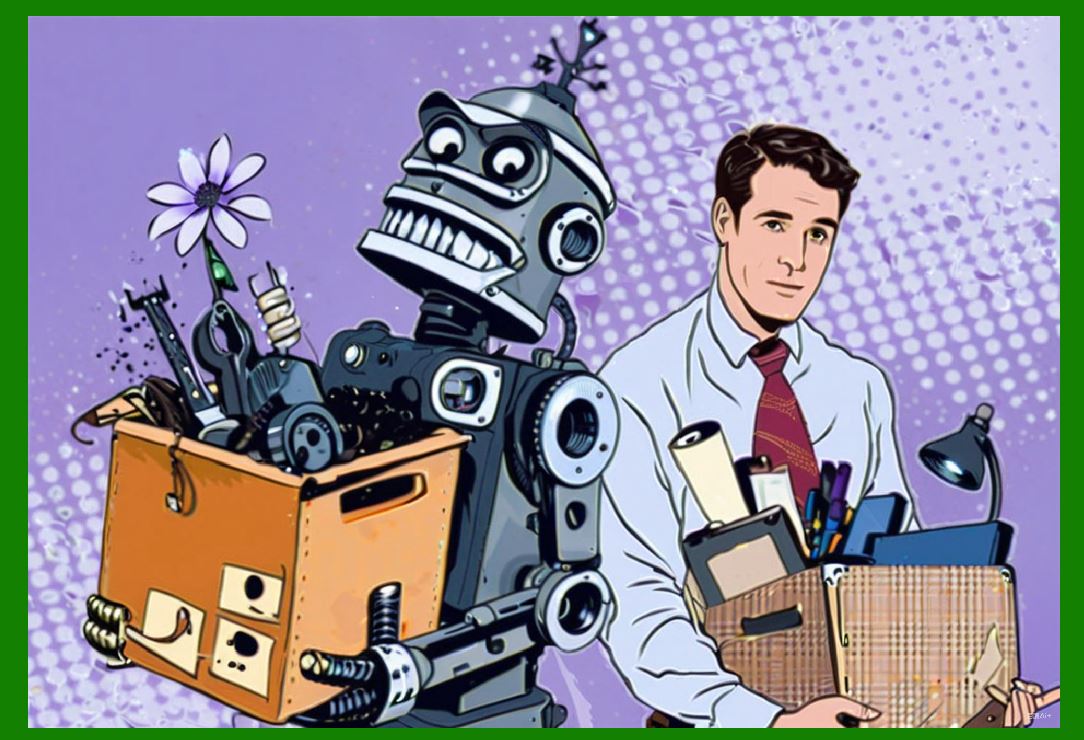
In economic terms, AI functions not only as a capital substitute for labor but also as an intelligence multiplier that enhances productivity and lowers cost. It becomes a restructuring force for entire industries. Routinized labor experiences displacement, and cognitive professional roles face partial automation. |
Therefore, avoiding unemployment requires understanding how AI redefines job boundaries, modifies required skill sets, and shifts wage structures. |
1.2 Historical Patterns of Technological Disruption |
Throughout industrial history, major technological revolutions consistently reshaped employment: |
Mechanization displaced physical labor in agriculture. |
Mass production systems transformed factory labor. |
Computing automated clerical and information workflows. |
The internet radically changed communication and commerce. |
In each case, technology eliminated some functions but created new industries, occupations, and professional identities. |
The AI revolution differs in its speed, scope, and depth: |
Speed: AI adoption scales exponentially once deployed because it is digitally replicable. |
Scope: It penetrates both cognitive and creative labor, which previous revolutions rarely touched. |
Depth: It enhances decision-making, which influences entire societal structures. |
The historical lesson remains constant. Those who adopt technology early benefit from new forms of work. Those who resist adaptation experience unemployment or downward mobility. |
1.3 Classification of Jobs by Automation Risk |
In the AI era, jobs can be categorized based on susceptibility to task automation: |
Jobs composed mainly of repetitive and rules-based tasks face high risk. |
Jobs involving complex social interactions and creative novelty face lower risk. |
Jobs requiring interdisciplinary integration often gain enhanced value due to AI augmentation. |
To avoid unemployment, individuals must transition away from task-defined roles toward value-defined roles. A task can be automated. A value role integrates human decision-making, responsibility, ethics, creativity, and context interpretation. |
This transformation changes hiring criteria. Employers now evaluate: |
Adaptability rather than static credentials |
Continuous learning rather than pre-acquired knowledge |
Problem discovery rather than task execution |
Data literacy rather than mere tool usage |
People must therefore design careers that cannot be fully decomposed into algorithmic steps. |

|
1.4 Economic Drivers of AI-Induced Labor Reallocation |
Organizations adopt AI for the following measurable incentives: |
Reduced operational and labor costs |
Faster processing speeds and throughput |
Fewer errors and higher consistency |
Higher scalability without proportional labor growth |
Competitive advantage against slower adopters |
These incentives accelerate job displacement, particularly in roles where humans provide limited differentiation from machines. |
However, the equation includes creation forces, not merely destruction. The AI economy generates new demands: |
AI system training, auditing, and compliance |
AI-enabled service delivery |
Human-machine collaboration design |
New product categories based on personalized intelligence |
Data governance and privacy stewardship |
Human oversight roles for ethical and safety accountability |
Understanding both sides of this economic force field reveals pathways to future employment. |
1.5 The Two Core Labor Markets of the AI Era |
AI divides the labor market into: |
Machine-complementary roles |
These roles leverage human abilities in creativity, critical thinking, social bonding, moral judgment, empathy, contextual understanding, and multidisciplinary integration. Humans remain indispensable. |
Machine-substitutable roles |
These roles emphasize execution, compliance, and predictable pattern repetition. Machines fully or mostly replace them. |
The strategic goal for every worker is to position themselves in the complementary category. |
This requires shifting identity from ¡°task performer¡± to problem solver, ¡°process follower¡± to value innovator, and ¡°employee¡± to strategic contributor. |
1.6 The Psychological Dimension of Displacement Risk |
Job loss represents not only economic disruption but psychological destabilization. AI intensifies three anxieties: |
Loss of control over career trajectory |
Obsolescence of accumulated experience |
Identity disruption when roles lose relevance |
To remain employable, individuals must treat learning as an identity and adaptability as a core personal value. Refusing mindset evolution can produce unemployment even in sectors where demand remains strong. |
Healthy adaptation includes: |
Reframing fear as motivation |
Cultivating curiosity toward new tools |
Building confidence through experimentation |
Developing resilience against disruption cycles |
Protecting mental health becomes a critical survival factor. |
1.7 Why the AI Era Rewards Proactive Actors |
Technological transitions historically reward leaders rather than followers. Early reskilling secures access to emerging opportunities before markets saturate. Waiting until displacement occurs leads to reactive, inferior positioning. |
Strong strategies in the AI era require: |
Anticipation of future skill demands |
Early investment in human-machine integration abilities |
Strategic networking within growth industries |
Continuous refinement of digital competencies |
Those who treat AI as a partner rather than a threat gain a competitive advantage that compounds over time. |
|
2. Skills that Remain Valuable in the AI Era |
2.1 Structural Overview of Future-Proof Capabilities |
The AI era does not eliminate human value. Instead, it shifts the definition of what is valuable. Skills that remain secure share three properties: |
They are difficult to automate because they require broad contextual reasoning, abstract interpretation, empathy, or ethical accountability. |
They are transferable across industries, because technological cycles accelerate cross-sector mobility. |
They enhance AI output, transforming machines into productivity multipliers rather than replacements. |
Five master categories define durable employability: |
Cognitive Intelligence Competencies |
Social and Emotional Intelligence Competencies |
Technological and Data Competencies |
Adaptability and Lifelong Learning Competencies |
Entrepreneurial and Creative Value Competencies |
These categories will be explained with deep analytical granularity. |
2.2 Cognitive Intelligence Competencies |
AI excels at pattern detection, scalability, and data-driven prediction. Human cognitive strengths lie in: |
Problem formulation rather than problem completion |
A machine can optimize a defined objective, but humans define what problems are worth solving. |
Cross-domain integration |
AI models struggle when combining unrelated knowledge domains lacking shared training data. |
Conceptual abstraction and meta-reasoning |
Humans excel at intuiting high-level principles and moral frameworks beyond historical behavior. |
Diagnostic ambiguity resolution |
When information is incomplete, uncertain, or contradictory, human judgment remains superior. |
Key durable cognitive skills: |
Critical thinking |
Analytical reasoning with imperfect data |
Systems thinking |
Ethical decision-making |
Long-range strategic planning |
These skills become decisive in roles such as policy formation, executive leadership, scientific innovation, complex finance, and risk management. |
2.3 Social and Emotional Intelligence Competencies |
AI cannot replicate the deep human interpersonal connection required in many high-value services. Emotional intelligence (EQ) involves understanding emotions in oneself and others, enabling trust-building and conflict resolution. |
Durable social capabilities include: |
Advanced communication in ambiguous environments |
Cultural and interpersonal negotiation |
Collaborative problem-solving with diverse stakeholders |
Leadership that motivates voluntary commitment |
Client relationship management based on credibility and empathy |
Mentorship and human development skillsets |
Even in AI-intensive workflows, trust determines adoption. Workers who manage relationships between stakeholders and intelligent systems hold crucial professional positions. |
High resilience employment areas: |
Healthcare professionals |
Educators and trainers |
Business development and sales strategists |
Mental health practitioners |
Managers and organizational leaders |
Legal advocates in emotionally charged contexts |
Humans retain dominance where meaning, trust, and accountability matter. |
2.4 Technological and Data Competencies |
The most significant employment protection is obtained through participation in the AI economy, not avoidance of it. |
AI-literate employees gain bargaining power. They understand system limitations, bias risks, and operational constraints. They become navigators of intelligent infrastructure rather than casualties of automation. |
Essential competencies: |
Human-machine collaboration proficiency |
Using AI tools efficiently and controlling quality of outputs. |
Data literacy across the value chain |
Understanding data sourcing, anomaly detection, privacy compliance, and interpretation of analytic results. |
Workflow automation enablement |
Using AI agents and robotic process automation (RPA) to eliminate low-value work. |
Model governance awareness |
Bias, fairness, safety standards, and regulatory compliance define future job legitimacy. |
Technical communication |
Conveying complex system behavior in understandable language for non-technical decision-makers. |
These skills are valuable in every profession, not only engineering. |
2.5 Adaptability and Lifelong Learning Competencies |
Static expertise decays rapidly in the AI economy. The half-life of technological knowledge shortens as innovation accelerates. |
Adaptability is not a soft preference. It is an economic survival tool. Workers must transform their identity from ¡°knower¡± to continuous learner. Competencies include: |
Learning velocity |
Speed of assimilating and applying new tools and workflows. |
Comfort with uncertainty |
Making decisions without full information. |
Proactive skill updating |
Monitoring industry trends and acquiring capabilities ahead of demand shifts. |
Cognitive flexibility |
Switching between specialized and generalist roles as contexts evolve. |
Self-directed learning |
Designing personal curriculum paths without institutional triggers. |
Governments and schools cannot supply adaptation at sufficient speed. Autonomous learning defines personal employability. |

|
2.6 Entrepreneurial and Creative Value Competencies |
Creativity remains a uniquely human domain, especially where novelty lacks historical precedent. AI synthesizes patterns. Humans challenge assumptions. |
Creative value competencies include: |
Original idea generation |
New business models, new design paradigms, new market propositions. |
Narrative and branding influence |
Constructing identity and meaning around products and services. |
Opportunity recognition |
Seeing gaps in markets before others detect them. |
Complex product innovation |
Integrating technology, market needs, culture, and social psychology. |
Risk-taking and initiative |
Willingness to experiment into the unknown separates leaders from followers. |
Entrepreneurship represents not only business creation but internal innovation inside organizations (intrapreneurship). Workers who expand revenue or create value streams become indispensable. |
2.7 Specific Skill Archetypes That Resist Automation |
Human-centered job archetypes retain persistent demand: |
Explorers |
Research, scientific discovery, future trend mapping |
Function: Extend the frontier of knowledge where training data does not yet exist. |
Explainers |
Interpreters, teachers, communicators, cultural mediators |
Function: Convert complex intelligence into accessible insight. |
Sustainers |
Ethicists, compliance officers, trust stewards, regulators |
Function: Ensure AI systems operate safely and fairly within social norms. |
Enhancers |
Designers, creative professionals, human experience curators |
Function: Elevate emotional impact and differentiate products through human stories. |
Integrators |
Project managers, architects, cross-functional strategists |
Function: Combine disciplines and align humans with intelligent systems. |
These archetypes form the core of talent resilience. |
2.8 The Role of Domain Expertise in Intelligent Systems Governance |
Domain knowledge does not disappear. It transforms. Workers who understand markets, human behavior, operational constraints, and regulatory environments become central to AI quality control. |
For example: |
Healthcare AI requires clinicians as supervisors of diagnostic accuracy. |
Legal AI requires lawyers to certify legal validity and mitigate liability. |
Industrial AI requires engineers to contextualize safety implications. |
AI produces suggestions, not accountability. Human domain experts retain ultimate responsibility, thus preserving employment and elevating role importance. |
2.9 The New Competency Pyramid of the AI Workforce |
The traditional education pyramid focused on: |
Knowledge ¡ú Skills ¡ú Experience |
The AI era reverses this structure: |
Experience navigating ambiguity ¡ú Skills through adaptation ¡ú Knowledge acquired as needed |
Professional value emerges from the ability to execute under change, not merely to repeat learned methods. |
The new employability formula: |
Human differentiation value |
= Emotional intelligence |
Interdisciplinary thinking |
AI utilization proficiency |
Adaptation velocity |
Accountability and trustworthiness |
Workers who match this profile do not fear automation. They supervise it. |
2.10 Conclusion of Part 2 |
Employability in the AI era relies on complementarity. Humans must own the elements of value that AI cannot fully replicate or ethically assume. The future workforce will be built around those capable of: |
Leveraging machines |
Leading humans |
Managing uncertainty |
Innovating into unexplored spaces |
Upholding societal trust frameworks |
These skills are not optional. They form the foundation of job security, income growth, and life stability in the coming decades. |

|
3. Practical Strategies for Individuals |
3.1 Strategic Mindset for Personal Employment Stability |
Long-term employability in the AI economy requires a precise strategic mindset anchored in three directives: |
Proactive transformation rather than waiting for automation to eliminate roles. |
Value orientation rather than task orientation, focusing on contributions that affect outcomes rather than process execution. |
Continuous evolution rather than static identity, accepting that a career is a dynamic portfolio instead of a single profession. |
Individuals who internalize these principles treat every skill as temporary and every advancement as preparation for the next shift. This psychological orientation produces resilience and competitive strength even when technologies evolve at accelerated speed. |
3.2 Personal Automation Risk Assessment |
The first actionable step involves evaluating personal vulnerability to automation. The risk correlates with the proportion of current tasks that are: |
Routine |
Rules-based |
Standardized |
Digitally observable |
Data dependent |
Performance measurable through objective metrics alone |
Workers can classify themselves into three categories: |
High displacement risk |
Administrative processing, simple financial operations, retail checkout assistance, data entry, transcription, repetitive manufacturing roles, basic content generation. |
Individuals must mobilize transition strategies immediately. |
Moderate displacement risk |
Logistics operators, medical technicians, paralegals, accountants, junior software developers, call center personnel. |
Role redesign and upskilling are urgent priorities. |
Low displacement risk |
Strategic decision-makers, educators, high trust professionals, complex designers, scientific researchers, multidisciplinary consultants. |
Even these roles require AI augmentation skills to remain relevant. |
A self-assessment performed regularly enables early movement into growth trajectories before layoffs occur. |
3.3 Building a Personalized AI-Augmented Skill Stack |
Sustainable employment requires a hybrid capability portfolio that combines human differentiation with AI empowerment. A comprehensive skill stack includes: |
Primary human-value specialization |
Strong domain expertise where human judgment matters. |
AI tool fluency |
Command of the intelligent systems reshaping the chosen domain. |
Data reasoning capacity |
Ability to interpret machine-generated insights and integrate them into decisions. |
Cross-functional communication |
Collaboration across technical and non-technical stakeholders. |
This integrated stack transforms an individual from replaceable labor into a human-AI performance amplifier. |
3.4 Systematic Reskilling Roadmap |
A strategic reskilling path consists of four sequential phases: |
Awareness acquisition |
Study how AI affects one¡¯s industry and professional identity. |
Competence acquisition |
Learn AI tools, UX interfaces, and workflow integration methods within one¡¯s field. |
Contribution enhancement |
Redesign job responsibilities with measurable productivity gains enabled by AI. |
Leadership positioning |
Guide peers and organizations in scaling AI-driven efficiencies. |
The goal is not merely learning new tools. The goal is to change role definition and demonstrate visible organizational value creation. |
3.5 Professional Brand Reinvention |
Hiring in the AI era emphasizes potential and adaptability. A modern professional identity must communicate: |
Mastery of change |
Ability to pilot emerging technologies |
Initiative in solving non-obvious problems |
Accountability and operational reliability |
Collaborative influence and communication excellence |
Individuals should construct a narrative demonstrating that they do not merely perform tasks but enable transformation. |
A compelling brand accelerates redeployment into new opportunities even as older roles vanish. |
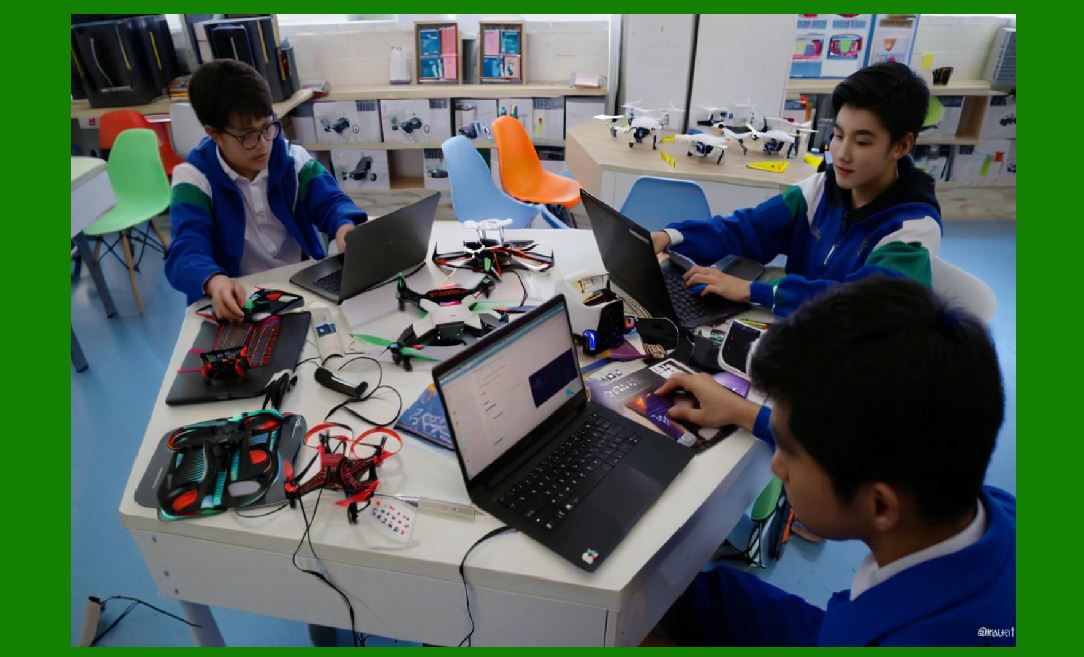
3.6 Building Human-Machine Collaboration Expertise |
Every professional must learn to: |
Delegate tasks to AI systems |
Critically evaluate model outputs |
Identify hidden assumptions, bias, and safety concerns |
Validate conclusions with contextual environment knowledge |
Provide final ethical and responsibility oversight |
Human authority remains essential. Machines lack accountability and stake in consequences. The most employable individuals are those who ensure AI operates reliably within social, legal, and moral boundaries. |
|
3.7 Strengthening Digital Portfolio Assets |
AI-era employability is reinforced by demonstrable proof of capability. Tangible achievements hold more weight than claims or certifications. Workers should accumulate: |
Documented process improvements |
AI-enabled efficiency results |
Solution case studies |
Demonstrated creative outputs |
Industry-relevant digital artifacts |
Authored insights and thought contributions |
Evidence of measurable contributions protects against layoffs by proving replacement would reduce value. |
3.8 Expanding Opportunity Networks |
Automation reduces hiring for execution roles and expands hiring for strategic and trust-intensive roles. Those desirable roles circulate predominantly through professional networks rather than open postings. |
Networking strategy should include: |
Stakeholder relationships in growth sectors |
Participation in communities of practice surrounding emerging technology |
Connections with decision-makers adopting AI solutions |
Mentorship relationships with innovative leaders |
Visibility through conferences, digital seminars, and expert forums |
Career protection is strengthened when others actively request an individual¡¯s involvement rather than merely evaluating an application. |
3.9 Financial Resilience for Career Transition |
Transition periods may temporarily reduce income as individuals retrain or pivot. Financial strategy must provide buffers enabling risk-taking and learning: |
Establish a dedicated retraining fund or savings reserve |
Reduce dependency on a single employer through side value creation |
Implement disciplined personal finance management |
Explore multiple revenue streams, including freelance expertise and digital products |
Economic resilience provides autonomy during transformation, avoiding reactive decisions under distress. |
3.10 Micro-entrepreneurial Initiative |
Individuals can avoid unemployment by becoming originators of value rather than recipients of task assignments. Entrepreneurial actions may include: |
Identifying pain points where AI can enable client success |
Offering specialized advisory services |
Designing personalized productivity workflows using automation |
Monetizing niche knowledge digitally (courses, analysis, applied research) |
Partnering with AI companies as pilot users or evangelists |
The transition from employee to value creator significantly reduces vulnerability to organizational restructuring. |
3.11 Geographic and Remote Work Flexibility |
AI standardizes digital collaboration. Employment markets increasingly reward those open to: |
Remote-first roles |
Cross-border work arrangements |
Freelance and project-based operations |
Portfolio careers distributed across multiple organizations |
Flexibility multiplies access to emerging opportunities worldwide, minimizing unemployment risk even when local industries decline. |
3.12 Psychological Strength as a Strategic Asset |
The AI era introduces continuous change, role volatility, and uncertainty. Individuals must cultivate: |
Persistence through learning difficulties |
Openness to evolving identity |
Resilience against career disruption |
Confidence in adaptation capabilities |
Growth mindset driven by curiosity rather than fear |
Psychological durability becomes as critical as technical competence. |
3.13 Conclusion of Part 3 |
Practical strategies for individuals revolve around evolution, augmentation, and diversification. They empower workers to: |
Stay ahead of displacement cycles |
Strengthen personal bargaining power |
Move into complementary roles |
Grow income by designing unique value contributions |
Maintain autonomy regardless of organizational changes |
Those who take early action secure stability and prosperity. Those who delay must navigate the transition under greater pressure. |

|
4. Practical Strategies for Enterprises |
4.1 The Employer¡¯s Perspective on AI Workforce Transformation |
Organizations adopt AI primarily to improve economic efficiency. However, poorly designed automation strategies can generate workforce disruption, institutional knowledge loss, and stakeholder resistance that undermine long-term competitiveness. Sustainable success in the AI era requires organizations to balance three factors: |
Productivity growth through automation and augmentation |
Human capability expansion through reskilling and role redesign |
Institutional resilience through talent preservation and cultural alignment |
Enterprises that only reduce labor costs sacrifice innovation capacity. Enterprises that strategically elevate employees through AI gain powerful competitive differentiation. |
4.2 Designing AI Workforce Complementarity |
AI displaces tasks, not people. Organizations must restructure roles to align: |
Machines ¡ú pattern processing, automation, scaling |
Humans ¡ú judgment, trust, creativity, accountability |
A robust complementarity model assigns: |
Repetitive tasks to automation |
Analytical insight validation to humans |
Strategic decision-making to leadership supported by AI inputs |
Customer interaction and emotional labor to human experts with AI augmentation |
Innovation and problem definition to cross-functional human teams |
This model ensures that investment in automation amplifies human contribution rather than replaces it. |
4.3 Workforce Mapping and Task Decomposition |
To avoid mass redundancy stemming from generalized assumptions about automation, enterprises must conduct precise task analyses: |
Decompose each role into distinct task units |
Classify each task by automation feasibility |
Assign future ownership: AI, human, or collaboration |
Redesign job specifications accordingly |
This process converts traditional job descriptions into dynamic intelligence collaboration profiles, redistributing responsibilities to retain employees while eliminating low-value labor. |
4.4 Reskilling as a Core Business Process |
Skills become obsolete faster than corporate hierarchies evolve. Organizations must institutionalize continuous reskilling through: |
Internal AI academies aligned with real business needs |
Modular learning paths targeting immediate task transitions |
Project-based learning deployment with direct impact demonstration |
Certification tied to role advancement |
Incentives for innovation and early adoption |
Training is no longer a cost center; it becomes the foundation of strategic capability renewal. |
4.5 Cross-Functional Team Redesign |
AI dissolves traditional silos between business functions. New workflows require integration: |
Data science + domain operations |
Engineering + compliance |
Marketing + behavioral analytics |
Design + cognitive psychology |
Human resources + automation governance |
Organizations must build cross-functional teams responsible for: |
Rapid experimentation |
Continuous workflow reengineering |
AI success case propagation |
Cultural integration and adoption support |
Human diversity enhances AI outcomes by revealing blind spots in technology and data design. |
4.6 Transparent Change Communication |
Employees fear automation when uncertainty dominates corporate communication. To reduce anxiety and avoid resistance, organizations should: |
Explain the strategic purpose of AI adoption |
Present a credible path toward employee evolution |
Provide clear opportunities for upskilling |
Commit to retention where feasible |
Demonstrate early wins that include human advancement |
Maintain leadership accountability for transition outcomes |
Transparency increases trust, which increases adoption, which accelerates productivity. |

|
4.7 Internal Mobility and Career Transition Systems |
To prevent skill atrophy and workforce fragmentation, organizations must ensure: |
Redeployment opportunities before termination |
Talent marketplaces with real-time role availability |
Coaching and career navigation support |
Cross-department rotational programs |
Project-based intermediary assignments |
These mechanisms convert displacement risk into internal growth potential. |
4.8 Performance Metrics for the AI Era |
Traditional productivity measures reward output volume and standardization. AI-era performance measurement must reward: |
Collaboration effectiveness with intelligent systems |
Innovation impact and continuous improvement |
Customer trust, experience, and loyalty outcomes |
Speed of adaptation to new technologies |
Quality of insights derived from data |
Ethical and regulatory compliance reliability |
Metrics influence behavior. Updated metrics produce a workforce committed to transformation. |
4.9 Governance of AI Adoption and Human Responsibility |
AI introduces operational, legal, and ethical risks. Organizations must: |
Create AI governance frameworks covering privacy, bias, transparency, and accountability |
Maintain human-in-the-loop control for consequential decisions |
Implement audit trails for automated processes |
Ensure compliance with evolving regulations |
Train employees to recognize and escalate anomalies |
Humans remain custodians of trust and societal alignment. Proper governance preserves employment in oversight and compliance roles. |
4.10 Leadership Transformation Requirements |
Executives must evolve from hierarchical decision controllers to strategic orchestrators of human-AI synergy. Leadership responsibilities include: |
Vision-setting for intelligent transformation |
Removing organizational friction against adoption |
Aligning incentives with transformational outcomes |
Cultivating internal champions for innovation |
Modeling adaptive and learning-oriented behavior |
Leadership that clings to outdated authority structures accelerates talent loss and weakens corporate competitiveness. |
4.11 Partner Ecosystems and Co-Creation |
Agile adoption requires collaboration with external stakeholders: |
Universities for talent pipeline development |
Technology vendors for advanced tooling |
Government agencies for compliance alignment |
Industry alliances for standardization and best practices |
A strong ecosystem accelerates innovation, supports continuous skill renewal, and mitigates technology risk. |
4.12 Protecting Institutional Knowledge |
Automation without retention destroys wisdom embedded in long-tenured employees. Enterprises should: |
Capture expert knowledge through structured processes |
Encode operational expertise into AI-assisted systems |
Assign veteran employees to quality, training, and governance roles |
Reward contributions to organizational knowledge bases |
Human experience becomes a multiplier of machine intelligence rather than a casualty of efficiency optimization. |
4.13 Conclusion of Part 4 |
Enterprises that treat employees as strategic partners in AI transformation gain: |
Higher productivity with lower disruption |
Stronger innovation capacity |
Reduced turnover costs |
Enhanced employer reputation |
Sustainable competitive advantage |
AI does not eliminate jobs when organizations deploy it to elevate human capability. It only eliminates jobs when deployed carelessly. |

|
5. Government, Education, and Policy Frameworks |
5.1 National Responsibility in the AI Employment Transition |
The AI-driven labor transition is systemic. Individuals and enterprises cannot bear full responsibility for adaptation. Governments must guarantee: |
Economic stability during workforce restructuring |
Talent development systems aligned with future needs |
Legal safeguards for fair labor treatment |
Innovation infrastructure for new job creation |
Inclusive access to AI participation benefits |
National competitiveness in the AI era correlates directly with the ability to transform the workforce without social crisis. |
5.2 Labor Market Forecasting and Data Transparency |
Governments require rigorous, continuous forecasting of employment transitions: |
Identify high-risk industries |
Predict emerging high-growth professions |
Track skill supply and demand in real time |
Provide public dashboards for workforce planning |
Fund analytical institutions that update transition models |
Disseminate reliable guidance to citizens and businesses |
Transparent intelligence prevents mismatch between displaced workers and available opportunities. |
5.3 Education System Reform for Future Skills |
Traditional education emphasizes memorization and standardized answers. AI provides automated knowledge retrieval and analytical computation, reducing the value of those skills. Educational systems must shift toward: |
Critical thinking over formula recall |
Creativity over repetition |
Collaboration over isolation |
Ethics and social understanding over mechanistic correctness |
Lifelong learning cycles rather than single-degree careers |
Human-AI collaboration literacy embedded at all levels |
Curricula must train students to define problems that machines cannot predefine. |
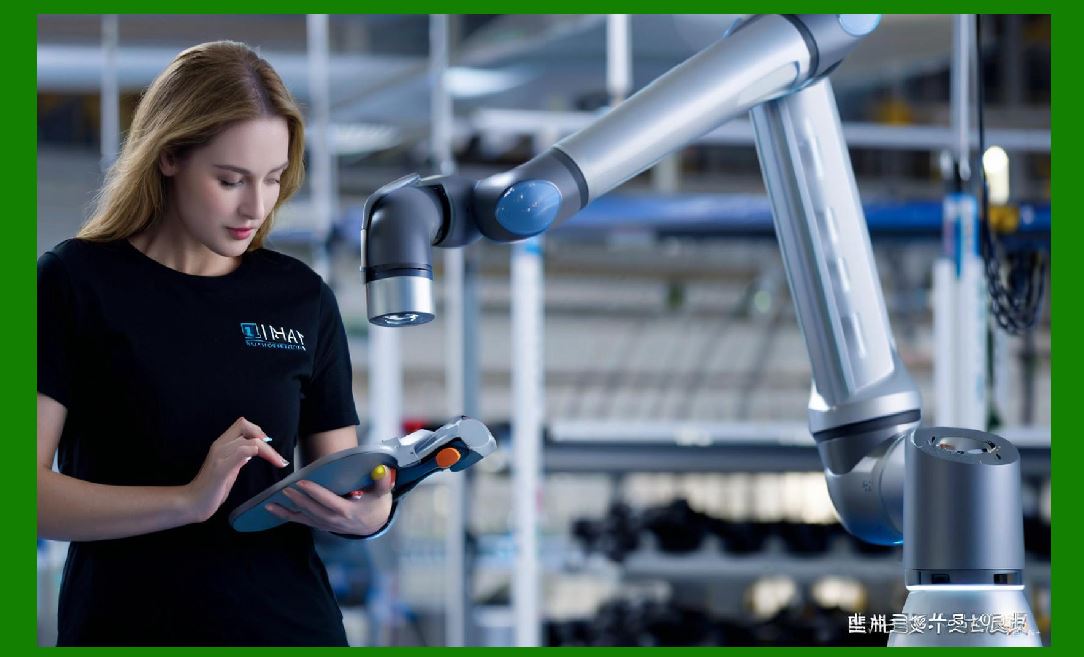
5.4 Public Access to Retraining Infrastructure |
Workforce transition requires universal accessibility: |
Subsidized reskilling programs |
Public digital literacy centers |
Remote participation options |
Employer partnership networks |
Targeted upskilling for vulnerable groups |
Governments must view training not as optional welfare, but as national defense for economic relevance. |
|
5.5 Incentive Programs for Employer Retention and Upskilling |
Employment preservation aligns public expenditures with private innovation outcomes. Incentive structures may include: |
Tax credits for internal retraining commitments |
Grants for AI augmentation rather than labor removal |
Financial rewards tied to hiring displaced workers |
Penalties for preventable mass layoffs |
Recognition systems for ethical automation leadership |
Effective policy aligns profit motives with stable employment. |
5.6 AI Safety and Regulation Supporting Workforce Confidence |
Public fear of automation grows when accountability is unclear. Governments must: |
Establish human responsibility in all critical automated workflows |
Enforce transparency of algorithmic decision-making |
Regulate bias, privacy, and discrimination risks |
Promote explainable and auditable AI |
Protect citizens from harmful uses of automation |
Strong protection frameworks enable acceptance of AI rather than resistance. |
5.7 Protection of Worker Rights and Transition Security |
Policies should shield individuals from abrupt livelihood collapse: |
Extended unemployment benefits tied to active reskilling participation |
Wage insurance during role transitions |
Mandatory advance notice of automation-driven restructuring |
Career transition advisors integrated into local labor offices |
Guaranteed access to mental health support |
Strengthened legal protections for gig and platform workers |
These measures transform displacement into structured change rather than catastrophic loss. |
5.8 Job Creation Through AI-Driven National Initiatives |
AI accelerates productivity, freeing human potential for new sectors: |
Green energy systems |
Advanced manufacturing |
Digital health and telemedicine |
Elder care and human services |
Creative industries and cultural technologies |
Space, robotics, and cybersecurity sectors |
Governments must proactively expand job creation in these domains to absorb workers transitioning away from automatable roles. |
5.9 Support for Entrepreneurship and Local Innovation |
New economic opportunities emerge fastest through entrepreneurship. Policy support might include: |
Micro-grants for technology-enabled startups |
Simplified business registration frameworks |
Mentor access and incubator networks |
Affordable AI computing resources for small enterprises |
Preferential procurement for innovation-driven ventures |
Entrepreneurial expansion distributes job creation beyond large corporations. |
5.10 Regional Transition Strategies |
AI impacts regions differently: |
Industrial zones face manufacturing disruption |
Rural areas risk increased digital inequality |
Financial hubs transform into automated analytics centers |
Governments must develop regional plans that: |
Retain local economic identity |
Rebuild industries around intelligent systems |
Expand digital infrastructure and broadband access |
Prevent geographic employment polarization |
Balanced development reduces long-term unemployment concentration. |
5.11 International Collaboration and Workforce Mobility |
Global labor markets restructure simultaneously. National policy should enable: |
Mutual recognition of skills and certifications |
Immigration pathways aligned with emerging industries |
Workforce mobility to alleviate regional skill shortages |
Cross-border research alliances |
International cooperation ensures talent circulation rather than isolated skill decay. |

|
5.12 Funding AI Literacy for the Entire Population |
AI literacy must be universal to prevent a divide where: |
A small elite commands automation |
A large population becomes economically marginalized |
Universal literacy requires programs for: |
Youth and students |
Mid-career workers |
Elderly individuals adapting to digital life |
Underrepresented groups vulnerable to displacement |
A society that learns together transitions together. |
5.13 Ethical Framework for Human-Centric Technology Adoption |
Government must ensure: |
Technology respects human dignity |
Workers retain identity beyond economic roles |
Benefits of automation are widely distributed |
No population segments suffer persistent exclusion |
Society must treat automation as a tool for human advancement rather than a replacement mechanism. |
5.14 Conclusion of Part 5 |
Strong policy frameworks serve as the backbone of a humane and prosperous AI transition. They: |
Minimize unemployment |
Maximize workforce quality |
Accelerate innovation |
Maintain social harmony and trust |
Enable broad access to new opportunities |
When individuals, enterprises, and governments collaborate, AI enriches society rather than destabilizing labor. |

|
6. Career Transformation Roadmaps |
6.1 Introduction to Career Transition Planning |
Career transformation in the AI era is no longer optional; it is an imperative. Individuals must move from reactive role survival toward proactive portfolio-based career management. A roadmap involves: |
Self-assessment of current skills and tasks |
Identification of AI impact on those tasks |
Prioritization of growth areas |
Structured upskilling and reskilling |
Network expansion and opportunity scanning |
Demonstrable contribution and personal branding |
The roadmap is iterative: assessment, adaptation, and advancement occur continuously as technologies evolve. |
6.2 Mapping Current Roles to Future-Proof Categories |
Workers should classify their roles using three axes: |
Automation susceptibility ¨C high, medium, low |
AI complementarity potential ¨C low, medium, high |
Strategic value of domain expertise ¨C low, medium, high |
Roles with high complementarity and strategic domain value are least at risk and represent pivot points for others to emulate. Jobs with low complementarity and high automation risk require rapid skill acquisition or transition. |
Example categories: |
High-risk, low-complementarity: Data entry, clerical processing, repetitive assembly |
Moderate-risk, moderate-complementarity: Junior analytics, technical support, routine financial roles |
Low-risk, high-complementarity: Strategy consulting, human-centered design, healthcare diagnostics, leadership roles |
Mapping enables focused investment of time, effort, and learning resources. |
6.3 Personal Capability Gap Analysis |
After categorization, individuals must perform a gap analysis: |
Identify skills currently lacking that are essential for complementary roles |
Assess accessibility of those skills (training, mentorship, online courses) |
Evaluate timelines for proficiency acquisition |
Prioritize high-value, high-transferable skills |
A structured gap analysis prevents scattered learning and accelerates career protection. |
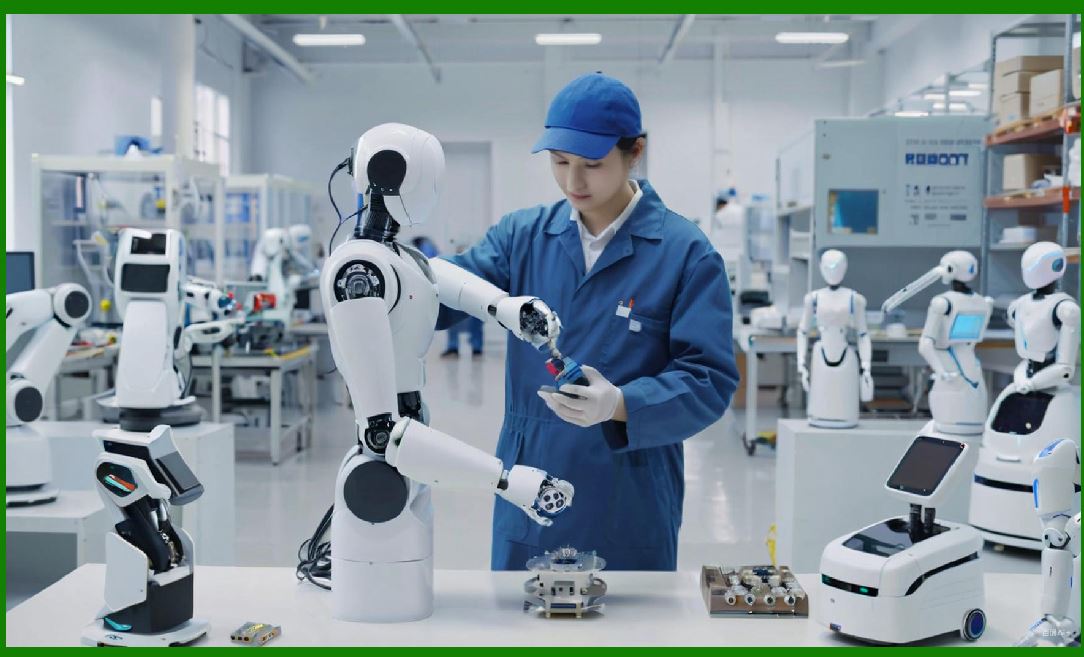
6.4 Stepwise Upskilling Strategies |
A practical strategy includes four sequential steps: |
Foundational knowledge acquisition |
Acquire literacy in AI, data analysis, digital tools, and human-machine interaction. |
Applied practice and integration |
Implement learned skills in existing roles to produce measurable results. |
Cross-domain specialization |
Combine primary domain expertise with AI augmentation abilities and soft skills. |
Leadership and innovation orientation |
Demonstrate capacity to guide others, manage AI projects, and generate strategic insights. |
Each step incorporates measurable milestones and timelines to maintain accountability. |
|
6.5 Creating a Portfolio of Demonstrable Work |
Transitioning careers successfully requires tangible proof of competence: |
Project documentation with quantifiable outcomes |
AI tool implementation records |
Case studies of process improvements |
Collaborative contributions across teams |
Personal content illustrating expertise (white papers, blogs, presentations) |
A portfolio replaces abstract resumes with concrete evidence of value creation, enhancing employability and negotiating power. |
6.6 Leveraging AI for Personal Career Growth |
Individuals should use AI as a strategic augmentation tool, not merely as a task replacement. Key approaches include: |
Automating routine tasks to free time for creative and strategic work |
Enhancing decision-making with predictive analytics |
Accelerating learning using intelligent tutoring and personalized knowledge platforms |
Identifying emerging opportunities through AI-driven market intelligence |
Strengthening personal brand via AI-assisted content creation |
Effective AI adoption ensures individuals gain productivity leverage, making themselves indispensable. |
6.7 Mentorship and Coaching Integration |
Guided career transition accelerates outcomes. Strategies include: |
Securing mentors with AI experience in relevant domains |
Participating in peer networks for shared knowledge |
Accessing online and institutional coaching resources |
Engaging in reverse mentorship, where younger digital-native talent supports adaptation to new technologies |
Mentorship combines skill acquisition, strategy guidance, and social validation. |
6.8 Industry-Specific Transition Strategies |
Each industry requires tailored approaches: |
Healthcare: Upskill in AI diagnostics, telemedicine, patient interaction with automation |
Finance: Data analytics, algorithmic oversight, regulatory compliance interpretation |
Manufacturing: Robotics coordination, predictive maintenance, design thinking |
Education: AI-enhanced instruction, personalized learning design, hybrid teaching |
Creative industries: Digital media tools, interactive experience design, AI-assisted content generation |
Logistics and retail: Automated supply chain management, inventory intelligence, customer engagement optimization |
Mapping skills to industry-specific transformation ensures relevance and minimizes downtime during career shifts. |
6.9 Psychological Preparation for Continuous Change |
Career transformation is psychologically demanding. Individuals must cultivate: |
Growth mindset ¨C viewing challenges as opportunities |
Cognitive flexibility ¨C adapting rapidly to changing demands |
Emotional resilience ¨C handling stress associated with uncertainty |
Persistence ¨C enduring multi-year skill accumulation |
Curiosity-driven motivation ¨C sustaining learning momentum |
Psychological readiness directly influences the effectiveness of technical upskilling. |
6.10 Monitoring Market Signals for Career Adjustment |
AI-driven labor markets evolve rapidly. Individuals must continuously monitor: |
Emerging technologies relevant to their domain |
Shifts in regulatory frameworks and industry standards |
Wage trends and job availability in complementary roles |
Organizational adoption patterns of AI tools |
Competitor skill portfolios and benchmarks |
Active monitoring enables timely recalibration of career pathways. |

|
6.11 Financial Planning for Career Transformation |
Career transformation may temporarily reduce income. Strategic financial planning includes: |
Budgeting for reskilling courses, certifications, and tools |
Maintaining an emergency fund for transition periods |
Exploring part-time or freelance work aligned with skill-building |
Leveraging employer-sponsored learning benefits |
Seeking grants, scholarships, or subsidized training programs |
Financial resilience ensures career transitions proceed strategically rather than out of necessity. |
6.12 Conclusion of Part 6 |
A structured career transformation roadmap ensures that individuals: |
Identify vulnerabilities and opportunities |
Build hybrid skill portfolios |
Leverage AI to enhance human value |
Demonstrate capability through tangible contributions |
Prepare psychologically and financially for multi-year adaptation |
Career transformation becomes a disciplined process rather than a reactive scramble, minimizing unemployment risk in the AI era. |
 cs@easiersoft.com