1. Introduction to Logistics Sorting Robots |
1.1 Logistics sorting robots represent a critical advancement in automated logistics operations, engineered to improve parcel handling efficiency, accuracy, and throughput in warehousing and distribution environments. Their adoption reflects a direct response to rapidly increasing parcel volumes, driven by e-commerce expansion, multichannel retailing, and heightened consumer service expectations. |
1.2 These robotic systems perform one of the most labor-intensive processes in distribution centers: sorting objects based on destination, type, or priority. Sorting functions include identifying parcels, transporting them through the facility, and routing them toward specific chutes, bins, or loading docks for downstream shipment. |
1.3 Logistics sorting robots replace or augment human labor in environments that previously relied heavily on repetitive manual sorting tasks. Human sorting is subject to fatigue, errors, and variability, while robotic sorting systems are designed for continuous 24-hour operation with consistent performance. |
1.4 Traditional automation solutions such as conveyor systems and fixed chute sorters remain static and costly to redesign when logistics operations change. By contrast, robotics solutions exhibit higher flexibility that enables processing facility reconfiguration without major structural investments. |
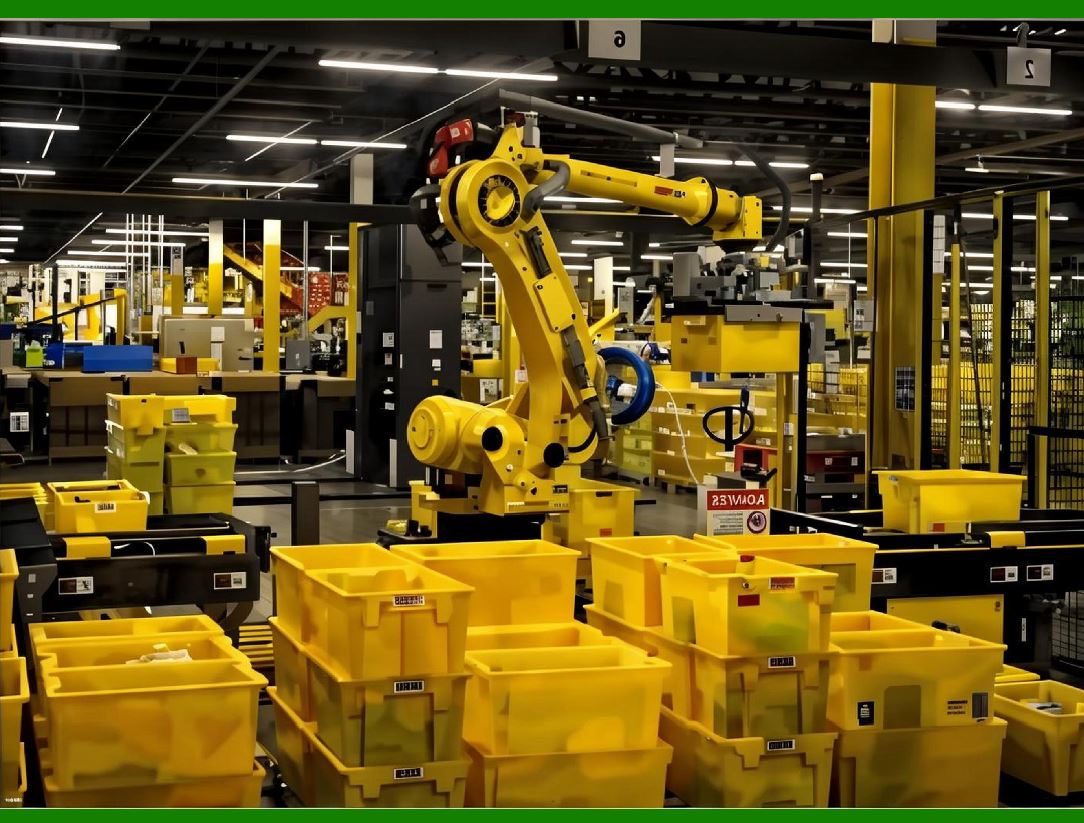
1.5 Sorting robots integrate multiple technical fields. Key disciplines include mechatronics, autonomous navigation, machine perception, wireless interaction, intelligent scheduling, distributed robotics, and systems engineering. These cross-domain technologies converge to form a coordinated fleet capable of synchronized parcel flow control. |
|
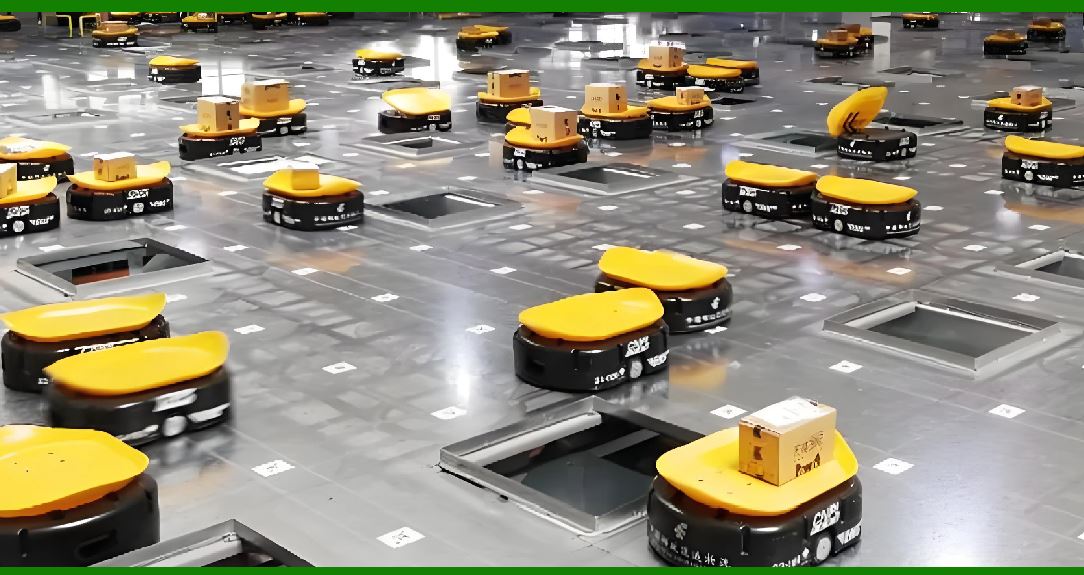
1.6 The conceptual principle behind sorting robots centers on modularity. Instead of relying on a single fixed sorter, many autonomous mobile robots (AMRs) operate in parallel. This distributed architecture improves scalability and fault tolerance. When parcel volume increases, operators may simply deploy more robots. |
1.7 Global logistics companies such as express parcel couriers, postal organizations, and omnichannel retailers increasingly adopt robotics-based sorting to balance productivity with economic viability. These robots help mitigate labor shortages and reduce overall logistics latency. |
1.8 From a systems perspective, sorting robots constitute a key component within the broader structure of smart warehousing and intelligent logistics. They contribute to the flow from goods receiving to dispatching, linking barcode or RFID identification with transportation and loading operations. |
1.9 Many sorting robots are designed to operate in a ¡°goods-to-destination¡± paradigm, where robots carry parcels to designated drop-off points rather than transporting parcels on complex conveyor belts. This mobile process is inherently more flexible and adaptable. |
1.10 The development of logistics sorting robots has undergone three main stages. The first stage involved static electromechanical sorting technology with limited intelligence. The second stage introduced AMRs capable of autonomous pathfinding. The third stage integrates advanced perception and AI decision engines to enable collaborative behaviors and optimized collective routing. |
1.11 Investment in sorting robots illustrates a convergence of operational demand and technological maturity. Hardware cost reductions in sensors, microprocessors, and drive systems facilitate commercial deployment in large-scale logistics networks. |
1.12 Industry analysts view the adoption of logistics sorting robots as a strategic initiative. It enables transportation providers to remain competitive, lowers cost per parcel, accelerates delivery times, and improves customer satisfaction across global commerce ecosystems. |
|
2. Classification of Logistics Sorting Robots |
2.1 Sorting robots vary widely in structure, locomotion design, and operational principle. Classification approaches differ depending on technical perspective, but common taxonomy identifies five major categories: |
a. Cross-belt sorting robots |
b. Tilt-tray sorting robots |
c. Autonomous mobile sorting robots (AMRs) |
d. Robotic arm sorting stations |
e. Drone-assisted sorting concepts (emerging) |
2.2 Cross-belt sorting robots feature a miniature conveyor belt installed at the robot¡¯s upper surface. When the robot reaches its assigned drop-off location, the belt activates to discharge the parcel to either side. This provides flexible lateral sorting capability crucial in high-density layouts. |
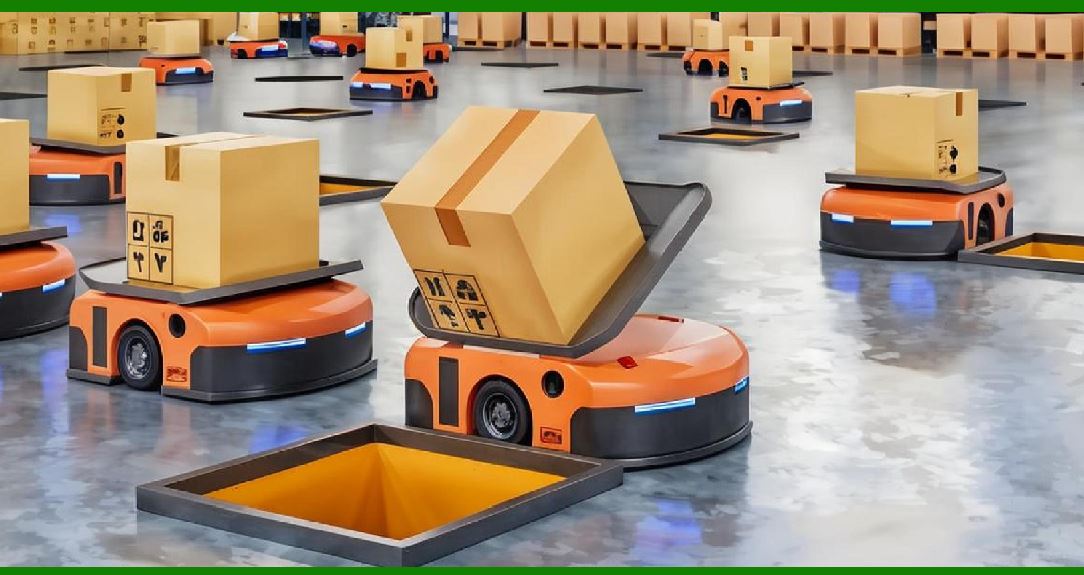
2.3 Tilt-tray sorting robots employ a mechanical tray capable of tilting left or right to release parcels into designated bins. This mechanism reduces friction and is suitable for handling packages with non-uniform surfaces that may not slide predictably on conveyors. |
2.4 Autonomous mobile sorting robots comprise the most widely deployed category. These units are compact anthropomorphic or square-profile vehicles containing a lifting mechanism or top container. They transport parcels directly to chutes while using navigation systems such as QR code grids or LiDAR maps. |
2.5 Robotic arm sorting stations perform smart picking, classification, and placement tasks. They often operate at fixed positions, integrated with vision systems for barcode recognition. These stations can support mixed sorting of irregular and non-conveyable parcels, including soft packages. |
2.6 Drone-assisted sorting robots remain primarily experimental. These aerial systems support vertical dimension sorting within multi-level warehouse environments. Although limited in payload capacity, drones represent a futuristic direction for vertical logistics automation. |
2.7 Another classification method focuses on motion techniques: |
a. Ground wheeled robots |
b. Slider-based robots on rails |
c. Conveyor-attached mobile units |
d. Hybrid robots using wheels plus rollers for controlled sliding |
e. Omnidirectional drive units for precision maneuvering |
2.8 The payload capability of sorting robots differs depending on design intent. Small robots often handle lightweight parcels such as consumer electronics or cosmetics, while heavy-duty models transport appliances or bulky goods. |
2.9 This classification expands further by information control architecture: |
a. Centralized command arbitration where a central controller assigns robot tasks |
b. Distributed intelligence where robots negotiate routes and priorities dynamically |
c. Hybrid scheduling incorporating both methods |
2.10 Additional differentiation occurs in power systems. Batteries remain dominant, but wireless charging, supercapacitors, and quick-swap battery modules improve continuous operation readiness. |
2.11 Some categories reflect navigation technology distinctions: |
a. Vision-guided robots |
b. QR-grid guided robots |
c. Magnetic strip guided robots |
d. Laser-SLAM (Simultaneous Localization and Mapping) robots |
e. UWB (Ultra-Wideband) anchored robots |
f. Multi-sensor fusion robots |
2.12 Market-leading designs increasingly conform to standards for parcel compatibility, from letter envelopes to express shipping cartons, thus minimizing operational constraints. |
2.13 Product segmentation often correlates with logistics application tiers. Large-scale national distribution hubs implement heavy-payload high-throughput designs, while last-mile parcel aggregation centers favor compact, highly flexible AMRs to optimize local delivery flows. |
|
3. Functional Architecture of Logistics Sorting Robots |
3.1 A sorting robot consists of complex hardware and software subsystems working in concert. All hardware components are engineered to maintain durability under continuous industrial usage. |
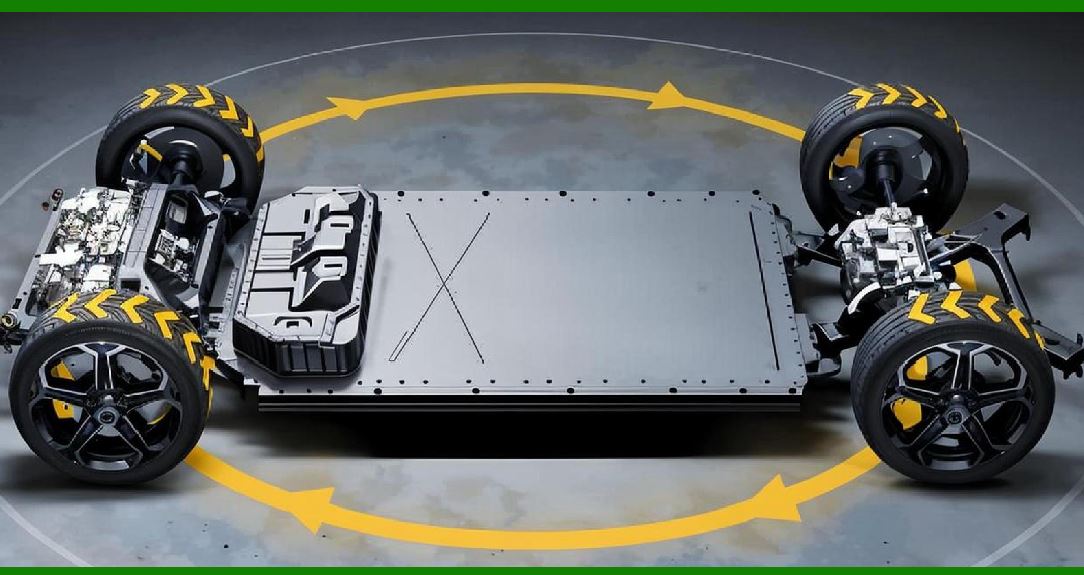
3.2 A typical robot includes chassis, drive motors, wheels or tracks, lift mechanism or tray system, sensors for perception, onboard computing hardware, wireless communication module, and embedded controllers. Integration ensures safe and reliable parcel transport. |
3.3 The chassis structure must support load stability and withstand repeated shock during acceleration, deceleration, and item discharge. It is typically composed of lightweight metal frames or high-strength engineered plastics. |
3.4 The drive system incorporates brushless DC motors or hub motors. These systems convert electrical power into mechanical torque. Design considerations include speed control precision, efficiency, thermal performance, and low acoustic signature. |
3.5 Navigation relies on sensor input and real-time control algorithms. QR codes placed on the floor provide absolute positioning references. Other designs employ LiDAR scanners, depth cameras, ultrasonic sensors, or inertial measurement units for relative localization. |
3.6 Safety sensors ensure collision avoidance. Proximity detectors and emergency braking routines mitigate the risk of contact with humans or other robots. Modern safety architectures often adopt functional safety standards for industrial electronics. |
3.7 Machine vision enables decoding of parcel identification markers. High-resolution cameras scan barcodes or optical codes on parcels and upload data for verification. Some robots integrate OCR capabilities for address label interpretation. |
3.8 The onboard computing system executes real-time control loops, navigation decision algorithms, and wireless communication protocols. It must operate with low latency and redundancy to avoid delays or operational failures. |
3.9 Wireless connectivity allows continuous command and status exchange with the Warehouse Control System (WCS). Robots typically support industrial Wi-Fi at 5 GHz for reliable communication. Fleet coordination depends heavily on strong low-delay network performance. |
3.10 Power management balances runtime with charging cycles. Intelligent battery analytics monitor cell health, power draw patterns, and charge optimization schedules to ensure maximum operational continuity. |
3.11 The sorting functional mechanism enables item release at precise drop-off points. Mechanical actuation timing accuracy ensures correct routing into the assigned channel without damage or misplacement. |
3.12 Multi-robot coordination logic is a major architectural component. The fleet must maintain synchronized flows and avoid congestion. A distributed robotics approach enhances scalability, throughput stability, and resilience against individual robot faults. |
3.13 Software architecture is modular, allowing upgrades to perception algorithms or routing strategies. Many providers implement containerized AI software that can be deployed during live operations without downtime. |
3.14 Diagnostic modules perform continuous health monitoring. Predictive maintenance analytics detect issues in advance to prevent unscheduled outages. This improves long-term uptime and reduces maintenance cost. |
3.15 The functional architecture of logistics sorting robots demonstrates the sophisticated integration of mechanical hardware, digital intelligence, wireless infrastructure, and logistics data flow. |
|
4. Intelligent Perception Systems in Logistics Sorting Robots |
4.1 Intelligent perception is fundamental to the autonomous operational capabilities of logistics sorting robots. It encompasses the suite of sensors, data processing algorithms, machine learning models, and fusion techniques that enable robots to interpret dynamic warehouse environments and parcels with high precision. |
4.2 Perception systems address three essential sensing domains: self-localization, environmental awareness, and parcel identification. Each domain requires specialized sensing hardware integrated through robust data fusion methods to maintain real-time responsiveness. |
4.3 Self-localization refers to determining the exact position and orientation of the robot relative to a predefined map. This functionality prevents navigation errors that could compromise throughput or safety. |
4.4 Environmental awareness ensures robots detect obstacles, identify dynamic hazards such as human workers or fallen parcels, and navigate collaboratively through shared spaces without collisions. This fosters safe human-robot coexistence. |
4.5 Parcel identification enables robots to acquire barcode or RFID label information from packages. The sorting system depends on accurate data acquisition to route items to correct destinations. |
4.6 Camera systems are the most prevalent perception modality. High-definition optical cameras capture visual data for barcode scanning, QR tag detection on the floor, and object recognition. These cameras are paired with illumination modules to stabilize imaging across lighting conditions. |
4.7 Machine vision algorithms execute image preprocessing, thresholding, and pattern recognition functions. Barcode recognition relies on contrast detection and spatial decoding, while OCR models handle printed alphanumeric content. Vision processing speed has direct correlation with robot productivity. |
4.8 LiDAR (Light Detection and Ranging) systems provide precise distance measurement and spatial mapping. Rotating or solid-state LiDAR scanners construct a 2D or 3D model of the robot¡¯s surroundings, enabling SLAM-based navigation. Erratic or cluttered warehouse environments benefit from LiDAR¡¯s robustness. |
4.9 Depth cameras employ structured light or time-of-flight (ToF) principles to capture three-dimensional object geometry. They support pose estimation and assist robotic arms with grasp path planning where deployed. Depth perception improves item handling confidence. |
4.10 Ultrasonic sensors detect nearby obstacles using sound waves. They serve as secondary safety sensors to provide redundancy in collision avoidance especially near low-lying objects that vision sensors might overlook. |
4.11 Inertial Measurement Units (IMUs) contribute acceleration and gyroscope readouts for short-term motion tracking. They help bridge localization gaps when visual markers are temporarily unavailable due to occlusion. |
4.12 RFID technology assists robots in reading embedded parcel identity without line-of-sight constraints. This capability enriches tracking accuracy in scenarios where barcodes cannot be easily scanned or have become damaged during transit. |
4.13 Magnetic strip guidance utilizes embedded ground magnets or tape to establish a fixed navigation path. Although less flexible than SLAM or QR-grid systems, magnetic guidance ensures absolute localization repeatability in facilities with highly stable layouts. |
4.14 Optical ground codes, often in QR-grid formats, provide precise positioning checkpoints. These are printed directly on warehouse floors or attached to modular floor tiles. Robots detect and decode these base codes to correct accumulated localization drift. |
4.15 Multi-sensor fusion architecture leverages complementary sensing strengths. Localization engines often combine LiDAR-based SLAM with periodic QR-ground code correction and IMU stabilization to achieve high accuracy under changing conditions. |

|
4.16 Perception software uses probabilistic filtering such as Extended Kalman Filters (EKF) and Particle Filters. These algorithms refine positional estimates by weighing sensor uncertainty and improving consistency even when some inputs deteriorate. |
4.17 AI-based detection models, such as convolutional neural networks (CNNs), classify object types, assess parcel dimensions, and detect anomalies like damaged packaging that may require manual intervention. |
4.18 Intelligent perception contributes to congestion prediction. Robots monitor peer movements and anticipate potential bottlenecks near drop-off points or charging stations. Predictive avoidance enhances total fleet throughput. |
4.19 Real-time obstacle tracking leverages motion prediction models. Robots distinguish between moving and stationary objects and plan maneuvers accordingly. This functionality protects coworkers in collaborative zones. |
4.20 Dynamic lighting adaptation is necessary for optical sensing reliability. Advanced perception modules automatically adjust exposure, gain, and shutter timing to compensate for reflective floor surfaces and daylight variations in semi-open warehouses. |
4.21 Edge computing integration minimizes latency. Local perception processing reduces dependency on cloud communication and ensures decision continuity even during network fluctuations. |
4.22 Perception system reliability influences the entire logistics workflow. Malfunctioning sensors may lead to mislocalization, routing errors, or dropped parcels, risking downstream delays and revenue loss. |
4.23 Redundancy and diagnostic self-tests guarantee perception accuracy over extended deployment cycles. Periodic recalibration of optical instruments is handled automatically during idle phases or charging intervals. |
4.24 Environmental contamination such as dust, moisture, and packaging debris requires protective enclosures, hydrophobic lens coatings, vibration isolation, and real-time error correction methods to preserve sensor longevity. |
4.25 Perception-enhanced safety systems support regulatory compliance with occupational safety standards. Fail-safe shutdown protocols activate if obstacle detection systems exceed defined uncertainty thresholds. |
4.26 Human worker detection is enhanced through multi-modal recognition. Infrared sensing can distinguish human heat signatures while machine vision can track reflective safety garments. These systems reinforce workforce safety protections. |
4.27 Motion capture of robotic peers enables cooperative navigation. Each robot interprets fleet-wide motion and avoids intersection conflicts near merging lanes or tight passage points, reducing error-induced downtime. |
4.28 Semantic mapping elevates perception beyond geometry. Robots classify spatial elements such as pickup stations, no-go zones, temporary storage points, and blocked corridors. Intelligent routing adapts to live warehouse shifts. |
4.29 Parcel perception accuracy directly affects routing fidelity. A single incorrectly scanned barcode may compromise multi-leg transportation planning. Therefore, verification routines perform secondary label scans to eliminate error propagation. |
4.30 Adaptive perception refines robot decision-making by learning from historical conditions. Machine learning models identify and correct recurrent recognition challenges such as shiny tape reflections or label wear patterns. |
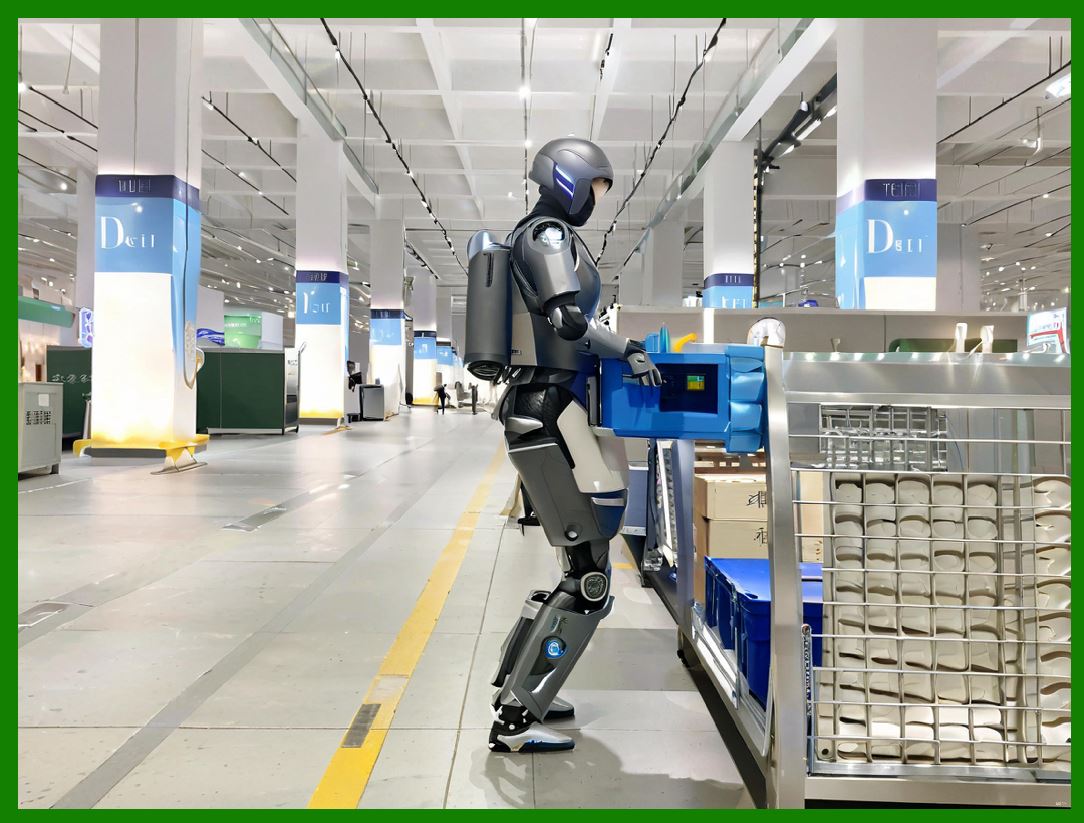
4.31 The integration of perception systems into logistics sorting robots is fundamental to creating operational autonomy, ensuring controlled motion behaviors, enabling flexible task execution, and supporting mission-critical logistics performance metrics. |
|
5. Autonomous Navigation and Mapping Systems |
5.1 Autonomous navigation is a core capability enabling logistics sorting robots to travel independently throughout distribution environments while following optimal routes. These systems integrate localization, path planning, obstacle avoidance, and adaptive decision strategies derived from real-time perception data. |
5.2 Navigation operates within a carefully defined map of the logistics facility. Map construction uses simultaneous localization and mapping (SLAM), QR-grid scanning, magnetic track following, or hybrid combinations. Map fidelity supports consistent robot positioning relative to chutes, charging stations, and cross-traffic intersections. |
5.3 Floor-based QR code navigation is prevalent due to its affordable and easy-to-maintain implementation. QR markers placed at grid intervals provide absolute positioning references. Robots interpret QR codes via downward-facing cameras, updating their coordinates multiple times per second. |
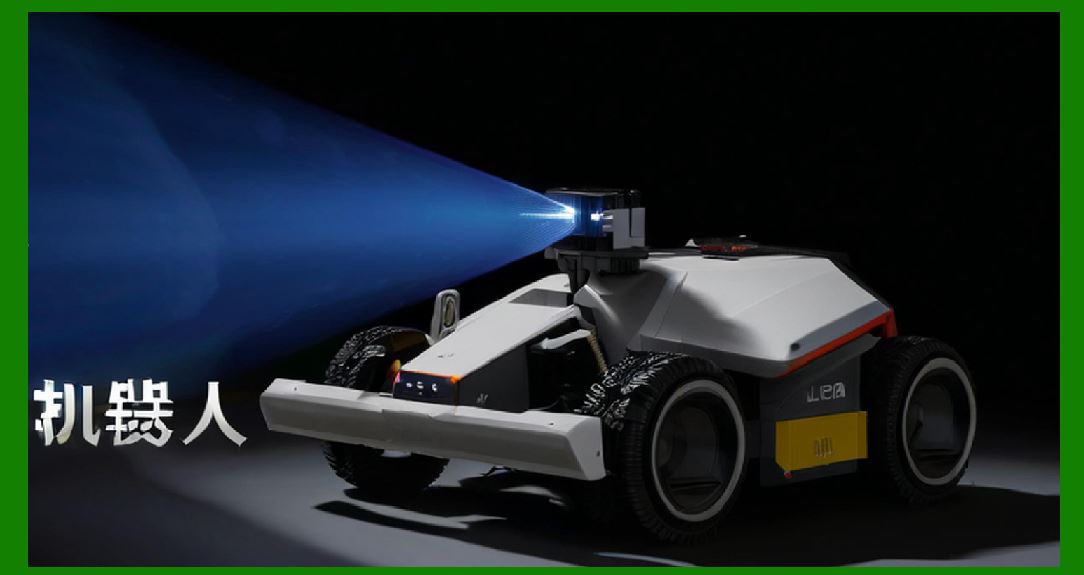
5.4 LiDAR-based SLAM provides flexible mapping without reliance on fixed ground markers. Robots continuously scan the warehouse with laser beams, matching reflections to internal map representations. SLAM adapts to facility layout modifications, resolving environmental drift through continuous map correction. |
5.5 Ultra Wideband (UWB) anchoring systems support triangulation-based navigation. Anchors mounted on warehouse walls emit precise time-of-arrival signals, enabling real-time robot localization. UWB provides strong performance in high-obstruction environments. |
5.6 Odometry uses motor encoder feedback to estimate displacement along the robot¡¯s movement vector. Although susceptible to cumulative drift, odometry establishes relative motion that supplements higher-accuracy external localization signals. |
5.7 Route planning determines the most efficient paths for reaching destinations while minimizing congestion. Algorithms range from classical A* heuristics to advanced multi-agent optimization systems that distribute routing intelligence across entire robotic fleets. |
5.8 Traffic management logic ensures smooth traffic flow. In high-density robot operations, collision-free navigation demands timely rerouting, prioritization, and scheduling. Robots may dynamically adjust speed, stopping distance, or waiting time to avoid bottleneck formation. |
5.9 Multi-robot scheduling systems consider parallel routing constraints and load distribution. These schedulers evaluate whether tasks should be delegated to the nearest available robot or a more strategically positioned unit to improve future task efficiency metrics. |
5.10 Obstacle avoidance mechanisms utilize redundant sensing. Vision, LiDAR, and ultrasound collaborate to detect static and dynamic hazards. Safety envelopes are continuously updated to ensure responsive avoidance maneuvers. |
5.11 Fleet communication architectures enable real-time exchange of positional telemetry and mission intentions. Robots broadcast location updates to prevent converging paths and resource contention events near shared nodes like narrow corridors. |
5.12 Deadlock avoidance strategies proactively mitigate gridlock situations where multiple robots could block one another. Deadlock prevention algorithms enforce directional flow rules or enforce one-way lanes in critical corridors. |
5.13 Robots implement acceleration and deceleration curves to maintain stability during motion. Controlled velocity transitions prevent package shifting or tipping, especially when navigating tight turns or uneven floor surfaces. |
5.14 Micro-navigation stability relies on advanced PID or Model Predictive Control (MPC) algorithms. These control systems adapt wheel speed with millisecond temporal granularity to maintain smooth kinematics and straight-path accuracy. |
5.15 Path replanning allows rerouting to avoid temporary obstacles such as human workers or staged pallets. Replanning occurs without interrupting robot mission execution, ensuring continuity of logistic operations. |
|
5.16 Lateral precision during docking at chutes is crucial. High-accuracy positioning sensors ensure that discharge trays align correctly above destination bins. Misalignment may cause package misdelivery or physical damage. |
5.17 Navigation safety rules align with industrial robotics standards. Robots must halt when obstacles enter specified protective zones and resume only after environment safety validation completes. |
5.18 Cloud-based navigation orchestration can apply fleet-level optimizations based on regional workload patterns. However, mission-critical motions such as collision avoidance always rely on local decision-making to guarantee safety. |
5.19 Mobile navigation systems can incorporate contextual learning. Route performance analytics identify historically congested areas or delay-prone aisle intersections. Future routing adjusts dynamically to minimize throughput penalties. |
5.20 Localization integrity is validated continuously. Cross-verification between SLAM estimates and QR-ground references ensures position tracking precision within millimeter-to-centimeter error tolerance depending on robot class. |
5.21 Adaptive grid resolution in map design supports flexible scalability. Large-scale facilities maintain coarse grid maps to optimize memory usage while robots entering high-precision task zones apply denser local maps. |
5.22 Robots employ lane discipline similar to vehicular traffic conventions. Left-hand or right-hand flow standards reduce head-on encounters while ensuring familiarity during human-robot collaborative navigation. |
5.23 Mission assignment frameworks incorporate navigation runtime estimation. Robots assess travel path complexity including turns, potential conflicts, and current traffic density before accepting tasks. This optimizes resource utilization. |
5.24 Energy-efficient routing reduces cumulative wear and battery consumption. Algorithms factor floor friction, ramp inclines, and idle waiting patterns into route choice decisions to maximize operational endurance. |
5.25 Navigation systems include fail-safe fallback behaviors. If localization confidence decreases below a threshold, robots may reduce speed or pause operations until sensor conditions recover or remote supervision intervenes. |
5.26 Task zones are prioritized to ensure systematic traffic patterns. High-throughput zones near inbound scanning lines receive elevated robot right-of-way clearance to avoid cascading parcel delays. |
5.27 Elevation changes in multi-floor robotic sorting centers require lift coordination. Robots synchronize docking with elevator platforms, aligning path planning across vertical transitions within the facility. |
5.28 Cur few and restricted access zones apply digital fences. Geofencing prevents robots from entering unauthorized storage areas or maintenance zones, preserving safety and operational discipline. |
5.29 Adaptive SLAM algorithms detect layout changes like new shelving or temporary inventory staging. Maps automatically update while robots continue operating nearby without shutdown. |
5.30 Operation under environmental disturbances such as dust accumulation or partial lighting outages necessitates robust fallback on multi-sensor fusion protocols to maintain continuous localization accuracy. |
5.31 Autonomous navigation represents one of the most transformative robotic capabilities in modern logistics sorting systems. It enables scalable, flexible, and intelligent parcel handling independent from rigid physical infrastructure. |
|
6. Communication Systems and Fleet Coordination Architecture |
6.1 Communication systems enable logistics sorting robots to function as synchronized components within a unified operational fleet. Robust communication infrastructure underpins navigation coordination, task execution, real-time tracking, and human supervisory control. |
6.2 Industrial wireless networks serve as the primary communication backbone. These networks support high-frequency telemetry transmission among robots, central servers, and peripheral automation assets including scanners and conveyor endpoints. |
6.3 Wi-Fi IEEE 802.11 standards are widely adopted due to cost efficiency and availability. Dedicated industrial access points enhance signal penetration and mitigate latency. Signal redundancy ensures continuous connectivity during locomotion across large facilities. |
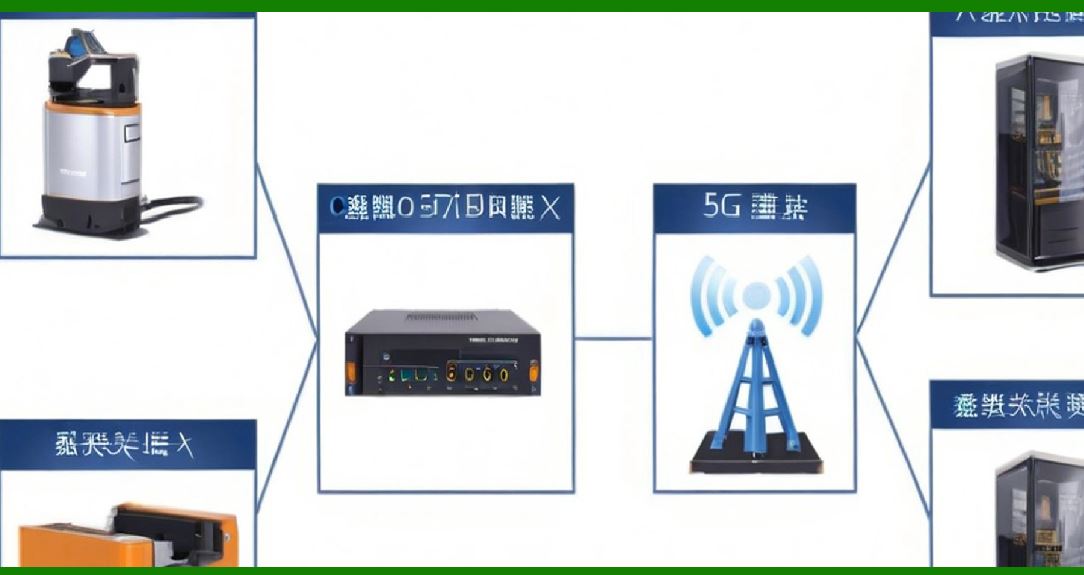
6.4 5G private network adoption is increasing among advanced logistics centers. Low latency and network slicing features enable guaranteed bandwidth allocation. Massive IoT connectivity supports large fleets without congestion. |
6.5 Wireless communication must overcome interference from metal shelving, moving machinery, and RF-dense industrial equipment. Antenna diversity and adaptive frequency management maintain strong signal quality throughout multi-zone warehouses. |
6.6 Message delivery protocols typically follow publish-subscribe models. Robots publish positional data and subscribe to task assignment channels. Distributed architecture minimizes central dependency and improves scalability. |
6.7 Edge servers positioned within the warehouse reduce round-trip communication delays. Data computation near device endpoints supports real-time fleet supervision and mission reallocation during peak throughput conditions. |
6.8 Low-latency communication is essential for collision-free fleet movement. Robots broadcast intent signals including turning direction, vehicle speed, and current trajectory to neighboring units. Cooperative awareness minimizes route conflict. |
6.9 Cybersecurity measures protect command integrity. Communication packets are encrypted, authenticated, and validated using industrial cybersecurity standards to prevent malicious interference or unauthorized control access. |
6.10 Fleet management software acts as the operational command layer. It consolidates status updates from all robots, optimizes global scheduling, and initiates corrective actions when congestion or traffic anomalies arise. |
6.11 Cloud integration enhances monitoring across multi-facility networks. Central command centers can evaluate comparative fleet performance analytics and initiate software updates, enhancing cross-site standardization. |
6.12 Task allocation algorithms incorporate workload balancing principles. Robots are dynamically assigned missions based on proximity, battery level, path complexity, and historical route efficiency. The objective is throughput maximization. |
6.13 Conflict resolution strategies are enforced when multiple robots request access to the same critical node. Priority hierarchies determine which unit receives passage rights first. These priorities may be static or context-dependent. |
6.14 Group routing intelligence allows clusters of robots to behave as cooperative swarms rather than independent vehicles. Swarm coordination increases density tolerance and reduces idle waiting time near chute zones. |
6.15 Redundancy protocols prevent mission loss during temporary disconnection. If communication is interrupted, robots transition to limited autonomy mode, continuing local tasks while awaiting reconnection. |
|
6.16 Diagnostics packets enable predictive maintenance. Operational telemetry including vibration levels, wheel load variance, and battery health is continuously reported to maintenance analytics systems. |
6.17 Communication architecture supports API interoperability with Warehouse Management Systems (WMS) and parcel tracking platforms. Routing decisions synchronize with inbound and outbound inventory flows. |
6.18 Middleware manages format conversion between heterogeneous hardware and network elements. It standardizes protocol communication which allows multi-vendor robot fleets to coexist and cooperate. |
6.19 Multi-layer communication security encrypts different message tiers separately. Navigation telemetry requires speed, while administrative commands require authentication rigor to prevent unauthorized directional overrides. |
6.20 Routing system efficiency depends on communication load distribution. Peak operational hours demand intelligent bandwidth allocation that prioritizes mission-critical packets over secondary analytics transfers. |
6.21 Visibility dashboards provide real-time fleet situational awareness. Supervisors can observe congestion heat maps, robot idle ratios, and predicted throughput deficits, enabling rapid intervention if needed. |
6.22 Communication failures must be mitigated. Robots detect poor signal strength, decelerate for safety, and navigate toward known wireless coverage points if needed to regain stable connectivity. |
6.23 Safety controllers synchronize emergency stop signals. A high-priority broadcast can command all robots to brake simultaneously if a severe hazard is detected inside the work zone. |
6.24 Communication firmware is regularly updated through secure over-the-air distribution. Incremental patches prevent operational disruption and continuously improve performance stability. |
6.25 Quantum-resistant encryption research is emerging for future-proof network security, preparing for potential cyber threats posed by quantum computing developments in the coming decade. |
6.26 Fleet orchestration systems integrate incident logging. Collision avoidance maneuvers, latency anomalies, or abnormal path deviations are stored for root-cause inspection to refine future policies. |
6.27 Multi-facility coordination frameworks allow robots in different geographic locations to share best-practice navigation models when warehouses have similar layouts. This accelerates deployment standardization. |
6.28 Multi-agent reinforcement learning coordination is gaining adoption. Robots learn communication-driven cooperation patterns that increase aggregate system efficiency beyond manually programmed rule sets. |
6.29 Fleet communication architecture is instrumental in transforming logistics operations from human-dependent navigation into fully autonomous, synchronized, and data-driven parcel distribution ecosystems. |

|
7. Sorting Mechanisms and Actuator Engineering |
7.1 Sorting mechanisms constitute the operational core of logistics sorting robots. These systems facilitate rapid, accurate, and controlled parcel discharge into designated bins, chutes, or conveyor branches. Mechanical precision directly influences throughput capacity and mis-sort reduction. |
7.2 Sorting actuators vary across robot classes. The predominant categories include tilt-tray mechanisms, cross-belt systems, catapult-based launchers, modular swivel trays, pushing actuators, and robotic arm-based manipulation for complex parcel geometries. |
7.3 Tilt-tray sorting utilizes a dynamically tilting platform mounted atop the robot chassis. Upon reaching correct destination coordinates, the tray inclines laterally under servo motor control, allowing gravity-assisted parcel dropoff into target receptacles. |
7.4 Tilt angle precision is crucial to maintain directional discharge accuracy. Over-tilt may project parcels beyond the intended target, while under-tilt yields incomplete transfer requiring corrective cycles that reduce throughput efficiency. |
7.5 Cross-belt sorting employs a miniature conveyor belt integrated on the robot surface. The belt activates laterally to slide parcels directly into destination bins, accommodating fragile or irregular shapes with minimized freefall stress. |
7.6 Cross-belt actuators rely on controlled torque output from compact motor units. The belt surface is engineered with high-friction elastomer materials to prevent unintended parcel slip during acceleration. |
7.7 Catapult sorting mechanisms are designed for high-velocity parcel projection. These rely on fast-response solenoids or spring-loaded launching frames capable of moving lightweight parcels with minimal dwell time at destination zones. |
7.8 Catapult systems require highly accurate force calibration relative to parcel mass. Excessive projection risks damage or collision in confined sorting grids. |
7.9 Modular swivel trays rotate around a central axis to discharge parcels. This method allows controlled directional routing on both left and right discharge sides without requiring forward movement alignment with the chute. |
7.10 Swivel actuation uses low-backlash gears and closed-loop angle feedback sensors. Smooth rotation prevents shock-induced label detachment or item shifting that could lead to scan failures later in transit. |
7.11 Pusher-actuated sorting employs linear actuators that extend and retract to push parcels sideways into destination bins. This mechanism supports heavy parcel loads, although it requires efficient clearance to avoid jamming incidents. |
7.12 Pneumatic pushers offer rapid stroke response but require compressed air infrastructure. Electric pushers provide simpler maintenance but may exhibit heat accumulation in high-duty-cycle operations. |
7.13 Robotic arm sorting mechanisms integrate articulated manipulators capable of handling oversized, irregularly shaped, or fragile items. These are typically deployed where sorting complexity exceeds conventional mechanism capabilities. |
7.14 End-of-arm tooling (EOAT) design varies based on gripping needs. Vacuum suction cups handle smooth cardboard surfaces, while adaptive clamps secure deformable packaging. |
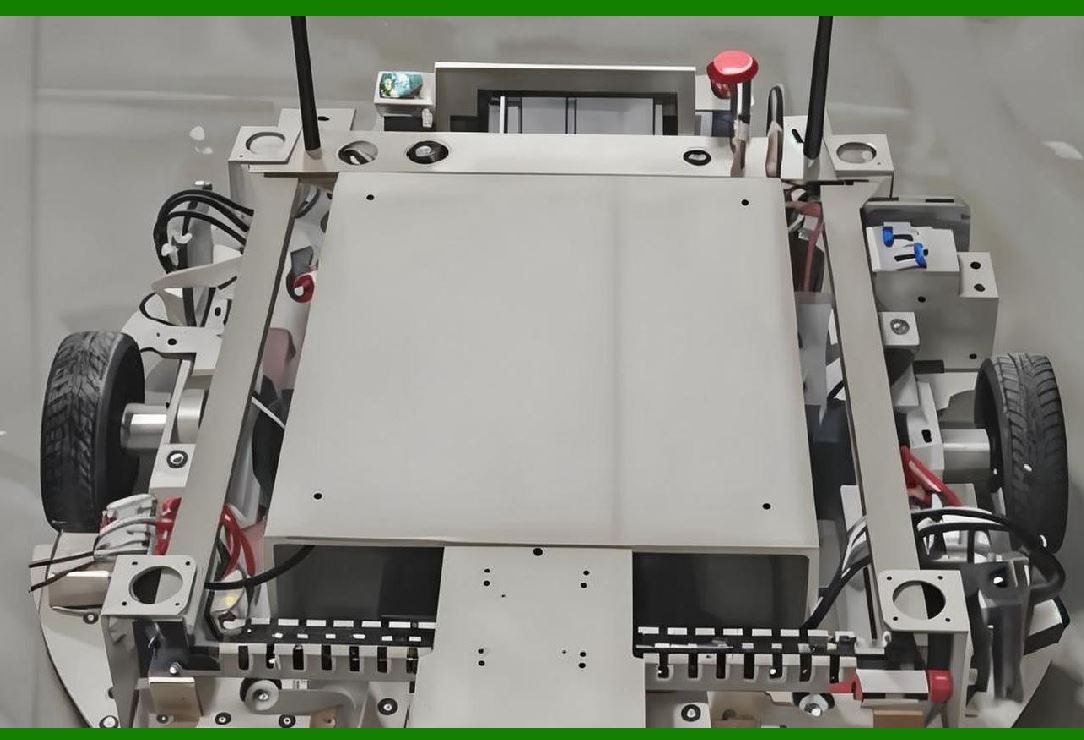
7.15 Parcel stabilization is crucial during traversal. Shock absorption dampers beneath actuators reduce vibration influence from robot mobility, preserving parcel position until controlled discharge is executed. |
|
7.16 Load sensors instrument sorting trays to verify parcel count and weight. Multi-item anomalies trigger supervisory logic to prevent inaccurate routing. |
7.17 Actuator motor selection prioritizes high torque density, compact form factor, low noise, and rapid response capability. Brushless DC motors commonly dominate due to durability and efficiency. |
7.18 Lubrication-free mechanical components are preferred to minimize contamination risk. Sorting environments must avoid oil exposure that could damage packaging surfaces or smear barcode labels. |
7.19 Kinematic modeling ensures consistent discharge trajectories. Computational simulations account for parcel mass distribution, surface friction, and aerodynamic drag effects during lateral transfer events. |
7.20 Structural reinforcement prevents frame deformation over prolonged high-speed sorting cycles. Stress concentration at actuator mounting points is carefully analyzed using finite element analysis to maintain service lifespan. |
7.21 Reverse ejection failure detection protects product integrity. If sensors detect incomplete parcel discharge, recovery cycles initiate automatically to avert mis-sort propagation downstream. |
7.22 Soft-start control algorithms reduce mechanical shock during actuator initiation. Gradual ramp rates mitigate the risk of tearing packaging materials or causing internal item shifts. |
7.23 Sorting speed in high-performance systems may exceed several thousand parcels per hour per robot. Cumulative throughput of large fleets can outperform static conveyor-based sorters in equivalent facility footprints. |
7.24 Mechanism synchronization with navigation ensures precise discharge timing. Robots align motion phase with actuator release triggers defined by exact spatial coordinates relative to target chute centers. |
7.25 Surface friction optimization ensures adequate parcel retention during acceleration and deceleration phases. Anti-slip mat materials are selected based on package surface variability testing. |
7.26 Noise reduction is addressed through motor acoustic damping and silent gear solutions. Worker-friendly acoustic environments support ergonomic compliance and productivity. |
7.27 Modularity enhances maintenance and scalability. Actuator assemblies are removable as independent serviceable units, allowing quick swaps that reduce downtime during peak periods. |
7.28 Foreign object detection around actuator surfaces prevents entrapment or jamming. Robots suspend sorting attempts if debris obstructs tray areas, notifying maintenance personnel with diagnostic alerts. |
7.29 High-temperature resistance is required for robots stationed near heat-generating equipment, such as shrink wrapping and industrial labeling machines. Thermal insulation prevents gear lubrication breakdown. |
7.30 Electromagnetic compatibility (EMC) certification ensures actuators operate reliably near large motors or high-amperage equipment without interference that could disrupt sorting control signals. |
7.31 Safety mechanisms incorporate pinch-point protection and emergency stall limits. When resistance exceeds expected profiles, actuators reverse motion or lock into safe positions. |
7.32 Intelligent sorting controllers estimate ideal actuator timing windows. Machine learning refinement improves ejection performance based on real parcel drop trajectory analytics collected during operations. |
7.33 Parcel orientation variability is addressed via pre-sorting alignment mechanisms or software compensation that adjusts discharge parameters based on scanned object posture. |
7.34 Multi-parcel discharge prevention is enforced using weight verification, infrared sensors, or machine vision. Only validated single-parcel conditions trigger sorting instructions. |
7.35 Durability engineering targets millions of repetitive cycles with minimal mechanical degradation. Component fatigue life is ranked through accelerated endurance testing prior to fleet deployment. |
7.36 Backup manual override interfaces allow operational continuity during actuator malfunction. Robots may temporarily reroute parcels to central fallback chutes where human workers intervene. |
7.37 Actuator energy efficiency contributes to overall fleet autonomy extension. Lightweight dynamic components reduce inertial overhead, improving mechanical efficiency metrics per discharge action. |
7.38 Anti-static surface treatment protects sensitive electronic goods in parcels from electrostatic discharge generated through material contact. |
7.39 Temperature and humidity compensation ensures actuator consistency in environments ranging from refrigerated cold chain zones to high-moisture sorting hubs located near maritime transport gateways. |
7.40 Sorting mechanism performance represents a defining factor in logistics robot economic feasibility. High-speed, accurate, and reliable discharge capabilities substantiate automation ROI and reduce human intervention dependency. |
|
 cs@easiersoft.com