Why did people invent barcodes? |
1. The revolutionary need for business efficiency |
The invention of barcodes stems from the urgent need for efficiency improvement in the business environment in the 20th century. With the rapid economic development and explosive growth of commodity varieties after World War II, the traditional manual recording and price marking methods can no longer meet the needs of modern retail. |
In the 1940s, the American supermarket industry faced severe challenges. The variety of commodities has rapidly increased from a few hundred before the war to thousands, and the traditional price marking and inventory management methods are extremely inefficient. Each item needs to be individually marked with a price, which is not only time-consuming and labor-intensive, but also prone to errors. Cashiers need to manually enter the price of each item, resulting in slow checkout and long queues of customers becoming the norm. According to statistics at the time, the error rate of manual cashiers was as high as 3-5%, which caused huge economic losses to retailers. |
Inventory management also faced difficulties. Merchants needed to conduct manual inventory frequently, which was cumbersome and inaccurate, resulting in either inventory backlogs or out of stock. This inefficient system seriously restricted the expansion and development of the retail industry, and there was an urgent need for a technical solution that could automatically identify commodities, quickly check out, and update inventory in real time. |
|
2. The inevitable product of technological development |
The invention of barcodes is not accidental, but the inevitable product of the development of multiple technologies to a certain stage. Its technical foundation can be traced back to the telegraph coding in the late 19th century and the optical character recognition technology in the early 20th century. |
In 1948, Bernard Silver, a graduate student at Drexel Institute of Technology in Philadelphia, overheard the owner of a local food chain complaining to the dean about the inefficiency of the product identification system. Silver and his classmate Norman Joseph Woodland began to study solutions. They initially tried to use ultraviolet ink, but it was costly and unstable. |
Woodland then drew inspiration from Morse code and extended the dots and lines into stripes of varying thickness. In 1952, they obtained the first barcode patent, using a concentric circle design instead of the current straight stripes. This design required large scanning equipment, and at the time lacked reliable optoelectronic technology and computer processing power, making it impossible to commercialize. |
In the 1960s, the maturity of laser technology provided an ideal scanning light source for barcodes, and the development of integrated circuits made it possible to miniaturize and economical decoding equipment. At the same time, the improvement of computer data processing capabilities made large-scale commodity information management a reality. These technological advances paved the way for the practical application of barcodes. |

|
3. Standardization and the formation of industry consensus |
For barcodes to really work, unified industry standards must be established. This process has lasted for more than 20 years of efforts and consultations. |
In 1970, the US supermarket industry established a special committee to study and formulate unified commodity coding standards. After three years of intense discussions, on April 3, 1973, the Universal Product Code (UPC) proposed by IBM was adopted as the standard. This standard specifies the precise structure, size and coding rules of the barcode to ensure that different manufacturers and retailers can use compatible systems. |
The main challenges in the standardization process include: determining the coding capacity (ultimately set at 12 digits), assigning manufacturer codes, solving the coding problem of different package sizes, and establishing a national management agency (the Uniform Code Council of the United States, now GS1 US). The food industry initially resisted the system, fearing increased costs, but strong push from large retailers such as Kroger eventually led to industry consensus. |
Europe and Japan subsequently developed their own standards (EAN and JAN) until the GS1 standard was adopted globally in 2005. This global standardization made barcodes the infrastructure for international trade and greatly promoted the development of global supply chains. |
|
4. Revolutionary changes brought about by practical applications |
On June 26, 1974, a Marsh supermarket in Troy, Ohio scanned the first UPC barcode product - 10 packs of Wrigley's juice gum, marking a historic turning point in the way business is operated. |
The barcode system brought immediate benefits to the retail industry: checkout speed increased by more than 40%, and the error rate dropped to less than 0.01%. Inventory management achieved real-time updates, out-of-stock situations were reduced by 30%, and inventory turnover was significantly improved. It is estimated that barcodes save the US retail industry about 17% of operating costs each year. |
More importantly, the sales data generated by barcodes completely changed the way business decisions are made. For the first time, merchants were able to accurately know the sales speed, time distribution and regional differences of each product, thereby optimizing procurement, pricing and promotion strategies. This data-driven management model is the cornerstone of modern retail. |
The application of barcodes soon expanded to other fields: library management (late 1970s), medical equipment tracking (1980s), logistics and transportation (1990s), etc. It became the most basic bridge connecting physical objects and the digital information world. |

|
5. Far-reaching impact at the economic and social level |
The popularity of barcodes has brought about economic and social changes far beyond the technology itself. At the macroeconomic level, it significantly reduced transaction costs, made large-scale retail possible, and directly promoted the rise of retail giants such as Walmart. According to research, barcode technology contributed about 25% of the productivity growth of the US retail industry from 1980 to 2000. |
In terms of supply chain management, barcodes enable full tracking from raw materials to consumers, making just-in-time (JIT) and lean management possible. The improved efficiency of the global supply chain has reduced commodity prices, expanded consumer choices, and improved living standards. |
Barcodes have also created new business models. Membership cards combined with barcodes have produced precision marketing; express tracking systems have given rise to e-commerce; and drug barcodes have reduced medical errors. It has even changed the employment structure, creating new professions such as system administrators and data analysts, while reducing many inefficient manual positions. |
At the social level, barcodes have subtly changed people's consumption habits and trust mechanisms. Consumers began to believe in the quality and price transparency of standardized products, which provided a technical foundation for the formation of a modern consumer society. |

|
6. Continuous Innovation and Future Development |
Despite the emergence of new technologies such as QR codes and RFID, traditional barcodes continue to evolve. The two-dimensional barcodes developed in the 1980s (such as PDF417) greatly increased data capacity. The QR code invented in Japan in 1994 has become an important interface in the mobile Internet era due to its fast reading and large capacity. |
Modern barcode technology is developing in three directions: enhancing data capabilities (such as GS1 Digital Link converting barcodes into web URLs), improving traceability (blockchain and barcodes combined), and improving user experience (dynamic barcodes display real-time information). Innovative applications such as biological barcodes are being launched in the fields of food safety and medicine. |
In the future, barcodes may be deeply integrated with the Internet of Things and artificial intelligence to become the basic identity of smart items. Its core value - a simple, reliable, and low-cost information bridge - will ensure that it will continue to play an irreplaceable role in the foreseeable future. |

|
7. Analysis of the deep reasons for the success of barcodes |
The success of barcode technology can be popularized and used globally for more than 70 years. Its success stems from several key factors: |
First, it perfectly balances technical complexity and ease of use. The coding principle is simple enough to be adopted by companies of all sizes; at the same time, it is robust enough to meet most identification needs. Its 'read-only' nature has become an advantage, ensuring system stability and security. |
Secondly, it has established a good mechanism for the distribution of benefits. Manufacturers obtain more accurate sales data, retailers improve operational efficiency, and consumers enjoy lower prices and faster services. This win-win situation has promoted spontaneous adoption. |
Third, it embodies the engineering wisdom of 'simple solutions to complex problems'. Instead of trying to solve all problems at once, barcodes focus on the most basic object identification function and realize complex applications by cooperating with other systems (such as databases). This modular design makes it highly adaptable and scalable. |
Finally, its physical form is amazingly robust. It can still be read even if it is partially damaged, does not require power or maintenance, and adapts to various environments and materials. This reliability is crucial in real business environments. |
From a more macro perspective, barcodes represent a key step in the transformation of industrial society to information society. It digitized physical objects and laid the foundation for the subsequent Internet revolution. Its historical status is no less than that of printing or steam engines, and it is one of the indispensable basic technologies in modern society. |

|
Practical Examples of Barcode Applications |
Since its commercialization in the 1970s, barcode technology has been widely used in retail, logistics, medical, manufacturing, library management and other fields. The following are specific examples of barcode applications in different industries, showing how it can improve efficiency, reduce errors and optimize management processes. |
1. Retail: Supermarkets and e-commerce |
(1) Walmart¡¯s supply chain management |
Walmart is one of the first retailers in the world to adopt barcode technology on a large scale. The key to its success lies in: |
Fast checkout: Cashiers scan barcodes to automatically obtain prices, reduce manual input errors, and increase checkout speed by more than 50%. |
Real-time inventory management: After each sale, the inventory system is automatically updated to prevent out-of-stock or backlogs. |
Supplier collaboration: Walmart requires all suppliers to use UPC (Universal Product Code) to ensure consistent supply chain data and optimize replenishment efficiency. |
(2) Amazon¡¯s warehousing logistics |
Amazon¡¯s warehouses use a combination of barcodes and QR codes: |
Goods entering the warehouse: Each item is affixed with a unique barcode, which is automatically matched to the inventory location after scanning. |
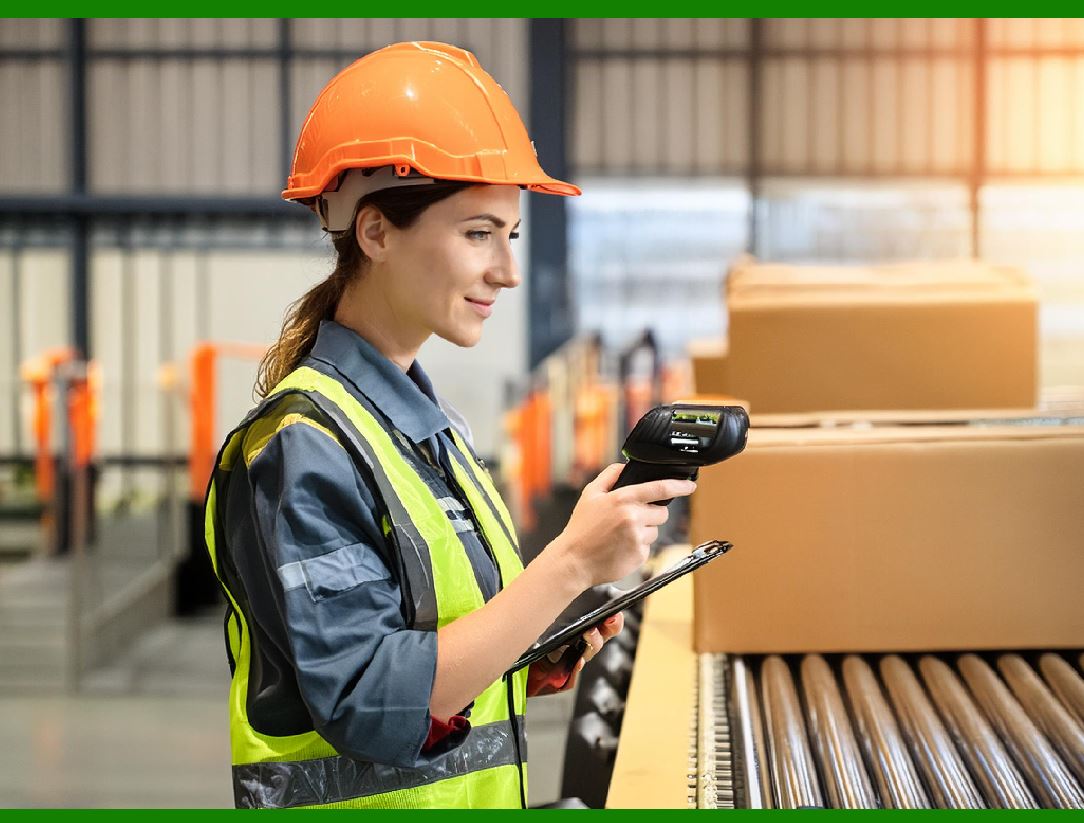
Intelligent sorting: Employees use handheld scanners, and the system guides the optimal picking path to improve efficiency. |
Package tracking: The barcode of each package is associated with the order, and customers can check the logistics status in real time. |

|
2. Logistics and express delivery industry |
(3) FedEx¡¯s package tracking |
FedEx was the first to use barcodes to track packages in the 1980s: |
Unique waybill number: Each package is assigned a barcode to record information such as the sender, recipient, and transportation route. |
Full-process visualization: Scanning records the dynamics of packages in sorting centers, transportation vehicles, and delivery points, and customers can check the logistics progress online. |
Reduce the loss rate: Automated scanning reduces manual registration errors, and the package loss rate has dropped by 80%. |
(4) DHL's intelligent sorting system |
DHL deploys high-speed barcode scanners in global hub warehouses: |
Automatic sorting: Parcels on the conveyor belt pass through the scanner, and the system automatically sorts them into transportation channels in different countries based on the barcode. |
Increase throughput: tens of thousands of parcels can be processed per hour, 10 times faster than manual sorting. |

|
3. Medical industry: drugs and patient safety |
(5) Hospital drug management |
Drug labeling: Each drug package is printed with a barcode, including production batch number, expiration date and other information. |
Reduce medication errors: Nurses scan the patient's wristband and drug barcode, and the system automatically checks the doctor's order to avoid giving the wrong drug or wrong dosage (according to the US FDA, the barcode system reduces medication errors by 50%). |
Inventory management: Pharmacies monitor drug inventory in real time and automatically generate purchase orders. |
(6) Blood bank management |
Blood tracking: Each bag of donated blood is affixed with a unique barcode to record blood type, donation date, and storage conditions. |
Blood transfusion safety: Scan the patient's wristband and blood bag before surgery to ensure blood type matching and prevent transfusion accidents. |

|
4. Manufacturing and asset management |
(7) Parts tracking in automobile manufacturing |
Automakers such as Toyota and BMW use barcodes on their production lines: |
Parts management: Each key component such as the engine and gearbox has a barcode to record production batch and quality inspection data. |
Error-proof assembly: Workers scan parts and vehicle VIN codes to ensure the correct model is installed and reduce rework. |
(8) Airline maintenance records |
Aircraft parts management: Each replaced part (such as engine blades) has a barcode to record maintenance history and life. |
Quick maintenance: Mechanics scan parts, retrieve maintenance manuals and historical data, and shorten maintenance time. |
|
5. Library and archive management |
(9) University library self-service borrowing and returning system |
Book identification: Each book is affixed with a barcode to associate the title, author, and collection location. |
Self-service borrowing: Students scan books and campus cards, and the system automatically records borrowing information, reducing waiting time. |
Anti-theft function: When unborrowed books pass through the exit, RFID (upgraded technology based on barcodes) will trigger an alarm. |
(10) Digitalization of government archives |
Archive tracking: Important documents (such as land certificates and court files) are affixed with barcodes, and the scanning records the circulation process to prevent loss or tampering. |

|
6. Food and agricultural traceability |
(11) Food safety traceability |
Supermarket fresh food management: The barcodes on the packaging of meat and vegetables record the origin, production date, and inspection report (such as the EU food traceability regulations). |
Problem food recall: If a batch of food is detected to be contaminated, the barcode can be used to quickly locate the affected product to reduce public risks. |
(12) Agricultural product supply chain |
Fruit grading and packaging: Apples, oranges, etc. are classified by size and quality and affixed with barcodes. When exported, the transportation temperature and shelf life are scanned and recorded. |

|
7. Emerging applications: mobile payment and smart packaging |
(13) Alipay/WeChat payment scan code shopping |
Unmanned convenience stores: customers scan product barcodes and pay with their mobile phones, without the need for cashiers (such as Amazon Go). |
Dynamic barcodes: Movie tickets and coupons generate temporary QR codes to prevent counterfeiting. |
(14) Smart packaging |
Interactive marketing: consumers scan barcodes on beverage bottles to participate in lucky draws or check nutritional information. |
Anti-counterfeiting authentication: barcodes on luxury goods (such as LV bags) can verify authenticity. |

|
Conclusion |
From supermarket checkout to aircraft maintenance, from drug management to food traceability, barcodes have become an indispensable infrastructure in modern society. Its core value lies in: |
Improve efficiency (reduce manual input and speed up the process) |
Reduce errors (automatically check data) |
Enhance traceability (record full life cycle information) |
In the future, with the development of QR code, RFID and blockchain technology, the application scenarios of barcodes will be further expanded, and continue to promote the digital transformation of various industries. |
 cs@easiersoft.com