Application of Barcode Technology in Warehouse Management |
1. Overview of Barcode Technology and Its Development History |
Barcode technology is an automatic recognition technology that is read by optical scanning. It encodes data into a set of black and white parallel lines and spaces of varying widths. These patterns can be quickly and accurately read and decoded by special scanning equipment. This technology originated in the 1940s, but it was not until 1974 that the first commercial barcode (a UPC code on a 10-pack of Wrigley chewing gum) was scanned in a supermarket in Ohio, USA, marking the official entry of barcode technology into the commercial application stage. |
In the following decades, barcode technology has undergone a revolutionary development from one-dimensional code to two-dimensional code. One-dimensional barcodes (such as UPC, EAN, Code 39, etc.) can only store information in one direction, usually containing about 20 characters of data. Two-dimensional codes (such as QR codes, Data Matrix, etc.) can store information in both horizontal and vertical directions, with a capacity of up to thousands of characters, and can also store more complex data types such as pictures and links. This technological advancement has greatly expanded the scope and possibilities of barcode applications in warehouse management. |
The basic working principle of barcode technology is: data is encoded through bars and spaces of different widths, the scanning device emits light and receives reflected light, identifies bars and spaces according to the intensity difference of reflected light, and then converts optical signals into digital or letter information through decoding algorithms. This technology has significant advantages such as low cost, high reliability and easy operation, making it an indispensable basic technology for modern warehouse management. |
|
2. Application of barcode technology in warehouse entry management |
2.1 Goods identification and information entry |
In the warehouse entry link, barcode technology is first used for the unique identification of goods. Each batch of arriving goods or raw materials will be assigned a unique barcode label, which may contain key data such as product code, batch number, production date, supplier information, etc. Modern warehouse management systems usually use serialized identification, that is, assigning a unique serial number to each minimum stock keeping unit (SKU) or even a single item to achieve true single item tracking. |
The label printing and pasting process has been highly automated. Many warehouses are equipped with automatic label printing and labeling systems. When the goods pass through the warehouse conveyor, the system will automatically generate and paste labels according to the pre-entered information, greatly reducing manual intervention and errors. For items of special shapes or materials, there are also special barcode label materials that are resistant to high temperatures, waterproof, and chemical corrosion. |
2.2 Warehouse inspection and data collection |
After the goods with barcodes arrive at the warehouse, the staff uses handheld or fixed scanning equipment to quickly collect the goods information. The scanning process completes several important functions at the same time: verifying the consistency of the goods with the purchase order, checking the quantity and specifications of the goods, and recording the time and location of the warehouse. These data are transmitted to the warehouse management system (WMS) in real time, automatically updating the inventory records, eliminating the errors and delays that may occur in traditional manual records. |
Advanced warehouses also use RFID and barcode hybrid technology, using RFID tags at the pallet or container level and barcodes at the single product level to achieve multi-level precise management. When entering the warehouse, the RFID reader can read the information of the entire pallet in batches at a long distance, while the barcode scanning provides more detailed single product verification. The two technologies complement each other to form a complete warehouse data chain. |
2.3 Allocation of storage space and guidance for shelving |
Modern warehouse management systems use barcode scanning data to intelligently allocate storage locations. The system automatically calculates the optimal storage location based on factors such as cargo attributes (such as size, weight, storage conditions), turnover rate (fast-moving consumer goods and slow-moving consumer goods), and relevance to other goods (items that are often shipped together should be stored nearby). After the staff scans the barcode of the cargo, the handheld terminal or smart glasses will display the shelving location recommended by the system, and the barcode of the location also needs to be scanned and confirmed for double verification. |
This barcode-based intelligent shelving system significantly improves warehouse space utilization (usually by 15-25%), reduces walking distance during picking, and enables strict implementation of inventory management principles such as [first in, first out] (FIFO). The system also records the exact location of each cargo, laying the foundation for subsequent inventory management and outbound operations. |
|
3. Application of barcode technology in inventory management |
3.1 Real-time inventory tracking and visualization |
Barcode technology enables real-time and accurate visualization of warehouse inventory. Whenever goods are moved, used or replenished, the relevant barcode scanning operation will immediately update the central database, and managers can view the current inventory quantity, location status and movement history of any item at any time. This real-time visibility completely changes the situation where traditional inventory management relies on periodic inventory counting and has information lags. |
Modern WMS systems can also generate multi-dimensional inventory analysis reports based on barcode scanning data, such as inventory turnover analysis, stagnant inventory identification, inventory age analysis, etc. These analyses help managers optimize procurement strategies, reduce capital occupation, and reduce the risk of expiration or obsolescence. For example, the system can automatically mark inventory that has not been moved for more than a set time, reminding managers to take promotional or allocation measures. |
3.2 Cycle counting and difference processing |
Barcode technology makes it possible to transform traditional comprehensive inventory counting into more efficient cycle counting. Cycle counting is to count part of the inventory regularly according to the plan, rather than stopping operations for a comprehensive inventory. The staff uses mobile devices to scan the barcode of the storage location and the barcode of the item. The system compares the actual inventory with the recorded inventory in real time and marks the difference immediately. |
The accuracy of barcode-based inventory counting can usually reach more than 99.9%, which is much higher than the 95-98% of manual inventory counting. When a difference is found, the system will record the type of difference and possible reasons (such as misplacement, theft, input errors, etc.). After the accumulation of this data, it can be used to analyze the weak links in warehouse operations and improve the process in a targeted manner. Some advanced systems can also automatically adjust the inventory frequency based on historical difference data, and conduct more frequent inspections on high-value or high-difference items. |
3.3 Expiration management and quality traceability |
For foods, medicines, chemicals and other commodities with strict shelf life requirements, barcode technology provides powerful expiration management functions. When entering the warehouse, the production date and expiration date are encoded into the barcode or linked to the database. The system automatically tracks the remaining validity period of each batch and issues an early warning when it is close to expiration, ensuring that the [first in, first out] principle is implemented and minimizing expiration losses. |
When quality problems occur, the barcode system can quickly trace the flow of all products in the same batch and achieve accurate recall. At the same time, by analyzing the batch characteristics of quality problems (such as specific suppliers, specific production time periods, etc.), it can help identify systemic risks in the supply chain. In some industries (such as medicine and aviation), this traceability capability is not only an efficiency tool, but also a basic requirement for regulatory compliance. |
|
4. Application of barcode technology in outbound and distribution management |
4.1 Order picking and verification |
Barcode technology has completely reformed the warehouse picking process. Traditional paper picking orders have been replaced by mobile terminals equipped with barcode scanning functions. The system intelligently generates the optimal picking path based on the order, guiding staff to complete the picking efficiently. Common picking modes include: |
Picking: Each order is picked separately, and each item is scanned and verified |
Seeding: After batch picking, it is distributed to each order, and barcode verification is performed throughout the process |
Regional relay picking: Different areas are responsible for specific people, and the handover is done through barcodes |
No matter which mode is adopted, barcode scanning ensures the basic principle of [correct items, correct quantities, and correct orders]. During the picking process, each scan will be compared with the system order data in real time, and errors will be immediately reminded, reducing the picking error rate to near zero. According to statistics, the barcode picking system can improve the picking efficiency by 30-50%, while reducing the error rate from 3-5% of traditional methods to less than 0.1%. |
4.2 Packaging and delivery verification |
After picking is completed, barcode technology continues to play a key role in packaging and delivery. The packaging workstation scans the order barcode, and the system displays a list of items that should be included, and the staff scans and verifies them one by one. After complete packaging, the outer box is affixed with a barcode label containing all the key information of the order, which will become the basis for subsequent logistics tracking. |
When shipping, scan each piece of goods or pallet out of the warehouse, the system automatically generates a loading list and transportation documents, and connects with the carrier system. This electronic handover process is not only fast, but also provides a complete chain of evidence for shipment, greatly reducing disputes after the goods are shipped out of the warehouse. For warehouses that use cross-docking, the barcode system can quickly identify the matching relationship between the arrival and the order to be shipped, and realize the rapid transfer of goods without entering the storage link. |
4.3 Transportation Tracking and Customer Acceptance |
After the goods leave the warehouse, the barcode label becomes a key node for supply chain visualization. Each handover point in the transportation process (such as transit warehouses and distribution centers) will scan the barcode to update the status of the goods, and both customers and warehouses can track the location of the goods in real time. When the customer receives the goods, scan the barcode to complete the acceptance, and the information is fed back to the warehouse system to automatically close the order, forming a complete outbound closed loop. |
This end-to-end barcode tracking system significantly improves delivery reliability and reduces cargo loss and delays. At the same time, the accumulated logistics data can be used to analyze transportation bottlenecks, optimize delivery routes, evaluate carrier performance, and continuously improve the efficiency of the entire supply chain. |
|
5. Integrated application of barcode technology and other warehouse technologies |
5.1 Integration with automation equipment |
In modern automated warehouses, barcode technology is deeply integrated with other automation equipment to create a highly efficient intelligent logistics system. Automated guided vehicles (AGVs) and autonomous mobile robots (AMRs) rely on scanning barcodes on the ground or shelves for navigation and positioning; automatic storage and retrieval systems (AS/RS) use barcodes to verify the correctness of access; sorters route packages to the correct exit through high-speed barcode recognition systems. |
This integration not only improves the speed of operation (some high-speed sorting systems can handle more than 100 items per minute), but also realizes the possibility of a 'lights-out warehouse', that is, a fully automated warehouse operation mode without human supervision. As a machine-readable identification language, barcodes have become the basic medium for human-machine collaboration and machine-machine communication. |
5.2 Integration with enterprise information systems |
Barcode systems rarely operate in isolation and are usually closely integrated with various enterprise information systems. Integration with ERP systems ensures that inventory changes are reflected in financial records in real time; integration with CRM systems enables customers to track order status; and integration with supplier systems supports collaborative forecasting and replenishment. This cross-system integration eliminates information silos and achieves end-to-end supply chain visualization from suppliers to customers. |
Modern WMS systems based on cloud technology further enhance this integration capability, allowing barcode data to be shared securely and in real time around the world. Multinational companies can manage warehouse networks distributed in different countries through unified standards and interfaces to achieve optimized global inventory allocation. |
5.3 Integration and innovation with emerging technologies |
Barcode technology continues to evolve and integrates with various emerging technologies to create more powerful warehouse management solutions. Mobile computing has made smartphones and tablets full-featured barcode scanning terminals; cloud computing provides almost unlimited storage and computing power to process massive amounts of scanned data; big data analysis mines operational optimization insights from barcode records; and the Internet of Things (IoT) makes each barcode-labeled item a node in an intelligent network. |
Particularly noteworthy is the combination of augmented reality (AR) and barcodes. Warehouse workers wear AR glasses and can intuitively see virtual information superimposed on physical objects after scanning barcodes, such as inventory details, operating instructions, warning prompts, etc., which greatly simplifies operational decisions in complex environments. Artificial intelligence (AI) is used to analyze historical data accumulated by the barcode system, predict demand fluctuations, optimize inventory layout, prevent potential problems, and transform warehouse management from reactive to predictive. |
|
6. Key considerations for implementing a barcode warehouse management system |
6.1 Barcode type and standard selection |
The implementation of a barcode warehouse management system first requires the selection of appropriate barcode types and standards. Common one-dimensional code standards include UPC (retail products), EAN (international products), Code 128 (logistics and warehousing), etc.; two-dimensional codes mainly include QR code, Data Matrix and PDF417, etc. Consider the following when choosing: |
Data capacity requirements: one-dimensional codes usually store about 20 characters, while two-dimensional codes can store thousands of characters |
Printing space limitations: two-dimensional codes can store more information in a limited space |
Scanning environment: long distances or harsh environments may require specially designed barcodes |
Industry standards: some industries have specific barcode specification requirements |
International warehouse networks also need to consider the coding habits and standard compatibility of different regions, such as the conversion between UPC preferred by North America and EAN commonly used in Europe. |
6.2 Hardware equipment selection and configuration |
The hardware selection of the barcode system directly affects the system performance and user experience. The main hardware components include: |
Scanning equipment: handheld, fixed, wearable, embedded, etc., need to be selected according to the scanning distance, frequency, and environment |
Printing equipment: label printers need to consider printing speed, resolution, and label material adaptability |
Mobile computing devices: industrial-grade PDAs or rugged tablets, need to evaluate battery life, drop resistance, etc. |
Network infrastructure: ensure that all areas of the warehouse have stable wireless coverage and support real-time data transmission |
Hardware configuration should follow the principle of [applicability]. There is no need to excessively pursue high-end configurations, but key positions and equipment need to have sufficient performance margins and reliability guarantees. For example, a high-frequency picking terminal may need to be equipped with a high-capacity battery and a dust-proof and splash-proof design. |
6.3 System Integration and Data Management |
A successful barcode system requires a carefully designed system architecture and data flow. Key considerations include: |
Interface with existing systems: evaluate which existing systems need to be integrated, and develop necessary APIs or middleware |
Data synchronization mechanism: determine real-time synchronization or batch synchronization, and handle abnormal situations such as network interruptions |
Data storage strategy: hierarchical storage of hot and cold data, balancing access speed and storage cost |
Backup and recovery: develop a complete data backup plan and disaster recovery process |
Data quality is also critical. It is necessary to establish a barcode data cleaning mechanism to handle duplicate, erroneous or incomplete scan records to ensure that decisions are based on accurate and reliable data. |
6.4 Personnel training and change management |
The success of technology implementation ultimately depends on the acceptance and use ability of personnel. An effective training plan should: |
Tiered training: design training content of different depths for managers, operators, and maintenance personnel |
Multi-format combination: classroom training, on-site guidance, online tutorials, simulation exercises, etc. |
Continuous support: provide sufficient support resources after going online, such as quick reference guides, help hotlines, etc. |
FeedbackMechanism: Collect user feedback to continuously improve the system and training materials |
Change management is equally important, especially for employees who are accustomed to traditional methods. By demonstrating the practical benefits of the barcode system (such as easier work, fewer errors, higher performance, etc.), resistance can be reduced and the adoption of the new system can be accelerated. |
|
7. Benefit evaluation of barcode warehouse management system |
7.1 Improvement of operational efficiency |
The barcode system improves warehouse operational efficiency in an all-round way. Picking efficiency can usually be improved by 30-50% because the system optimizes the path and reduces confirmation time; the speed of receiving and putting on the shelves is increased by 20-40% because automatic identification reduces manual records; the inventory efficiency is improved most significantly, which can reach 5-10 times the speed of traditional methods. These efficiency improvements are directly converted into labor cost savings and increased throughput capacity. |
Efficiency improvements are also reflected in the acceleration of exception handling. In traditional warehouses, problems often require reporting and long investigations, but barcode systems can quickly locate the source of problems, such as the exact location of misplaced items, common types of errors in a certain link, etc., making corrective measures more timely and accurate. |
7.2 Improvement of inventory accuracy |
Inventory record accuracy is the most significant improvement area of barcode systems. In traditional warehouses that rely on manual records, inventory accuracy is usually between 95-98%, while barcode systems can increase this indicator to more than 99.9%. This near-perfect accuracy brings multiple benefits: |
Reduce out-of-stocks and overstocking: Accurate inventory data supports more scientific replenishment decisions |
Reduce safety stock: Trust in system accuracy can reduce buffer stock |
Reduce order errors: Accurate inventory ensures promised deliverability and improves customer satisfaction |
Simplify audit process: Highly reliable records reduce audit workload and problems found |
Improved inventory accuracy also reduces the problems of [ghost inventory] (the system shows that it exists but it is not actually found) and [hidden inventory] (actually exists but the system does not record it), both of which often cause serious operational chaos and customer dissatisfaction in manually managed warehouses. |
7.3 Enhanced Customer Service and Compliance |
Barcode systems enhance customer service capabilities in many ways. Real-time visibility of order status, improved delivery accuracy, and faster response times all directly improve customer experience. In B2B scenarios, customers may be granted limited system access to directly view inventory levels and order progress, reducing communication costs. |
In terms of compliance, barcode systems provide a complete audit trail, recording the entire process of each item from receipt to shipment, meeting the requirements of various standards such as GMP, GDP, and ISO. When quality or safety issues arise, recall or isolation measures can be implemented quickly and accurately to minimize risks and losses. |
7.4 Long-term strategic value |
Beyond immediate operational indicators, barcode warehouse management systems also create important long-term strategic value. Accumulated operational data can be used to analyze trends, predict demand, and optimize network layout; standardized processes reduce the impact of employee turnover; flexible system architecture supports business expansion and model innovation. |
In the context of digital transformation, barcode systems are often the first step and basic platform for digitalization of enterprise logistics, creating conditions for subsequent automation and intelligent upgrades. Investing in barcode technology is not only a tactical choice to solve current problems, but also a strategic decision to build future competitiveness. |
|
8. Future development trends of barcode warehouse management systems |
8.1 Technology integration and innovation |
In the future, barcode technology will continue to integrate and innovate with other advanced technologies. Advances in computer vision will enable ordinary cameras to reliably read damaged, distorted or partially obscured barcodes; 5G networks will support high-speed interconnection of more devices and achieve more real-time data synchronization; edge computing will enable scanning devices to have local data processing capabilities and reduce dependence on central systems. |
Particularly noteworthy is the combination of digital twin technology and barcode systems. Each barcode-identified entity in the warehouse will have a corresponding digital twin in the virtual world. The two are associated through barcodes to achieve perfect synchronization of physical flow and information flow, creating unprecedented possibilities for simulation optimization and predictive analysis. |
8.2 Sustainability and Green Logistics |
Barcode technology will also contribute to the sustainable development of warehouses. By optimizing inventory levels and turnover rates, overproduction and transportation can be reduced; through precise expiration date management, the waste of easily expired goods such as food and medicine can be reduced; through electronic processes, the use of consumables such as paper can be reduced. |
In the future, barcode labels themselves will also be more environmentally friendly, using biodegradable materials, non-toxic inks, and even [label-free] laser direct marking technology. More energy-efficient scanning devices and optimized system algorithms will also reduce the overall carbon footprint. |
8.3 Enhanced Human Collaboration |
Despite increasing automation, human workers will still play an important role in warehouses. Future barcode systems will pay more attention to the experience design of human-machine collaboration, such as more ergonomic scanning devices, more intuitive user interfaces, and smarter task allocation. |
Augmented reality technology will present barcode information to workers in a more natural way, reducing cognitive load; wearable devices will keep hands free while maintaining connection to the system; adaptive algorithms will adjust system behavior according to personal work patterns and preferences to achieve personalized work support. |
8.4 Globalization and Standardization |
As supply chains become more globalized, barcode standards will also tend to be more unified and interoperable. International standards organizations such as GS1 are promoting the establishment of a global unified identification system to make cross-border logistics as smooth as domestic logistics. At the same time, distributed ledger technologies such as blockchain may be combined with barcode systems to provide transparent and tamper-proof traceability capabilities for global supply chains. |
Multilingual support and localization adaptation will also become important development directions for barcode systems, enabling the same system to serve warehouse networks in different regions and cultures while meeting local regulations and business practice requirements. |
|
Conclusion |
The application of barcode technology in modern warehouse management has evolved from a simple identification tool to a digital nervous system for the entire logistics operation. Through real-time, accurate data collection and automated processing, barcode systems have significantly improved warehouse operational efficiency, inventory accuracy, and customer service levels, while reducing costs and error rates. With the continued advancement of technology and its integration with other innovative technologies, the role of barcodes in warehouse management will be further expanded and deepened. |
For companies considering implementing or upgrading a barcode warehouse management system, the key lies in comprehensive planning, step-by-step implementation, and continuous optimization. A successful system is not only the deployment of technology, but also the redesign of processes and the re-empowerment of personnel. When technology, processes, and personnel are coordinated, the barcode system will unleash its full potential and become an important pillar of corporate logistics competitive advantage. |
|
Case Study: Integration of Barcode Technology and Automation Equipment |
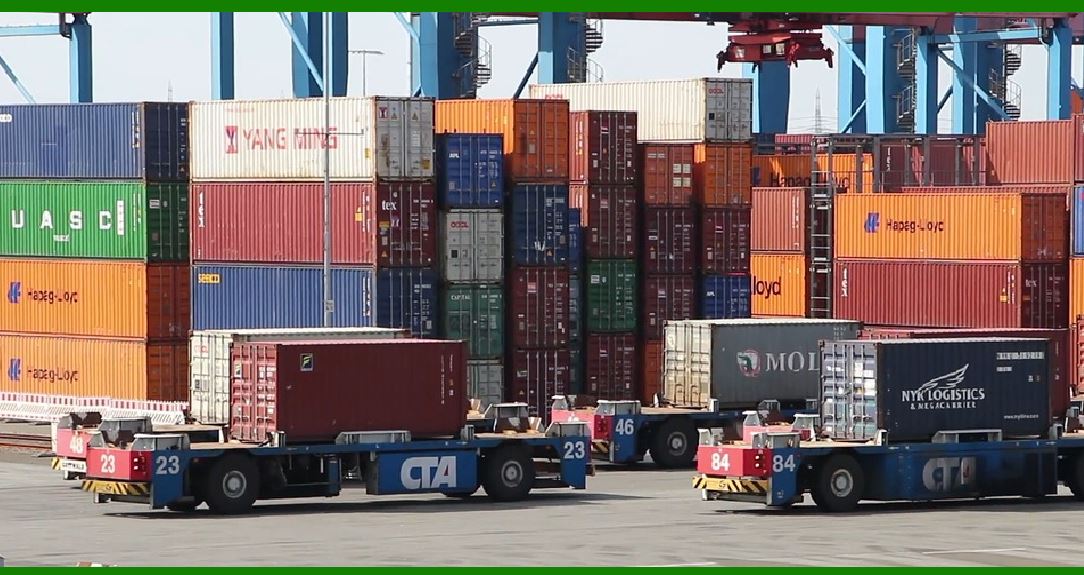
In modern automated warehouses, barcode technology is deeply integrated with other automation equipment to create a highly efficient intelligent logistics system. Automated Guided Vehicles (AGVs) and Autonomous Mobile Robots (AMRs) rely on scanning barcodes on the ground or shelves for navigation and positioning; Automatic Storage and Retrieval Systems (AS/RS) use barcodes to verify the correctness of access; Sorters route packages to the correct exit through high-speed barcode recognition systems. |
Case Study: Application of Barcode Technology and Automation Equipment Integration in Modern Automated Warehouses |
1. Barcode Technology Infrastructure in Automated Warehouses |
The barcode technology infrastructure of modern automated warehouses consists of a multi-layer system that constitutes the 'nervous system' of intelligent logistics. At the bottom is the physical identification layer, including various barcode labels attached to goods, pallets, shelves and floors. These labels are made of highly durable materials that can withstand friction, temperature and humidity changes in the warehouse environment. The middle layer is the data collection layer, which consists of fixed and mobile scanning devices, including handheld scanners, vehicle-mounted scanning terminals, channel scanning gates and visual recognition systems. The top layer is the data processing layer, where the warehouse management system (WMS) and logistics control software process the data stream from the scanning devices in real time and coordinate the operation of various types of automated equipment. |
The key features of this architecture are real-time and reliability. Taking the regional distribution center of an international e-commerce giant as an example, its system design ensures that the delay from barcode scanning to instruction feedback does not exceed 200 milliseconds, and the scanning success rate is maintained at more than 99.99%. To achieve this goal, the center deploys redundant network connections and multi-level data caching mechanisms, so that even local system failures will not affect the overall operation. |
|
2. Barcode-guided Automated Guided Vehicle (AGV) System |
2.1 Ground Barcode Navigation Principle |
The AGV system using barcode navigation relies on a two-dimensional barcode matrix pre-pasted on the ground. These QR codes are arranged on the AGV driving path at precise intervals (usually 1-2 meters), and each code contains absolute position coordinates and direction information. The downward scanner at the bottom of the AGV reads the ground barcode at a fixed frequency (usually 10-30Hz), combined with the data of the on-board inertial measurement unit (IMU) to achieve centimeter-level positioning accuracy. |
This system is used in the warehouse of a Japanese automotive parts manufacturer. When its AGV runs on a circular path of up to 800 meters, the position deviation is always controlled within ?mm. The key lies in the use of special anti-glare barcode materials and high-resolution industrial scanning heads, which can maintain reliable reading even in humid or lightly polluted ground environments. |
2.2 Dynamic path planning and traffic management |
The barcode-based navigation system supports complex dynamic path planning. The central control system monitors the position and task status of all AGVs in real time. When potential conflicts are detected, the path will be recalculated and new navigation instructions will be issued through the wireless network. The European hub warehouse of an international express company uses this function to enable 120 AGVs to work efficiently in an operating area of ??20,000 square meters, handling more than 5,000 transportation tasks per hour during peak hours. |
The system uses a zoning and timing strategy to optimize traffic flow: the warehouse is divided into multiple logical areas, and the area boundaries are marked by barcodes; AGVs will apply for [right of way] before entering the critical area to avoid deadlock. This design has reduced the average waiting time of AGVs in the warehouse by 67% and increased the overall throughput by 41%. |
|
3. Intelligent goods-to-person system of autonomous mobile robots (AMRs) |
3.1 Implementation of hybrid navigation technology |
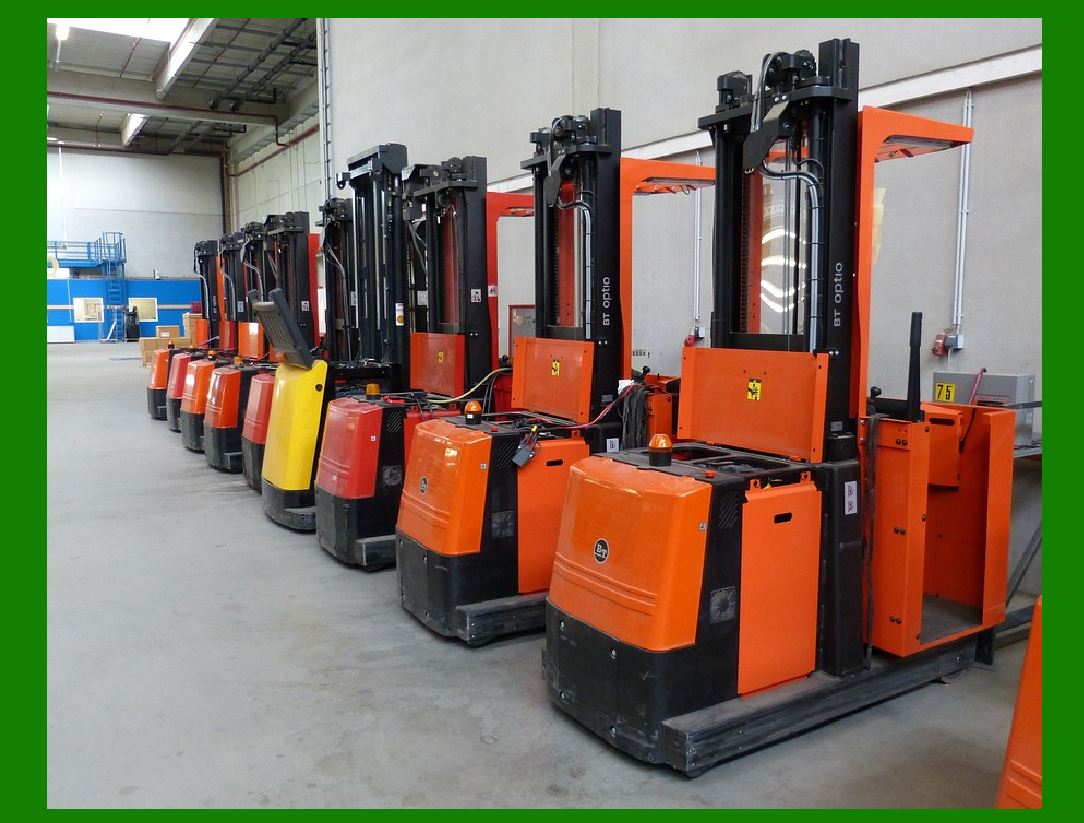
Modern AMRs combine barcode positioning and SLAM (simultaneous localization and mapping) technology to form a hybrid navigation solution. The barcodes at the bottom of the shelf provide absolute position calibration, while the lidar and visual sensors handle relative navigation and obstacle avoidance. This design maintains the high accuracy of the barcode system and obtains the flexibility of SLAM. |
The smart warehouse of a Chinese electronics manufacturer has deployed 80 such AMRs. Practice shows that hybrid navigation reduces the positioning error of AMR by 82% compared with pure SLAM system, and reduces the redeployment cost by 90% (because there is no need to modify the environment to install reflectors). AMR scans the shelf barcode for position correction every 10 moves to ensure that the cumulative error in long-term operation does not exceed 2 cm. |
3.2 Adaptive Shelf Management |
The barcode-based AMR system realizes revolutionary adaptive shelf management. Each movable shelf has a unique QR code. AMR not only moves the shelf, but also continuously collects shelf status data. When the scan finds that the access frequency of a shelf is abnormally high, the system will automatically adjust it to a position closer to the picking area. |
After the automated warehouse of a clothing e-commerce company adopted this strategy, the average picking time of best-selling products was shortened from 3.2 minutes to 47 seconds. The system also analyzes the correlation between shelves (goods that are often accessed at the same time) and optimizes the storage layout, reducing the average distance of related goods from 15 meters to 3.5 meters, and shortening the picking path by 76%. |
|
4. Barcode Verification in Automatic Storage and Retrieval System (AS/RS) |
4.1 Accurate Access Control in Stereoscopic Warehouses |
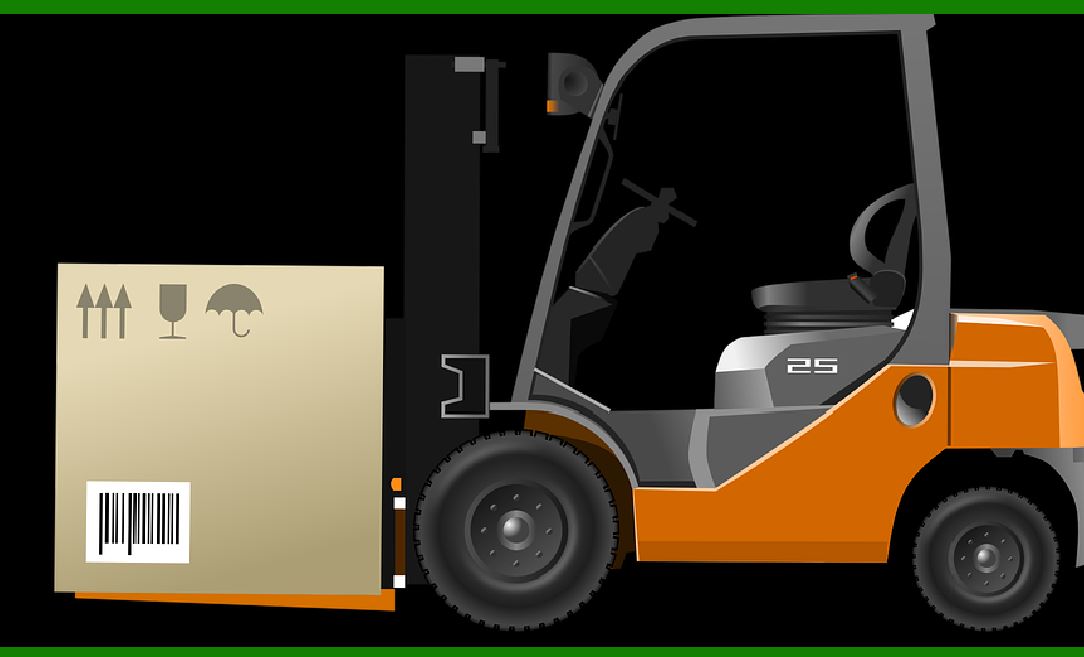
In high-density stereoscopic warehouses, the barcode system ensures access operations with millimeter-level accuracy. Before the stacker accesses the pallet, it will verify the matching of the pallet barcode and the location barcode through multi-angle scanning. The AS/RS system of a German automobile manufacturer adopts a triple verification mechanism: pre-scan before the pallet enters the aisle, recheck scan during the stacker lifting process, and confirmation scan before final storage. |
This strict process enables the system to achieve an operational accuracy rate of 99.998%, which is equivalent to only one error in every 50,000 operations. The system also records the weight distribution data of each pallet and associates it with the barcode information to ensure that heavy items are always stored in a location that matches the load-bearing capacity. |
4.2 Real-time Inventory Visualization |
The integration of AS/RS and barcode system realizes true real-time inventory visualization. In the automated warehouse of a semiconductor material supplier in South Korea, the location status update delay of any item does not exceed 1.5 seconds. Managers can view the real-time status of any cargo position through a 3D interface, including item information, storage time and estimated turnover time. |
An innovative application of the system is the 'virtual inventory' function: by analyzing barcode scanning records and weight sensor data, the system can continuously verify inventory accuracy without interrupting operations, making traditional manual inventory unnecessary and saving more than 800 hours of downtime each year. |
|
5. Barcode recognition technology in high-speed sorting systems |
5.1 Multi-faceted scanning and dynamic decoding |
Modern parcel sorting centers use multi-faceted scanning tunnels to ensure the success rate of barcode reading. The regional hub of an international logistics company installed an omnidirectional scanning system with 16 scanning heads. Each package will be photographed 28 times from different angles when passing through the sorting machine. The system uses a machine learning algorithm to select the best image for decoding. |
This configuration enables the center to achieve a sorting accuracy of 99.92%, and maintain a reading rate of 98.7% even in the face of wrinkled, damaged or partially obscured barcodes. The system can also automatically identify the deterioration of barcode quality, trigger an early warning to reprint labels, and reduce the reading problems in subsequent links from the source. |
5.2 Intelligent routing and exception handling |
The real-time decision-making system based on barcodes enables the sorting machine to handle complex routing logic. The sorting machine at a French postal sorting center not only recognizes the destination barcode, but also reads the QR code containing information such as package size, weight and priority, and optimizes the sorting path accordingly. When an abnormal situation is detected (such as overweight or dangerous goods signs), the system automatically routes the package to a manual inspection station. |
A prominent feature of the system is [learning routing]: by analyzing historical data, predicting the workload of each sorting port, and adjusting the routing strategy in advance to avoid congestion. After implementation, the center's peak processing capacity increased by 35% and the average retention time of packages decreased by 58%. |
|
6. Synergy and performance indicators of integrated systems |
6.1 Seamless collaboration between systems |
The deep integration of automation equipment and barcode technology creates significant synergy. A regional distribution center of a US retail giant demonstrates this synergy: AMR transports the shelves to the picking station, the fixed scanner verifies the picking action, the AGV transports the completed order to the packaging area, the AS/RS automatically replenishes the inventory, and the sorting machine finally distributes it by store - the whole process is connected in series by the barcode system to achieve end-to-end traceability. |
The center's operational data shows that this integration has shortened the order fulfillment cycle from 4-6 hours in traditional warehouses to 22 minutes, reduced manpower requirements by 62%, and increased the accuracy from 98.4% to 99.97%. It is particularly noteworthy that the system can automatically balance the workload of each link to prevent bottleneck effects. |
6.2 Comparison of key performance indicators |
The following table compares the performance difference between the barcode integrated system and the traditional warehouse: |
Indicator Traditional warehouse Barcode automated warehouse Improvement |
Picking efficiency (rows/person-hour) 60-80 300-450 + 400% |
Inventory accuracy 95-98% 99.9-99.99% + 3-4 percentage points |
Order fulfillment cycle 4-8 hours 15-45 minutes -85% ~ -95% |
Space utilization 60-75% 85-95% + 25-30% |
Labor cost ratio 55-65% 25-35% -45% ~ -50% |
|
7. Implementation challenges and solutions |
7.1 System integration complexity |
The integration of automation equipment and barcode systems faces multi-protocol compatibility challenges. When a multinational company deployed a global unified system, it found that equipment from different suppliers used at least 7 different communication protocols. Their solution was to develop a middleware platform that converts various protocols into standardized RESTful APIs while retaining 15% capacity redundancy to cope with peak loads. |
A key success factor for the project was the protocol analysis conducted in advance: the team spent 3 months recording the communication characteristics of each device in detail, including data format, refresh frequency, and error handling mechanism, laying the foundation for middleware development. The final system achieved a 98.7% command first execution success rate. |
7.2 Environmental Adaptability Design |
The industrial environment poses a severe test to the reliability of the barcode system. The experience of a petrochemical warehouse in the Middle East is quite representative: high temperature (often up to 50°C), dust and chemical corrosion cause conventional barcode labels to fail within 2-3 weeks. The solution is to use RFID-barcode composite tags with ceramic substrates, combined with anti-corrosion scanning windows, to extend the label life to more than 18 months. |
The warehouse also redesigned the layout of the scanning points to avoid reading interference caused by direct sunlight, and installed air curtains on critical paths to reduce dust accumulation. These measures have increased the system availability from 91% in the early stage to 99.4%, fully meeting the requirements of continuous operation. |
|
8. Future Development Directions |
8.1 AI-Enhanced Recognition Systems |
Next-generation systems will deeply integrate AI vision technology. Experimental applications have shown that scanning systems combined with deep learning can identify severely damaged barcodes (even if the readable part is less than 30%) with an accuracy rate 40% higher than traditional algorithms. A logistics company is testing a [predictive maintenance] system that predicts possible failures of scanning equipment by analyzing the changing trends of barcode image quality and arranges maintenance in advance. |
8.2 Digital Twins and Real-Time Optimization |
Digital twin technology based on barcode data will enable real-time dynamic optimization of warehouses. A pilot project of a European automobile manufacturer created a virtual model synchronized with the physical warehouse, simulated the impact of various scheduling strategies, and then deployed the optimal solution to the actual system. Initial results show that this approach has increased equipment utilization by 22% and reduced energy consumption by 15%. |
8.3 Sustainable Technology Integration |
Environmental considerations are driving the innovation of barcode technology. Innovations such as biodegradable corn-based tags, low-power green scanners, and devices that charge using ambient light are entering the market. A Nordic company's 'Zero Impact Warehouse' project showed that these technologies can reduce carbon footprint by 35% while maintaining 99.6% system reliability. |
 cs@easiersoft.com