Chapter 12: The Future Horizon |
Emerging Technologies and the Next Decade of Healthcare AIDC |
Executive Summary |
This chapter looks forward, exploring the frontiers of automatic identification and data capture (AIDC) technology in healthcare. While previous chapters have focused on established and emerging applications, this chapter examines the technologies, standards, and market forces that will shape healthcare AIDC over the next decade. The future is not about choosing between barcodes and RFID---it is about integrating multiple technologies into seamless, intelligent systems that enhance patient safety and operational efficiency. |
We begin by examining the global AIDC market trajectory. The healthcare AIDC market is projected to reach approximately $17.1 billion by 2035, growing at a compound annual rate of 6.9% from 2026 to 2035, up from $8.9 billion in 2025 . In volume terms, the market is projected to grow at 13.8% annually, reaching approximately 744 million units by 2036 . The pharmaceutical traceability barcode scanner market alone was estimated at USD 291.0 million in 2025 and is projected to grow at 8.40% annually . |
We then examine the three major technology trends shaping the market: AI integration for advanced analytics and predictive insights, mobile and wearable AIDC devices for point-of-care data collection, and the expansion of real-time location systems (RTLS) and IoT integration for enhanced asset and personnel tracking . These trends are moving the market beyond simple data capture toward intelligent data utilization, enabling more proactive and efficient healthcare operations. |
The chapter then examines the current and emerging applications of RFID in healthcare. A 2026 scoping review found that RFID is increasingly being employed across numerous applications: reducing medical errors in the operating room through detecting and tracking surgical materials, infection prevention and control through pH meters that can detect wound healing, patient identification to prevent incorrect drug administration, and remote monitoring of vital signs . In pharmacy settings, RFID enables automatic inventory analysis, expiration tracking, recall management, and authentication of medications to mitigate counterfeit threats . |
We then examine the hardware landscape, including the specialized requirements for pharmaceutical traceability barcode scanners. These devices are designed to read pharmaceutical-specific barcodes (1D batch/lot codes, 2D Data Matrix serials, and in some cases RFID tags) even in harsh settings such as cold storage and dusty warehouses . In 2024, global production reached approximately 831,000 units, with an average price of around US$ 350 per unit and average gross profit margins of 28-31% . |
The chapter also examines the regulatory landscape, including the newly published ISO 16791:2026 standard for identification and labelling of medicinal products. This standard outlines commonly accepted international practices for AIDC barcoding solutions for applications from manufacturing to dispensing . We also review global UDI requirements, including the fully implemented FDA system in the United States (Class III: 2014, Class II: 2016, Class I: 2018) and China's NMPA phased implementation (Class II: June 2024 estimated, Class I: October 2026 estimated) . |
We then present specific case studies of RFID implementation, including a global leader in medical technology that implemented SATO's RFID pallet tracking system to monitor medical products through sterilization processes, achieving increased productivity, regulatory compliance, and decreased manpower costs . We also examine statements from pharmacy leaders on the value of RFID technology. |
The chapter concludes with a synthesis of market projections and trends, regional dynamics, and key takeaways for healthcare organizations planning their AIDC strategies for the coming decade. |

|
12.1 The Market Trajectory: A Decade of Growth |
The healthcare automatic identification and data capture (AIDC) market is entering a period of sustained, significant growth. According to a 2026 market analysis, the global healthcare AIDC market was valued at USD 8.9 billion in 2025 and is projected to reach approximately USD 17.1 billion by 2035, growing at a compound annual rate of 6.9% from 2026 to 2035 . In volume terms, the market is projected to grow at 13.8% annually, reaching approximately 744 million units by 2036 . |
Market Drivers |
Several factors are driving this remarkable growth: |
Increasing adoption of electronic health records (EHRs): AIDC technologies provide the critical link between the physical world of patient care and the digital realm of health information management. Barcoded wristbands, RFID tags, and other identifiers enable automatic population of EHRs, reducing manual data entry errors and saving clinical time . |
Ongoing digital transformation of healthcare: The broader shift toward digital healthcare---including telemedicine, mobile health, and connected medical devices---relies on AIDC for secure patient identification and data management . |
Regulatory mandates: Serialization requirements such as the U.S. Drug Supply Chain Security Act (DSCSA) and the EU Falsified Medicines Directive (FMD) require interoperable tracking of pharmaceutical products, sustaining investment in 2D barcode and RFID labeling . A pharmaceutical traceability barcode scanner is a specialized, regulatory-compliant data capture device designed to track medicinal products across their full lifecycle from manufacturing to patient administration . |
Anti-counterfeiting priorities: Pharmaceutical stakeholders use smart labels to deter counterfeiting, detect diversion, and enable rapid recalls. RFID technology ensures medications are authentic in real-time, mitigating the threat of counterfeit products entering the pharmacy workflow . |
Healthcare digitalization: Hospitals continue to digitize inventory, asset tracking, and patient identification, lifting the value proposition for RFID, NFC, and barcode labels that tie into EHR, medication administration, and inventory systems . |
Regional Dynamics |
North America is expected to dominate the global healthcare AIDC market, driven by high adoption rates of healthcare IT solutions, stringent regulatory mandates for patient safety and data security (such as HIPAA), and the presence of leading AIDC vendors. The U.S. government's policies promoting effective use of electronic health records are a major driver . |
Asia-Pacific is projected to be the fastest-growing regional market, with China and India leading the expansion. Growth is fueled by increasing government and private sector investments in modernizing healthcare infrastructure, rising healthcare awareness, and the need to improve healthcare accessibility and quality in densely populated areas . |
Europe is experiencing steady growth driven by advanced healthcare infrastructure, strict data protection regulations (including GDPR compliance), and a strong emphasis on patient safety . |

|
12.2 The Three Major Technology Trends |
A detailed market analysis identifies three major technology trends shaping the healthcare AIDC market over the forecast period . |
Trend 1: AI and Machine Learning Integration for Advanced Analytics |
A key market trend is the integration of artificial intelligence (AI) and machine learning into AIDC systems. AI algorithms analyze vast amounts of data captured by AIDC devices to identify patterns, predict trends, and provide actionable insights . |
AI is being used for: |
Inventory optimization: Forecasting demand for medical supplies to optimize inventory management |
Predictive maintenance: Predicting equipment maintenance needs before failures occur |
Patient safety: Identifying potential patient safety risks before they materialize |
This trend moves the market beyond simple data capture toward intelligent data utilization, enabling more proactive and efficient healthcare operations. Machine learning models trained on historical AIDC data can identify anomalies and potential medication errors before they occur . |
Trend 2: Mobile and Wearable AIDC Devices at the Point of Care |
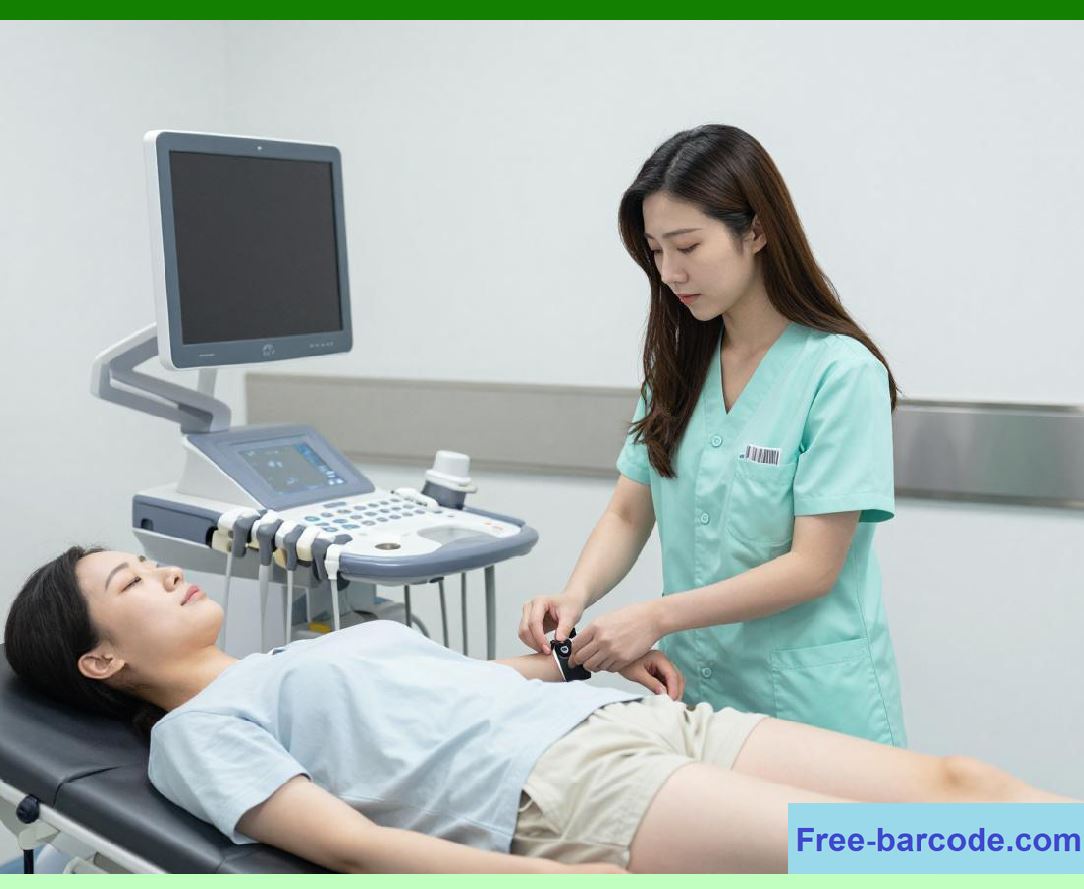
Another key trend is the increasing adoption of mobile and wearable AIDC devices in clinical settings. Smartphones, tablets, and wearable scanners allow healthcare professionals to capture data and access patient information at the point of care, improving workflow efficiency and reducing time spent on administrative tasks . |
Wearable devices, such as smart wristbands with integrated RFID or barcode technology, enable seamless patient identification and tracking throughout a hospital stay. This trend toward mobility enhances flexibility and usability, making AIDC systems more integral to daily clinical routines . |
Trend 3: Expansion of RTLS and IoT Integration |
The integration of AIDC and Internet of Things (IoT) technologies is creating new possibilities for smart healthcare environments. Real-time location systems (RTLS) using RFID and other AIDC technologies enable tracking of medical equipment, staff, and patients throughout healthcare facilities . |
Connected devices that communicate and share data with each other optimize patient flow, monitor environmental conditions, and improve overall safety and security. This integration contributes to improved operational efficiency and more effective utilization of healthcare facility resources . |
|
12.3 RFID Applications: Current and Emerging |
A 2026 scoping review of research published since 2020 found that RFID technology is increasingly being employed across numerous healthcare applications . |
Reducing Medical Errors in the Operating Room |
RFID is being used to detect and track surgical materials to monitor their usage rate and prevent breakage. This application directly addresses the problem of retained surgical items, as discussed in Chapter 3. By tagging surgical sponges, instruments, and other materials, RFID enables real-time tracking that manual counting cannot achieve . |
Infection Prevention and Control |
RFID technology is being used in infection prevention through pH meters that can detect, through a noncontact electronic reading based on RFID, when wounds are healing or worsening. This capability enables earlier intervention and more targeted treatment . |
Patient Identification |
Patient identification is a key area where RFID technology can improve efficiency and reduce misidentification by preventing incorrect drug administration and dosage errors. RFID-enabled wristbands provide non-contact reading, making them suitable for high-mobility environments like emergency departments or surgical prep areas . |
Remote Vital Signs Monitoring |
RFID can assist in remote and real-time monitoring of vital signs, including blood pressure, heart rate, and body temperature. This capability extends the reach of healthcare beyond traditional clinical settings and supports the growing trend toward home-based and remote care . |
Pharmacy Inventory Management |
In pharmacies, RFID technology enables automatic analysis of inventory without manual counting, which can be labor-intensive and time-consuming. Each medication product can be affixed with an RFID tag so pharmacists can precisely track inventory, with RFID technology able to automatically initiate reorder processes and minimize the risk of medication shortage . |
RFID tags can also notify pharmacists when a medication is approaching expiration or has been recalled, allowing for prompt stock rotation and reducing financial losses. This capability addresses the expiration waste problem documented throughout this book . |
Counterfeit Mitigation |
RFID ensures medications are authentic in real-time, mitigating the threat of counterfeit products entering the pharmacy workflow. This is increasingly important as pharmaceutical supply chains become more global and complex . |
Voice of the Pharmacist |
Arpit Mehta, PharmD, MPH, MHA, CPEL, director of pharmacy at Allegheny Health Network, has spoken to the utility of RFID technology and its potential to revolutionize pharmacy operations: |
> '[RFID] technology can help us focus on what's important without truly worrying about --- the labor or the staff that's needed to do that work safely. Technology helps to supplement how we do what we do, safely and effectively, for our patients.' |

|
12.4 The Hardware Landscape: Pharmaceutical Traceability Scanners |
The global pharmaceutical traceability barcode scanner market is a critical component of the broader AIDC ecosystem. These specialized devices are designed to meet the unique demands of pharmaceutical tracking . |
What Makes These Scanners Specialized |
A pharmaceutical traceability barcode scanner is a specialized, regulatory-compliant data capture device tailored for the pharmaceutical industry. Unlike general scanners, it reliably reads pharmaceutical-specific barcodes---1D batch/lot codes, 2D Data Matrix serials, and in some cases RFID tags---even in harsh settings such as cold storage and dusty warehouses . |
These scanners feature ruggedized, anti-glare hardware and integrate seamlessly with global traceability systems such as the FDA's DSCSA, the EU's FMD, and China's National Drug Traceability System. They enable real-time encrypted data transmission for chain-of-custody verification, flag counterfeit/expired/mislabeled drugs via built-in compliance checks, and maintain audit trails to meet strict regulatory mandates . |
Production and Pricing |
In 2024, global pharmaceutical traceability barcode scanner production reached approximately 831,000 units, with an average global market price of around US$ 350 per unit. The average gross profit margin was 28-31% . |
Supply Chain Structure |
The supply chain of pharmaceutical traceability barcode scanners forms a compliance-centric, technology-integrated ecosystem : |
Upstream includes suppliers of specialized hardware components (high-precision barcode/RFID scanning modules, encrypted data chips, ruggedized industrial-grade casings), developers of pharmaceutical-specific software and algorithms (DSCSA/FMD-compliant decoding protocols, encrypted data transmission tools), raw material providers, and certification bodies. |
Midstream manufacturers integrate these inputs through precision assembly, rigorous compliance testing (for data integrity and environmental durability), and firmware calibration to produce scanners that meet global pharmaceutical traceability mandates. |
Downstream links to specialized industrial equipment distributors and medical supply channel partners, which deliver devices to end users---pharmaceutical manufacturers (for production line batch tracking), wholesale distributors (for warehouse chain-of-custody verification), retail pharmacies, hospital dispensaries (for patient-administered medication authentication), and regulatory agencies (for supply chain audit). |
Cost Structure |
The cost structure of pharmaceutical traceability barcode scanners is dominated by regulatory-compliant hardware and software components, accounting for 50-60% of total costs : |
- High-precision 2D Data Matrix scanning modules and encrypted chips are 30-40% pricier than general-purpose scanner components |
- RFID-enabled models incur an additional 20% hardware premium |
- Software and algorithm licensing (15-20% of costs) covers compliance with regional traceability system protocols and real-time data encryption tools |
- Certification and testing costs (10-15%) include mandatory regulatory audits and environmental durability trials |
- The remaining 10-15% encompasses production assembly and quality control, logistics, and post-sales support |
Entry-level 1D barcode models bear 25-30% lower total costs than premium multi-modal (barcode+RFID) scanners with advanced compliance features . |

|
12.5 The Regulatory Landscape: ISO 16791:2026 and UDI Requirements |
ISO 16791:2026 - New International Standard |
In March 2026, the International Organization for Standardization (ISO) published ISO 16791:2026, a new standard for identification and labelling of medicinal products . This standard provides requirements on identification and labelling from the point of manufacturing of packaged medicinal product to the point of dispensing the product. |
The standard outlines commonly accepted international practices for AIDC barcoding solutions for applications and applies to manufacturers, distributors, healthcare facilities, and all parties involved in labelling and distribution of packaged medicinal products. The standard notes that users can consider coding interoperability requirements for other AIDC technologies, such as RFID, though that technology is not addressed in this document except as for information . |
This standard represents an important step toward global harmonization of pharmaceutical traceability requirements, reducing complexity for multinational suppliers and making the supply chain more cost-effective for everyone. |
Global UDI Requirements |
The implementation of Unique Device Identification (UDI) systems around the world is reshaping how medical devices are labeled, tracked, and managed. While the goal is universal---better patient safety, faster recalls, and improved supply chain traceability---the timelines vary by jurisdiction . |
United States (FDA): Fully implemented. Class III devices required compliance by September 2014, Class II by September 2016, Class I by September 2018, and Reusable Class I by December 2022. All UDI data must be submitted to the Global Unique Device Identification Database (GUDID) . |
China (NMPA): Phased implementation. Class III devices were required by January 2021 and June 2022 (phased). Class II devices were estimated for June 2024. Class I devices are estimated for October 2026. All UDI data must be submitted to the China National UDI Database . |
The benefits of UDI extend beyond regulatory compliance. When scanned and logged properly, UDIs improve patient safety through accurate identification and expiration tracking, speed of recalls and adverse event tracing, inventory accuracy and reduction in counterfeit product use, and implant traceability and compliance documentation . |

|
12.6 Case Study: RFID Pallet Tracking for Sterilization |
A compelling example of RFID implementation comes from a global leader in medical technology dedicated to ensuring patient and healthcare worker safety, as documented by SATO America . |
The Business Challenge |
The customer faced a cumbersome process of manually tracking pallets in their warehouse as products moved to and from sterilization chambers. This manual tracking method was not only time-consuming but also laborious and tedious for staff. The extensive labor required resulted in high manpower costs. Moreover, manual processes are prone to human errors, which can have serious implications in the context of medical instruments where accuracy is paramount. Additionally, the absence of real-time visibility and status updates compounded the inefficiencies in the warehouse management system . |
The Solution |
SATO provided an advanced solution involving the integration of RFID tags on pallets, as well as the utilization of RFID technology at the sterilization chamber and gantry points in the warehouse. This comprehensive approach enabled real-time monitoring of work-in-processes, ensuring accurate zone location tracking of the pallets, including their status concerning sterilization completion . |
(An RFID gantry is a structure equipped with RFID technology used to track and manage objects as they pass through a designated point. When an object with an RFID tag moves through the gantry, the RFID system reads the tag's information, allowing for real-time tracking, data collection, and process monitoring .) |
The Results |
The implementation achieved: |
Increased productivity and efficiency of the sterilization process |
Regulatory compliance with traceability and accuracy of medical products |
Decreased manpower costs |
This case study demonstrates that RFID can automate tracking through harsh processes like sterilization, reducing labor costs and improving compliance---findings consistent with the broader evidence presented throughout this book. |

|
12.7 The Synergy of Barcode and RFID |
A common misconception is that hospitals must choose between barcodes and RFID. In reality, most modern healthcare environments benefit from using both . |
Each technology plays a distinct role : |
Barcodes are best for workflows requiring direct interaction and confirmation. They must be scanned directly, ensuring intentional interaction at the point of care. This makes them ideal for patient identification before medication administration, where verification is critical. |
RFID is best for automation, speed, and broad visibility. RFID readers can capture data from many tagged items at once, significantly reducing the time required for manual counts. This makes RFID a strong fit for inventory management, where frequent and accurate counts are necessary but manual processes are disruptive. |
Mobile devices play a key role in making both technologies efficient. Devices like Zebra mobile computers allow clinicians and staff to scan barcodes at the bedside, in supply rooms, or on the move---without interrupting care delivery . |
By combining the two technologies, hospitals can align each technology with the tasks it supports best---maximizing efficiency without adding unnecessary complexity . |

|
12.8 Market Projections by Technology and Application |
Technology Segmentation |
According to market analysis, by technology in 2026 : |
Barcode segment is expected to hold the largest market share. Barcode is a mature, cost-effective, highly reliable technology deeply integrated into healthcare workflows. The simplicity, ease of use, and low cost of labels and scanners make it a universal solution for applications ranging from patient wristbands to medication packaging. |
RFID segment is projected to have the highest CAGR through 2036. RFID offers significant advantages including the ability to read multiple tags simultaneously without direct line-of-sight and the capacity to store more data. These characteristics make RFID particularly suitable for real-time asset tracking, inventory management, and ensuring the sterility of surgical instruments. |
Biometric segment is rapidly growing for secure patient identification and access control. |
Application Segmentation |
By application, in 2026 : |
Patient and prescription management is expected to hold the largest market share. Accurate patient identification is the most important factor for patient safety, and AIDC technologies are the gold standard for achieving this. Barcode- or RFID-enabled wristbands ensure that the right patient receives the right treatment, medication, and care at every stage of their healthcare journey. |
In prescription management, AIDC is used to verify patient identity, check medication details, and record administration, significantly reducing the risk of medication errors---one of the leading causes of adverse events in hospitals. |
Asset management uses AIDC to track medical equipment, surgical instruments, and facility assets throughout their lifecycle. |
Inventory management enables real-time tracking of medical supplies and pharmaceuticals. |
Specimen management applications ensure accurate identification and tracking of specimens throughout the laboratory and diagnostic process. |

|
12.9 Regional Projections |
North America |
North America is expected to lead the global healthcare AIDC market, holding the largest market share. The region's leadership is driven by high adoption rates of healthcare IT solutions, stringent regulatory mandates for patient safety and data security (including HIPAA compliance requirements), and well-established healthcare infrastructure. The presence of major AIDC vendors and a strong culture of technological innovation also support market dominance . |
Asia-Pacific |
Asia-Pacific is projected to be the fastest-growing regional market for AIDC solutions. Growth is fueled by increasing government and private sector investments in modernizing healthcare infrastructure, particularly in China and India. Rising health awareness, growing middle-class populations, and the need to improve healthcare accessibility and quality in densely populated areas drive demand for efficient data management solutions . |
Europe |
Europe is experiencing steady growth driven by advanced healthcare infrastructure, strict data protection regulations (including GDPR compliance), and a strong emphasis on patient safety. The region's mature healthcare system and technology adoption support continued market expansion . |

|
12.10 Key Market Players |
The major companies operating in the global healthcare AIDC market include : |
Zebra Technologies Corp.: At HIMSS 2025, Zebra presented its AI-powered OCR and barcode solutions designed to streamline the scanning and processing of surgical tool data and support more accurate and efficient inventory management . |
Honeywell International Inc.: A leading provider of healthcare scanning solutions. |
Avery Dennison Corp.: Major player in RFID and labeling solutions for healthcare. |
Impinj: Leading provider of RAIN RFID solutions for healthcare asset tracking. |
Cognex Corp.: Provider of machine vision and barcode reading solutions. |
Other notable players: Terso Solutions, GuardRFID, GAO RFID, Lyngsoe Systems, RFiD Discovery, Quake Global, Lowry Solutions. |
Market players are leveraging partnerships, collaborations, mergers, and acquisition strategies for business expansion and innovative product development to maintain their market positioning . |

|
12.11 Detailed Summary |
This chapter has examined the future horizon for AIDC technologies in healthcare, drawing on market projections, technology trend analysis, regulatory developments, and case studies from the United States, China, and Europe. |
Key Findings |
1. The healthcare AIDC market is entering a decade of sustained growth. Projected to reach approximately $17.1 billion by 2035, growing at 6.9% CAGR from 2026 to 2035, up from $8.9 billion in 2025 . In volume terms, the market is projected to reach approximately 744 million units by 2036, growing at 13.8% annually . |
2. Three major technology trends are shaping the market: AI integration for advanced analytics and predictive insights, mobile and wearable AIDC devices for point-of-care data collection, and expansion of RTLS and IoT integration for enhanced asset and personnel tracking . |
3. RFID applications are expanding across healthcare. Current and emerging applications include reducing medical errors in the operating room, infection prevention and control, patient identification, remote vital signs monitoring, pharmacy inventory management, and counterfeit mitigation . |
4. Pharmaceutical traceability scanners are a specialized market segment. In 2024, global production reached approximately 831,000 units, with an average price of around US$ 350 per unit and gross profit margins of 28-31% . |
5. ISO 16791:2026 provides a new international standard for identification and labelling of medicinal products from manufacturing to dispensing . |
6. Global UDI requirements continue to evolve. The FDA system is fully implemented; China's NMPA is on a phased schedule with Class I devices expected by October 2026 . |
7. Barcodes and RFID will continue to coexist. The most successful implementations use each technology where it excels: barcodes for workflows requiring direct interaction and confirmation, RFID for automation, speed, and broad visibility . |
8. North America leads, Asia-Pacific grows fastest. North America holds the largest market share due to high adoption rates and regulatory mandates. Asia-Pacific is the fastest-growing region, driven by healthcare infrastructure modernization in China and India . |

|
Implications for Practice |
For healthcare administrators and technology planners, several principles emerge for navigating the next decade: |
Plan for integration, not replacement. The future is not about choosing between barcodes and RFID---it is about integrating both with AI, IoT, and mobile technologies. Ensure your systems can accommodate multiple data capture methods. |
Invest in infrastructure that supports AI and analytics. The data captured by AIDC systems is valuable not just for immediate operations but for predictive analytics. Choose systems that can export data to AI platforms. |
Prepare for UDI compliance deadlines. For organizations operating in or sourcing from China, the October 2026 deadline for Class I devices is approaching. Ensure your systems can read and process UDI-compliant barcodes. |
Monitor the RFID tag cost trajectory. As tag costs continue to fall, applications that were previously cost-prohibitive become feasible. Re-evaluate your technology choices periodically. |
Engage with suppliers on pre-tagged products. As more pharmaceutical and medical device manufacturers adopt RFID tagging, the burden on hospitals will decrease. Engage with your suppliers to understand their RFID roadmaps. |

|
The Core Insight |
The future of healthcare AIDC is not about a single technology replacing another. It is about integration---barcodes and RFID working together, augmented by AI for predictive analytics, connected through IoT for real-time visibility, and secured by blockchain for immutable traceability. |
The barcode will not disappear. Its cost-effectiveness, standardization, and deep workflow integration ensure its continued relevance. But RFID will grow, enabling applications that barcodes cannot address---real-time tracking, bulk reading, harsh environment durability, and automated monitoring. |
The healthcare organization of 2035 will not ask 'barcode or RFID' It will ask 'which combination of technologies best solves this specific problem' And the answer will increasingly be 'both, plus AI, plus IoT, plus whatever comes next.' |
The trajectory is clear. The technologies are proven. The market is growing. And the patients---the ultimate beneficiaries of safer, more efficient healthcare---will be the ones who benefit most. |
 cs@easiersoft.com