Chapter 18: The Market Reality |
Current Adoption Trends, Economic Drivers, and Regional Dynamics in Healthcare AIDC |
Executive Summary |
This chapter examines the market reality of automatic identification and data capture (AIDC) technologies in healthcare, moving beyond individual case studies to analyze the broader economic and adoption trends shaping the industry. While previous chapters have explored implementation strategies, barriers, and safety implications, this chapter focuses on the market forces that drive---and sometimes hinder---the adoption of barcodes, RFID, and related technologies across healthcare systems. |
We begin by examining the current market size and growth projections. The healthcare smart labels market---which encompasses both barcode and RFID labels for patient identification, medication tracking, cold chain monitoring, and asset management---is projected to expand from USD 3.76 billion in 2025 to USD 7.21 billion by 2031, registering a compound annual growth rate (CAGR) of 13.92% . This growth is driven by serialization mandates such as the U.S. Drug Supply Chain Security Act (DSCSA) and the EU Falsified Medicines Directive (FMD), anti-counterfeiting priorities, the expansion of biologics and vaccines requiring cold-chain monitoring, and the ongoing digitalization of healthcare. |
The medical specimen tracking system market provides another window into AIDC adoption. Valued at USD 1.48 billion in 2025, this market is projected to grow at a CAGR of 12.55%, reaching USD 3.40 billion by 2032 . The market encompasses barcode tracking, NFC tracking, RFID, and real-time location systems (RTLS), with each technology offering distinct trade-offs among cost, read range, environmental resilience, and workflow impact. |
We then examine adoption trends in U.S. hospitals. A retrospective analysis of HIMSS Analytics survey data demonstrates 'optimistic growth in the adoption of these patient safety solutions,' including barcode, RFID, biometric, and pharmacy automation technologies . However, 'adoption rates and trends vary across hospital systems,' reflecting differences in financial resources, leadership commitment, and organizational readiness. |

|
The chapter then synthesizes findings from a 2025 narrative review of barcode technology facilitators and barriers, which analyzed 11 qualitative studies from 6 countries . The review identified three themes---materials, system design, and work environment---as exclusively associated with barriers. Workarounds, such as bypassing barcoding, omitting process steps, and unauthorized process steps, were reported in 8 studies as responses to barriers. These findings underscore that market growth alone does not guarantee successful implementation---system-level barriers must be addressed. |
We then examine the healthcare RFID market, which is expected to register steady growth driven by pharmaceutical applications, inventory management, and patient tracking . A study proposing an RFID-based Hospital Management System with integrated machine learning for financial loss prediction found that RFID adoption significantly reduces financial losses and improves patient tracking, medication accuracy, and resource management . |
The chapter then turns to the Chinese market, where RFID technology is being systematically deployed for high-value medical consumables traceability. A 2025 analysis in the China Medical Device Industry Data Report identified technical challenges including signal interference, system compatibility, data security, and cost control, while proposing systematic solutions from tag selection to backend maintenance . Chinese hospitals are implementing RFID-enabled supply chain management systems under the SPD (Supply-Processing-Distribution) model, utilizing RFID technology and smart cabinet systems for consumables management . |
The chapter concludes with a synthesis of market trends, adoption drivers, and barriers, providing practical guidance for healthcare organizations navigating the AIDC technology landscape. |

|
18.1 The Healthcare Smart Labels Market: Size and Growth |
The healthcare smart labels market---which includes both barcode and RFID labels for patient identification, medication tracking, cold chain monitoring, and asset management---is experiencing robust growth. According to Mordor Intelligence, the market is projected to expand from USD 3.76 billion in 2025 to USD 7.21 billion by 2031, registering a compound annual growth rate (CAGR) of 13.92% between 2026 and 2031 . |
Key Market Drivers |
Several factors are driving this growth : |
DSCSA/EU FMD Serialization Mandates: Serialization requirements in the United States and Europe continue to drive demand for item-level labeling. The DSCSA emphasizes interoperable, electronic tracing, while the EU FMD relies on pack-level verification through EMVS. These requirements create a durable baseline for the healthcare smart labels market as companies refresh and expand labeling systems to remain compliant. |
Anti-Counterfeiting and Diversion Control Priorities: Pharmaceutical stakeholders use smart labels to deter counterfeiting, detect diversion, and enable rapid recalls. Item-level barcodes and NFC tags support authentication and chain-of-custody checks across wholesalers, third-party logistics providers, and hospital pharmacies. |
Expansion of Biologics and Vaccines Cold-Chain Needs: The growth of biologics and vaccines maintains a high standard for refrigerated transport and storage, boosting demand for time-temperature indicators and sensorized labels on shippers, cases, and unit packs. |
Healthcare Digitalization and RFID/NFC Adoption: Hospitals continue to digitize inventory, asset tracking, and patient identification, lifting the value proposition for RFID, NFC, and barcode labels that tie into EMR, medication administration, and inventory systems. |
EPCIS 2.0 and Interoperable Data Exchange: New data standards support sensor events alongside serialized identifiers, aligning label data with enterprise platforms for real-time decision making. |
Ambient IoT/BLE Sensing: Emerging technologies are bringing unit-level condition visibility, allowing real-time tracking without active scanning by the user. |
Technology Segmentation |
By technology in the healthcare smart labels market : |
QR Code and 2D Barcode labels led with 41.23% revenue share in 2025, reflecting their central role in DSCSA and EMVS verification at the unit level in hospitals and pharmacies. |
Sensing labels that capture temperature and related conditions are projected to grow fastest at a 14.65% CAGR through 2031 as biologics and vaccines expand. |
RAIN RFID continues to scale for automated counting and cabinet management in care settings. |
NFC complements with patient-initiated taps for authentication and information access. |
The market analysis notes that 'multi-technology strategies remain common, so clinical and logistics teams can scan 2D barcodes while inventory teams automate with RFID, preserving resilience in the healthcare smart labels market' . |
By Component |
By component, microprocessors and ICs accounted for 42.96% of the market in 2025. Sensors are forecast to rise at a 14.82% CAGR over 2026-2031, driven by cold-chain monitoring requirements . |
By Application |
By application, drug tracking and serialization captured 39.37% of the market in 2025. Cold-chain monitoring is projected to grow at a 14.48% CAGR through 2031, reflecting the expansion of temperature-sensitive biologics and vaccines . |
By End User |
By end user, pharmaceutical companies held 35.85% of the market in 2025. Contract manufacturing organizations (CMOs) and contract development and manufacturing organizations (CDMOs) are expected to grow at a 15.92% CAGR during 2026-2031, as these organizations apply RFID to manage work-in-process, serialized aggregation, and consignment inventory . |
By Geography |
By geography, North America accounted for 43.14% of the market in 2025. Asia-Pacific is set to record a 14.76% CAGR to 2031, driven by healthcare infrastructure modernization in countries like China and India . |
Market Restraints |
Significant restraints temper this growth : |
High Implementation and Infrastructure Cost: Total cost of ownership includes labels and inlays, readers and printers, encoding and verification stations, and the software needed to capture and exchange EPCIS events. These economic factors can delay deployments, particularly where the value density of products is moderate. |
Data Privacy, Security, and Interoperability Hurdles: Patient data protections under HIPAA in the United States and GDPR in Europe drive strict controls on how label-linked events are captured, stored, and shared across systems. |
RFID Performance Challenges: RFID performance on vials, liquids, and metal-rich environments remains a technical challenge that requires careful system design. |
Fragmented Standards and Compliance Workflows: Compliance workflows across DSCSA, UDI, and EMVS can be complex and require significant organizational effort. |

|
18.2 The Medical Specimen Tracking System Market |
The medical specimen tracking system market provides another window into AIDC adoption in healthcare. According to a 2026 market analysis, this market was valued at USD 1.48 billion in 2025 and is projected to grow at a CAGR of 12.55%, reaching USD 3.40 billion by 2032 . |
Market Overview |
The market encompasses consumables (labels, tags, wristbands), hardware (connectivity devices, printers, scanners, storage solutions), and software platforms. Key technologies include barcode tracking, NFC tracking, RFID, and real-time location systems (RTLS). Each technology offers distinct trade-offs among cost, read range, environmental resilience, and workflow impact . |
Barcode tracking remains a 'foundational element due to its simplicity and cost-effectiveness,' while RFID and NFC 'enable hands-free and batch-level identification that accelerates workflows in high-volume environments.' RTLS expands the ability to monitor specimen movement inside facilities, enabling dynamic routing and immediate exception handling . |
End-User Segmentation |
End-user segmentation highlights how requirements differ across healthcare settings : |
Biotechnology and pharmaceutical companies prioritize traceability for regulatory submissions and clinical trial integrity. |
Diagnostic laboratories emphasize throughput and turnaround time. |
Hospitals focus on specimen safety across clinical workflows. |
Research laboratories value flexible integration for experimental protocols. |
Regional Dynamics |
The analysis notes that 'regional dynamics play a crucial role in shaping adoption priorities, regulatory requirements, and supply chain configurations' . |
In the Americas, clinical networks emphasize interoperability with established health information exchanges, widespread adoption of barcode and RFID technologies, and a strong focus on regulatory compliance. |
In Asia-Pacific, 'large, high-volume laboratory networks' are combined with 'rapid adoption of mobile and cloud technologies.' Manufacturing hubs across the region influence global supply chains for consumables and hardware. |
AI and Machine Learning Integration |
The analysis highlights emerging trends: 'artificial intelligence and machine learning are being embedded into quality workflows to identify anomaly patterns, optimize inventory replenishment, and support compliance reporting' . This integration is accompanied by an increasing emphasis on cybersecurity and data governance, as connected devices expand the attack surface and data integrity becomes central to regulatory compliance. |
Tariff Considerations |
The analysis also addresses the impact of tariff policy changes: 'Tariff policy changes in the United States in 2025 have produced a layered impact on specimen tracking supply chains, particularly where hardware components and consumables cross borders multiple times during production and distribution' . Organizations are responding by diversifying supply chains, increasing buffer inventories, and accelerating qualification of alternative vendors. |

|
18.3 Adoption Trends in U.S. Hospitals |
A retrospective descriptive analysis of HIMSS Analytics survey data provides valuable insights into AIDC adoption trends in U.S. hospitals. The analysis demonstrates 'optimistic growth in the adoption of these patient safety solutions,' including barcode, RFID, biometric, and pharmacy automation technologies . |
However, 'adoption rates and trends vary across hospital systems' . This variation reflects differences in financial resources, leadership commitment to patient safety, organizational readiness for technological change, and regulatory pressures. |
Barcode Medication Administration in U.S. Hospitals |
Barcode medication administration (BCMA) systems are now standard practice in most U.S. hospitals. The evidence demonstrating their effectiveness in reducing medication errors is robust. The 2025 narrative review notes that 'barcode technologies are integral to closed-loop electronic medication management systems (EMMS), ensuring safe drug dispensing, preparation, and administration' . |
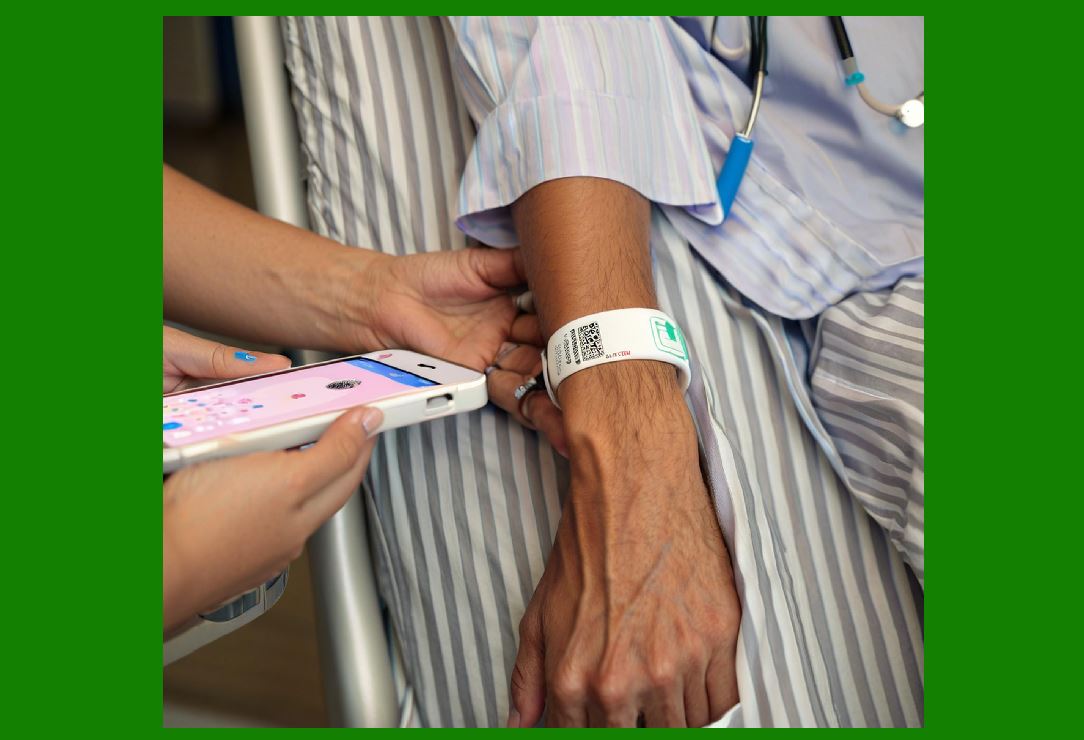
BCMA involves 'identifying the correct patient by scanning the patient's wristband and the correct drug by reading the medication's barcode, followed by recording the administration at the point of care in the electronic health record (EHR) system' . |
Equipment Tracking Systems in U.S. Hospitals |
U.S. hospitals rely on equipment tracking systems to efficiently manage their supply and equipment inventory. The most commonly used systems include Radio Frequency Identification (RFID), barcoding, and Real-Time Locating Systems (RTLS). Each system has its benefits and challenges, and hospitals must choose the system that best fits their needs and budget. |
RFID technology uses radio waves to identify and track objects, including medical equipment, throughout a healthcare facility. Benefits include real-time tracking, efficient inventory management, and enhanced security. Challenges include cost, potential interference from metal objects or other electronic devices, and integration complexity with existing inventory management software. |
Barcoding is another popular equipment tracking system, with barcodes printed on labels attached to equipment and scanners used to read these codes. Benefits include affordability, ease of use, and compatibility with existing hospital management systems. Challenges include limited information (basic data on location and usage but not detailed insights on maintenance or performance), line-of-sight requirement, and durability issues (barcodes can become damaged or unreadable over time). |
RTLS technology allows hospitals to track the real-time location of equipment within their facilities using wireless communication devices such as Wi-Fi or Bluetooth. Benefits include accurate tracking, workflow optimization, and patient safety improvements. Challenges include technology limitations (signal interference, accuracy issues, data latency), cost considerations, and privacy concerns. |
The key takeaway is that 'efficient tracking of equipment can help hospitals reduce costs, improve patient outcomes, and streamline operations.' However, no single technology is optimal for all hospitals or all applications. |

|
18.4 The Healthcare RFID Market |
The healthcare RFID market is a significant and growing segment of the broader AIDC landscape. According to industry research, the healthcare RFID market is expected to register steady growth during the forecast period . |
Market Drivers |
Pharmaceutical Applications: Multinational pharmaceutical companies have been manufacturing medicines for decades to distribute worldwide. Labeling, however, is a rigorous and challenging task that continues to grow more complex. With new labeling regulations that can vary widely across countries and regions, pharmaceutical companies must either build their own systems to meet global needs or delegate them to experts . |
Integrating RFID in pharmaceutical products will help increase patient safety because it allows for more precise control and authentication of medicinal products throughout the supply chain, aiming to reduce errors to almost zero. In addition, it eliminates the need for costly and, more importantly, labor-intensive in-house medication labeling, thereby relieving a significant burden on hospital staff . |
Inventory Management: RFID may be applied for inventory management at hospitals and pharmacies to ensure quality and reduce waste. The benefits go beyond the return on investment since it has the potential to save lives. Industry players are putting together premium product portfolios that include tamper-evident RFID tags and luminous labels to reduce costs, raise accuracy, and speed up operations while protecting pharmaceutical brands from counterfeiting . |
Regulatory Environment: The healthcare RFID market has been significantly driven by an increasingly strict regulatory environment in the pharmaceuticals sector. Governments and regulatory bodies throughout different countries have introduced stringent measures to reduce problems caused by counterfeits . |
Market Restraints |
High Installation Costs: Any industry adopting RFID must invest significantly in readers, tags, software, electricity, and operating replacement services. Additional features such as integration of Internet of Things components, system reliability testing, and training costs add to the expense of an RFID solution . |
System Interoperability: Interoperability challenges persist as organizations customize implementations or run hybrid legacy systems . |
Regional Dynamics |
Asia Pacific to Register Fastest Growth: The main factors positively influencing growth in the Asia-Pacific region are rising medical costs and improved healthcare infrastructure. Growth factors include the increasing number of healthcare professionals associated with hospitals, improved regulatory frameworks, prioritizing patient safety, and tracking medical devices . |
North America Mature Market: In North America, RFID technology has been extensively used in the healthcare industry for medicine devices, machinery, and support equipment. The growth is fueled by increasing use of RFID to monitor these devices in different health environments to provide efficient patient care . |

|
18.5 RFID-Based Hospital Management Systems: Research Evidence |
A 2025 study in the Journal of Information Systems Engineering and Management proposed an RFID-based Hospital Management System integrating RFID tags, a mobile application, and a backend database to enhance data accuracy and streamline operations . |
System Architecture |
The proposed system consists of three core components : |
RFID Infrastructure: RFID readers are strategically placed at hospital entry points, wards, operating rooms, and storage areas. Portable readers assist in patient check-ins and bedside monitoring. Ultra-high-frequency (UHF) RFID tags, capable of long-range and high-speed data transmission, enhance the efficiency of asset and personnel tracking. |
Mobile Application: A cross-platform mobile application serves as the primary interface for hospital staff, enabling real-time access to patient information, medication schedules, and inventory status. |
Backend System: A robust backend ensures scalable and efficient data processing, managing structured healthcare records securely while maintaining compliance with industry standards such as HL7 and HIPAA. |
Key Applications |
The system addresses three key operational areas : |
Patient Tracking: Patients are assigned RFID-enabled wristbands containing unique identifiers and encrypted medical data. Strategically placed RFID readers track patient movement in real-time, ensuring accurate location monitoring and reducing wait times for medical services. |
Medication Administration: To prevent prescription errors, nurses use the mobile application to scan both patient wristbands and RFID-tagged medications before administration. The system cross-verifies dosage information and issues immediate alerts if discrepancies are detected. |
Inventory Management: Real-time tracking of medical equipment and supplies is enabled through RFID tagging. Automated alerts notify staff of low stock levels, misplaced assets, or equipment requiring maintenance. |
Machine Learning Integration |
The study also developed a machine learning model using Random Forest Regressor to analyze hospital financial data from 2010 to 2024, comparing pre-RFID (2010-2015) and post-RFID (2015-2024) periods. The results indicated 'a significant reduction in financial losses and improvements in patient tracking, medication accuracy, and resource management' . The study concludes that 'RFID proves to be a strategic investment for cost reduction and enhanced patient safety in healthcare.' |
Key Research Findings |
The study's literature review synthesizes extensive research on RFID in healthcare : |
- Ma et al. demonstrated that RFID-enabled systems significantly reduce identification errors and streamline hospital workflows. |
- Pandey et al. proposed an RFID-integrated Electronic Health Record (EHR) system that minimizes human errors associated with manual entry. |
- L'opez et al. provided a comprehensive review showing that hospitals adopting RFID systems experienced a reduction in medication errors and improved patient tracking. |
- Bianco et al. explored how RFID and NFC technologies ensure secure and accurate medication administration. |
- Jeon et al. discussed how IoT-enhanced RFID solutions provide real-time insights into hospital asset utilization. |

|
18.6 Barriers to Implementation: The Systematic Review Evidence |
Despite market growth, implementation barriers remain significant. A 2025 narrative review published in the Journal of Patient Safety analyzed 11 qualitative studies from 6 countries (United States, Netherlands, United Kingdom, France, Argentina, and China) . |
The Medication Safety Problem |
The review establishes the importance of its subject matter: 'In hospital settings, errors and adverse events associated with medication management and use (MMU) are prevalent. Many medication errors (MEs) arise from failures in complex tasks unfamiliar to the operator or performed under pressure, such as complex manual dose calculations and conversions or the need to identify the right drug from storage units containing multiple similar-looking packages' . |
The most effective error-reduction strategies focus on 'systemic changes that reduce dependence on human intervention, such as replacing manual workflows with automation and computerization' . |
The Ten Themes |
The review identified 10 common themes. Seven themes emerged as both facilitators and barriers: efficacy, implementation, leadership, medication safety, process, technology, and user experience. Three themes---materials, system design, and work environment---were exclusively associated with barriers . |
Materials barriers include deficiencies such as 'need to use a partial dose or a different formulation,' 'no unit-dose medications,' 'packaging discarded,' 'damaged barcodes,' 'barcodes inside different packages or covered by another label,' 'packaging with multiple barcodes,' 'nonformulary medications or patient's home medications without readable barcodes,' and 'damaged wristband (e.g., torn; deteriorated by fluids; chewed; cut; smudged)' . |
Workarounds were reported in 8 studies as 'responses to the barriers,' including bypassing barcoding, omitting process steps, and unauthorized process steps . |
Implications for Implementation |
The review 'underscores the complexity of implementing and maintaining high-leverage, technology-based systemic defenses in clinical practice. The findings provide a foundation for the improvement of the safety and usability of barcode technologies in hospital settings' . |

|
18.7 The Chinese Market: RFID for High-Value Medical Consumables |
China represents a significant and growing market for healthcare RFID solutions. A 2025 analysis in the China Medical Device Industry Data Report examines the application of RFID technology for anti-counterfeiting and traceability management of high-value medical consumables . |
Challenges |
The report identifies several challenges facing RFID implementation in China : |
Technical Challenges: Signal interference affects read accuracy, with performance influenced by 'multiple factors.' Integration with existing hospital information systems is often problematic due to compatibility issues. |
Data Challenges: Data security, quality, and storage management are significant concerns. High-value consumables generate large volumes of traceability data that must be protected and maintained. |
Management Challenges: Personnel training, tag management, equipment maintenance and updating, and cost control are all 'arduous tasks' that require systematic attention. |
The Proposed Solution |
The report proposes 'a complete solution' to these challenges: 'from tag selection, rational placement of readers, to optimization of middleware and strengthening of backend system maintenance---systematically constructing an intelligent management system' . |
This systematic approach has proven effective. The report notes that 'this management system can significantly enhance the standardization and informatization level of full-process traceability management for high-value medical consumables, improve work efficiency, save labor costs, and ensure medical safety' . |
SPD Model Implementation |
Chinese hospitals are increasingly implementing RFID-enabled supply chain management systems under the SPD (Supply-Processing-Distribution) model. Research on SPD management 'Exploring Optimization Paths for Refined Operation and Management of Low-Value Consumables in Public Hospitals under the New Model describes the use of 'Third-Party Supply Chain Information Management Platform', 'Visualized Three-Tier Departmental Warehouse',(RFID)' (third-party supply chain information management platforms, visual three-level department libraries, RFID technology, and smart cabinet systems) for consumables management . |
RFID Smart Inventory Management System |
A 2025 article in the journal Digital Technology and Application discusses the construction and application of RFID-enabled smart inventory management systems for reagents and consumables. The authors note that traditional inventory management models can no longer meet the requirements of modern laboratories, medical institutions, and industrial production for efficient and accurate management of chemical reagents and consumables. RFID technology, as a non-contact automatic identification technology, has been widely applied in multiple fields due to its unique advantages . |

|
18.8 UDI and Regulatory Drivers |
The Unique Device Identification (UDI) system is a key regulatory driver of AIDC adoption globally. According to a 2025 academic review, 'UDI improves the level of refined management' and enables end-to-end traceability of medical devices . |
The same review notes that 'the RFID management event rate decreased by 5.9% (P<0.001)' following implementation . This statistically significant reduction demonstrates the effectiveness of RFID in reducing management errors. |
The review also identifies the benefits of AI scheduling: 'AI scheduling improves the utilization of spare resources' . This finding aligns with the broader trend toward AI integration in healthcare AIDC systems. |
However, the review also notes limitations: 'system fragmentation,' 'high RFID tag costs,' and 'black-box AI algorithms' remain challenges . |

|
18.9 Regional Dynamics: North America vs. Asia-Pacific |
North America |
North America accounted for 43.14% of the healthcare smart labels market in 2025 . The region's leadership is driven by high adoption rates of healthcare IT solutions, stringent regulatory mandates (including HIPAA and DSCSA requirements), and the presence of leading AIDC vendors. |
The North America RFID in Healthcare Market is well-established, with extensive use of RFID for medicine devices, machinery, and support equipment . |
Asia-Pacific |
Asia-Pacific is set to record a 14.76% CAGR in the healthcare smart labels market to 2031 . Growth is fueled by: |
- Increasing government and private sector investments in modernizing healthcare infrastructure |
- Rising healthcare awareness and growing middle-class populations |
- The need to improve healthcare accessibility and quality in densely populated areas |
- Manufacturing hubs across the region influencing global supply chains |
The 'Asia Pacific to Register Fastest Growth' according to healthcare RFID market analysis . The main factors positively influencing growth are 'rising medical costs and improved healthcare infrastructure' . |
|
18.10 Key Market Players |
Major companies operating in the healthcare RFID market include : |
Alien Technology Corporation |
Zebra Technologies Corporation - In March 2023, Alpro Pharmacy introduced Zebra's mobile computing and RFID solutions to digitalize its manual inventory management system, enhancing efficiency by approximately 80% and improving accuracy by reducing human errors . |
CCL Industries Inc. |
Avery Dennison Corporation |
Biolog-id |
GAO RFID, Inc. |
Honeywell International Inc. |
Impinj Inc. |
In the medical specimen tracking system market, key players are differentiating through product integration, service models, and standards-based interoperability. Leaders are packaging hardware and consumables with managed services and software subscriptions to create predictable revenue streams . |

|
18.11 Detailed Summary |
This chapter has examined the market reality of automatic identification and data capture (AIDC) technologies in healthcare, drawing on market research, academic literature, and industry analysis. |
Key Findings |
1. The healthcare smart labels market is growing rapidly. Projected to expand from USD 3.76 billion in 2025 to USD 7.21 billion by 2031, at a CAGR of 13.92%. Drivers include DSCSA/EU FMD serialization mandates, anti-counterfeiting priorities, expansion of biologics/vaccines cold-chain needs, and healthcare digitalization . |
2. QR Code and 2D Barcode labels led with 41.23% revenue share in 2025, reflecting their central role in regulatory verification. Sensing labels are projected to grow fastest at a 14.65% CAGR through 2031 . |
3. The medical specimen tracking system market was valued at USD 1.48 billion in 2025 and is projected to reach USD 3.40 billion by 2032, at a CAGR of 12.55% . |
4. U.S. hospitals show optimistic growth in AIDC adoption, but adoption rates vary across hospital systems. Barcode medication administration (BCMA) is now standard practice in most U.S. hospitals . |
5. A 2025 narrative review identified three themes---materials, system design, and work environment---as exclusively associated with barriers to barcode technology use. Workarounds were reported in 8 of 11 studies as responses to barriers . |
6. The healthcare RFID market is driven by pharmaceutical applications, inventory management, and patient tracking. Asia-Pacific is expected to register the fastest growth . |
7. An RFID-based Hospital Management System with machine learning integration demonstrated significant reduction in financial losses and improvements in patient tracking, medication accuracy, and resource management . |
8. The Chinese market faces challenges including signal interference, system compatibility, data security, and cost control. A systematic solution approach---from tag selection to backend maintenance---has proven effective . |
9. Chinese hospitals are implementing RFID-enabled SPD (Supply-Processing-Distribution) systems with smart cabinets and RFID technology for consumables management . |
10. North America accounted for 43.14% of the healthcare smart labels market in 2025, while Asia-Pacific is set to record a 14.76% CAGR to 2031 . |

|
Implications for Practice |
For healthcare administrators and technology planners, several principles emerge: |
Stay informed on regulatory requirements. DSCSA and EU FMD serialization mandates create a durable baseline for the healthcare smart labels market. Organizations must ensure compliance to avoid market exclusion . |
Plan for multi-technology strategies. Multi-technology strategies remain common, allowing clinical teams to scan 2D barcodes while inventory teams automate with RFID . |
Address the three exclusive barriers. Materials, system design, and work environment deserve special attention in implementation planning . |
Consider total cost of ownership. Total cost includes labels and inlays, readers and printers, encoding and verification stations, and software. These economic factors can delay deployments . |
Monitor regional dynamics. Asia-Pacific offers the fastest growth, but North America remains the largest market. Supply chain diversification is increasingly important given tariff impacts . |
|
The Core Insight |
The market reality for AIDC technologies in healthcare is one of robust growth driven by regulatory mandates, patient safety priorities, and digitalization trends. However, market growth alone does not guarantee successful implementation. The barriers identified in the academic literature---materials, system design, and work environment---must be addressed at the organizational level. |
Organizations that invest in high-quality materials, thoughtful system design, and supportive work environments will achieve higher adoption rates and better patient safety outcomes. Those that focus solely on technology acquisition without addressing these system-level factors will struggle with workarounds and low compliance. |
The market is moving toward multi-technology strategies and AI integration. Healthcare organizations that plan for these trends---investing in infrastructure that supports both barcode and RFID, and ensuring data can flow to AI analytics platforms---will be best positioned for the future. |
The evidence is clear. The market is growing. The technologies are proven. And the patients---the ultimate beneficiaries---will be the ones who benefit most. |
 cs@easiersoft.com