Chapter 21: The Technology Horizon |
Emerging Innovations and the Next Generation of Healthcare AIDC |
Executive Summary |
This chapter explores the cutting edge of automatic identification and data capture (AIDC) technology in healthcare, examining the innovations that will shape the next decade of patient safety, operational efficiency, and supply chain integrity. While previous chapters have focused on established applications and implementation strategies, this chapter looks forward to the technologies and trends that are still emerging from research laboratories, pilot programs, and early adopter sites. |
We begin by examining recent innovations in surgical instrument management, drawing on a 27-month study of RFID-tagged surgical instruments that demonstrated no assembly errors across 94 tray assemblies, successful tracking of usage counts and defect histories, and a learning effect as staff became more familiar with the technology . The study confirms that RFID can provide individual-level tracking of surgical instruments, recording the number of uses and defective history of each instrument, while also tracking the frequency of instruments being transferred from one tray to another. |
We then examine the expansion of barcode medication administration (BCMA) into the operating room---a setting long considered the 'final frontier' for this technology. A 2025 report from the ASHP Midyear Clinical Meeting documents how health systems are beginning to close the gap, with one pioneering implementation achieving 84.5% medication scanning and 87.6% patient identifier scanning in the first month, reaching enterprise-wide scanning above 93% by June 2022 . |
The chapter then examines innovations in blood management, including SATO's comprehensive PJM RFID 'vein-to-vein' solutions for blood collection, processing, storage, transportation, quality management, and transfusion . These solutions, fully compliant with ISBT guidelines and ISO18000-3 Mode 2 standards, demonstrate how RFID can provide complete traceability across the entire blood journey. |
We then examine emerging trends in medical specimen tracking, where RFID and IoT-enabled systems are supplementing or replacing traditional barcode-based tracking . The market for medical specimen tracking systems is projected to reach $2.0 billion by 2032, growing at 11.5% annually, with China forecast to grow at 15.8% CAGR. |
The chapter also examines the growing application of RFID for high-value medical consumables traceability in China, addressing challenges of signal interference, system compatibility, data security, and cost control through systematic implementation approaches . |
The chapter concludes with a synthesis of findings and a forward-looking assessment of the technologies and trends that will shape the next decade of healthcare AIDC. |

|
21.1 The Evolution of Surgical Instrument Tracking |
One of the most demanding applications for AIDC technology is the tracking of surgical instruments---tools that must be individually identified, tracked through harsh sterilization processes, and accounted for before and after every procedure. Traditional manual counting is error-prone and time-consuming, and barcode labels cannot survive repeated exposure to steam autoclaves. |
A longitudinal study conducted over 27 months in clinical areas evaluated a management system for RFID-tagged surgical instruments . The system was used by 13 study participants in the central sterile supply department, who assembled surgical trays using the RFID technology. Over the study period, trays were assembled 94 times using the system. The results were remarkable: during this entire period, no assembly errors occurred . |
Beyond error prevention, the system successfully recorded the number of uses and the defective history of each surgical instrument. An instrument malfunction occurred after the 19th, 56th, and 73rd uses---all within expected instrument lifespans---and in no case was the malfunction caused by the RFID tag itself. This capability is clinically significant: instruments that are nearing the end of their safe life can be identified and retired before they fail during a procedure . |
Perhaps most importantly, the system recorded the history of instruments being transferred from one tray to another. In busy surgical services, instruments are often borrowed between trays, and without individual tracking, it is easy to lose track of where each instrument is. The RFID system provided visibility into instrument movement that was previously impossible to obtain . |
The study also documented a learning effect. The time required to assemble surgical trays was recorded, and the data showed that as staff became more familiar with the RFID system, assembly times decreased. This finding addresses a common concern about RFID implementation---that it might slow down workflows. The study suggests that with proper training and system design, RFID can actually improve efficiency over time . |
The authors concluded: 'The results suggest that our system can be used to manage instruments safely. Additionally, the management system was acquired of the learning effect and the usability on daily maintenance. This finding suggests that the management system examined here ensures surgical instrument and tray assembly quality' . |
A Canadian case study at a teaching hospital in Montreal reinforces these findings. The research used business process reengineering and simulation techniques to assess the realistic potential of RFID technology for surgical instrument logistics . The research outcomes demonstrated that tagging individual instruments or their sets leads to reduction of the time spent reprocessing soiled instruments, as well as reduction of costs related to staff. Specific key performance indicators were identified, and eventual issues related to implementation of the redesigned processes were discussed. |
Importantly, the authors note that 'implementing RFID-enabled solutions in hospital context is still an emerging phenomenon that involves various stakeholders in a change management project. While implementing RFID technology can benefit hospitals by improving business processes and workflows, the adoption is still slow, especially for managing surgical instruments. It is, hence, crucial to compare the advantages and drawbacks of RFID-enabled surgical instruments solutions with other well-established traceability technologies such as barcoding' . |
The implications for healthcare organizations are clear. RFID for surgical instrument tracking is no longer experimental---it has been validated in multi-year clinical studies with demonstrated error reduction, usage tracking, and learning effects. Organizations considering implementation should plan for change management, involve all stakeholders, and expect a learning curve, but the evidence suggests that the benefits substantially outweigh the implementation challenges. |

|
21.2 The Final Frontier: BCMA in the Operating Room |
Barcode medication administration (BCMA) is well established on inpatient units, where medication administration follows relatively predictable patterns. In the operating room, however, workflows are far more variable, and BCMA adoption has lagged significantly. This setting has been described as the 'final frontier' for BCMA . |
The challenges are substantial. In the operating room, medications may be pre-pulled, doses adjusted on the fly, and documentation shared across anesthesia providers, surgeons, and nursing staff. 'Everything from medication sourcing to documentation is dynamic and team-based,' according to Dr. Samantha Squires, director of pharmacy operations at Aurora Medical Center Summit . |
Yet progress is being made. Dr. Dustin Carneal, a clinical pharmacist at Aurora BayCare Medical Center, helped pioneer one of the nation's earliest successful OR BCMA implementations at a Northeast Ohio hospital. The work received national recognition from the Institute for Safe Medication Practices and later helped shape Vizient's 2025 best practice recommendations . |
The key insight was that successful OR BCMA requires workflow redesign, not just technology installation. Rather than attempting to retrofit inpatient BCMA workflows into the OR, the health system focused on upstream technology and ordering changes. Surgeons transitioned from relying solely on preference cards to entering medication orders during preoperative visits, with orders activated upon patient arrival for surgery. This shift enabled pharmacist verification before medications were dispensed or prepared---an essential step for barcode validation in a setting where surgery medications are often administered without traditional orders . |
The team also reengineered automated dispensing cabinet (ADC) workflows to support barcode scanning. OR staff removed medications directly from ADCs, adding a safety measure of minimizing ADC overrides, and scanning was required for medications and medication-like items prior to administration. Pharmacy worked closely with OR circulators and informatics teams to build master order sets, align ADC profiles with perioperative workflows, and identify documentation gaps within the medication administration record . |
Extensive simulation was used to test the technology under real-world conditions, including complex cases with rapid turnover and emergent scenarios. These exercises helped define when BCMA scanning and final documentation should occur and where exceptions or alternative workflows were necessary due to patient instability, sterile field constraints, fast case turnover, or limited OR team size . |
The results were impressive. In the first month of adoption, 84.5% of medications were scanned prior to administration, and 87.6% of patient identifiers were successfully scanned. By June 2022, enterprise-wide medication scanning exceeded 93%, with patient identifier scanning above 94% . |
Dr. Squires stressed that multidisciplinary engagement is critical: 'Pharmacy, anesthesia, nursing, informatics, patient safety, and service-line leaders must work together to define what constitutes a 'drug' in the perioperative environment, determine where scanning adds value, and establish nonpunitive approaches to compliance monitoring' . |
The implications for healthcare organizations are clear. OR BCMA is feasible, but it requires significant preparation, multidisciplinary buy-in, and workflow flexibility. Organizations that approach it as a technology implementation will struggle; those that approach it as a workflow transformation, with extensive simulation and stakeholder engagement, can succeed. |

|
21.3 Blood Management: RFID from Vein to Vein |
Blood management is one of the most critical applications for RFID technology, with implications for patient safety that are literally life-or-death. Recent innovations have demonstrated the potential for RFID to provide complete traceability across the entire blood journey---from donation to transfusion. |
At the 2025 International Society of Blood Transfusion (ISBT) Congress, the SATO Group presented its comprehensive PJM RFID 'vein-to-vein' solutions, fully compliant with ISBT guidelines and ISO18000-3 Mode 2 standards . PJM (Phase Jitter Modulation) RFID technology ensures complete traceability, significantly enhances operational efficiency, and reinforces patient safety across the entire blood management process. |
The solutions address every critical stage of blood management : |
Blood collection: Accurate and compliant PJM RFID tags and readers for efficient labelling of blood bags and tubes, also pairing with reliable mixers to trace blood donor tubes at the donation site. |
Blood processing: Advanced PJM RFID-enabled solutions designed for seamless integration into blood processing workflows, enhancing accuracy and ensuring traceability during separation and centrifugation stages. |
Blood components storage: PJM RFID-enabled monitoring and storage solutions, including seamless retrofit of RFID antennas into any blood storage appliance (fridge, freezer, platelet agitator) without impacting the overall capacity of the storage unit. The system also includes Sentinel Eyes, an intelligent system for remote management and the secure delivery of blood products, as well as Compact Antenna Solution (CAS) smart trays featuring plug-and-play antennas which fit in even the smallest storage appliances. |
Blood components transportation: Solutions that accelerate blood components inventory management and enhance logistical efficiency, ensuring quick, accurate, and safe handling during transportation. |
Blood quality management: Real-time monitoring systems to trace plasma bags and to automatically monitor the TOOF (Time-Out-Of-Freezer) for plasma fractionation industry, as well as to promptly identify, isolate, and recall blood products that present quality issues or potential risks, safeguarding patient safety. |
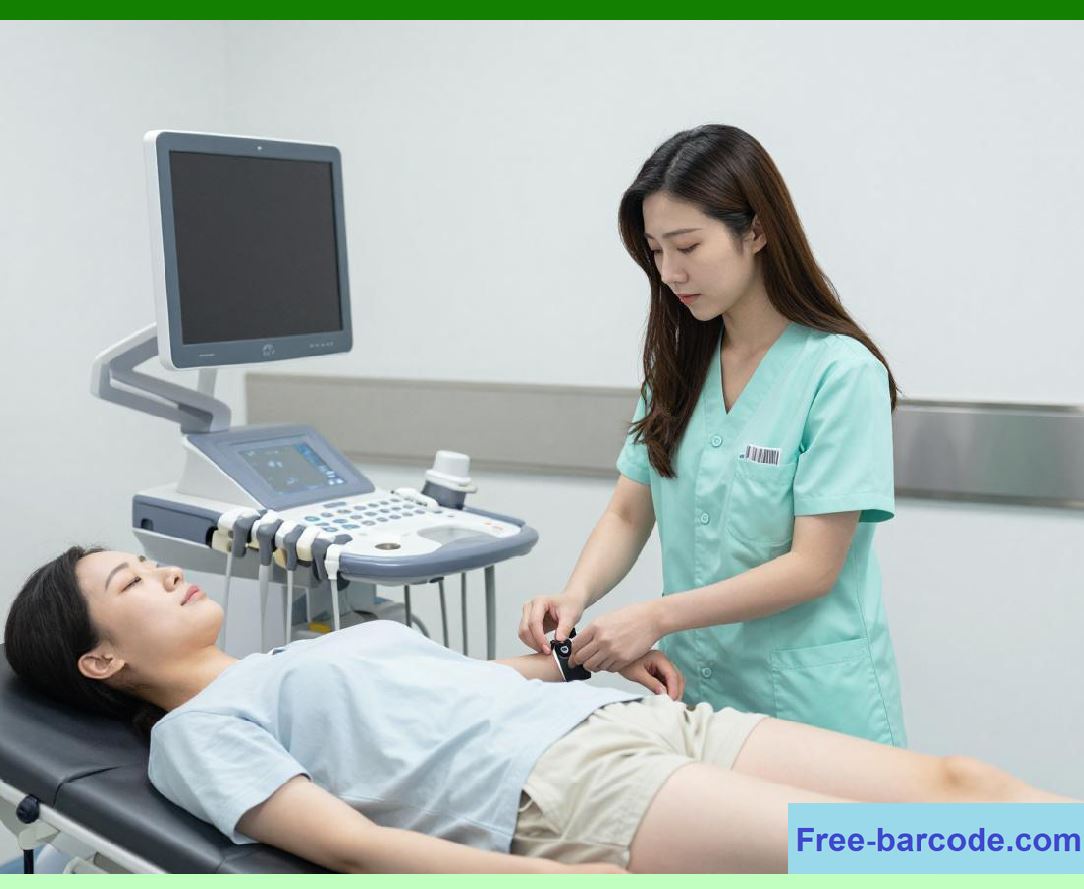
Blood transfusion: Robust portable printers, patient wristbands, and NFC readers for bedside labelling, ensuring precise identification and enhancing bedside transfusion safety. |
This comprehensive approach demonstrates that RFID can provide end-to-end traceability for blood products, addressing the challenges documented in earlier chapters (such as the Amsterdam UMC study that found only 2.2% of blood units complied with all temperature guidelines). By integrating RFID into every stage of the blood journey, hospitals can achieve real-time visibility, automated alerts for temperature excursions, and reliable chain-of-custody documentation. |
The SATO solutions are the product of strategic collaboration with partners including GPI and B Medical Systems, reflecting the growing ecosystem of RFID-enabled healthcare solutions . |
|
21.4 Medical Specimen Tracking: Emerging Trends |
The medical specimen tracking systems market is undergoing significant transformation, driven by technological innovation and increasing demands for accuracy, regulatory compliance, and efficiency . The global market was estimated at $950.2 million in 2025 and is projected to reach $2.0 billion by 2032, growing at a compound annual rate of 11.5% . |
RFID and IoT-Enabled Tracking |
One of the most significant trends is the integration of RFID and IoT-enabled specimen tracking systems. Traditional barcode-based tracking, while still widely used, is being supplemented or replaced by RFID tags and IoT sensors that allow for real-time, automated sample monitoring without the need for manual scanning . These technologies enhance chain-of-custody visibility, ensuring that medical specimens---including blood, tissue, urine, and genetic samples---are accurately tracked throughout the diagnostic workflow. |
RFID-based specimen tracking also improves batch processing efficiency, reducing sample misidentification and retrieval delays in high-volume laboratories. In a laboratory processing thousands of specimens daily, the ability to read multiple tags simultaneously without line-of-sight is transformative . |
Cloud and Blockchain Integration |
Another key trend is the expansion of cloud-based and blockchain-secured specimen tracking platforms. Cloud-based solutions allow centralized data access, multi-lab collaboration, and seamless integration with hospital electronic health records (EHRs). Additionally, blockchain technology is being introduced to create tamper-proof, immutable records of sample handling, ensuring compliance with regulatory standards such as HIPAA, CLIA, and GDPR. By securing patient data and specimen traceability, blockchain-powered tracking minimizes the risks associated with fraud, human error, and data breaches in pathology labs . |
AI-Powered Analytics |
Technological innovations in automation, AI-powered analytics, and robotic sample handling are significantly enhancing specimen tracking efficiency. One of the key advancements is the development of AI-driven sample recognition and anomaly detection systems. Machine learning algorithms can analyze sample data in real time, identifying discrepancies in sample labeling, volume mismatches, or storage location errors before they lead to diagnostic mistakes. This predictive analysis helps laboratories proactively prevent specimen loss and misclassification, ensuring higher accuracy in test results . |
Temperature-Sensitive Tracking |
The demand for temperature-sensitive specimen tracking solutions is also rising, particularly for biobanking, organ transplantation, and infectious disease diagnostics. Many laboratories and healthcare providers are adopting real-time temperature and humidity monitoring sensors that send instant alerts in case of temperature deviations. These innovations are essential for preserving the integrity of cryogenic samples, vaccine storage, and forensic DNA specimens, reducing the risk of specimen degradation due to environmental fluctuations . |
Regional Growth: China Leading |
The U.S. market for medical specimen tracking systems is estimated at $293.9 million in 2025. China is forecast to reach $506.8 million by 2032, trailing a CAGR of 15.8% over the analysis period---the fastest growth among major markets . This rapid growth reflects China's ongoing healthcare infrastructure modernization and increasing adoption of advanced diagnostic technologies. |

|
21.5 Chinese Innovations: RFID for High-Value Medical Consumables |
China is actively deploying RFID technology for the traceability of high-value medical consumables---a category that includes surgical implants, cardiac stents, orthopedic devices, and other expensive, single-use items that must be tracked from manufacturer to patient. |
A 2025 analysis in the China Medical Device Industry Data Report examines the application of RFID technology for anti-counterfeiting and traceability management of high-value medical consumables . The report identifies several challenges facing RFID implementation: |
Technical challenges: Signal interference affects read accuracy, with performance influenced by 'multiple factors.' Integration with existing hospital information systems is often problematic due to compatibility issues . |
Data challenges: Data security, quality, and storage management are significant concerns. High-value consumables generate large volumes of traceability data that must be protected from unauthorized access and maintained for regulatory compliance . |
Management challenges: Personnel training, tag management, equipment maintenance and updating, and cost control are all 'arduous tasks' that require systematic attention . |
The report proposes 'a complete solution' to these challenges: 'from tag selection, rational placement of readers, to optimization of middleware and strengthening of backend system maintenance---systematically constructing an intelligent management system' . |
This systematic approach has proven effective. The report notes that 'this management system can significantly enhance the standardization and informatization level of full-process traceability management for high-value medical consumables, improve work efficiency, save labor costs, and ensure medical safety' . |
The Chinese approach to RFID traceability is systematic and comprehensive, addressing not just the technology but also the organizational and process changes needed for success. This stands in contrast to implementations that focus solely on technology acquisition without addressing the surrounding ecosystem. |

|
21.6 Pharmaceutical Traceability Scanners: The Regulatory Engine |
A specialized segment of the AIDC market deserves particular attention: pharmaceutical traceability barcode scanners. These devices are the 'regulatory engine' of pharmaceutical supply chain traceability, designed to meet the unique demands of pharmaceutical tracking . |
What Makes These Scanners Specialized |
A pharmaceutical traceability barcode scanner is a specialized, regulatory-compliant data capture device tailored for the pharmaceutical industry. Unlike general scanners, it reliably reads pharmaceutical-specific barcodes---1D batch/lot codes, 2D Data Matrix serials, and in some cases RFID tags---even in harsh settings such as cold storage and dusty warehouses. The devices feature ruggedized, anti-glare hardware and integrate seamlessly with global traceability systems such as the FDA's DSCSA, the EU's FMD, and China's National Drug Traceability System. They enable real-time encrypted data transmission for chain-of-custody verification, flag counterfeit/expired/mislabeled drugs via built-in compliance checks, and maintain audit trails to meet strict regulatory mandates . |
Production and Pricing |
In 2024, global pharmaceutical traceability barcode scanner production reached approximately 831,000 units, with an average global market price of around US$ 350 per unit. The average gross profit margin was 28-31% . |
The supply chain forms a compliance-centric, technology-integrated ecosystem: upstream includes suppliers of specialized hardware components (high-precision barcode/RFID scanning modules, encrypted data chips, ruggedized industrial-grade casings), developers of pharmaceutical-specific software and algorithms, raw material providers, and certification bodies; midstream manufacturers integrate these inputs through precision assembly, rigorous compliance testing, and firmware calibration; downstream links to specialized industrial equipment distributors and medical supply channel partners, which deliver devices to pharmaceutical manufacturers, wholesale distributors, retail pharmacies, hospital dispensaries, and regulatory agencies . |
Cost Structure and Tariff Impacts |
The cost structure of pharmaceutical traceability barcode scanners is dominated by regulatory-compliant hardware and software components, accounting for 50-60% of total costs : |
- High-precision 2D Data Matrix scanning modules and encrypted chips are 30-40% pricier than general-purpose scanner components |
- RFID-enabled models incur an additional 20% hardware premium |
- Software and algorithm licensing (15-20% of costs) covers compliance with regional traceability system protocols and real-time data encryption tools |
- Certification and testing costs (10-15%) include mandatory regulatory audits and environmental durability trials |
- The remaining 10-15% encompasses production assembly, quality control, logistics, and post-sales support |
Entry-level 1D barcode models bear 25-30% lower total costs than premium multi-modal (barcode+RFID) scanners with advanced compliance features . |
The 2025 U.S. tariff policies introduce profound uncertainty into the global economic landscape for these devices, affecting competitive dynamics, regional economic interdependencies, and supply chain reconfigurations . |

|
21.7 The Integration of AI and Advanced Analytics |
Across all AIDC applications, the integration of artificial intelligence and machine learning is transforming simple data capture into intelligent decision support. |
AI in Specimen Tracking |
AI-driven sample recognition and anomaly detection systems can analyze sample data in real time, identifying discrepancies in sample labeling, volume mismatches, or storage location errors before they lead to diagnostic mistakes. This predictive analysis helps laboratories proactively prevent specimen loss and misclassification, ensuring higher accuracy in test results . |
AI in Inventory Management |
AI algorithms can analyze usage patterns to forecast demand for medical supplies, optimize inventory levels, and identify potential safety risks before they materialize. As the medical specimen tracking market analysis notes, 'machine learning algorithms can analyze sample data in real time, identifying discrepancies... before they lead to diagnostic mistakes' . |
AI in OR BCMA |
In the OR BCMA implementation, the team noted that 'anesthesia macros enable proper two-step validation, not just scan to document.' This process still needs input from EHR developers to ensure that additional cross checks are available for validating the 'five rights,' 'but there is promise' . |
The Future of AI-AIDC Integration |
The integration of AI with AIDC is still in early stages, but the trajectory is clear. As AIDC systems generate ever-larger volumes of data---scan events, location histories, temperature logs, usage patterns---AI will become essential for extracting actionable insights. Organizations that invest in AIDC infrastructure that can export data to AI analytics platforms will be positioned to benefit from these advances. |

|
21.8 Detailed Summary |
This chapter has examined the emerging frontiers of automatic identification and data capture (AIDC) technology in healthcare, drawing on recent research, market analysis, and case studies from the United States, Canada, China, and Europe. |
Key Findings |
1. RFID for surgical instrument tracking is validated and effective. A 27-month study demonstrated no assembly errors across 94 tray assemblies, successful tracking of usage counts and defect histories, and a learning effect as staff became more familiar with the technology . A Canadian case study confirmed that tagging individual instruments reduces reprocessing time and staff costs . |
2. BCMA in the operating room is feasible but requires workflow redesign. A pioneering implementation achieved 84.5% medication scanning and 87.6% patient identifier scanning in the first month, reaching enterprise-wide scanning above 93% by June 2022. Success requires multidisciplinary engagement, extensive simulation, and upstream ordering changes . |
3. RFID blood management solutions provide complete 'vein-to-vein' traceability. SATO's PJM RFID solutions address every critical stage of blood management: collection, processing, storage, transportation, quality management, and transfusion. The solutions are fully compliant with ISBT guidelines and ISO18000-3 Mode 2 standards . |
4. The medical specimen tracking systems market is projected to reach $2.0 billion by 2032, growing at 11.5% annually. Key trends include RFID/IoT integration, cloud and blockchain platforms, AI-powered analytics, and temperature-sensitive tracking. China is forecast to grow at 15.8% CAGR---the fastest among major markets . |
5. China is systematically deploying RFID for high-value medical consumables traceability. Challenges include signal interference, system compatibility, data security, and cost control. The proposed solution is systematic: from tag selection to backend maintenance . |
6. Pharmaceutical traceability scanners are a specialized market segment. In 2024, global production reached approximately 831,000 units, with an average price of USD 350 per unit and gross profit margins of 28-31%. Tariff policies are introducing uncertainty into global supply chains . |

|
Implications for Practice |
For healthcare administrators and technology planners, several principles emerge: |
Invest in surgical instrument RFID. The evidence from longitudinal studies demonstrates that RFID for surgical instruments is effective, with documented error reduction and learning effects. Organizations should plan for change management and stakeholder engagement. |
Pursue OR BCMA with realistic expectations. OR BCMA is feasible but requires significant preparation, multidisciplinary buy-in, workflow flexibility, and extensive simulation. Organizations that approach it as a workflow transformation rather than a technology implementation will succeed. |
Consider comprehensive blood management RFID solutions. Solutions that address the entire blood journey---from collection to transfusion---offer the greatest safety benefits. Organizations should evaluate end-to-end solutions rather than point solutions. |
Monitor specimen tracking market trends. The shift from barcode to RFID/IoT-enabled tracking is accelerating. Organizations planning new laboratory systems should consider hybrid approaches that can accommodate both technologies. |
Address systematic challenges for RFID implementation. The Chinese experience demonstrates that successful RFID implementation requires systematic attention to tag selection, reader placement, middleware optimization, and backend maintenance---not just technology acquisition. |

|
The Core Insight |
The technology horizon for healthcare AIDC is bright. RFID for surgical instruments is validated and effective. BCMA in the operating room is feasible with proper preparation. Blood management RFID solutions provide complete traceability from vein to vein. Specimen tracking is transitioning from barcodes to RFID and IoT. China is systematically deploying RFID for high-value medical consumables. |
The common thread across all these innovations is not the technology itself---it is the systematic approach to implementation. The organizations that succeed are those that invest in workflow redesign, multidisciplinary engagement, extensive simulation, and systematic attention to the entire ecosystem of tags, readers, middleware, and backend systems. |
The technology is ready. The evidence is clear. The path forward is systematic. And the patients---the ultimate beneficiaries of safer, more efficient healthcare---will be the ones who benefit most. |
 cs@easiersoft.com