Chapter 22: The Security and Privacy Imperative |
Protecting Patient Data in an Era of Connected Healthcare |
Executive Summary |
This chapter examines the critical security and privacy dimensions of automatic identification and data capture (AIDC) technologies in healthcare. While previous chapters have focused on the clinical and operational benefits of barcodes, RFID, and IoT systems, this chapter addresses the risks and safeguards that must accompany these powerful technologies. As healthcare becomes increasingly connected---with RFID tags tracking patients, staff, and equipment; barcode scans documenting every medication administration; and IoT sensors monitoring environmental conditions---the volume of sensitive data generated by AIDC systems grows exponentially. This data, if compromised, could have serious consequences for patient privacy and safety. |
We begin by examining the fundamental security architecture of AIDC technologies. Unlike barcode systems, which store minimal data and require physical access for reading, RFID systems communicate wirelessly and can be read from a distance without the knowledge or consent of the person being tracked. This capability---a feature for operational efficiency---becomes a vulnerability when considering data privacy. We analyze the differences between passive and active RFID tags in terms of security risk profiles, noting that active tags with longer read ranges present greater privacy concerns than short-range passive tags. |

|
We then examine the specific security challenges identified in the academic literature. A comprehensive review of medical asset tracking technologies notes that 'challenges related to privacy mainly originate from counterfeiting unencrypted sensitive data within RFID tags, intercepting data during transmission, or unauthorized access of sensitive data.' From a legal perspective, unencrypted patient data stored in RFID tags may violate government regulations such as HIPAA in the United States. Privacy and security threats are factors that slow adoption of RFID in healthcare. |
The chapter then examines the unique security requirements of pharmaceutical supply chain tracking. The Drug Supply Chain Security Act (DSCSA) in the United States and the EU Falsified Medicines Directive (FMD) require interoperable electronic tracing of pharmaceutical products. Pharmaceutical traceability barcode scanners feature real-time encrypted data transmission for chain-of-custody verification, flag counterfeit/expired/mislabeled drugs via built-in compliance checks, and maintain audit trails to meet strict regulatory mandates. These security features are not optional---they are regulatory requirements. |
We then examine emerging security technologies, including blockchain-based traceability systems that create tamper-proof records of sample handling, ensuring compliance with standards such as HIPAA, CLIA, and GDPR. By securing patient data and specimen traceability, blockchain-powered tracking minimizes risks associated with fraud, human error, and data breaches in pathology labs. |
The chapter concludes with a comprehensive security framework for healthcare organizations implementing AIDC technologies, addressing encryption, access control, authentication, audit trails, and incident response. We also provide specific guidance for UDI compliance and recommendations for navigating the tension between operational efficiency and patient privacy. |
|
22.1 The Security Paradox of Connected Healthcare |
The same technologies that make healthcare safer and more efficient also create new security and privacy risks. This is the central paradox of connected healthcare: every barcode scan that prevents a medication error, every RFID read that locates a missing infusion pump, every IoT sensor that monitors a vaccine's temperature is also a data point that could potentially be intercepted, manipulated, or misused. |
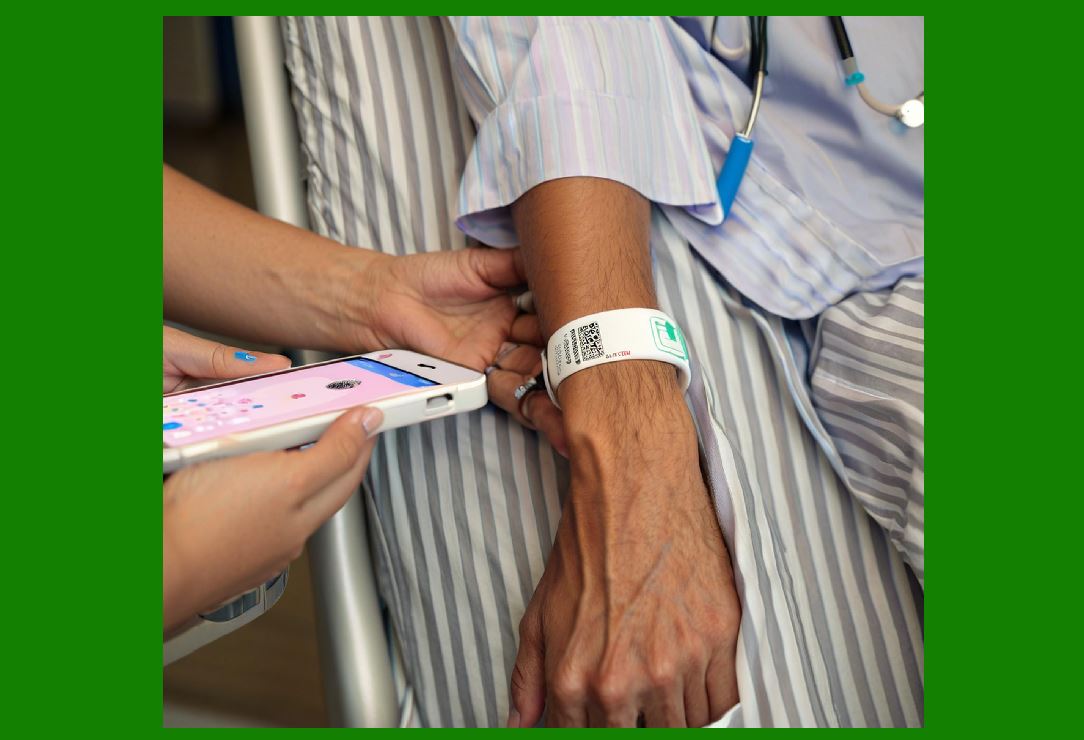
Consider the patient identification wristband. A traditional paper wristband contains only the patient's name and perhaps a medical record number---information that is already visible to anyone who walks into the patient's room. An RFID-enabled wristband, by contrast, contains a unique identifier that can be read wirelessly from a distance. In a well-designed system, that identifier is meaningless without access to the backend database that links it to patient information. But if the system is poorly designed---if sensitive data is stored directly on the tag, or if encryption is not used---an attacker with a handheld RFID reader could potentially access patient information without the patient's knowledge or consent. |
Similarly, consider the medication administration record. When a nurse scans a patient's wristband and then a medication vial, the system logs the event. This creates a detailed record of which medications were given to which patient, by which nurse, at what time. This data is essential for patient safety---it enables verification that the Five Rights were followed, and it provides a record for billing and quality improvement. But it is also sensitive data that must be protected from unauthorized access. A nurse who scans a medication for a high-profile patient---a celebrity, a politician, a colleague---should not be able to access that patient's medication history unless they are directly involved in their care. |
The security challenge is not unique to AIDC technologies. Healthcare has always dealt with sensitive data, and HIPAA and other regulations provide a framework for protecting that data. But AIDC technologies introduce new attack surfaces and new risks that healthcare organizations must address. A 2020 analysis of RFID adoption challenges in healthcare identified privacy and security as among the top barriers to adoption. The authors noted that 'privacy and security threats are factors that slow down adoption of RFID in healthcare' and that 'unencrypted patient data stored in RFID tags may be perceived as a violation of government regulations, such as HIPAA in the U.S.' |
This chapter provides a framework for understanding and addressing these risks. The goal is not to discourage adoption of AIDC technologies---the benefits are too substantial for that. The goal is to ensure that adoption proceeds thoughtfully, with appropriate safeguards, so that the benefits can be realized without compromising patient privacy or data security. |

|
22.2 The Security Architecture of AIDC Technologies |
To understand the security risks of AIDC technologies, we must first understand their basic security architecture. Barcode and RFID systems have fundamentally different security properties. |
Barcode Security |
Barcodes are the more secure of the two technologies from a privacy perspective, primarily because of their limitations. A barcode stores a minimal amount of data---typically a numeric identifier that serves as a key to a backend database. It does not store patient names, medical record numbers, or other sensitive information directly. The barcode itself is meaningless without access to the database that links the identifier to the underlying data. |
Furthermore, barcodes require line-of-sight and close proximity for reading. An attacker cannot surreptitiously scan a patient's wristband from across a room or through a wall. They would need to be physically close to the patient and have a direct view of the barcode. This physical requirement significantly limits the attack surface. |
However, barcodes are not immune to security issues. A barcode label can be copied or replaced. An attacker with access to a printer could create a duplicate wristband for a patient, potentially enabling identity fraud. Barcode scanners can be compromised if they are connected to a network without proper security controls. And the backend database that links barcode identifiers to patient data must be protected just like any other healthcare database. |
RFID Security |
RFID introduces new security challenges because of its wireless, non-line-of-sight communication. A comprehensive review of medical asset tracking technologies notes that 'RFID systems primarily include hardware (tags, antenna, and readers) and software. Data are encoded in a chip implanted in the tag and communicated between a reader and a tag.' |
The wireless communication creates several security concerns: |
Eavesdropping: An attacker with a compatible RFID reader could potentially intercept communications between a legitimate reader and a tag, capturing data in transit. If the data is not encrypted, this could expose sensitive information. |
Unauthorized reading: Unlike a barcode, which requires the holder to present it to a scanner, an RFID tag can be read without the knowledge or consent of the person carrying it. An attacker could walk through a hospital corridor with a concealed RFID reader and capture tag identifiers from all patients and staff in range. |
Tag cloning: Some RFID tags can be cloned---copied onto a blank tag---if the attacker can read the original tag and the tag does not have cryptographic protections. A cloned tag could be used to impersonate a patient or staff member. |
Data tampering: If an RFID tag is writable (some tags allow data to be written or rewritten), an attacker with access to the tag could potentially modify the data stored on it. This could have serious consequences if the tag is used for medication verification or patient identification. |
Denial of service: An attacker could jam RFID frequencies, preventing legitimate readers from communicating with tags. In a hospital setting, this could disrupt medication administration or equipment tracking. |
The risk profile varies significantly between passive and active RFID tags: |
Passive tags have no internal power source and rely on the reader's electromagnetic field for power. Their read range is limited---typically 3-10 meters for UHF tags, and much shorter for HF tags used in medical applications. They store minimal data and are generally less capable of supporting cryptographic protections due to power constraints. The low cost of passive tags (typically $0.10-$1.50) makes them economically feasible for large-scale deployments, but also means they may lack advanced security features. |
Active tags have internal batteries and can transmit signals independently. They have much longer read ranges---often exceeding 100 meters---which increases the risk of unauthorized reading. However, active tags can also support more sophisticated security features, including encryption and authentication, because they have more power and processing capability. Their higher cost (typically $15 and above) may be justified for high-value applications where security is paramount. |
The academic literature emphasizes that 'challenges related to privacy mainly originate from counterfeiting unencrypted sensitive data within RFID tags, intercepting data during transmission, or unauthorized access of sensitive data.' These are not theoretical concerns---they have been demonstrated in research settings and, in some cases, in real-world attacks. |

|
22.3 Pharmaceutical Supply Chain Security |
The pharmaceutical supply chain is a particularly high-stakes domain for AIDC security. Counterfeit medications are a global problem, with the World Health Organization estimating that 1 in 10 medical products in low- and middle-income countries is substandard or falsified. Even in developed countries, counterfeit drugs occasionally enter the legitimate supply chain, with potentially fatal consequences. |
The regulatory response to this threat has been the implementation of serialization requirements. In the United States, the Drug Supply Chain Security Act (DSCSA) requires interoperable electronic tracing of pharmaceutical products at the package level. In Europe, the Falsified Medicines Directive (FMD) requires similar traceability. Both regulations rely on barcode and, increasingly, RFID technology to create a secure chain of custody from manufacturer to patient. |
Pharmaceutical traceability barcode scanners are the specialized devices that enable this traceability. These are not general-purpose scanners---they are 'specialized, regulatory-compliant data capture device[s] tailored for the pharmaceutical industry. Unlike general scanners, it reliably reads pharmaceutical-specific barcodes---1D batch/lot codes, 2D Data Matrix serials, and in some cases RFID tags---even in harsh settings such as cold storage and dusty warehouses.' |
Key security features of pharmaceutical traceability scanners include: |
Real-time encrypted data transmission: Data is encrypted as it is transmitted from the scanner to the traceability system, protecting it from interception. |
Built-in compliance checks: The scanner can flag counterfeit, expired, or mislabeled drugs by verifying the scanned data against regulatory databases. |
Audit trail maintenance: Every scan is logged, creating an immutable record that can be used for regulatory compliance and forensic investigation. |
The cost structure of these scanners reflects their security requirements. 'High-precision 2D Data Matrix scanning modules and encrypted chips are 30-40% pricier than general-purpose scanner components.' RFID-enabled models incur an additional 20% hardware premium. Software and algorithm licensing accounts for 15-20% of costs, covering compliance with regional traceability system protocols and real-time data encryption tools. |
The security of the pharmaceutical supply chain is not just a technical issue---it is a regulatory requirement with significant consequences for non-compliance. Organizations that fail to implement secure traceability systems risk fines, product seizures, and exclusion from markets. The rising stringency of regulations is demonstrated by the FDA's increasing inspection numbers: inspections reached 522 in FY2022, 766 in FY2023, and 972 in FY2024. This trend is likely to continue. |

|
22.4 Blockchain for Healthcare Traceability |
One of the most promising emerging technologies for securing healthcare AIDC data is blockchain. Blockchain---a distributed, immutable ledger---offers several properties that are valuable for healthcare traceability: |
Immutability: Once data is recorded on a blockchain, it cannot be altered or deleted without detection. This is critical for maintaining the integrity of chain-of-custody records. |
Transparency: All authorized parties can view the same data, reducing the risk of discrepancies and disputes. |
Decentralization: No single party controls the data, reducing the risk of tampering or manipulation. |
Auditability: The complete history of a product or specimen can be traced from origin to destination, supporting regulatory compliance and forensic investigation. |
According to the medical specimen tracking market analysis, 'blockchain technology is being introduced to create tamper-proof, immutable records of sample handling, ensuring compliance with regulatory standards such as HIPAA, CLIA, and GDPR. By securing patient data and specimen traceability, blockchain-powered tracking minimizes the risks associated with fraud, human error, and data breaches in pathology labs.' |
The application of blockchain to specimen tracking is particularly valuable because specimens are often handled by multiple organizations---clinics, transport services, laboratories, and storage facilities. Each handoff creates a potential point of failure or fraud. A blockchain-based system ensures that every transfer is recorded and cannot be retroactively altered, creating a complete, verifiable chain of custody. |
Similarly, for the pharmaceutical supply chain, blockchain can provide end-to-end traceability that is resistant to tampering. A pharmaceutical product that moves from manufacturer to wholesaler to distributor to pharmacy to patient would have each transfer recorded on the blockchain, with each party cryptographically signing their portion of the record. If a counterfeit product enters the supply chain, the blockchain record will reveal the point at which the legitimate chain was broken. |
The Chinese healthcare system has been particularly active in exploring blockchain for medical traceability. As noted in earlier chapters, China's 'Internet + Medical Health' development strategy encourages the use of advanced information technologies, including blockchain, for healthcare applications. |
However, blockchain is not a panacea. It introduces its own challenges: scalability (healthcare generates enormous volumes of data), interoperability (different blockchain systems may not communicate), and key management (lost cryptographic keys can mean lost access to data). Organizations should evaluate blockchain solutions carefully, focusing on specific use cases where its unique properties---immutability and decentralization---provide clear value over traditional database approaches. |

|
22.5 The Human Factor in Security |
No amount of technology can compensate for human error or insider threats. The security of AIDC systems depends not only on encryption and access controls but also on the behavior of the people who use them. |
The 2025 narrative review of barcode technology facilitators and barriers identified 'work environment' as a theme exclusively associated with barriers, including 'insufficient staffing, rushed conditions, competing priorities.' These same factors undermine security as well as safety. A nurse who is rushed and understaffed may share login credentials with a colleague, may leave a workstation unlocked, or may fail to log out of a system---all behaviors that compromise security. |
The review also identified 'materials' as an exclusive barrier, including 'damaged wristbands' and 'missing wristbands.' A damaged or missing wristband is not just a safety issue---it is a security issue. If a patient's wristband is damaged or missing, hospital staff cannot reliably verify their identity. An attacker could potentially exploit this gap by presenting a false identity. |
The systematic review did not specifically address security behaviors, but the patterns are likely similar. Workarounds that bypass security controls will emerge when those controls are perceived as burdensome or unnecessary. Organizations that treat security as a burden imposed by IT rather than as an enabler of patient safety will struggle to achieve compliance. |
The solution is to design security into workflows, not add it on top. Authentication should be seamless---perhaps through RFID-enabled staff badges that automatically log users in and out as they move between workstations. Encryption should be transparent---users should not need to think about whether their scans are being encrypted; it should happen automatically. And security training should be integrated into clinical training, not treated as a separate, annual compliance exercise. |

|
22.6 Regulatory Compliance: HIPAA and Beyond |
In the United States, the Health Insurance Portability and Accountability Act (HIPAA) sets the baseline for protecting patient health information. HIPAA applies to 'covered entities' (healthcare providers, health plans, and healthcare clearinghouses) and their 'business associates' (contractors who handle protected health information on their behalf). |
AIDC systems generate and process protected health information in several ways: |
Patient identification wristbands link a physical identifier (the barcode or RFID tag) to the patient's electronic health record. The wristband itself may not contain identifiable information, but the database that maps the identifier to patient data certainly does. |
Medication administration records document which medications were given to which patient, by which provider, at what time. These are directly identifiable health information. |
Specimen tracking records link specimens to patients throughout the diagnostic process. A blood sample label may contain only a laboratory ID, but the laboratory information system links that ID to the patient. |
Equipment tracking data is less obviously sensitive, but if a piece of equipment is assigned to a specific patient room, the tracking data could indirectly reveal patient location. |
HIPAA requires covered entities to implement administrative, physical, and technical safeguards to protect electronic protected health information. For AIDC systems, this means: |
Access controls: Only authorized personnel should be able to read RFID tags or barcode labels that link to patient data. |
Audit controls: Systems must record and monitor access to protected health information. |
Integrity controls: Data must be protected from improper alteration or destruction. |
Transmission security: Data transmitted over networks must be encrypted. |
Organizations implementing AIDC systems should conduct a HIPAA risk assessment as part of their implementation planning. This assessment should identify where protected health information is created, stored, transmitted, and accessed; evaluate the risks to that information; and implement safeguards to mitigate those risks. |
In Europe, the General Data Protection Regulation (GDPR) imposes even stricter requirements for protecting personal data, including health information. GDPR requires organizations to obtain explicit consent for data processing, to provide individuals with access to their data, and to delete data upon request---requirements that may be challenging for AIDC systems that generate large volumes of data. |
In China, the Personal Information Protection Law (PIPL) similarly regulates the collection and processing of personal information, including health data. Organizations operating in multiple jurisdictions must navigate a complex patchwork of requirements, further emphasizing the value of robust, defensible security practices. |
The medical specimen tracking market analysis notes that 'patient data protections under HIPAA in the United States and GDPR in Europe drive strict controls on how label-linked events are captured, stored, and shared across systems.' These protections are not optional---they are legal requirements with significant penalties for non-compliance. |

|
22.7 The UDI Regulatory Framework |
The Unique Device Identification (UDI) system is primarily a patient safety and supply chain traceability regulation, but it also has security implications. UDI requires that medical devices bear a unique identifier that can be read by automatic identification technologies---typically a barcode, but increasingly RFID as well. |
From a security perspective, UDI serves several functions: |
Authentication: A valid UDI that can be verified against the GUDID database helps confirm that a device is genuine, not counterfeit. |
Recall management: When a device is recalled, the UDI enables manufacturers and regulators to identify exactly which devices are affected and where they were distributed. |
Adverse event reporting: When a patient experiences an adverse event related to a device, the UDI enables precise identification of the device, supporting investigation and trend analysis. |
The FDA's UDI system is fully implemented, with Class III devices required since 2014, Class II since 2016, and Class I since 2018. China's NMPA is on a phased schedule, with Class I devices expected by October 2026. |
For organizations implementing UDI-compliant systems, security considerations include: |
Data integrity: UDI data must be protected from tampering. If an attacker can modify UDI data, they could potentially conceal counterfeit devices or disrupt recalls. |
Access control: Only authorized personnel should be able to create, modify, or delete UDI records. |
Audit trails: All changes to UDI data should be logged and reviewable. |
The UDI system, like the DSCSA and FMD, represents a regulatory-driven security framework. Organizations that comply with these regulations will, by default, implement many of the security controls needed to protect AIDC data. |

|
22.8 Security Challenges from the Academic Literature |
The academic literature on AIDC security is relatively limited, but the available studies identify several key challenges. A 2020 analysis of RFID adoption challenges in healthcare, published in the journal Sensors, examined technological, security/privacy, and organizational/financial barriers. |
Technological challenges include electromagnetic interference (EMI) with biomedical devices. The review notes that 'RFID wireless transmissions may cause EMI with biomedical devices' and that 'RFID tags could potentially cause EMI to medical equipment such as external pacemakers or syringe pumps, which could cause equipment to switch off in proximity to an RFID tag.' This is not a security issue per se, but it is a safety issue that could be exploited by an attacker seeking to disrupt care. |
Security and privacy challenges include counterfeiting unencrypted sensitive data within RFID tags, intercepting data during transmission, and unauthorized access of sensitive data. From a legal perspective, 'unencrypted patient data stored in RFID tags may be perceived as a violation of government regulations, such as HIPAA in the U.S.' |
Organizational and financial challenges include the high cost of implementing secure systems. The review notes that 'a large initial investment is required for RFID deployment' and that 'in addition to tags and readers, the RFID infrastructure requires middleware, databases, servers, and applications. Training, business process redesign, organizational change, and maintenance are also costs that need to be accounted for.' |
The review cites a study conducted in the U.S. concluding that 'adoption cost is regarded as the top barrier for RFID adoptions.' Another pilot study in an American hospital estimated a long-term return on investment through a 5-year ROI of 2%, with an approximate payback period of four years. These figures are lower than the ROI estimates cited elsewhere in this book, reflecting the additional costs of implementing secure systems. |
The key takeaway is that security is not free. Organizations must budget for secure system design, encryption, access controls, audit logging, and ongoing monitoring. Cutting corners on security to reduce upfront costs is a false economy---the potential costs of a data breach or regulatory penalty far exceed the savings. |

|
22.9 Emerging Security Technologies |
Several emerging technologies promise to enhance the security of AIDC systems. |
Blockchain for Traceability |
As discussed above, blockchain offers immutability and decentralization that are valuable for chain-of-custody applications. The medical specimen tracking market analysis highlights 'the expansion of cloud-based and blockchain-secured specimen tracking platforms... blockchain technology is being introduced to create tamper-proof, immutable records of sample handling, ensuring compliance with regulatory standards such as HIPAA, CLIA, and GDPR.' |
Tamper-Evident RFID Tags |
Specialized RFID tags can detect and report tampering. These tags are designed so that any attempt to remove or damage the tag is detectable---the tag may stop functioning or may report a tamper event when read. This is valuable for securing high-value items such as controlled substances or expensive medical devices. |
Cryptographic Authentication |
RFID tags with cryptographic capabilities can authenticate themselves to readers, preventing cloning and spoofing. The tag stores a private key that cannot be extracted, and uses it to sign responses to reader challenges. This requires more powerful tags---typically active or semi-passive---which increases cost but may be justified for high-security applications. |
Encrypted Data Storage |
For applications where data must be stored on the tag itself (rather than in a backend database), encryption can protect that data from unauthorized reading. The tag stores only encrypted data, and only readers with the appropriate decryption key can access it. |
Physical Security |
For high-security applications, physical security measures can complement electronic security. RFID readers can be placed in controlled areas, with access limited by ID badges or biometrics. RFID tags can be embedded in tamper-resistant housings. And the physical security of backend servers must be maintained. |

|
22.10 A Security Framework for Healthcare AIDC |
Based on the analysis in this chapter, the following framework provides practical guidance for healthcare organizations implementing AIDC technologies. |
Principle 1: Minimize Data on Tags |
The best way to protect data on an RFID tag is not to store it there. Tags should store only a unique identifier that serves as a key to a secure backend database. No patient names, medical record numbers, or other sensitive information should be stored directly on tags. |
Principle 2: Encrypt All Wireless Communications |
All data transmitted between RFID tags and readers should be encrypted. This protects against eavesdropping and man-in-the-middle attacks. For passive tags with limited power and processing capability, lightweight encryption algorithms may be necessary. |
Principle 3: Implement Strong Access Controls |
Only authorized readers should be able to read RFID tags. This can be achieved through reader authentication---the tag verifies that the reader is authorized before responding. It can also be achieved through physical controls---placing readers in secure locations and limiting access. |
Principle 4: Maintain Comprehensive Audit Trails |
Every AIDC event---every scan, every read, every write---should be logged. Logs should include who performed the action, when, from where, and what data was accessed. Logs should be protected from tampering and retained according to regulatory requirements. |
Principle 5: Conduct Regular Security Assessments |
Organizations should regularly assess the security of their AIDC systems. This includes vulnerability scanning, penetration testing, and code review for any custom-developed software. Assessments should be conducted by qualified third parties where possible. |
Principle 6: Train Staff on Security |
Security is everyone's responsibility. Staff should be trained on the security risks of AIDC systems and on their responsibilities for protecting patient data. Training should be ongoing, not a one-time event. |
Principle 7: Plan for Incidents |
Despite best efforts, security incidents may occur. Organizations should have incident response plans that address AIDC-specific scenarios, such as a compromised RFID tag or a data breach involving scanned medication records. |
Principle 8: Comply with Regulations |
HIPAA, GDPR, PIPL, and other regulations establish minimum standards for protecting health information. Organizations should ensure that their AIDC systems comply with all applicable regulations, and should consult with legal counsel on specific requirements. |

|
22.11 The Future of AIDC Security |
The security landscape for AIDC technologies will continue to evolve. Several trends will shape the future: |
Increasing regulatory pressure: The trend toward stricter regulation of healthcare data protection will continue. Organizations should expect more frequent audits, higher penalties for non-compliance, and more prescriptive security requirements. |
Convergence with IoT security: As AIDC systems become more integrated with IoT devices, the security of these systems will converge. Standards developed for IoT security (such as those from the Industrial Internet Consortium) will increasingly apply to AIDC. |
AI-powered security monitoring: Artificial intelligence can analyze the vast volumes of data generated by AIDC systems to detect anomalies that may indicate security incidents. For example, an AI system might detect that a particular RFID reader is reading tags at an unusual time or from an unusual location, suggesting compromise. |
Quantum computing threats: In the long term, quantum computers may be able to break the cryptographic algorithms that currently protect RFID communications. Organizations should monitor developments in post-quantum cryptography and plan for eventual migration. |
The goal of AIDC security is not to eliminate all risks---that is impossible. The goal is to manage risks to an acceptable level, balancing the benefits of connected technology against the potential harms of data compromise. This is a continuous process of assessment, improvement, and adaptation. Organizations that approach security as an ongoing practice rather than a one-time project will be best positioned to protect their patients and their data. |

|
22.12 Detailed Summary |
This chapter has examined the security and privacy dimensions of AIDC technologies in healthcare. Drawing on academic literature, regulatory frameworks, and emerging technologies, we have analyzed the risks and safeguards associated with barcode, RFID, and IoT systems. |
Key Findings |
1. AIDC technologies create new security risks. The wireless, non-line-of-sight communication of RFID tags creates risks of eavesdropping, unauthorized reading, tag cloning, data tampering, and denial of service. These risks must be addressed through technical and organizational safeguards. |
2. Barcodes are more secure from a privacy perspective. They require line-of-sight and close proximity for reading, store minimal data, and have no wireless communication to intercept. However, they are not immune to security issues. |
3. The security risk profile differs between passive and active RFID. Active tags have longer read ranges and more processing capability, enabling stronger security features but also presenting greater privacy risks. Passive tags have shorter ranges and less capability, limiting both risks and security features. |
4. Pharmaceutical supply chain security is regulated by DSCSA and FMD. These regulations require interoperable electronic tracing of pharmaceutical products. Pharmaceutical traceability scanners feature encrypted data transmission, built-in compliance checks, and audit trail maintenance. |
5. Blockchain is emerging as a security technology for healthcare traceability. Blockchain provides tamper-proof, immutable records of sample handling, supporting compliance with HIPAA, CLIA, and GDPR. It minimizes risks associated with fraud, human error, and data breaches. |
6. The human factor is critical to security. Workarounds, rushed conditions, and insufficient staffing undermine security as well as safety. Organizations must design security into workflows, not add it on top. |
7. HIPAA, GDPR, and PIPL establish legal requirements for protecting health data. Organizations must implement administrative, physical, and technical safeguards for AIDC systems. Non-compliance carries significant penalties. |
8. UDI compliance has security implications. The UDI system provides authentication, recall management, and adverse event reporting capabilities that depend on data integrity and access control. |

|
Implications for Practice |
For healthcare administrators and technology planners, several principles emerge: |
Minimize data on tags. Store only unique identifiers on tags, not patient names or medical record numbers. Link to secure backend databases. |
Encrypt all wireless communications. Protect against eavesdropping and man-in-the-middle attacks. Use appropriate encryption for tag capabilities. |
Implement strong access controls. Authenticate readers before tags respond. Use physical controls to limit reader access. |
Maintain comprehensive audit trails. Log every AIDC event. Protect logs from tampering. Retain according to regulatory requirements. |
Conduct regular security assessments. Perform vulnerability scanning, penetration testing, and code review. Use qualified third parties. |
Train staff on security. Security is everyone's responsibility. Training should be ongoing, not one-time. |
Plan for incidents. Have incident response plans that address AIDC-specific scenarios. Test plans regularly. |
Comply with regulations. Ensure AIDC systems comply with HIPAA, GDPR, PIPL, and other applicable regulations. Consult legal counsel. |

|
The Core Insight |
The security and privacy of AIDC systems in healthcare is not a technical problem to be solved once and forgotten. It is an ongoing practice of risk assessment, mitigation, monitoring, and improvement. Organizations that treat security as an afterthought---as something to be added after the technology is deployed---will struggle. Organizations that integrate security into every stage of the AIDC lifecycle---from requirements through design, implementation, operation, and decommissioning---will succeed. |
The same technologies that make healthcare safer and more efficient also create new risks. The benefits are substantial, but they must be balanced against the potential harms. The framework in this chapter provides a path to that balance---a way to realize the benefits of AIDC while protecting the privacy and security of patients. |
In the connected healthcare of the future, security will not be a constraint on innovation---it will be an enabler. Patients will trust that their data is safe. Providers will trust that their systems are reliable. Regulators will trust that the supply chain is secure. That trust is earned through thoughtful, systematic attention to security at every level. The evidence is clear. The path forward is marked. And the patients---the ultimate beneficiaries---will be the ones who benefit most. |
 cs@easiersoft.com