Chapter 25: The Innovation Landscape Revisited |
Emerging Technologies, Low-Cost Solutions, and the Future of Healthcare AIDC |
Executive Summary |
This chapter examines the cutting edge of automatic identification and data capture (AIDC) technology in healthcare, exploring both emerging high-end innovations and practical low-cost solutions that are making these technologies accessible to resource-constrained organizations. While previous chapters have focused on established applications and implementation strategies, this chapter looks at what is coming nextand at how innovative organizations are already achieving remarkable results with limited resources. |
We begin by examining recent innovations in RFID-enabled medical record management. A 2025 study published in the journal China Medical Engineering demonstrated that an RFID-based secure medical record cart significantly improved satisfaction rates across all measured dimensions, including use satisfaction, safety satisfaction, and department communication satisfaction . The technology addresses the dual challenges of medical record storage security and standardized usage, while improving 5S management in wards. |
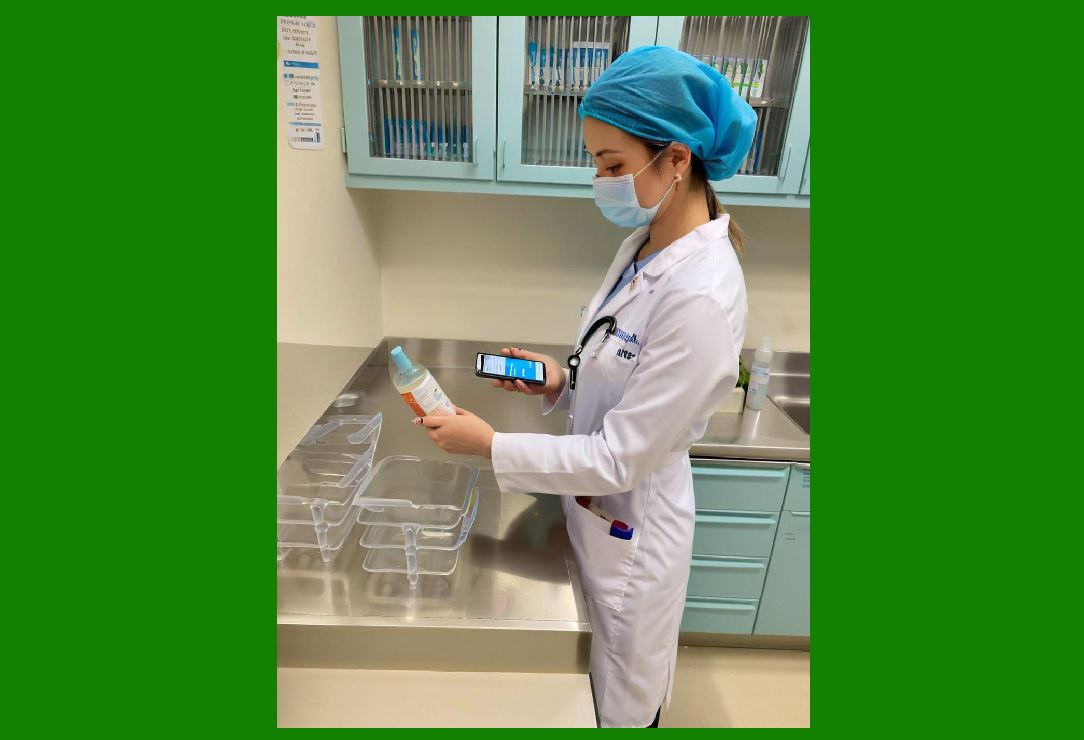
The chapter then examines the expansion of barcode medication administration (BCMA) into the operating rooma setting long considered the 'final frontier' for this technology. A 2025 report from the ASHP Midyear Clinical Meeting documents how health systems are beginning to close the gap, with one pioneering implementation achieving 84.5% medication scanning and 87.6% patient identifier scanning in the first month, reaching enterprise-wide scanning above 93% by June 2022 . |
|
We then examine the West China Hospital case, where the surgical team implemented an RFID-based smart management system for surgical robots that won the national 'Outstanding Case Award' in 2025 . The system includes IoT-based visual management for precise robot equipment positioning and intelligent consumables management solutions using RFID technology for closed-loop traceability. |
The chapter then examines the Shenzhen Pingshan Hospital low-cost RFID innovation in depth. The hospital developed a lightweight RFID inventory module at only 6-8% of commercial system costs, using off-the-shelf UHF tags and general-purpose handheld PDAs . The results include discrepancy reduction to 1%, 98% reduction in unrecorded transfers, 80% reduction in financial reconciliation time, and 70 staff hours saved annually. The Shenzhen Municipal Health Commission specifically noted that the hospital's practice 'breaks the industry perception that 'digitalization = high investment'.' |
We then examine large-scale RFID implementations in the United States, including the Baoding First Central Hospital project where a Chongqing-based company won a 1.107 million RMB contract to implement an RFID smart logistics management platform covering 40,000 custom RFID tags and comprehensive asset lifecycle management . The project aims to achieve 'full asset lifecycle management' breaking down information silos across the hospital. |
The chapter also examines the Sinopharm Group group's innovations, including AI-powered Automated Case Acceptance and Inspection solutions with over 95% recognition accuracy and RFID Smart Warehousing solutions achieving 99.99% recognition accuracy in 0.1 seconds with over 30% labor cost reduction . |
The chapter concludes with a synthesis of findings and a forward-looking assessment of the technologies and trends that will shape the next decade of healthcare AIDC. |

|
25.1 RFID for Medical Record Management: The Jiaxing Case |
One of the most innovative applications of RFID technology in healthcare is the secure management of paper medical records. A 2025 study published in the journal China Medical Engineering evaluated the clinical application of a patented 'RFID-based Secure Medical Record Cart' at the Jiaxing Second Hospital . |
The Challenge |
Medical records present unique security and management challenges. Paper records contain sensitive patient information that must be protected from unauthorized access. They must be readily available to authorized clinical staff but secure when not in use. Traditional medical record carts offer limited securityrecords can be removed without tracking, and there is no audit trail of who accessed which record when. |
The Innovation |
The research team developed and patented an RFID-based secure medical record cart designed to address these challenges. The cart integrates RFID technology to enable: |
Individual record tracking: Each medical record is tagged with an RFID label that uniquely identifies it. |
Access control: The cart can detect when records are removed or returned, creating an audit trail. |
Location tracking: The system can track which records are in which cart and where each cart is located. |
5S management support: The technology supports workplace organization and standardization. |
Study Methods |
The study was conducted from January to May 2024 across three rehabilitation wards, an ICU, and surgical wards. Researchers compared satisfaction metrics before (before December 2023) and after implementation. |
Results |
The results were statistically significant across all measured dimensions (P < 0.05): |
Use satisfaction rate: Significantly higher after implementation |
Safety satisfaction rate: Significantly higher after implementation |
Department communication satisfaction rate: Significantly higher after implementation |
The study concludes: 'The use of a secure medical record cart based on RFID technology can improve the quality and enhance the security of paper medical record management, improve 5S management in the ward, and significantly increase satisfaction in all aspects' . |
Implications |
This case study demonstrates that RFID innovation is not limited to high-profile applications like surgical instrument tracking or medication administration. Even 'mundane' applications like medical record management can benefit from RFID technology, improving both security and staff satisfaction. The Jiaxing Second Hospital's innovation is particularly notable because it was developed as an in-house solution rather than purchased from a commercial vendor, demonstrating that healthcare organizations can be innovators themselves. |

|
25.2 The Final Frontier: BCMA in the Operating Room |
Barcode medication administration (BCMA) is well established on inpatient units, where medication administration follows relatively predictable patterns. In the operating room, however, workflows are far more variable, and BCMA adoption has lagged significantly. This setting has been described as the 'final frontier' for BCMA . |
The Challenges |
The challenges are substantial. In the operating room, medications may be pre-pulled, doses adjusted on the fly, and documentation shared across anesthesia providers, surgeons, and nursing staff. 'Everything from medication sourcing to documentation is dynamic and team-based,' according to Dr. Samantha Squires, director of pharmacy operations at Aurora Medical Center Summit . |
Unlike inpatient units where medication administration follows predictable schedules, the OR is characterized by: |
High variability: Each surgery has different medication requirements |
Time pressure: Delays in medication administration can impact surgical outcomes |
Team-based care: Multiple providers (anesthesia, surgery, nursing) share responsibility |
Sterile field constraints: Scanning may be difficult when the patient is draped |
Emergency situations: Rapid medication administration may be needed without time for scanning |
The Pioneering Implementation |
Dr. Dustin Carneal, a clinical pharmacist at Aurora BayCare Medical Center, helped pioneer one of the nation's earliest successful OR BCMA implementations at a Northeast Ohio hospital before relocating to Wisconsin in 2022. The work received national recognition from the Institute for Safe Medication Practices and later helped shape Vizient's 2025 best practice recommendations . |
Key Insight: Workflow Redesign, Not Technology Installation |
Rather than attempting to retrofit inpatient BCMA workflows into the OR, the health system focused on upstream technology and ordering changes. Surgeons transitioned from relying solely on preference cards to entering medication orders during preoperative visits, with orders activated upon patient arrival for surgery. This shift enabled pharmacist verification before medications were dispensed or preparedan essential step for barcode validation in a setting where surgery medications are often administered without traditional orders . |
ADC Workflow Reengineering |
The team also reengineered automated dispensing cabinet (ADC) workflows to support barcode scanning. OR staff removed medications directly from ADCs (adding a safety measure of minimizing ADC overrides), and scanning was required for medications and medication-like items prior to administration. Pharmacy worked closely with OR circulators and informatics teams to build master order sets, align ADC profiles with perioperative workflows, and identify documentation gaps within the medication administration record. |
Dr. Carneal explained a key design decision: 'This includes defining an anesthesia formulary and surgery formulary to ensure definition in workflowsfor example, restricting tranexamic acid and antibiotics to MAR orders and documentation, rather than enabling documentation on the anesthesia module/record, in order to help physically separate the workflows and mitigate wrong route errors' . |
Extensive Simulation |
Simulation was used extensively to test the technology under real-world conditions, including complex cases with rapid turnover and emergent scenarios. These exercises helped define when BCMA scanning and final documentation should occur and where exceptions or alternative workflows were necessary due to patient instability, sterile field constraints, fast case turnover, or limited OR team size . |
Results |
The technology-forward approach produced measurable results: |
First month: 84.5% of medications were scanned prior to administration; 87.6% of patient identifiers were successfully scanned |
By June 2022: Enterprise-wide medication scanning exceeded 93%; patient identifier scanning above 94% |
Key Success Factors |
Dr. Squires stressed that multidisciplinary engagement is critical: 'Pharmacy, anesthesia, nursing, informatics, patient safety, and service-line leaders must work together to define what constitutes a 'drug' in the perioperative environment, determine where scanning adds value, and establish nonpunitive approaches to compliance monitoring' . |
Implications |
The Aurora experience demonstrates that OR BCMA is feasible, but it requires significant preparation, multidisciplinary buy-in, workflow flexibility, and extensive simulation. Organizations that approach it as a technology implementation will struggle; those that approach it as a workflow transformation, with extensive stakeholder engagement, can succeed. |

|
25.3 West China Hospital: RFID for Surgical Robot Management |
West China Hospital, one of China's largest and most prestigious medical centers, has implemented an innovative RFID-based management system for surgical robots. In August 2025, the surgical team's case study titled 'Multi-level Response, Rapid Reset, Lean Management' won the national 'Outstanding Case Award' in the 2025 Surgical Robot Management Case Collection . |
The Challenge |
The hospital faced several pain points in surgical robot management: |
Low efficiency in robot turnover between cases |
Long setup times for surgical supplies and instrumentation |
Insufficient nursing competence for complex robotic procedures |
Difficulty locating robot equipment when needed |
The Solution |
The team implemented a comprehensive smart management system with several innovative components: |
Information Sharing Platform: Seamless information sharing with synchronized data (push notifications), full patient path information sharing enabling wireless information transfer. The system includes parallel dispatching before anticipated case completion . |
IoT-Based Robot Equipment Visual Management: (Precise positioning) of related instrument and equipment locations using IoT technology. This enables staff to quickly locate needed equipment without searching. |
Intelligent Consumables Management: Using RFID technology for (closed-loop management throughout the entire process) and information traceability. The solution integrates with surgical workflows to ensure that supplies are available when needed and properly tracked. |
Modular Storage: Surgical supplies are consolidated and stored in modular, fixed locations turning complexity into simplicity, turning scattered items into consolidated sets) . |
Recognition |
The case was selected from over 120 national entries and received the highest awardthe Outstanding Case Award. The competition evaluated entries across five dimensions: clinical pathway optimization and robot-assisted surgery efficiency improvement, equipment lifecycle operational benefit management, nursing collaboration system innovation, quality control system construction and risk management, and smart hospital scenario integration innovation . |
Implications |
The West China Hospital case demonstrates that RFID and IoT technologies are being integrated into the most advanced surgical settingsrobotic surgery. As surgical robots become more common, the need for efficient management of these expensive, complex devices will grow. RFID-enabled tracking, smart consumables management, and integrated information platforms will be essential for maximizing robot utilization and ensuring patient safety. |

|
25.4 Low-Cost Innovation: The Shenzhen Pingshan Model |
Perhaps the most instructive example of practical innovation in healthcare AIDC comes from Shenzhen Pingshan Maternal and Child Health Hospital. The hospital developed a lightweight RFID inventory module that has become a model for 'low-cost informatization' in healthcare management . |
The Challenge |
The hospital faced common challenges: inefficient fixed asset inventory, discrepancies between records and physical assets, and high management costs. Commercial RFID systems were too expensive for the hospital's budget. Like many resource-constrained organizations, they needed a solution that could deliver results without massive capital investment. |
The Innovative Solution |
The hospital's innovation team developed a lightweight RFID module with several key characteristics : |
Low cost: The total investment was only 6-8% of commercial systems. Hardware selection focused on ultra-high frequency (UHF) electronic tags and general-purpose handheld PDAs, with manageable 5-year maintenance costs. |
Focused functionality: Rather than attempting to replicate all features of commercial systems, the hospital focused on core functions essential for fixed asset management. This 'lean' approach avoided unnecessary complexity. |
Modular architecture: The system was designed for rapid iteration. New features could be added in an average of 2.5 hours, and hardware adaptation could be completed in just 1.2 hours. This agility allowed the hospital to respond quickly to changing needs. |
Practical implementation: The system uses quarterly cycle inventory to achieve dynamic asset monitoring, rather than attempting real-time tracking that would require more infrastructure. |
The Results |
The results achieved with minimal investment are remarkable : |
| Metric | Result | |
|--|--| |
| Asset record-to-physical discrepancy | Reduced to just 1% | |
| Unrecorded asset transfers | 98% reduction | |
| Misplaced equipment return | >90% within one week | |
| Equipment utilization | 8% improvement | |
| Financial reconciliation time | From 2 weeks to 2 days (80% reduction) | |
| Asset transfer registration time | From 15 minutes to 3 minutes per transfer | |
Recognition and Dissemination |
The project was recognized as an excellence award in Shenzhen's 'Public Medical Institution Economic Management Year' Operational Management Excellence Cases, as the only institution in its district to receive this recognition . |
In October 2025, the hospital was invited to share its practices with the broader Shenzhen healthcare system as a core case unit. The Shenzhen Municipal Health Commission specifically noted that the hospital's practice 'breaks the industry perception that 'digitalization = high investment'' and that the 'micro-investment, big results' management approach has significant demonstration value . |
The hospital's model has become a replicable template for other organizations seeking to achieve digital transformation without massive capital investment. The key insight is that expensive commercial systems are not always necessaryfocused functionality, smart hardware selection, and modular architecture can achieve substantial improvements at a fraction of the cost. |
The 'One Device for Multiple Uses' Strategy |
A related innovation from the same hospital involved the development of a 'one device for multiple uses' strategy. The team innovatively developed RFID-based modules for different asset types (fixed assets, medical devices, information equipment) and for 'one thing, one code' management. The costs for system development, testing, and iteration were all completed within the controlled budget . |

|
25.5 Large-Scale RFID Implementation: The BaoDing Project |
While low-cost solutions are valuable for resource-constrained organizations, large-scale RFID implementations continue to demonstrate their value for major healthcare facilities. A significant example is the Baoding First Central Hospital project, where a Chongqing-based company won a 1.107 million RMB contract to implement an RFID smart logistics management platform . |
Project Scope |
The project, bid in April 2026, includes: |
Smart logistics management platform: Comprehensive software for asset lifecycle management |
Intelligent handheld IoT identification terminals: Mobile devices for RFID scanning |
Electronic label printer: For printing custom RFID tags |
40,000 custom RFID electronic tags: For All asset tagging |
Key Requirements |
The procurement content specifies the following requirements: |
Complete asset lifecycle management: Full coverage from asset receipt to scrapping. |
Breakdown of information silos: Integration across previously disconnected systems. |
Compliance with national standards: Meeting the requirements of tertiary public hospital performance evaluation and hospital smart management grading assessment. |
Expected Benefits |
According to the tender announcement, the RFID system will provide: |
Efficient asset inventory: Using the long-distance, batch reading characteristics of RFID tags, staff can quickly scan all hospital assets without close-range individual verification. |
Reduced human error: RFID tags bind unique equipment identification codes, automatically syncing equipment model, purchase date, maintenance records, and using departmental information. Data is automatically uploaded to the system, with fully digital recording throughout the process. Avoiding manual operation errors. |
Full lifecycle visibility: From procurement receiving, departmental use, internal transfer, daily use, maintenance inspection to scrapping and retirement, every link can be tracked and located in real time. |
Standardized compliance reporting: The system automatically generates standardized asset reports, transfer logs, and maintenance archives. Data is complete and verifiable, records are fully traceable, and it easily adapts to various compliance inspections and reviews. |
Implications |
The Baoding project demonstrates several important trends: |
Government procurement is driving adoption: This is a public, competitive bidding process, indicating that RFID for healthcare is moving from experimental to mainstream. |
Scale is increasing: 40,000 tags represent a substantial deployment, covering... most assets in a tertiary hospital. |
ROI is quantifiable: The project is justified based on labor savings, reduced waste, and improved compliancenot just 'innovation for innovation's sake.' |
Local vendors are competitive: A Chongqing-based company won the bid, demonstrating that domestic RFID solution providers are competitive in the Chinese market. |

|
25.6 Sinopharm Accord: AI and RFID at Industrial Scale |
The Sinopharm Consignment group has implemented several large-scale innovations that demonstrate the industrial application of AI and RFID technologies in healthcare supply chains. In October 2025, the group won five awards at the China Pharmaceutical Commerce Association's Digital Transformation Innovation Case Competition. |
AI-Powered Whole-Case Automatic Receiving |
One of the awarded solutions integrates multi-spectral imaging with AI algorithms to address the challenge of stacked cases, damaged labels. The solution achieves high-precision extraction of five-sided information on drug boxes (High-precision extraction of five-sided pharmaceutical case information) including batch number and expiration date, with a recognition accuracy exceeding 95%. |
The solution enables five-sided key information recognition and analysis for whole-case products, including product specification, quantity, batch number, expiration date, UDI code, and drug traceability code. Through conveyor recognition and analysis, the system achieves unmanned operation from unloading to shelving, dramatically reducing labor costs. |
RFID Smart Warehousing |
Another awarded solution uses RFID technology integrated with SPD management models to construct a full-link intelligent identification scenario for 'receiving-sorting-storage-dispatch'. (recognition scenario), achieving precise tracking and efficient control of the entire material flow process. |
Key metrics include: |
Recognition speed: Batch material information recognition completed within 0.1 seconds. |
Recognition accuracy: Up to 99.99%. |
Labor cost reduction: Over 30% reduction. |
This solution effectively addresses the pain points of low efficiency and error-proneness in traditional manual sorting and provides a replicable, scalable innovation model for healthcare digital transformation. |
Sinopharm Holding: 23 Digital Transformation Cases |
The broader Sinopharm Holding group had 23 cases recognized in the same competition, including benchmark cases, excellence cases, outstanding cases, and popular cases. |
Notable case awards include: |
Benchmark Cases: |
- RFID Technology Innovation Driving Healthcare Digital Upgrade |
- Pharmaceutical and Medical Device Whole-Case Automatic Receiving Solution |
Excellence Cases: |
- SPD Regional Construction + Smart Warehousing Solution |
- IoT-Based Cold Chain Traceability and Hospital Logistics RFID Intelligence Project |
Sinopharm Holding Guangzhou Medical Management Co., Ltd., a subsidiary, received specific recognition for its 'SPD+RFID' technology architecture, which constructs a full-link intelligent recognition scene across 'receiving-sorting-storage-dispatch', achieving precise tracking and efficient control throughout the material flow process. |
Implications |
The Sinopharm Group and Sinopharm Holding cases demonstrate several Important trends: |
AI and RFID are converging: The whole-case automatic receiving solution combines multi-spectral imaging and AI algorithms, showing that the future of AIDC is not just about reading codes but about intelligent interpretation. |
Scale drives ROI: At industrial scale (warehouses processing thousands of cases daily), even small efficiency improvements generate substantial returns. |
Labor reduction is a primary driver: The over 30% labor cost reduction cited in the RFID smart warehousing solution is quantifiable and directly impacts the bottom line. |
Standards enable integration: The focus on UDI codes and drug traceability codes demonstrates the importance of standards for interoperability across the healthcare supply chain. |

|
25.7 The Changsha Central Hospital 'Five Small Innovations' Model |
The Changsha Central Hospital's 'Five Small Innovations' project provides another example of practical, low-cost innovation in healthcare AIDC. The project, which won first prize in the Changsha Health System 'Five Small' Innovation Project Selection in December 2025, demonstrates that innovation is not limited to large, well-funded institutions . |
The Project: Smart Hospital Equipment Lifecycle Management |
The project, developed by the Equipment Management Department team led by Zhang Zhiqiang, applied ultra-high frequency (UHF) RFID technology to establish a unified asset identification system. The innovation achieved four core functions : |
1. 'QR code + RFID' dual-tag technology: Enabling second-level batch inventory of medical equipment |
2. Online electronic work order system: Achieving fully transparent fault handling with real-time tracking |
3. Full-process data tracking: Covering equipment warehouse receiving, allocation, scrapping, and depreciation |
4. Integrated shared electronic archive: Enabling cloud-based information sharing across the organization |
The Results |
The results, documented in the hospital's announcement, are impressive : |
Procurement cycle reduction: Average reduction of 20% |
Second-visit rate reduction: 80% reduction (meaning equipment issues resolved on first visit rather than requiring repeat service calls) |
Inventory efficiency improvement: More than 95% reduction in inventory time |
Staff satisfaction: 100% satisfaction among relevant positions |
The Shoulder Arthroscopy Drape Innovation |
The same announcement reported another innovation from the Anesthesia Surgery Department: a shoulder arthroscopy surgical drape. The team, led by Yu Zhenhong, identified that existing surgical drapes had inadequate fluid collection structures for shoulder arthroscopy procedures. They redesigned the drape's dimensions and materials to create an integrated, three-dimensional collection bag suitable for different shoulder arthroscopy patient positions. |
The results included improved perioperative patient safety and comfort, enhanced sterile barrier reliability, and improved operating room environmental safety. This project won the Third Prize in the 2025 Hunan Province Employee Excellent Technological Innovation Achievement selection . |
Implications |
The Changsha Central Hospital case demonstrates that innovation in medical technology is not limited to large, well-funded institutions. A regional hospital in central China, with a committed team and creative application of RFID technology, achieved world-class results that improved equipment management efficiency, reduced costs, and enhanced patient safety. |
The 'Five Small Innovations' framework (small inventions, small creations, small innovations, small designs, small suggestions)provides a structured approach to encouraging grassroots innovation. This model could be replicable in other healthcare systems seeking to foster innovation without massive capital investment. |
|
25.8 The Advocate Health Barcode Breakthrough |
In the United States, a quality improvement initiative at Advocate Health (Midwest) demonstrated that even established BCMA systems can be improved through targeted, low-cost interventions. The project, presented at the 2025 Nursing Research & Professional Development Conference, achieved dramatic improvements in BCMA compliance . |
The Challenge |
In Quarter Four 2023, BCMA compliance rates on two inpatient medical-surgical units were 91.5% and 94.6%below the system goal of 97% (stretch goal 98%). Issues in data accuracy were identified and addressed in January 2024, ensuring reliable tracking. Once data accuracy was confirmed, barcode scanning compliance remained below target on both units (February 2024: 93.3% for MS3; 94.6% for MS5), prompting intervention . |
The Intervention |
A Plan-Do-Study-Act (PDSA) cycle was initiated. Biweekly reviews revealed usability errors with BCMA, including frequent overrides. Although compliance data was shared during staff meetings, rates remained below target. |
To enhance engagement, the strategy was revised to include : |
Posting individual compliance rates on unit huddle boards: Making performance visible to peers |
One-on-one coaching for staff falling below 98%: Providing individualized support |
Public recognition for staff achieving 100% compliance: Positive reinforcement |
The Results |
The results were dramatic : |
MS3: Compliance increased by 6.4%, rising from 92.9% to 99.3% |
MS5: Compliance improved by 3.4%, from 95.5% to 98.9% |
Largest month-over-month gain: MS3 +4.7 points (July-August); MS5 +1.7 points (June-July) |
By the end of 2024, both units consistently exceeded the 98% stretch goal. This trend was sustained into 2025 . |
Implications for Practice |
The Advocate Health case demonstrates : |
Transparency drives improvement: Posting individual compliance rates on huddle boards fostered healthy competition and accountability. |
Positive reinforcement works: Public recognition of 100% compliance motivated staff to achieve and maintain high performance. |
Sustained improvement is possible: The trend was sustained into 2025, showing that gains were not temporary. |
Nurses take pride in compliance: 'Nurses regularly check the boards, monitoring progress and taking pride in meeting or exceeding compliance goals.' |

|
25.9 Detailed Summary |
This chapter has examined the innovation landscape for automatic identification and data capture (AIDC) technologies in healthcare, drawing on recent research, award-winning case studies, and practical implementations from the United States and China. |
Key Findings |
1. RFID for medical record management is effective and improves satisfaction. A 2025 study at JiaXing Second Hospital demonstrated significant improvements in use satisfaction, safety satisfaction, and department communication satisfaction after implementing an RFID-based secure medical record cart . |
2. OR BCMA is feasible with workflow redesign and multidisciplinary engagement. A pioneering implementation achieved 84.5% medication scanning in the first month, reaching 93% by June 2022. Success requires multidisciplinary engagement, upstream ordering changes, and extensive simulation . |
3. West China Hospital implemented RFID for surgical robot management, winning the national 'Outstanding Case Award' in 2025. The solution includes IoT-based visual positioning, RFID-enabled consumables traceability, and integrated information platforms . |
4. Low-cost innovation is possible and effective. Shenzhen Pingshan Hospital developed a lightweight RFID module at only 6-8% of commercial system costs, achieving 1% discrepancy rate, 98% reduction in unrecorded transfers, and 70 staff hours saved annually. The model 'breaks the perception that 'digitalization = high investment'' . |
5. Large-scale RFID implementations are accelerating. The Baoding First Central Hospital project awarded a 1.107 million RMB contract for 40,000 RFID tags and comprehensive asset lifecycle management, driven by regulatory compliance requirements. |
6. Sinopharm Accord's AI and RFID solutions achieved more than 95% recognition accuracy for whole-case pharmaceutical receiving and 99.99% accuracy in 0.1 seconds for RFID smart warehousing, with over 30% labor cost reduction. |
7. The Changsha Central Hospital 'Five Small Innovations' project achieved 20% procurement cycle reduction, 80% second-visit rate reduction, and 95%+ inventory efficiency improvement through 'QR code + RFID' dual-tag technology. |
8. The Advocate Health 'Barcode Breakthrough' improved BCMA compliance from 92.9% to 99.3% through simple, low-cost interventions: posting individual compliance rates, one-on-one coaching, and public recognition . |

|
Implications for Practice |
For healthcare administrators and technology planners, several principles emerge: |
Embrace the 'both/and' approach to innovation. High-end solutions (like AI-powered warehouse automation) and low-cost solutions (like Shenzhen Pingshan's lightweight RFID module) both have their place. The key is matching the solution to the organization's resources and needs. |
Start with the 'Five Small Innovations' mindset. Not every innovation requires massive investment. Small inventions, small creations, small innovations, small designs, and small suggestions can generate substantial improvements when systematically encouraged. |
Use transparency and positive reinforcement to drive adoption. The Advocate Health case demonstrates that low-cost behavioral interventionsposting compliance rates, providing coaching, recognizing achievementcan be as effective as expensive technology upgrades. |
Involve frontline clinicians in innovation. The Jiaxing medical record cart, West China surgical robot system, and Changsha 'Five Small Innovations' were all developed by clinical staff who understood the problems firsthand. Innovation cannot be delegated entirely to IT departments or external vendors. |
Learn from award-winning cases. National and regional innovation awards identify best practices that have been validated by peers. Organizations should study award-winning cases and adapt proven solutions to their own contexts. |
|
The Core Insight |
The innovation landscape for healthcare AIDC is characterized by a striking divergence. At one end, large health systems like Sinopharm Accord are achieving dramatic results through AI-powered automation with over 99.99% accuracy and over 30% labor cost reduction. At the other end, resource-constrained hospitals like Shenzhen Pingshan are achieving remarkable results with minimal investment, developing lightweight RFID modules at 6-8% of commercial system costs. |
The common thread is not the size of the investmentit is the clarity of purpose, the focus on solving real problems, and the commitment to learning from implementation challenges. The Jiaxing medical record cart addressed a specific pain point. The West China surgical robot system addressed efficiency gaps. The Advocate Health 'Barcode Breakthrough' used transparency and positive reinforcement to drive compliance. |
The technology is not the limiting factor. Barcodes work. RFID works. AI works. The limiting factors are organizational culture, leadership commitment, staff engagement, and the willingness to experiment and learn. Organizations that address these factors---whether with multi-million dollar investments or lightweight, low-cost solutions---will succeed. Those that focus only on technology acquisition without addressing the human and organizational dimensions will struggle. |
The evidence is clear. The path forward is flexiblefrom high-investment comprehensive solutions to low-cost targeted innovations. And the patientsthe ultimate beneficiaries of safer, more efficient healthcarewill be the ones who benefit most. |
 cs@easiersoft.com