Chapter 8: The Safety Net |
Preventing Medical Errors Through Automatic Identification at the Point of Care |
Executive Summary |
This chapter explores the most consequential application of automatic identification technologies in healthcare: preventing medical errors at the point of care. While previous chapters have examined inventory management, supply chain logistics, and laboratory tracking, this chapter focuses on the critical moments when technology directly interfaces with clinical decision-making to prevent harm. |
We begin by examining the sobering scale of medical errors as a public health threat. Tens of thousands of preventable deaths occur annually, with medication errors representing a substantial portion of this toll. The Joint Commission has identified patient identification as a root cause of many errors since its first National Patient Safety Goal in 2003. We explore why patient identification remains challenging despite its seeming simplicity. |
We then examine the technology landscape for patient identification, with particular focus on wristband technologies. The global patient identification wristbands market was valued at $20.5 billion in 2024 and is projected to reach $55.6 billion by 2030, growing at 18.1% annually. RFID-enabled wristbands are growing even faster at 20.5% CAGR, reflecting the accelerating shift from passive to active identification. |
The chapter then presents the most compelling evidence yet for RFID's error-prevention capabilities: a comprehensive 2025 study of emergency drug boxes (EDBs) at a large U.S. academic medical center. This study found that 24% of manually stocked emergency boxes contained errors, with expired items (26%), incorrect box expiration dates (22%), and missing items (18%) as the most common problems. Critically, the study determined that RFID technology would detect 73% of these errors, including 40% rated as moderate to severe clinical severity. The medications most frequently involved---lidocaine, mannitol, sodium bicarbonate, and calcium chloride---are all critical drugs used in life-threatening emergencies. |
We then examine the human factors challenges that undermine even the best technology. A 2025 systematic review of qualitative studies from six countries identified seven common themes affecting barcode technology use, with three themes---materials, system design, and work environment---exclusively associated with barriers. Work-arounds were reported in 8 of 11 studies, with clinicians bypassing barcoding entirely, omitting process steps, and using unauthorized process steps. The review concludes that work-arounds are 'responses to barriers'---rational adaptations to system failures, not evidence of clinician laziness. |
The chapter then examines the U.S. market context and technology innovations, including SATO's healthcare safety solutions and Datalogic's AI-driven neural decoding technology presented at HIMSS 2026. We explore the healthcare smart labels market, valued at $3.76 billion in 2025 and projected to reach $7.21 billion by 2031, with QR Code and 2D DataMatrix labels leading at 41.23% revenue share. Sensing labels are the fastest-growing segment, reflecting the critical importance of cold chain monitoring. |
We then examine the Chinese perspective, including Peking University Shougang Hospital's drug traceability system achieving 98% upload success and the Ordos Blood Station's comprehensive RFID deployment. We conclude with scenario-based recommendations for healthcare organizations and a synthesis of key principles for patient safety technology implementation. |

|
8.1 The Unacceptable Toll of Medical Errors |
In 1999, the Institute of Medicine released a landmark report titled 'To Err Is Human,' which estimated that medical errors result in 44,000 to 98,000 preventable deaths and more than one million injuries each year in U.S. hospitals. This report shocked the healthcare establishment and sparked a patient safety movement that continues to this day. |
Yet despite decades of effort, medical errors remain a leading cause of death. While the exact figures are debated---methodologies vary and many errors go unreported---the consensus is sobering: tens of thousands of patients die each year from preventable errors, and millions more suffer harm. |
A 2025 systematic review of qualitative studies on barcode technology in hospital settings notes that 'in hospital settings, errors and adverse events associated with medication management and use (MMU) are prevalent. Many medication errors (MEs) arise from failures in complex tasks unfamiliar to the operator or performed under pressure, such as complex manual dose calculations and conversions or the need to identify the right drug from storage units containing multiple similar-looking packages.' |
The review emphasizes that 'the likelihood of MEs and their subsequent consequences can be mitigated by fortifying the MMU process by implementing systemic defenses designed to prevent errors, make errors visible, or mitigate harm if an error occurs.' The most effective error-reduction strategies focus on 'systemic changes that reduce dependence on human intervention, such as replacing manual workflows with automation and computerization.' |
This is precisely where barcode and RFID technologies enter the picture. These technologies do not replace clinical judgment---they support it by automating the tasks most prone to human error: reading, remembering, and comparing. A barcode scanner does not misread a wristband because it is tired. A computer does not confuse two patients with similar names. The technology provides the certainty that human perception, under pressure, cannot reliably achieve. |

|
8.2 The Foundation: Patient Identification Wristbands |
Patient identification is the cornerstone of patient safety. Before any medication is administered, before any blood is drawn, before any procedure is performed, the identity of the patient must be confirmed. This seemingly simple task is, in fact, one of the most frequent sources of medical error. |
The Joint Commission recognized this when it established 'Improve the accuracy of patient identification' as its first National Patient Safety Goal in 2003---and it has remained the first goal ever since. The Commission requires that at least two patient identifiers be used whenever care is provided, and that the identifiers not include the patient's room number or physical location. |
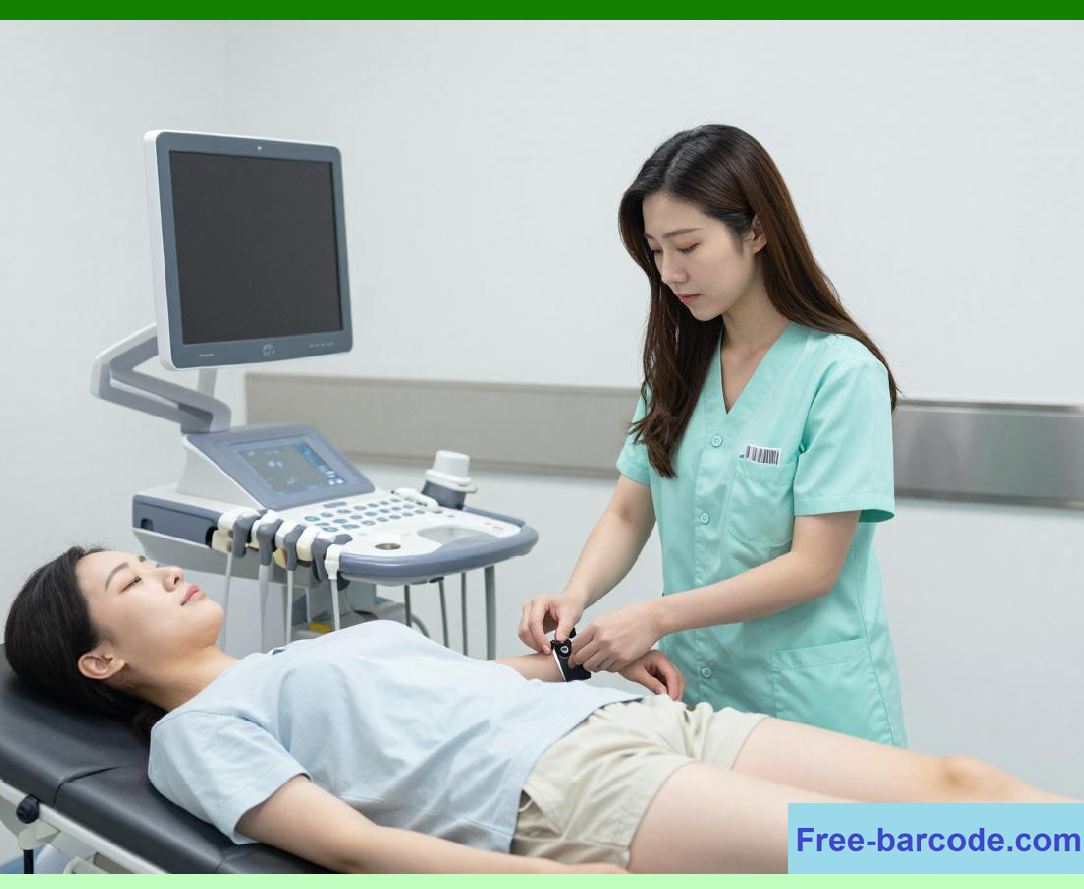
Patient identification wristbands have been the standard solution for decades. A 2025 market analysis describes them as 'a foundational component in the delivery of safe, accurate, and traceable healthcare services. Designed to ensure proper patient identification throughout hospitalization or clinical visits, these wristbands are evolving beyond simple identifiers to incorporate digital technologies, color-coded alerts, and integration with Electronic Health Record (EHR) systems.' |
The Market Shift to Smart Wristbands |
The global market for patient identification wristbands was valued at $20.5 billion in 2024 and is projected to reach $55.6 billion by 2030, growing at a compound annual rate of 18.1%. Growth in the RFID patient identification wristbands segment is even faster, estimated at 20.5% CAGR over the same period. |
This growth reflects several converging trends: |
Increasing complexity of hospital workflows: As healthcare delivery becomes more complex, with more handoffs between providers and more transitions of care, the risk of misidentification increases. Technology is needed to manage this complexity. |
Rising concerns about patient safety: High-profile medical errors have made patient safety a top priority for hospital administrators, regulators, and the public. |
Regulatory demands for error-free care delivery: Accrediting bodies and regulators increasingly require documented evidence of patient identification compliance. |
Integration with EHR systems: Wristbands are no longer standalone identifiers but are integrated into the digital infrastructure of the hospital. A barcode scan on a wristband can pull up the patient's entire medical record, medication list, allergy profile, and care plan. |
Barcode vs. RFID Wristbands |
Traditional barcode wristbands require line-of-sight scanning. A nurse must position the scanner directly over the barcode, at the correct distance and angle. This is generally acceptable for medication administration at the bedside---the nurse is already at the patient's side, performing a deliberate verification. |
However, barcode wristbands have limitations. They can be damaged by water, alcohol, or physical wear. The barcode may become smudged or scratched, making it unreadable. The wristband may be positioned awkwardly---on a sleeping patient's wrist, tucked under blankets---requiring the nurse to disturb the patient to scan it. |
RFID-enabled wristbands address these limitations. The market analysis notes that 'unlike barcode wristbands that require line-of-sight scanning, RFID tags enable non-contact reading, making them suitable for high-mobility environments like emergency departments or surgical prep areas.' |
RFID wristbands offer additional capabilities: |
Automated patient tracking: RFID readers placed at doorways and key locations can automatically detect when a patient enters or leaves an area. This supports patient flow management, wandering prevention, and contact tracing. |
Integration with access control: RFID wristbands can be programmed to allow or restrict access to certain areas---for example, preventing a patient with dementia from wandering into unsafe areas. |
Real-time location services (RTLS): By triangulating signals from multiple readers, the hospital can determine a patient's location in real time, supporting efficient care coordination. |
Emerging Innovations |
The wristband market continues to innovate. According to the market analysis, 'biometric wristbands are emerging in advanced care settings and pilot programs. These devices incorporate fingerprint or vein pattern recognition, allowing dual authentication and reducing the potential for misidentification in high-risk procedures.' |
Furthermore, 'smart wristbands capable of vital sign monitoring, location tracking, and event logging are being trialed in specialized units such as ICUs or post-operative care. Although still nascent, these integrations signal a shift toward wearable health IT, where patient identification overlaps with remote monitoring and real-time analytics.' |
SATO, a global auto-ID solutions provider, describes a vision where 'by replacing a patient's wristband with one that can monitor vital signs, the system can track their condition, from heart rate, activity level, stress level and location. This information lets patients rest assured that nurses will know when they fall or have an unexpected accident and will rush to the scene immediately.' |
This convergence of identification, monitoring, and communication represents the frontier of patient safety technology. The wristband is no longer just an identifier---it is becoming a platform for comprehensive patient monitoring and protection. |

|
8.3 The Emergency Drug Box Study: RFID's Life-Saving Potential |
While patient identification is critical, the most direct evidence of RFID's error-prevention capabilities comes from a 2025 study of emergency drug boxes (EDBs) published in the journal *Hospital Pharmacy*. This study, conducted at a large U.S. academic medical center, provides the most compelling data yet on the real-world impact of manual processes versus RFID automation. |
The Context: Emergency Drug Boxes |
Emergency drug boxes contain essential medications and supplies for use during life-threatening emergencies---cardiac arrests, respiratory failures, anaphylactic shocks, and other crises where every second counts. These boxes are stocked and replenished manually, relying on pharmacy technicians to fill them and pharmacists to verify the contents. |
The stakes could not be higher. In an emergency, there is no time to check whether a medication is expired, no time to search for a missing item, no time to verify that the correct drug is present. The box must be ready. The study notes that 'cardiac and/or respiratory resuscitation is a stressful situation during which health care practitioners have little time to verify the accuracy of the medications and supplies contained in EDBs.' |
Despite the critical nature of these processes, the study notes that 'little has been published regarding the accuracy of medication stocking for use in emergency situations.' Previous studies found that one-third of emergency carts had expired emergency drugs, and 12% of hypoglycemia boxes lacked recommended content. |
Study Design |
The study was conducted at a 1,162-bed academic medical center providing tertiary and quaternary care. The research team assessed 451 emergency drug boxes---251 adult boxes and 200 pediatric boxes---for stocking errors. Each adult box contained 93 items with 46 medications; each pediatric box contained 97 items with 44 medications. |
Potential error categories included: expired item, missing item, incorrect item, item quantity above or below par, contaminated item, opened item, crystallized mannitol, incorrect box expiration date, and no pharmacist verification. |
In the second phase, 23 interdisciplinary members of adult and pediatric Cardiopulmonary Resuscitation committees independently evaluated the potential clinical severity of each unique error using a 3-rank scale: (1) unlikely to cause any harm or discomfort; (2) potential to cause moderate discomfort or clinical deterioration; and (3) potential for severe discomfort or clinical deterioration. |
Finally, the research team determined whether RFID technology could have detected each identified error, assuming that medications, syringes, needles, and drug dosing cards were RFID-tagged. |
The Shocking Results |
The results are sobering. Of the 451 emergency drug boxes analyzed, 106 (24%) contained at least one error, resulting in 132 identified errors. The most common error types were: |
| Error Type | Count | Percentage of Errors | |
||-|| |
| Expired item | 34 | 26% | |
| Incorrect EDB expiration date | 29 | 22% | |
| Missing item | 24 | 18% | |
| Item quantity above par | 11 | 8% | |
| Crystallized mannitol | 8 | 6% | |
| Incorrect item stocked | 7 | 5% | |
The medications most frequently involved in errors were lidocaine (9 errors), mannitol (8 errors), sodium bicarbonate (6 errors), and calcium chloride (3 errors). These are all critical drugs used in cardiac arrest and other life-threatening emergencies. |
The clinical severity analysis revealed that the most concerning errors involved incorrect medications, missing needles, medication quantities below par, crystallized mannitol, and contaminated products. These errors could cause severe discomfort or clinical deterioration during an emergency. |
The RFID Solution |
Of the 132 errors identified, 96 (73%) were detectable with RFID technology. Of these detectable errors, 43 (40%) were ranked as having moderate to severe clinical severity---meaning RFID could prevent harm in a substantial proportion of the most dangerous errors. |
The study concludes: 'Manual restocking and checking of EDBs are vulnerable to human error, which can have serious consequences and jeopardize patient safety. Adopting RFID technology can greatly improve the accuracy and reliability of this essential process.' |
This finding has profound implications. A 24% error rate in manually stocked emergency boxes is unacceptable. But the solution is not to blame the technicians and pharmacists---they are doing the best they can under difficult conditions. The solution is to automate the verification process, replacing human memory and visual inspection with machine-readable certainty. |
The study's conclusions are reinforced by a survey from the American Society of Health-System Pharmacy (ASHP), which found that '47% of the survey respondents were either in the process of or interested in exploring RFID technology, with greatest interest centered on emergency code trays and boxes.' The interest is there; the evidence is now there as well. |

|
8.4 The Human Factors Challenge: Work-Arounds and Barriers |
Even the best technology is useless if it is not used correctly. A 2025 systematic review of qualitative studies on barcode technologies in hospital settings, published in the *Journal of Patient Safety*, examined this challenge in depth. The review analyzed 11 studies from 6 countries: the United States, the Netherlands, the United Kingdom, France, Argentina, and China. |
The Seven Themes |
The review identified seven common themes that emerged as both facilitators and barriers: efficacy, implementation, leadership, medication safety, process, technology, and user experience. Three themes---materials, system design, and work environment---were exclusively associated with barriers, meaning no study identified them as facilitators. |
Materials refers to problems with the physical items being scanned: medications without unit-dose barcodes, damaged barcodes, packaging with multiple barcodes (confusing which one to scan), wristbands damaged by fluids or chewing, and non-formulary medications without readable barcodes. |
System design refers to problems with how the technology was configured: difficulties altering automatic documentation, the need to use partial doses or different formulations than what the barcode expects. |
Work environment refers to problems with the physical and organizational setting: insufficient staff, rushed conditions that prevent proper scanning, and competing priorities that pull clinicians' attention away from scanning. |
Work-Arounds as Responses to Barriers |
The most concerning finding of the review is the prevalence of work-arounds. In 8 of the 11 studies, clinicians developed work-arounds in response to barriers. These took three forms: |
1. Bypassing barcoding entirely: Administering medications without scanning them, relying on manual verification instead. |
2. Omitting process steps: Scanning the patient wristband but not the medication, or vice versa. |
3. Unauthorized process steps: Manually entering medication identification numbers instead of scanning, or signing off medications as administered without verifying. |
The review emphasizes that work-arounds are not evidence of lazy or careless clinicians. Rather, they are 'responses to the barriers'---rational adaptations to systems that make the right behavior difficult or impossible. A clinician who manually enters a medication number because the barcode is damaged is not being careless; they are solving a problem that the system should have solved. |
Implications for Implementation |
The findings of this review have direct implications for healthcare organizations implementing barcode or RFID systems: |
Treat work-arounds as diagnostic data. When a clinician bypasses the system, ask why. The answer will reveal a problem---damaged label, slow scanner, inconvenient workflow---that needs fixing. Fix the system, not the clinician. |
Involve frontline clinicians in system design. The barriers identified---materials, system design, work environment---are all problems that frontline clinicians could have identified before implementation if they had been asked. Their input is not optional; it is essential. |
Invest in materials quality. Damaged barcodes are not inevitable. High-quality wristbands, proper label placement, and regular maintenance can prevent many of the material barriers. |
Provide continuous training and support. The review identified facilitators including 'availability of 24 h support, availability of instructions, one-on-one support in clinical practice.' Organizations that skimp on training and support will see higher rates of work-arounds. |
|
8.5 The U.S. Market Context: Smart Labels and RFID Adoption |
The healthcare smart labels market---which includes barcode and RFID labels for patient identification, medication tracking, and specimen management---is growing rapidly. According to Mordor Intelligence, the market was valued at $3.76 billion in 2025 and is projected to reach $7.21 billion by 2031, growing at a compound annual rate of 13.92%. |
Technology Segmentation |
By technology, QR Code and 2D DataMatrix labels led with 41.23% revenue share in 2025. These 2D barcodes are particularly valuable in healthcare because they can encode substantial information in a very small space---essential for labeling tiny blood tubes, medication vials, and patient wristbands. |
RAIN RFID continues to scale for automated counting and cabinet management. The report notes that 'in clinical settings, RFID and RTLS improve operational visibility for devices and medication carts, while NFC on wristbands and unit packages supports bedside scanning and closed-loop medication administration.' |
Sensing labels that monitor temperature and other environmental conditions are projected to grow fastest at a 14.65% CAGR through 2031. The expansion of biologics and vaccines, which require strict cold chain management, is driving this growth. The report notes that 'the expansion of biologics and specialty therapies in 2026 keeps cold-chain capacity tight, which raises the importance of time-temperature indicators and sensor labels on shippers, kits, and unit packs.' |
Drivers and Restraints |
Several factors are driving the healthcare smart labels market: |
Serialization mandates: The DSCSA in the United States and EU FMD in Europe require serialized identifiers on pharmaceutical packages. These mandates 'sustain ongoing investment in 2D barcode and RFID labeling across finished dose forms and secondary packaging.' |
Anti-counterfeiting priorities: 'Pharmaceutical stakeholders use smart labels to deter counterfeiting, detect diversion, and enable rapid recalls, with serialization and tamper-evidence working alongside mobile verification.' |
Healthcare digitalization: 'Hospitals continue to digitize inventory, asset tracking, and patient identification, which lifts the value proposition for RFID, NFC, and barcode labels that tie into EMR, medication administration, and inventory systems.' |
However, significant restraints remain: |
High implementation costs: 'Total cost of ownership includes labels and inlays, readers and printers, encoding and verification stations, and the software needed to capture and exchange EPCIS events.' Smaller hospitals and clinics may find these costs prohibitive. |
Data privacy and security: 'Patient data protections under HIPAA in the United States and GDPR in Europe drive strict controls on how label-linked events are captured, stored, and shared across systems.' |
RFID performance challenges: 'RFID performance challenges on vials/liquids/metal-rich environments' remain a technical limitation that requires careful system design to overcome. |

|
8.6 Technology Innovations Enhancing Point-of-Care Safety |
Several recent hardware innovations are making point-of-care safety technologies more reliable and easier to use. |
SATO's Healthcare Safety Solutions |
SATO, a global provider of auto-ID solutions, has developed integrated systems for healthcare safety. As described on the company's sustainability website, 'in hospitals and clinical sites, barcodes and RFID make three-factor verification possible (between IDs on the patient's wristband, the nurse's ID card, and drug labels) to accurately manage and record who administered which drug to which patient. By digitizing procedures that used to rely on visual confirmation, the system minimizes errors and near-miss medication errors, to enhance safety and security of patients while reducing physical and mental workload of nurses.' |
SATO also offers 'a system specifically to support the high level of printing and verification quality demanded in pharmaceutical labeling. This package solution consists of a label printer and verifier and uses a printer-mounted camera to automatically check the barcode, expiry date and serial number, as well as readability (broken lines or blurred printing) of the labels. Reliable labeling contributes to raising the quality of logistics services and ensuring patient safety and security.' |
This automated verification of label quality addresses the 'materials' barrier identified in the systematic review---damaged or illegible barcodes are a major source of work-arounds. By preventing bad labels from being printed in the first place, organizations can eliminate this barrier entirely. |
Datalogic's AI-Driven Decoding |
At the HIMSS 2026 conference, Datalogic showcased its Gryphon 4600 HC barcode scanner, which uses 'AI-driven neural decoding' to read barcodes 'even on small, condensed, curved, poorly printed and reflective barcodes.' This technology addresses another major source of frustration: the need to position the scanner perfectly and try multiple times to get a read. |
By using AI to decode barcodes that would be unreadable by traditional scanners, Datalogic's technology reduces the likelihood that clinicians will develop work-arounds. A scanner that works reliably---even on imperfect barcodes---is a scanner that clinicians will use. |

|
8.7 The Chinese Perspective: Implementation at Scale |
China is not standing still in patient safety technology. Several recent implementations demonstrate Chinese innovation in this space. |
Peking University Shougang Hospital: Drug Traceability System |
As described in Chapter 6, Peking University Shougang Hospital launched a comprehensive drug traceability system that gives each medication an 'electronic identity card.' The system integrates three platforms: the National Drug Traceability Collaborative Platform, the hospital's Health Information System (HIS), and a smart pharmacy platform. |
At the dispensing stage, an automated dispensing machine serves as a 'precision sorter.' When the machine scans a drug's barcode, it automatically associates the drug with the patient's prescription. Most scanning happens 'unconsciously'---the pharmacist does not need to take extra steps. Only a few special medications require manual scanning with handheld devices. |
The hospital reports a 98% success rate for drug traceability code uploads. Patients at busy windows wait no more than three minutes, even when the window handles 1,000 prescriptions daily. |
Jilin University First Hospital: Comprehensive Traceability |
An even more comprehensive implementation is described by Jilin University First Hospital. This system extends drug traceability across the entire medication use cycle: |
Receiving: To ensure data accuracy, the hospital adopted a 'source collection' model, moving barcode scanning forward to the supplier's unloading stage. |
Outpatient Dispensing: The hospital split traceability code collection into front-end and back-end operations, preserving pharmacists' existing workflow while ensuring that every medication had its code captured. |
Inpatient Dispensing: The hospital adopted a 'pharmacy-nurse collaborative model,' extending traceability collection to the nurse station. Nurses scan the medication code at the bedside when administering medications, adding a second verification step. |
External Medications: The hospital includes externally prescribed medications in its traceability system, scanning and verifying medications brought from outside pharmacies. |
This comprehensive approach has transformed medication safety. The system automatically compares drug identifiers with the hospital's drug dictionary, firing alerts for mismatches. If a recall is necessary, the hospital can query its dispensing system to identify exactly which patients received the affected batch. |
Ordos Blood Station: RFID Blood Tracking |
The Ordos Blood Station in Inner Mongolia has implemented a comprehensive RFID platform covering the entire blood supply chain from 'donor vein to patient vein.' The system uses ultra-high frequency (UHF) RFID technology with a suite of specialized equipment: blood batch transfer cabins, portable intelligent collection terminals, and desktop RF scanning recorders. |
According to the Ordos Blood Station, this system has 'completely solved the core pain points' of traditional management: low efficiency, high risk of human error, and difficulty monitoring the cold chain. The 'contactless, wear-resistant, long-life, fast read-write' characteristics of RFID make it ideal for the demanding blood bank environment. |

|
8.8 Scenario-Based Recommendations for Patient Safety Implementation |
Drawing on the evidence presented in this chapter, here are practical recommendations for healthcare organizations seeking to enhance patient safety through automatic identification technologies. |
Scenario A: Emergency Drug Boxes and Crash Carts |
Recommended technology: RFID tags on all medications, syringes, needles, and drug dosing cards, plus RFID-enabled storage cabinets that automatically track inventory and expiration dates. |
Why: The emergency drug box study provides compelling evidence that manual processes are dangerously error-prone. A 24% error rate is unacceptable for equipment used in life-threatening emergencies. RFID can detect 73% of errors, including the most clinically severe ones. |
Implementation considerations: Start with a pilot on one unit. Measure baseline error rates. Implement RFID tagging and automated verification. Measure again. The return on investment will be measured not in dollars saved but in lives saved---but the cost savings from prevented adverse events are substantial as well. |
Scenario B: Patient Identification Wristbands |
Recommended technology: RFID-enabled wristbands with integration to EHR and medication administration systems. |
Why: The patient identification wristbands market is growing at 18.1% annually, with RFID wristbands growing at 20.5%, reflecting the clear advantages of non-contact reading, automated tracking, and integration capabilities. |
Implementation considerations: RFID wristbands require reader infrastructure. For hospitals without this infrastructure, barcode wristbands remain a good option. The choice depends on the hospital's existing technology base and budget. |
Scenario C: Medication Administration at the Bedside |
Recommended technology: Barcode medication administration (BCMA) with high-quality barcode wristbands and unit-dose medication barcodes. |
Why: BCMA is well-established, cost-effective, and supported by extensive evidence. The systematic review found that clinicians value the increased safety that BCMA provides, and the FDA has estimated that barcode technology could prevent nearly 500,000 adverse events over 20 years. |
Implementation considerations: Address the barriers identified in the systematic review: high-quality materials (wristbands and medication labels), careful workflow integration, sufficient training and support, and user involvement in design. Monitor for work-arounds and treat them as diagnostic data. |
Scenario D: Blood Transfusion Safety |
Recommended technology: RFID tags on blood units plus barcode on patient wristband (redundant verification). |
Why: The Ordos Blood Station implementation demonstrates that RFID can automate blood tracking from donor to patient. The redundant verification (RFID + barcode) provides an additional layer of safety for the highest-risk transfusion situations. |
Implementation considerations: Blood products are liquid, which can interfere with RFID signals. Careful tag placement and reader configuration are essential. Pilot testing is strongly recommended. |

|
8.9 Detailed Summary |
This chapter has explored the application of barcode and RFID technologies for preventing medical errors at the point of care. Drawing on market analysis, clinical studies, systematic reviews, and implementation case studies from the United States and China, we have examined how these technologies create a safety net for patients and clinicians. |
Key Findings |
1. Medical errors remain a leading cause of preventable death. Tens of thousands of patients die annually from preventable errors, with medication errors representing a substantial portion of this toll. The most effective error-reduction strategies focus on 'systemic changes that reduce dependence on human intervention.' |
2. Patient identification wristbands are evolving from passive identifiers to smart monitoring platforms. The global market for patient identification wristbands is projected to reach $55.6 billion by 2030, with RFID-enabled wristbands growing at 20.5% CAGR. Emerging innovations include biometric wristbands and smart wristbands capable of vital sign monitoring. |
3. Emergency drug boxes are dangerously error-prone under manual processes. A 2025 study of 451 emergency drug boxes at a large U.S. academic medical center found that 24% contained at least one error. The most common errors were expired items (26%), incorrect box expiration dates (22%), and missing items (18%). The medications most frequently involved---lidocaine, mannitol, sodium bicarbonate, and calcium chloride---are all critical drugs used in life-threatening emergencies. |
4. RFID would detect 73% of emergency drug box errors. Of the 132 identified errors, 96 were detectable with RFID technology, including 40% rated as having moderate to severe clinical severity. The study concludes that 'adopting RFID technology can greatly improve the accuracy and reliability of this essential process.' |
5. Work-arounds are a major barrier to effective technology use. A 2025 systematic review of qualitative studies from six countries found that work-arounds---bypassing barcoding, omitting process steps, and using unauthorized process steps---were reported in 8 of 11 studies. The review emphasizes that work-arounds are 'responses to barriers,' not evidence of clinician laziness. |
6. Three themes are exclusively associated with barriers. Materials (damaged barcodes, missing wristbands), system design (difficulties with partial doses), and work environment (insufficient staff, rushed conditions) were identified exclusively as barriers, with no facilitator counterparts. These are system problems, not user problems. |
7. The healthcare smart labels market is growing rapidly. Valued at $3.76 billion in 2025 and projected to reach $7.21 billion by 2031 (13.92% CAGR), with QR Code and 2D DataMatrix labels leading at 41.23% share. Sensing labels for cold chain monitoring are the fastest-growing segment. |
8. Serialization mandates are driving adoption. The DSCSA in the U.S. and EU FMD in Europe require serialized identifiers on pharmaceutical packages, sustaining investment in 2D barcode and RFID labeling. Anti-counterfeiting priorities and healthcare digitalization are additional drivers. |
9. Technology innovations are addressing real-world barriers. SATO's automated label verification prevents bad labels from being printed. Datalogic's AI-driven neural decoding reads barcodes that traditional scanners cannot. These innovations reduce the likelihood of work-arounds. |
10. China is implementing patient safety technologies at scale. Peking University Shougang Hospital's drug traceability system achieves 98% upload success. Jilin University First Hospital extends traceability across the entire medication use cycle, including externally prescribed medications. The Ordos Blood Station has implemented RFID blood tracking from donor to patient. |

|
Implications for Practice |
For healthcare administrators and clinicians, several principles emerge: |
Start with the highest-risk processes. The emergency drug box study demonstrates that some manual processes are unacceptably dangerous. These should be the first targets for automation. |
Address the human factors barriers. The systematic review's findings are clear: materials quality, system design, and work environment are the biggest barriers. Invest in high-quality wristbands and labels. Design systems around clinical workflows. Ensure adequate staffing. |
Treat work-arounds as diagnostic data. When a clinician bypasses the system, ask why. The answer will reveal a problem that needs fixing. Fix the system, not the clinician. |
Involve frontline clinicians in design. The barriers identified in the review are all problems that frontline clinicians could have identified before implementation if they had been asked. Their input is not optional. |
Measure compliance and make it visible. The huddle board intervention described in Chapter 5---posting individual compliance rates publicly---dramatically improved BCMA compliance at low cost. Transparency creates accountability. |
Implications for Policy |
For policymakers and regulators, the evidence supports: |
Continued emphasis on serialization and traceability. The DSCSA and EU FMD have driven adoption of barcode and RFID technologies. Harmonization across jurisdictions would further reduce errors. |
Recognition that technology is not enough. Regulation that mandates technology without supporting implementation is unlikely to achieve its goals. Guidance on workflow integration, training, and change management would be valuable. |
Support for smaller facilities. The cost of RFID systems remains substantial. Small and rural hospitals may need technical assistance or financial support to implement robust patient safety technologies. |

|
The Core Insight |
The evidence in this chapter is sobering. Twenty-four percent of emergency drug boxes contain errors. Clinicians develop work-arounds in response to system barriers. Medical errors remain a leading cause of preventable death. |
But the evidence is also hopeful. RFID would detect 73% of emergency drug box errors. Technology innovations are addressing real-world barriers. Hospitals that invest in high-quality materials, careful workflow integration, and user involvement achieve high compliance and low error rates. |
The patient identification wristband---that simple band of plastic or paper---has become a platform for comprehensive patient safety. It links the physical patient to their digital record. It verifies identity before medication administration. It can monitor vital signs, track location, and alert staff to falls. |
This is the safety net. Not a single technology, but a system of technologies---barcodes, RFID, AI, IoT---working together to catch errors before they reach the patient. And in healthcare, where the stakes are measured in lives, catching errors is not just good practice. It is the highest priority. |
 cs@easiersoft.com