Part 27: Barcode Applications in Automotive Production Scheduling, Line Balancing, and Real-Time Manufacturing Optimization Systems |
27.1 Introduction to Production Scheduling and Line Balancing |
In modern automotive manufacturing, production scheduling and line balancing are essential to ensure efficient assembly, reduce bottlenecks, and maximize throughput. Production scheduling involves assigning tasks, workstations, and resources over time, while line balancing ensures that each workstation in the assembly line has an appropriate workload to prevent idle time or overloading. |
Barcode technology plays a pivotal role in achieving precision and real-time adaptability in scheduling and line balancing by providing accurate identification of vehicles, components, and resources. This facilitates continuous optimization of production flow. |

|
27.2 Vehicle-Specific Scheduling Using VIN Barcodes |
Each vehicle has a unique Vehicle Identification Number (VIN) barcode that encodes its configuration, build sequence, and scheduled production timeline: |
* VIN barcodes are scanned at the start of the assembly line to register vehicle entry |
* Scheduling systems retrieve the vehicle specific production tasks and sequence |
* Adjustments are made dynamically if upstream delays or resource constraints occur |
* Accurate sequencing ensures that assembly stations are prepared with the right components and tools |
This approach supports just-in-time (JIT) production and reduces errors in customized builds. |

|
27.3 Component-Level Production Coordination |
Barcodes on individual components enable precise coordination of materials for each scheduled vehicle: |
* Scanning ensures that components match vehicle configuration and are available at the right station |
* Tracks the arrival and consumption of each part in real time |
* Alerts the system if components are missing or incorrectly sequenced |
* Enables predictive material replenishment based on actual consumption data |
By linking component barcodes to production schedules, manufacturers prevent stoppages due to missing or incorrect parts. |

|
27.4 Workstation Load Balancing |
Barcode systems support line balancing by providing real-time data on workload distribution: |
* Scanning vehicles and components records processing times at each workstation |
* Systems analyze workload to identify stations with bottlenecks or idle capacity |
* Tasks can be reassigned or resources adjusted dynamically |
* Historical barcode data informs future line balancing decisions based on variability and performance trends |
This reduces assembly line inefficiencies and maintains consistent production flow. |

|
27.5 Real-Time Production Monitoring and Feedback |
Barcode-enabled monitoring provides continuous visibility of production performance: |
* Each scan updates production tracking systems in real time |
* Metrics such as cycle time, throughput, and workstation utilization are calculated dynamically |
* Alerts are generated for deviations from planned schedules or expected processing times |
* Operators and supervisors can respond immediately to bottlenecks or errors |
Real-time monitoring ensures that production schedules are followed accurately, reducing delays and increasing efficiency. |

|
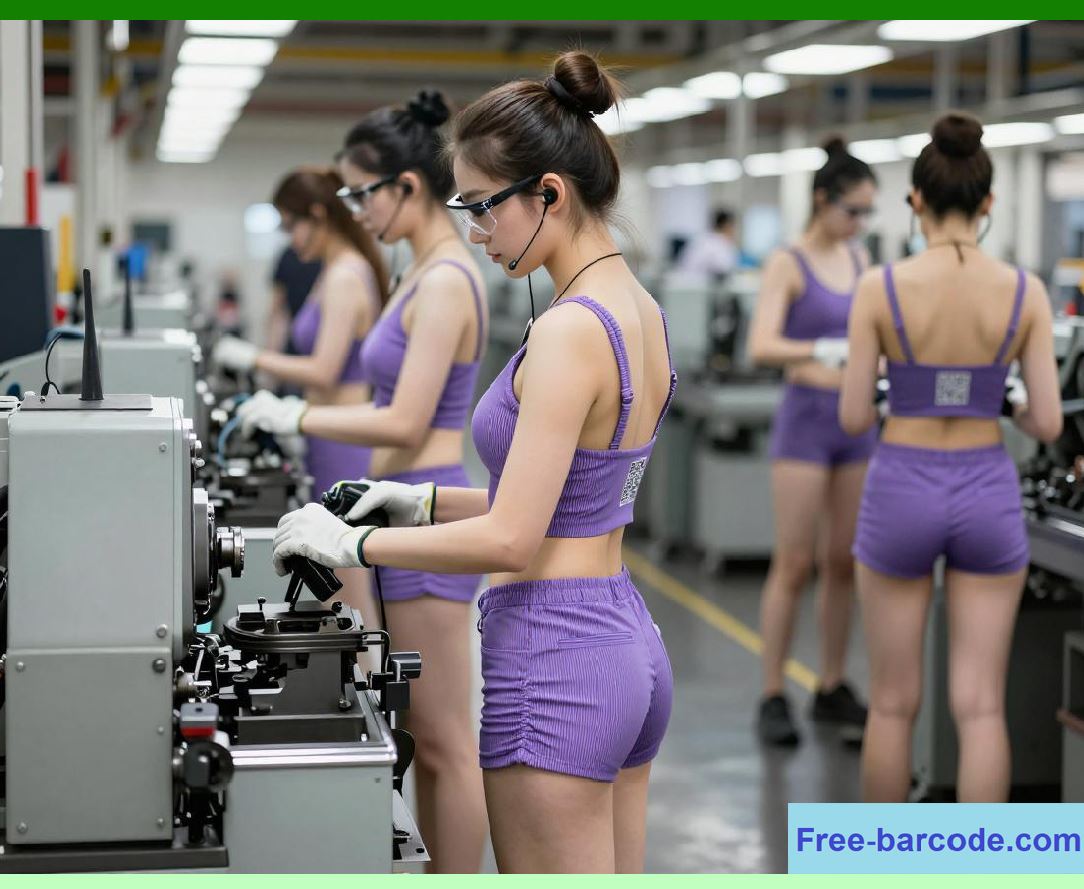
27.6 Integration with Manufacturing Execution Systems (MES) |
Barcode data integrates with MES platforms to optimize production: |
* MES receives scan data to confirm task completion, material usage, and vehicle progression |
* Supports advanced scheduling algorithms that adjust line operations based on real-time data |
* Enables simulation of production scenarios and that-ifanalysis for scheduling optimization |
* Provides traceable documentation for compliance, audits, and quality assurance |
MES integration ensures seamless coordination between physical production and digital planning systems. |
|
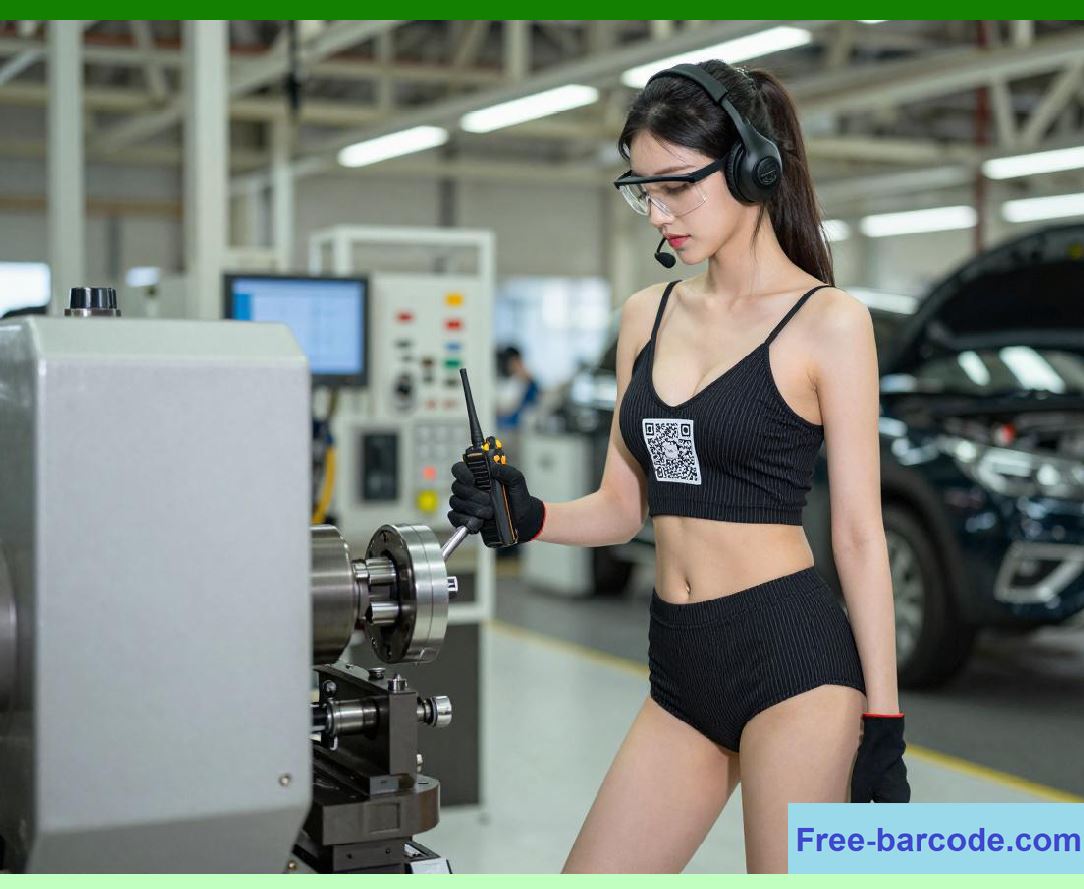
27.7 Predictive Scheduling and Bottleneck Prevention |
By analyzing historical barcode data, manufacturers can implement predictive scheduling strategies: |
* Identify recurring bottlenecks or delays at specific stations or shifts |
* Adjust production plans proactively to prevent idle time or overloading |
* Forecast material requirements and resource allocation based on past consumption patterns |
* Improve overall throughput without sacrificing quality or compliance |
Barcode-driven predictive scheduling minimizes disruptions and improves plant efficiency. |
|
27.8 Support for Mixed-Model and Mass Customization Production |
Automotive plants often assemble multiple vehicle models and configurations on the same line: |
* VIN and component barcodes provide exact configuration information for each vehicle |
* Scheduling systems use barcode data to sequence vehicles efficiently according to build complexity |
* Workstation assignments and tooling are dynamically adjusted based on real-time scan data |
* Ensures minimal changeover time and error-free assembly across multiple models |
This capability supports mass customization while maintaining high throughput. |

|
27.9 Continuous Improvement Through Data Analytics |
Barcode data collected from production scheduling and line balancing operations enables continuous improvement initiatives: |
* Identifying stations with frequent downtime or processing variability |
* Evaluating operator efficiency and training requirements |
* Analyzing component flow and replenishment cycles for optimization |
* Developing predictive models for future production planning |
Data-driven insights from barcodes help manufacturers implement lean manufacturing practices and improve overall operational efficiency. |

|
27.10 Strategic Benefits of Barcode-Enabled Production Scheduling and Line Balancing |
Key strategic advantages include: |
1. Accurate Task Scheduling VIN barcodes provide vehicle-specific production instructions. |
2. Component Availability Assurance Barcode tracking prevents missing or incorrect parts at workstations. |
3. Real-Time Line Balancing Workload distribution is dynamically optimized using scan data. |
4. Increased Throughput Bottlenecks are detected and resolved immediately. |
5. Enhanced MES Integration Barcode data feeds digital planning and execution systems. |
6. Predictive Scheduling Historical data enables proactive production adjustments. |
7. Support for Mixed-Model Production Efficient sequencing of multiple models reduces changeover time. |
8. Continuous Improvement Analytics from barcode data guide process optimization. |
9. Cost Efficiency Reduced downtime, rework, and excess inventory lower production costs. |
10. Operational Visibility Supervisors and management have real-time insight into production progress and issues. |
Barcode-enabled production scheduling and line balancing transform automotive manufacturing into a flexible, data-driven operation capable of supporting mass customization while maintaining high efficiency and quality. |

|
Technical Content Summary for Part 27 |
* VIN barcodes provide vehicle-specific scheduling and build instructions. |
* Component barcodes ensure material availability and sequencing for each vehicle. |
* Workstation load balancing is optimized through real-time scan data. |
* Production monitoring provides immediate feedback on cycle times, throughput, and deviations. |
* MES integration leverages barcode data for scheduling, simulation, and documentation. |
* Predictive scheduling reduces bottlenecks and idle time. |
* Barcode data supports mixed-model and mass customization production with minimal errors. |
* Analytics enable continuous improvement and lean manufacturing implementation. |
* Strategic benefits include higher throughput, cost reduction, quality assurance, and operational transparency. |
 cs@easiersoft.com