Part 9: Barcode Applications in Real-Time Production Monitoring and Process Optimization |
9.1 Introduction to Real-Time Production Monitoring in Automotive Manufacturing |
Automotive manufacturing is one of the most sophisticated industrial production environments in the world. A modern vehicle assembly plant may produce hundreds or even thousands of vehicles every day while coordinating the movement of tens of thousands of parts, hundreds of production stations, and numerous automated systems. To maintain efficiency and product quality, manufacturers require accurate, real-time visibility into every stage of the production process. |
Traditional production monitoring methods relied heavily on manual reporting, periodic inspections, and paper-based documentation. Although these methods were useful in earlier manufacturing environments, they are inadequate for today's high-speed production operations. Delays in information collection often result in slow responses to production problems, inventory shortages, equipment failures, and quality issues. |
Barcode technology provides the foundation for real-time production monitoring by enabling automatic data collection at every stage of manufacturing. Every barcode scan generates an immediate digital transaction that updates production databases, manufacturing execution systems, warehouse management systems, and enterprise resource planning platforms. This continuous flow of information allows manufacturers to monitor operations as they occur and respond rapidly to changing conditions. |

|
9.2 Establishing Real-Time Visibility Across the Manufacturing Process |
One of the primary advantages of barcode technology is its ability to provide real-time visibility throughout the entire manufacturing operation. |
As materials, components, subassemblies, and vehicles move through production, barcode scanners capture their status and location. Each scan updates centralized databases, allowing managers to view current production conditions instantly. |
Real-time visibility includes: |
* Material availability |
* Component consumption |
* Work-in-progress status |
* Equipment utilization |
* Assembly completion rates |
* Inspection results |
* Production bottlenecks |
* Inventory levels |
* Shipping readiness |
This information allows supervisors and managers to make informed decisions based on current production conditions rather than historical reports. |
For example, if a critical component begins running low, barcode scanning data can immediately alert inventory planners, allowing replenishment activities to begin before production is affected. |

|
9.3 Monitoring Production Line Performance |
Production line performance is a key indicator of manufacturing efficiency. |
Barcode systems continuously collect data regarding production activities, enabling manufacturers to monitor important performance metrics such as: |
* Units produced per hour |
* Assembly cycle times |
* Production throughput |
* Station utilization |
* Downtime duration |
* Rework frequency |
* Defect occurrence rates |
* Equipment performance |
Every scan creates a timestamped record that can be analyzed to determine how efficiently each production station is operating. |
For example, when a vehicle reaches a workstation, scanning its barcode records the arrival time. A subsequent scan at the completion of the workstation records the departure time. The difference between these timestamps represents the actual processing time for that station. |
By analyzing these records across thousands of vehicles, manufacturers can identify process inefficiencies and opportunities for improvement. |

|
9.4 Tracking Work-in-Progress in Real Time |
Work-in-progress (WIP) represents products that are currently being manufactured but have not yet been completed. |
Excessive WIP can indicate production inefficiencies, while insufficient WIP may suggest underutilized resources or supply shortages. |
Barcode technology enables continuous monitoring of WIP throughout the factory. |
Every time a component, assembly, or vehicle moves from one station to another, barcode scanning records the transaction. Production managers can then determine: |
* Current WIP levels |
* Location of WIP inventory |
* Processing status |
* Queue lengths |
* Production delays |
* Assembly completion percentages |
This information allows manufacturers to balance production workloads and maintain optimal production flow. |
Real-time WIP visibility also supports lean manufacturing initiatives by reducing unnecessary inventory accumulation and minimizing waste. |

|
9.5 Identifying Production Bottlenecks |
Production bottlenecks are among the most common causes of manufacturing inefficiency. |
A bottleneck occurs when one process operates more slowly than surrounding processes, causing work to accumulate and reducing overall throughput. |
Barcode-generated production data allows manufacturers to identify bottlenecks with a high degree of accuracy. |
Examples include: |
* Excessive queue times |
* Delayed component arrivals |
* Extended assembly durations |
* Frequent equipment stoppages |
* Repeated quality inspections |
* High rework rates |
Because every production step is associated with barcode timestamps, managers can determine exactly where delays occur. |
Once bottlenecks are identified, corrective actions may include: |
* Adjusting staffing levels |
* Redistributing workloads |
* Modifying production schedules |
* Upgrading equipment |
* Improving operator training |
* Reconfiguring assembly layouts |
The result is improved production efficiency and increased manufacturing capacity. |

|
9.6 Real-Time Monitoring of Component Consumption |
Automotive assembly operations consume thousands of components every hour. |
Accurate monitoring of component usage is essential for maintaining uninterrupted production. |
Barcode scanning enables real-time tracking of component consumption by recording each withdrawal from inventory and each installation on the assembly line. |
Manufacturers can monitor: |
* Consumption rates |
* Inventory depletion |
* Component demand trends |
* Material shortages |
* Replenishment requirements |
This information supports just-in-time manufacturing strategies by ensuring that components arrive exactly when needed. |
Real-time consumption monitoring also improves inventory forecasting and reduces the likelihood of emergency procurement activities. |

|
9.7 Production Scheduling Optimization |
Production scheduling is a complex process that requires balancing customer demand, inventory availability, labor resources, equipment capacity, and supplier deliveries. |
Barcode systems provide the real-time information necessary for dynamic production scheduling. |
By analyzing barcode-generated production data, manufacturers can: |
* Adjust schedules in response to demand changes |
* Prioritize urgent orders |
* Balance assembly line workloads |
* Manage production disruptions |
* Improve resource allocation |
* Reduce idle time |
For example, if barcode data indicates a shortage of a critical component, production schedules can be modified immediately to prioritize vehicles that do not require the affected component. |
This flexibility improves overall manufacturing responsiveness and reduces production interruptions. |

|
9.8 Supporting Lean Manufacturing Initiatives |
Lean manufacturing focuses on eliminating waste while maximizing customer value. |
Barcode technology supports lean manufacturing by providing accurate, real-time information about production activities. |
Common forms of manufacturing waste include: |
* Excess inventory |
* Waiting time |
* Overproduction |
* Defects |
* Rework |
* Unnecessary transportation |
* Excess motion |
* Underutilized resources |
Barcode systems help identify and reduce these inefficiencies. |
For example, barcode tracking can reveal excessive inventory accumulation between production stations. Managers can then investigate the root cause and implement corrective actions. |
Similarly, barcode data can highlight recurring quality problems that generate rework and production delays. |
Through continuous monitoring and improvement, manufacturers can achieve significant gains in efficiency and productivity. |

|
9.9 Monitoring Automated Manufacturing Systems |
Modern automotive factories rely heavily on automation. |
Robots, automated guided vehicles (AGVs), automated storage systems, and intelligent conveyors perform many production tasks. |
Barcode technology serves as a critical communication mechanism within these automated systems. |
Automated equipment uses barcode data to: |
* Identify parts |
* Verify assembly sequences |
* Track production progress |
* Route materials |
* Trigger replenishment activities |
* Validate completed operations |
For example, an AGV may scan barcodes to determine which components to transport and where to deliver them. |
Similarly, robotic assembly systems can verify component identity before installation. |
The result is greater automation accuracy and improved production reliability. |

|
9.10 Real-Time Quality Monitoring |
Quality issues can significantly impact production efficiency and customer satisfaction. |
Barcode systems support real-time quality monitoring by linking inspection results directly to components, assemblies, and vehicles. |
When inspections occur, barcode scans capture: |
* Inspection results |
* Measurement values |
* Defect classifications |
* Operator information |
* Equipment identification |
* Production timestamps |
Quality engineers can monitor defect rates in real time and identify emerging quality problems before they become widespread. |
Early detection allows corrective actions to be implemented quickly, reducing scrap, rework, and warranty costs. |

|
9.11 Production Analytics and Performance Dashboards |
Barcode-generated production data provides valuable input for manufacturing analytics systems. |
Production dashboards display real-time information such as: |
* Current output |
* Production targets |
* Quality performance |
* Inventory status |
* Equipment utilization |
* Downtime events |
* Labor productivity |
* Throughput rates |
Managers can access these dashboards from production control centers, offices, or mobile devices. |
This visibility enables faster decision-making and more effective production management. |
Advanced analytics can also identify trends, forecast future performance, and support continuous improvement initiatives. |

|
9.12 Integration with Manufacturing Execution Systems |
Manufacturing Execution Systems (MES) coordinate and monitor factory operations. |
Barcode technology serves as a primary data collection mechanism for MES platforms. |
Barcode scans provide MES systems with real-time information regarding: |
* Production progress |
* Material movements |
* Quality inspections |
* Equipment activities |
* Operator actions |
* Inventory transactions |
This integration creates a comprehensive digital representation of factory operations. |
MES platforms can then automate workflows, generate alerts, schedule production activities, and maintain complete production records. |
The combination of barcode technology and MES significantly improves manufacturing visibility and control. |

|
9.13 Supporting Industry 4.0 and Smart Factory Initiatives |
Industry 4.0 emphasizes digital connectivity, intelligent automation, and data-driven manufacturing. |
Barcode technology remains a fundamental component of smart factory architectures because it provides reliable, low-cost identification and tracking capabilities. |
Within Industry 4.0 environments, barcode data can be integrated with: |
* Industrial IoT sensors |
* Artificial intelligence systems |
* Predictive maintenance platforms |
* Digital twins |
* Cloud computing services |
* Autonomous robots |
* Advanced analytics systems |
The resulting ecosystem provides unprecedented visibility into manufacturing operations. |
Barcode technology acts as a bridge between physical production activities and digital information systems. |

|
9.14 Long-Term Strategic Benefits |
The strategic benefits of barcode-based real-time production monitoring extend far beyond immediate operational improvements. |
Long-term advantages include: |
* Increased production capacity |
* Improved product quality |
* Reduced operating costs |
* Enhanced customer satisfaction |
* Faster response to market changes |
* Better supplier coordination |
* Improved regulatory compliance |
* Stronger competitive positioning |
As automotive manufacturing continues to evolve toward greater automation and digitalization, barcode technology remains a foundational tool for achieving operational excellence. |
Technical Content Summary for Part 9 |

|
Part 9 explored the application of barcode technology in real-time production monitoring and process optimization within automotive manufacturing environments. |
Major topics included: |
1. Real-time visibility across manufacturing operations. |
2. Monitoring production line performance using barcode-generated data. |
3. Tracking work-in-progress inventory throughout production. |
4. Identifying and eliminating production bottlenecks. |
5. Monitoring component consumption and material flow. |
6. Optimizing production scheduling through real-time information. |
7. Supporting lean manufacturing initiatives and waste reduction. |
8. Managing automated manufacturing systems and robotics. |
9. Conducting real-time quality monitoring. |
10. Utilizing production analytics and management dashboards. |
11. Integrating barcode systems with Manufacturing Execution Systems (MES). |
12. Supporting Industry 4.0 and smart factory strategies. |
13. Achieving long-term improvements in productivity, quality, and competitiveness. |
|
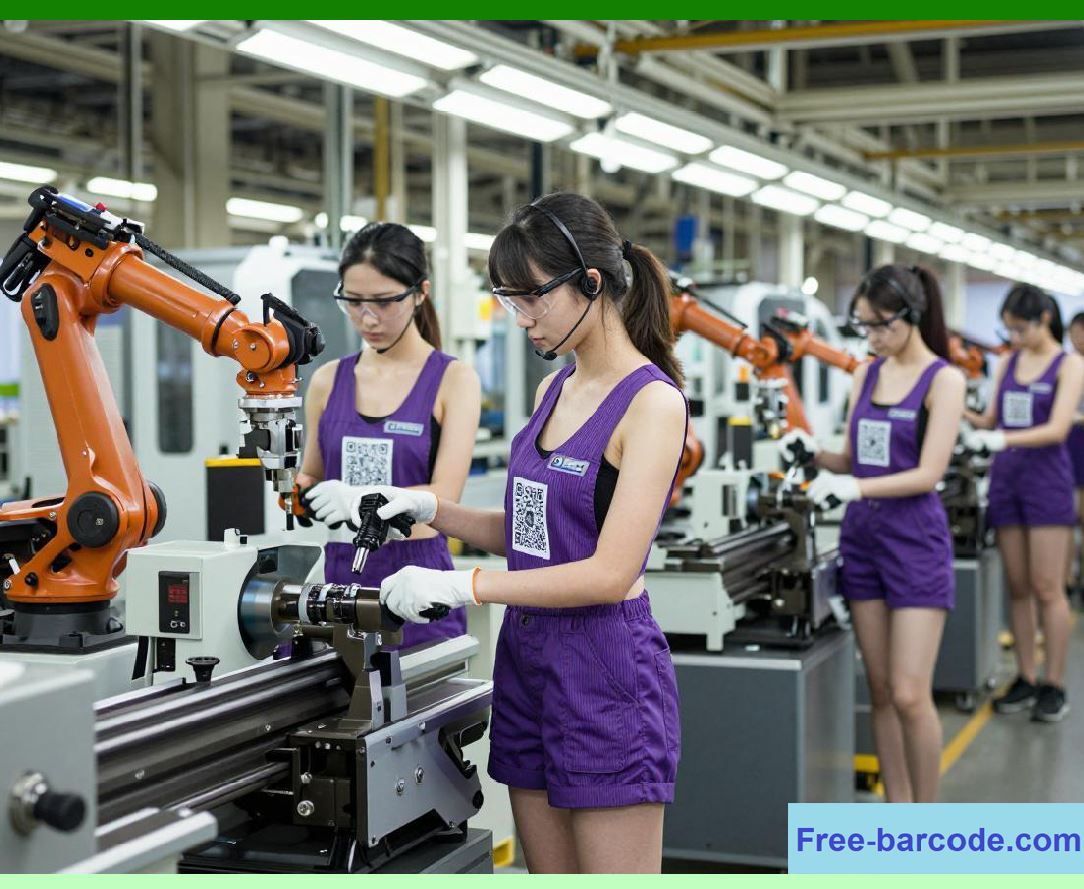
Barcode technology serves as a critical information infrastructure that transforms automotive manufacturing into a highly visible, data-driven, and continuously optimized production environment. Through accurate and timely data collection, manufacturers gain the ability to monitor operations in real time, improve decision-making, reduce waste, enhance quality, and maintain efficient production flow across increasingly complex manufacturing systems. |
 cs@easiersoft.com