Chapter 16: Real-World Example - Custom Gearbox Manufacturer |
16.1 The Company Before ERP |
Midwest Gear & Transmission was a family-owned manufacturer of custom gearboxes for industrial equipment. Their customers included agricultural machinery makers, mining equipment companies, and industrial pump manufacturers. Each gearbox was built to order, with variations in gear ratios, shaft lengths, housing materials, and sealing requirements. The company had one hundred and twenty employees, a seventy-thousand-square-foot factory, and annual revenue of forty million dollars. |
Before implementing an ERP system, Midwest Gear operated the way many small manufacturers do. Engineering used a mix of CAD software and paper drawings. The bill of materials for each gearbox was maintained in a spreadsheet. Production planning was done on a whiteboard in the plant manager's office. Inventory was tracked in a legacy system that ran on an old desktop computer. Purchasing was done by calling suppliers and sending faxes. Quality records were kept in binders on a shelf. The finance department used separate accounting software that was not connected to anything else. |
The company had problems. Delivery dates were missed on nearly half of all orders. Inventory of raw materials was high, but shortages of critical components were common. The shop floor frequently stopped because a bearing or seal was missing. Engineering changes took weeks to propagate to production, resulting in parts made to obsolete drawings. The quality manager spent half her time chasing paper records for customer audits. The finance team took three weeks to close the books each month. |
The owners knew they needed to change. They had lost several large customers to competitors who could deliver faster and more reliably. They were losing money on orders that should have been profitable because they had no accurate cost data. They decided to implement a modern ERP system designed for make-to-order manufacturing. |
|
16.2 The Implementation Journey |
The implementation took fourteen months. It was painful at times. Data had to be cleaned. Processes had to be redesigned. Employees had to learn new ways of working. But the company persevered. They started with a pilot in one product family - small gearboxes for agricultural equipment - before rolling out to the entire factory. |
The first step was cleaning the data. Every part number was reviewed. Duplicate numbers were eliminated. Descriptions were standardized. Bills of materials for each gearbox family were entered into the ERP's BOM module. Routings for each operation - cutting, turning, hobbing, heat treating, grinding, assembly, testing - were defined. Standard times were established based on historical data and time studies. |
The second step was training. Every employee received training appropriate to their role. Engineers learned how to create and revise BOMs in the ERP. Planners learned how to run MRP and interpret action messages. Purchasing learned how to use the supplier portal. Machinists learned how to scan work orders and record completions. Quality inspectors learned how to enter inspection results and generate non-conformance reports. Finance learned how to use the integrated general ledger. |
The third step was going live. The old systems were turned off. The ERP became the single source of truth. For the first few weeks, there were problems. Some transactions were missed. Some data was incorrect. But the company had a 'go-live support team' that worked long hours to resolve issues. Within a month, the system was stable. |
|
16.3 Engineering and BOM Management |
After the ERP was live, the engineering department changed how they worked. Every gearbox design was now captured in the ERP's BOM module. The BOM was multi-level, showing the finished gearbox, its subassemblies, and all purchased and manufactured components. Each component had a part number, a description, a quantity, and a unit of measure. |
When an engineer needed to change a design, they created an Engineering Change Order in the ERP. The ECO specified the reason for the change, the affected parts, and the new BOM structure. The ECO was routed to manufacturing, purchasing, and quality for approval. Once approved, the ERP automatically updated the BOM and flagged any open work orders that were affected. The planner was notified and could decide whether to continue with the old design or convert to the new one. |
One engineer recalled a specific example. A customer requested a change to the input shaft diameter on a gearbox that was already in production. Under the old system, this change would have caused chaos. Under the new ERP, the engineer created an ECO. The system showed that three work orders were already in progress using the old shaft. The planner decided to let those work orders continue with the old shaft, but to use the new shaft for all future orders. The ECO was effective immediately for new orders. The change was implemented cleanly, with no scrap and no customer complaints. |
|
16.4 Planning and Scheduling |
The master production schedule was now managed in the ERP. Sales orders for custom gearboxes were entered directly into the system. The ERP's available-to-promise calculation gave the sales team a realistic delivery date based on current workload and material availability. Salespeople no longer guessed. They gave customers dates that the factory could actually meet. |
MRP ran every night. It exploded the BOMs for all open sales orders, subtracted inventory on hand and on order, and generated purchase requisitions for raw materials and purchased components. The planner reviewed the action messages each morning. Release messages were converted to purchase orders automatically. Expedite messages were investigated. Reschedule messages were adjusted. |
Rough-cut capacity planning was run weekly. The planner saw that the heat treatment furnace was the bottleneck. The load profile showed that the furnace was overloaded by fifteen percent in week six. The planner authorized overtime on the furnace for that week. The overload was resolved. No orders were delayed. |
The planner also used the system to level the load on the gear hobbing machines. By shifting some orders from the busiest machine to a less busy one, he reduced the maximum load from ninety-five percent to eighty percent. The factory now had slack to absorb unexpected disruptions. |
|
16.5 Purchasing and Supplier Collaboration |
The purchasing department was transformed. Purchase requisitions arrived automatically from MRP. Buyers reviewed them in batches and released them as purchase orders. The orders were transmitted electronically to suppliers through the supplier portal. |
The company's top twenty suppliers were given access to the portal. They could see their open orders, acknowledge delivery dates, and upload quality certificates. The portal also displayed a rolling twelve-week forecast of expected demand. One casting supplier used the forecast to reserve furnace capacity, reducing their lead time from six weeks to four weeks. Another supplier used the forecast to order raw steel in larger quantities, reducing their cost and passing some of the savings back to Midwest Gear. |
The supplier scorecard was reviewed monthly. One bearing supplier had an on-time delivery score of only eighty percent. The purchasing manager called the supplier and shared the scorecard. The supplier was surprised - their internal records showed ninety-five percent. They discovered a discrepancy in how delivery dates were defined. After agreeing on a common definition, the supplier's score improved to ninety-two percent. Still not perfect, but better. The purchasing manager began sourcing from a second bearing supplier to create redundancy. |

|
16.6 Shop Floor Control |
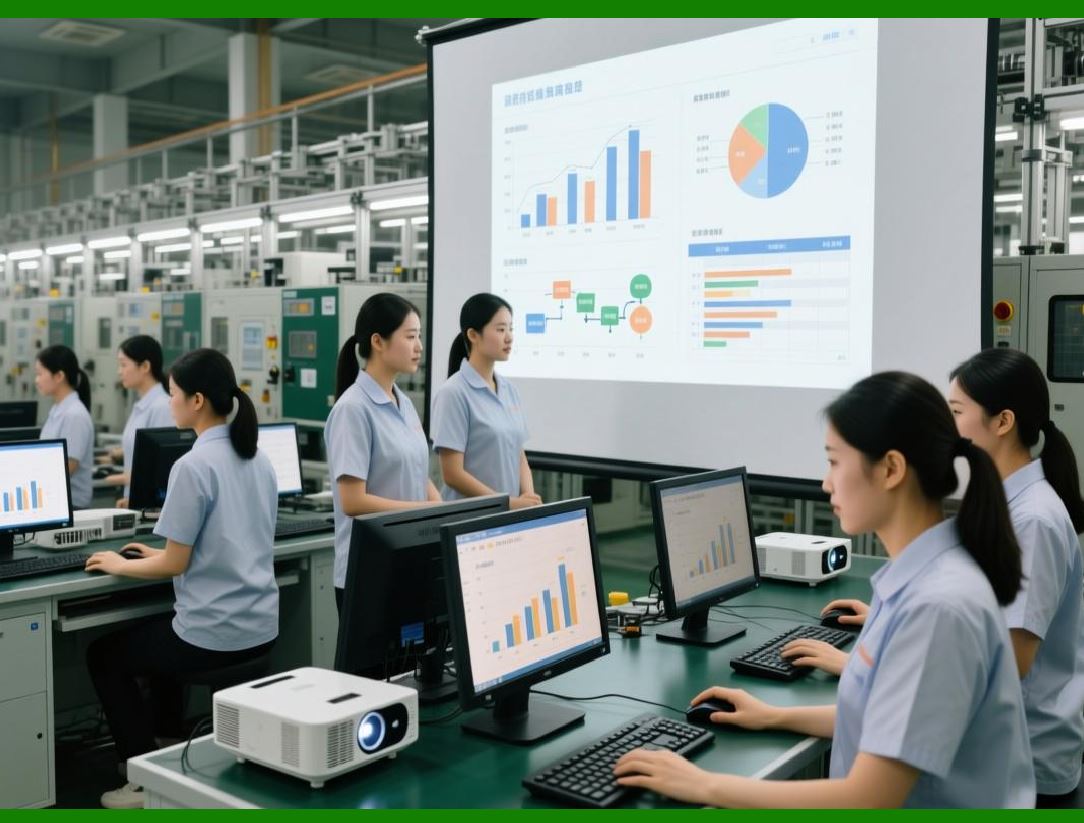
The shop floor was the most visible change. Every work center had a touchscreen terminal. Machinists scanned their badge, scanned the work order, and started the job. When they completed the job, they scanned again and entered the quantity completed and any scrap. |
The terminals also displayed digital work instructions. For a complex gear hobbing operation, the machinist could call up the setup sheet showing the correct tooling, speeds, and feeds. The drawing was displayed on the screen, zoomable and rotatable. No paper was needed. |
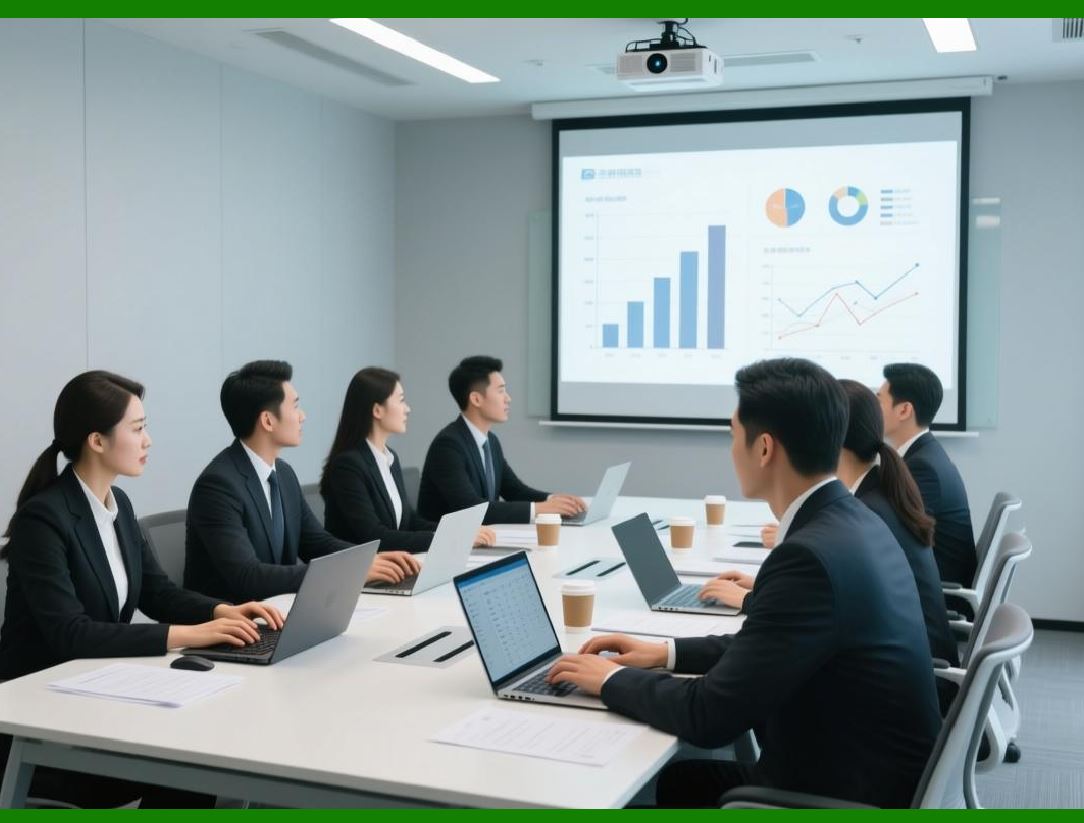
The real-time data from the shop floor fed a large display in the plant manager's office. The display showed every active work order, its current operation, its actual progress versus plan, and its estimated completion time. When a machine went down, the display showed it in red within minutes. The plant manager could see problems before they caused delays. |
One day, the grinding department fell behind because a grinding wheel needed replacement. The supervisor saw the backlog growing on the display. He reassigned an operator from a non-critical job to the grinder. The backlog was cleared by the end of the shift. Under the old system, the problem would not have been noticed until the next morning, when it was too late to recover. |
|
16.7 Quality Management |
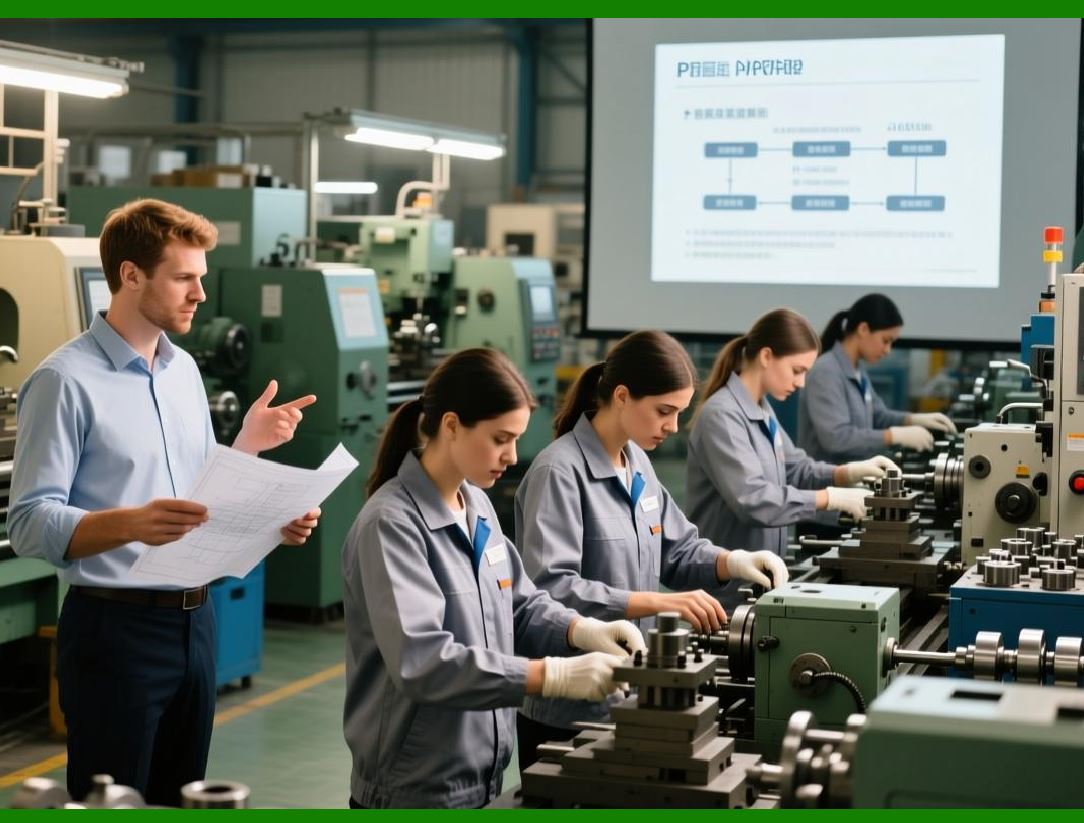
Quality was integrated into every operation. The ERP required first article inspection on every CNC machining operation. The machinist produced the first part, measured it, and entered the measurements into the system. The system compared the measurements to the specifications. If they were within tolerance, the system allowed the machinist to continue. If not, the system blocked further production until the setup was corrected. |
The quality manager created a supplier scorecard that was updated automatically from incoming inspection data. Suppliers could see their scorecard through the portal. One supplier of castings consistently failed incoming inspection due to porosity. The quality manager used the ERP's non-conformance report to document each failure. After five failures in three months, the supplier was put on probation. A new supplier was qualified. The casting quality improved dramatically. |
The ERP also tracked calibration. Every measuring instrument had a calibration due date. When a caliper was due for calibration, the system alerted the quality manager. The caliper was sent to an outside lab. The system prevented any inspection results from being recorded with an out-of-calibration instrument. |
|
16.8 Maintenance Management |
The maintenance department used the ERP to schedule preventive maintenance. Each machine had a maintenance schedule. When a task was due, the ERP created a maintenance work order. The maintenance planner coordinated with production to find a time to take the machine offline. |
The ERP also tracked spare parts. Critical spare parts for the bottleneck heat treatment furnace were kept in a dedicated bin. The ERP's min-max logic ensured that a replacement was ordered as soon as the spare was used. When the furnace's blower motor failed, the maintenance technician went to the bin, retrieved the spare motor, and had the furnace running again in four hours. Under the old system, the spare motor would not have been in stock, and the downtime would have been three days. |
The maintenance manager also used the ERP's history to identify recurring problems. One CNC lathe had required three spindle bearing replacements in two years. The history showed that the bearing failures always occurred after running a particular high-speed program. The maintenance manager worked with the programmer to modify the program, reducing the spindle acceleration rate. The bearing failures stopped. |
|
16.9 Costing and Finance |
The finance department saw the biggest improvement in closing time. Before ERP, closing the books took three weeks. The finance team had to wait for production reports, reconcile spreadsheets, and make manual journal entries. After ERP, closing took three days. The operational data was already in the system. The journal entries were already made. The finance team's job was to review, not to enter. |
The CFO could now produce a profitability report by product family. The report showed that small gearboxes for agricultural equipment had a gross margin of twenty-eight percent. Medium gearboxes for mining equipment had a margin of thirty-two percent. Large gearboxes for industrial pumps had a margin of only eighteen percent. The CFO dug deeper. The large gearboxes required special heat treatment that was outsourced to an expensive vendor. The company invested in its own heat treatment furnace, bringing the process in-house. The margin on large gearboxes increased to twenty-five percent. |
The CFO could also produce a profitability report by customer. One large customer, who represented twenty percent of revenue, had a gross margin of only twelve percent. The customer demanded frequent engineering changes and aggressive delivery dates. The company renegotiated the contract, adding a surcharge for engineering changes and expediting. The customer accepted. The margin increased to eighteen percent. |
|
16.10 Human Resources and Skill Matching |
The human resources manager used the ERP's skill matrix to track operator certifications. Each machinist was certified on specific machines and operations. When a new machinist was hired, the system showed which certifications they already had and which they needed. The training coordinator scheduled the needed training. |
The ERP also supported skill-based scheduling. When a work order required a five-axis CNC machine, the system checked which machinists were certified on that machine and assigned the job to the most qualified available person. This reduced setup errors and improved quality. |
When a senior machinist announced his retirement, the HR manager used the ERP's succession planning feature. The system identified two younger machinists who had most of the required skills. The senior machinist spent his last three months training both of them. The ERP tracked the training progress. When the senior machinist left, the company had two qualified replacements. |
|
16.11 Document Control |
The document control module was used for all engineering drawings, work instructions, quality plans, and supplier certifications. Every document was stored in the ERP with version control. When an engineer revised a drawing, the old version was archived, and the new version was released. Anyone who tried to open the old version saw a warning that a newer version existed. |
The ERP also managed customer-provided documents. One customer provided their own gearbox specifications, which differed from the company's standard. The ERP linked those specifications to the customer's sales orders. When the customer changed their specification, the ERP flagged the change and routed it to engineering for review. No order was ever built to an outdated customer specification. |
The quality manager used the document control module to manage supplier quality certificates. Certificates were uploaded to the ERP and linked to the receiving lot. When a customer requested a certificate for a specific shipment, the quality manager could retrieve it in seconds. |

|
16.12 The Results |
Eighteen months after going live, Midwest Gear & Transmission had transformed. On-time delivery improved from fifty-two percent to ninety-four percent. Inventory turns increased from three to six. Scrap and rework costs decreased by forty percent. Overtime expenses decreased by twenty-five percent. The finance team's closing time decreased from three weeks to three days. Customer satisfaction scores improved dramatically. |
The company had also grown. With the efficiency gains, they could produce more without adding machines or people. Revenue increased by fifteen percent, but costs increased by only five percent. Profit margin increased from eight percent to fourteen percent. |
The owners were pleased. The ERP system had paid for itself in less than two years. But the owners also noted that the system was not a magic wand. It required discipline. It required clean data. It required people to change how they worked. The system enabled the transformation, but the people made it happen. |
|
16.13 Lessons Learned |
The ERP implementation at Midwest Gear taught several lessons that are valuable for any mechanical manufacturer. |
First, data quality is everything. The company spent three months cleaning part numbers, BOMs, and routings before going live. That investment paid back many times over. Garbage in, garbage out is not a cliche, it is a law. |
Second, training is not optional. Every employee needed to understand not just how to use the system, but why it mattered. The machinist who understood that a missed scan would cause a shortage was more likely to scan than the machinist who was just following orders. |
Third, start small and expand. The pilot in one product family allowed the company to work out the kinks before rolling out to the entire factory. The pilot also created a success story that built momentum for the full implementation. |
Fourth, choose the right implementation partner. Midwest Gear worked with an ERP consultant who had deep experience in mechanical manufacturing. The consultant understood gearboxes, heat treatment, and the challenges of make-to-order production. That industry knowledge was as valuable as the software itself. |
Fifth, measure and communicate. The company tracked key performance indicators weekly and posted them on a dashboard in the break room. Everyone could see on-time delivery, inventory turns, and scrap rates. The data created a shared sense of purpose. |
Sixth, never stop improving. The ERP was not a one-time project. It was a platform for continuous improvement. The company continued to refine their BOMs, update their standards, and improve their processes. The system grew with them. |
|
16.14 What Could Have Gone Wrong |
Not every ERP implementation succeeds. Midwest Gear faced several risks that could have derailed the project. |
One risk was resistance to change. Some employees, especially those who had been with the company for decades, were skeptical. 'We've always done it this way' was a common refrain. The company addressed this by involving skeptical employees in the design of the new processes. When a machinist suggested a better way to structure the shop floor interface, the company implemented his suggestion. He became a champion of the system, not an opponent. |
Another risk was data migration. The old systems were messy. There were duplicate part numbers. There were BOMs with missing components. The company decided to clean the data before migration, not after. This added time to the project but saved enormous pain later. |
Another risk was going live too early. The temptation was to go live as soon as possible to start seeing benefits. But the company resisted. They waited until the data was clean, the training was complete, and the processes were tested. The go-live was still bumpy, but it was manageable. |
Another risk was losing focus on the business. During the implementation, some managers were so focused on the ERP that they neglected their day jobs. Orders were delayed. Customers complained. The company learned to balance implementation activities with running the business. They hired a dedicated project manager to lead the implementation, leaving the operations managers free to manage operations. |

|
16.15 Summary: From Chaos to Clarity |
Midwest Gear & Transmission was a typical mechanical manufacturer: good people, good products, but chaotic processes. They missed delivery dates. They held too much inventory. They lost money on orders they should have profited from. They were reactive, not proactive. |
The ERP system did not solve all their problems overnight. But it gave them the tools to solve their problems themselves. The BOM module gave them a single source of truth for product structures. MRP gave them a systematic way to calculate material requirements. Capacity planning helped them see overloads before they caused delays. Shop floor control gave them real-time visibility. Quality management integrated inspection into every operation. Maintenance management kept the machines running. Costing gave them accurate product costs. Document control ensured everyone used the correct versions. |
The results were dramatic: ninety-four percent on-time delivery, double the inventory turns, forty percent less scrap, and nearly double the profit margin. The company was transformed. But the transformation was not automatic. It required discipline, training, and a willingness to change. The ERP was the enabler. The people were the doers. |
In the final chapters, we will look at the choices available to mechanical manufacturers today - cloud versus on-premise - and the future of ERP with artificial intelligence and predictive analytics. |
|
Key takeaways from Chapter 16: |
1. A custom gearbox manufacturer transformed from chaotic to clear through a disciplined ERP implementation. |
2. Data cleaning - part numbers, BOMs, routings - was the essential first step; garbage in, garbage out is a law. |
3. Engineering Change Orders (ECOs) with electronic workflows eliminated the problem of obsolete drawings on the shop floor. |
4. Available-to-promise (ATP) gave sales realistic delivery dates, replacing guesses with data-driven promises. |
5. MRP with daily action messages replaced manual planning, and rough-cut capacity planning prevented overloads. |
6. Supplier portals with forecasts and scorecards improved supplier performance and reduced lead times. |
7. Shop floor control with touchscreens and real-time displays gave managers visibility and enabled rapid response to problems. |
8. Quality integration with first article inspection and supplier scorecards reduced defects and improved incoming quality. |
9. Preventive maintenance scheduling and spare parts management reduced unplanned downtime and accelerated repairs. |
10. Integrated costing and finance reduced month-end closing from three weeks to three days and revealed true product profitability. |
11. Skill matrices and skill-based scheduling matched the right machinist to the right job, reducing setup errors. |
12. Document control with versioning ensured that everyone used the correct drawings and specifications. |
13. The results were dramatic: on-time delivery from fifty-two percent to ninety-four percent, inventory turns doubled, profit margin nearly doubled. |
14. Success required discipline, training, a pilot approach, and a culture of continuous improvement. The ERP enabled; the people executed. |
 cs@easiersoft.com