Part 23 |
Warehouse Management and Logistics Coordination in Apparel ERP Systems |
1. Introduction to Apparel Warehouse and Logistics Management |
1.1 Importance of Logistics in the Apparel Industry |
1.1.1 |
Warehouse management and logistics coordination are among the most critical operational areas within apparel enterprises. The apparel industry depends heavily on efficient movement of: |
* Raw materials |
* Semi-finished products |
* Finished garments |
* Retail inventory |
* E-commerce orders |

|
1.1.2 |
Apparel supply chains are highly dynamic due to: |
* Seasonal demand fluctuations |
* Frequent style updates |
* High SKU complexity |
* Multi-channel distribution |
* Fast fashion cycles |
1.1.3 |
ERP systems integrate warehouse and logistics operations into centralized management platforms capable of coordinating: |
* Inventory control |
* Warehouse activities |
* Transportation planning |
* Distribution scheduling |
* Fulfillment execution |

|
1.1.4 |
Without ERP coordination, apparel enterprises frequently experience: |
* Inventory inaccuracies |
* Delayed shipments |
* Fulfillment bottlenecks |
* Excess transportation costs |
* Poor order visibility |
1.1.5 |
Modern ERP systems therefore play a central role in improving logistics efficiency and supply chain responsiveness. |

|
2. Characteristics of Apparel Warehouse Operations |
2.1 Extremely High SKU Complexity |
2.1.1 |
Apparel warehouses manage highly complex SKU structures. |
2.1.2 |
Each product may contain multiple combinations involving: |
* Styles |
* Colors |
* Sizes |
* Fits |
* Seasonal variations |
2.1.3 |
Large apparel enterprises may manage millions of SKU combinations simultaneously. |
2.1.4 |
ERP systems provide structured SKU classification and inventory visibility. |

|
2.2 Seasonal Inventory Volatility |
2.2.1 |
Apparel inventory levels fluctuate dramatically during: |
* Seasonal launches |
* Promotional periods |
* Holiday sales |
* Collection transitions |
2.2.2 |
ERP systems support dynamic warehouse capacity planning and inventory balancing. |

|
3. Warehouse Management System (WMS) Integration |
3.1 ERP and WMS Coordination |
3.1.1 |
Modern apparel ERP systems frequently integrate with warehouse management systems. |
3.1.2 |
WMS integration supports: |
* Real-time inventory tracking |
* Picking optimization |
* Receiving coordination |
* Shipping management |
3.1.3 |
Integrated systems improve warehouse efficiency and operational visibility. |

|
3.2 Real-Time Inventory Updates |
3.2.1 |
ERP systems synchronize warehouse inventory movements in real time. |
3.2.2 |
Inventory transactions may include: |
* Receipts |
* Transfers |
* Shipments |
* Returns |
* Cycle counts |
3.2.3 |
Real-time visibility improves inventory accuracy and fulfillment reliability. |

|
4. Receiving and Putaway Operations |
4.1 Material Receiving Coordination |
4.1.1 |
Apparel warehouses receive materials from: |
* Fabric suppliers |
* Trim vendors |
* Manufacturing facilities |
* Overseas factories |
4.1.2 |
ERP systems coordinate: |
* Shipment verification |
* Quality inspection |
* Barcode scanning |
* ASN processing |
4.1.3 |
Receiving automation improves accuracy and operational speed. |

|
4.2 Intelligent Putaway Management |
4.2.1 |
ERP-integrated WMS systems optimize warehouse storage allocation. |
4.2.2 |
Putaway decisions may consider: |
* Product velocity |
* Storage requirements |
* Picking efficiency |
* Seasonal demand |
4.2.3 |
Optimized storage improves warehouse productivity. |

|
5. Inventory Control in Apparel Warehouses |
5.1 Real-Time Inventory Visibility |
5.1.1 |
Inventory accuracy is critically important in apparel logistics operations. |
5.1.2 |
ERP systems provide visibility involving: |
* Warehouse inventory |
* Retail stock |
* In-transit inventory |
* Reserved stock |
5.1.3 |
Comprehensive visibility improves supply chain coordination. |

|
5.2 Cycle Counting and Inventory Auditing |
5.2.1 |
Apparel warehouses frequently conduct inventory audits to maintain accuracy. |
5.2.2 |
ERP systems support: |
* Cycle counting schedules |
* Variance analysis |
* Audit reporting |
5.2.3 |
Inventory auditing reduces shrinkage and operational errors. |

|
6. Picking and Packing Optimization |
6.1 Order Picking Strategies |
6.1.1 |
Apparel order fulfillment often involves complex picking operations. |
6.1.2 |
ERP-integrated WMS systems support: |
* Batch picking |
* Zone picking |
* Wave picking |
* Single-order picking |
6.1.3 |
Picking optimization improves fulfillment speed and labor productivity. |

|
6.2 Packing Coordination |
6.2.1 |
Packing operations must ensure: |
* Product protection |
* Accurate labeling |
* Efficient packaging |
* Brand presentation quality |
6.2.2 |
ERP systems coordinate packing instructions and shipping documentation. |

|
7. Apparel E-Commerce Fulfillment |
7.1 High-Volume E-Commerce Processing |
7.1.1 |
Apparel e-commerce generates large volumes of small individual orders. |
7.1.2 |
ERP systems coordinate: |
* Order prioritization |
* Picking workflows |
* Shipment generation |
* Delivery tracking |
7.1.3 |
Automated fulfillment improves operational scalability. |

|
7.2 Same-Day and Fast Delivery Operations |
7.2.1 |
Consumers increasingly expect rapid delivery services. |
7.2.2 |
ERP systems optimize: |
* Local inventory allocation |
* Shipment routing |
* Fulfillment center coordination |
7.2.3 |
Fast fulfillment improves customer satisfaction and competitiveness. |

|
8. Distribution Network Coordination |
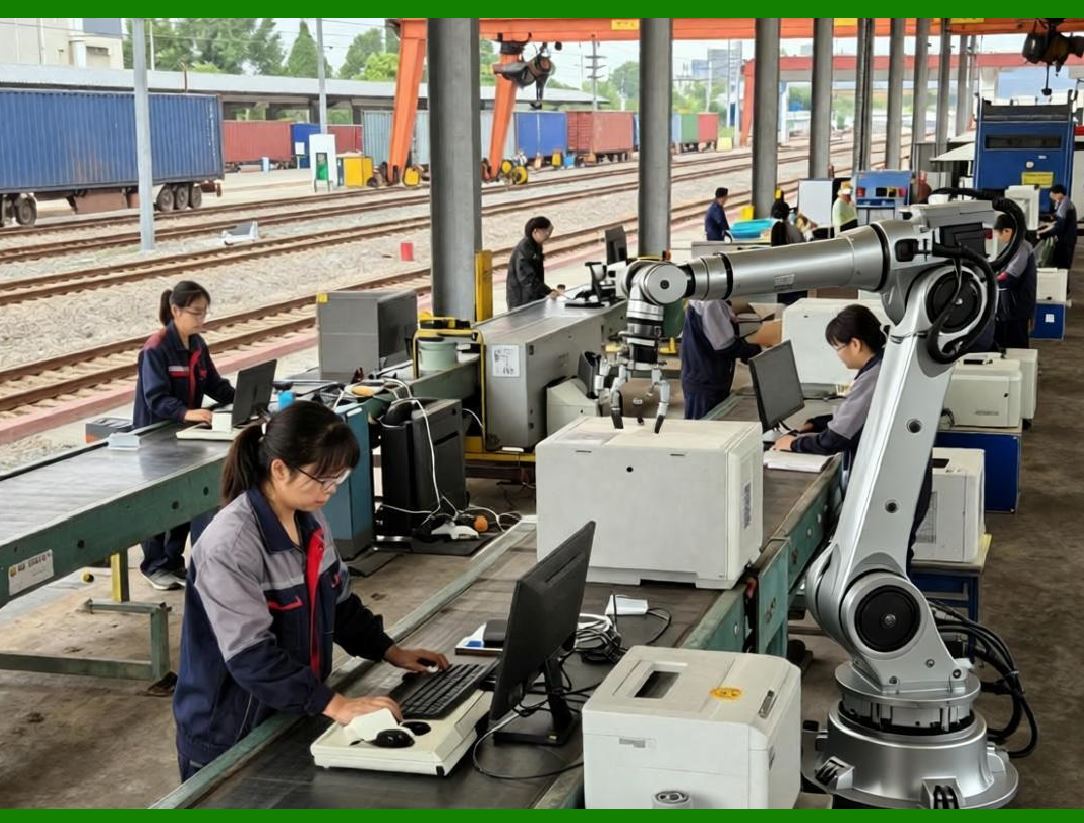
8.1 Multi-Warehouse Operations |
8.1.1 |
Large apparel enterprises often operate multiple: |
* Distribution centers |
* Regional warehouses |
* Retail fulfillment hubs |
8.1.2 |
ERP systems coordinate inventory balancing across the network. |
8.1.3 |
Network coordination improves inventory utilization and service levels. |
|
8.2 Inter-Warehouse Transfers |
8.2.1 |
ERP systems support inventory redistribution between warehouse locations. |
8.2.2 |
Transfers may occur to: |
* Balance inventory |
* Support regional demand |
* Improve delivery speed |
8.2.3 |
Inventory mobility improves supply chain flexibility. |

|
9. Transportation Management |
9.1 Transportation Planning and Optimization |
9.1.1 |
Transportation costs significantly affect apparel supply chain profitability. |
9.1.2 |
ERP systems optimize: |
* Shipment consolidation |
* Carrier selection |
* Route planning |
* Delivery scheduling |
9.1.3 |
Transportation optimization reduces logistics expenses. |

|
9.2 International Freight Coordination |
9.2.1 |
Global apparel supply chains often involve international logistics operations. |
9.2.2 |
ERP systems coordinate: |
* Ocean freight |
* Air shipments |
* Customs documentation |
* Import/export compliance |
9.2.3 |
International visibility improves supply chain reliability. |

|
10. RFID and Barcode Technologies in Apparel Logistics |
10.1 Barcode-Based Warehouse Operations |
10.1.1 |
Barcode systems are widely used throughout apparel logistics environments. |
10.1.2 |
ERP systems integrate barcode workflows involving: |
* Receiving |
* Picking |
* Packing |
* Shipment verification |
10.1.3 |
Barcode automation improves operational accuracy and efficiency. |

|
10.2 RFID-Based Inventory Visibility |
10.2.1 |
RFID technology is increasingly adopted in apparel logistics operations. |
10.2.2 |
RFID improves: |
* Inventory counting speed |
* Real-time tracking |
* Shipment verification |
* Retail replenishment accuracy |
10.2.3 |
ERP-integrated RFID systems improve inventory visibility across the supply chain. |

|
11. Reverse Logistics and Return Processing |
11.1 Apparel Return Complexity |
11.1.1 |
The apparel industry experiences high product return rates. |
11.1.2 |
Returns may result from: |
* Size mismatches |
* Style dissatisfaction |
* Product defects |
11.1.3 |
ERP systems coordinate reverse logistics and return processing workflows. |

|
11.2 Return Inspection and Reprocessing |
11.2.1 |
Returned garments must often undergo: |
* Quality inspection |
* Repackaging |
* Refurbishment |
* Inventory reassignment |
11.2.2 |
ERP systems track return disposition decisions and inventory updates. |

|
12. Labor Management in Apparel Warehouses |
12.1 Workforce Scheduling |
12.1.1 |
Warehouse labor demand fluctuates significantly according to seasonal order volumes. |
12.1.2 |
ERP systems support labor scheduling involving: |
* Peak season planning |
* Shift allocation |
* Productivity monitoring |
12.1.3 |
Labor optimization improves warehouse efficiency. |

|
12.2 Productivity Analytics |
12.2.1 |
ERP systems analyze warehouse productivity metrics involving: |
* Picking speed |
* Packing accuracy |
* Shipment throughput |
* Labor utilization |
12.2.2 |
Performance analytics improve operational management. |

|
13. AI and Automation in Apparel Logistics ERP |
13.1 AI-Based Demand and Fulfillment Forecasting |
13.1.1 |
AI technologies increasingly support logistics planning. |
13.1.2 |
ERP systems may use AI to forecast: |
* Order volumes |
* Inventory demand |
* Fulfillment workloads |
13.1.3 |
Predictive analytics improve logistics planning accuracy. |
|
13.2 Warehouse Automation Technologies |
13.2.1 |
Modern apparel warehouses increasingly adopt automation technologies involving: |
* Autonomous mobile robots |
* Automated sorting systems |
* Smart conveyor systems |
13.2.2 |
ERP systems coordinate intelligent warehouse automation workflows. |
|
14. Sustainability in Apparel Logistics |
14.1 Sustainable Packaging Management |
14.1.1 |
Apparel enterprises increasingly focus on sustainable packaging practices. |
14.1.2 |
ERP systems track: |
* Packaging material usage |
* Recyclable packaging adoption |
* Packaging costs |
14.1.3 |
Sustainability tracking improves environmental reporting. |
|
14.2 Carbon Emission Monitoring |
14.2.1 |
Transportation operations contribute significantly to carbon emissions. |
14.2.2 |
ERP systems increasingly monitor: |
* Transportation emissions |
* Logistics energy usage |
* Sustainability KPIs |
14.2.3 |
Emission visibility supports ESG initiatives. |
|
15. Future Trends in Apparel Logistics ERP Systems |
15.1 Intelligent Autonomous Logistics Networks |
15.1.1 |
Future ERP systems may coordinate: |
* Autonomous warehouses |
* AI-driven routing |
* Self-optimizing inventory allocation |
15.1.2 |
Intelligent logistics networks will improve operational speed and scalability. |
15.2 Hyper-Responsive Fulfillment Ecosystems |
15.2.1 |
Future apparel logistics systems may support: |
* Near-instant inventory visibility |
* Real-time fulfillment balancing |
* Predictive shipment coordination |
15.2.2 |
Hyper-responsive logistics ecosystems will strengthen omni-channel retail competitiveness. |
|
Technical Content Summary of Part 23 |
This part explored warehouse management and logistics coordination within apparel ERP systems. It explained the operational complexity of apparel logistics environments involving high SKU complexity, seasonal inventory volatility, multi-channel fulfillment, and global transportation coordination. |
The discussion covered WMS integration, receiving operations, intelligent putaway management, inventory control, picking optimization, e-commerce fulfillment, multi-warehouse coordination, transportation management, barcode and RFID technologies, reverse logistics, warehouse labor management, AI-driven logistics forecasting, warehouse automation technologies, and sustainability initiatives. |
These ERP capabilities are essential for improving inventory accuracy, warehouse productivity, logistics visibility, fulfillment speed, transportation efficiency, and supply chain responsiveness within apparel enterprises. |
|
URLs for reference: |
* [https://www.sap.com/](https://www.sap.com/) |
* [https://www.oracle.com/](https://www.oracle.com/) |
* [https://www.zebra.com/](https://www.zebra.com/) |
* [https://www.manh.com/](https://www.manh.com/) |
* [https://www.infor.com/](https://www.infor.com/) |
 cs@easiersoft.com