GS1 Sunrise 2027 Plan Detail (Part 1 of 19) |
Foundations, Global Context, and the Shift Toward 2D Barcodes |
1. Introduction to GS1 Sunrise 2027 Initiative |
The GS1 Sunrise 2027 Initiative is a global supply chain transformation program led by GS1, the international organization responsible for developing and maintaining barcode standards used across retail, healthcare, logistics, and manufacturing industries. |
The core objective of the initiative is to transition from traditional one-dimensional (1D) barcodes Such as the UPC and EAN systems to two-dimensional (2D) barcodes at point-of-sale (POS) and point-of-care (POC) environments by the year 2027. |
This shift is not merely a technical upgrade. It represents a structural transformation in how product data is stored, accessed, and exchanged across the global economy. |
|
2. Why 2027The Strategic Timeline Explained |
The year 2027 is not arbitrary. It reflects a coordinated global timeline agreed upon by retailers, manufacturers, healthcare providers, and technology vendors working within GS1 frameworks. |
Several key reasons define this target year: |
1. Retail infrastructure modernization cycles typically span 50 years, and 2027 aligns with hardware refresh cycles. |
2. 2D barcode scanning technology has reached maturity in both cost and reliability. |
3. Global supply chain disruptions (such as those experienced in recent years) increased urgency for better traceability systems. |
4. Regulatory pressure in sectors like pharmaceuticals and food safety is increasing worldwide. |
5. Mobile scanning adoption by consumers has become mainstream. |
Thus, 2027 serves as a practical convergence point rather than a symbolic milestone. |

|
3. Limitations of Traditional 1D Barcodes |
To understand Sunrise 2027, it is essential to examine why 1D barcodes are no longer sufficient. |
Traditional UPC/EAN barcodes encode only a small amount of information: |
1. Typically only a product identifier (GTIN). |
2. No built-in support for expiration dates. |
3. No batch or lot-level traceability. |
4. No serialization or unique item identity. |
5. No dynamic data or digital linking capability. |
These limitations mean that all additional information must be stored in backend databases, disconnected from the physical product itself. |
This creates inefficiencies in: |
* Recall management |
* Counterfeit detection |
* Inventory tracking |
* Consumer engagement |

|
4. The Rise of 2D Barcodes as a Solution |
Two-dimensional barcodes such as QR codes, Data Matrix, and GS1 Digital Link-compatible formats solve these limitations by allowing significantly greater data density. |
Key advantages include: |
1. Ability to store hundreds or thousands of characters. |
2. Support for multiple data elements in a single symbol. |
3. Error correction capabilities for damaged labels. |
4. Compatibility with mobile phones and enterprise scanners. |
5. Direct linkage to digital content and cloud systems. |
This enables a shift from static identification to dynamic product intelligence. |

|
5. The Core Vision of Sunrise 2027 |
The GS1 Sunrise 2027 initiative is built on three fundamental strategic goals: |
5.1 Enhanced Product Transparency |
Consumers and businesses will be able to access detailed product data instantly by scanning a single code. |
5.2 Improved Supply Chain Traceability |
Every product can be traced at batch or even item level, improving safety and logistics efficiency. |
5.3 Seamless Physical-to-Digital Connection |
Products become digital entry points into online ecosystems, linking physical goods with cloud-based information. |

|
6. The Role of GS1 in Global Standardization |
GS1 plays a central role in ensuring that all stakeholders adopt compatible systems. |
GS1 standards are already widely used in: |
* Retail checkout systems (UPC/EAN) |
* Healthcare product identification (GTIN, HIBC, etc.) |
* Logistics tracking (SSCC labels) |
* Food traceability systems |
Sunrise 2027 extends these existing standards rather than replacing them entirely. |

|
7. The Transition Philosophy: Coexistence, Not Replacement |
A critical principle of Sunrise 2027 is dual coexistence during the transition phase. |
This means: |
1. 1D barcodes will not disappear immediately. |
2. 2D barcodes will be introduced alongside existing symbols. |
3. Retailers will gradually upgrade scanning systems. |
4. Manufacturers will begin dual-label packaging. |
This avoids disruption to global supply chains while enabling modernization. |

|
8. Why 2D Barcodes Are Coming Center Stage* |
The phrase Center stagereflects a shift in operational priority. |
Historically: |
* 1D barcodes were primary identifiers |
* 2D codes were optional or supplementary |
After 2027: |
* 2D codes will become the primary data carriers |
* 1D codes may remain for fallback compatibility |
This shift is driven by: |
* Mobile-first scanning environments |
* Demand for richer product data |
* Growth of AI-driven supply chain analytics |
* Regulatory compliance needs |

|
9. Point-of-Sale (POS) Transformation |
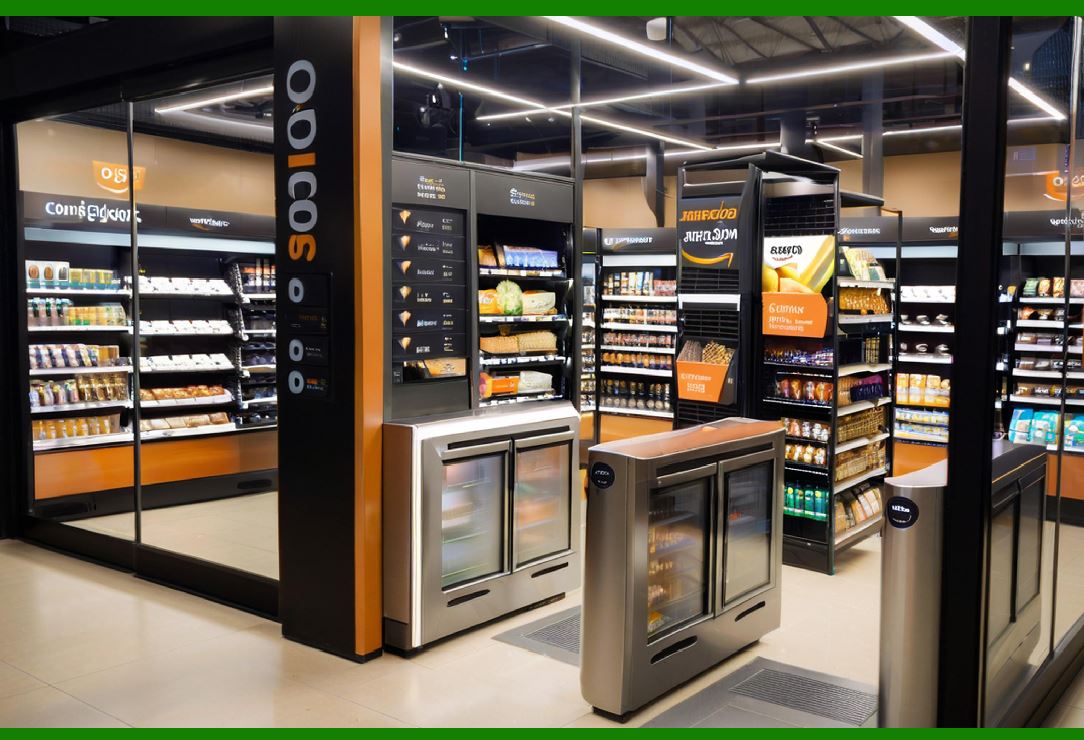
At retail checkout systems, Sunrise 2027 will significantly expand functionality. |
A single scan may now retrieve: |
1. Product identity (GTIN) |
2. Expiration date |
3. Batch/lot number |
4. Serial number |
5. Promotions or pricing rules |
6. Sustainability or recycling information |
This reduces dependency on backend database lookups and increases checkout speed and accuracy. |

|
10. Point-of-Care (POC) Transformation in Healthcare |
In healthcare environments, particularly hospitals and pharmacies, Sunrise 2027 introduces major safety improvements. |
At point-of-care scanning, 2D barcodes can enable: |
1. Medication verification before administration |
2. Patient-specific dosage matching |
3. Expiration validation |
4. Recall alerts at bedside level |
5. Full traceability of medical products |
This reduces medication errors and improves patient safety outcomes. |

|
11. Data Expansion: From Identity to Intelligence |
The most fundamental change introduced by Sunrise 2027 is conceptual: |
* Old system: That is this product* New system: That is this product, and everything about it |
2D barcodes allow encoding of: |
1. Product identifiers |
2. Manufacturing data |
3. Supply chain history |
4. Regulatory compliance data |
5. Digital links (URLs, GS1 Digital Link) |
This transforms packaging into a data interface. |

|
12. Digital Link Integration |
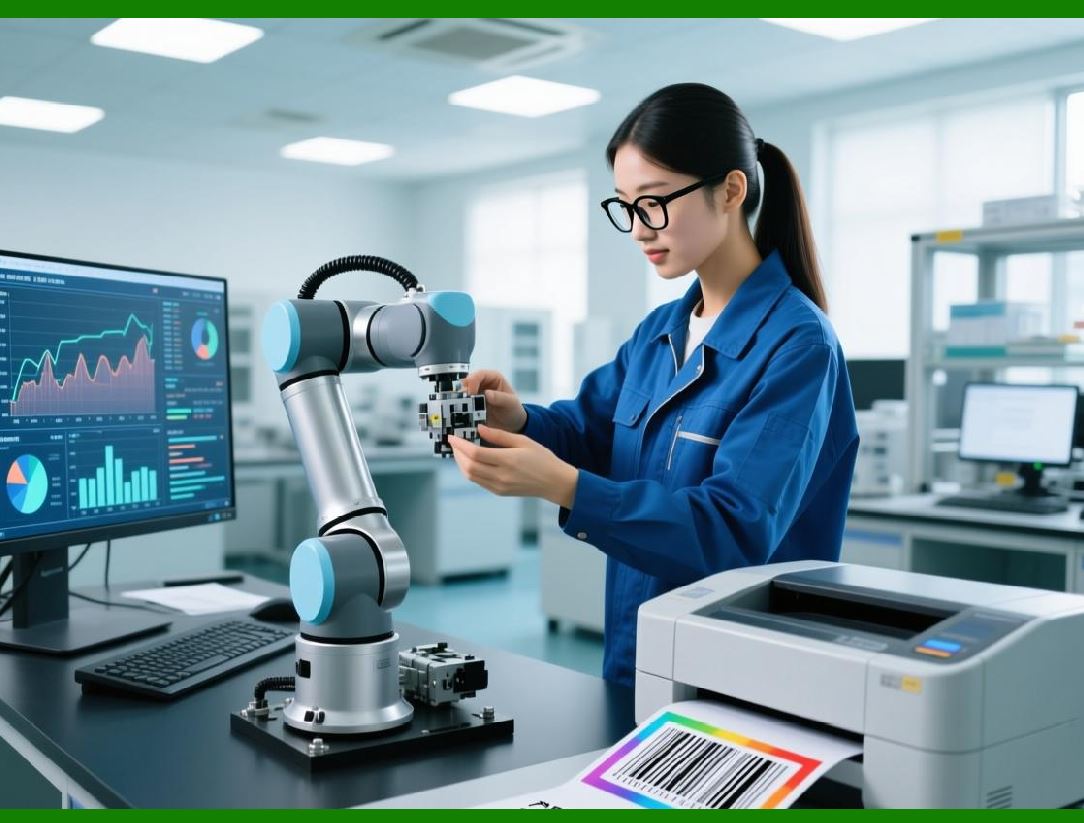
A key component of the Sunrise vision is the GS1 Digital Link standard. |
This allows a barcode to act as a gateway to web-based resources such as: |
* Product manuals |
* Recall notices |
* Marketing content |
* Sustainability data |
* Authentication services |
Instead of storing all data physically on the label, the code acts as a pointer to a structured digital ecosystem. |
|
13. Industry Drivers Behind Adoption |
Several global forces are accelerating adoption: |
1. Consumer demand for transparency |
2. Regulatory enforcement (especially food and pharma) |
3. E-commerce growth requiring better product data |
4. Anti-counterfeiting initiatives |
5. Sustainability tracking requirements |
Together, these forces make 2D migration not optional but inevitable. |

|
14. Early Adoption Patterns |
Before 2027, many industries are already testing or deploying 2D systems: |
* Food retail chains using QR-based traceability |
* Pharmaceutical serialization systems |
* Logistics companies using Data Matrix for parcel tracking |
* Consumer brands adding QR codes for marketing engagement |
These early deployments act as proof-of-concept systems for global rollout. |

|
15. Challenges in Early Transition |
Despite strong momentum, several challenges exist: |
1. Scanner infrastructure upgrades required |
2. Standardization across global supply chains |
3. Cost of re-labeling packaging systems |
4. Training retail staff and logistics operators |
5. Ensuring backward compatibility |
These challenges are central to the phased approach of Sunrise 2027. |

|
16. Strategic Importance of Global Alignment |
Because supply chains are international, fragmentation would be highly disruptive. |
GS1 role ensures: |
* Uniform standards across countries |
* Interoperability between industries |
* Consistent scanning behavior globally |
Without this alignment, 2D adoption would remain fragmented and inefficient. |

|
17. Summary of Part 1 |
This foundational section established: |
1. Sunrise 2027 is a global barcode transformation initiative led by GS1 |
2. The shift moves from 1D barcodes to 2D barcodes at POS and POC environments |
3. The goal is richer data, better traceability, and digital connectivity |
4. 2027 is a coordinated industry milestone |
5. The transition will be gradual and dual-system based |
6. 2D barcodes become the central data carrier for product identity |

|
Next Part Preview |
In Part 2, I will cover: |
* Technical architecture of 2D barcodes in GS1 systems |
* QR vs Data Matrix vs GS1 DataMatrix roles |
* Data structure inside GS1 Digital Link |
* Encoding rules and syntax evolution |
* Error correction and reliability systems |
 cs@easiersoft.com