Operating Room (OR) Management - The Symphony Scheduler: How American Hospitals Orchestrate the Complex Choreography of Surgery |
Short Executive Summary |
This chapter explores Operating Room (OR) Management---the specialized module within the Hospital Information System that coordinates the extraordinarily complex logistics of surgical services. The OR is the financial and operational heart of most U.S. hospitals, generating a substantial portion of revenue while consuming vast resources. OR Management systems integrate scheduling, staffing, equipment tracking, instrument sterilization, inventory management, and clinical documentation to ensure that every surgery proceeds smoothly, safely, and on time. Through detailed U.S. case studies---from a large academic medical center with 40 operating rooms to a community hospital with a hybrid OR suite and a rural critical-access facility---we examine how OR Management systems have transformed surgical services from a paper-based, often chaotic process into a precision-driven, data-rich enterprise. The chapter covers the core components of OR Management: surgical scheduling, case cart preparation, instrument tracking, preference cards, staff credentialing and assignment, intraoperative documentation, and post-anesthesia care unit (PACU) handoff. It explores the economic imperatives of OR efficiency, the challenges of on-time starts and case turnover, the integration with anesthesia information management systems (AIMS), and the emerging use of artificial intelligence for predictive scheduling and resource allocation. It concludes that OR Management is not merely a scheduling tool; it is the conductor of a complex symphony, ensuring that every instrument, every team member, and every patient arrives at the right place at the right time---a feat of coordination that is essential for both patient safety and institutional viability. |

|
Operating Room (OR) Management - The Symphony Scheduler |
A Detailed Popular-Science Exploration |
1. The Heart of the Hospital's Economy |
The operating room is the financial and operational heart of a U.S. hospital. It is where the most complex, high-stakes, and expensive care is delivered. A single hour of OR time can generate thousands of dollars in revenue, but it also consumes enormous resources: highly skilled personnel, expensive equipment, sterile instruments, and a vast supply chain. A single surgical case might involve a surgeon, an anesthesiologist, a nurse, a surgical technician, a scrub nurse, a circulating nurse, and support staff---all coordinated to work in perfect harmony. |
In a typical U.S. hospital, the OR suite is a bustling, high-pressure environment. Cases are scheduled weeks in advance, but emergencies and cancellations can disrupt the schedule at a moment's notice. The ability to manage this complexity is critical. An efficient OR generates more revenue, reduces wait times for patients, and improves staff satisfaction. An inefficient OR---with delays, cancellations, and wasted time---can cost the hospital millions of dollars annually. |
The OR Management module of the Hospital Information System is the digital conductor that orchestrates this symphony. It manages scheduling, staffing, equipment, instruments, supplies, documentation, and financials. It ensures that the right patient, with the right procedure, is in the right OR, with the right team, at the right time---with all the necessary instruments and supplies. |
This chapter will take you inside the OR Management system of a modern American hospital. We will explore how surgeries are scheduled, how the OR is prepared, how the surgical team documents the procedure, and how the patient transitions to the recovery room. We will examine the economic and operational imperatives that drive OR efficiency, and we will look to the future of the OR with artificial intelligence and robotics. |

|
2. The Evolution of OR Management in the U.S. |
The journey of OR management from paper to digital reflects the broader evolution of hospital operations. |
The paper era (pre-1990s): Surgical scheduling was managed on paper calendars, whiteboards, and telephone calls. Surgeons' offices would call the OR scheduling desk to book a case. The scheduler would manually check the availability of ORs, surgeons, and staff. Instrument trays were prepared by hand, based on a surgeon's preference card---a paper document listing the specific instruments and supplies the surgeon preferred for each procedure. The process was labor-intensive, error-prone, and difficult to adjust when emergencies arose. |
The early computerized era (1990s-2000s): The first OR management systems automated scheduling, replacing the paper calendar with a digital calendar that could be accessed by surgeons' offices. They also introduced electronic preference cards, which allowed surgeons to specify their instrument and supply preferences in a digital format. However, these systems were often stand-alone, not integrated with the rest of the hospital's IT. |
The integrated era (2000s-present): Today's OR Management systems are fully integrated with the EHR, the billing system, the inventory system, and the sterilization system. They are part of the broader HIS. When a surgeon schedules a case, the OR Management system reserves the OR, schedules the staff, ensures the instruments are sterilized, prepares the case cart, and automatically generates the charge for the case. |
The AI era (emerging): The newest OR Management systems use artificial intelligence to predict case durations, optimize schedules, and anticipate supply needs. They are also integrated with robotic surgical systems and anesthesia information management systems. |

|
3. The Core Components of OR Management |
A comprehensive OR Management system includes several key modules. |
Surgical Scheduling: |
This is the central function. The system provides a color-coded, grid-based calendar that displays all ORs and time slots. Surgeons or their staff can request a case, specifying: |
Patient: Identified by MRN and encounter number. |
Procedure: The specific surgery (using CPT or ICD-10 procedure codes). |
Surgeon: The primary surgeon and any assistants. |
Anesthesia: The requested anesthesia type (general, regional, local, or monitored anesthesia care---MAC). |
Special equipment: Any special equipment needed (e.g., a specific endoscope, a robotic system, a microscope). |
Special requests: Such as the need for a specific implant or a specific vendor representative. |
Estimated duration: The surgeon's estimate of how long the case will take. |
The scheduling system checks for conflicts---is the OR availableIs the surgeon availableIs the anesthesia provider availableIs the necessary equipment availableIf there are conflicts, the system alerts the scheduler, who can propose alternative times. |
Staff Scheduling and Credentialing: |
Each surgical case requires a specific team. The OR Management system tracks the credentials of each staff member: |
Surgeons: Board certification, privileges, and specialized training (e.g., robotic surgery certification). |
Anesthesiologists and CRNAs: Licensure, board certification, and specialized training. |
Nurses (RNs): Licensure, OR certification (e.g., CNOR), and specialized training. |
Surgical technologists: Certification and training. |
Scrub nurses and circulating nurses: Credentials and training. |
The system ensures that only credentialed staff are assigned to cases that match their privileges. For example, a surgeon who is not credentialed to perform robotic surgery will not be assigned to a robotic case. |
Preference Cards: |
Preference cards are detailed lists of the instruments, supplies, and equipment that a particular surgeon prefers for a specific procedure. These are the 'recipes' for a surgical case. The OR Management system stores preference cards digitally and makes them available to the central sterile processing department (CSPD) and the OR team. |
A typical preference card includes: |
Instrument tray: A list of all instruments needed---including their specific names, sizes, and quantities. |
Suture and needle preferences: The specific suture materials and needle types. |
Implants and prosthetics: The specific implants, screws, plates, or other devices that will be used. |
Drapes and gowns: The specific sizes and types. |
Positioning aids: The specific pillows, pads, and supports needed to position the patient. |
Specialty equipment: The specific power tools, endoscopes, or other devices. |
Antibiotics and medications: The specific antibiotics and other medications to be administered during surgery. |
Fluids and irrigation: The specific solutions to be used. |
The preference card is a living document; surgeons can update it as their preferences change. |
Case Cart Preparation and Instrument Tracking: |
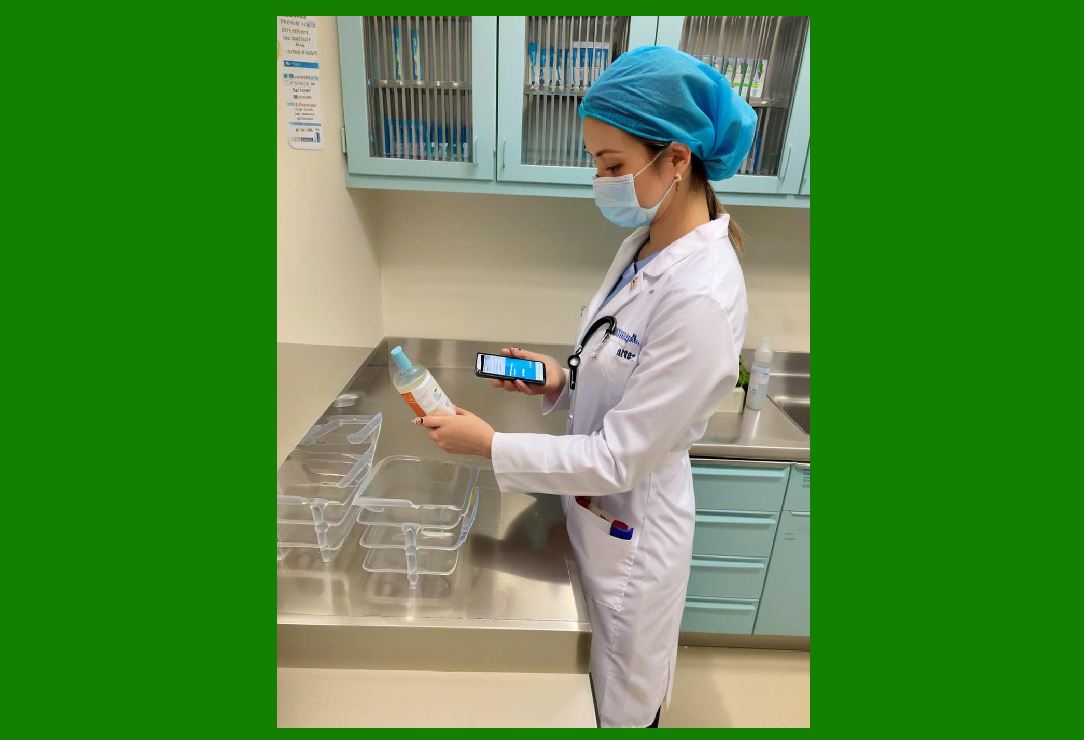
Once a case is scheduled, the OR Management system generates a 'case cart' list---a detailed list of all the instruments, supplies, and implants that need to be prepared for the case. The list is sent to the central sterile processing department (CSPD). The CSPD assembles the case cart, using the preference card to select the correct instruments and supplies. Each instrument and implant is tracked using a unique barcode or RFID tag. |
Inventory and Implant Management: |
The OR Management system tracks inventory of all supplies, implants, and instruments. When an implant is used, it is scanned and charged to the patient's account. The system also monitors inventory levels, reorders supplies when they are low, and tracks expiration dates. |
Instrument Sterilization and Tracking: |
Instruments are sterilized after each use. The OR Management system tracks: |
The sterilization cycle: The date and time of sterilization, the sterilization method (autoclave, hydrogen peroxide gas plasma), and the lot number. |
The instrument tray: Each tray has a unique barcode. The system tracks which tray was used for which case. |
The instrument count: A critical safety process---the surgical team counts all instruments, sponges, and needles before and after the procedure to ensure nothing is left inside the patient. |
Intraoperative Documentation: |
During the surgery, the OR team documents the procedure in the EHR. This is done using a combination of structured fields and free-text narrative. |
Anesthesia record: The anesthesiologist or CRNA documents vital signs, anesthetic agents, fluids, and medications. |
Nursing documentation: The circulating nurse documents the surgical time-out, the patient's positioning, the skin prep, the instrument count, and all other nursing activities. |
Surgeon's operative report: The surgeon dictates or types a detailed report of the procedure, including the findings, the steps performed, the closure method, and the final outcome. |
PACU (Post-Anesthesia Care Unit) Handoff: |
After the procedure, the patient is transferred to the PACU. The OR Management system communicates with the PACU system to ensure the PACU team is ready. The OR team provides a handoff report, which is documented in the EHR. |
Billing and Charge Capture: |
The OR Management system automatically captures all charges associated with a surgical case---the OR time, the supplies used, the implants, the anesthesia services, and the professional fees. This ensures accurate and timely billing. |
Quality and Safety Metrics: |
The OR Management system tracks key quality and safety metrics: |
Surgical site infections (SSIs): Tracking infection rates after specific procedures. |
On-time starts: The percentage of cases that start on time. |
Turnover time: The time between cases. |
Case duration: The actual time vs. the scheduled time. |
Cancellation rates: The percentage of cases that are canceled. |
Adverse events: Tracking of unintended events, such as a retained foreign object. |

|
4. The Surgical Scheduling Process: A Detailed Walkthrough |
To understand how OR Management works, let us walk through the process of scheduling a surgical case at a U.S. hospital. |
Step 1 - The Surgeon's Decision: |
A surgeon decides that a patient needs a surgical procedure---for example, a laparoscopic cholecystectomy (gallbladder removal). The surgeon's office contacts the hospital's OR scheduling desk. |
Step 2 - Scheduling Request: |
The OR scheduler enters the patient's information into the OR Management system (or, if the patient is already in the system, the scheduler finds the patient's record). The scheduler selects the procedure, the surgeon, the estimated duration, and any special requirements (e.g., the need for a specific camera). |
Step 3 - System Checks: |
The OR Management system performs a series of checks: |
Surgeon availability: Is the surgeon available at the requested time |
OR availability: Is the OR available at the requested time |
Staff availability: Are the necessary nurses and anesthesia providers available |
Equipment availability: Is the required equipment (e.g., a specific laparoscopic tower) available |
Credentialing: Is the surgeon credentialed to perform this procedure at this hospital |
Step 4 - Schedule Confirmation: |
If all checks are passed, the scheduler confirms the booking. The OR is reserved, the surgeon is assigned, and the staff are scheduled. The case is added to the OR calendar. |
Step 5 - Case Cart Preparation: |
The OR Management system generates a case cart list, based on the surgeon's preference card. The list is sent to the CSPD, which assembles the case cart---the instruments, supplies, and implants---and places them on a cart. The cart is labeled with the patient's name, the procedure, and the OR number. |
Step 6 - Instrument Sterilization: |
If the case requires any specific instruments (e.g., an endoscope or a specialized drill), they are sterilized, and the system tracks their sterilization date and time. |
Step 7 - Preoperative Verification: |
On the day of surgery, the OR Management system verifies that everything is ready: |
Patient: The patient has arrived and is in the preoperative holding area. |
Surgeon: The surgeon is present. |
Anesthesia: The anesthesia provider is present. |
OR: The OR is clean and set up. |
Case cart: The case cart is in the OR, and the instruments are sterile. |
Consent: The patient has signed the informed consent form (which is scanned into the EHR). |
Step 8 - Surgical Time-Out: |
Before the incision is made, the surgical team performs a 'time-out'---a verbal confirmation of the patient's identity, the procedure, the surgical site, and any allergies. The circulating nurse documents the time-out in the EHR. |
Step 9 - The Procedure: |
The surgery is performed. The anesthesia provider documents vital signs and medications. The circulating nurse documents the instrument count, the skin prep, and other nursing activities. The surgeon dictates the operative report. |
Step 10 - Instrument Count and Close: |
Before the incision is closed, the surgical team counts all instruments, sponges, and needles to ensure none are left inside the patient. The count is documented in the EHR. |
Step 11 - PACU Handoff: |
The patient is transferred to the PACU. The OR team gives a handoff report to the PACU nurse, documenting the patient's condition, the procedure performed, and any special considerations. |
Step 12 - Billing: |
The OR Management system automatically generates charges: OR time, supplies, implants, anesthesia, and professional fees. |

|
5. Preference Cards: The Surgeon's Recipe |
The preference card is one of the most critical elements of the OR Management system. It is the surgeon's 'recipe' for the procedure, specifying exactly what instruments, supplies, and equipment they want. |
Creating a preference card: When a new surgeon joins the hospital or when a surgeon is performing a new procedure, they work with a nurse or a surgical technologist to create a preference card. The card is stored in the OR Management system and can be updated at any time. |
Using a preference card: When a case is scheduled, the OR Management system retrieves the surgeon's preference card for that procedure. It generates a case cart list, which is sent to the CSPD. The CSPD uses the list to assemble the case cart. |
The value of preference cards: |
Efficiency: The case cart is prepared in advance, with exactly the instruments and supplies the surgeon needs. This reduces intraoperative delays. |
Safety: The correct instruments and supplies are available, reducing the risk of a miscount or a wrong procedure. |
Cost control: The system tracks the supplies used, ensuring that only the necessary items are prepared. |
Surgeon satisfaction: Surgeons have confidence that their preferred instruments and supplies will be available. |
Challenges of preference cards: |
Maintenance: Preference cards must be kept up-to-date. If a surgeon changes their practice (e.g., switches to a new suture), the card must be updated. Many U.S. hospitals have a preference card review process, where surgeons review their cards annually. |
Variability: Different surgeons have different preferences for the same procedure. The system must accommodate this variability by storing multiple preference cards for the same CPT code. |

|
6. Instrument Tracking and Sterilization: A Critical Safety Chain |
One of the most critical functions of the OR Management system is tracking instruments through the sterilization and use cycle. |
The sterile processing department (CSPD): The CSPD is the hub of instrument sterilization. It receives used instruments from the OR, decontaminates them, inspects them, assembles them into trays, sterilizes them, and stores them for future use. |
The tracking system: Each instrument tray has a unique barcode or RFID tag. The OR Management system tracks: |
Location: Where is the trayIn the ORIn the CSPDIn the sterile storage area |
Status: Is it cleanIs it dirtyIs it sterileIs it out of date |
History: Which cases has it been used forWhen was it last sterilized |
Lot number: For high-value or implantable instruments, the lot number is tracked for traceability. |
Instrument count: The OR team counts instruments before and after the surgery. The count is documented in the EHR. If there is a discrepancy---e.g., a missing sponge---the OR team must find it before the patient is closed. This is a critical safety check to prevent a retained foreign object (RFO), which is a rare but serious complication. |
U.S. regulation: The FDA regulates certain instruments (e.g., some endoscopic instruments) and requires tracking of sterilization cycles. The OR Management system helps hospitals comply with these regulations. |

|
7. The Financial Imperative: OR Efficiency |
The OR is the largest revenue center in most U.S. hospitals, but it is also the largest cost center. OR Management systems are essential for maximizing efficiency. |
The cost of OR time: A single minute of OR time can cost the hospital $60 to $120 or more, depending on the hospital and the procedure. This includes salaries (surgeons, anesthesiologists, nurses, technicians), equipment depreciation, and overhead. In a large academic medical center, the annual cost of OR operations can exceed $100 million. |
The cost of delays: |
Late starts: If a case starts late, it can push back all subsequent cases, reducing the total number of cases that can be performed in a day. A single 15-minute delay can cost the hospital $1,000 to $2,000. |
Long turnover time: The time between cases---cleaning the OR, setting up for the next case---is non-revenue-generating time. Reducing turnover time increases revenue. |
Cancellations: A case that is canceled on the day of surgery results in wasted resources and lost revenue. |
OR Management metrics: |
First case on-time start: The percentage of first cases that start within the scheduled start time. In many U.S. hospitals, this is benchmarked at 90% or higher. |
Turnover time: The median time from one case ending to the next case starting. |
Case duration accuracy: How accurately the surgeon's estimated duration matches the actual duration. |
Block utilization: The percentage of allocated OR time that is actually used. |
Case volume: The number of cases performed per day, per OR, per month. |
U.S. benchmarking: U.S. hospitals often compare their OR efficiency metrics against national benchmarks, such as those provided by the Association of periOperative Registered Nurses (AORN) or the Advisory Board. |

|
8. Staff Scheduling and Credentialing: The Right Team for the Right Case |
Each surgical case requires a specific team with specific credentials. The OR Management system manages the complex process of staff scheduling and credentialing. |
Staff roles: The OR team typically includes: |
Surgeon (and assistants): The lead surgeon and any assistant surgeons (residents, fellows, or other surgeons). |
Anesthesiologist or CRNA: Provides anesthesia and monitors the patient during the surgery. |
Scrub nurse: Prepares the instrument table and hands instruments to the surgeon. |
Circulating nurse: Manages the OR environment, documents the procedure, and assists the surgeon and scrub nurse. |
Surgical technologist: Sets up and maintains the sterile field and assists the surgeon. |
Other staff: May include a perfusionist (for cardiac surgery), a neurophysiologist (for neurosurgery), or a vendor representative (for specific implants). |
Credentialing: Each staff member must be credentialed to perform their specific role. For example: |
- A surgeon must have privileges to perform the specific procedure. |
- An anesthesiologist must be board certified or board eligible. |
- A scrub nurse must have OR certification (CNOR). |
- A surgical technologist must be certified (CST). |
The system's role: The OR Management system stores the credentialing data for each staff member. When a case is scheduled, the system checks that the assigned staff have the appropriate credentials. If there is a mismatch---e.g., a surgeon without robotic privileges assigned to a robotic case---the system alerts the scheduler. |
Staff scheduling: The OR Management system helps schedule staff, ensuring that each OR has the required team. It also tracks staff workload---e.g., how many hours each staff member has worked in the OR, and whether they are approaching overtime limits. |
Union and labor considerations: In many U.S. hospitals, nurses and other staff are unionized. The OR Management system must accommodate union rules---e.g., mandatory breaks, shift length limits, and overtime pay. |
|
9. The Anesthesia Information Management System (AIMS) |
The Anesthesia Information Management System (AIMS) is a specialized component of the OR Management system that is dedicated to the documentation of anesthesia care. |
Anesthesia record: The AIMS captures a detailed, time-stamped record of the anesthesia care, including: |
Vital signs: Heart rate, blood pressure, respiratory rate, oxygen saturation, and other hemodynamic parameters, recorded continuously from the patient's monitors. |
Airway and ventilation: The type of airway, ventilator settings, and respiratory parameters. |
Anesthetic agents: The agents used (inhalational, intravenous, regional), the doses, and the times they were administered. |
Intravenous fluids: The type and volume of IV fluids administered. |
Medications: All medications administered during the case, including antibiotics, pain medications, and emergency drugs. |
Events: Any significant events, such as hypotension, arrhythmias, or allergic reactions. |
Integration with monitoring devices: The AIMS is connected to the patient's monitors (EKG, SpO2, blood pressure, etc.). Vital signs are automatically captured and recorded in the anesthetic record, reducing manual documentation. |
Decision support: The AIMS provides clinical decision support---e.g., alerts for hypotension, hypoxia, or bradycardia. It also suggests appropriate drug doses. |
Billing: The AIMS automatically captures the anesthesia time and the ASA (American Society of Anesthesiologists) physical status classification, which are used to calculate anesthesia charges. |
Post-anesthesia care: The AIMS provides a handoff report to the PACU team, summarizing the anesthesia care and the patient's immediate postoperative status. |
U.S. regulation: Anesthesia documentation is subject to Medicare billing rules and state regulations. The AIMS helps ensure compliance. |

|
10. The OR and the EHR: A Seamless Integration |
The OR Management system is fully integrated with the hospital's EHR. This provides a seamless flow of information: |
Preoperatively: |
- The OR Management system sends the patient's surgical schedule to the preoperative holding area. |
- The preoperative nurse reviews the patient's EHR, verifies the consent, and documents the preoperative assessment. |
- The OR Management system alerts the surgical team when the patient is ready to be moved to the OR. |
Intraoperatively: |
- The surgical team documents the procedure in the EHR. This includes the time-out, the instrument count, and the operative findings. |
- The anesthesia provider documents in the AIMS, which is integrated with the EHR. |
- The EHR is updated in real time with the patient's status. |
Postoperatively: |
- The OR Management system sends the patient's status to the PACU, alerting the PACU team. |
- The PACU team documents the patient's recovery in the EHR. |
- The OR Management system sends a summary of the case to the surgeon's office and to the primary care physician. |

|
11. U.S. Case Study: The Cleveland Clinic's OR Management |
The Cleveland Clinic is a large academic medical center with over 40 operating rooms across its main campus. It has a highly sophisticated OR Management system, integrated with its Epic EHR. |
Scheduling: The Clinic performs over 50,000 surgical cases annually. The OR Management system uses a centralized scheduling process, with a dedicated call center for surgeons' offices. The system uses a color-coded calendar to display OR availability. |
Preference cards: The Clinic has over 20,000 active preference cards. The system tracks these cards and ensures they are up-to-date. Surgeons can update their cards via a secure portal. |
Instrument tracking: The Clinic uses RFID tags to track instrument trays. The OR Management system knows the location and status of every tray in real time. |
Data analytics: The Clinic uses the OR Management system's analytics capabilities to track key metrics---on-time starts, turnover time, case duration accuracy. This data is used for continuous quality improvement. |
Outcomes: The Clinic has achieved high OR efficiency, with on-time starts exceeding 90% and turnover time consistently below 30 minutes. This has contributed to high patient volume and robust financial performance. |

|
12. U.S. Case Study: A Community Hospital's OR Optimization |
A 250-bed community hospital in the Midwest uses a cloud-based OR Management system. The hospital has 8 ORs and performs approximately 8,000 cases annually. |
Challenges: The hospital faced challenges with on-time starts, particularly for the first case of the day. Surgeons were often late, and the OR team was not always ready. |
Solutions: |
Communication: The OR Management system sends automated reminders to surgeons and staff before each case. |
Preparation: The system alerts the OR team when the patient is in the preoperative holding area, giving them time to prepare. |
Case cart optimization: The system uses preference cards to prepare case carts, reducing last-minute scrambling for supplies. |
Data tracking: The hospital tracks on-time starts and shares the data with the surgeons, creating accountability. |
Outcomes: The hospital improved its first-case on-time start rate from 65% to 85% within six months. This increased case volume by 5% and improved staff morale. |

|
13. U.S. Case Study: A Critical Access Hospital's OR |
A rural Critical Access Hospital in Montana has a single OR and performs about 300 cases annually. It uses a basic OR Management system. |
Challenges: The hospital has limited staff and resources. Surgeons are often not full-time employees; they are community physicians who come to the hospital for their cases. |
Solutions: The OR Management system is used to schedule cases and manage the instrument inventory. The hospital also uses a 'surgeon's preference card' system to ensure that the correct instruments and supplies are available for each surgeon. |
Outcomes: The system helps the hospital maintain a high level of OR efficiency despite its limited resources. It also ensures that the hospital is prepared for the specific needs of each surgeon. |

|
14. The OR Management and Value-Based Care |
The shift to value-based care in the U.S. has increased the importance of OR efficiency and quality. |
Bundled payments: In some bundled payment models, the hospital receives a single payment for an entire episode of care, including the surgery, the hospital stay, and post-discharge care. The hospital's profit depends on managing the costs of the episode. The OR Management system helps control costs by optimizing OR efficiency and reducing waste. |
Surgical quality: CMS and other payers track surgical quality measures---surgical site infections, readmissions, and complications. The OR Management system's data---on time-outs, instrument counts, and sterile processing---helps hospitals meet these quality standards. |
Patient satisfaction: Patients increasingly expect a smooth, efficient surgical experience. The OR Management system's role in ensuring on-time starts, clear communication, and a well-prepared surgical team contributes to higher patient satisfaction. |

|
15. The Human Element: The OR Team |
Despite all the technology, the OR is a human environment. The OR Management system supports, but does not replace, the human skills of the OR team. |
Teamwork: The OR requires seamless teamwork. The OR Management system facilitates communication and coordination, but it cannot replace the trust and understanding that develop among team members. |
Leadership: The OR charge nurse or nurse manager is responsible for the overall coordination of the OR. The OR Management system provides them with the information they need to make decisions. |
Surgeon satisfaction: Surgeons are a critical customer of the OR Management system. The system must be intuitive and efficient, or surgeons will become frustrated. |
Patient safety: The OR Management system's role in instrument tracking, the time-out, and the instrument count is directly related to patient safety. A failure in any of these processes can lead to a serious adverse event. |

|
16. The Future of OR Management: AI, Robotics, and Predictive Analytics |
The OR Management system is evolving rapidly, driven by artificial intelligence and new technologies. |
Predictive scheduling: AI algorithms can predict the actual duration of a surgery more accurately than the surgeon's estimate, based on the surgeon's historical performance, the patient's characteristics, and the complexity of the case. This allows for more efficient scheduling and reduces idle time. |
Automated case cart preparation: AI can automatically generate a case cart list based on the surgeon's preference card and the specific procedure. It can also predict which supplies are likely to be needed and ensure they are in stock. |
Real-time OR management: The OR Management system of the future will provide real-time status updates on every OR---the current case, the expected completion time, and the status of the next case. It will also have a 'command center' dashboard that allows a manager to see the entire OR suite at a glance and make proactive decisions (e.g., moving a case to another OR if one is delayed). |
Robotic surgery integration: The OR Management system will integrate with robotic surgical systems (e.g., da Vinci). It will schedule robotic cases, ensure the robotic system is available and calibrated, and track the robotic instruments. |
Predictive supply chain: The OR Management system will use predictive analytics to anticipate supply needs, ensuring that critical supplies (e.g., specific implants) are always available. |
Virtual and augmented reality: The OR team can use AR to overlay digital information on the patient's anatomy during surgery. The OR Management system can support this by providing the necessary data. |
Blockchain for supply chain integrity: Some U.S. researchers are exploring the use of blockchain to track implants and supplies from the manufacturer to the patient, ensuring authenticity and traceability. |
|
17. The Economics of OR Management: A Cost-Benefit Analysis |
The OR Management system is a significant investment, but it yields substantial financial returns. |
Costs: |
Software licensing: Annual fees for the OR Management module. |
Hardware: Computers, tablets, barcode scanners, and RFID readers. |
Implementation: Costs for training, change management, and system configuration. |
Maintenance: Ongoing support and upgrades. |
Benefits: |
Reduced turnover time: A U.S. hospital that reduced turnover time by 10 minutes could increase case volume by 5% to 10%, generating millions in additional revenue. |
Reduced OR idle time: Better scheduling reduces idle time, allowing more cases to be performed. |
Reduced overtime: Better scheduling reduces the need for staff overtime. |
Reduced waste: Better instrument tracking and inventory management reduce waste and loss. |
Improved billing accuracy: Automatic charge capture reduces missed charges, increasing revenue. |
Reduced complications: Better safety processes reduce the cost of complications and readmissions. |
Payback period: Most U.S. hospitals achieve a payback period of 1 to 2 years for their OR Management system investment. |

|
Detailed Concluding Summary |
This chapter has provided a comprehensive, plain-English exploration of Operating Room (OR) Management---the specialized module within the Hospital Information System that orchestrates the complex logistics of surgical services. We began by framing the OR as the financial and operational heart of most U.S. hospitals, a high-stakes environment where millions of dollars are generated and thousands of lives are touched. We described the evolution of OR management from paper calendars and manual case carts to integrated, data-driven digital systems. |
We detailed the core components of OR Management: surgical scheduling with its color-coded calendars and conflict checks; staff scheduling and credentialing, ensuring only qualified personnel are assigned; preference cards, the surgeon's 'recipe' for instruments and supplies; case cart preparation and instrument tracking, ensuring the right instruments are ready and sterile; inventory and implant management, tracking supplies and billing; intraoperative documentation, including the anesthesia record and the operative report; PACU handoff, ensuring a smooth transition to recovery; and billing and charge capture, which automatically generates claims for the case. |
We walked through a detailed surgical scheduling process, from the surgeon's decision to the PACU handoff, showing how each step is managed by the OR Management system. We emphasized the critical importance of preference cards and instrument tracking for safety and efficiency. |
We explored the financial imperatives of OR efficiency, highlighting the high cost of OR time and the impact of delays, and we described key metrics such as on-time starts, turnover time, and case duration accuracy. We discussed staff scheduling and credentialing, including the roles of the OR team and the importance of matching credentials to the case. |
We examined the Anesthesia Information Management System (AIMS), the specialized component that captures detailed, time-stamped anesthesia records, integrates with monitoring devices, and supports billing. We emphasized the seamless integration of OR Management with the EHR, from preoperative verification to postoperative documentation. |
We presented three U.S. case studies: the Cleveland Clinic's highly sophisticated OR Management system with its RFID tracking, preference card management, and data analytics; a community hospital that used the OR Management system to improve on-time starts and increase case volume; and a rural Critical Access Hospital that used a basic system to maintain efficiency with limited resources. |
We discussed the role of OR Management in value-based care, with its focus on bundled payments, surgical quality measures, and patient satisfaction. We emphasized the human element---the OR team's teamwork, leadership, and commitment to patient safety---and how the OR Management system supports but does not replace these human skills. |
We looked to the future of OR Management: AI-powered predictive scheduling for more accurate case duration estimates; automated case cart preparation; real-time command center dashboards; integration with robotic surgical systems; predictive supply chain management; virtual and augmented reality for surgical guidance; and blockchain for supply chain integrity. We made the economic case, showing that despite its costs, OR Management yields significant returns through improved efficiency, reduced waste, and better billing. |

|
In conclusion, OR Management is not merely a scheduling tool; it is the conductor of a complex symphony, ensuring that every instrument, every team member, and every patient arrives at the right place at the right time. It is a feat of coordination that is essential for both patient safety and institutional viability. In a U.S. healthcare system where efficiency and quality are increasingly intertwined, OR Management is the key to unlocking the full potential of surgical services---maximizing the number of lives that can be helped while minimizing the costs and risks that are inherent in the art and science of surgery. |
 cs@easiersoft.com