Chapter 37: Barcode Technology - The Silent Identifier |
If the HIS is the hospital's nervous system, then barcodes are its molecular tags---tiny, black-and-white stripes that carry enormous power. In a busy hospital, thousands of items, samples, and people move simultaneously. Barcode technology acts as the 'visual handshake' between the physical world and the digital database, ensuring that what the system *thinks* is happening matches what is *actually* happening at the bedside. |
Patient Identification - The Wristband That Saves Lives |
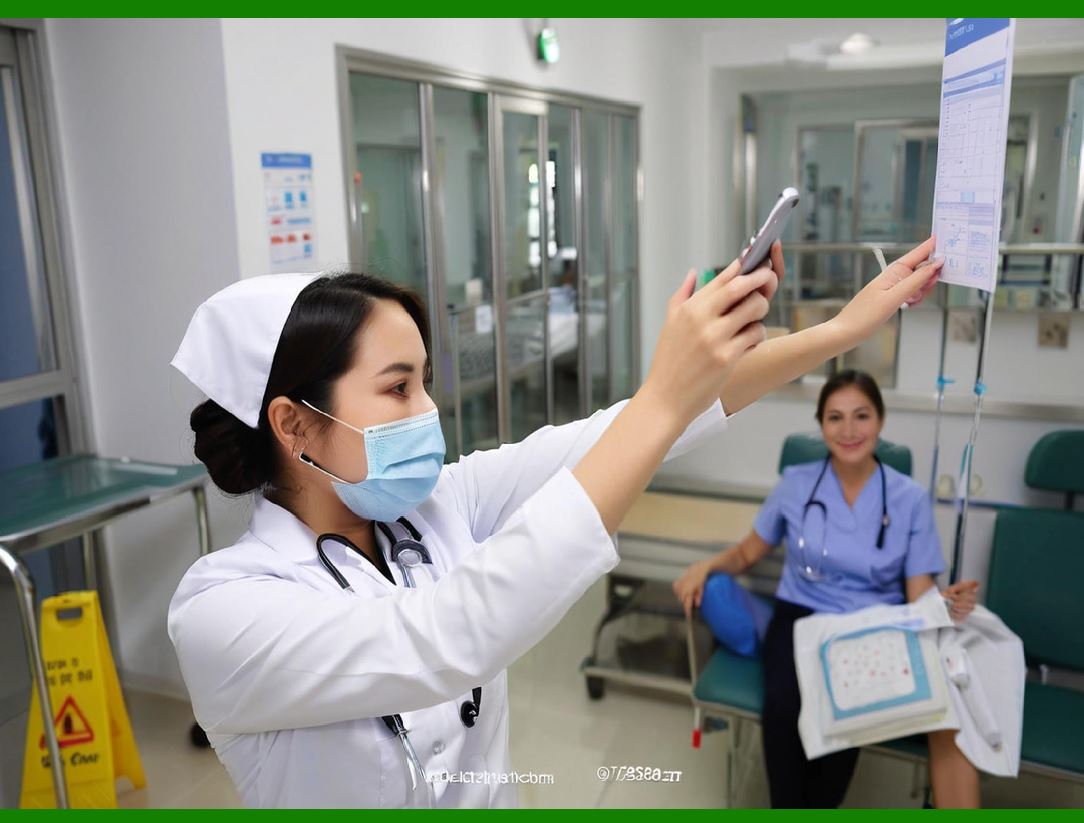
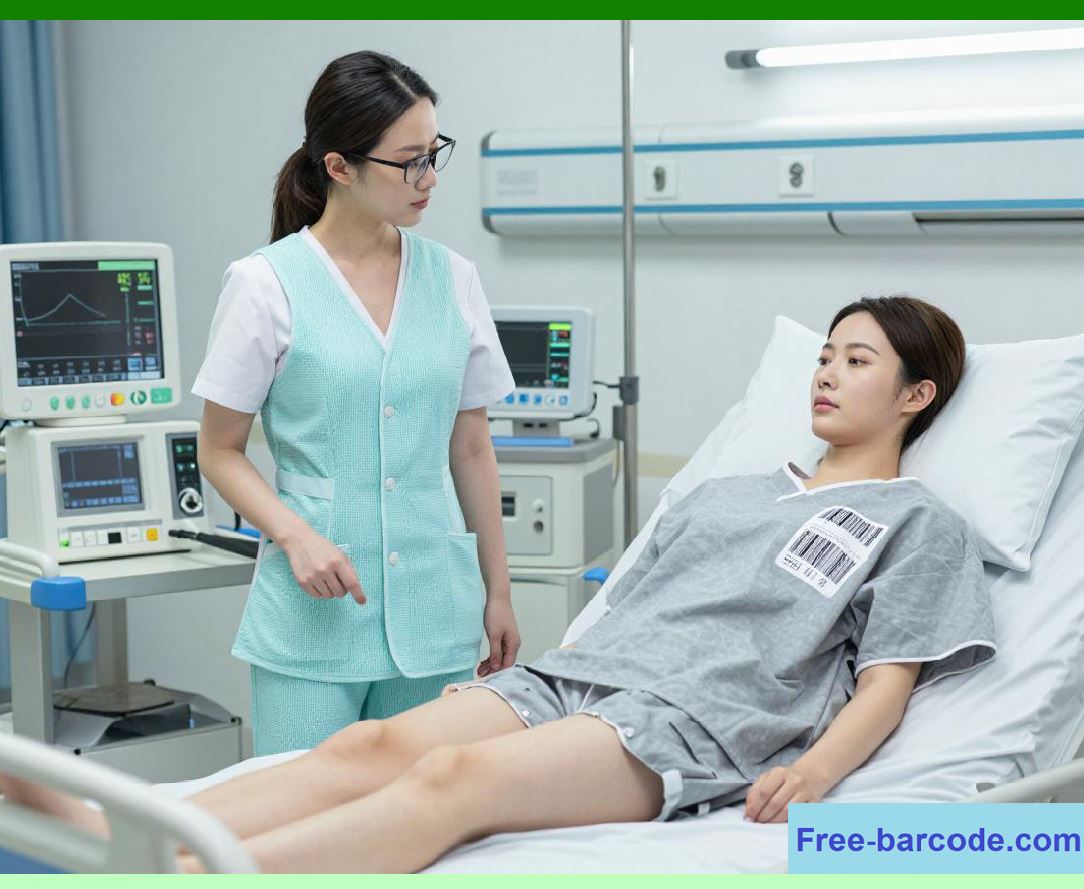
The most critical application is the patient wristband. Upon admission, every patient receives a printed barcode (or a 2D QR code) that encodes their unique Medical Record Number (MRN). Before any procedure---whether drawing blood, administering a drug, or performing surgery---nurses and doctors scan the wristband. The HIS instantly pulls up the patient's profile, verifies their identity against the planned order, and displays a confirmation screen. This 'five-rights' check (right patient, right drug, right dose, right route, right time) has been proven to reduce medication administration errors by over 50% in peer-reviewed studies. |
|
Medication Administration - The Closed-Loop Safety Net |
In the pharmacy, every single dose of medication---from a pill blister pack to an IV bag---is labeled with a unique barcode at the point of dispensing. When the nurse arrives at the bedside, they perform a 'triple scan': the patient's wristband, their own staff ID badge, and the medication barcode. The HIS cross-references all three in milliseconds. If the drug is wrong, expired, or prescribed for another patient, the screen flashes a red alert and blocks administration. This closed-loop system virtually eliminates 'wrong patient' or 'wrong drug' incidents. |
Specimen Tracking - From Vein to Lab Report |
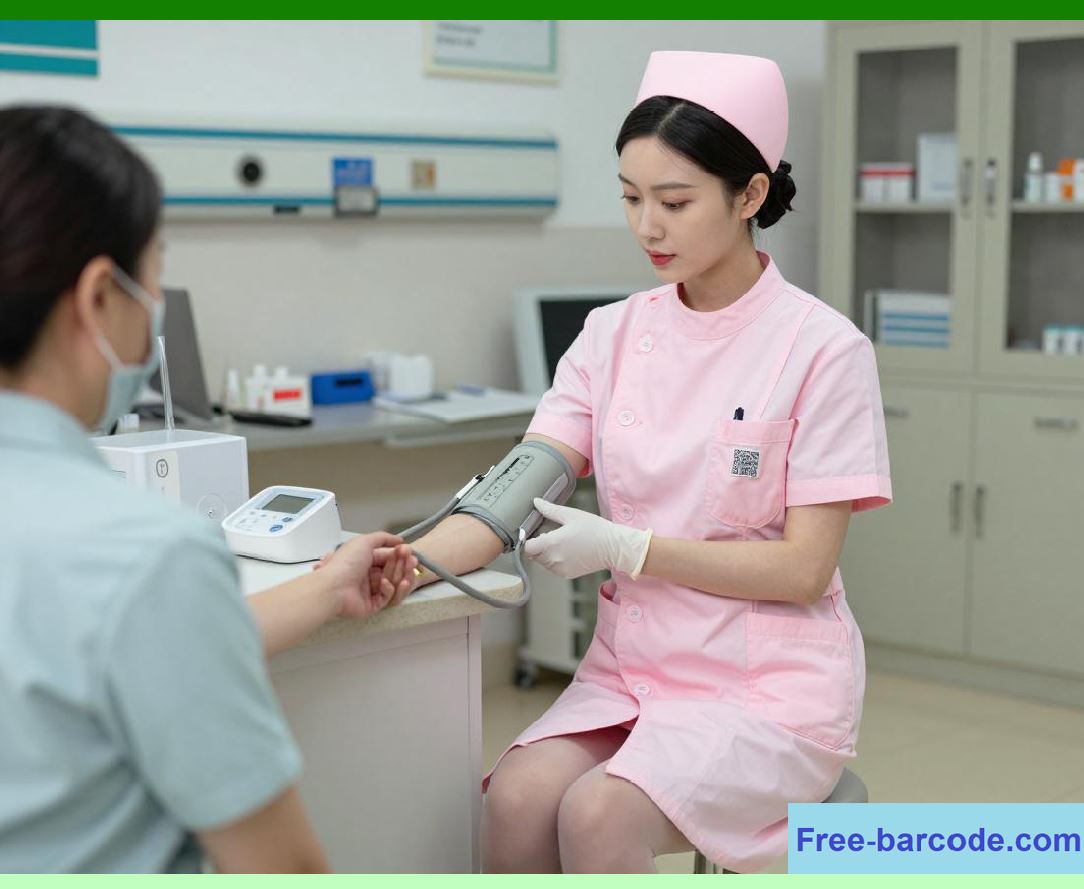
Blood tubes, urine cups, and tissue biopsy jars all receive barcode labels at the collection point---often printed bedside immediately after the phlebotomist scans the patient's wristband. As the specimen travels through pneumatic tubes or courier hands, it is scanned at every checkpoint: arrival at the lab, loading onto the analyzer, and final result validation. If a sample gets misplaced, the HIS logs its last known location, allowing staff to trace it within minutes instead of hours. Moreover, the system ensures that lab results are automatically routed back to the correct patient's EHR without manual data entry---eliminating transcription errors. |
|
Blood Transfusion - A Matter of Life and Death |
Blood banks are among the most barcode-dependent areas. Each unit of donated blood receives a unique donation number barcode, tied to its blood type, expiration date, and screening results. Before transfusion, the clinician scans the patient's wristband and the blood bag's barcode. The HIS performs an instantaneous compatibility check: Does the blood type matchHas the unit expiredIs there any cross-match reaction notedOnly after all green lights does the system release the electronic 'go-ahead' for the transfusion to begin. |
Surgical Instrument and Implant Tracking |
In the operating room, surgical trays, laparoscopic tools, and high-value implants (like artificial joints or cardiac stents) are tagged with barcodes or, increasingly, RFID-equivalent labels. Before and after each surgery, the circulating nurse scans every instrument and implant. This serves two purposes: first, it ensures that no foreign object is left inside the patient (the infamous 'retained sponge' error); second, it automatically updates the inventory system, triggering reorders for consumed implants and alerting sterile processing when a tray needs immediate re-sterilization. |
|
Equipment Maintenance and Location Tracking |
Beyond patient care, barcodes are affixed to mobile hospital equipment---infusion pumps, ventilators, bedside monitors, and wheelchairs. When a biomedical engineer performs routine calibration or repair, they scan the equipment barcode, and the HIS logs the maintenance history and next due date. Additionally, staff can scan a barcode on a wall-mounted 'dock' to check a device in/out of a specific ward, allowing the system to display real-time equipment availability---preventing frantic searches during emergencies. |
Supply Chain and Expiry Management |
In hospital storerooms, every box of gauze, catheter, or suture material bears a barcode. Warehouse staff use handheld scanners during receiving and dispensing. The HIS tracks lot numbers and expiration dates automatically. When an item approaches its expiry date, the system sends an alert to the inventory manager, prioritizing its use or arranging returns. This reduces medical waste significantly---a financial and environmental benefit. |
|
Integration with Mobile Devices and Smart Glasses |
Today's barcode integration goes beyond dedicated handheld scanners. Many hospitals equip nurses with ruggedized smartphones or tablets that have built-in cameras---the same camera scans barcodes via software decoding algorithms. In cutting-edge settings, some clinicians wear augmented-reality (AR) smart glasses that scan barcodes via head gesture; the HIS then projects the patient's vital signs or medication history directly onto the lens, allowing hands-free verification during sterile procedures. |
The Challenge - Barcode Quality and Scanning Conditions |
Despite its simplicity, barcode technology faces real-world obstacles: smudged wristbands, wrinkled labels, poor lighting, or labels peeled off by sweat. To mitigate this, modern HIS employs 2D barcodes (such as Data Matrix or QR codes) that include error-correction algorithms---they can still be read even if up to 30% of the symbol is damaged. Moreover, redundant backup processes (manual entry of the MRN as a fallback) ensure that care never halts due to a scanning failure. |

|
Data Analytics from Barcode Scans |
Beyond operational safety, every barcode scan generates a timestamp and a location stamp. Aggregated over thousands of daily scans, the HIS can produce heatmaps of workflow bottlenecks---e.g., which ward has the longest delay between medication dispensing and administration, or which lab consistently receives specimens after the cut-off time. Administrators use these analytics to redesign processes, reduce turnaround times, and improve patient throughput. |
The Psychological Benefit - Confidence at the Bedside |
Perhaps the most underappreciated value is psychological. When a nurse performs a triple-scan and sees the green checkmark, they experience a moment of confirmation bias in the right direction---'I am doing the correct thing for this exact person.' This small but consistent reassurance reduces cognitive load, allowing the clinician to focus their mental energy on clinical judgment rather than clerical worry. In high-stress environments like the ER or ICU, that confidence is priceless. |
|
Looking Ahead - Beyond Barcodes to RFID and Biometrics |
While barcodes are cheap and universally standardized, the future points toward passive RFID (radio-frequency identification) tags that do not require line-of-sight scanning---a whole tray of instruments can be read in one second as it passes through a doorway. Similarly, biometric identification (palm-vein or iris scanning) may eventually replace wristband barcodes for patient ID. However, for the foreseeable decade, the humble barcode remains the 'golden bridge' between the physical patient and the digital HIS---low-cost, highly reliable, and universally adopted. In the symphony of hospital operations, the barcode is the quiet metronome that keeps every beat in perfect time. |
 cs@easiersoft.com