Admission, Discharge, and Transfer (ADT) - The Gateway to Care: How U.S. Hospitals Track Patients from Arrival to Departure |
Short Executive Summary |
This chapter explores the Admission, Discharge, and Transfer (ADT) module---the foundational administrative engine of every Hospital Information System. ADT is the first and last point of digital contact for every patient, managing their physical location, demographic data, insurance verification, and bed assignment throughout their hospital journey. Through detailed U.S. case studies---from a bustling urban Level 1 trauma center to a suburban community hospital and a rural critical-access facility---we illustrate how ADT drives patient flow, bed management, revenue cycle integrity, and regulatory compliance. The chapter covers registration workflows, bed tracking, transfer coordination, discharge planning, and the critical handoff of information across care settings. It concludes that ADT is far more than a clerical tool; it is the operational nervous system that ensures the right patient is in the right bed at the right time, with the right information---a prerequisite for clinical excellence and financial sustainability in American healthcare. |

|
Admission, Discharge, and Transfer (ADT) - The Gateway to Care |
A Detailed Popular-Science Exploration |
1. The Front Door of the Hospital: Why ADT Matters |
When a patient walks---or is wheeled---into a hospital, the very first interaction is not with a doctor or a nurse. It is with the registration clerk, who asks for a name, date of birth, insurance card, and home address. This seemingly mundane transaction is the entry point into the Hospital Information System (HIS), and it is governed by the ADT module---short for Admission, Discharge, and Transfer. |
ADT is the administrative backbone of every U.S. hospital. It tracks the patient's journey from the moment they arrive until the moment they leave, and every bed move in between. It manages not only the patient's location but also their legal identity, financial responsibility, and clinical context. Without ADT, there would be no way to know who is in which bed, which procedures have been authorized, or who to bill for the care provided. |
In the paper era, ADT functions were handled by handwritten logbooks, index cards, and pneumatic tube messages. A patient's room assignment was written on a whiteboard, and transfers were communicated by telephone---often with errors. Today, ADT is a sophisticated, real-time digital system that integrates with every other module of the HIS: clinical documentation, laboratory, pharmacy, radiology, billing, and even housekeeping. |
This chapter will take you inside the ADT module of a modern American hospital. We will follow patients through admissions, transfers, and discharges, exploring the workflows, the regulatory requirements, the financial implications, and the human stories behind the data. We will see how ADT is not just about administration---it is about safety, efficiency, and the patient experience. |

|
2. The Anatomy of an Admission: A Step-by-Step Journey |
To understand ADT, let us walk through a typical inpatient admission at a U.S. community hospital---say, St. Mary's Medical Center, a 350-bed facility in the Midwest. |
Step 1 - Pre-registration (Patient Access Center) |
Many U.S. hospitals now have centralized patient access centers that handle pre-registration by phone or online. For a scheduled admission (e.g., an elective hip replacement), the patient receives a call a few days before arrival. A registration specialist collects demographic information, verifies insurance eligibility, and estimates the patient's out-of-pocket cost. This information is entered into the ADT system, creating a 'pre-admit' record with a status of 'scheduled.' The record has no bed assignment yet, but it reserves the patient's MRN and creates a placeholder encounter. |
In the U.S., pre-registration has become increasingly important because of the shift toward high-deductible health plans. Patients are often responsible for thousands of dollars before insurance kicks in. The pre-registration call provides a 'financial clearance' step, ensuring that the patient understands their financial obligation---and that the hospital can collect an upfront deposit if required. |
Step 2 - Arrival and Check-in |
On the day of admission, the patient arrives at the hospital's main entrance. They are directed to the admissions desk. The registration clerk asks for the patient's name and date of birth, which the clerk types into the ADT module. The system queries the Master Patient Index (MPI) to find the patient's existing MRN, or if it is a first-time visitor, it creates a new MRN. |
The clerk then verifies the pre-registered data, updates any changes (e.g., a new home address or a different insurance card), and scans the insurance card into the system (stored as an image in a document management module linked to the ADT record). The patient signs consent forms electronically on a signature pad---these documents are not paper; they are PDFs generated from templates and stored in the HIS. |
The ADT module now changes the encounter status from 'scheduled' to 'arrived' or 'in department' (emergency). A unique encounter number is generated for this specific hospitalization, distinct from the patient's MRN. The MRN stays with the patient for life; the encounter number is specific to this visit. |
Step 3 - Bed Assignment and Room Selection |
Simultaneously, the hospital's bed management system---often integrated with ADT---receives a notification that an inpatient admission is pending. The bed management team (often a nurse coordinator) reviews the patient's clinical needs: Does the patient require telemetry monitoringIsolation for an infectious conditionBariatric equipmentA private room for infection prevention |
The ADT module displays a real-time bed board---a digital map of every bed in the hospital, color-coded by occupancy, cleaning status, and patient acuity. A bed that is 'clean and ready' is highlighted in green. The coordinator selects an appropriate bed and assigns it to the patient. The ADT system updates the bed status to 'occupied' and records the assignment. |
In many U.S. hospitals, bed assignment is no longer a manual guess. Predictive algorithms, fed by historical data from the ADT module, forecast bed availability---e.g., which patients are likely to be discharged today, how long it will take to clean their rooms, and how many new admissions are expected from the ER. This 'bed demand' forecasting has reduced hallway boarding (patients waiting in the ER for an inpatient bed) by 20% to 30% in some systems. |
Step 4 - Clinical Handoff and Nursing Assignment |
Once the bed is assigned, the ADT system notifies the nursing unit. The charge nurse receives an alert on their screen: 'New admission: John Doe, 72-year-old male, hip replacement, assigned to Bed 412.' The charge nurse assigns a primary nurse to the patient. The ADT record now includes the nurse's identifier and the unit location. |
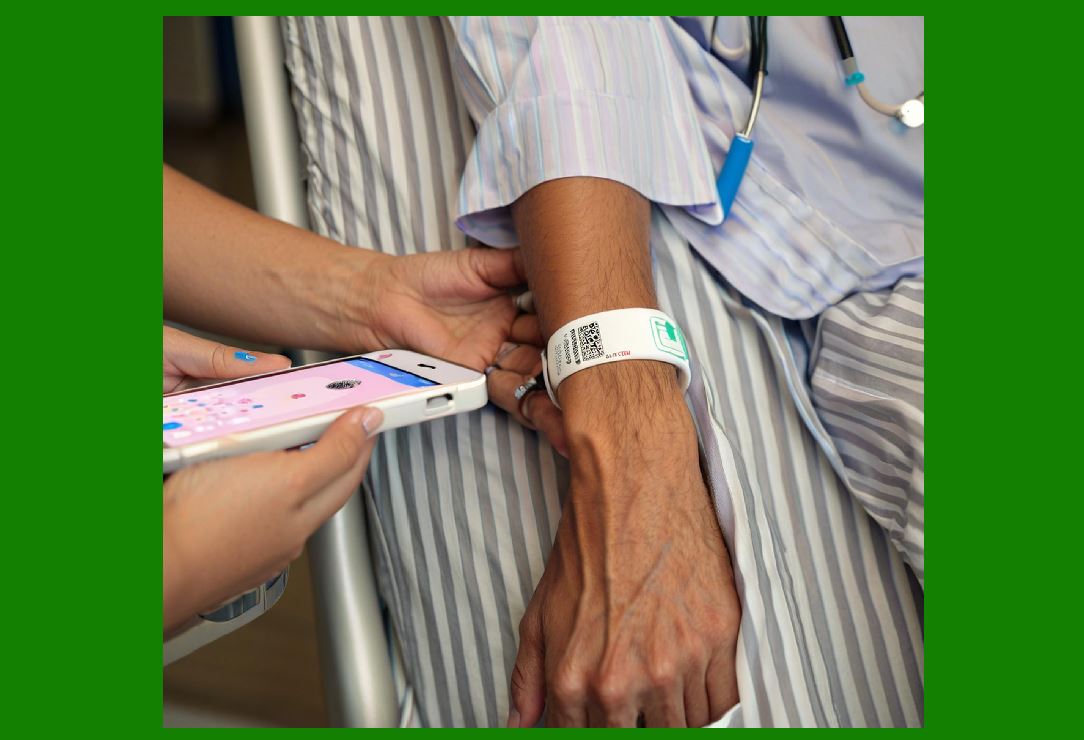
The patient is transported to the unit (by a porter or a family member). Upon arrival, the unit secretary or nurse confirms the bed assignment by scanning the patient's wristband barcode. The ADT module records the exact time the patient 'arrived to unit'---this is a critical timestamp for regulatory reporting (e.g., 'admission to inpatient bed time' for CMS quality measures). |
Step 5 - Clinical Data Integration |
Now that the ADT record is active, it serves as the anchor for all clinical data. The nurse begins the admission assessment, entering vital signs, allergies, home medications, and medical history into the clinical documentation module---all linked to the encounter number. The physician writes admission orders (via CPOE), which are also linked to the encounter. The lab system knows which patient is on which unit, because the ADT record provides the location; labels printed for specimen collection include the patient's name, MRN, and location. |
At this point, the admission is complete. The entire process---from check-in to bed assignment to nurse assignment---typically takes 15 to 45 minutes for a scheduled admission. For an emergency admission, it can happen in under 5 minutes, with the ADT record being created concurrently with clinical stabilization. |

|
3. The Emergency Department (ED) Track: A Fast-Paced Variation |
The emergency department is a different beast. In a busy U.S. urban ED, patients arrive unpredictably---by ambulance, private car, or on foot. The ADT module in the ED is optimized for speed. |
When a patient arrives by ambulance, paramedics often transmit a 'pre-hospital notification' via electronic data exchange (e.g., using a system like EMS ePCR). The receiving hospital's ADT module creates a 'pending' encounter with a status of 'pre-arrival' even before the patient arrives. This includes the patient's name, date of birth, chief complaint, and vital signs from the field. The ED is alerted to prepare. |
Upon arrival at the ED triage desk, a nurse assesses the patient's acuity using a standardized scale like the Emergency Severity Index (ESI). The triage nurse enters this information into a special 'ED tracking board'---a visual display within the ADT module that shows every patient in the ED, their location (bed number or hallway), their chief complaint, their triage acuity, and how long they have been waiting. |
The ED tracking board is a lifesaver in chaotic environments. It allows the charge nurse to see at a glance which patients are most critical, which have been waiting longest, and which beds are about to become available as patients are admitted or discharged. The board is updated in real time: when a patient is moved from the waiting room to a treatment room, the ADT record is updated with the new location. When a lab result comes back, it appears on the board. When a physician signs a discharge order, the board changes the patient's status to 'discharge pending.' |
One of the most stressful challenges in U.S. EDs is 'boarding'---inpatients who are admitted but have no available bed in the hospital. They remain in the ED, occupying beds that are needed for new emergency patients. The ADT module tracks this: a patient with an admission order but no assigned bed is listed as 'admit pending' on the ED board, with a timer showing how long they have been boarding. This data is used to escalate bed management efforts and, in some states, is reported to regulators as a metric of hospital efficiency. |

|
4. Transfer: The Art of Moving the Right Patient to the Right Place |
Transfers occur for many reasons in a hospital: |
- A patient in the medical-surgical unit develops respiratory failure and needs ICU-level care. |
- A patient in the ICU improves and is transferred to a step-down unit. |
- A patient needs a specialized procedure (e.g., cardiac catheterization) available only in a different part of the hospital. |
- A patient requires transfer to another hospital---perhaps a tertiary center for trauma, burn care, or organ transplant. |
The ADT module handles all these moves. A transfer is not just a location change; it is a clinical and administrative event that affects nursing assignments, pharmacy delivery, food services, and billing. |
Intra-hospital transfer (e.g., ward to ICU): |
When a physician decides that a patient needs ICU-level care, they enter a transfer order in the CPOE system. This order triggers a notification to the bed management team and the ICU charge nurse. The ICU team evaluates the patient's acuity and accepts the transfer. The ADT module changes the patient's location from 'Medical-Surgical Unit, Bed 312' to 'ICU, Bed 7.' The system automatically updates the patient's nursing assignment (ICU nurses now appear as responsible) and alerts the pharmacy that medications should be delivered to the new location. The previous unit's ADT record is updated to show the bed as 'vacated' and triggers a cleaning request to housekeeping. |
Critical nuance: During a transfer, the patient's clinical data must remain intact. The ADT module does not create a new encounter; it simply changes the 'location' and 'nursing unit' fields of the existing encounter. All lab results, orders, and notes from the previous unit remain visible and are now accessible to the new care team. This continuity is essential for patient safety---imagine if a patient's allergy list was lost during a transfer. |
Inter-hospital transfer (e.g., transfer to a tertiary care center): |
U.S. hospitals frequently transfer patients to other facilities for specialized care not available locally. For example, a community hospital in rural Nebraska might transfer a patient with a complex brain bleed to a university medical center in Omaha. |
The ADT module handles inter-hospital transfers differently. The sending hospital enters a 'transfer out' order, which changes the encounter status to 'transfer pending' and documents the receiving facility's name and contact information. The patient's clinical summary---including diagnoses, medications, lab results, and imaging reports---is packaged into a Continuity of Care Document (CCD) and transmitted to the receiving hospital via secure health information exchange (HIE) or direct messaging. The sending hospital's ADT module then closes the encounter with a status of 'discharged, transferred to another facility.' The receiving hospital's ADT module creates a new encounter (or updates an existing one) with the status of 'transferred in from external facility,' and its clinical team receives the patient's data electronically. |
The ADT module also tracks transfer acceptance and ambulance transport. If a receiving hospital accepts the patient, a transfer coordinator confirms the acceptance in the system, and an ambulance or air medical transport is dispatched. The ADT record can include transport details---the ambulance unit, the estimated time of arrival, and the transport mode (ground vs. helicopter)---which are visible to both hospitals in real time. |

|
5. Discharge: The End of One Chapter, the Beginning of Another |
Discharge is the final phase of a hospital encounter, and it is one of the most complex ADT workflows. A discharge is not simply 'goodbye'---it is a carefully orchestrated process that involves clinical, administrative, and social components. |
Step 1 - Discharge order: |
The attending physician enters a discharge order in the CPOE system. This order includes the discharge date and time, the discharge disposition (e.g., 'home,' 'home with home health services,' 'skilled nursing facility,' 'rehabilitation hospital,' or 'hospice'), and the final diagnoses. The order is signed electronically. The ADT module changes the encounter status to 'discharge pending.' |
Step 2 - Discharge planning and case management: |
In U.S. hospitals, discharge planning is often led by a case manager or social worker. They review the patient's post-discharge needs: Does the patient need physical therapy at homeCan they manage their medications independentlyIs there a family caregiver availableIf the patient is going to a skilled nursing facility (SNF), the case manager arranges the transfer and ensures the SNF has the necessary clinical information. |
The ADT module integrates with the case management system. When a discharge order is entered, the ADT notifies the case manager's dashboard. The case manager documents the planned discharge destination, the estimated discharge date, and any barriers to discharge (e.g., awaiting authorization from insurance). This data is used to track 'discharge delay' metrics---a key operational metric in U.S. hospitals, since delayed discharges reduce bed availability and increase costs. |
Step 3 - Medication reconciliation: |
Before discharge, a pharmacist or nurse performs medication reconciliation---comparing the patient's home medication list (from the ADT's historical records) with the hospital's inpatient medication orders and the discharge prescriptions. The ADT module displays a side-by-side comparison. The final discharge medication list is entered into the system and printed for the patient, as well as transmitted electronically to the patient's primary care physician and pharmacy. |
Step 4 - Patient education and discharge instructions: |
The nurse provides discharge instructions---what to do about wound care, how to take new medications, signs of complications to watch for, and follow-up appointments. These instructions are often generated automatically by the HIS, drawing from the discharge order and the patient's diagnosis. The patient or family member signs the discharge instructions (electronically or on paper), acknowledging they understand. |
Step 5 - Final billing and financial closure: |
The ADT module triggers the billing process. A coder reviews the chart, assigns the appropriate ICD-10 diagnoses and CPT procedure codes, and enters them into the ADT record. The billing system, fed by the ADT, generates a final claim and submits it to the insurance company (or Medicare/Medicaid). For U.S. hospitals, this step is critical: if the discharge disposition is not correctly documented (e.g., 'home' vs. 'skilled nursing facility'), the payment amount can differ by thousands of dollars. |
Step 6 - Physical departure and bed cleaning: |
The patient is discharged from the hospital---either walks out, is wheeled to a car, or is transported by ambulance to a SNF. The ADT module records the actual departure time (time of physical departure). The bed is marked 'vacated' and housekeeping receives a notification to clean and ready the bed for the next patient. The ADT system updates the bed board to 'dirty,' then 'cleaning in progress,' then 'clean and ready.' This entire cycle---from discharge order to bed ready---is tracked in minutes, enabling the hospital to maximize bed utilization. |
Step 7 - Post-discharge follow-up: |
Increasingly, U.S. hospitals use ADT data to trigger post-discharge follow-up calls. A nurse or care coordinator receives a list of discharged patients (from the ADT module) and calls them within 48 hours to ensure they are recovering well, have filled their prescriptions, and have kept their follow-up appointments. This has been shown to reduce 30-day readmission rates---a key quality metric for CMS, which penalizes hospitals with high readmission rates. |

|
6. ADT and the Revenue Cycle: The Financial Lifeline |
In the U.S. healthcare system, the ADT module is intimately connected to the revenue cycle---the process of billing and collecting payment for services. A single error in ADT can lead to claim denials, delayed payments, or lost revenue. |
Insurance verification: During registration, the ADT module interfaces with electronic eligibility verification systems (often via a clearinghouse). The system queries the patient's insurance company in real time: Is the patient coveredWhat is their deductibleWhat is their co-paymentWhat is the pre-authorization requirement for the planned admissionIf the pre-authorization is missing, the ADT module triggers an alert to the case management team, who must obtain it before the scheduled procedure. In the U.S., failure to obtain pre-authorization for certain admissions can result in the hospital being denied payment entirely---a $50,000 loss for a typical surgical admission. |
Patient identity and eligibility: The ADT record's demographic accuracy is paramount. A misspelled name or a transposed date of birth can cause insurance claims to be rejected. Many U.S. hospitals use automated address verification and identity validation services (e.g., using the patient's social security number or driver's license) to reduce such errors. |
Room and board charges: While a patient is admitted, the ADT module calculates 'room and board' charges based on the patient's location and the level of care. An ICU bed charges more per day than a medical-surgical bed. The ADT system tracks the exact time a patient is transferred from ICU to a lower-acuity unit, so the billing is accurate to the minute---important because U.S. payers often reimburse based on a per-diem rate that varies by level of care. |
Discharge disposition and payment: Under U.S. Medicare, a patient's discharge disposition significantly affects payment. For example, if a patient is discharged to a skilled nursing facility, Medicare pays the hospital a different amount (often less) than if the patient is discharged home with home health. If the ADT module incorrectly codes the discharge disposition, the hospital may receive a lower payment than it is owed. This has led to extensive training of discharge planners on how to enter disposition codes correctly. |
Charity care and bad debt: For patients who are uninsured or underinsured, the ADT module tracks financial assistance applications. U.S. hospitals are required under the Affordable Care Act (ACA) to provide charity care to eligible low-income patients. The ADT record includes fields for financial counseling notes and charity care approvals, which are essential for the hospital's tax-exempt status reporting. |

|
7. ADT and Regulatory Compliance: The Government's Watchful Eye |
The U.S. healthcare system is heavily regulated, and the ADT module is the primary tool for reporting to federal, state, and local authorities. |
CMS quality measures: The Centers for Medicare & Medicaid Services (CMS) require hospitals to report dozens of quality measures, many of which rely on ADT timestamps. For example: |
Emergency Department Throughput: Measures such as 'median time from ED arrival to ED departure for admitted patients' and 'median time from ED arrival to ED departure for discharged patients.' These require precise ADT timestamps for arrival, admission order, and departure. |
Discharge Timeliness: CMS tracks whether patients with certain conditions (e.g., heart failure, pneumonia) are discharged with appropriate follow-up appointments. The ADT module records the discharge date and the scheduled follow-up date. |
Hospital Readmissions Reduction Program: CMS identifies patients readmitted within 30 days of discharge. The ADT module, along with the patient's MRN, allows CMS to link the index admission (the first hospitalization) to the readmission encounter, even if the readmission occurs at a different hospital (provided that hospital submits data to CMS). |
State and local reporting: Many U.S. states require hospitals to report specific data elements within 24 hours of admission---such as the patient's age, gender, race, ethnicity, primary diagnosis, and payer. This is often mandated for all-payer claims databases, which state governments use for health policy analysis. The ADT module exports these data fields automatically, eliminating manual data entry. |
Emergency preparedness: In public health emergencies (e.g., a mass casualty event, a pandemic surge), U.S. hospitals are required to report bed capacity and availability to state and federal agencies (e.g., the HHS ASPR---Assistant Secretary for Preparedness and Response). The ADT module provides real-time counts of occupied beds, available beds, and ICU capacity. During the COVID-19 pandemic, many U.S. hospitals used their ADT systems to auto-report daily census to public health dashboards, enabling coordination of patient transfers across regions. |
The Joint Commission and accreditation: U.S. hospitals seeking accreditation from The Joint Commission (which is required for Medicare participation) must maintain accurate and timely medical records. The ADT module's audit trails---recording who admitted, transferred, or discharged a patient, and at what time---are essential for compliance with the 'record completion' standards. If a hospital cannot produce an audit trail for a patient's whereabouts, it risks accreditation deficiencies. |

|
8. The Bed Management Dashboard: A Command Center for Patient Flow |
In large U.S. hospitals, the ADT module feeds into a sophisticated bed management dashboard---sometimes called a 'command center' or 'patient flow center.' This is a large screen (or a series of screens) displayed prominently in a central office, showing a live, color-coded map of the entire hospital. |
The dashboard displays: |
- Each nursing unit (e.g., 3-West, 4-East, ICU, ED) with a count of total beds, occupied beds, and available beds. |
- Each patient's location, name (often truncated for privacy), attending physician, and expected discharge date (if known). |
- 'Boarders'---patients who have been admitted but are still in the ED waiting for an inpatient bed---with a timer indicating how long they have been waiting. |
- 'Discharge pending'---patients for whom a discharge order has been entered but who have not physically departed, with a timer showing the delay. |
- Housekeeping status for recently vacated beds---'dirty,' 'cleaning,' or 'clean and ready.' |
- Projected admissions from the ED, the OR (post-surgical admissions), and scheduled elective admissions for the next 24 hours. |
The dashboard is not just for observation; it is interactive. A bed coordinator can click on a bed, assign it to a pending admission, or send a notification to housekeeping to prioritize cleaning. The ADT module automatically updates the dashboard in near real-time. |
One of the most advanced U.S. examples is at Intermountain Healthcare in Utah, where a central command center uses ADT data combined with predictive analytics to manage patient flow across 15 hospitals. The system predicts, for each hospital, how many admissions will arrive in the next 6 hours, how many discharges will occur, and which units will be most stressed. It then recommends proactive moves---such as transferring stable patients from ICU to step-down earlier than usual, or opening a surge unit. Intermountain reported a 25% reduction in ED boarding time within the first year of implementing this predictive ADT dashboard. |

|
9. ADT and the Patient Experience: Beyond the Data |
While ADT is often seen as a back-end administrative tool, it has a profound impact on the patient's experience. A patient who feels like 'just a number' is more likely to have a negative perception of care. |
Timely communication: When a patient is admitted, the ADT system can automatically send a notification to the patient's chosen family members or primary care physician via a secure patient portal or text message. For example, a spouse might receive a text: 'Your husband John has been admitted to St. Mary's Medical Center, Bed 412, Unit 4-West. Directions and visitor hours are available at [link].' This simple automated message reduces anxiety and keeps families informed. |
Patient identification and dignity: The ADT module supports the printing of wristbands that include the patient's name, date of birth, and a barcode. Some U.S. hospitals now include a photo of the patient on the wristband---taken at registration---to further reduce misidentification errors. Patients report feeling more 'known' when staff call them by name and correctly pronounce it, which the ADT system stores with phonetic guides. |
Room preference and amenities: In some U.S. hospitals, the ADT module includes fields for patient preferences---private room, window, halal/kosher meals, etc. If a patient expresses a preference during pre-registration, the ADT can assign a room that meets those preferences, subject to availability. This is a small touch, but it contributes to patient satisfaction scores (e.g., HCAHPS---Hospital Consumer Assessment of Healthcare Providers and Systems), which affect Medicare reimbursement. |
Discharge communication: The ADT module generates a 'discharge summary' that is provided to the patient upon departure. This summary includes a list of diagnoses, medications, follow-up appointments, and signs of complications. U.S. hospitals have shifted from handing out a generic sheet to providing a personalized, patient-friendly summary, printed in large type, in the patient's preferred language. The ADT record stores language preference, enabling the system to pull translated templates. |

|
10. Interfacing with External Systems: ADT as the Hub |
The ADT module does not work in isolation. It is the central hub that feeds patient location and demographic data to virtually every other system in the hospital. |
Laboratory Information System (LIS): When a lab order is placed, the LIS uses the ADT data to identify the patient, the encounter, and the current location. The specimen label printed by the LIS includes the patient's name and MRN from the ADT record. |
Pharmacy System: Medication orders are linked to the encounter. When a medication is dispensed, the pharmacy system uses the ADT location to direct the medication to the correct nursing unit---not to a unit the patient has been transferred from. |
Radiology Information System (RIS): Imaging orders include the patient's location so that a portable X-ray can be sent to the correct room, or so that the patient can be transported to the radiology department. |
Operating Room (OR) Scheduling: The OR system retrieves the patient's ADT record for pre-operative verification---ensuring the patient has the right name, right procedure, and right site. |
Dietary/Nutrition: The nutrition system uses ADT data to deliver meals to the correct patient, considering dietary restrictions entered in the clinical module. |
Environmental Services (Housekeeping): When a bed is vacated, the ADT sends a request to the housekeeping system, which assigns a cleaner and tracks the cleaning status. |
Health Information Exchange (HIE): When a patient is admitted to a hospital that participates in a regional HIE, the ADT module sends an 'ADT notification' to the HIE. Other participating providers (e.g., the patient's primary care physician, a specialist) receive a secure message: 'Your patient was admitted to St. Mary's Hospital on [date].' This alerts them so they can follow up. |
In technical terms, these interfaces are often implemented using HL7 ADT messages. HL7 defines a standard set of message types for admission (ADT^A01), discharge (ADT^A03), transfer (ADT^A02), and other events (e.g., cancel, merge, update). The hospital's HIS sends these messages to external systems whenever the ADT record changes. This 'publish-subscribe' model ensures that every connected system stays synchronized. |
|
11. The ADT Audit Trail: The Law's Paper Trail |
The ADT module maintains a detailed audit trail for every action---who registered the patient, who assigned the bed, who changed the patient's location, who modified the discharge disposition, and at what time. This audit trail is not merely a good practice; it is a legal requirement. |
In U.S. malpractice litigation, plaintiffs' attorneys often request the ADT audit log to reconstruct the patient's whereabouts and the sequence of care. For example, if a patient claims they were neglected in the emergency department for hours, the ADT audit trail can show the exact time they arrived, when they were triaged, when they were moved to a treatment room, and when they were admitted to an inpatient bed---providing an objective timeline that can either support or refute the claim. |
Similarly, in Medicare fraud investigations, the ADT audit trail is used to verify that billed services were actually rendered to a patient who was physically present. If a billing claim shows a procedure performed on a specific date, but the ADT record shows the patient was discharged the day before, that is a red flag. |
The ADT audit trail also supports internal quality improvement. A hospital can query its ADT database to identify bottlenecks---e.g., 'What is the average time from discharge order to physical departure' and 'Which nursing unit has the longest delay in transferring patients to the ICU' These queries are used to redesign workflows and reduce patient wait times. |

|
12. ADT in the Rural and Critical Access Hospital Context |
Not all U.S. hospitals are large urban academic centers. There are over 1,300 Critical Access Hospitals (CAHs)---rural hospitals with fewer than 25 inpatient beds, often located in medically underserved areas. Their ADT workflows are smaller in scale but face unique challenges. |
In a CAH, there may be no dedicated bed management coordinator. The charge nurse or the hospital administrator may handle ADT functions manually, entering data into the HIS alongside their clinical duties. The ADT module must be intuitive and require minimal training. Vendors like MEDITECH and CPSI (Computer Programs and Systems, Inc.) offer simplified ADT interfaces tailored to CAHs. |
One of the biggest challenges for rural ADT is patient transfers to larger hospitals. Because CAHs lack specialized services (e.g., neurosurgery, cardiac catheterization, neonatal intensive care), they frequently transfer patients to tertiary centers. The ADT module must efficiently handle the transfer-out workflow, including generating a transfer summary and transmitting it electronically. In many rural U.S. states, health information exchanges (HIEs) have been specifically funded to facilitate these transfers---ensuring that the tertiary hospital receives the patient's ADT data and clinical summary before the ambulance arrives. |
The ADT module in a CAH also connects to the national telehealth network. For example, a patient admitted to a CAH with a suspected stroke might be evaluated by a neurologist via telemedicine. The ADT record is shared with the neurologist, who documents their recommendations in the HIS. If the patient is transferred, the ADT record travels with them. |

|
13. ADT and Population Health: The Big Picture |
Beyond individual patient management, aggregated ADT data is a powerful source of population health insights. U.S. hospitals and health systems use de-identified ADT data to understand community health trends. |
Social determinants of health (SDOH): The ADT module collects address and sometimes race/ethnicity data. When aggregated, this reveals geographic patterns---e.g., which ZIP codes have the highest hospitalization rates for asthma or diabetes. Hospitals can then partner with community organizations to offer targeted interventions, such as mobile asthma clinics or healthy food delivery. |
Heat maps of hospital utilization: By analyzing ADT data over time, hospitals can identify seasonal patterns---e.g., flu admissions peak in February, orthopedic surgeries increase in the summer, and psychiatric admissions rise during holidays. This informs staffing and resource allocation. |
All-payer claims analysis: In states with all-payer claims databases, ADT data from all hospitals is combined with insurance claims to analyze healthcare spending and outcomes. For example, a state might use ADT data to compare hospital readmission rates across institutions, identify high-performing hospitals, and disseminate best practices. |
Public health emergency response: During the COVID-19 pandemic, the U.S. Department of Health and Human Services required hospitals to submit daily ADT-derived data---including COVID-19 confirmed and suspected patient counts, ICU capacity, and ventilator availability---to a centralized federal database (HHS Protect). This was used to allocate supplies, staff, and vaccines to hotspots. The ADT module was the primary data source for these reports. |
|
14. The Challenges of ADT: Common Errors and Their Consequences |
Despite its sophistication, the ADT module is vulnerable to human and system errors. Some of the most common U.S. ADT issues include: |
Duplicate patient records (overlay): When the MPI fails, a patient may be assigned a new MRN for a subsequent visit, creating a duplicate record. The patient's medications, allergies, and history are split across two records---a dangerous situation. U.S. hospitals spend significant resources on 'patient identity integrity' teams to identify and merge duplicates. |
Incorrect room assignment: A bed coordinator might accidentally assign a patient to a room that is not yet cleaned, or to a room in the wrong unit. The ADT module's bed board should prevent this, but if the bed status is not updated by housekeeping, errors can occur. Patients may arrive at a room containing another patient---a privacy violation. |
Missed transfer notifications: When a patient is transferred, the ADT module sends notifications to all interfaced systems. But if an interface fails (e.g., the pharmacy interface is down), medications may continue to be delivered to the old unit. Clinical staff must remain vigilant. |
Delayed discharge documentation: If a physician fails to enter a discharge order in a timely manner, the ADT record may show the patient as still admitted even though they have left---leading to incorrect bed occupancy counts and billing errors. |
Incorrect discharge disposition: As noted earlier, a coding error in discharge disposition can affect Medicare reimbursement. In one U.S. case, a hospital mistakenly coded a patient's discharge as 'home' when the patient was actually sent to a skilled nursing facility, resulting in a $12,000 underpayment. The error was caught only during a routine internal audit. |
Unauthorized access: The ADT record contains PHI (protected health information). U.S. hospitals have disciplined employees who accessed ADT records for personal reasons---e.g., checking on a neighbor's admission or looking up a celebrity patient. The ADT audit trail makes such snooping detectable. |

|
15. ADT in the Era of Value-Based Care |
The U.S. healthcare system is transitioning from fee-for-service (paying for each procedure) to value-based care (paying for outcomes, such as low readmission rates). ADT data is central to this transition. |
Readmission penalties: Under the Hospital Readmissions Reduction Program (HRRP), Medicare reduces payments to hospitals with higher-than-expected readmission rates for certain conditions (heart failure, pneumonia, COPD, etc.). The ADT module tracks readmissions: if a patient discharged from hospital A is readmitted to hospital B within 30 days, and both hospitals share ADT data via an HIE, hospital A's readmission rate is affected. This has led to a strong focus on ADT-driven post-discharge care coordination. |
Episode-based payment models: In models like the Comprehensive Care for Joint Replacement (CJR) model, Medicare pays a bundled payment for an entire episode of care---from the surgery through 90 days post-discharge. The ADT module tracks all encounters within that episode, including readmissions, emergency visits, and post-acute care transfers. This data is used to calculate the total cost of the episode and to determine whether the hospital receives a bonus or a penalty. |
Population health management contracts: Some U.S. health systems sign 'capitated' contracts with insurers---receiving a fixed payment per patient per year to manage all their care. The ADT module helps these systems track where their patients are receiving care---which hospitals, which emergency departments, which specialists---so they can identify opportunities to reduce unnecessary utilization. |

|
16. The Future of ADT: AI, Predictive Analytics, and Ambient Intelligence |
The ADT module is not standing still. Several U.S. innovations are reshaping its future: |
Predictive bed management: As mentioned earlier, machine learning models are being trained on years of ADT data to predict bed demand. These models consider historical admissions by day of week, season, local epidemics, and even weather (e.g., snowy days lead to more fall-related admissions). The predictions help hospitals proactively discharge patients, open surge units, and reduce ED boarding. |
Natural language processing (NLP) for discharge planning: NLP algorithms analyze clinical notes to predict a patient's likely discharge date and post-discharge needs---for example, if the notes mention 'family unable to care for patient,' the system flags the need for skilled nursing facility placement. This allows case managers to intervene earlier. |
Real-time location systems (RTLS) integration: Some U.S. hospitals are integrating RTLS---using RFID or Bluetooth tags on patients, staff, and equipment---with the ADT module. Instead of manually entering a patient's location, the ADT system automatically detects when a patient moves and updates the location. This is especially useful in the ED and OR, where patient movement is rapid. |
Ambulance and pre-hospital ADT: ADT is expanding into the pre-hospital space. Some emergency medical services (EMS) systems now transmit patient data directly into the hospital's ADT module en route---so that by the time the ambulance arrives, the patient is already registered, and the ED tracking board shows them as 'en route.' |
Voice-activated ADT: Using speech recognition, clinicians can update a patient's ADT status by voice---e.g., 'Admit John Doe to Bed 412'---and the system processes the command. This reduces manual data entry and is especially useful in sterile environments like the OR. |

|
Detailed Concluding Summary |
This chapter has taken an in-depth tour of the Admission, Discharge, and Transfer (ADT) module---the administrative cornerstone of every Hospital Information System in the United States. We began by framing ADT as the first and last digital touchpoint for patients, the system that manages their identity, location, insurance, and clinical context from arrival to departure. |
We walked through a detailed step-by-step admission process: pre-registration via patient access centers, arrival check-in with real-time MPI verification, bed assignment using a digital bed board, and nursing assignment. We then contrasted this with the fast-paced emergency department, where the ADT-powered ED tracking board manages triage acuity, waiting times, and boarding of admitted patients. We explored intra-hospital and inter-hospital transfers, emphasizing the critical continuity of data---the same encounter travels with the patient, preventing loss of allergy lists or medication orders. |
Discharge was examined as a complex orchestration of clinical orders, case management, medication reconciliation, patient education, billing, and bed cleaning---each step generating ADT timestamps that feed into quality reporting and financial reconciliation. We showed how the ADT module is the financial lifeline of the hospital, interfacing with eligibility verification systems, calculating room-and-board charges based on accurate level-of-care tracking, and ensuring correct coding of discharge disposition for Medicare reimbursement. |
We connected ADT to the regulatory landscape, describing how it supports CMS quality measures (ED throughput, readmission penalties), state all-payer reporting, and The Joint Commission accreditation requirements. We introduced the bed management dashboard as the command center for patient flow, with real-time color-coded visuals and predictive analytics used by leading U.S. health systems like Intermountain Healthcare to reduce ED boarding by over 25%. |
We highlighted the patient experience impact---automated family notifications, preference-driven room assignments, and personalized discharge summaries that improve HCAHPS satisfaction scores. We then explored how ADT serves as the central integration hub, feeding location and demographic data to laboratory, pharmacy, radiology, operating room scheduling, dietary, housekeeping, and health information exchanges---all via standardized HL7 ADT messages. |
The audit trail was presented as a legal and quality-improvement tool, documenting every change for litigation defense, fraud investigations, and workflow bottleneck analysis. We contrasted the large urban hospital ADT environment with the rural Critical Access Hospital, where simplified interfaces and seamless transfer-out workflows are essential due to limited local services. |
We discussed the role of ADT in population health---aggregating de-identified data to reveal social determinants, geographic utilization patterns, and public health emergency capacity---including its central role in federal COVID-19 reporting. We catalogued common ADT errors (duplicate records, incorrect room assignments, missed transfer notifications, delayed discharges, and unauthorized access) and their consequences, emphasizing the need for robust identity integrity teams. |
We explored ADT's pivotal role in the value-based care era, where readmission penalties and bundled payment models depend on accurate tracking of post-discharge encounters and episode-based costs. Finally, we looked to the future: predictive AI for bed management, NLP for automated discharge planning, real-time location systems for automatic location updates, pre-hospital ADT integration with EMS, and voice-activated ADT commands. |

|
In conclusion, the ADT module is far more than a digital registration clipboard. It is the operational engine that coordinates patient flow, ensures financial integrity, supports regulatory compliance, and enables safe, efficient care transitions. In a U.S. hospital, the ADT system is the silent conductor of a complex symphony---managing the movement of patients, beds, and information so that clinicians can focus on what matters most: healing. Without a robust ADT, a hospital would descend into chaos---patients lost in hallways, tests ordered for wrong rooms, insurance claims denied, and readmissions unreported. With it, the hospital becomes a well-orchestrated system of care, where every patient is known, located, and tracked from the first hello to the final goodbye. |
 cs@easiersoft.com