Using Barcode in Supply Chain Management ¨C A Comprehensive Study |
1. Introduction to Supply Chain Management and Barcode Technology |
1.1 Supply Chain Management (SCM) is the coordinated management of activities involved in sourcing, procurement, production, and logistics to deliver goods and services from raw material suppliers to end consumers. It covers processes from demand planning and inventory management to distribution and final delivery. A supply chain consists of interconnected networks of organizations, including manufacturers, suppliers, warehouses, transporters, retailers, and customers. |
1.2 Efficient supply chain management is essential for reducing costs, increasing customer satisfaction, and improving overall competitiveness. Modern SCM increasingly relies on digital technologies to monitor, track, and optimize flows of goods, information, and finances. |
1.3 Barcode technology has become one of the foundational tools enabling SCM efficiency. A barcode is a machine-readable symbol that represents data in a visual format using patterns of lines, dots, or shapes. Scanners interpret these patterns and convert them into digital information for software systems. |
1.4 The integration of barcodes into supply chain management provides a cost-effective and reliable method to automate data capture, reduce manual errors, and improve visibility across the supply chain. Since the introduction of the Universal Product Code (UPC) in the 1970s, barcodes have evolved into multiple formats, such as EAN, Code128, PDF417, QR Code, and Data Matrix, each serving unique roles in supply chain operations. |
1.5 In this study, we will explore the role of barcodes in SCM in extreme detail, covering historical context, technical structure, encoding principles, operational integration, business benefits, case studies, industry applications, and future prospects. |
|
2. Historical Evolution of Barcode Technology in Supply Chains |
2.1 The concept of barcoding emerged in the early 1950s when Norman Joseph Woodland and Bernard Silver patented the first barcode system based on Morse code principles. However, it was not until the 1970s that commercial adoption began with the introduction of the UPC barcode in U.S. grocery retail. |
2.2 The first barcode scan occurred in 1974 on a pack of Wrigley¡¯s chewing gum, marking a historic milestone. This single event demonstrated how barcode technology could revolutionize product identification and checkout processes. |
2.3 During the 1980s, as globalization expanded and manufacturing networks became more complex, barcodes started being applied not only at retail checkout counters but also in inventory management, warehouse logistics, and transportation tracking. |
2.4 The 1990s brought the rise of EAN-13 as a standard barcode system for international trade, facilitating interoperability between countries. Around this time, more advanced symbologies such as Code128 and Interleaved 2 of 5 were widely adopted in warehousing and logistics, particularly for pallet and carton labeling. |
2.5 By the early 2000s, with the growth of e-commerce and just-in-time (JIT) supply chain models, barcodes became indispensable for achieving accuracy, speed, and cost-efficiency. Companies like Walmart, UPS, and Amazon standardized barcode use across their global operations. |
2.6 Today, barcodes are deeply integrated into supply chain management systems, often used alongside RFID, IoT sensors, and blockchain to create end-to-end traceability. Despite the rise of alternative technologies, barcodes remain dominant because they are inexpensive, reliable, and universally recognized. |

|
3. Fundamentals of Barcode Technology |
3.1 Definition: A barcode is a symbol consisting of a series of elements¡ªbars, spaces, dots, or patterns¡ªthat encode information readable by a scanning device. |
3.2 Types of Barcodes: |
Linear (1D) barcodes: Encode data horizontally using parallel lines (e.g., UPC, EAN, Code128). |
Stacked barcodes: Consist of multiple linear barcodes stacked vertically (e.g., PDF417, Code 16K). |
Matrix (2D) barcodes: Encode information both horizontally and vertically, allowing greater data density (e.g., QR Code, Data Matrix, Aztec). |
3.3 Encoding Principle: Each symbol is designed with specific rules for representing numbers, letters, or binary data. Scanners use laser beams or imaging technology to capture the reflected light from the barcode pattern, then convert it into electrical signals. Software decodes these signals into usable information. |
3.4 Printing Technology: Barcodes are typically printed using thermal transfer, direct thermal, inkjet, or laser printing methods. Label materials include paper, plastic, and synthetic substrates, depending on the supply chain environment. |
3.5 Standards and Governance: GS1, a global standards organization, regulates barcode symbologies for international trade. Standards such as GS1-128 and GS1 DataMatrix ensure compatibility across industries and borders. |
|
4. Importance of Barcodes in Supply Chain Management |
4.1 Supply chains are increasingly complex, spanning multiple geographies and stakeholders. The challenge lies in maintaining visibility and accuracy across all nodes. Manual processes often fail due to errors, delays, and high costs. |
4.2 Barcodes address these challenges by enabling: |
Automatic Identification: Products and logistics units are instantly recognized. |
Real-Time Tracking: Movements can be monitored at every stage. |
Error Reduction: Manual entry mistakes are minimized. |
Speed: Scanning barcodes accelerates inventory counting, shipping, and receiving. |
Cost Efficiency: Labels are inexpensive and require minimal maintenance. |
4.3 In essence, barcodes act as the digital language of supply chains, connecting physical goods to information systems. |

|
5. Integration of Barcodes into SCM Processes |
5.1 Procurement and Supplier Management: Suppliers affix barcodes to raw materials and components. This ensures that incoming shipments can be quickly verified against purchase orders. |
5.2 Inbound Logistics: At receiving docks, goods are scanned to record arrival times, condition, and contents. This updates warehouse management systems (WMS) and enterprise resource planning (ERP) systems in real time. |
5.3 Inventory Management: Every item, carton, or pallet is tracked with a unique barcode. Stock levels are automatically updated whenever items are moved, reducing stockouts and overstock situations. |
5.4 Production and Assembly: Barcodes on parts and subassemblies ensure correct sequencing in manufacturing. They also support traceability by linking finished products back to component batches. |
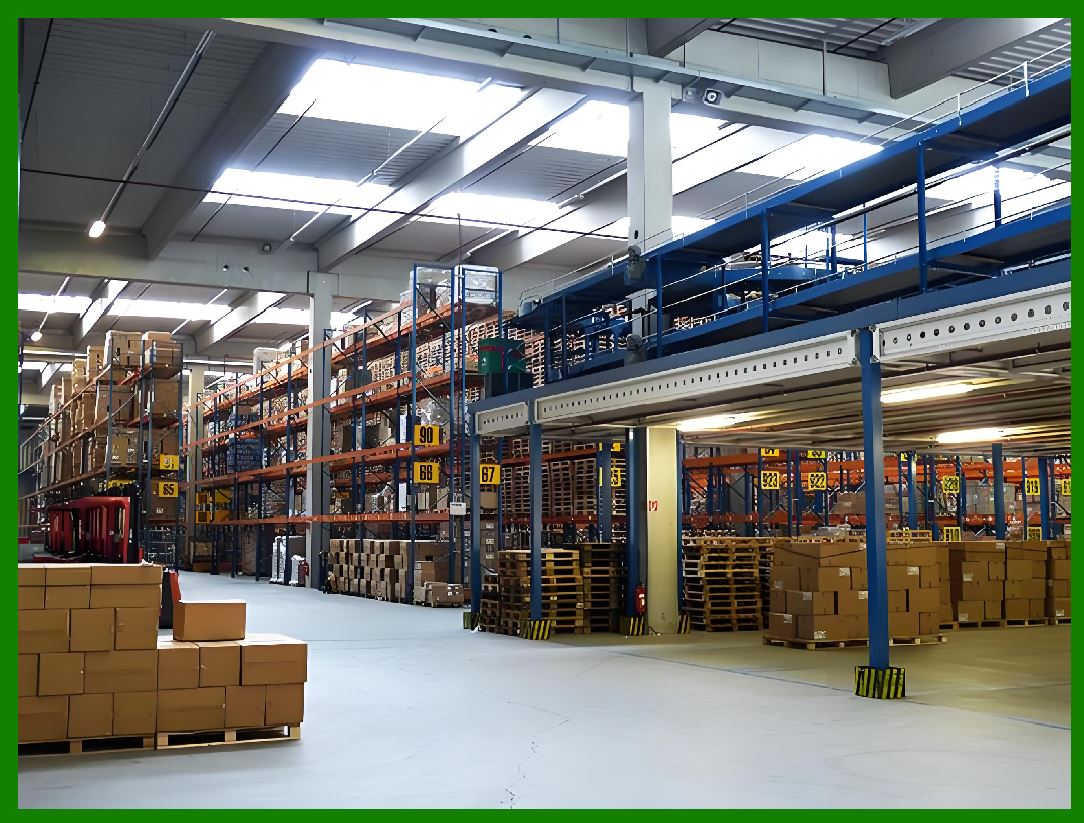
5.5 Warehousing and Storage: Locations (shelves, racks, bins) are labeled with barcodes. Workers use handheld scanners to guide picking, putaway, and cycle counting operations with accuracy. |
5.6 Outbound Logistics: When orders are picked, packed, and shipped, barcodes on shipping labels ensure accurate carrier assignment and customer delivery. Integration with transportation management systems (TMS) ensures end-to-end traceability. |
5.7 Retail and Point of Sale (POS): At retail stores, barcodes speed up checkout, link to pricing databases, and generate sales data that feeds back into demand forecasting systems. |

|
6. Barcode Symbologies in Supply Chain Management |
6.1 Introduction to Symbologies |
A symbology is the set of rules defining how characters, numbers, and data are encoded into the bars, spaces, or patterns of a barcode. In supply chain management, choosing the right symbology is critical because it determines how much data can be stored, how easily it can be scanned, and whether it complies with international standards. |
6.2 UPC (Universal Product Code) |
6.2.1 The UPC was the first widely adopted barcode standard, introduced in U.S. grocery retail in 1974. |
6.2.2 It encodes a 12-digit number that identifies a manufacturer and a product. |
6.2.3 In SCM, UPCs are primarily used at retail checkout, but they also facilitate upstream processes such as replenishment planning and sales analytics. |
6.2.4 Limitations: UPCs cannot encode alphanumeric data, nor can they represent large amounts of information beyond product identity. |
6.3 EAN (European Article Number) |
6.3.1 The EAN system extends UPC for international use, typically in a 13-digit format (EAN-13). |
6.3.2 Widely used in global supply chains, EAN ensures interoperability between countries and allows multinational retailers to manage inventory seamlessly. |
6.3.3 EAN-8 is used on smaller packages with limited printing space. |
6.4 Code 128 |
6.4.1 A high-density linear symbology that can encode all 128 ASCII characters. |
6.4.2 Extremely useful in supply chains for representing batch numbers, expiration dates, and other dynamic information. |
6.4.3 Adopted in GS1-128 labeling, which is the global standard for encoding application identifiers (AIs) such as GTIN, lot number, and best-before date. |
6.4.4 Used extensively for pallet and carton labels in distribution centers. |
6.5 Interleaved 2 of 5 (ITF-14) |
6.5.1 Designed to encode numeric-only data in a compact format. |
6.5.2 Often used on corrugated packaging for shipping cartons. |
6.5.3 ITF-14 is favored for outer packaging because it tolerates printing on low-quality materials better than Code128. |
6.6 PDF417 |
6.6.1 A stacked linear barcode capable of encoding large amounts of data (up to 1.1 KB). |
6.6.2 Used for shipping labels, transport documents, and customs declarations. |
6.6.3 Its error correction capability ensures readability even when labels are partially damaged. |
6.7 Data Matrix |
6.7.1 A two-dimensional (2D) symbology that encodes data in a square or rectangular pattern of black and white cells. |
6.7.2 Can store large amounts of data in small spaces, making it ideal for labeling tiny items such as electronic components, pharmaceuticals, and surgical instruments. |
6.7.3 Plays a key role in traceability regulations, such as pharmaceutical serialization mandated by the FDA and EU. |
6.8 QR Code (Quick Response Code) |
6.8.1 Originally developed for the automotive industry in Japan. |
6.8.2 Supports fast scanning and high data capacity, including numeric, alphanumeric, binary, and even Kanji. |
6.8.3 Increasingly used in SCM for linking physical goods to digital records, such as product manuals, tracking portals, or authentication systems. |
6.8.4 QR Codes are also common in B2C contexts such as delivery notifications and customer returns. |
6.9 GS1 DataBar |
6.9.1 A family of symbologies designed for encoding more information than UPC/EAN in a compact format. |
6.9.2 Widely used in fresh produce to encode variable-weight data like price-per-weight or expiration dates. |
6.9.3 Enables ¡°couponing¡± and promotional tracking in retail supply chains. |
6.10 Comparative Use in SCM |
UPC/EAN: best for retail POS. |
GS1-128: best for cartons, pallets, and logistics labeling. |
Data Matrix: best for small-item serialization. |
QR Code: best for consumer engagement and digital linkage. |
PDF417: best for transport and customs documents. |
|
7. Technical Aspects of Barcode Printing and Scanning in Logistics |
7.1 Printing Technologies for Barcodes |
7.1.1 Direct Thermal Printing: Uses heat-sensitive paper; low cost but limited lifespan (labels can fade). Common in shipping labels. |
7.1.2 Thermal Transfer Printing: Uses a ribbon to transfer ink onto the label surface; durable and suited for long-term storage. |
7.1.3 Laser Printing: High resolution, used for bulk label sheets in office environments. |
7.1.4 Inkjet Printing: Fast, flexible, but sometimes prone to smudging in industrial conditions. |
7.1.5 Digital Printing: Enables variable data printing, ideal for just-in-time labeling in supply chains. |
7.2 Label Materials |
7.2.1 Paper labels: cost-effective, widely used. |
7.2.2 Synthetic labels: resistant to moisture, chemicals, and abrasion, ideal for industrial logistics. |
7.2.3 Adhesives: Permanent, removable, or repositionable depending on supply chain needs. |
7.3 Barcode Scanners in SCM |
7.3.1 Laser Scanners: Emit a laser beam that moves across the barcode. Common in POS and handheld devices. |
7.3.2 CCD Scanners: Use an array of sensors to capture reflected light, suitable for close-range scanning. |
7.3.3 2D Imagers: Capture full images of barcodes, allowing reading of 2D symbologies like QR and Data Matrix. |
7.3.4 Fixed-Mount Scanners: Installed along conveyor belts to automatically scan passing cartons and pallets. |
7.3.5 Mobile Scanners: Integrated into handheld computers used by warehouse staff for picking and inventory management. |
7.4 Environmental Considerations |
7.4.1 Scanning reliability depends on label durability in harsh environments such as cold storage, outdoor logistics, or chemical exposure. |
7.4.2 Protective label coatings and high-contrast printing improve readability. |
7.4.3 Omni-directional scanning ensures efficiency by eliminating the need to align labels with scanners. |
7.5 Integration with IT Systems |
7.5.1 Scanners connect via USB, Bluetooth, Wi-Fi, or proprietary wireless systems to WMS and ERP platforms. |
7.5.2 Data captured by scanning is automatically fed into databases, enabling real-time visibility of goods across the supply chain. |
7.5.3 APIs and middleware facilitate communication between barcode systems and other supply chain technologies. |
|
8. Case Studies of Barcode Use in SCM |
8.1 Retail Industry ¨C Walmart |
8.1.1 Walmart pioneered the use of UPC and EDI (Electronic Data Interchange) to create one of the world¡¯s most efficient supply chains. |
8.1.2 Barcodes allow Walmart to track inventory in real time, reduce stockouts, and optimize replenishment. |
8.1.3 Suppliers are required to label shipments with GS1-compliant barcodes to integrate seamlessly into Walmart¡¯s distribution network. |
8.2 Courier and Logistics ¨C UPS and FedEx |
8.2.1 Both companies rely heavily on barcoded shipping labels to track millions of parcels daily. |
8.2.2 Packages are scanned at every stage¡ªpickup, sorting hubs, and delivery trucks¡ªensuring accurate real-time tracking for customers. |
8.2.3 Integration with mobile devices allows drivers to confirm deliveries instantly. |
8.3 Automotive Industry ¨C Toyota |
8.3.1 Toyota¡¯s Just-In-Time production system depends on barcoded Kanban cards. |
8.3.2 Every part and subassembly carries a barcode to ensure precise sequencing in production. |
8.3.3 Traceability allows Toyota to recall specific defective batches without halting entire production lines. |
8.4 Pharmaceutical Industry ¨C Pfizer and Novartis |
8.4.1 Regulatory requirements mandate serialization of drug packages to combat counterfeiting. |
8.4.2 Data Matrix barcodes encode GTIN, lot number, and expiration date for each package. |
8.4.3 Integration with global databases ensures traceability across borders. |
8.5 E-commerce ¨C Amazon |
8.5.1 Amazon¡¯s fulfillment centers rely on barcodes at every step¡ªreceiving, shelving, picking, packing, and shipping. |
8.5.2 Robots in warehouses scan location barcodes to navigate aisles and retrieve products. |
8.5.3 This barcode-driven system enables Amazon to fulfill millions of orders daily with high accuracy. |

|
9. Barcode Standards and GS1¡¯s Role in Supply Chain Management |
9.1 Introduction to Standardization |
9.1.1 For barcodes to function effectively across global supply chains, they must conform to standardized formats that ensure interoperability between manufacturers, distributors, retailers, logistics providers, and regulators. |
9.1.2 Without global standards, each company might adopt incompatible systems, leading to data silos, inefficiency, and errors. |
9.2 GS1 Organization |
9.2.1 GS1 is a global, not-for-profit standards organization responsible for maintaining the world¡¯s most widely used supply chain standards, including barcodes. |
9.2.2 Founded in 1974 as the Uniform Product Code Council, it has grown into a network of over 110 local member organizations. |
9.2.3 GS1¡¯s mission is to improve supply chain efficiency through globally accepted identifiers, data capture standards, and data exchange frameworks. |
9.3 GS1 Identifiers and Application in SCM |
9.3.1 GTIN (Global Trade Item Number): Identifies trade items at every packaging level (unit, case, pallet). |
9.3.2 GLN (Global Location Number): Identifies physical locations such as warehouses, stores, and factories. |
9.3.3 SSCC (Serial Shipping Container Code): Identifies individual logistics units like pallets or cartons. |
9.3.4 GRAI, GIAI, and GSRN: Used for asset identification, returnable items, and service relationships. |
9.4 GS1 Barcode Standards |
9.4.1 EAN/UPC Family: Still the backbone of retail checkout systems. |
9.4.2 GS1-128: Encodes GTIN and additional application identifiers such as lot number, weight, or expiration date. |
9.4.3 ITF-14: For outer case marking, particularly on corrugated cartons. |
9.4.4 GS1 DataBar: Enables encoding of more attributes in a small label space. |
9.4.5 GS1 DataMatrix: Widely used in healthcare for serialization and regulatory compliance. |
9.4.6 GS1 QR Code: Encodes web links and product information, bridging digital and physical supply chains. |
9.5 Role of Standards in Interoperability |
9.5.1 With GS1 standards, a carton labeled in China can be scanned and recognized in Europe or the U.S. without modification. |
9.5.2 Retailers can accept shipments from multiple suppliers without needing custom integration. |
9.5.3 Regulators can mandate compliance (e.g., EU Falsified Medicines Directive) knowing that global symbologies will be supported. |
9.6 Regulatory Compliance Enabled by GS1 |
9.6.1 Pharmaceutical Serialization: Each drug package carries a GS1 DataMatrix with GTIN, batch number, expiration, and serial number. |
9.6.2 Food Safety Traceability: GS1-128 and DataMatrix support ¡°farm-to-fork¡± traceability in line with FSMA (Food Safety Modernization Act). |
9.6.3 Customs and Trade: Shipping labels use SSCC to ensure customs authorities can track goods across borders. |
9.7 Case Example ¨C Fresh Produce Supply Chains |
9.7.1 A grower assigns a GTIN to each type of fruit. |
9.7.2 Packaging facilities label cartons with GS1-128 including harvest date and grower ID. |
9.7.3 Retailers scan cartons on receipt, linking them to sales data at checkout. |
9.7.4 In case of contamination, a recall can be limited to specific harvest lots. |
9.8 The Sunrise 2027 Plan |
9.8.1 GS1 has announced that by 2027, 2D barcodes (QR and DataMatrix) will be widely adopted at retail point-of-sale. |
9.8.2 This transition will allow barcodes to carry far more information than traditional UPC/EAN, enabling traceability, sustainability reporting, and consumer transparency. |
9.8.3 For supply chain managers, this marks a major evolution ¡ª requiring investment in new scanning infrastructure but unlocking far richer datasets. |

|
10. Challenges and Limitations of Barcode Use in SCM |
10.1 Dependence on Label Quality |
10.1.1 A poorly printed or damaged barcode can become unreadable. |
10.1.2 In logistics environments, labels may be exposed to dirt, moisture, abrasion, or extreme temperatures, reducing reliability. |
10.2 Line-of-Sight Requirement |
10.2.1 Unlike RFID, barcodes require direct line of sight to be scanned. |
10.2.2 Pallets wrapped in shrink film or boxes stacked deep in a warehouse may be difficult to scan quickly. |
10.3 Limited Data Capacity |
10.3.1 Linear barcodes (UPC/EAN) can only store product identifiers, not detailed attributes. |
10.3.2 Although 2D codes overcome this, not all stakeholders have upgraded scanning infrastructure. |
10.4 Scanning Speed in Bulk Operations |
10.4.1 In high-volume logistics hubs, scanning every item individually can create bottlenecks. |
10.4.2 Automated conveyor scanning mitigates this but requires significant investment. |
10.5 Counterfeit Risk |
10.5.1 Barcodes are easy to copy; counterfeiters can duplicate labels to disguise fake products. |
10.5.2 Anti-counterfeit measures require secure printing, serialization, and sometimes combination with RFID or blockchain. |
10.6 Integration Issues |
10.6.1 Companies with legacy IT systems may struggle to integrate barcode scanning into enterprise-wide workflows. |
10.6.2 Middleware solutions are needed to bridge scanners, WMS, and ERP platforms. |
10.7 Human Dependency |
10.7.1 Many barcode workflows rely on human workers manually scanning items. |
10.7.2 Errors can still occur if workers skip scans or mishandle devices. |

|
11. Comparative Analysis of Barcodes vs. RFID in SCM |
11.1 Overview of RFID |
11.1.1 Radio Frequency Identification (RFID) uses electromagnetic fields to identify objects equipped with RFID tags. |
11.1.2 Unlike barcodes, RFID does not require line of sight and can read multiple items simultaneously. |
11.2 Barcode Advantages |
11.2.1 Low cost of labels (fractions of a cent). |
11.2.2 Global acceptance and infrastructure already in place. |
11.2.3 Easy to print on-demand with minimal equipment. |
11.3 RFID Advantages |
11.3.1 Can read hundreds of tags in bulk without line of sight. |
11.3.2 Can store more data than linear barcodes. |
11.3.3 Enables automation such as gate readers and smart shelves. |
11.4 Barcode Limitations vs. RFID |
11.4.1 Manual scanning is slower compared to automated RFID gates. |
11.4.2 Less secure against counterfeiting. |
11.4.3 Lower resilience to environmental factors (though 2D codes improve this). |
11.5 Hybrid Use in SCM |
11.5.1 Many companies deploy both technologies: barcodes for low-cost items and RFID for high-value goods. |
11.5.2 Example: Apparel supply chains use barcodes for retail checkout but RFID for warehouse inventory counts. |
11.5.3 The combination ensures scalability, cost control, and operational efficiency. |
|
12. Future Trends in Barcode Use in Supply Chains |
12.1 2D Barcode Expansion |
12.1.1 With the GS1 Sunrise 2027 initiative, retailers will shift from 1D UPC/EAN to 2D QR and DataMatrix codes. |
12.1.2 This transition will make barcodes ¡°smarter,¡± capable of carrying sustainability data, product origin, and even recall instructions. |
12.2 Integration with IoT |
12.2.1 IoT devices such as smart shelves and connected scanners will automatically read barcodes and transmit data to cloud platforms. |
12.2.2 Predictive analytics will optimize inventory based on real-time barcode scans. |
12.3 Blockchain and Barcodes |
12.3.1 Barcodes can serve as entry points to blockchain-based supply chain records. |
12.3.2 Each scan can be logged immutably, ensuring transparency in industries like food and pharmaceuticals. |
12.4 Artificial Intelligence |
12.4.1 AI-driven image recognition may allow scanning of damaged or poorly printed barcodes. |
12.4.2 AI can analyze scanning data to detect anomalies, such as counterfeit shipments. |
12.5 Consumer Engagement |
12.5.1 Barcodes will increasingly bridge B2B and B2C supply chains. |
12.5.2 Customers scanning 2D codes can access product provenance, ethical sourcing information, or promotional offers. |
12.6 Sustainability Applications |
12.6.1 Barcodes will support circular economy models by linking items to recycling instructions and lifecycle data. |
12.6.2 Governments may require 2D barcodes for regulatory compliance in carbon reporting. |

|
13. Conclusion: The Long-Term Significance of Barcodes in Supply Chains |
13.1 Barcodes have transformed supply chain management from a manual, error-prone process into a digitally integrated system capable of real-time visibility. |
13.2 Despite challenges, barcodes remain the most cost-effective and universally accepted automatic identification technology. |
13.3 Their role is expanding from simple product identification to enabling traceability, compliance, sustainability, and consumer engagement. |
13.4 With the transition to 2D codes by 2027, supply chains will gain unprecedented access to granular product data, bridging the gap between physical goods and digital ecosystems. |
13.5 While RFID, IoT, and blockchain add layers of sophistication, barcodes will continue to serve as the foundation of global supply chain digitization, underpinning efficient trade for decades to come. |
|
Executive Summary: Using Barcodes in Supply Chain Management |
1. Introduction to Supply Chain Management (SCM) and Barcodes |
Supply Chain Management (SCM) refers to the processes involved in sourcing, production, distribution, and delivery of goods, from raw materials to final customers. Efficiency, visibility, and accuracy are key challenges SCM faces in modern global markets. |
Barcodes have become essential for automating data capture, reducing errors, and ensuring traceability throughout the supply chain. Barcodes, including 1D and 2D formats, are critical in streamlining operations across retail, warehousing, logistics, and manufacturing. |
2. Historical Evolution of Barcode Technology |
Barcodes were first developed in the 1950s, with commercial adoption beginning in 1974 in U.S. retail via the UPC system. Over the decades, barcode use expanded globally, particularly in logistics, manufacturing, and pharmaceuticals. |
GS1, founded in 1974, has been instrumental in standardizing barcode symbologies (like EAN, GS1-128, and QR codes) for international supply chain interoperability. |
3. Barcode Symbologies in SCM |
Barcodes are categorized into 1D (linear) and 2D formats, with each type serving specific needs in SCM: |
UPC and EAN: Widely used in retail for item identification. |
GS1-128: Used in logistics for encoding multiple attributes (GTIN, lot numbers, expiration dates). |
DataMatrix and QR Codes: Used for small item tracking, pharmaceutical serialization, and consumer engagement. |
PDF417: Common in transport documentation due to its ability to store larger data volumes. |
4. Technical Aspects of Barcode Printing and Scanning |
Printing: Different methods (e.g., thermal transfer, laser printing) are used depending on durability needs, from short-term labels to long-lasting packaging. |
Scanning: Barcode scanners include laser-based, CCD, and 2D imagers, each offering unique capabilities for capturing data in various environments. |
Environmental Considerations: Barcode reliability is influenced by the print quality and external factors (dust, moisture, abrasion). Omni-directional scanning is increasingly used for faster, more reliable operations. |
5. Integration of Barcodes in SCM Operations |
Procurement and Receiving: Barcodes streamline incoming inventory by linking shipments to purchase orders, enhancing visibility and accuracy in warehouses. |
Inventory Management: Barcodes provide real-time updates on stock levels, helping reduce stockouts and overstock situations, while ensuring efficient warehouse operations. |
Outbound Logistics and Retail: At the checkout, barcodes speed up transactions and ensure correct pricing. Automated sorting and shipping systems leverage barcodes for fast, accurate deliveries. |
Manufacturing: Barcodes support Just-In-Time and Lean Manufacturing by tracking component and product movements, ensuring the right materials are used at the right time. |
6. Barcode Standards and GS1¡¯s Role |
GS1 governs barcode standards and global trade item numbers (GTIN), location identifiers (GLN), and shipping container codes (SSCC). |
These standards enable global interoperability and regulatory compliance, particularly in industries like pharmaceuticals, food safety, and retail. |
By 2027, GS1 plans a universal shift to 2D barcodes, which will significantly improve data density and traceability in the supply chain. |
7. Challenges and Limitations of Barcode Use |
Quality Control: Damaged or poorly printed barcodes can lead to scanning errors. |
Line-of-Sight Limitations: Barcodes require direct visibility for scanning, unlike RFID, which works in bulk without direct contact. |
Limited Data Storage: Traditional 1D barcodes (like UPC) can only store minimal data, often requiring additional manual tracking for certain attributes (e.g., batch number, expiration date). |
Environmental Challenges: Barcodes can suffer from wear and tear in harsh conditions, such as outdoor logistics or cold storage. |
8. Comparative Analysis of Barcodes vs. RFID |
RFID offers advantages in bulk reading and non-line-of-sight scanning, but is more costly compared to barcode labels. |
Barcodes remain the preferred choice for low-cost, high-volume applications (e.g., retail checkout, pallet labeling), while RFID excels in tracking assets across large spaces and providing real-time visibility in warehouse environments. |
Many companies combine both technologies for hybrid use, benefiting from the strengths of each: barcodes for simplicity and RFID for more complex supply chain visibility. |
9. Future Trends in Barcode Use |
2D Barcodes: With the GS1 Sunrise 2027 plan, the shift toward 2D barcodes (QR, DataMatrix) will enable higher data capacity, supporting consumer engagement, product provenance, and regulatory compliance. |
IoT Integration: Barcodes will integrate with Internet of Things (IoT) systems for real-time, automated tracking, data sharing, and predictive analytics. |
Blockchain Integration: Combining barcodes with blockchain technology will provide immutable supply chain records, ensuring transparency and traceability from origin to delivery. |
Artificial Intelligence (AI): AI will enhance barcode scanning capabilities, helping detect and correct errors in real time, improve inventory management, and optimize supply chain workflows. |
10. Conclusion: Long-Term Significance of Barcodes in SCM |
Barcodes will remain indispensable in supply chains due to their low cost, ease of implementation, and universal acceptance. |
While new technologies like RFID, IoT, and blockchain are transforming SCM, barcodes will continue to play a central role, especially with the transition to 2D codes. |
The future of barcodes lies in greater data transparency, consumer interaction, and enhanced regulatory compliance, making them more critical to global trade than ever before. |

|
Final Thoughts |
The continued evolution of barcode technology is integral to the future of supply chain management. As businesses face increasing demand for real-time tracking, end-to-end traceability, and regulatory compliance, barcodes ¡ª alongside RFID and other emerging technologies ¡ª will continue to provide the backbone for these innovations. By the time the GS1 Sunrise 2027 plan is fully implemented, the role of barcodes in enabling a more connected and transparent global supply chain will be more profound than ever. |
 cs@easiersoft.com