The History of Cauzin Softstrip 2D Barcode |
1.Introduction to Cauzin Softstrip |
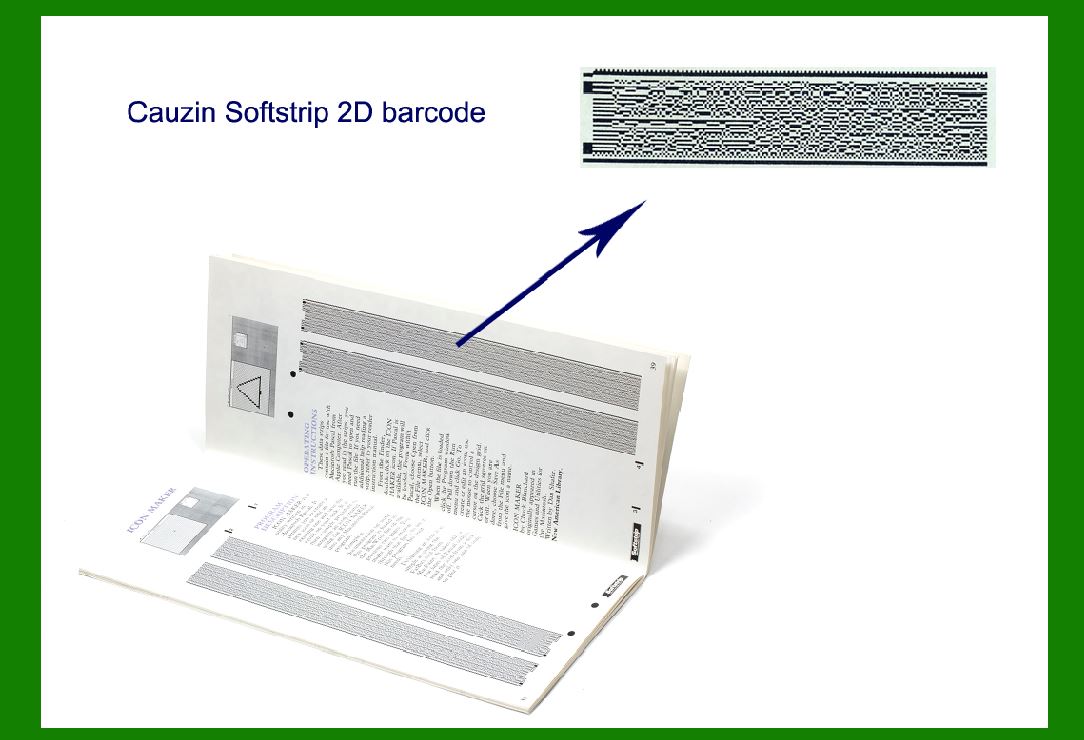
Cauzin Softstrip is a 2D barcode technology developed by Cauzin, a company known for its innovations in barcode and optical data capture technologies. This barcode type is notable for its unique properties, particularly its ability to be printed on flexible materials and its enhanced performance in various environmental conditions. The development of Cauzin Softstrip reflects a significant advancement in the field of 2D barcoding, especially in applications requiring durable and adaptable data encoding. |
|
2.Early Development and Concept (Late 1980s - Early 1990s) |
The concept for Cauzin Softstrip emerged in the late 1980s when the need for more adaptable and durable barcode technologies became evident. Early research focused on creating a 2D barcode that could be printed on flexible materials, such as plastic films and fabric, which were becoming increasingly important for various industrial and consumer applications. The initial development involved creating prototypes and testing their performance in real-world conditions. |
During this period, Cauzin conducted extensive research on the limitations of existing barcode technologies, such as traditional linear barcodes and early 2D barcodes like QR codes. The goal was to address issues related to durability, readability under various conditions, and the ability to withstand physical distortions. |

|
3.Prototyping and Initial Testing (Early to Mid-1990s) |
By the early 1990s, Cauzin had developed the first prototypes of the Softstrip 2D barcode. These early versions were designed to be printed on flexible substrates, which allowed them to be used in a wide range of applications where traditional barcodes were unsuitable. Initial testing focused on evaluating the performance of these prototypes in terms of readability, durability, and resistance to environmental factors such as moisture, temperature fluctuations, and physical abrasion. |
The results of these tests were promising, showing that the Softstrip barcode could maintain its functionality even when printed on deformable or flexible materials. This ability made it an attractive option for industries such as logistics, packaging, and textiles. |

|
4.Patent and Commercialization (Mid to Late 1990s) |
In the mid-1990s, Cauzin secured patents for the Softstrip 2D barcode technology. These patents covered various aspects of the barcode's design and functionality, including its encoding and decoding mechanisms, as well as its unique ability to perform well on flexible substrates. |
With the patents in place, Cauzin began the process of commercializing the Softstrip 2D barcode technology. This involved establishing partnerships with printing and manufacturing companies to integrate the barcode into existing product lines and applications. The technology was initially adopted in niche markets where its unique properties provided a significant advantage over existing barcode solutions. |

|
5.Adoption and Expansion (Late 1990s - Early 2000s) |
During the late 1990s and early 2000s, the Cauzin Softstrip 2D barcode gained traction in various industries. One notable application was in the packaging industry, where the ability to print barcodes on flexible packaging materials provided new opportunities for product identification and tracking. The technology was also used in the textile industry for tagging garments and other fabric products. |
The adoption of Softstrip 2D barcodes was facilitated by the increasing availability of compatible printing technologies and the growing demand for durable and flexible barcoding solutions. As a result, Cauzin's technology began to see wider use across different sectors, including logistics, retail, and manufacturing. |

|
6.Technological Advancements and Integration (2000s) |
In the 2000s, Cauzin continued to refine and enhance the Softstrip 2D barcode technology. Advances in printing technologies and materials science allowed for improvements in the barcode's performance and versatility. The company introduced new versions of the Softstrip barcode with enhanced error correction capabilities and better readability under challenging conditions. |
During this period, Cauzin also worked on integrating the Softstrip barcode with other technologies, such as RFID and smart labels. This integration aimed to provide a more comprehensive solution for product tracking and data management, combining the benefits of both barcode and RFID technologies. |

|
7.Global Adoption and Industry Standards (2010s) |
By the 2010s, the Cauzin Softstrip 2D barcode had achieved global recognition and adoption. The technology was incorporated into industry standards and guidelines for flexible barcoding solutions. It became a popular choice for applications where traditional barcodes and other 2D barcodes struggled to meet the requirements for durability and adaptability. |
The widespread adoption of Softstrip 2D barcodes in various industries was driven by their ability to perform well in demanding environments and on diverse substrates. Examples of successful implementations include its use in the automotive industry for tracking parts and components, as well as in the medical field for labeling flexible medical devices and packaging. |

|
8.Recent Developments and Future Outlook (2020s and Beyond) |
In recent years, Cauzin has continued to innovate and expand the capabilities of the Softstrip 2D barcode technology. The company has focused on enhancing the barcode's performance in increasingly complex and demanding applications. This includes improvements in data capacity, error correction, and compatibility with emerging technologies. |
Looking ahead, the Cauzin Softstrip 2D barcode is expected to play a significant role in the ongoing evolution of data capture and management technologies. Its unique properties and adaptability make it a valuable tool for industries requiring flexible and durable barcoding solutions. As new materials and printing technologies emerge, the Softstrip barcode is likely to continue evolving to meet the changing needs of various applications. |

|
9.Conclusion |
The history of the Cauzin Softstrip 2D barcode reflects a journey of innovation and adaptation in the field of data capture technology. From its early development and prototyping to its widespread adoption and integration with other technologies, the Softstrip barcode has demonstrated its value in addressing the challenges of modern barcoding applications. As the technology continues to evolve, it is poised to remain a key player in the world of flexible and durable barcoding solutions. |
 cs@easiersoft.com