The History of Codablock Barcode in the Healthcare Sector |
1.Introduction to Codablock Barcode |
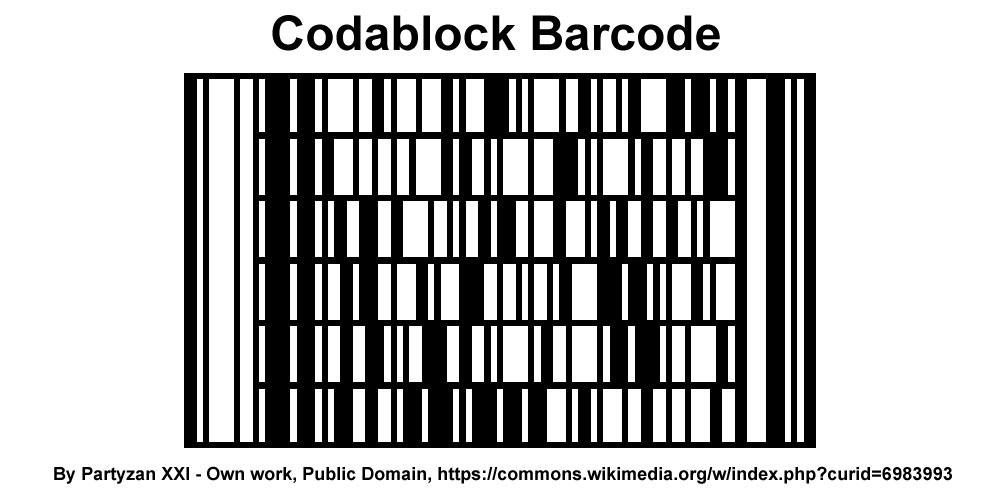
Codablock, a type of stacked barcode symbology, was developed to enhance data capacity while maintaining a compact size. It was created by Heinrich Oehlmann in 1989 and was a significant advancement in barcode technology, particularly in the healthcare sector where data accuracy and efficiency are paramount. This barcode type combines the benefits of linear barcodes with the higher data capacity of 2D barcodes, making it particularly suitable for applications requiring the encoding of large amounts of information. |
|
2.Early Adoption in Healthcare |
The healthcare sector quickly recognized the potential of Codablock barcodes. In the early 1990s, healthcare providers and pharmaceutical companies began to adopt this technology for various applications. The primary driving force behind this adoption was the need to encode more information in a smaller space, which is essential for labeling small medical devices, pharmaceuticals, and patient wristbands. |
3.Pharmaceutical Labeling |
One of the first major applications of Codablock in healthcare was in pharmaceutical labeling. Pharmaceuticals often require extensive labeling information, including drug name, dosage, manufacturer details, expiration date, and batch number. Traditional linear barcodes were insufficient for this purpose due to their limited data capacity. Codablock barcodes, with their ability to store more data in a compact form, became the preferred choice. This adoption was first observed in the mid-1990s, with leading pharmaceutical companies integrating Codablock barcodes into their labeling processes. |

|
4.Medical Device Tracking |
Another significant application of Codablock barcodes in healthcare emerged in the tracking of medical devices. Medical devices, such as surgical instruments and implants, need to be tracked for inventory management, sterilization processes, and patient safety. Codablock barcodes facilitated the encoding of serial numbers, manufacturing dates, and other critical information on these devices. By the late 1990s, several medical device manufacturers had begun to implement Codablock barcodes, improving traceability and ensuring compliance with regulatory requirements. |
5.Implementation in Hospital Settings |
Hospitals and healthcare facilities also saw the advantages of Codablock barcodes for patient identification and medication administration. Patient wristbands equipped with Codablock barcodes allowed for the encoding of comprehensive patient information, such as medical history, allergies, and treatment plans. This implementation helped reduce errors in patient care by providing healthcare professionals with quick and accurate access to patient data. The late 1990s and early 2000s marked a period of widespread adoption of Codablock barcodes in hospitals, enhancing patient safety and operational efficiency. |

|
6.Standardization and Regulatory Support |
As the use of Codablock barcodes in healthcare grew, there was a need for standardization to ensure interoperability and compliance with regulations. In the early 2000s, various healthcare standards organizations, such as the Health Industry Business Communications Council (HIBCC) and GS1, began to recognize and support Codablock barcodes. These organizations developed guidelines and standards for the implementation of Codablock barcodes in healthcare, further promoting their adoption across the industry. |
7.Integration with Electronic Health Records (EHRs) |
The integration of Codablock barcodes with electronic health records (EHRs) marked a significant advancement in healthcare IT systems. EHRs store comprehensive patient information, and Codablock barcodes enabled seamless and accurate data entry. For example, when a medication with a Codablock barcode was scanned, the information was automatically populated into the patient's EHR, reducing the risk of manual entry errors. This integration became more prevalent in the mid-2000s, aligning with the broader push for digital transformation in healthcare. |

|
8.Case Study: Codablock in Pharmacy Automation |
A notable example of Codablock barcode implementation is in pharmacy automation systems. Automated pharmacy systems dispense medications accurately and efficiently, and Codablock barcodes play a crucial role in this process. By encoding detailed medication information in Codablock barcodes, these systems ensure that the correct medication is dispensed to the right patient. The University of California San Francisco (UCSF) Medical Center implemented such a system in the late 2000s, reporting significant improvements in medication safety and operational efficiency. |
9.Enhancing Blood Bank Operations |
Blood banks also benefited from the adoption of Codablock barcodes. Blood products require meticulous tracking to ensure compatibility and safety. Codablock barcodes allowed blood banks to encode detailed information, such as donor ID, blood type, collection date, and expiration date, in a compact format. The American Red Cross implemented Codablock barcodes in their blood tracking systems in the early 2010s, enhancing traceability and improving the safety of blood transfusions. |

|
10.Expanding Applications in Healthcare |
The versatility of Codablock barcodes led to their application in various other areas of healthcare. For instance, laboratory specimens, which require precise tracking from collection to analysis, benefited from Codablock barcodes. By encoding comprehensive specimen information, these barcodes minimized the risk of misidentification and errors in laboratory processes. The Mayo Clinic, a leading healthcare provider, adopted Codablock barcodes for specimen tracking in the mid-2010s, reporting enhanced accuracy and efficiency in their laboratory operations. |
11.Advancements in Mobile Health Technologies |
With the rise of mobile health technologies, Codablock barcodes found new applications. Mobile health apps and devices, such as glucometers and heart rate monitors, used Codablock barcodes to encode and transmit patient data. These barcodes facilitated the seamless transfer of health data between devices and healthcare systems, supporting remote patient monitoring and telemedicine. The adoption of Codablock barcodes in mobile health technologies became more pronounced in the late 2010s, contributing to the growth of digital health solutions. |

|
12.Challenges and Innovations |
While Codablock barcodes offered numerous benefits, their implementation in healthcare also faced challenges. Ensuring barcode readability on curved or small surfaces, such as vials and syringes, required innovations in printing and scanning technologies. Healthcare providers collaborated with barcode technology companies to develop solutions that addressed these challenges. For example, specialized scanners with enhanced decoding algorithms were introduced to ensure accurate scanning of Codablock barcodes on challenging surfaces. |
13.Recent Developments and Future Prospects |
In recent years, Codablock barcodes have continued to evolve, with advancements in barcode technology and healthcare applications. The integration of Codablock barcodes with emerging technologies, such as blockchain for secure and transparent data management, holds promise for further enhancing healthcare operations. Additionally, the development of more sophisticated printing and scanning technologies will likely expand the use of Codablock barcodes in new and innovative ways. |

|
14.Case Study: Codablock in COVID-19 Vaccine Distribution |
The COVID-19 pandemic underscored the importance of efficient and accurate tracking in healthcare. Codablock barcodes played a critical role in the distribution of COVID-19 vaccines. These barcodes encoded detailed information about vaccine batches, including manufacturing dates, lot numbers, and expiration dates. This ensured accurate tracking and traceability, from manufacturing to administration. Major healthcare organizations, such as the Centers for Disease Control and Prevention (CDC), utilized Codablock barcodes in their vaccine distribution systems, demonstrating the technology's vital role in managing public health crises. |
15.Global Adoption and Standardization |
The adoption of Codablock barcodes in healthcare has not been limited to the United States. Healthcare providers and pharmaceutical companies worldwide have recognized the benefits of this technology. The global adoption of Codablock barcodes has been facilitated by international standards organizations, which have developed guidelines to ensure interoperability across borders. For example, the International Organization for Standardization (ISO) has included Codablock barcodes in their standards for healthcare barcode symbologies, promoting their use in diverse healthcare systems. |

|
16.Impact on Patient Safety and Operational Efficiency |
The impact of Codablock barcodes on patient safety and operational efficiency in healthcare cannot be overstated. By enabling the accurate and efficient encoding of detailed information, Codablock barcodes have reduced errors in medication administration, patient identification, and medical device tracking. This has resulted in improved patient outcomes and enhanced operational efficiency for healthcare providers. Studies have shown that the implementation of Codablock barcodes in healthcare settings has led to a significant reduction in medication errors and improved patient care processes. |

|
17.Conclusion |
The history of Codablock barcodes in healthcare is a testament to the technology's versatility and impact. From their early adoption in pharmaceutical labeling and medical device tracking to their integration with electronic health records and mobile health technologies, Codablock barcodes have revolutionized healthcare operations. As the healthcare industry continues to evolve, Codablock barcodes are poised to play an even more significant role in enhancing patient safety, operational efficiency, and data accuracy. The ongoing advancements in barcode technology and the continued global adoption of Codablock barcodes will undoubtedly shape the future of healthcare, ensuring that this innovative technology remains a cornerstone of healthcare operations for years to come. |
 cs@easiersoft.com