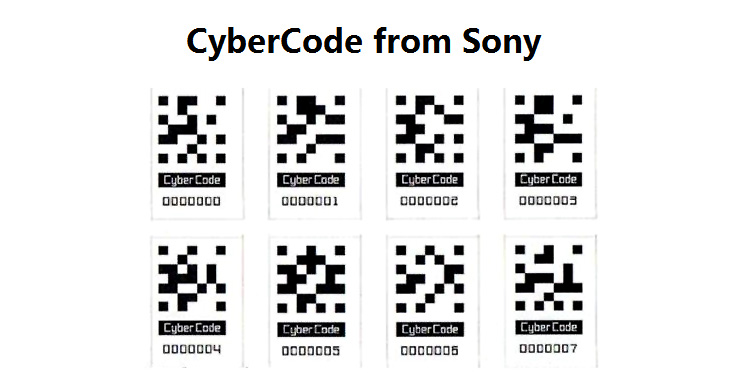
1.Introduction to CyberCode CyberCode, developed by Sony Computer Science Laboratories (Sony CSL), represents a significant milestone in the evolution of barcode technology. Designed to bridge the gap between the physical and digital worlds, CyberCode was envisioned as an innovative 2D barcode system that could facilitate augmented reality (AR) applications and enhance the interaction between users and digital content. The history of CyberCode is marked by key developments and applications that have influenced its adoption and evolution. |
|
2.Early Development and Conceptualization (Late 1990s) The concept of CyberCode was conceived in the late 1990s at Sony CSL. During this period, the rapid advancement of digital technology and the growing interest in AR and ubiquitous computing prompted researchers to explore new ways to link the physical and digital realms. The idea was to create a barcode that could be easily recognized by cameras and used to trigger digital interactions. This led to the development of a prototype CyberCode system that could encode information in a 2D matrix, readable by standard cameras. |

|
3.Prototype and Initial Testing (1999-2000) In 1999, Sony CSL introduced the first prototype of CyberCode. The initial tests focused on the barcode's ability to be recognized quickly and accurately by cameras under various conditions. Researchers aimed to ensure that CyberCode could be detected from different angles and distances, making it versatile for diverse applications. These early tests were promising, demonstrating that CyberCode could effectively serve as a bridge between the physical and digital worlds. |

|
4.Official Launch and Early Applications (2000-2001) CyberCode was officially launched in 2000, marking its entry into the market. Sony CSL showcased the potential of CyberCode in various AR applications, emphasizing its ability to enhance user experiences. One of the early applications included interactive museum exhibits, where CyberCode was used to provide visitors with additional information about exhibits through their mobile devices. This period also saw the use of CyberCode in educational settings, where it facilitated interactive learning experiences. |

|
5.Advancements in AR and Ubiquitous Computing (2002-2003) As the early 2000s progressed, the development of AR and ubiquitous computing technologies accelerated. CyberCode became an integral part of these advancements. In 2002, Sony CSL introduced new features to CyberCode, improving its robustness and accuracy. Researchers focused on optimizing the barcode's design to ensure reliable detection and decoding even in challenging environments. These enhancements made CyberCode more suitable for a wider range of applications, including retail and advertising. |

|
6.Integration with Mobile Devices (2004-2005) The mid-2000s saw a significant shift in the way people interacted with digital content, driven by the proliferation of mobile devices. Recognizing this trend, Sony CSL worked on integrating CyberCode with mobile devices, enabling users to access digital content seamlessly through their smartphones. This integration opened up new possibilities for CyberCode, particularly in mobile marketing and location-based services. For example, users could scan CyberCode on posters to access promotional content or navigate to specific locations using AR guidance. |

|
7.Expansion into Entertainment and Gaming (2006-2007) Building on its success in AR applications, CyberCode expanded into the entertainment and gaming industries. In 2006, Sony CSL collaborated with game developers to incorporate CyberCode into video games and interactive entertainment experiences. This allowed players to interact with physical game elements and unlock digital content by scanning CyberCode with their devices. One notable example was the use of CyberCode in collectible card games, where players could scan cards to access in-game bonuses and exclusive content. |
8.Continued Innovation and Research (2008-2009) By 2008, CyberCode had established itself as a versatile and reliable barcode system. Sony CSL continued to innovate, exploring new ways to enhance CyberCode's capabilities. Researchers focused on improving the barcode's resistance to environmental factors, such as lighting conditions and surface variations. Additionally, efforts were made to reduce the processing time required for detection and decoding, ensuring a smoother user experience. These advancements further solidified CyberCode's position in the market. |

|
9.Collaborations and Industry Adoption (2010-2011) The early 2010s marked a period of increased collaboration and industry adoption for CyberCode. Sony CSL partnered with various companies to explore new applications and expand CyberCode's reach. One significant collaboration was with the retail industry, where CyberCode was used to enhance shopping experiences. Retailers integrated CyberCode into product packaging, allowing customers to access detailed product information, reviews, and promotional offers by scanning the barcode. This not only improved customer engagement but also provided valuable insights into consumer behavior. |
10.Expansion into Augmented Reality Glasses (2012-2013) As AR technology continued to evolve, CyberCode found new applications in the emerging field of AR glasses. In 2012, Sony CSL began exploring the integration of CyberCode with AR glasses, enabling users to access digital content hands-free. This was particularly useful in industrial and medical settings, where AR glasses equipped with CyberCode could assist workers and healthcare professionals by providing real-time information and guidance. The successful integration of CyberCode with AR glasses demonstrated its versatility and adaptability to new technologies. |

|
11.CyberCode in Healthcare and Education (2014-2015) The mid-2010s saw CyberCode making significant strides in the healthcare and education sectors. In healthcare, CyberCode was used to streamline patient care and improve the accuracy of medical records. For instance, healthcare providers could use CyberCode to quickly access patient information and medication details, reducing the risk of errors. In education, CyberCode facilitated interactive learning experiences, allowing students to access supplementary materials and participate in virtual labs by scanning barcodes on textbooks and lab equipment. |
12.Global Expansion and Standardization Efforts (2016-2017) As CyberCode's popularity grew, efforts were made to standardize the technology and promote its global adoption. In 2016, Sony CSL collaborated with international standards organizations to develop guidelines for CyberCode implementation. These efforts aimed to ensure compatibility and interoperability across different industries and regions. The standardization of CyberCode facilitated its integration into various global supply chains, enhancing its utility in logistics and inventory management. |

|
13.CyberCode in IoT and Smart Cities (2018-2019) The late 2010s witnessed the rise of the Internet of Things (IoT) and smart city initiatives. CyberCode played a crucial role in these developments by providing a reliable and efficient way to connect physical objects with digital networks. In smart cities, CyberCode was used to tag infrastructure elements, such as streetlights and utility meters, enabling real-time monitoring and maintenance. In IoT applications, CyberCode facilitated device identification and data transmission, contributing to the seamless integration of smart devices into everyday life. |
14.Enhancements in Security and Privacy (2020-2021) With the increasing importance of data security and privacy, Sony CSL focused on enhancing the security features of CyberCode. In 2020, new encryption techniques were introduced to protect the data encoded in CyberCode, ensuring that sensitive information remained secure. These enhancements made CyberCode more suitable for applications in secure environments, such as financial services and government agencies. The emphasis on security and privacy reinforced CyberCode's reputation as a trusted and reliable barcode system. |

|
15.CyberCode in the Post-Pandemic World (2022-2023) The COVID-19 pandemic accelerated the adoption of digital technologies, and CyberCode was no exception. In the post-pandemic world, CyberCode found new applications in contactless interactions and remote services. For example, CyberCode was used in contactless payment systems, allowing customers to make payments by scanning barcodes with their mobile devices. Additionally, CyberCode facilitated remote work and virtual collaboration by enabling easy access to digital content and resources. These applications underscored CyberCode's adaptability to changing societal needs. |
16.Recent Developments and Future Directions (2024) As of 2024, CyberCode continues to evolve, with ongoing research and development efforts aimed at further enhancing its capabilities. Sony CSL is exploring new applications of CyberCode in emerging technologies, such as blockchain and artificial intelligence (AI). The integration of CyberCode with blockchain technology holds promise for secure and transparent supply chain management, while AI-powered CyberCode systems could enable advanced data analysis and real-time decision-making. These future directions highlight the potential of CyberCode to drive innovation in various industries. |

|
17.Conclusion The history of CyberCode from Sony is a testament to the power of innovation and collaboration in advancing barcode technology. From its early conceptualization and prototype testing to its widespread adoption and integration with emerging technologies, CyberCode has consistently demonstrated its versatility and reliability. Through continuous improvements and strategic partnerships, CyberCode has established itself as a key player in the barcode industry, poised to shape the future of digital-physical interactions for years to come. |

|
 cs@easiersoft.com