1.Origins and Inception: The Industrial 2 of 5 barcode, also known as Code 2 of 5, traces its origins back to the 1960s, a period marked by the growing need for automatic identification and data capture (AIDC) technologies. During this era, industries were transitioning towards automated systems to improve efficiency, accuracy, and productivity. The development of barcode technology was crucial to this transformation. Industrial 2 of 5 was among the early linear barcodes developed to meet these emerging needs, particularly in the transportation and warehousing sectors. | 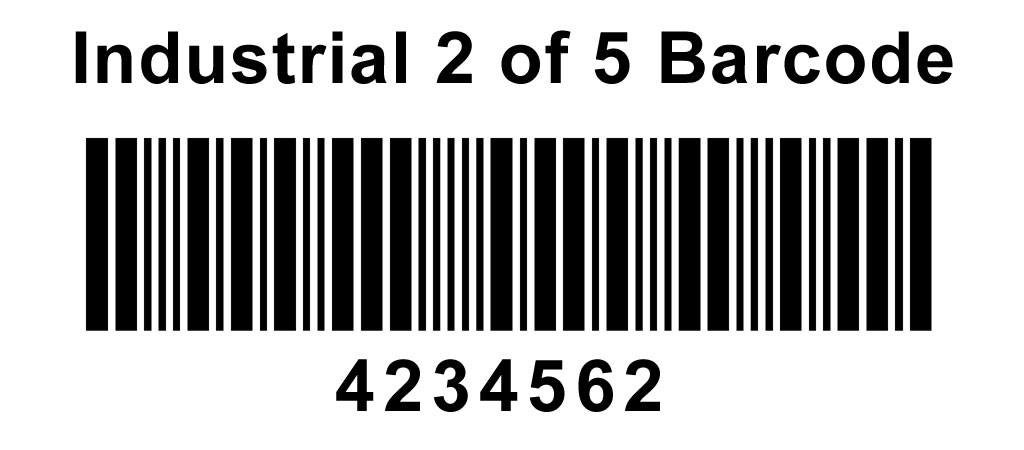
| 2.Early Development: The initial development of the Industrial 2 of 5 barcode was driven by the need for a simple and reliable coding system that could be easily printed and scanned. The code was designed to be numeric-only, which suited the inventory management systems of the time. It encoded data by using two wide bars out of every five bars, which is where it gets its name. This structure made it relatively easy to print with existing technologies and robust enough to withstand the industrial environments in which it was used. | 3.Adoption in the Railroad Industry: One of the earliest and most significant applications of the Industrial 2 of 5 barcode was in the railroad industry. In the late 1960s and early 1970s, railroads began to use this barcode to track railcars and manage freight more efficiently. The barcode was applied to railcars and could be read by trackside scanners, providing real-time information about the location and status of the cars. This application was one of the first large-scale implementations of barcode technology, demonstrating its potential to revolutionize logistics and supply chain management. | 
| 4.Expansion into Warehousing and Inventory Management: Following its success in the railroad industry, the Industrial 2 of 5 barcode was quickly adopted in warehousing and inventory management. The simplicity and robustness of the code made it ideal for tracking items in large warehouses, where it was used to manage inventory, streamline operations, and reduce errors. Companies began to print the barcodes on labels and affix them to products, boxes, and pallets. This practice significantly improved the efficiency of inventory tracking and reduced the time and labor costs associated with manual inventory management. | 5.Standardization and Regulation: As the use of Industrial 2 of 5 expanded, there was a growing need for standardization to ensure compatibility and interoperability between different systems and organizations. In the 1970s, efforts were made to establish standards for the format, dimensions, and encoding rules of the barcode. These standards were crucial for ensuring that barcodes could be consistently printed and accurately read by scanners. Organizations such as the American National Standards Institute (ANSI) and the International Organization for Standardization (ISO) played key roles in this standardization process. | 
| 6.Technological Advancements in Printing and Scanning: The development of more advanced printing and scanning technologies in the late 1970s and early 1980s further boosted the adoption of Industrial 2 of 5 barcodes. Dot matrix printers, thermal printers, and laser printers enabled the high-quality printing of barcodes, ensuring they were clear and legible. Similarly, advancements in scanning technology, including the development of more sensitive and accurate barcode scanners, improved the reliability of barcode reading. These technological improvements made the Industrial 2 of 5 barcode even more practical and widespread. | 7.Adoption in the Retail Sector: While Industrial 2 of 5 was primarily used in industrial and logistics applications, it also found some use in the retail sector. Retailers began to use the barcode to track inventory and manage stock levels. However, its numeric-only format and relatively low density compared to other emerging barcode types, such as UPC (Universal Product Code), limited its widespread adoption in retail. Nonetheless, it remained a valuable tool for managing inventory and streamlining operations in smaller retail environments and back-end processes. | 
| 8.Integration with Computer Systems: The integration of Industrial 2 of 5 barcodes with computer systems in the 1980s and 1990s marked a significant advancement in the use of the technology. Companies began to use barcode data to automatically update inventory databases, generate reports, and manage logistics. This integration significantly improved the accuracy and efficiency of inventory management systems, reducing the likelihood of errors and enabling more precise control over stock levels. The ability to automatically capture and process data using barcodes was a major step forward in the evolution of AIDC technologies. | 9.International Expansion: Throughout the 1980s and 1990s, the use of Industrial 2 of 5 barcodes expanded internationally. Companies in Europe, Asia, and other regions began to adopt the technology for their logistics and inventory management needs. The global adoption of the barcode was facilitated by the establishment of international standards and the increasing availability of compatible printing and scanning equipment. As a result, Industrial 2 of 5 became a widely recognized and utilized barcode type in various industries around the world. | 
| 10.Application in the Library Systems: Another notable application of Industrial 2 of 5 barcodes was in library systems. Libraries used the barcode to manage their collections, track borrowed and returned items, and streamline their cataloging processes. By affixing barcodes to books and other materials, libraries were able to automate many aspects of their operations, reducing the time and effort required for manual record-keeping. This application highlighted the versatility and practicality of the Industrial 2 of 5 barcode in diverse settings. | 11.Competition and Coexistence with Other Barcodes: Despite its widespread use, Industrial 2 of 5 faced competition from other barcode types, such as Code 39, Code 128, and later, 2D barcodes like QR codes and Data Matrix. Each of these barcodes offered different advantages, such as higher data density, alphanumeric encoding, and better error correction. As a result, Industrial 2 of 5 became one of many barcode options available to organizations, each suited to different applications and requirements. In many cases, Industrial 2 of 5 coexisted with other barcodes, complementing them in specific use cases. | 
| 12.Modern Applications and Legacy Use: In the 21st century, the use of Industrial 2 of 5 has declined somewhat due to the rise of more advanced and versatile barcode types. However, it remains in use in certain industries and applications where its simplicity, robustness, and numeric-only format are advantageous. For example, it is still used in some manufacturing and warehousing environments, as well as in legacy systems that were designed around the Industrial 2 of 5 standard. Its continued use in these settings underscores the enduring value of the technology. | 13.Transition to Digital and RFID Technologies: As technology continues to evolve, many organizations have transitioned from traditional barcodes to digital and RFID (Radio-Frequency Identification) technologies. RFID, in particular, offers significant advantages over barcodes, such as the ability to read multiple items simultaneously and from a distance. However, the cost and complexity of implementing RFID systems mean that barcodes, including Industrial 2 of 5, still play a role in many applications. The transition to newer technologies is gradual, and barcodes remain a reliable and cost-effective solution for many businesses. | 
| 14.Examples of Industrial 2 of 5 in Use: | Railroads: As mentioned earlier, one of the earliest and most prominent uses of Industrial 2 of 5 was in the railroad industry. Railroads used the barcode to track railcars and manage freight, significantly improving the efficiency and accuracy of their operations. Warehousing: In warehousing environments, Industrial 2 of 5 barcodes were used to label and track inventory items, pallets, and shipments. This application helped streamline inventory management processes and reduce the likelihood of errors. Libraries: Libraries adopted Industrial 2 of 5 barcodes to manage their collections and automate the borrowing and returning of books and other materials. This application demonstrated the versatility of the barcode in different settings. Manufacturing: In manufacturing, Industrial 2 of 5 barcodes were used to label and track components, products, and shipments. This application improved the efficiency and accuracy of production and logistics processes. Retail: While less common in retail compared to other barcode types, Industrial 2 of 5 was used in some smaller retail environments and for back-end inventory management. | 
| 15.Conclusion: The history of the Industrial 2 of 5 barcode is a testament to the enduring value and versatility of barcode technology. From its origins in the 1960s to its modern applications, Industrial 2 of 5 has played a crucial role in the evolution of AIDC technologies. Its simplicity, robustness, and numeric-only format made it a valuable tool for a wide range of industries and applications. While newer technologies continue to emerge, Industrial 2 of 5 remains a reliable and cost-effective solution for many organizations, demonstrating the lasting impact of this early barcode standard. | 
|
|
 cs@easiersoft.com