The History of ITF-6 Barcode |
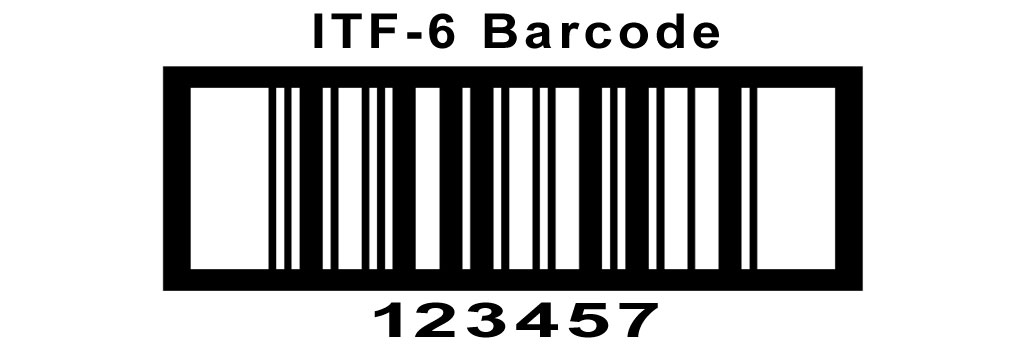
1.Introduction and Origins The ITF-6 barcode, also known as Interleaved 2 of 5 (ITF) barcode, is a variation of the Interleaved 2 of 5 barcode format, specifically designed for the packaging and distribution of goods. ITF-6 is used predominantly for encoding data related to product shipping and packaging. Unlike its more commonly known sibling, the ITF-14, which encodes 14 digits, ITF-6 is designed to encode 6 digits, making it a compact and efficient solution for specific logistical needs. |
|
2.Early Development and Adoption The roots of the ITF-6 barcode can be traced back to the development of the Interleaved 2 of 5 barcode format in the early 1970s. The Interleaved 2 of 5 barcode was invented by David Allais and Ray Stevens at the Intermec Corporation in 1972. This barcode format was initially developed for industrial applications, including the marking of corrugated shipping containers and product packaging. The Interleaved 2 of 5 format gained popularity due to its ability to encode a high density of numeric data while being readable by a wide range of barcode scanners. |
3.Introduction of ITF-6 Barcode The ITF-6 barcode was introduced as a specialized version of the Interleaved 2 of 5 barcode to meet the needs of industries requiring shorter barcode lengths for specific applications. The 6-digit encoding capability of ITF-6 made it particularly suitable for small packages and items where space was limited. The format became an efficient way to encode minimal yet essential data for tracking and identification purposes. |

|
4.Adoption in Various Industries ITF-6 barcodes quickly found their niche in industries where compact and efficient labeling was crucial. For instance, the retail industry began using ITF-6 barcodes for labeling small items and packages that required unique identification codes for inventory management and logistics. The ability to encode six digits in a compact form allowed businesses to streamline their processes and improve accuracy in inventory tracking. |
5.Standardization and Regulation As the use of barcodes became more widespread, there was a need for standardization to ensure compatibility and interoperability across different systems and industries. The ITF-6 barcode format, being a variation of the Interleaved 2 of 5 barcode, adhered to the same basic principles and encoding rules. Organizations such as the International Organization for Standardization (ISO) and the GS1 organization played a key role in standardizing barcode formats, including ITF-6, to facilitate global trade and logistics. |

|
6.Technological Advancements and Improvements Over the years, advancements in barcode scanning technology further enhanced the usability and efficiency of ITF-6 barcodes. Early barcode scanners were often bulky and limited in their capabilities, but as technology progressed, smaller, more powerful, and more accurate scanners were developed. This improvement in scanning technology made it easier for businesses to adopt ITF-6 barcodes for various applications, from retail to logistics. |
7.Integration with Other Barcode Systems The ITF-6 barcode did not exist in isolation; it was often used in conjunction with other barcode systems to provide a comprehensive solution for product identification and tracking. For example, businesses could use ITF-6 barcodes for internal inventory management while using other barcode formats, such as UPC or EAN, for product sales and customer transactions. This integration allowed for seamless data exchange and improved efficiency across different stages of the supply chain. |

|
8.Case Study: ITF-6 in the Pharmaceutical Industry The pharmaceutical industry is one sector where the ITF-6 barcode has found significant application. Due to the need for precise tracking and identification of small packages of drugs and medical supplies, ITF-6 barcodes were implemented to streamline inventory management and reduce errors. By encoding essential information such as batch numbers and expiration dates, ITF-6 barcodes helped improve the accuracy and efficiency of pharmaceutical logistics. |
9.Impact on Inventory Management The introduction of ITF-6 barcodes revolutionized inventory management practices in various industries. The ability to quickly and accurately scan barcodes allowed businesses to maintain real-time inventory records, reducing the likelihood of stockouts and overstock situations. This level of precision was particularly beneficial for industries dealing with perishable goods, where timely and accurate inventory tracking was crucial. |

|
10.Challenges and Limitations Despite its many advantages, the ITF-6 barcode also faced certain challenges and limitations. One significant limitation was its numeric-only encoding capability, which restricted its use in applications requiring alphanumeric data. Additionally, the compact size of the barcode meant that it could only encode a limited amount of information, making it less suitable for applications requiring extensive data encoding. |
11.Evolution and Adaptation As technology and industry needs continued to evolve, so did the ITF-6 barcode. Businesses and developers worked on adapting the barcode format to meet emerging requirements, such as incorporating additional security features and improving scanning accuracy. These adaptations ensured that ITF-6 remained a relevant and valuable tool for various applications. |

|
12.Case Study: ITF-6 in the Automotive Industry The automotive industry is another sector where ITF-6 barcodes have been extensively used. In manufacturing plants, ITF-6 barcodes were used to label and track small components and parts, ensuring that each item could be accurately identified and traced throughout the production process. This application helped improve quality control and streamline manufacturing operations. |
13.Global Reach and Usage The ITF-6 barcode format gained global acceptance and usage, becoming a standard tool in many countries for specific applications. Its simplicity and efficiency made it a popular choice for businesses of all sizes, from small enterprises to large multinational corporations. The ability to encode essential information in a compact form allowed for seamless integration into existing processes and systems. |

|
14.Future Prospects and Developments Looking ahead, the future of ITF-6 barcodes is likely to be influenced by ongoing technological advancements and evolving industry needs. As businesses continue to seek more efficient and accurate ways to manage their inventory and logistics, there may be further developments and enhancements to the ITF-6 barcode format. For instance, advancements in barcode printing and scanning technology could lead to even more compact and high-density encoding solutions. |
15.Case Study: ITF-6 in the Retail Industry In the retail industry, ITF-6 barcodes played a crucial role in streamlining the supply chain and improving inventory management. Retailers used ITF-6 barcodes to label small items such as cosmetics, electronics accessories, and other compact products. This application allowed for efficient tracking and management of inventory, reducing the likelihood of errors and improving overall operational efficiency. |

|
16.Collaboration with Technology Partners The success and widespread adoption of ITF-6 barcodes were also attributed to collaboration with technology partners. Barcode scanner manufacturers, software developers, and industry associations worked together to ensure that ITF-6 barcodes could be easily implemented and integrated into existing systems. This collaboration helped drive the adoption of ITF-6 barcodes across various industries. |
17.Educational Initiatives and Training To facilitate the widespread adoption of ITF-6 barcodes, educational initiatives and training programs were developed. Businesses and industry professionals were provided with resources and training materials to help them understand the benefits and applications of ITF-6 barcodes. This knowledge dissemination played a key role in promoting the use of ITF-6 barcodes and ensuring their successful implementation. |

|
18.Case Study: ITF-6 in the Logistics Industry In the logistics industry, ITF-6 barcodes were used to label and track packages and shipments. The ability to encode essential shipping information in a compact form allowed for efficient handling and tracking of packages throughout the supply chain. Logistics companies used ITF-6 barcodes to improve the accuracy and speed of their operations, ensuring timely and accurate delivery of goods. |
19.Continued Relevance in Modern Applications Despite the emergence of newer barcode formats and technologies, ITF-6 barcodes continue to remain relevant in modern applications. Their simplicity, efficiency, and compact size make them a valuable tool for specific use cases where other barcode formats may not be suitable. Businesses continue to rely on ITF-6 barcodes for various applications, from inventory management to logistics and beyond. |

|
20.Conclusion The history of the ITF-6 barcode is a testament to the ongoing innovation and adaptation of barcode technology to meet the evolving needs of industries and businesses. From its early development and adoption to its continued relevance in modern applications, the ITF-6 barcode has played a crucial role in improving efficiency, accuracy, and reliability in various sectors. As technology continues to advance, the ITF-6 barcode is likely to see further developments and enhancements, ensuring its continued utility and importance in the years to come. |
21.Timeline Summary |
1.1972: Development of the Interleaved 2 of 5 barcode by David Allais and Ray Stevens at Intermec Corporation. 2.Early 1970s: Initial adoption of the Interleaved 2 of 5 barcode in industrial applications. 3.1970s-1980s: Introduction and adoption of the ITF-6 barcode as a specialized version of the Interleaved 2 of 5 barcode for compact encoding. 4.1980s-1990s: Standardization efforts by organizations such as ISO and GS1 to ensure compatibility and interoperability of ITF-6 barcodes. 5.1990s-2000s: Advancements in barcode scanning technology improve the efficiency and accuracy of ITF-6 barcode usage. 6.2000s-Present: Continued adoption and integration of ITF-6 barcodes in various industries |

|
 cs@easiersoft.com