Barcode Technology

Barcode History

Barcode Label Paper

Barcode Printer

Barcode Application

Inventory Management

AI Barcode QRCode

Barcode Scanner

Barcode Software

Barcode Software B

Barcode Software C

Barcode Software D

Barcode Software E

New Technology A

New Technology B

Robot Technology

Barcode Types

Barcode Types B

Barcode Types C

Barcode Types D

Barcode Types E

Barcode Types F

Electronic Technology

Psychology at Work

Barcode Technology and Barcode Software Related   <<< Back to Directory <<<

The history of ISBN barcode

The International Standard Book Number (ISBN) is a numeric commercial book identifier that is intended to be unique.

Publishers purchase or receive ISBNs from an affiliate of the International ISBN Agency. An ISBN is assigned to each separate edition and variation (except reprintings) of a publication.

For example, an e-book, a paperback, and a hardcover edition of the same book must each have a different ISBN. The ISBN is ten digits long if assigned before 2007, and thirteen digits long if assigned on or after 1 January 2007.

The history of the ISBN system dates back to the late 1960s.

Here are some key points:

1. Standard Book Number (SBN):

Before the ISBN, there was the Standard Book Number (SBN), a commercial system that used nine-digit code numbers to identify books.

In 1965, British bookseller and stationers WHSmith announced plans to implement a standard numbering system for its books.

They hired consultants to work on their behalf, and the system was devised by Gordon Foster, an emeritus professor of statistics at Trinity College Dublin.

2. Development of the ISBN:

The International Organization for Standardization (ISO) sought to adapt the British SBN for international use.

The ISBN identification format was conceived in 1967 in the United Kingdom by David Whitaker (regarded as the 'Father of the ISBN') and in 1968 in the United States by Emery Koltay (who later became director of the U.S. ISBN agency R. R. Bowker).

3. First ISBN Assignment:

The first ISBN was assigned to a book titled 'The Adventures of Tom Sawyer' by Mark Twain in 1967.

Transition to Thirteen Digits: For nearly forty years, ISBNs contained only ten digits. However, new books and updated editions were published at such a rapid rate that unique ISBN numbers were dwindling.

In 2007, the ISBN adopted three new digits, known as the prefix. This allowed new ISBN numbers to be created, using a 978 prefix to ensure that every number is unique.

In summary, the ISBN system has evolved over time to meet the needs of the publishing industry, ensuring that each book edition receives a unique identifier for tracking and cataloging purposes.

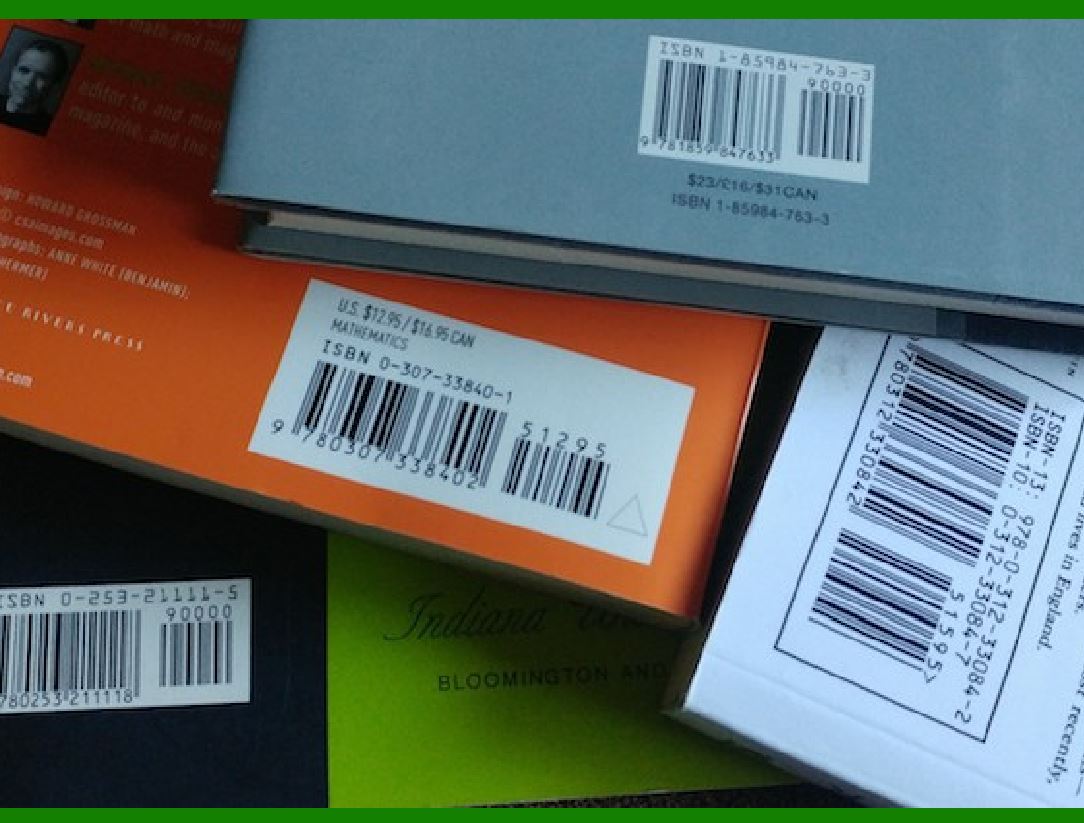
Next time you see a barcode with a serial number on the back of a book, you'll know it's more than just for the cashier, it's an ISBN!

Let's take a look at an example of an International Standard Book Number (ISBN).

ISBN-13 with 978 Prefix:

ISBN-13: 978-0-439-02348-1

ISBN-10: 0-439-02348-3

In this example, the ISBN-13 consists of five sections, including the prefix element '978'.The last digit is a check digit, and the other sections correspond to the ISBN-10 format. The prefix '978' makes it a universal product code called an EAN.

ISBN-13 with 979 Prefix:

ISBN-13: 979-8-886-45174-0

ISBN-10: Not convertible

Here, the ISBN-13 has a different prefix, '979', which is also used for book identification. The ISBN-10 is not convertible because it doesn't follow the standard ISBN-10 format.

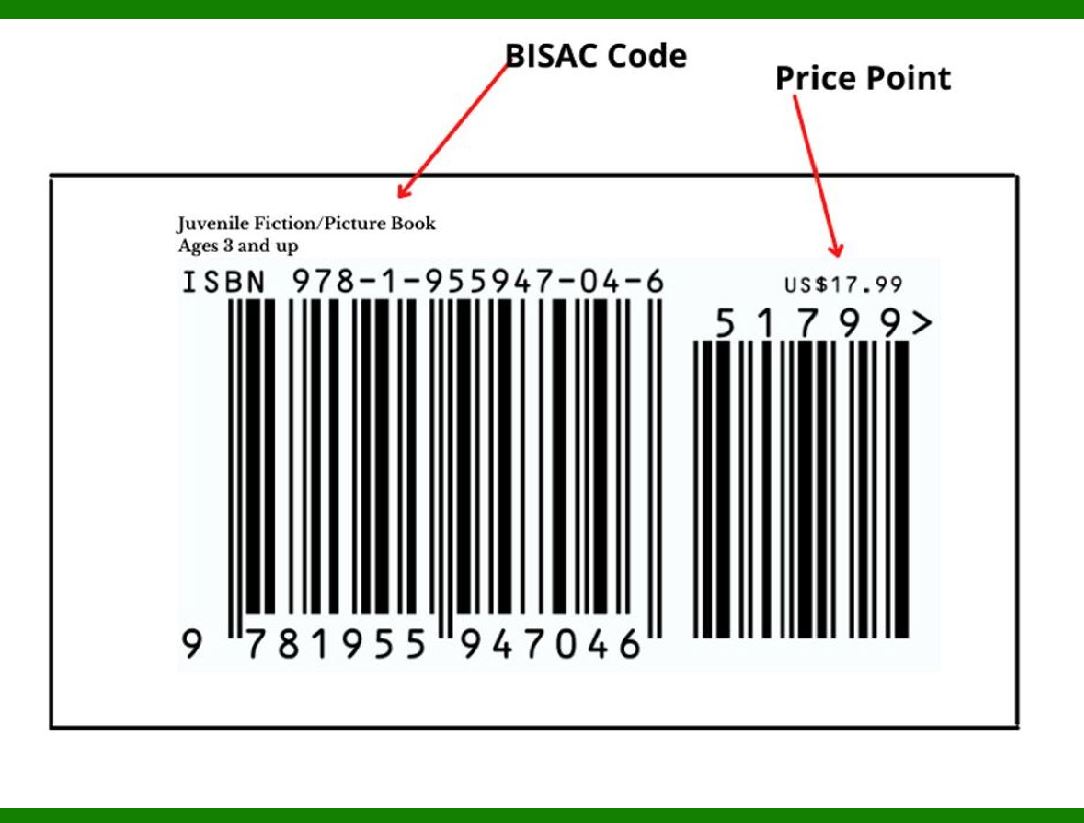
The ISBN-13 is typically printed above the barcode on the back cover of a book, making it easily scannable for inventory and sales purposes.

If you encounter a book with either of these ISBN formats, you'll know it's more than just a random set of numbers, it's a key to identifying that specific edition!


EasierSoft Barcode Label Design & Bulk Printing Software

---- Use Excel Data to Batch Print Barcodes on Label Sheets or Roll Labels  

---- How to use this barcode software

Download:  Free Barcode Software + Barcode Label Designer

Download Free Barcode Software at Softonic

     Download at CNET

Once you obtain a GS1/UPC/EAN barcode, or other barcode type and QR code, you can use our free software to batch print barcode labels onto Roll label paper using a professional label printer, or to batch print barcodes onto Avery 5160 label sheets using a regular laser or inkjet printer. Our software has free and paid versions.

The free version fully meets your needs for batch printing GS1/UPC/EAN barcodes. The paid version can import data from Excel and databases to batch print barcode labels with different values.

How to Start

Input Data

Import Excel Data

Print Barcode

Barcode Format

Label Designer

All Screen Shot

Export Barcode Image

Save Template

Output Word Excel

How to Use & FAQ:

Load Excel data (pro)

Manually copy data from Excel files

Filter some data for printing

Edit imported barcode data

Input data (Pro)

Label Designer

Edit data in Label designer

Label Designer - Add new label

Label Designer - Printing

Set the barcode label format to be printed

Other Barcode Label Format Settings

Barcode types supported by this program

Barcode Label Font Settings

Configuring the Barcode Print Rotation

Text Alignment for Barcode Labels

Automatically Adjusting Barcode Width

Text Beneath the Barcode

Configuring Barcode Size

Auto Calculate the Barcode Size

Export Barcode images

Export Barcode Image Format

File Names for Exported Barcode

Resolution of Exported Barcode Images

Fixed Folder for Exporting Barcode

Default Barcode Image Export Format

Print bulk barcodes quickly

Print barcodes to Avery 5160 label

How to bulk Barcode Printing

Sample - Avery 5162 (2x7) Label Sheet

Example: Print barcodes to 5*3cm roll

Example: Print barcodes to 5161 label

Example: Print barcodes to 5162 label

Example: Print barcodes to 5163 label

Example: Print barcodes to 5164 label

Example: Print portrait orientation 5164

Example: Print barcodes to 5167 label

Example: Print barcodes to 5168 label

Example: Print portrait orientation 5168

Example: Print barcodes to 5169 label

Example: Print barcodes to 5660 label

Example: Print barcodes to 5661 label

Example: Print barcodes to 5662 label

Example: Print barcodes to 5663 label

Example: Print barcodes to 5664 label

Example: Print portrait orientation 5664

Example: Print barcodes to 5873 label

Example: Print barcodes to 5874 label

Two ways to import Excel data

Import Excel Data - Pro Edition

Import Excel Data - Std Edition

Highlights

Excel integration: Import data directly from Excel to generate and print barcodes in bulk.

Label designer: Create complex labels with multiple barcodes, text, logos, and shapes.

Batch printing: Print thousands of barcodes at once using standard inkjet/laser printers or professional barcode printers.


Flexible editions:

Standard Edition: Simple batch printing with Excel data.

Professional Edition: Adds command-line automation for workflow integration.

Label Designer Edition: Advanced design features for complex labels.


Why Choose Our Barcode Solutions?

Cost-effective: Free online generator and permanent free desktop version available.

Easy to use: No technical expertise required—just input data and print.

Versatile: Supports nearly all 1D and 2D barcode types, including QR codes.

Trusted: Recommended by CNET and widely downloaded by users worldwide.


Suitable Use Cases

Small businesses and startups needing quick barcode labels for products.

Retailers and online sellers managing inventory with batch barcode printing.

Manufacturers requiring sequential or custom barcode labels for packaging.

Educational and testing environments where barcodes are used for tracking.


CONTACT

cs@easiersoft.com

If you have any question, please feel free to email us.


https://free-barcode.com


<<< Back to Directory <<<     Barcode Generator     Barcode Freeware     Privacy Policy