The History of TLC39 Barcode (TCIF Linked Code 39) |
1.Origins and Development The TLC39 barcode, also known as TCIF Linked Code 39, emerged from the need for a robust and flexible barcode symbology that could handle a variety of data types and be used in different industries. Its origins can be traced back to the mid-1990s when the Telecommunication Industries Forum (TCIF), a consortium of telecommunication companies, identified a gap in existing barcode symbologies for efficiently encoding complex data structures required in their operations. |
|
2.Motivation and Rationale The telecommunication industry, which deals with a vast amount of equipment, components, and intricate logistics, required a symbology that could not only represent alphanumeric data but also manage larger data payloads within a compact and scalable format. This led to the development of TLC39, a symbology that linked traditional Code 39 symbols with additional data-carrying capacity, providing a more comprehensive solution than existing barcodes like Code 128 or QR Codes at that time. |

|
3.TCIF and Industry Collaboration TCIF collaborated with various stakeholders, including equipment manufacturers, logistics providers, and software developers, to define the specifications and standards for TLC39. This collaborative approach ensured that the new barcode met the diverse needs of the telecommunication industry while maintaining compatibility with existing scanning and data processing systems. |

|
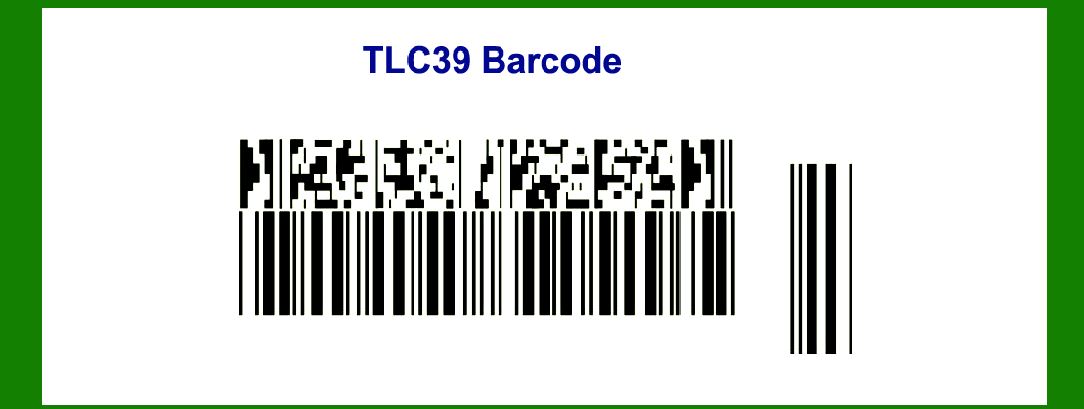
4.Specification and Structure The TLC39 barcode is an extension of the traditional Code 39 barcode, incorporating an additional data row beneath the primary Code 39 symbol. This additional row allows for the encoding of supplementary information, such as serial numbers, manufacturing dates, or other relevant data, without compromising the readability of the primary code. The dual-row structure is designed to be scanned as a single symbol, thereby streamlining data capture processes. |
5.Implementation and Adoption Following its development, the TCIF worked on promoting and implementing the TLC39 barcode across the telecommunication industry. Pilot projects were conducted to demonstrate its effectiveness in various use cases, such as inventory management, equipment tracking, and logistics optimization. These pilots showed significant improvements in data accuracy and operational efficiency, leading to broader adoption within the industry. |

|
6.Early Use Cases One of the earliest adopters of the TLC39 barcode was a major telecommunication equipment manufacturer. They used the barcode for tracking high-value components throughout their production and distribution networks. By embedding critical information within the barcode, they were able to reduce errors, improve traceability, and streamline their supply chain operations. |
7.Expansion to Other Industries The success of TLC39 in the telecommunication industry caught the attention of other sectors with similar data management needs. The healthcare industry, for instance, found the TLC39 barcode useful for tracking medical devices and patient records. Its ability to encode detailed information in a compact format made it suitable for applications requiring stringent data accuracy and traceability. |

|
8.Standardization Efforts To facilitate wider adoption and interoperability, TCIF worked with international standards organizations to formalize the specifications of TLC39. The barcode was eventually included in several standards, making it easier for companies across different industries to implement and use it. This standardization was crucial in establishing TLC39 as a reliable and universally accepted barcode symbology. |
9.Technological Advancements As barcode scanning technology advanced, so did the capabilities of TLC39. Modern scanners with higher resolution and improved decoding algorithms enhanced the reliability and speed of scanning TLC39 barcodes. This technological progress further solidified the barcode's position as a versatile and efficient data carrier. |

|
10.Integration with ERP Systems Another significant milestone in the history of TLC39 was its integration with Enterprise Resource Planning (ERP) systems. By embedding detailed product information within the barcode, companies could streamline their inventory management and automate data entry processes. This integration reduced manual errors and improved overall operational efficiency. |
11.Case Study: Global Telecom Operator A notable case study in the adoption of TLC39 involves a global telecom operator that implemented the barcode across its entire supply chain. By doing so, they were able to achieve real-time visibility into their inventory, reduce stock discrepancies, and enhance their ability to respond to market demands. The comprehensive data encoded within the TLC39 barcodes allowed for better decision-making and improved customer service. |

|
12.Challenges and Solutions Despite its advantages, the implementation of TLC39 was not without challenges. Some early adopters faced difficulties in adapting their existing infrastructure to accommodate the new barcode. However, through collaborative efforts with TCIF and barcode solution providers, these challenges were addressed. Training programs and technical support were crucial in helping companies transition to the new system smoothly. |
13.Evolution and Enhancements Over the years, the TLC39 barcode has undergone several enhancements to keep pace with evolving industry requirements. Improvements in error correction capabilities, increased data capacity, and better integration with digital systems have all contributed to its sustained relevance. These enhancements have ensured that TLC39 remains a viable solution for modern data management needs. |

|
14.Current Applications Today, TLC39 is used in a variety of applications beyond its original scope. In addition to telecommunication and healthcare, industries such as aerospace, defense, and manufacturing have adopted the barcode for tracking components, managing inventory, and ensuring compliance with regulatory standards. Its flexibility and robustness make it suitable for diverse use cases. |
15.Future Prospects Looking ahead, the future of TLC39 appears promising. With the continued advancement of barcode scanning technology and the increasing demand for detailed data management solutions, TLC39 is well-positioned to remain a key player in the barcode landscape. Potential developments include further enhancements in data capacity and integration with emerging technologies such as blockchain for improved traceability and security. |

|
16.Conclusion In conclusion, the history of the TLC39 barcode is a testament to the power of industry collaboration and innovation. From its origins in the telecommunication sector to its adoption across various industries, TLC39 has proven to be a versatile and reliable solution for complex data management needs. Its evolution and continued relevance underscore the importance of adaptable and robust barcode symbologies in today's data-driven world. |

|
17.Key Milestones and Timeline To summarize the key milestones in the history of TLC39: |
Mid-1990s: Identification of the need for a new barcode symbology by TCIF. Late 1990s: Development and pilot testing of TLC39 within the telecommunication industry. Early 2000s: Wider adoption and expansion into other industries such as healthcare. Mid-2000s: Standardization efforts and inclusion in international barcode standards. Late 2000s: Integration with ERP systems and technological advancements in scanning capabilities. 2010s: Continued enhancements and adoption in new sectors such as aerospace and defense. 2020s: Ongoing improvements and future prospects in integrating with emerging technologies. |

|
18.Conclusion The TLC39 barcode stands as a significant innovation in the field of data management and logistics. Its development was driven by the specific needs of the telecommunication industry, but its benefits have been recognized and adopted across various other sectors. The collaborative efforts in its development, the technological advancements that have enhanced its capabilities, and the continued improvements to meet evolving needs all contribute to its enduring success and relevance. As industries continue to demand more efficient and reliable data management solutions, the TLC39 barcode will likely continue to play a crucial role in meeting these challenges. |

|
 cs@easiersoft.com