Part 11 The History, Engineering Systems, Industrial Printing Technologies, and Global Barcode Infrastructure of Zebra Technologies |
1. Introduction to Zebra Technologies |
1.1 |
Zebra Technologies is one of the most influential companies in the global automatic identification and data capture industry. The company is widely recognized for its leadership in barcode printing systems, RFID technologies, mobile computing, industrial automation, and enterprise asset intelligence solutions. |
1.2 |
Zebra occupies a unique position in the barcode label printer ecosystem because it is not only a printer manufacturer but also a full enterprise mobility and data intelligence provider. Its technologies span barcode printers, RFID systems, handheld mobile computers, scanning devices, machine vision systems, software platforms, and cloud-based operational intelligence systems. |

|
1.3 |
Zebra barcode printers are among the most widely deployed globally across logistics, retail, manufacturing, healthcare, transportation, government, and field service industries. The company products are known for durability, scalability, industrial reliability, and deep integration with enterprise systems. |
1.4 |
One of Zebra defining strengths is its ecosystem approach. Instead of focusing solely on hardware, Zebra built a complete infrastructure that connects printing devices, scanning systems, RFID tags, mobile computers, and software analytics into unified enterprise workflows. |

|
This system-level approach positioned Zebra as a dominant player in large-scale supply chain digitization projects, warehouse automation systems, smart retail operations, and healthcare asset tracking systems. |
1.6 |
Today, Zebra continues to expand its portfolio through acquisitions, software development, cloud platforms, and AI-driven enterprise intelligence solutions. |

|
2. Founding History and Early Development |
2.1 |
Zebra Technologies was founded in 1969 in the United States by Edward Kaplan and Gerald Mohr. |
2.2 |
The company initially focused on specialty high-speed electromechanical products, including sophisticated printing and labeling systems designed for industrial and government applications. |
2.3 |
During the early development of barcode technology in the 1970s and 1980s, Zebra quickly recognized the potential of machine-readable identification systems for logistics, manufacturing, and retail automation. |
2.4 |
As barcode standards became widely adopted, Zebra transitioned into thermal barcode printing technologies, focusing heavily on industrial-grade printers capable of high-volume, high-precision label production. |

|
2.5 |
The company rapidly expanded into enterprise markets requiring reliable printing systems integrated with emerging warehouse management and supply chain technologies. |
2.6 |
Zebra early success was strongly tied to its ability to provide robust, scalable, and high-performance barcode printing solutions for industrial environments. |
2.7 |
Over time, Zebra expanded internationally through acquisitions, global distribution networks, and strategic partnerships with enterprise software and logistics providers. |
2.8 |
This early foundation established Zebra as a central player in the global automatic identification industry. |

|
3. Thermal Printing Technologies and Engineering Architecture |
3.1 |
Thermal printing technology became the foundation of Zebra barcode printer portfolio. Thermal systems are widely used due to their speed, reliability, low maintenance, and excellent barcode precision. |
3.2 |
Zebra developed both direct thermal and thermal transfer printing systems. Direct thermal printers are widely used for shipping labels, warehouse labels, receipts, and short-term logistics applications. |
3.3 |
Thermal transfer printing systems support durable industrial labeling applications requiring resistance to abrasion, chemicals, UV exposure, and environmental stress. |
3.4 |
A core engineering focus for Zebra has always been printhead precision. Barcode readability depends heavily on edge sharpness, consistent bar width, and thermal uniformity across the printhead surface. |

|
3.5 |
Zebra developed advanced thermal control systems that regulate heat distribution across microscopic heating elements, ensuring consistent print quality even under high-speed operation. |
3.6 |
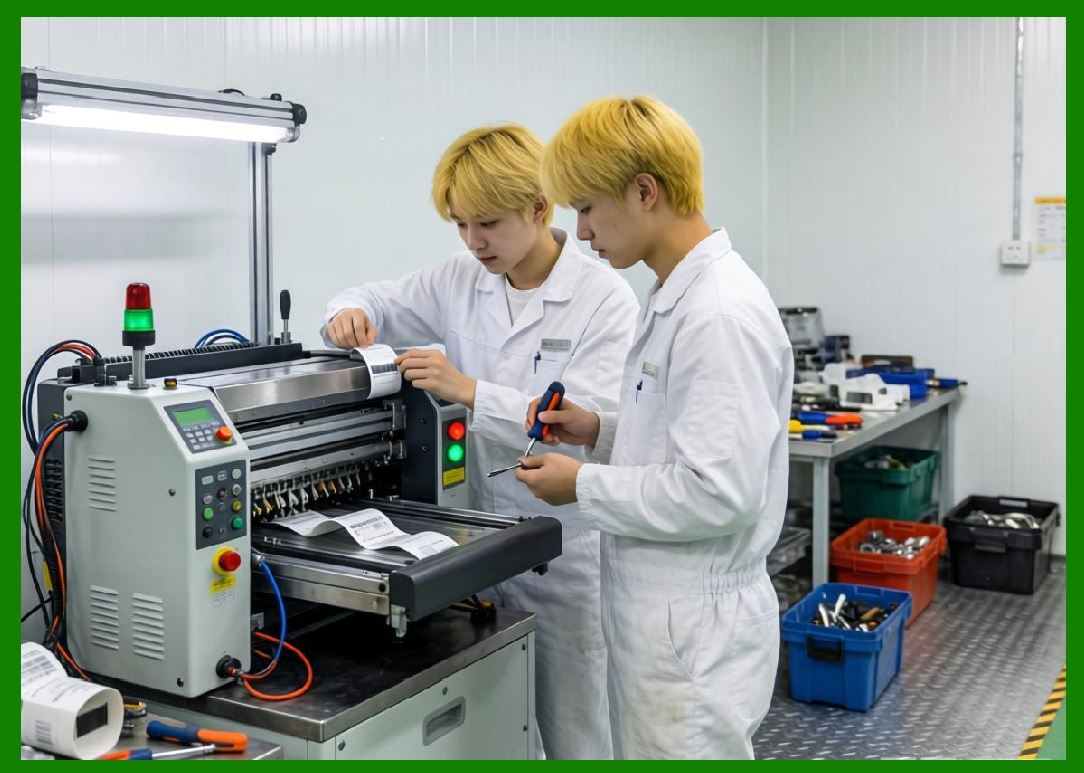
Media handling systems are another critical component. Zebra printers incorporate precision rollers, sensors, calibration systems, and alignment technologies to ensure accurate label positioning. |
3.7 |
Industrial durability is a major design principle. Zebra printers are engineered for continuous operation in warehouses, factories, distribution centers, ports, and logistics hubs. |
3.8 |
The company also emphasizes modular printer architecture, allowing components such as printheads, rollers, and sensors to be easily replaced or upgraded. |
|
4. Barcode Printer Product Families |
4.1 |
Zebra developed one of the most extensive portfolios of barcode printers in the global industry, covering desktop, industrial, mobile, and print-and-apply systems. |
4.2 |
The ZT series represents Zebra flagship industrial printer family. These printers are designed for high-performance manufacturing, logistics, transportation, and warehouse automation environments. |
4.3 |
ZT printers support high-speed operation, advanced connectivity, RFID encoding, industrial durability, and enterprise-level scalability. |
4.4 |
The GX and ZD series target desktop and mid-range applications, including retail stores, healthcare facilities, laboratories, and small to medium-sized businesses. |

|
4.5 |
Zebra mobile printers are widely used in transportation, field service, retail mobility, warehouse operations, and healthcare environments. |
4.6 |
Print-and-apply systems are used in automated production lines, enabling high-speed labeling of products in manufacturing and packaging environments. |
4.7 |
Zebra printers support a wide range of barcode formats including linear barcodes, 2D codes such as QR Code and Data Matrix, GS1 standards, and serialization systems. |
4.8 |
The company printer ecosystem is designed for scalability across both small business environments and global enterprise infrastructure. |

|
5. RFID Printing and Smart Labeling Technologies |
5.1 |
Zebra is one of the global leaders in RFID-enabled barcode printing systems. RFID printers integrate thermal printing with embedded RFID tag encoding in a single operational process. |
5.2 |
RFID systems allow real-time tracking of assets without requiring line-of-sight scanning, significantly improving inventory accuracy and supply chain visibility. |
5.3 |
Zebra RFID printers support EPCglobal standards, UHF RFID encoding, serialization systems, and enterprise traceability requirements. |
5.4 |
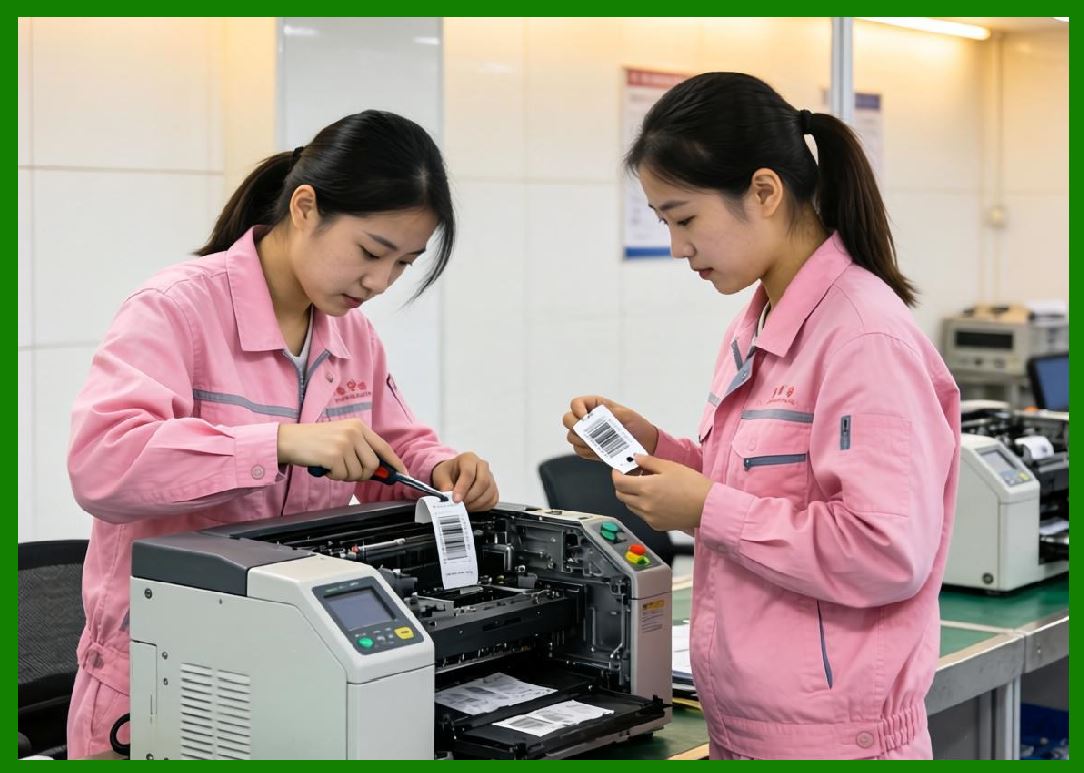
RFID calibration and encoding accuracy are critical engineering challenges. Zebra developed advanced verification systems to ensure RFID tags are correctly encoded before deployment. |
|
5.5 |
Retail apparel is one of the largest RFID application sectors, enabling real-time inventory management and omnichannel fulfillment operations. |
5.6 |
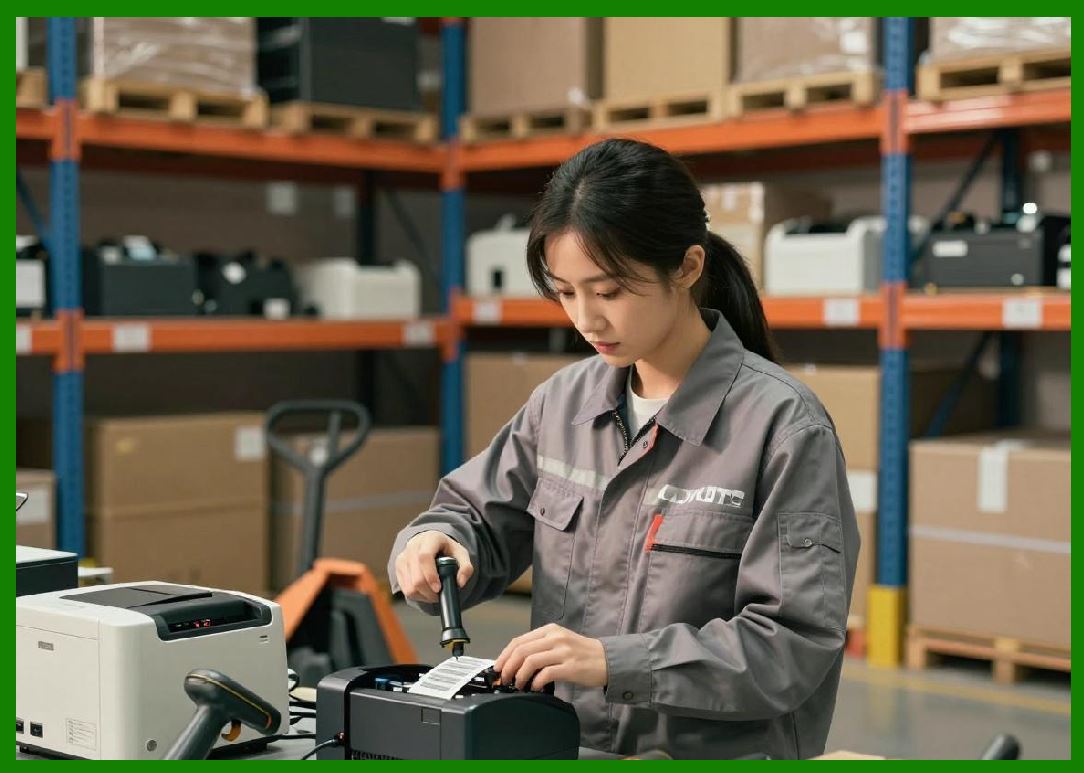
Warehouse automation systems rely heavily on RFID for pallet tracking, shipment validation, and automated inventory management. |
5.7 |
Zebra integrates RFID systems with cloud platforms, mobile computers, scanners, and enterprise software systems to create unified asset intelligence ecosystems. |
5.8 |
RFID technologies remain one of Zebra most strategically important long-term growth areas. |
|
6. Enterprise Mobility and Mobile Computing Systems |
6.1 |
A major distinguishing feature of Zebra Technologies is its leadership in enterprise mobility systems beyond barcode printers. |
6.2 |
The company manufactures rugged handheld mobile computers, barcode scanners, wearable devices, and real-time data capture systems used in logistics, retail, healthcare, and field services. |
6.3 |
These devices allow workers to scan, print, track, and manage inventory in real time, improving operational efficiency and reducing human error. |
6.4 |
Mobile computing systems are tightly integrated with Zebra printing infrastructure, enabling seamless workflows between data capture and label generation. |

|
6.5 |
Zebra devices support Android-based enterprise systems, cloud connectivity, Wi-Fi, Bluetooth, cellular networks, and edge computing applications. |
6.6 |
Wearable scanners and mobile terminals are widely used in warehouse picking operations, retail inventory management, and healthcare asset tracking. |
6.7 |
The integration of mobile computing and printing systems allows Zebra to provide complete end-to-end enterprise automation solutions. |
6.8 |
This ecosystem approach significantly differentiates Zebra from traditional printer-focused manufacturers. |

|
7. Software Platforms and Enterprise Intelligence |
7.1 |
Zebra increasingly operates as a software and analytics company in addition to a hardware manufacturer. |
7.2 |
The company provides enterprise software platforms for device management, printer fleet monitoring, workflow optimization, and real-time operational analytics. |
7.3 |
Zebra software ecosystem enables centralized management of printers, scanners, mobile computers, RFID systems, and IoT devices. |
7.4 |
Cloud-based infrastructure allows organizations to manage globally distributed device fleets across multiple regions and operational environments. |

|
7.5 |
Data analytics systems transform barcode and RFID data into actionable insights for supply chain optimization, inventory management, and operational efficiency. |
7.6 |
Artificial intelligence is increasingly used for predictive maintenance, anomaly detection, and workflow automation. |
7.7 |
Zebra also provides developer tools, APIs, and SDKs for integration with enterprise resource planning systems, warehouse management systems, and retail platforms. |
7.8 |
This software-driven transformation positions Zebra as a leader in enterprise asset intelligence. |

|
8. Industrial and Sector Applications |
8.1 |
Zebra systems are widely used in manufacturing for production tracking, component labeling, serialization, and quality control. |
8.2 |
Logistics and warehousing represent one of Zebra largest application sectors, where barcode and RFID systems enable real-time supply chain visibility. |
8.3 |
Retail companies use Zebra systems for inventory tracking, shelf labeling, omnichannel fulfillment, and customer engagement systems. |
8.4 |
Healthcare systems rely on Zebra technologies for patient identification, specimen tracking, medication labeling, and hospital asset management. |

|
8.5 |
Transportation industries use Zebra systems for shipping labels, freight tracking, baggage handling, and logistics coordination. |
8.6 |
Government agencies use Zebra systems for identification, logistics management, defense applications, and public infrastructure tracking. |
8.7 |
Food and beverage industries rely on Zebra labeling systems for traceability, expiration tracking, and regulatory compliance. |
8.8 |
Zebra widespread adoption across industries reflects its strong position in enterprise automation ecosystems. |

|
9. Acquisitions, Expansion, and Global Strategy |
9.1 |
Zebra Technologies has expanded significantly through strategic acquisitions of companies specializing in RFID, mobile computing, printing systems, and software platforms. |
9.2 |
These acquisitions helped Zebra build a comprehensive enterprise ecosystem spanning hardware, software, cloud infrastructure, and analytics. |
9.3 |
The company global expansion strategy includes strong presence in North America, Europe, Asia-Pacific, and Latin America. |
9.4 |
Zebra also collaborates closely with enterprise software vendors, logistics companies, retail chains, and healthcare organizations. |

|
9.5 |
The company ecosystem approach allows it to compete not only in printer hardware but also in broader digital transformation initiatives. |
9.6 |
Zebra continues investing heavily in innovation labs, research centers, and technology development programs. |
9.7 |
Partnerships with cloud providers, AI companies, and industrial automation firms further strengthen its market position. |
9.8 |
This strategy has positioned Zebra as one of the most influential companies in global enterprise automation. |

|
10. Future Technologies and Strategic Outlook |
10.1 |
Zebra future direction focuses heavily on AI-driven automation, intelligent edge computing, cloud-native enterprise systems, and real-time supply chain intelligence. |
10.2 |
RFID expansion remains a key strategic priority as global industries increasingly adopt item-level tracking and real-time inventory systems. |
10.3 |
The company is also investing in machine vision, robotics integration, and intelligent sensing systems. |
10.4 |
Cloud-based enterprise intelligence platforms will continue expanding, integrating printing, scanning, RFID, and mobile computing into unified systems. |

|
10.5 |
Sustainability is becoming increasingly important, with focus on energy efficiency, recyclable materials, and reduced operational waste. |
10.6 |
Cybersecurity is another critical focus area as enterprise devices become more deeply integrated into digital infrastructure. |
10.7 |
Zebra is also exploring deeper integration of AI for predictive logistics, automated decision-making, and intelligent workflow optimization. |
10.8 |
As global supply chains continue digitizing, Zebra Technologies is expected to remain a central leader in enterprise asset intelligence and automatic identification systems. |

|
Detailed Technical Content Summary |
This part provided a comprehensive technical and historical overview of Zebra Technologies and its dominant role in the global barcode printer and enterprise automation industry. The article examined the company founding, early industrial development, and transition into a global leader in automatic identification systems. |
The discussion covered thermal printing technologies, industrial barcode printer architectures, RFID-enabled systems, print-and-apply automation, and enterprise mobility solutions including handheld computers and scanners. Significant attention was given to Zebra ecosystem strategy integrating hardware, software, cloud platforms, and enterprise analytics. |
The article also explored RFID systems, mobile computing technologies, software platforms, AI integration, and enterprise intelligence systems. Applications across logistics, retail, healthcare, manufacturing, transportation, government, and food industries were analyzed in depth. |
Finally, the article examined Zebra strategic acquisitions, global expansion, and future technological direction involving AI, IoT, cloud computing, sustainability, cybersecurity, and intelligent supply chain automation systems. |
 cs@easiersoft.com