Part 13 The History, Engineering Architecture, Print Technologies, and Industrial Barcode Ecosystem of Intermec Technologies Corporation |
1. Introduction to Intermec Technologies Corporation |
1.1 |
Intermec Technologies Corporation was one of the most influential companies in the history of barcode printing, RFID systems, rugged mobile computing, and enterprise data capture technologies. The company played a foundational role in shaping modern warehouse automation, logistics digitization, and industrial barcode infrastructure. |
1.2 |
Intermec became widely known for its leadership in industrial-grade barcode printers, RFID-enabled labeling systems, rugged handheld computers, and integrated enterprise mobility solutions. Its technologies were designed specifically for demanding environments such as warehouses, distribution centers, transportation hubs, manufacturing plants, and field operations. |

|
1.3 |
Unlike companies focused purely on printing hardware, Intermec built a complete ecosystem of automatic identification technologies, combining printers, scanners, RFID systems, mobile computing devices, and enterprise software into unified operational platforms. |
1.4 |
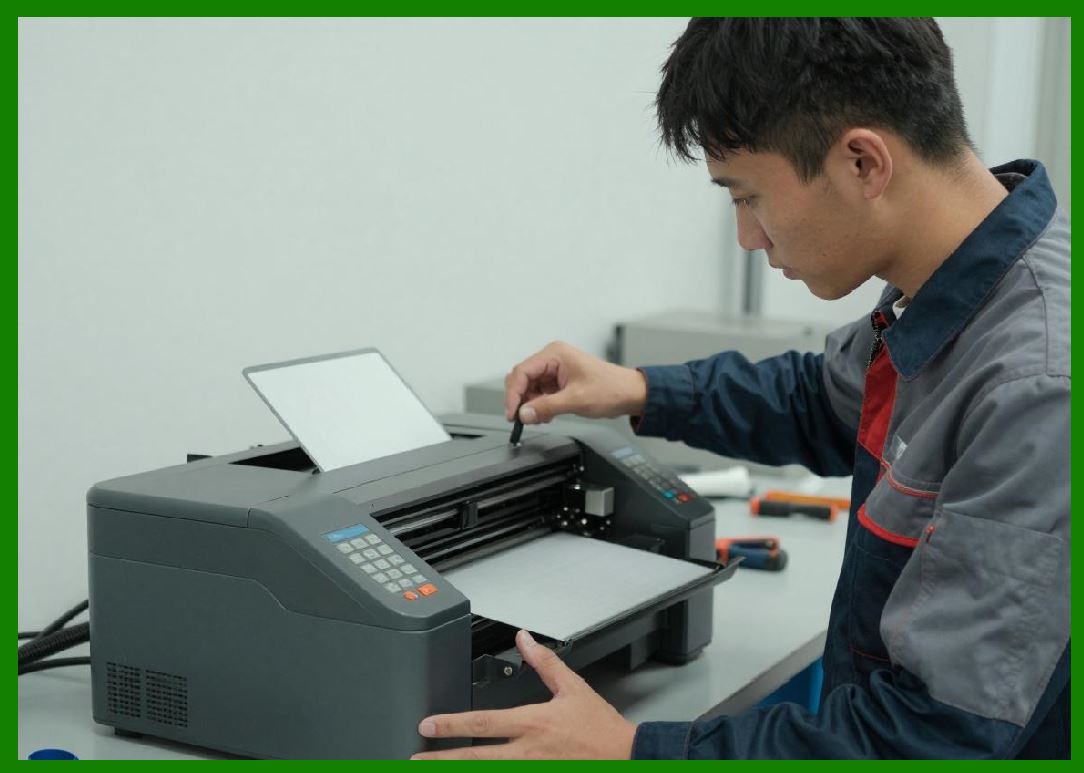
The company products were widely deployed in global supply chains where reliability, durability, and real-time data accuracy were essential for operational success. |
|
1.5 |
Intermec became especially respected for its rugged engineering philosophy, emphasizing long-term durability, industrial reliability, and deep integration with enterprise workflows. |
1.6 |
Over time, Intermec became a key part of broader industry consolidation trends in automatic identification technologies and was eventually integrated into larger enterprise automation ecosystems. |

|
2. Founding History and Early Development |
2.1 |
Intermec originated in the United States during the 1960s and 1970s, a period when industrial automation and machine-readable identification systems were beginning to emerge. |
2.2 |
The company initially focused on developing data collection and industrial automation technologies for manufacturing and logistics environments. |
2.3 |
As barcode technology emerged in the 1970s, Intermec quickly recognized its transformative potential for supply chain management, inventory control, and industrial tracking systems. |
2.4 |
Intermec became one of the early pioneers in integrating barcode scanning, printing, and data collection into unified industrial systems. |

|
2.5 |
The company invested heavily in rugged industrial electronics capable of operating in harsh environments such as warehouses, factories, outdoor logistics sites, and transportation facilities. |
2.6 |
By the 1980s, Intermec had established itself as a leading provider of automatic identification and data capture technologies for enterprise customers. |
2.7 |
The company expanded globally through partnerships, enterprise contracts, and industrial distribution networks. |
2.8 |
Intermec early innovations laid the foundation for modern warehouse automation and real-time supply chain visibility systems. |

|
3. Thermal Printing Technologies and Engineering Design |
3.1 |
Intermec became a major developer of industrial thermal barcode printing technologies, which remain central to modern logistics and manufacturing operations. |
3.2 |
The company supported both direct thermal and thermal transfer printing systems. Direct thermal printing was widely used in shipping labels, warehouse identification, and logistics documentation. |
3.3 |
Thermal transfer printing systems enabled durable labeling for industrial environments requiring resistance to heat, chemicals, abrasion, and long-term storage conditions. |
3.4 |
Intermec engineers placed strong emphasis on printhead durability and precision, ensuring consistent barcode quality even under continuous industrial workloads. |

|
3.5 |
Thermal control systems were designed to maintain stable heat distribution across printhead elements, reducing distortion and improving scanning reliability. |
3.6 |
Media handling systems included precision rollers, sensors, and calibration mechanisms to ensure accurate label alignment during high-speed operation. |
3.7 |
Industrial robustness was a defining feature of Intermec printers, with reinforced structures, rugged components, and long-life mechanical systems. |
3.8 |
These engineering principles ensured reliability in demanding environments such as logistics hubs, manufacturing plants, and transportation networks. |

|
4. Industrial Barcode Printer Product Families |
4.1 |
Intermec developed several important industrial barcode printer product families that became widely used in enterprise logistics and manufacturing systems. |
4.2 |
The PM series represented compact industrial printers designed for medium-volume labeling applications with strong reliability and ease of integration. |
4.3 |
The PX series became one of Intermec most advanced industrial printer platforms, supporting high-speed production environments and enterprise-scale labeling operations. |
4.4 |
PX printers were designed for continuous operation in warehouses, manufacturing plants, and distribution centers requiring high throughput and durability. |

|
4.5 |
Desktop printers were widely used in retail, healthcare, laboratory, and office environments requiring compact barcode printing solutions. |
4.6 |
Intermec also developed print-and-apply systems for automated manufacturing and packaging lines. |
4.7 |
These systems enabled high-speed labeling of products in industrial production environments with minimal human intervention. |
4.8 |
Intermec printers supported a wide range of barcode formats including linear barcodes, 2D codes, GS1 standards, and serialization systems. |

|
5. RFID Technology and Smart Labeling Systems |
5.1 |
Intermec was one of the early pioneers in RFID-enabled barcode printing systems, playing a significant role in the development of smart labeling technologies. |
5.2 |
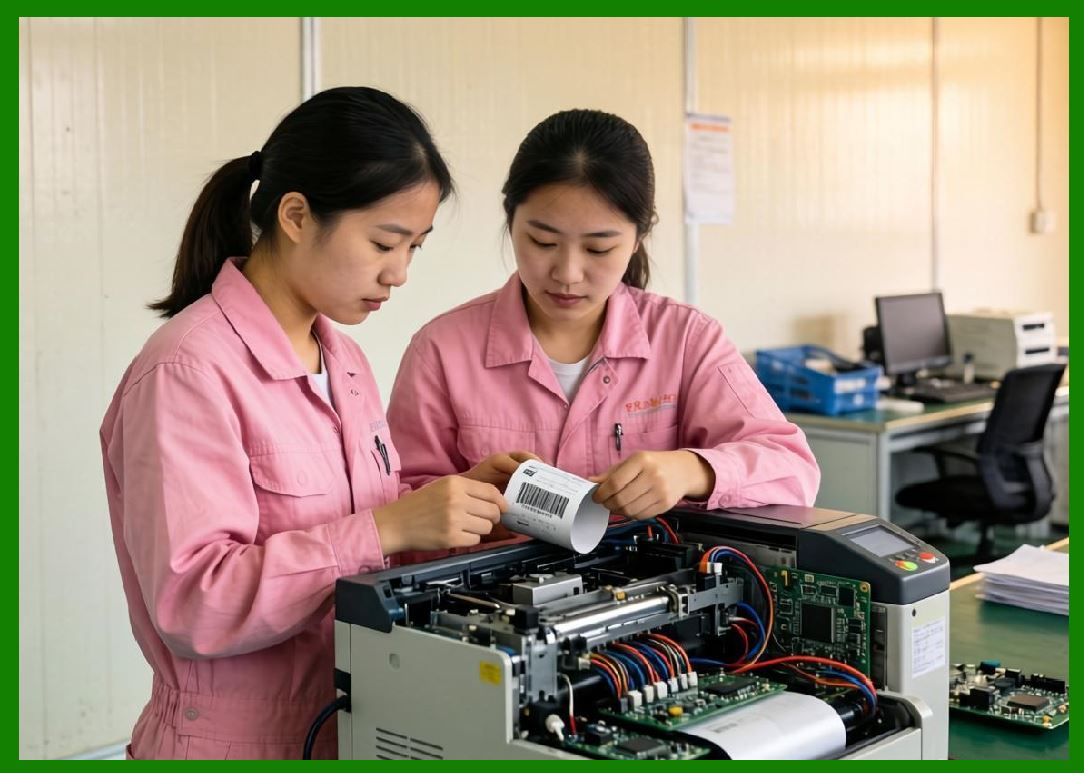
RFID printers combine thermal printing with embedded RFID chip encoding, enabling both visible and digital identification within a single label. |
5.3 |
These systems are widely used in supply chain management, logistics tracking, warehouse automation, and retail inventory systems. |
5.4 |
RFID integration requires precise synchronization between printing mechanisms, antenna systems, and radio-frequency encoding components. |

|
5.5 |
Intermec developed advanced RFID calibration and verification systems to ensure encoding accuracy and operational reliability. |
5.6 |
Retail apparel industries became one of the largest adopters of RFID systems for real-time inventory tracking and omnichannel fulfillment. |
5.7 |
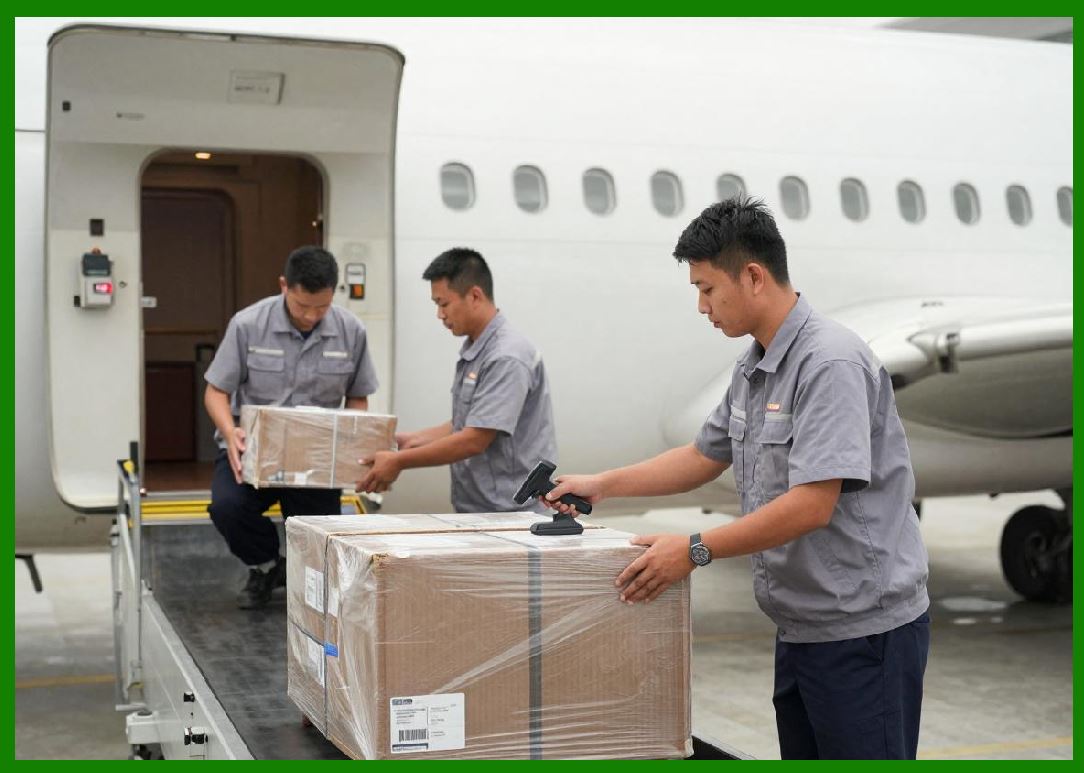
Warehouse automation systems use RFID for pallet tracking, shipment validation, and real-time logistics visibility. |
5.8 |
Intermec RFID technologies significantly influenced modern supply chain digitization systems. |
|
6. Rugged Mobile Computing and Data Capture Systems |
6.1 |
One of Intermec most important contributions was its leadership in rugged mobile computing and enterprise data capture systems. |
6.2 |
The company developed handheld computers, barcode scanners, and mobile terminals designed for industrial environments. |
6.3 |
These devices allowed workers to capture, process, and transmit data in real time across warehouses, transportation networks, and field operations. |
6.4 |
Mobile computing systems became essential for warehouse picking, inventory management, logistics tracking, and field service operations. |

|
6.5 |
Intermec devices were designed to withstand drops, vibration, temperature extremes, dust, and moisture exposure. |
6.6 |
Wireless communication technologies such as Wi-Fi, Bluetooth, and cellular connectivity enabled real-time enterprise integration. |
6.7 |
These mobile systems were often tightly integrated with Intermec printers to create complete data capture and labeling workflows. |
6.8 |
The combination of scanning, computing, and printing formed a unified enterprise mobility ecosystem. |

|
7. Enterprise Software and System Integration |
7.1 |
Intermec developed enterprise software platforms enabling device management, workflow integration, and system connectivity across industrial environments. |
7.2 |
The company provided tools for integrating barcode printers, RFID systems, scanners, and mobile computers into enterprise resource planning systems. |
7.3 |
Warehouse management systems and logistics platforms relied heavily on Intermec infrastructure for real-time data synchronization. |
7.4 |
Remote management systems enabled centralized monitoring and control of distributed device fleets. |
|
7.5 |
Software development kits and APIs allowed enterprises to build custom applications integrating Intermec hardware into specialized workflows. |
7.6 |
Cloud-based systems gradually became more important for managing large-scale distributed enterprise deployments. |
7.7 |
Intermec also supported standards-based integration for interoperability across mixed hardware environments. |
7.8 |
These software systems played a key role in enabling digital transformation of supply chain operations. |

|
8. Industrial Applications and Market Deployment |
8.1 |
Intermec systems were widely used in manufacturing for production tracking, compliance labeling, and quality assurance processes. |
8.2 |
Logistics and warehousing represented one of the company largest application areas, with barcode and RFID systems enabling real-time inventory visibility. |
8.3 |
Retail industries used Intermec systems for distribution logistics, inventory control, and supply chain management. |
8.4 |
Healthcare organizations relied on Intermec technologies for specimen tracking, patient identification, and hospital asset management. |

|
8.5 |
Transportation and postal systems used Intermec printers for shipping labels, routing, and logistics documentation. |
8.6 |
Government agencies adopted Intermec systems for defense logistics, identification systems, and public infrastructure management. |
8.7 |
Food and beverage industries used Intermec labeling systems for traceability, expiration tracking, and regulatory compliance. |
8.8 |
The broad adoption of Intermec systems reflects their importance in global industrial automation. |

|
9. Acquisition by Honeywell and Industry Consolidation |
9.1 |
A major turning point in Intermec history occurred when it was acquired by Honeywell International Inc.. |
9.2 |
This acquisition was part of a broader industry consolidation trend where major automation companies integrated printing, scanning, RFID, and mobility technologies into unified platforms. |
9.3 |
Through this acquisition, Honeywell expanded its enterprise mobility portfolio and strengthened its position in industrial barcode printing markets. |
9.4 |
Intermec technologies became integrated into Honeywell broader industrial automation ecosystem. |

|
9.5 |
This integration enabled more comprehensive solutions combining printers, mobile computers, RFID systems, and enterprise analytics platforms. |
9.6 |
The acquisition also expanded Honeywell customer base across logistics, retail, manufacturing, and healthcare industries. |
9.7 |
Intermec engineering legacy continues to influence modern Honeywell product development. |
9.8 |
The consolidation demonstrated the strategic importance of unified enterprise automation systems. |

|
10. Future Influence and Technological Legacy |
10.1 |
Although Intermec no longer operates as an independent company, its technologies remain highly influential in modern industrial automation systems. |
10.2 |
Its innovations in rugged mobile computing continue shaping warehouse logistics, field service operations, and transportation systems. |
10.3 |
RFID technologies pioneered by Intermec continue to evolve in modern supply chain visibility systems. |
10.4 |
Cloud-based enterprise automation platforms build upon principles originally developed in Intermec integration systems. |

|
10.5 |
Artificial intelligence is increasingly applied to predictive maintenance, logistics optimization, and real-time operational analytics. |
10.6 |
Sustainability considerations are influencing modern successors of Intermec technologies through energy efficiency and waste reduction systems. |
10.7 |
Cybersecurity has become increasingly important as industrial devices become network-connected enterprise endpoints. |
10.8 |
Intermec legacy remains deeply embedded in modern barcode printing, RFID systems, and enterprise mobility infrastructure. |

|
Detailed Technical Content Summary |
This part provided a detailed historical and technical analysis of Intermec Technologies Corporation and its significant contributions to barcode printing, RFID systems, and enterprise mobility technologies. The article explored Intermec origins in industrial data capture systems and its evolution into a major automatic identification technology provider. |
The discussion covered thermal barcode printing technologies, industrial printer architectures, print-and-apply systems, and RFID-enabled smart labeling technologies. Significant attention was given to Intermec rugged mobile computing systems, handheld devices, and integrated enterprise data capture ecosystems. |
The article also examined enterprise software systems, cloud integration, warehouse management platforms, and industrial automation workflows. The acquisition of Intermec by Honeywell was analyzed as part of broader industry consolidation trends. |
Finally, the article discussed Intermec legacy and continuing influence on modern supply chain automation, RFID systems, mobile computing technologies, AI-driven logistics optimization, and global enterprise barcode infrastructure. |
 cs@easiersoft.com