Part 14 The History, Engineering Systems, Printing Technologies, and Global Industrial Labeling Ecosystem of Avery Dennison Corporation |
1. Introduction to Avery Dennison in Barcode and Labeling Ecosystems |
1.1 |
Avery Dennison Corporation is one of the most important companies in the global labeling and automatic identification ecosystem, although it is not primarily a barcode printer manufacturer in the same way as Zebra or Honeywell. Instead, it plays a foundational role in the entire barcode printing industry by producing label materials, adhesive technologies, RFID inlays, smart labeling systems, and industrial tagging solutions. |
1.2 |
The company influence is extremely significant because every barcode printer hether industrial, desktop, mobile, or RFID-enabled Depends on consumables such as labels, adhesives, and tag materials. Avery Dennison operates at this foundational layer of the ecosystem, enabling the physical substrate upon which barcode information is printed or encoded. |

|
1.3 |
Beyond traditional labeling materials, Avery Dennison became one of the world leading providers of RFID inlays and smart label components. These technologies are embedded into millions of products across retail, logistics, healthcare, apparel, and supply chain systems worldwide. |
1.4 |
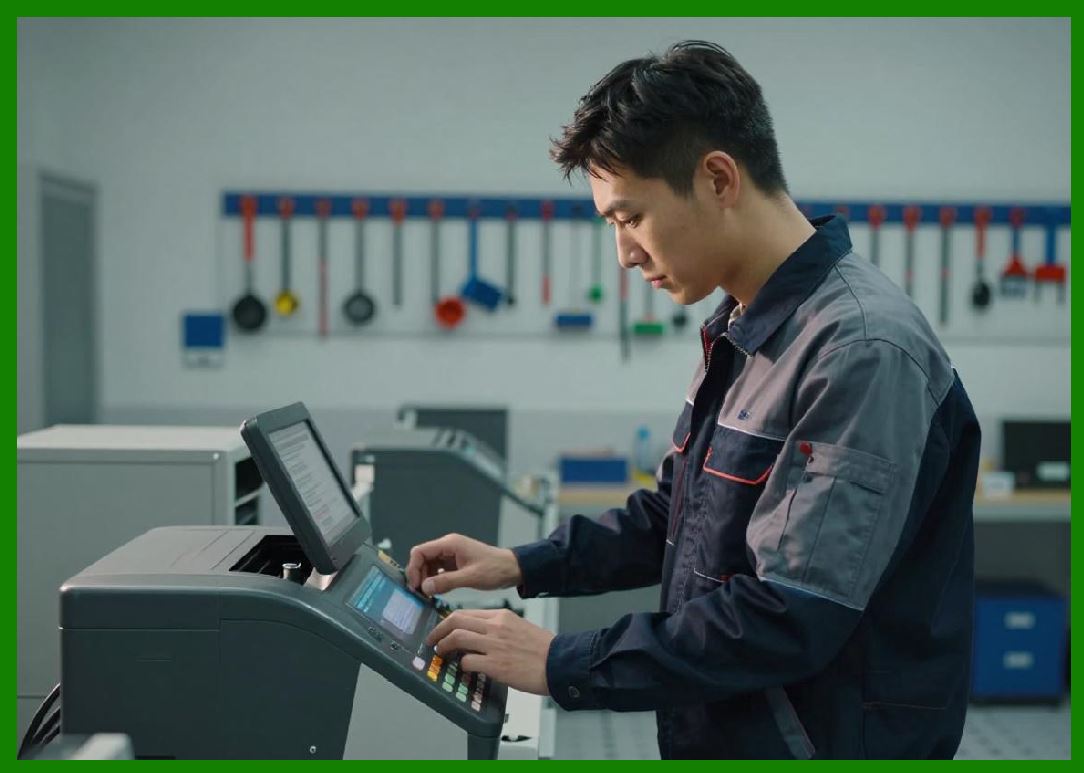
The company technologies support the entire lifecycle of automatic identification, from raw materials and manufacturing to retail checkout, inventory tracking, and reverse logistics. |
|
1.5 |
Avery Dennison plays a central role in enabling item-level intelligence,where every product can be uniquely identified, tracked, and managed digitally through barcode or RFID systems. |
1.6 |
Today, the company continues expanding into digital identification systems, IoT-connected labeling, sustainability-driven materials, and intelligent supply chain infrastructure. |

|
2. Historical Origins and Corporate Development |
2.1 |
Ray Stanton Avery founded the company in 1935 in the United States, initially focusing on self-adhesive labeling technologies. |
2.2 |
The early innovation that defined the company was the development of practical self-adhesive labels, which significantly improved labeling efficiency across industrial and commercial applications. |
2.3 |
Before self-adhesive labels, labeling processes required glue, manual application, and time-consuming production workflows. Avery innovation dramatically simplified product identification systems. |
2.4 |
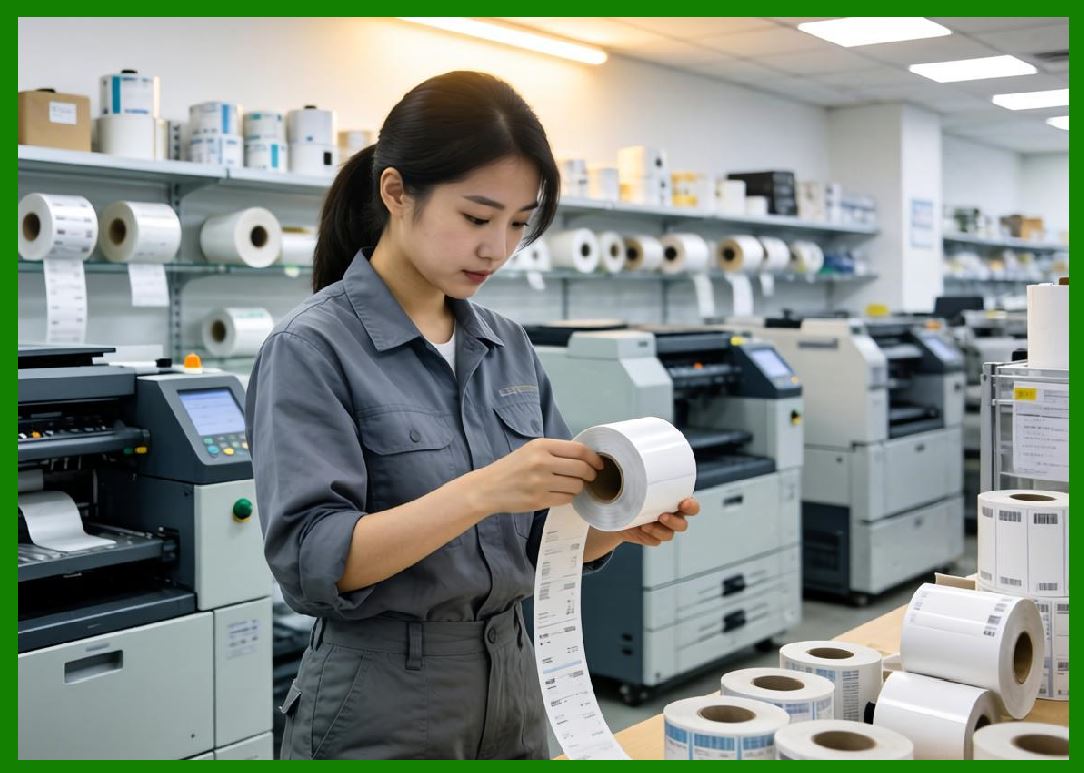
As retail and industrial production expanded in the mid-20th century, demand for standardized labeling systems grew rapidly. Avery Dennison became a major supplier of labeling materials across multiple industries. |
|
2.5 |
The company gradually expanded its operations into industrial adhesives, labeling films, packaging materials, and printing substrates. |
2.6 |
With the emergence of barcode technology in the 1970s and 1980s, Avery Dennison materials became essential components of automated identification systems. |
2.7 |
The company expanded globally, establishing manufacturing, R&D, and distribution networks across North America, Europe, and Asia. |
2.8 |
Over time, Avery Dennison became a key enabler of the global barcode ecosystem by supplying the physical materials required for labeling and RFID encoding systems. |

|
3. Label Materials Science and Adhesive Technologies |
3.1 |
Avery Dennison is widely recognized for its advanced materials science in adhesives, films, coatings, and label substrates used in barcode printing applications. |
3.2 |
Barcode labels must maintain structural integrity under a wide range of environmental conditions including temperature variation, moisture exposure, chemical contact, abrasion, and UV radiation. |
3.3 |
The company develops specialized adhesive formulations designed for different applications such as permanent bonding, removable labeling, freezer-grade adhesives, and high-durability industrial adhesives. |
3.4 |
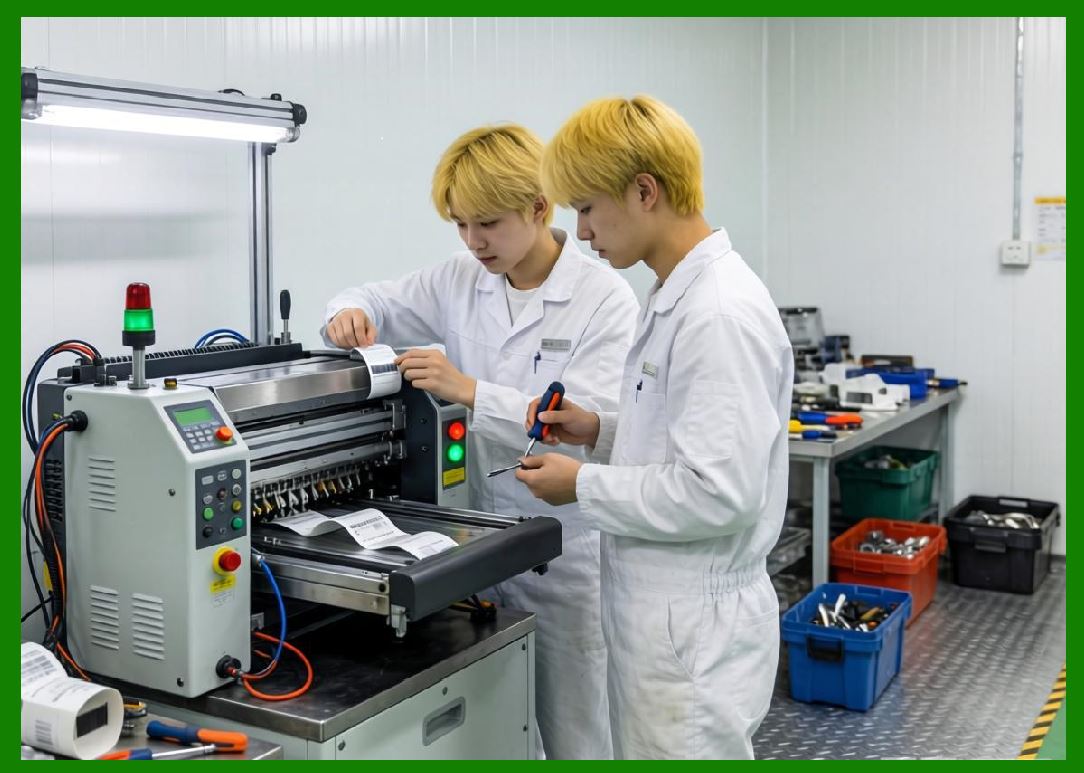
Label face stocks include paper, synthetic films, polyester, polypropylene, and specialty materials designed for extreme industrial environments. |
|
3.5 |
Coating technologies ensure that printed barcodes maintain high contrast and scanning reliability across thermal transfer and direct thermal printing systems. |
3.6 |
Avery Dennison also develops RFID-compatible materials that allow embedded antenna structures to function reliably without signal interference or degradation. |
3.7 |
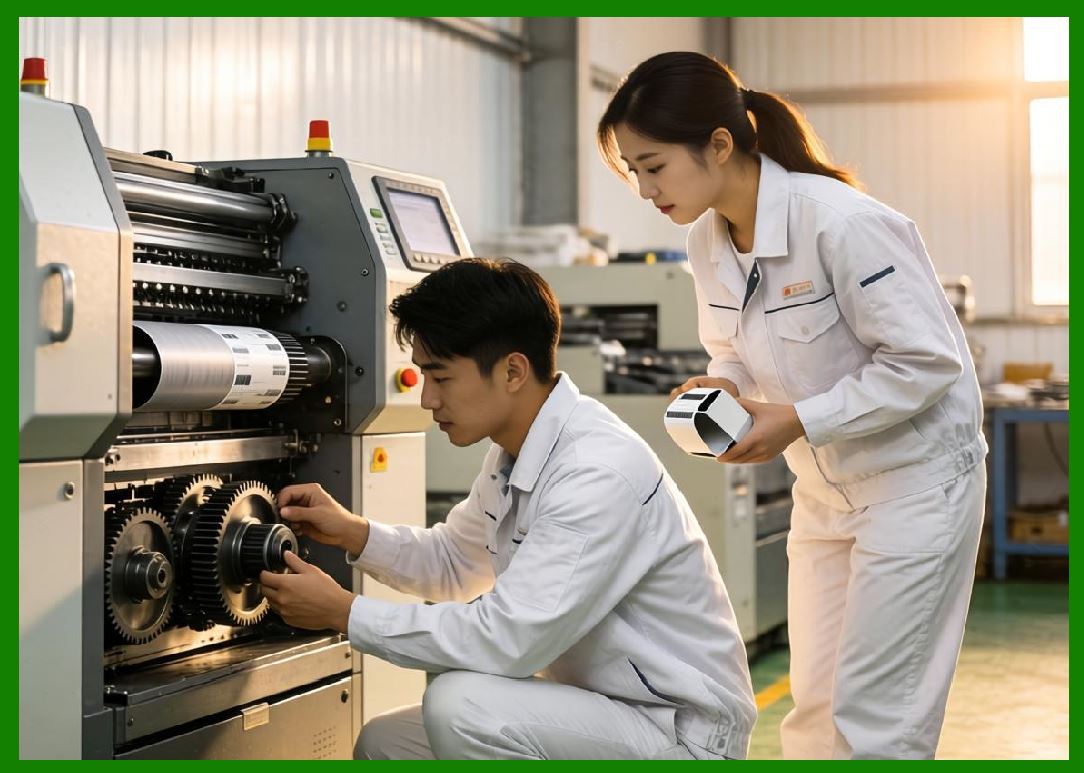
Material engineering is critical for ensuring compatibility with thermal printers, inkjet systems, laser printers, and RFID encoding systems. |
3.8 |
These innovations make Avery Dennison one of the most important foundational companies in the automatic identification supply chain. |
|
4. RFID Inlays and Smart Label Technologies |
4.1 |
One of Avery Dennison most significant contributions to modern barcode ecosystems is its leadership in RFID inlay and smart label manufacturing. |
4.2 |
An RFID inlay consists of a microchip and antenna embedded within a label structure. These components allow wireless identification and tracking of individual items. |
4.3 |
Avery Dennison produces billions of RFID inlays used across retail apparel, logistics, healthcare, automotive, and industrial supply chains. |
4.4 |
RFID smart labels enable real-time inventory tracking, automated checkout systems, anti-theft systems, and supply chain visibility. |

|
4.5 |
The company invests heavily in antenna design optimization, chip integration technologies, and signal reliability engineering. |
4.6 |
RFID inlays must be compatible with high-speed production processes while maintaining signal integrity and consistent encoding performance. |
4.7 |
Avery Dennison also develops specialized RFID materials for challenging environments such as metal surfaces, liquid containers, and high-density product packaging. |
4.8 |
These technologies are essential for enabling modern smart retail and digital supply chain systems. |
|
5. Integration with Barcode Printer Ecosystems |
5.1 |
Although Avery Dennison does not primarily manufacture barcode printers, its materials are essential for all major printer brands including Zebra, Honeywell, SATO, Epson, BIXOLON, and others. |
5.2 |
Thermal transfer printing systems rely heavily on compatibility between printhead temperature profiles, ribbon chemistry, and label surface coatings all areas influenced by Avery Dennison materials engineering. |
5.3 |
Direct thermal printing systems require specialized heat-sensitive coatings that ensure barcode clarity, stability, and long-term readability. |
5.4 |
Avery Dennison collaborates indirectly with printer manufacturers to ensure label materials meet precise specifications for industrial printing performance. |
|
5.5 |
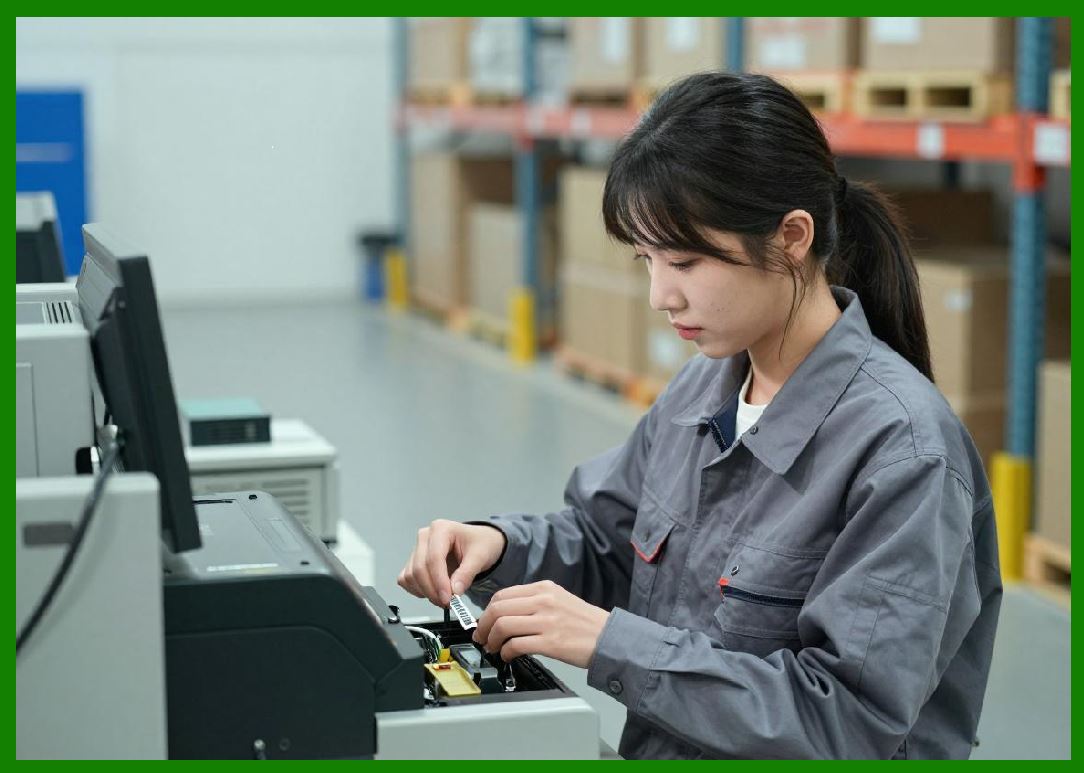
RFID printers depend on inlays that can be accurately encoded without signal loss, interference, or structural deformation during printing. |
5.6 |
Label stock consistency is critical for automated print-and-apply systems used in high-speed manufacturing environments. |
5.7 |
The company materials also support variable data printing systems, serialization workflows, and high-resolution barcode generation. |
5.8 |
Without high-quality label materials, even the most advanced barcode printers cannot achieve reliable industrial performance. |

|
6. Industrial Applications of Labeling and RFID Materials |
6.1 |
Avery Dennison materials are used extensively in retail supply chains for product labeling, price tagging, and inventory identification systems. |
6.2 |
In logistics and warehousing, label materials support shipping labels, pallet tracking, carton identification, and automated sorting systems. |
6.3 |
Healthcare applications include specimen labeling, pharmaceutical packaging, patient identification wristbands, and laboratory tracking systems. |
6.4 |
Food and beverage industries rely on specialized adhesive materials for expiration labeling, cold-chain logistics, and regulatory compliance labeling. |

|
6.5 |
Industrial manufacturing applications include component tracking, assembly line labeling, and serialized product identification. |
6.6 |
Apparel industries represent one of the largest RFID adoption sectors, with Avery Dennison supplying inlays for item-level tracking. |
6.7 |
Automotive industries use labeling materials for parts tracking, logistics management, and production line traceability. |
6.8 |
Across all industries, Avery Dennison enables the physical infrastructure of digital identification systems. |

|
7. Sustainability and Environmental Innovation |
7.1 |
Sustainability has become a major strategic focus for Avery Dennison, particularly in reducing environmental impact of labeling materials and adhesive systems. |
7.2 |
The company develops recyclable label materials, reduced-waste packaging systems, and environmentally friendly adhesive formulations. |
7.3 |
Linerless labeling technologies eliminate traditional backing paper, significantly reducing waste in logistics and retail environments. |
7.4 |
Avery Dennison invests in lifecycle analysis of labeling materials to reduce carbon footprint across supply chain operations. |

|
7.5 |
Sustainable RFID solutions are also being developed with reduced material usage and improved recycling compatibility. |
7.6 |
The company collaborates with global brands to improve sustainability in packaging and product identification systems. |
7.7 |
Energy-efficient manufacturing processes are also a key focus of its production facilities worldwide. |
7.8 |
Sustainability innovation is increasingly shaping the future of industrial labeling systems. |

|
8. Digital Transformation and Smart Supply Chain Systems |
8.1 |
Avery Dennison has expanded beyond physical materials into digital identification platforms and smart supply chain solutions. |
8.2 |
The company provides software and cloud-based systems for managing RFID data, labeling workflows, and supply chain intelligence. |
8.3 |
Digital platforms enable companies to track products from manufacturing through distribution to retail and recycling. |
8.4 |
Item-level intelligence systems allow real-time visibility into inventory, logistics flow, and consumer product movement. |

|
8.5 |
Integration with enterprise systems such as ERP and warehouse management platforms enhances operational efficiency. |
8.6 |
AI and analytics are increasingly used to optimize supply chain visibility and inventory forecasting. |
8.7 |
The company also supports blockchain-based traceability systems in certain applications. |
8.8 |
These technologies position Avery Dennison as a key enabler of digital supply chain transformation. |

|
9. Strategic Industry Role and Market Influence |
9.1 |
Avery Dennison occupies a foundational position in the barcode and RFID ecosystem, influencing virtually every industry that relies on automated identification. |
9.2 |
The company works closely with printer manufacturers, software providers, logistics companies, retailers, and industrial manufacturers. |
9.3 |
Its materials form the substrate layer upon which global barcode systems operate. |
9.4 |
Without standardized labeling materials, global interoperability of barcode and RFID systems would not be possible. |

|
9.5 |
Avery Dennison innovations influence labeling standards, RFID adoption, and supply chain digitization strategies worldwide. |
9.6 |
The company is also a major participant in industry standards organizations and global labeling initiatives. |
9.7 |
Its technologies enable large-scale deployment of smart labeling systems across billions of products. |
9.8 |
This makes Avery Dennison one of the most strategically important companies in the entire automatic identification ecosystem. |

|
10. Future Technologies and Industry Outlook |
10.1 |
Avery Dennison is expected to continue expanding into digital identification systems, smart packaging, and IoT-enabled labeling technologies. |
10.2 |
RFID adoption will continue growing as item-level tracking becomes standard across global supply chains. |
10.3 |
Artificial intelligence will play an increasing role in supply chain optimization, demand forecasting, and inventory intelligence systems. |
10.4 |
Sustainable materials development will remain a major focus, including biodegradable adhesives and recyclable label structures. |

|
10.5 |
Integration with blockchain and digital product passports may expand transparency in global supply chains. |
10.6 |
Smart packaging technologies will increasingly connect physical products with digital ecosystems. |
10.7 |
Cloud-based labeling platforms will enable real-time global coordination of labeling and tracking systems. |
10.8 |
Avery Dennison is expected to remain a foundational enabler of global barcode, RFID, and digital supply chain infrastructure. |

|
Detailed Technical Content Summary |
This part provided a comprehensive technical and historical overview of Avery Dennison Corporation and its essential role in the global barcode and RFID ecosystem. The article examined its founding by Ray Stanton Avery, its pioneering development of self-adhesive labels, and its evolution into a global leader in labeling materials and RFID inlays. |
The discussion covered material science engineering, adhesive technologies, thermal printing compatibility, RFID inlay manufacturing, and integration with industrial barcode printer systems. Significant attention was given to the company role in enabling global barcode printing ecosystems across all major printer manufacturers. |
The article also explored industrial applications across retail, logistics, healthcare, manufacturing, apparel, automotive, and food industries. Sustainability initiatives, linerless labeling, recyclable materials, and environmental engineering innovations were analyzed in depth. |
Finally, the article examined Avery Dennison role in digital supply chain transformation, smart labeling systems, IoT integration, blockchain traceability, and future developments in AI-driven logistics and intelligent packaging systems. |
 cs@easiersoft.com