Part 24 The History, Engineering Systems, Printing Technologies, and Industrial Labeling Ecosystem of Avery Dennison Corporation |
1. Introduction to Avery Dennison in the Barcode Ecosystem |
1.1 |
Avery Dennison Corporation is a global leader in materials science, pressure-sensitive labeling materials, RFID inlays, and intelligent packaging solutions. Although it is not primarily a printer manufacturer, its technologies form a foundational layer of the entire barcode printing ecosystem. |
1.2 |
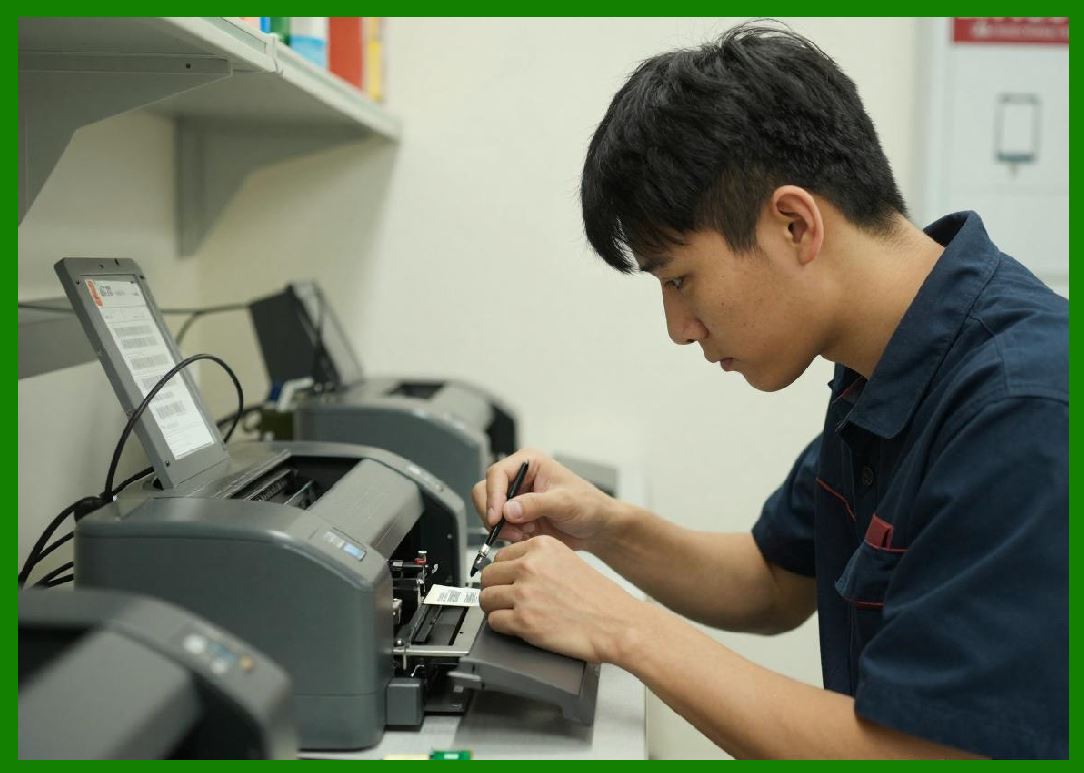
Avery Dennison plays a critical upstream role by supplying label materials, adhesives, RFID inlays, and smart label components that are used by nearly every major barcode printer manufacturer worldwide. |
|
1.3 |
Its technologies are essential for industries such as logistics, retail, healthcare, apparel, food supply chains, and industrial manufacturing, where labeling and tracking are fundamental. |
1.4 |
Unlike hardware-centric companies, Avery Dennison focuses on the consumable intelligence layerof the barcode ecosystem, bridging physical materials with digital identification systems. |

|
1.5 |
The company is widely recognized for its innovation in RFID smart labels, sustainable packaging materials, and high-performance pressure-sensitive adhesives. |
1.6 |
Today, Avery Dennison is a key enabler of global supply chain digitization and item-level intelligence. |

|
2. Founding History and Corporate Development |
2.1 |
Ray Stanton Avery founded the company in 1935 in the United States, initially focusing on self-adhesive labels and labeling machinery. |
2.2 |
The company early breakthrough was the development of pressure-sensitive labeling technology, which eliminated the need for wet adhesives in labeling applications. |

|
2.3 |
This innovation significantly improved efficiency in retail and industrial labeling, laying the foundation for modern barcode label production. |
2.4 |
Over time, Avery expanded into industrial labeling materials, adhesive technologies, and specialty substrates used in high-performance environments. |

|
2.5 |
In the late 20th century, the company merged with Dennison Manufacturing, forming Avery Dennison and expanding into global materials science markets. |
2.6 |
As barcode systems became standardized globally, Avery Dennison became a primary supplier of label materials used in thermal transfer and direct thermal printing. |

|
2.7 |
The company later expanded into RFID inlays and smart labeling technologies. |
2.8 |
Today, Avery Dennison is a global leader in intelligent labeling and materials science innovation. |

|
3. Label Materials Science and Pressure-Sensitive Technologies |
3.1 |
Avery Dennison core technological foundation lies in pressure-sensitive adhesive (PSA) materials used in barcode labels and industrial tags. |
3.2 |
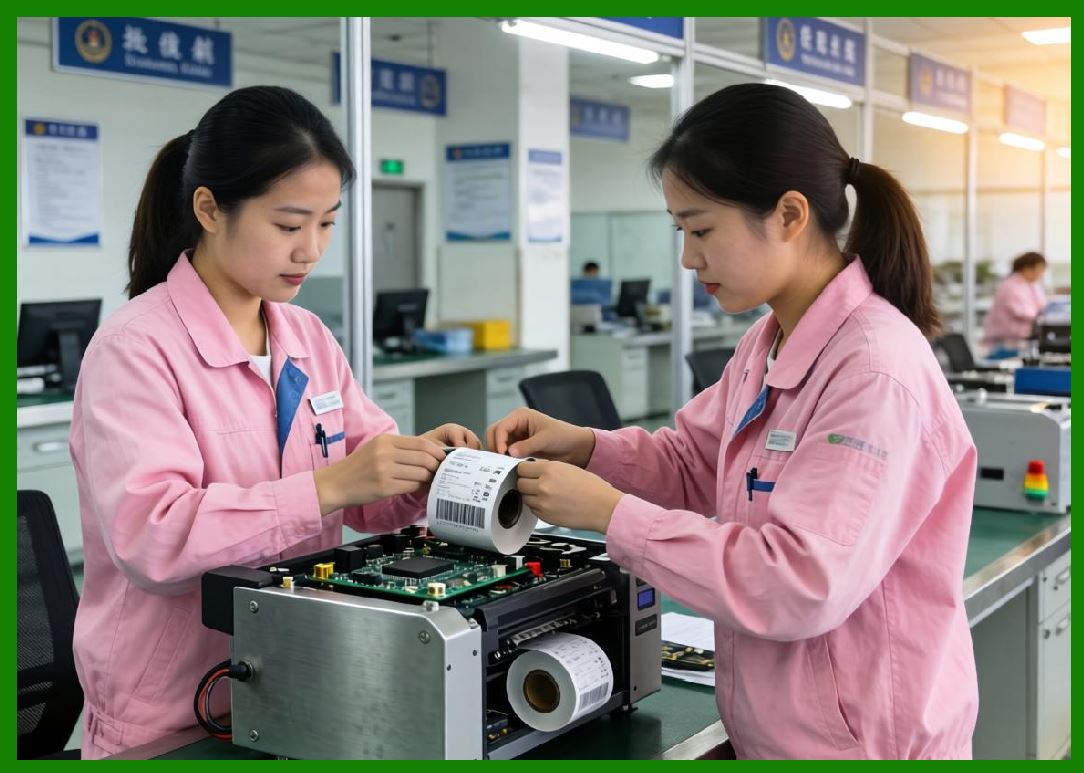
These materials consist of multiple layers including facestock, adhesive, and release liner, each engineered for specific environmental and industrial conditions. |
3.3 |
Facestock materials vary from paper to synthetic polymers depending on durability requirements. |
3.4 |
Adhesive systems are engineered for temperature resistance, chemical stability, and surface compatibility. |
|
3.5 |
Release liners are designed for efficient processing in high-speed label printing systems. |
3.6 |
These materials must maintain print quality compatibility with thermal transfer and direct thermal printing technologies. |
3.7 |
Avery Dennison develops materials optimized for scanning accuracy, durability, and environmental resistance. |
3.8 |
Material science innovation is central to its competitive advantage. |

|
4. RFID Inlays and Smart Label Technologies |
4.1 |
Avery Dennison is one of the largest global suppliers of RFID inlays used in smart labels and connected packaging systems. |
4.2 |
RFID inlays consist of microchips and antennas embedded into label materials. |
4.3 |
These inlays enable wireless data transmission for inventory tracking, authentication, and supply chain visibility. |
4.4 |
RFID smart labels are widely used in retail apparel, logistics, pharmaceuticals, and food supply chains. |

|
4.5 |
Manufacturing precision is critical, as antenna alignment and chip bonding directly affect read performance. |
4.6 |
Avery Dennison develops both passive and specialized RFID inlays for different frequency and application requirements. |
4.7 |
These systems integrate seamlessly with RFID-enabled barcode printers from manufacturers like Zebra and Honeywell. |
4.8 |
RFID innovation is a key driver of modern supply chain digitization. |

|
5. Label Conversion and Supply Chain Integration |
5.1 |
Avery Dennison operates a global label conversion network that transforms raw materials into finished label products. |
5.2 |
These converted labels are used in high-speed industrial printing environments worldwide. |
5.3 |
The company supplies labels optimized for thermal transfer, direct thermal, and ink-based printing systems. |
5.4 |
Material compatibility with barcode printers is essential for print quality and scanning reliability. |

|
5.5 |
Avery Dennison collaborates with printer manufacturers to ensure system compatibility. |
5.6 |
Its supply chain supports global logistics networks with consistent labeling materials. |
5.7 |
The company plays a key role in standardizing labeling materials across industries. |
5.8 |
This integration makes it a foundational supplier in the barcode ecosystem. |

|
6. Industrial Applications Across Global Markets |
6.1 |
Avery Dennison materials are used in retail apparel labeling for price tags, branding, and RFID tracking. |
6.2 |
Logistics industries use its labels for shipping, warehousing, and package identification. |
6.3 |
Healthcare systems rely on its materials for specimen tracking, patient labeling, and pharmaceutical packaging. |
6.4 |
Food and beverage industries use its materials for traceability, expiration labeling, and cold-chain logistics. |

|
6.5 |
Manufacturing industries use durable labels for asset tracking and compliance identification. |
6.6 |
E-commerce companies rely heavily on Avery Dennison labels for fulfillment operations. |
6.7 |
Government and industrial sectors use labeling systems for regulatory compliance and asset management. |
6.8 |
Its materials are deeply embedded in global supply chain infrastructure. |

|
7. Sustainability and Material Innovation |
7.1 |
Avery Dennison is a major leader in sustainable labeling materials and circular economy initiatives. |
7.2 |
The company develops recyclable label substrates and reduced-waste adhesive systems. |
7.3 |
Energy-efficient production processes are increasingly emphasized in manufacturing operations. |
7.4 |
Sustainable RFID inlays are being developed to reduce environmental impact. |

|
7.5 |
The company supports global initiatives to reduce plastic waste in packaging systems. |
7.6 |
Lifecycle assessment is used to evaluate environmental impact of labeling materials. |
7.7 |
Biodegradable and compostable label materials are emerging areas of innovation. |
7.8 |
Sustainability is a core strategic direction for future growth. |

|
8. Competitive Positioning and Ecosystem Role |
8.1 |
Avery Dennison does not compete directly with barcode printer manufacturers; instead, it enables them. |
8.2 |
Its competitors include other materials science and adhesive technology companies. |
8.3 |
The company is a critical upstream supplier in the global AIDC ecosystem. |
8.4 |
It maintains partnerships with Zebra, Honeywell, SATO, and other printer manufacturers. |

|
8.5 |
Its dominance in RFID inlays gives it a strategic position in smart labeling markets. |
8.6 |
Avery Dennison benefits from economies of scale in global materials production. |
8.7 |
Its ecosystem role makes it indispensable in global supply chains. |
8.8 |
The company is a foundational layer in barcode and RFID infrastructure. |

|
9. Future Outlook and Technological Direction |
9.1 |
Avery Dennison is expected to expand RFID adoption across global supply chains. |
9.2 |
Smart packaging systems will integrate more deeply with digital tracking platforms. |
9.3 |
Sustainability innovation will continue to drive material development. |
9.4 |
AI-driven supply chain analytics will increase demand for item-level labeling intelligence. |

|
9.5 |
Digital product passports will rely heavily on RFID and smart label technologies. |
9.6 |
Blockchain integration may enhance traceability and authentication systems. |
9.7 |
Next-generation materials will focus on recyclability and performance efficiency. |
9.8 |
Avery Dennison will remain a central infrastructure provider in global labeling systems. |

|
Detailed Technical Content Summary |
This part provided a comprehensive technical and historical overview of Avery Dennison Corporation and its role as a foundational materials science provider in the barcode and RFID labeling ecosystem. The article examined its origins in pressure-sensitive labeling innovation and its evolution into a global leader in smart label materials. |
The discussion covered adhesive technologies, label substrates, RFID inlays, smart packaging systems, and global supply chain integration. Significant attention was given to Avery Dennison role as an upstream enabler rather than a direct competitor to barcode printer manufacturers. |
The article also explored sustainability initiatives, material science innovations, RFID expansion, and industrial applications across retail, logistics, healthcare, and manufacturing sectors. |
Finally, the article discussed Avery Dennison strategic importance in future digital supply chains, including smart packaging, digital product passports, AI-driven logistics systems, and global traceability infrastructure. |
 cs@easiersoft.com