Part 27 The History, Engineering Systems, Printing Technologies, and Industrial Labeling Ecosystem of SATO Holdings Corporation |
1. Introduction to SATO in Barcode Labeling Systems |
1.1 |
SATO Holdings Corporation is one of the most important global manufacturers in the barcode label printing and automatic identification industry. The company specializes in barcode printers, RFID systems, labeling software, and integrated data capture solutions used across logistics, retail, healthcare, and manufacturing industries. |
1.2 |
SATO is widely recognized for its philosophy of Auto-ID solutions,meaning it does not only manufacture printers, but also delivers complete identification systems combining hardware, software, labels, and cloud-based data integration. |
1.3 |
The company plays a key role in global supply chain traceability, enabling item-level tracking through barcode and RFID technologies. |

|
1.4 |
Unlike many competitors, SATO emphasizes end-to-end labeling ecosystems, where printers, consumables, software, and integration services are designed as a unified system. |
1.5 |
SATO solutions are widely used in healthcare patient safety systems, retail inventory management, logistics tracking, and industrial production environments. |
1.6 |
Today, SATO continues to expand its role in digital transformation, smart labeling, and sustainable identification systems. |

|
2. Founding History and Corporate Development |
2.1 |
Yo Sato founded SATO in 1940 in Japan, initially focusing on handheld labeling machines and mechanical tagging devices. |
2.2 |
The company early innovation centered on improving manual labeling efficiency for retail and industrial applications. |
2.3 |
As global industries adopted barcode systems, SATO transitioned into electronic barcode printing technologies. |
2.4 |
The company expanded its capabilities into thermal printing systems and automated labeling solutions. |
2.5 |
International expansion allowed SATO to establish strong presence in Asia, Europe, and North America. |
2.6 |
Strategic acquisitions helped SATO enhance its RFID and software capabilities. |
2.7 |
The company evolved into a full Auto-ID solutions provider rather than just a printer manufacturer. |
2.8 |
Today, SATO is a global leader in integrated labeling and identification systems. |

|
3. Thermal Printing Technologies and Engineering Systems |
3.1 |
SATO barcode printers are based on advanced thermal printing technologies, including direct thermal and thermal transfer systems. |
3.2 |
Direct thermal printing is widely used in logistics, retail, and healthcare for temporary labeling applications. |
3.3 |
Thermal transfer printing is used for durable labeling in industrial environments requiring long-term traceability. |
3.4 |
SATO places strong emphasis on printhead durability and consistent barcode readability. |
3.5 |
Heat control systems ensure stable printing performance under high-volume conditions. |
3.6 |
Mechanical design focuses on reliability and low downtime in industrial environments. |
3.7 |
Media handling systems ensure precise label alignment and high-speed operation. |
3.8 |
SATO engineering is optimized for enterprise-level scalability. |

|
4. Barcode Printer Product Families |
4.1 |
SATO offers a wide range of barcode printers including desktop, industrial, and mobile systems. |
4.2 |
The CL4NX and CL6NX series are among its most advanced industrial printer platforms. |
4.3 |
These printers are designed for high-performance logistics and manufacturing environments. |
4.4 |
Desktop printers are used in retail, healthcare, and office applications. |
4.5 |
Mobile printers support field logistics, warehouse operations, and transportation workflows. |
4.6 |
Industrial printers are designed for continuous operation in demanding environments. |
4.7 |
SATO printers support a wide range of barcode standards including GS1, QR Code, and Data Matrix. |
4.8 |
The product line is tightly integrated with SATO labeling ecosystem. |

|
5. RFID Systems and Smart Labeling Integration |
5.1 |
SATO is a strong player in RFID-enabled printing systems and smart labeling technologies. |
5.2 |
RFID printers combine thermal printing with embedded chip encoding capabilities. |
5.3 |
These systems are widely used in apparel retail, logistics tracking, and healthcare identification systems. |
5.4 |
RFID encoding requires precise calibration between antenna design and printing alignment. |
5.5 |
SATO focuses on improving read accuracy and reducing tag failure rates. |
5.6 |
Retail industries use RFID for real-time inventory visibility and omnichannel fulfillment. |
5.7 |
Healthcare systems use RFID for patient tracking and medication safety. |
5.8 |
SATO continues to expand RFID integration into cloud-based systems. |

|
6. Auto-ID Philosophy and Integrated Labeling Ecosystem |
6.1 |
SATO defining strategy is its Auto-ID philosophy, which integrates hardware, software, and consumables into a unified system. |
6.2 |
This approach ensures that labels, printers, and software are optimized to work together seamlessly. |
6.3 |
SATO provides complete labeling ecosystems rather than standalone devices. |
6.4 |
Software platforms support label design, data integration, and workflow automation. |
6.5 |
Cloud-based systems enable remote monitoring and management of labeling operations. |
6.6 |
Enterprise integration allows real-time data synchronization with ERP systems. |
6.7 |
This holistic approach reduces operational complexity for customers. |
6.8 |
SATO ecosystem approach is a key differentiator in the market. |

|
7. Software Systems and Digital Transformation |
7.1 |
SATO provides software solutions for label design, printing management, and data integration. |
7.2 |
Label creation tools support complex barcode and RFID tag configurations. |
7.3 |
Centralized printer management systems support enterprise-wide deployments. |
7.4 |
Integration with ERP and WMS systems ensures data accuracy and traceability. |
7.5 |
Cloud platforms enable real-time visibility of printing operations. |
7.6 |
Mobile applications support on-the-go label creation and printing. |
7.7 |
AI-assisted systems are emerging for workflow optimization. |
7.8 |
Software plays a central role in SATO digital transformation strategy. |

|
8. Industrial Applications Across Global Markets |
8.1 |
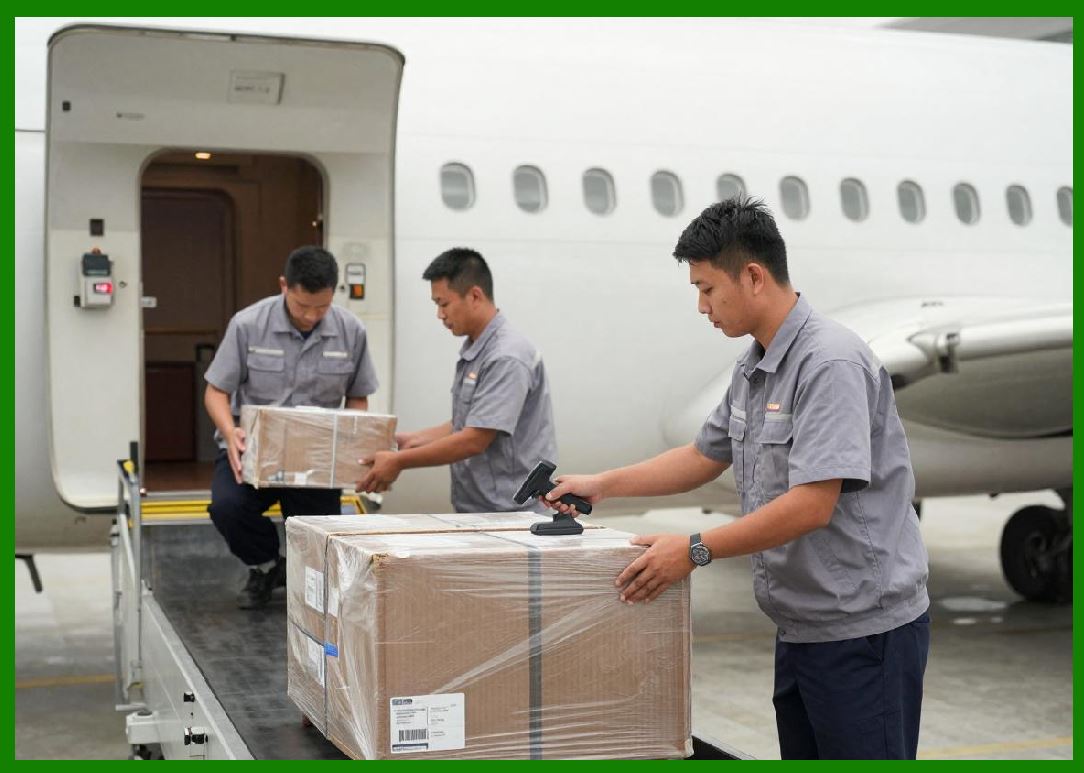
SATO systems are widely used in logistics and warehouse operations for inventory tracking. |
8.2 |
Retail industries use SATO RFID systems for apparel tagging and inventory management. |
8.3 |
Healthcare systems rely on SATO labeling for patient identification and specimen tracking. |
8.4 |
Manufacturing industries use barcode systems for production traceability. |
8.5 |
Food industries use labeling systems for compliance and expiration tracking. |
8.6 |
Transportation industries use labeling systems for cargo and shipment identification. |
8.7 |
Government and public sectors use Auto-ID systems for asset tracking. |
8.8 |
SATO systems are widely adopted in global supply chains. |

|
9. Competitive Positioning and Market Strategy |
9.1 |
SATO competes with Zebra Technologies, Honeywell, TSC, BIXOLON, Brother, and Toshiba Tec. |
9.2 |
Its key advantage lies in its integrated Auto-ID ecosystem approach. |
9.3 |
The company differentiates itself through strong software and consumables integration. |
9.4 |
SATO is particularly strong in healthcare and retail RFID applications. |
9.5 |
Its global presence spans Asia, Europe, and North America. |
9.6 |
The company focuses on end-to-end traceability solutions. |
9.7 |
SATO ecosystem strategy strengthens customer lock-in and system efficiency. |
9.8 |
It remains a major global Auto-ID solutions provider. |

|
10. Future Outlook and Technological Direction |
10.1 |
SATO is expected to expand AI-driven labeling automation systems. |
10.2 |
RFID adoption will continue growing across global supply chains. |
10.3 |
Cloud-based Auto-ID systems will become standard enterprise infrastructure. |
10.4 |
Digital product identity systems will expand significantly. |
10.5 |
Sustainability initiatives will focus on eco-friendly labeling materials. |
10.6 |
Cybersecurity will become increasingly important in connected systems. |
10.7 |
Real-time traceability will become a global standard requirement. |
10.8 |
SATO is expected to remain a leading Auto-ID ecosystem provider. |
|
Detailed Technical Content Summary |
This part provided a comprehensive technical and historical overview of SATO Holdings Corporation and its role in barcode printing, RFID systems, and integrated Auto-ID ecosystems. The article examined its origins in mechanical labeling tools and its evolution into a global provider of integrated identification systems. |
The discussion covered thermal printing technologies, barcode printer families (including CL4NX and CL6NX), RFID-enabled systems, and Auto-ID ecosystem design. Significant attention was given to SATO integrated hardware-software-consumable approach. |
The article also explored cloud-based labeling systems, ERP integration, healthcare and retail applications, and global supply chain traceability systems. Applications across logistics, healthcare, manufacturing, food, and transportation industries were analyzed in depth. |
Finally, the article discussed SATO competitive positioning, ecosystem strategy, and future direction involving AI-driven automation, RFID expansion, digital product identity systems, sustainability initiatives, and next-generation global traceability ecosystems. |
 cs@easiersoft.com