Part 3 The History, Technologies, Innovations, and Industrial Contributions of SATO Holdings Corporation |
1. Introduction to SATO Holdings Corporation |
1.1 |
SATO Holdings Corporation is one of the most historically important companies in the barcode labeling and automatic identification industry. Unlike many barcode printer manufacturers that entered the market after barcode technology became commercially successful, SATO played a foundational role in the development of automatic labeling itself. The company is widely recognized not only for barcode label printers but also for pioneering practical hand-labeling systems and contributing significantly to industrial identification technologies. |
1.2 |
SATO became internationally respected for its strong engineering culture, precision manufacturing capabilities, industrial reliability, and early commitment to automatic identification systems. The company influence spans multiple industries including manufacturing, retail, healthcare, food production, logistics, transportation, automotive manufacturing, and pharmaceutical operations. |

|
1.3 |
One of SATO most historically significant achievements was the invention of the hand labeler, a device that transformed retail price marking and product identification workflows worldwide. This invention established the company early reputation for practical innovation and operational efficiency. |
1.4 |
Over time, SATO expanded far beyond simple hand-labeling devices. The company evolved into a global enterprise specializing in barcode printers, RFID printers, industrial print-and-apply systems, smart labeling solutions, enterprise identification software, and IoT-connected industrial automation platforms. |

|
1.5 |
SATO development path differs somewhat from several Western barcode manufacturers because the company maintained a strong long-term emphasis on integrated labeling systems rather than focusing exclusively on printer hardware. This systems-oriented philosophy helped SATO establish strong positions in factory automation and industrial traceability applications. |
1.6 |
Today, SATO is recognized as one of the world leading providers of barcode printing and RFID solutions. Its technologies are used throughout Asia, Europe, North America, Latin America, and many emerging industrial markets. |

|
2. Founding History and Early Development |
2.1 |
SATO was founded in Japan in 1940 by Yo Sato. The company originally operated under the name Sato Kogyo Co., Ltd. Its earliest activities focused on manufacturing bamboo products and other industrial materials during a period when Japan industrial economy was undergoing significant transformation. |
2.2 |
Following World War II, Japan entered a long period of industrial rebuilding and economic expansion. During this era, Japanese manufacturers increasingly sought ways to improve productivity, inventory management, retail efficiency, and manufacturing standardization. This environment created opportunities for companies capable of delivering practical industrial innovations. |
2.3 |
In the early 1960s, Yo Sato identified a major operational problem in Japanese retail stores. Price marking and product labeling were still largely manual, requiring employees to handwrite or individually stamp price tags onto merchandise. This process was slow, inconsistent, and inefficient. |
2.4 |
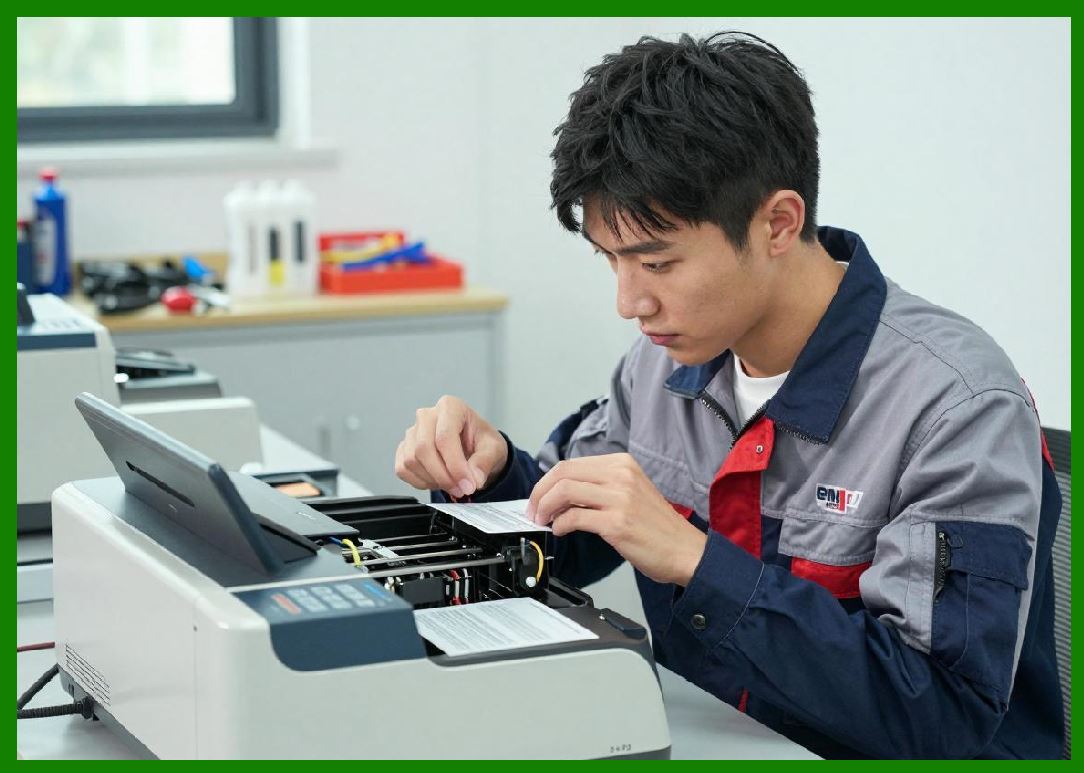
To address this challenge, Yo Sato invented the hand labeler in 1962. This mechanical device enabled rapid and standardized label application for pricing and inventory identification. The invention significantly improved retail productivity and became one of the foundational technologies of modern retail labeling systems. |
|
2.5 |
The hand labeler quickly gained popularity not only in Japan but eventually worldwide. Retailers appreciated its simplicity, speed, and operational efficiency. This invention established SATO as a pioneer in practical labeling technology and laid the groundwork for the company future expansion into automatic identification systems. |
2.6 |
As barcode technology began gaining international adoption during the 1970s, SATO recognized the enormous future potential of machine-readable identification systems. The company expanded its engineering efforts toward barcode printing technologies, industrial labeling automation, and data capture systems. |
2.7 |
SATO gradually transformed from a mechanical labeling company into an advanced electronics and industrial printing manufacturer. This transition required substantial investment in thermal printing systems, embedded electronics, software development, printhead engineering, and industrial automation technologies. |

|
3. SATO Role in the Evolution of Barcode Printing |
3.1 |
SATO became one of the earliest companies to commercialize barcode-compatible printing systems in Japan and Asia. The company recognized that barcode technology would fundamentally transform logistics, manufacturing, warehousing, and retail operations. |
3.2 |
During the 1980s, SATO focused heavily on thermal printing technologies because thermal methods provided high barcode accuracy and lower maintenance requirements compared with impact printing systems. The company developed both direct thermal and thermal transfer barcode printers. |
3.3 |
SATO engineers emphasized precision media handling and stable barcode generation. Industrial barcode scanning systems require extremely accurate print consistency because small distortions can reduce scanner readability. SATO invested heavily in print quality optimization and thermal control engineering. |
3.4 |
The company also concentrated on developing industrial-grade reliability. Many SATO printers were specifically designed for demanding operational environments including factories, distribution centers, refrigerated warehouses, and high-volume logistics facilities. |

|
3.5 |
SATO became especially respected for compact industrial designs. Compared with some larger industrial printer competitors, many SATO systems emphasized space efficiency while still maintaining strong durability and performance characteristics. |
3.6 |
Another important aspect of SATO strategy involved integrating labeling workflows directly into industrial production systems. Rather than viewing printers as isolated devices, SATO focused on complete operational workflows involving data collection, automation, compliance labeling, and supply chain traceability. |
3.7 |
This systems-oriented philosophy later became especially important in industries such as food traceability, pharmaceutical compliance, automotive manufacturing, and healthcare identification where accurate end-to-end tracking is critical. |

|
4. Thermal Printing Technologies and Engineering Innovations |
4.1 |
SATO became internationally respected for its advanced thermal printing technologies. Like other leading barcode printer manufacturers, SATO developed expertise in both direct thermal and thermal transfer printing systems. |
4.2 |
Direct thermal printing systems became widely used for temporary labels such as shipping labels, receipts, food labeling, logistics tracking, and warehouse identification. SATO optimized these systems for fast operation and low maintenance requirements. |
4.3 |
Thermal transfer systems represented a particularly important engineering focus because industrial customers often required highly durable labels capable of surviving harsh environmental conditions. SATO printers supported specialized ribbons and synthetic media suitable for demanding industrial applications. |

|
4.4 |
SATO invested heavily in printhead engineering. Thermal printheads require highly precise temperature control across dense arrays of microscopic heating elements. Uneven heating can distort barcode shapes and reduce readability. SATO engineers worked extensively on heat distribution optimization and print consistency. |
4.5 |
Media transport precision also became a major technical focus. Industrial labeling applications often require exact label positioning for automated application systems. SATO developed sophisticated stepper motor controls, sensor calibration systems, and media alignment mechanisms. |
4.6 |
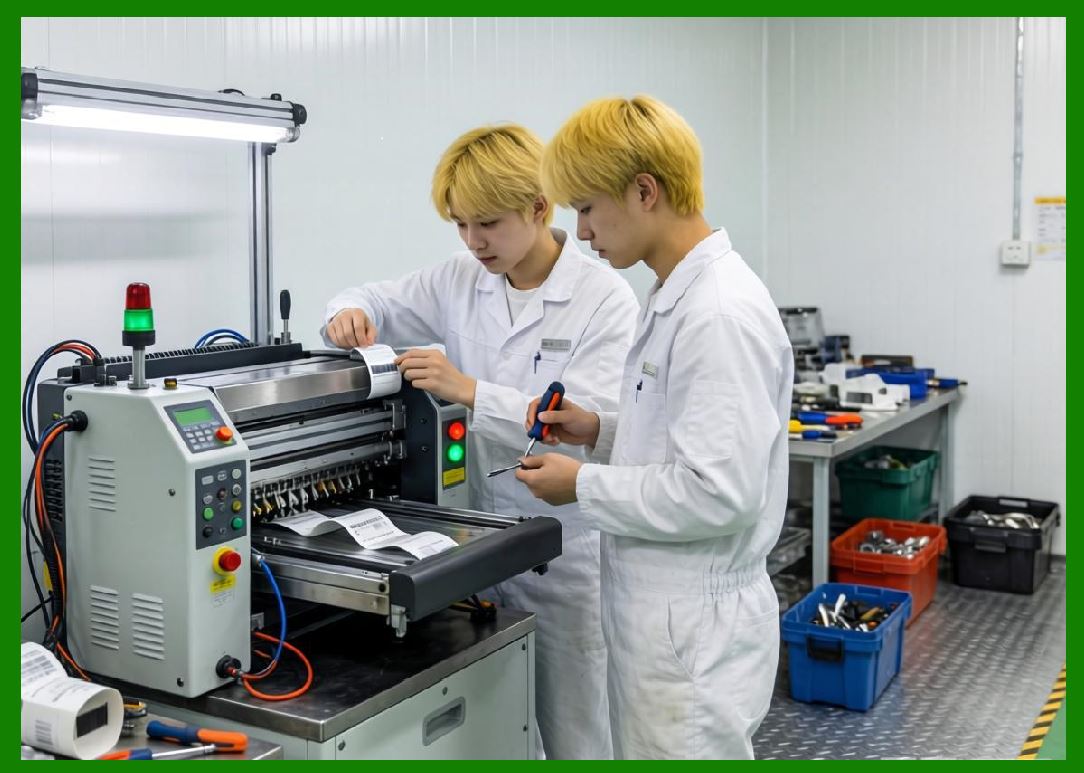
The company also introduced high-resolution industrial printing systems supporting applications requiring miniature labels and dense two-dimensional barcodes. Electronics manufacturing, healthcare, semiconductor packaging, and laboratory identification increasingly depended on these capabilities. |
|
4.7 |
SATO further emphasized mechanical reliability and ease of maintenance. Industrial customers often operate printers continuously for long periods, making downtime extremely costly. SATO printers therefore incorporated rugged construction, simplified maintenance access, and durable industrial components. |
4.8 |
The company additionally worked on reducing operational complexity. User-friendly media loading systems, intuitive interfaces, automated calibration routines, and simplified ribbon replacement procedures improved usability in large enterprise environments. |

|
5. SATO Printer Command Languages and Software Integration |
5.1 |
As enterprise automation systems expanded globally, SATO recognized the growing importance of software integration and printer control standardization. The company therefore developed sophisticated printer command languages and enterprise connectivity capabilities. |
5.2 |
SATO printers support SBPL, or SATO Barcode Printer Language. SBPL enables enterprise systems to control label formatting, barcode generation, graphics rendering, serialization, variable data management, and RFID encoding functions. |
5.3 |
SBPL became especially important in industrial environments where automated production systems dynamically generate labels in real time. Manufacturing execution systems, warehouse management systems, ERP platforms, and shipping software could communicate directly with SATO printers. |
5.4 |
The company also invested heavily in middleware and software integration technologies. SATO recognized that enterprise customers increasingly required centralized printer management, remote configuration, diagnostics, and workflow integration. |

|
5.5 |
Networking technologies became another major focus area. Early barcode printers primarily relied on serial communication, but modern SATO systems support Ethernet, Wi-Fi, Bluetooth, USB, industrial network protocols, and cloud-based printer management infrastructures. |
5.6 |
SATO additionally introduced software development kits, printer drivers, emulation support, and enterprise APIs to simplify integration with third-party applications and automation systems. |
5.7 |
Many SATO printers also support printer language emulation modes for compatibility with existing enterprise infrastructures. This flexibility helped organizations transition from older printer systems without completely redesigning their software architectures. |
5.8 |
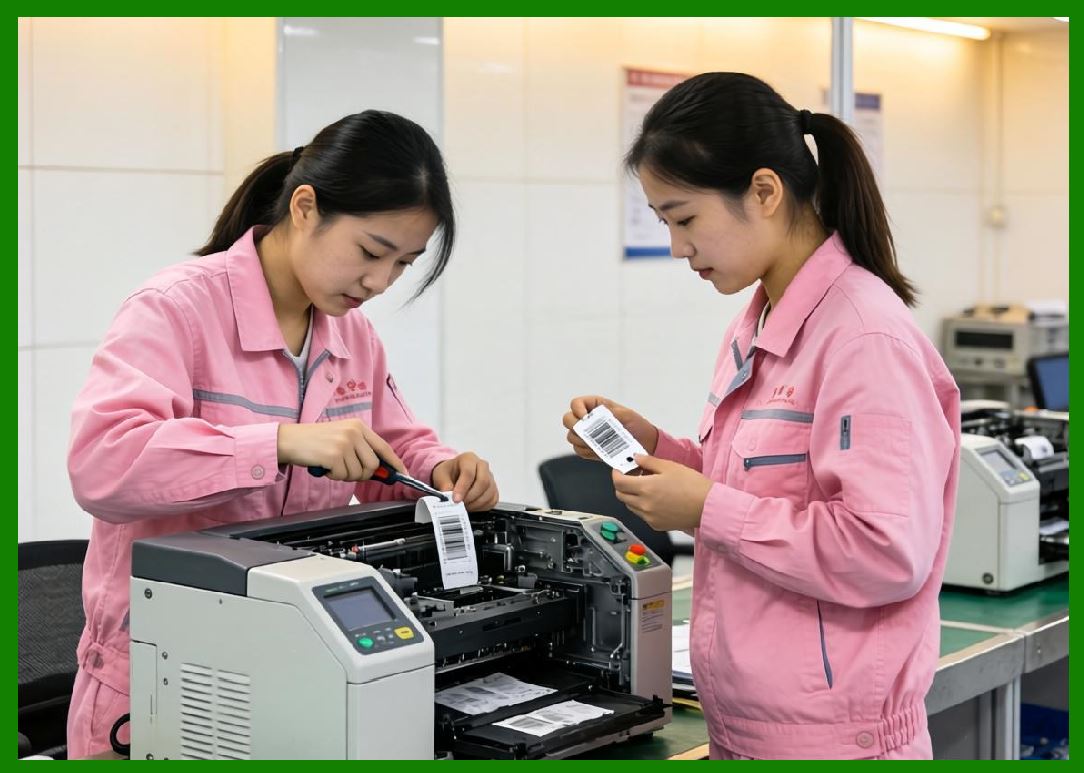
Modern SATO enterprise solutions increasingly integrate cloud management, remote monitoring, IoT analytics, and predictive maintenance capabilities. |
|
6. SATO Industrial Barcode Printer Product Families |
6.1 |
SATO developed a wide range of barcode printer families addressing diverse operational requirements. The company product portfolio includes industrial printers, desktop printers, mobile printers, print engines, RFID printers, and specialized healthcare systems. |
6.2 |
The CL series became one of SATO best-known industrial printer families. These printers gained strong reputations for reliability, industrial durability, and high-performance thermal printing in manufacturing and logistics operations. |
6.3 |
The company later introduced advanced NX series industrial printers featuring improved processing power, network connectivity, touchscreen interfaces, remote management capabilities, and enhanced RFID support. |
6.4 |
SATO desktop printers targeted retail stores, healthcare clinics, laboratories, and office environments requiring compact barcode printing systems. These models emphasized affordability, ease of operation, and space-efficient designs. |

|
6.5 |
Mobile printers represented another important product category. SATO portable systems enabled warehouse workers, delivery personnel, healthcare providers, and retail employees to print labels and receipts directly at operational locations. |
6.6 |
Print-and-apply systems became especially important in industrial automation environments. These integrated systems automatically print and apply labels directly onto products, cartons, pallets, or packaging lines during manufacturing and logistics operations. |
6.7 |
SATO also developed OEM print engines designed for integration into industrial automation equipment. These embedded print systems became widely used in automated packaging lines and factory automation systems. |
6.8 |
Healthcare-specific product lines were optimized for hospital workflows including patient wristbands, specimen labels, medication identification, and laboratory tracking applications. |

|
7. SATO RFID Technologies and Smart Labeling Systems |
7.1 |
SATO became one of the leading innovators in RFID-enabled barcode printing systems. The company recognized early that RFID would become increasingly important for industrial traceability and supply chain automation. |
7.2 |
Integrated RFID printers allow simultaneous printing and RFID encoding within a single operational process. SATO engineers focused on improving synchronization accuracy between thermal printing operations and RFID tag encoding systems. |
7.3 |
RFID printing presents several engineering challenges. The printer must accurately position the RFID antenna relative to the embedded chip while coordinating media movement, print timing, and radio-frequency communication. SATO invested heavily in solving these technical problems. |
7.4 |
The company developed advanced RFID printer systems supporting UHF RFID, EPC standards, serialization workflows, and supply chain compliance requirements. These systems became widely used in logistics, retail, manufacturing, and healthcare operations. |

|
7.5 |
SATO also emphasized RFID verification technologies capable of detecting defective or improperly encoded tags automatically. Faulty RFID labels could be identified and rejected before deployment into operational supply chains. |
7.6 |
Retail apparel became one of the most important RFID application areas. RFID labels enabled retailers to improve inventory visibility, accelerate cycle counting, reduce stock inaccuracies, and support omnichannel commerce strategies. |
7.7 |
Healthcare organizations also adopted SATO RFID technologies for patient tracking, medical equipment monitoring, specimen management, and pharmaceutical identification systems. |
7.8 |
The company increasingly integrated RFID systems with cloud-based analytics, IoT infrastructure, and intelligent operational visibility platforms. |

|
8. Industrial Applications and Global Market Presence |
8.1 |
SATO technologies became deeply integrated into manufacturing industries worldwide. Automotive factories use SATO systems for parts traceability, compliance labeling, production control, and work-in-progress tracking. |
8.2 |
Food production and food safety became another major SATO specialization. Food manufacturers use SATO printers for expiration labeling, batch tracking, allergen identification, cold chain management, and regulatory compliance systems. |
8.3 |
Healthcare applications represent a critically important market segment for SATO. Hospitals use SATO printers for patient wristbands, medication labeling, laboratory specimen tracking, and blood bank management systems. |
8.4 |
Retail companies rely on SATO solutions for price marking, shelf labeling, RFID inventory systems, logistics labeling, and omnichannel retail operations. |

|
8.5 |
Transportation and logistics companies use SATO printers for shipping labels, pallet identification, freight management, warehouse automation, and route tracking systems. |
8.6 |
SATO technologies are also used extensively in electronics manufacturing, pharmaceuticals, aviation, chemicals, government operations, and industrial warehousing. |
8.7 |
The company maintains a strong international presence with operations throughout Japan, Asia-Pacific, Europe, North America, and Latin America. SATO continues expanding its global reseller, integration, and support networks. |
8.8 |
The company emphasis on integrated industrial workflows and traceability systems has allowed it to remain highly competitive despite intense global competition in the barcode printing industry. |

|
9. Research, Innovation, and Smart Factory Development |
9.1 |
SATO increasingly focuses on smart factory technologies and Industry 4.0 integration. The company views barcode printing as one component within broader industrial visibility ecosystems involving IoT devices, sensors, cloud analytics, and automation platforms. |
9.2 |
The company invests heavily in intelligent labeling systems capable of supporting real-time operational tracking and digital supply chain visibility. These technologies are becoming increasingly important in global manufacturing and logistics networks. |
9.3 |
SATO also researches sustainable labeling technologies. Environmental concerns are encouraging manufacturers to reduce label waste, improve energy efficiency, and adopt recyclable materials. |
9.4 |
Linerless labeling systems represent one important sustainability direction. These systems eliminate traditional label backing liners, reducing waste volume and improving media efficiency. |

|
9.5 |
The company additionally explores cloud-based printer management systems, predictive maintenance technologies, AI-assisted diagnostics, and remote operational monitoring platforms. |
9.6 |
Cybersecurity has become increasingly important as industrial printers become connected enterprise network devices. SATO invests in secure communication protocols, authentication systems, and firmware protection mechanisms. |
9.7 |
RFID and IoT convergence will likely remain a major strategic focus area. Future SATO systems may increasingly support intelligent asset tracking, automated warehouse robotics, real-time environmental sensing, and digital twin infrastructure. |
9.8 |
As global industries continue adopting smart manufacturing and intelligent logistics systems, SATO is expected to remain one of the world leading industrial barcode and RFID technology providers. |

|
10. SATO Corporate Philosophy and Industry Influence |
10.1 |
SATO corporate philosophy has historically emphasized practical innovation and operational improvement. The company consistently focused on technologies capable of improving productivity, reducing errors, and enhancing traceability. |
10.2 |
Unlike some companies that concentrated primarily on hardware performance metrics, SATO often emphasized complete operational workflows and integrated industrial processes. This systems-level perspective became one of the company distinguishing characteristics. |
10.3 |
The invention of the hand labeler demonstrated SATO long-standing focus on solving real-world operational problems through practical engineering solutions. This philosophy continued throughout the company later development of barcode, RFID, and industrial automation technologies. |
10.4 |
SATO also contributed significantly to the international expansion of automatic identification systems throughout Asia. The company helped accelerate barcode adoption in manufacturing, retail, healthcare, and logistics industries across multiple countries. |

|
10.5 |
Its strong expertise in industrial traceability positioned SATO favorably in industries increasingly regulated by serialization, safety, and compliance requirements. Food safety laws, pharmaceutical regulations, and supply chain transparency initiatives all increased demand for sophisticated identification systems. |
10.6 |
The company influence extends into numerous industrial standards, labeling workflows, and operational best practices used globally today. |
10.7 |
SATO continues balancing traditional industrial reliability with newer digital transformation technologies including RFID, cloud infrastructure, IoT integration, AI-assisted management, and smart factory systems. |
10.8 |
The company remains one of the most respected and historically important organizations in the worldwide barcode labeling and industrial identification industry. |

|
Detailed Technical Content Summary |
This part provided a comprehensive technical and historical overview of SATO Holdings Corporation, one of the world pioneering barcode and labeling technology manufacturers. The article examined the company founding by Yo Sato, the invention of the hand labeler, and SATO transition from mechanical labeling systems into advanced barcode and RFID technologies. |
The discussion covered SATO thermal printing innovations, industrial engineering capabilities, printhead technologies, media handling systems, and high-resolution barcode printing developments. The article also explained SBPL printer language, enterprise integration systems, networking technologies, and cloud-connected industrial workflows. |
Major SATO product families were analyzed, including industrial printers, desktop systems, mobile printers, print-and-apply automation systems, healthcare printers, and OEM print engines. Significant attention was given to SATO RFID printer technologies, smart labeling systems, and industrial traceability solutions. |
The article further explored SATO applications across manufacturing, food safety, healthcare, logistics, retail, transportation, and smart factory environments. Finally, it discussed SATO future technological directions involving Industry 4.0, sustainability, linerless labeling, IoT integration, AI-assisted diagnostics, cybersecurity, and intelligent industrial automation. |
 cs@easiersoft.com