Part 30 The History, Engineering Systems, Printing Technologies, and Industrial Labeling Ecosystem of Zebra Technologies Corporation |
1. Introduction to Zebra Technologies in the Barcode Ecosystem |
1.1 |
Zebra Technologies Corporation is widely regarded as the global leader in barcode label printers, RFID systems, and enterprise mobility solutions. The company plays a foundational role in modern supply chain digitization, enabling real-time visibility across logistics, retail, healthcare, manufacturing, and transportation industries. |
1.2 |
Zebra is not only a printer manufacturer but a full-stack automatic identification and data capture (AIDC) provider, integrating hardware, software, analytics, and cloud-based systems into a unified ecosystem. |
1.3 |
Its technologies are used to track everything from individual retail items to large-scale industrial assets, making it one of the most influential companies in global traceability infrastructure. |
1.4 |
Zebra systems are widely deployed in mission-critical environments where accuracy, uptime, and scalability are essential. |
1.5 |
The company is especially dominant in industrial barcode printing and enterprise mobile computing markets. |
1.6 |
Today, Zebra continues to lead innovation in RFID, AI-powered automation, and intelligent supply chain systems. |

|
2. Founding History and Corporate Evolution |
2.1 |
Ed Kaplan and Gerard Burks founded Zebra Technologies in 1969 in the United States. |
2.2 |
The company initially focused on specialty electromechanical systems and later transitioned into barcode printing and labeling technologies in the early 1980s as barcode standards became widely adopted. |
2.3 |
Zebra rapidly expanded during the global adoption of UPC barcodes in retail systems, positioning itself as a pioneer in automated identification technologies. |
2.4 |
Through strategic acquisitions, Zebra strengthened its capabilities in RFID, mobile computing, and enterprise software. |
2.5 |
The company acquired Motorola SolutionsEnterprise business, significantly expanding its mobile computing and scanner portfolio. |
2.6 |
Zebra became a dominant force in enterprise mobility and industrial barcode printing markets. |
2.7 |
Its global expansion included strong penetration in North America, Europe, and Asia-Pacific markets. |
2.8 |
Today, Zebra is the most influential company in the AIDC industry. |
|
3. Thermal Printing Technologies and Engineering Systems |
3.1 |
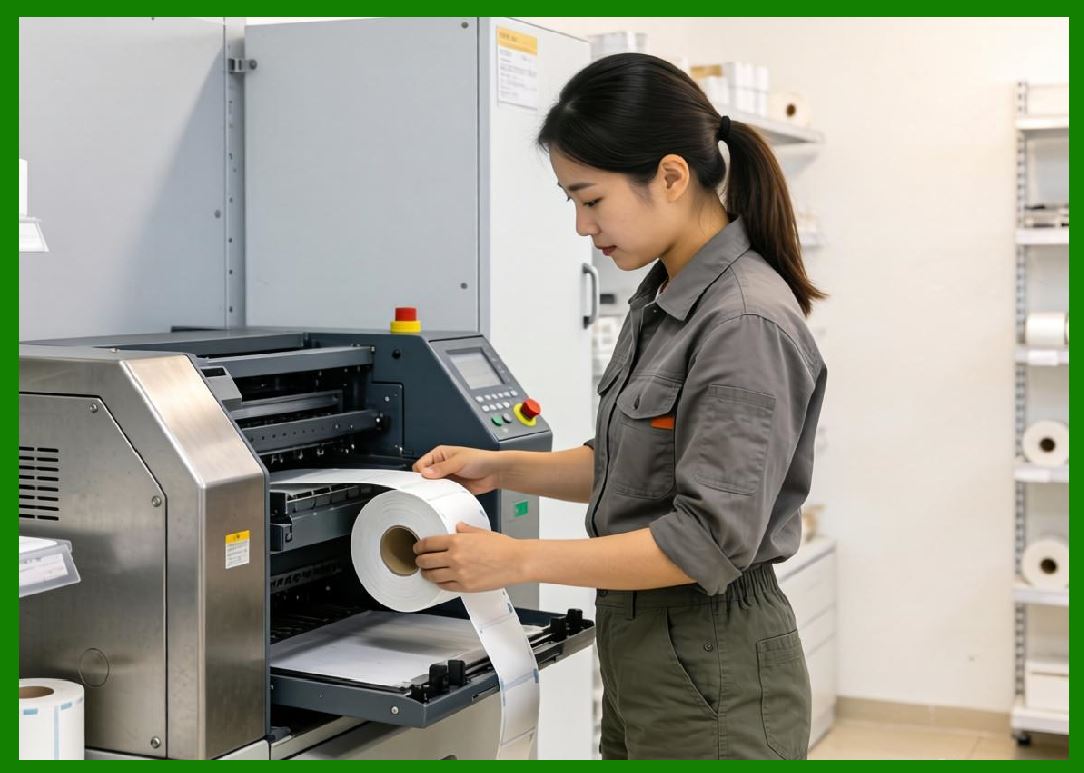
Zebra barcode printers are built on advanced thermal printing technologies, including direct thermal and thermal transfer systems. |
3.2 |
Direct thermal printing is widely used in shipping labels, retail labeling, and logistics applications. |
3.3 |
Thermal transfer printing is used for durable industrial labeling requiring long-term readability. |
3.4 |
Zebra engineering emphasizes industrial durability, high throughput, and continuous operation. |
3.5 |
Advanced printhead control systems ensure high-resolution barcode output and scanning accuracy. |
3.6 |
Mechanical systems are designed for heavy-duty industrial environments such as warehouses and manufacturing plants. |
3.7 |
Media handling systems support high-speed, automated label production workflows. |
3.8 |
Zebra printers are known for reliability in mission-critical environments. |

|
4. Barcode Printer Product Families |
4.1 |
Zebra offers a comprehensive range of barcode printers including desktop, industrial, and mobile systems. |
4.2 |
The ZT series represents Zebra flagship industrial printer platform, widely used in logistics and manufacturing. |
4.3 |
ZT printers are designed for high-volume, high-speed industrial labeling environments. |
4.4 |
ZD series desktop printers are used in retail, healthcare, and office environments. |
4.5 |
Mobile printers support field logistics, transportation, and warehouse operations. |
4.6 |
Print engines and OEM components are integrated into automated production systems. |
4.7 |
Zebra printers support global barcode standards including GS1, QR Code, Data Matrix, and others. |
4.8 |
The product portfolio is designed for scalability across enterprise environments. |

|
5. RFID Systems and Intelligent Tracking Technologies |
5.1 |
Zebra is a global leader in RFID printing and encoding systems used in supply chain visibility applications. |
5.2 |
RFID printers combine thermal printing with embedded chip encoding for dual identification systems. |
5.3 |
These systems are widely used in retail apparel, logistics, healthcare, and manufacturing industries. |
5.4 |
RFID encoding requires precise antenna tuning and synchronization with print processes. |
5.5 |
Zebra has developed industry-leading RFID calibration and encoding technologies. |
5.6 |
Retail industries use RFID for real-time inventory tracking and omnichannel fulfillment. |
5.7 |
Warehouse systems rely on RFID for pallet, carton, and item-level tracking. |
5.8 |
Zebra continues to expand RFID into cloud-connected intelligent systems. |

|
6. Enterprise Mobility and Data Capture Ecosystem |
6.1 |
A key differentiator for Zebra is its enterprise mobility ecosystem, which includes mobile computers, handheld scanners, wearable devices, and vehicle-mounted terminals. |
6.2 |
These devices enable real-time data capture in logistics, retail, manufacturing, and healthcare environments. |
6.3 |
Zebra mobile computers operate on rugged Android platforms designed for industrial use. |
6.4 |
Barcode scanners support high-speed decoding in warehouse and retail environments. |
6.5 |
Wearable scanning systems improve efficiency in high-volume logistics operations. |
6.6 |
Integration between scanners and printers enables automated scan-to-print workflows. |
6.7 |
This ecosystem dramatically improves operational efficiency and accuracy. |
6.8 |
Zebra mobility solutions are central to its enterprise strategy. |

|
7. Software Platforms and Cloud Ecosystems |
7.1 |
Zebra provides enterprise software platforms for device management, workflow automation, and data analytics. |
7.2 |
Printer management systems allow centralized control of global printer fleets. |
7.3 |
Cloud-based monitoring systems provide real-time visibility into device health and performance. |
7.4 |
Integration with ERP, WMS, and MES systems ensures synchronized data flow. |
7.5 |
AI-driven analytics support predictive maintenance and operational optimization. |
7.6 |
Zebra software ecosystem supports cybersecurity and compliance requirements. |
7.7 |
APIs enable integration with third-party enterprise systems. |
7.8 |
Software is a core pillar of Zebra ecosystem strategy. |

|
8. Industrial Applications Across Global Markets |
8.1 |
Zebra systems are widely used in logistics for warehouse labeling and shipment tracking. |
8.2 |
Retail industries use Zebra RFID systems for inventory visibility and omnichannel retail. |
8.3 |
Healthcare systems rely on Zebra for patient identification and medication tracking. |
8.4 |
Manufacturing industries use Zebra printers for production traceability and quality control. |
8.5 |
Transportation and aviation industries use Zebra systems for logistics documentation. |
8.6 |
Government agencies use Zebra systems for asset tracking and identification. |
8.7 |
E-commerce fulfillment centers rely heavily on Zebra automation systems. |
8.8 |
Zebra is deeply embedded in global supply chain infrastructure. |

|
9. Competitive Positioning and Market Strategy |
9.1 |
Zebra competes with Honeywell, SATO, TSC, Brother, BIXOLON, and Toshiba Tec. |
9.2 |
It holds the strongest global position in enterprise barcode printing and RFID systems. |
9.3 |
The company advantage lies in its fully integrated hardware-software-mobility ecosystem. |
9.4 |
Zebra acquisitions strategy has expanded its dominance in enterprise mobility. |
9.5 |
It targets high-value enterprise and mission-critical applications. |
9.6 |
Zebra benefits from strong global brand recognition in AIDC technologies. |
9.7 |
Its ecosystem approach creates strong customer retention. |
9.8 |
Zebra remains the global leader in barcode and RFID infrastructure. |

|
10. Future Outlook and Technological Direction |
10.1 |
Zebra is expected to expand AI-driven supply chain intelligence systems. |
10.2 |
RFID adoption will continue growing across all major industries. |
10.3 |
Cloud-native printing and mobility platforms will become standard infrastructure. |
10.4 |
Edge computing will enhance real-time decision-making capabilities. |
10.5 |
Cybersecurity will become increasingly critical in connected ecosystems. |
10.6 |
Sustainability initiatives will focus on reducing device energy consumption. |
10.7 |
Autonomous logistics systems will increase demand for Zebra technologies. |
10.8 |
Zebra is expected to remain the global leader in AIDC and intelligent supply chain systems. |

|
Detailed Technical Content Summary |
This part provided a comprehensive technical and historical overview of Zebra Technologies Corporation and its dominant role in the global barcode printing, RFID, and enterprise mobility ecosystem. The article examined its origins in 1969 and its evolution into the world leading AIDC solutions provider. |
The discussion covered thermal printing technologies, industrial printer families (ZT and ZD series), RFID systems, enterprise mobility devices, and integrated scanning-printing workflows. Significant attention was given to Zebra fully integrated ecosystem approach combining hardware, software, and analytics. |
The article also explored cloud platforms, AI-driven analytics, ERP integration, warehouse management systems, and enterprise mobility ecosystems. Applications across logistics, retail, healthcare, manufacturing, and transportation industries were analyzed in depth. |
Finally, the article discussed Zebra competitive dominance, market strategy, and future direction involving AI-powered automation, RFID expansion, cloud-native ecosystems, edge computing, sustainability initiatives, and next-generation global supply chain intelligence systems. |
 cs@easiersoft.com