Part 34 The History, Engineering Systems, Printing Technologies, and Industrial Labeling Ecosystem of Printronix, LLC |
1. Introduction to Printronix in Industrial Printing Systems |
1.1 |
Printronix, LLC is a long-established manufacturer specializing in high-performance industrial printers designed for mission-critical supply chain, logistics, manufacturing, and enterprise data center environments. The company is particularly known for its line matrix printers, thermal barcode printers, and enterprise-grade printing systems. |
1.2 |
Printronix occupies a unique position in the printing industry because it bridges traditional high-volume line printing technologies with modern barcode label printing and RFID-enabled industrial labeling systems. |

|
1.3 |
The company solutions are widely deployed in environments requiring extreme durability, high throughput, and uninterrupted operation, such as distribution centers, automotive manufacturing plants, and large-scale logistics hubs. |
1.4 |
Printronix is also known for its focus on print verification technologies, ensuring barcode readability and data accuracy in industrial workflows. |
1.5 |
Its products are engineered for continuous 24/7 operation in demanding industrial environments. |
1.6 |
Today, Printronix continues to evolve toward smart manufacturing, cloud-connected printing systems, and digital supply chain integration. |

|
2. Founding History and Corporate Development |
2.1 |
Robert A. Kleist and engineering partners founded Printronix in 1974 in the United States, originally focusing on high-speed line matrix printing systems for enterprise data processing. |
2.2 |
The company initially served data centers and industrial enterprises requiring high-volume printed output for invoices, reports, and logistics documentation. |
2.3 |
As barcode technology emerged, Printronix expanded into industrial barcode label printing systems. |
2.4 |
The company became known for rugged industrial printers capable of operating in harsh environments. |
2.5 |
Printronix expanded globally through partnerships and enterprise sales channels. |
2.6 |
Over time, it incorporated RFID and barcode verification technologies into its product portfolio. |
2.7 |
The company adapted from legacy line printing to modern thermal barcode and RFID systems. |
2.8 |
Today, Printronix is a specialized provider of industrial-grade printing solutions for supply chain operations. |

|
3. Line Matrix Printing Technology and Engineering Systems |
3.1 |
Printronix is historically known for its line matrix printing technology, a high-speed impact printing method used for continuous industrial output. |
3.2 |
Line matrix printers use a moving hammer bank to strike an ink ribbon against paper, forming characters line by line. |
3.3 |
This technology is extremely durable and suitable for multi-part forms and continuous feed paper systems. |
3.4 |
Line matrix printing remains valuable in environments where thermal or laser printing is not practical. |
3.5 |
These systems are capable of extremely high-volume printing with low operational cost per page. |
3.6 |
Mechanical engineering emphasizes long lifecycle durability and minimal downtime. |
3.7 |
Noise reduction and energy optimization systems have improved modern line matrix designs. |
3.8 |
Printronix remains one of the last major manufacturers of this technology. |

|
4. Thermal Barcode Printing Systems |
4.1 |
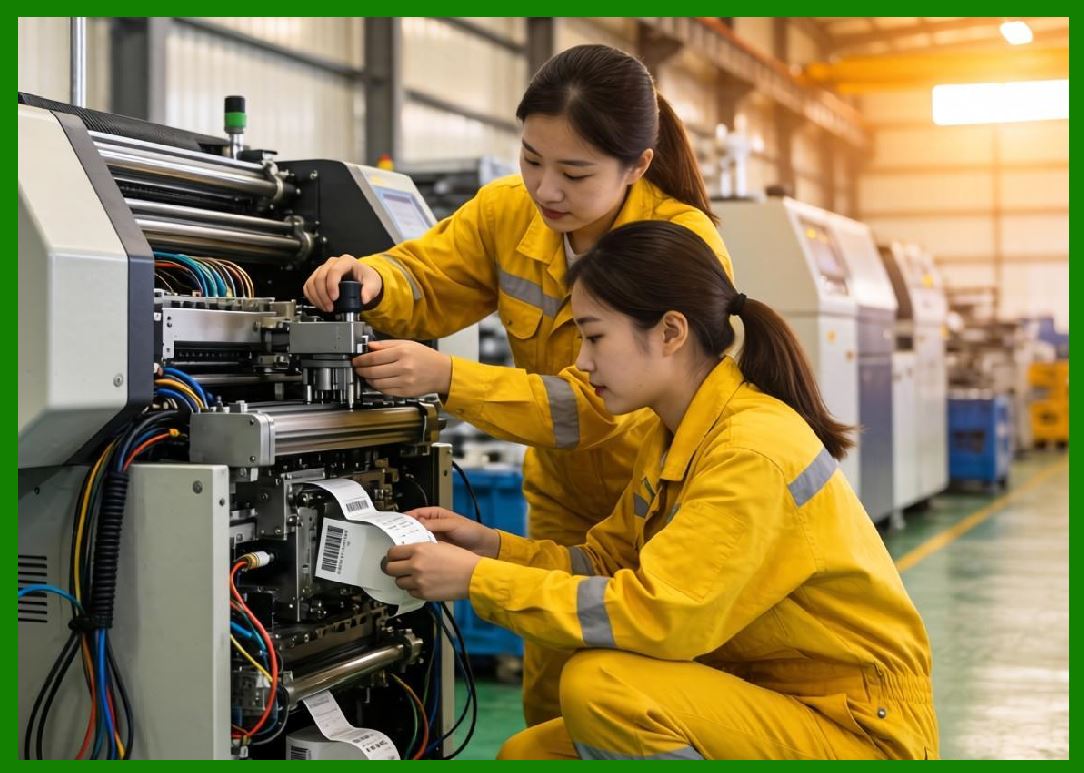
In addition to line matrix systems, Printronix produces industrial thermal barcode printers. |
4.2 |
These printers support both direct thermal and thermal transfer printing technologies. |
4.3 |
They are widely used in warehouse labeling, shipping logistics, and manufacturing tracking systems. |
4.4 |
Thermal systems provide high-resolution barcode output suitable for GS1 standards. |
4.5 |
Industrial printheads are designed for long-term durability and high throughput. |
4.6 |
Media handling systems support continuous roll-to-label operations. |
4.7 |
Integration with enterprise systems enables dynamic data printing. |
4.8 |
Printronix thermal printers are optimized for industrial-grade reliability. |
|
5. Barcode Verification and Print Quality Assurance Systems |
5.1 |
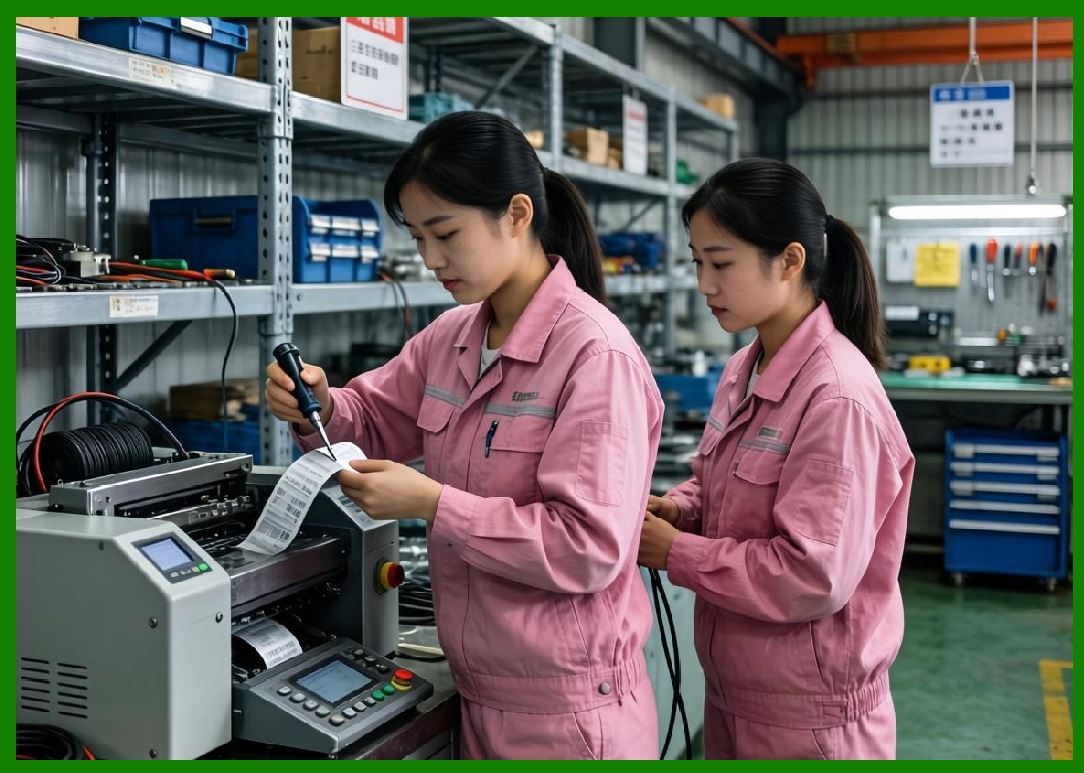
A key differentiator of Printronix is its barcode verification technology, which ensures printed barcodes are readable and compliant with standards. |
5.2 |
Inline verification systems scan barcodes immediately after printing to detect defects. |
5.3 |
This reduces shipping errors and improves supply chain accuracy. |
5.4 |
Verification systems support compliance with GS1 and other global standards. |
5.5 |
Real-time feedback allows printers to adjust output quality dynamically. |
5.6 |
This technology is widely used in regulated industries such as pharmaceuticals and automotive manufacturing. |
5.7 |
Barcode verification improves operational reliability in logistics systems. |
5.8 |
Printronix is a leader in integrated print-and-verify systems. |
|
6. RFID Printing and Smart Labeling Systems |
6.1 |
Printronix has expanded into RFID-enabled industrial printing systems. |
6.2 |
RFID printers combine thermal printing with chip encoding capabilities for smart labels. |
6.3 |
These systems are used in logistics, retail, healthcare, and industrial asset tracking. |
6.4 |
RFID encoding requires precision alignment between antenna design and chip programming. |
6.5 |
Printronix focuses on ensuring high encoding accuracy and reliability. |
6.6 |
RFID systems enable real-time visibility of inventory and assets. |
6.7 |
Integration with enterprise systems supports automated supply chain tracking. |
6.8 |
Printronix continues to develop RFID solutions for industrial environments. |

|
7. Software Systems and Enterprise Integration |
7.1 |
Printronix provides software platforms for printer management and workflow integration. |
7.2 |
Label design tools support barcode and RFID label creation. |
7.3 |
Printer monitoring systems enable centralized control of industrial fleets. |
7.4 |
Integration with ERP and WMS systems ensures real-time data synchronization. |
7.5 |
Cloud-based monitoring solutions are increasingly adopted. |
7.6 |
Data integrity systems ensure compliance with industrial standards. |
7.7 |
APIs allow integration with enterprise software ecosystems. |
7.8 |
Software systems enhance operational control and reliability. |

|
8. Industrial Applications Across Global Markets |
8.1 |
Logistics industries use Printronix printers for warehouse labeling and shipping documentation. |
8.2 |
Manufacturing industries use line matrix systems for production reports and tracking. |
8.3 |
Retail and distribution centers use barcode systems for inventory management. |
8.4 |
Pharmaceutical industries use verification systems for compliance labeling. |
8.5 |
Automotive industries use tracking systems for parts identification. |
8.6 |
Government and military sectors use durable printing systems for documentation. |
8.7 |
E-commerce fulfillment centers rely on barcode printing for logistics operations. |
8.8 |
Printronix systems are widely used in mission-critical industrial environments. |

|
9. Competitive Positioning and Market Strategy |
9.1 |
Printronix competes with Zebra Technologies, Honeywell, SATO, TSC, BIXOLON, and Toshiba Tec. |
9.2 |
Its unique advantage lies in line matrix printing and barcode verification systems. |
9.3 |
The company focuses on high-reliability industrial printing environments. |
9.4 |
Printronix serves enterprise customers with mission-critical requirements. |
9.5 |
It maintains a niche position in high-volume industrial printing markets. |
9.6 |
The company emphasizes print integrity and operational reliability. |
9.7 |
Printronix differentiates through hybrid legacy-modern printing systems. |
9.8 |
It remains a specialized leader in industrial printing verification systems. |

|
10. Future Outlook and Technological Direction |
10.1 |
Printronix is expected to expand smart factory and Industry 4.0 integration. |
10.2 |
AI-driven print verification systems will improve accuracy. |
10.3 |
RFID adoption will continue in industrial environments. |
10.4 |
Cloud-based monitoring will enhance global printer management. |
10.5 |
Sustainability initiatives will focus on energy-efficient printing. |
10.6 |
Cybersecurity will become critical in connected industrial systems. |
10.7 |
Hybrid printing technologies may evolve further. |
10.8 |
Printronix will continue focusing on high-reliability industrial printing systems. |

|
Detailed Technical Content Summary |
This part provided a comprehensive technical and historical overview of Printronix, LLC and its role in industrial printing, barcode labeling, and print verification systems. The article examined its origins in line matrix printing technology and its evolution into a specialized industrial printing provider. |
The discussion covered line matrix printing systems, thermal barcode printers, RFID-enabled labeling systems, and barcode verification technologies. Significant attention was given to Printronix emphasis on print integrity, reliability, and mission-critical environments. |
The article also explored software systems, ERP integration, cloud monitoring, and enterprise printing workflows. Applications across logistics, manufacturing, pharmaceuticals, retail distribution, and government sectors were analyzed in depth. |
Finally, the article discussed Printronix competitive positioning, niche strategy, and future direction involving AI-driven verification, Industry 4.0 integration, RFID expansion, cloud-based management, and next-generation industrial printing ecosystems. |
 cs@easiersoft.com