Part 5 The History, Industrial Technologies, Enterprise Mobility Systems, and Barcode Printing Innovations of Honeywell |
1. Introduction to Honeywell and Its Role in the Barcode Printer Industry |
1.1 |
Honeywell is one of the largest and most diversified industrial technology corporations in the world. Although the company is widely known for aerospace systems, industrial controls, automation technologies, building management systems, sensors, and safety products, Honeywell also became one of the most influential organizations in the automatic identification and data capture industry. |
1.2 |
Unlike companies that originated solely as barcode printer manufacturers, Honeywell entered the barcode and enterprise mobility sector through a combination of internal technological development and major acquisitions. Over time, Honeywell assembled an extensive portfolio including barcode printers, RFID systems, handheld barcode scanners, rugged mobile computers, warehouse automation systems, voice-directed workflows, and intelligent logistics infrastructure. |
1.3 |
Honeywell importance in the barcode label printer industry stems not only from printer hardware itself but also from its deep integration of barcode technologies into broader industrial automation ecosystems. The company positioned barcode printing as one component within large-scale enterprise productivity and operational intelligence systems. |
|
1.4 |
Honeywell barcode printers became especially respected in logistics, warehousing, transportation, retail distribution, healthcare, manufacturing, and government operations. The company solutions are widely deployed in environments requiring ruggedness, scalability, enterprise connectivity, and continuous operation. |
1.5 |
A major part of Honeywell influence came through its acquisition of several historically important automatic identification companies. These acquisitions provided Honeywell with extensive expertise in thermal printing, industrial scanning, enterprise mobility, RFID systems, and warehouse automation technologies. |
1.6 |
Today, Honeywell is regarded as one of the most comprehensive enterprise automation and automatic identification solution providers in the world. Its barcode printer technologies are deeply integrated into global supply chains, smart warehouses, industrial IoT systems, and digital transformation initiatives. |

|
2. Historical Background of Honeywell |
2.1 |
Honeywell corporate history dates back to the late nineteenth century. The company origins involve several industrial engineering businesses that later merged and evolved into the modern Honeywell organization. |
2.2 |
One important predecessor company was founded by Albert Butz in 1885. Butz developed early automatic furnace control systems, helping establish the technological foundations for industrial automation and environmental control systems. |
2.3 |
Over the twentieth century, Honeywell expanded into numerous industrial sectors including aerospace, defense, computing, industrial control systems, process automation, sensors, and advanced electronics. The company became known for engineering-intensive products requiring high reliability and sophisticated systems integration. |
|
2.4 |
Honeywell entry into automatic identification technologies accelerated during the late twentieth century as barcode scanning, warehouse automation, and enterprise mobility became strategically important across industries. |
2.5 |
Rather than building its barcode printer business entirely from scratch, Honeywell expanded aggressively through acquisitions of specialized automatic identification companies possessing advanced expertise in barcode technologies and enterprise mobility systems. |
2.6 |
This acquisition-driven strategy allowed Honeywell to rapidly assemble a broad portfolio of barcode printing technologies, scanning systems, RFID infrastructure, mobile computing platforms, and industrial automation software. |
2.7 |
The company large industrial customer base and global infrastructure further strengthened its ability to deploy barcode and enterprise mobility solutions across manufacturing, logistics, transportation, retail, healthcare, and government sectors. |
2.8 |
Today, Honeywell operates globally across dozens of countries and supports enterprise customers through extensive engineering, manufacturing, software development, technical support, and industrial integration networks. |
|
3. Honeywell Expansion Through Intermec Acquisition |
3.1 |
One of the most important events in Honeywell barcode printing history occurred in 2013 when Honeywell acquired Intermec. |
3.2 |
Intermec was one of the pioneering companies in barcode technology, industrial mobile computing, RFID systems, and thermal barcode printing. The company possessed decades of expertise in rugged industrial identification systems and held numerous important patents related to barcode scanning and RFID technologies. |
3.3 |
Intermec had already established a strong reputation in warehousing, logistics, transportation, field mobility, and industrial automation applications. Its products were widely used in demanding operational environments requiring rugged reliability. |
3.4 |
By acquiring Intermec, Honeywell gained extensive thermal printer technologies, industrial barcode printing expertise, RFID systems, enterprise mobility platforms, and warehouse automation capabilities. |

|
3.5 |
The acquisition dramatically strengthened Honeywell position in automatic identification and data capture markets. It also expanded Honeywell customer relationships with major logistics companies, manufacturers, retailers, transportation firms, and government agencies. |
3.6 |
Intermec industrial printer technologies became integrated into Honeywell broader enterprise automation strategy. Honeywell further developed these technologies while integrating them with cloud systems, warehouse management infrastructure, enterprise analytics, and industrial IoT platforms. |
3.7 |
The acquisition also enhanced Honeywell patent portfolio significantly. Intermec possessed important intellectual property in barcode scanning, wireless communications, RFID technologies, and industrial mobility systems. |
3.8 |
This strategic acquisition helped position Honeywell as one of the largest full-spectrum enterprise mobility and industrial identification providers globally. |

|
4. Thermal Barcode Printing Technologies |
4.1 |
Honeywell barcode printers primarily utilize thermal printing technologies because thermal systems provide high barcode precision, industrial durability, low maintenance operation, and compatibility with automated workflows. |
4.2 |
Direct thermal printing systems are widely used for shipping labels, logistics labels, receipts, transportation tickets, food labeling, and temporary warehouse identification. Honeywell optimized these systems for speed, simplicity, and operational reliability. |
4.3 |
Thermal transfer printing systems became especially important for industrial customers requiring durable labels capable of resisting chemicals, abrasion, heat, cold, moisture, ultraviolet exposure, and harsh environmental conditions. |
4.4 |
Honeywell engineers invested heavily in printhead reliability and thermal management systems. Barcode readability depends critically on accurate thermal energy control across the printhead. Uneven heating can distort barcode geometry and reduce scanning accuracy. |

|
4.5 |
Media handling precision also became a major engineering focus. Industrial labeling systems often require extremely accurate label alignment for automated print-and-apply operations and high-speed production lines. |
4.6 |
The company developed sophisticated sensing technologies supporting reflective media sensing, transmissive gap sensing, black mark detection, continuous media calibration, and RFID tag alignment systems. |
4.7 |
Honeywell industrial printers additionally emphasized mechanical durability. Many models feature reinforced metal frames, industrial motors, high-capacity ribbon systems, and ruggedized electronics designed for continuous operation. |
4.8 |
The company also optimized printing systems for large-scale enterprise environments involving high-volume label generation and centralized fleet management. |
|
5. Honeywell Industrial Barcode Printer Product Families |
5.1 |
Honeywell developed multiple industrial barcode printer families targeting warehousing, manufacturing, transportation, healthcare, retail, and logistics industries. |
5.2 |
The PM series became one of Honeywell most respected industrial printer lines. These printers gained strong reputations for rugged durability, high-speed operation, advanced networking capabilities, and industrial reliability. |
5.3 |
PM printers were designed specifically for harsh industrial environments involving vibration, dust, temperature variation, and continuous production demands. These systems became widely used in factories, warehouses, ports, and distribution centers. |
5.4 |
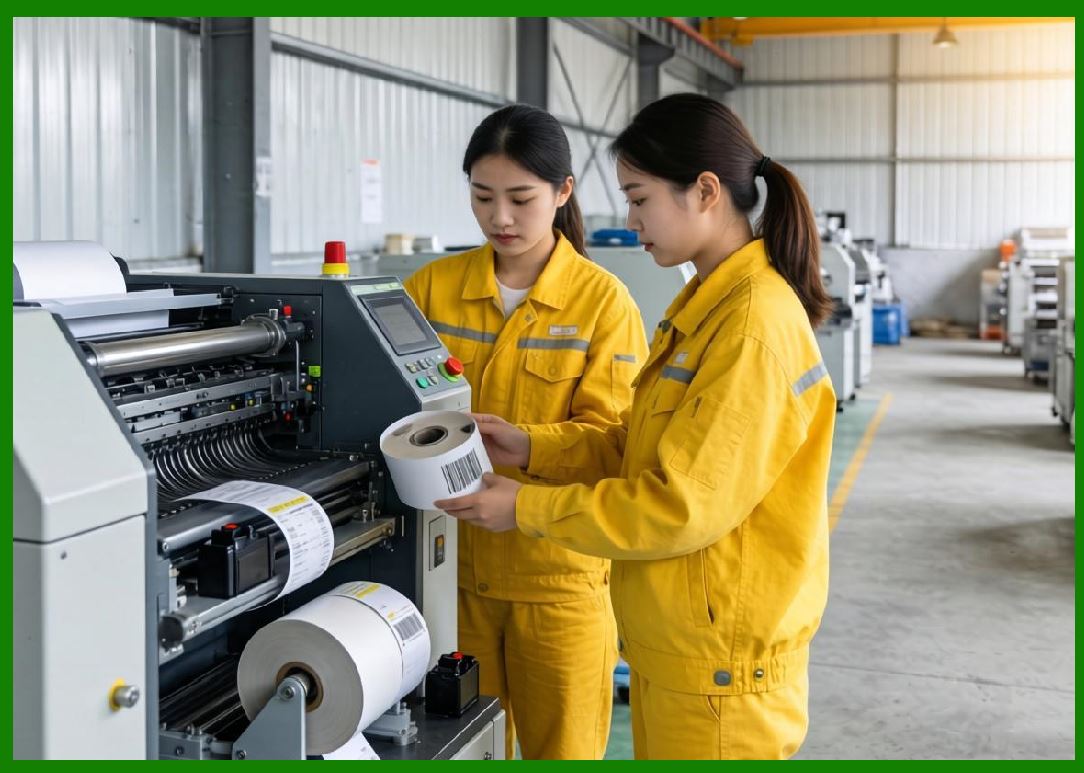
The PX series represented another major industrial product family emphasizing high-performance printing and advanced enterprise integration. These systems supported high-resolution barcode generation and industrial automation workflows. |
|
5.5 |
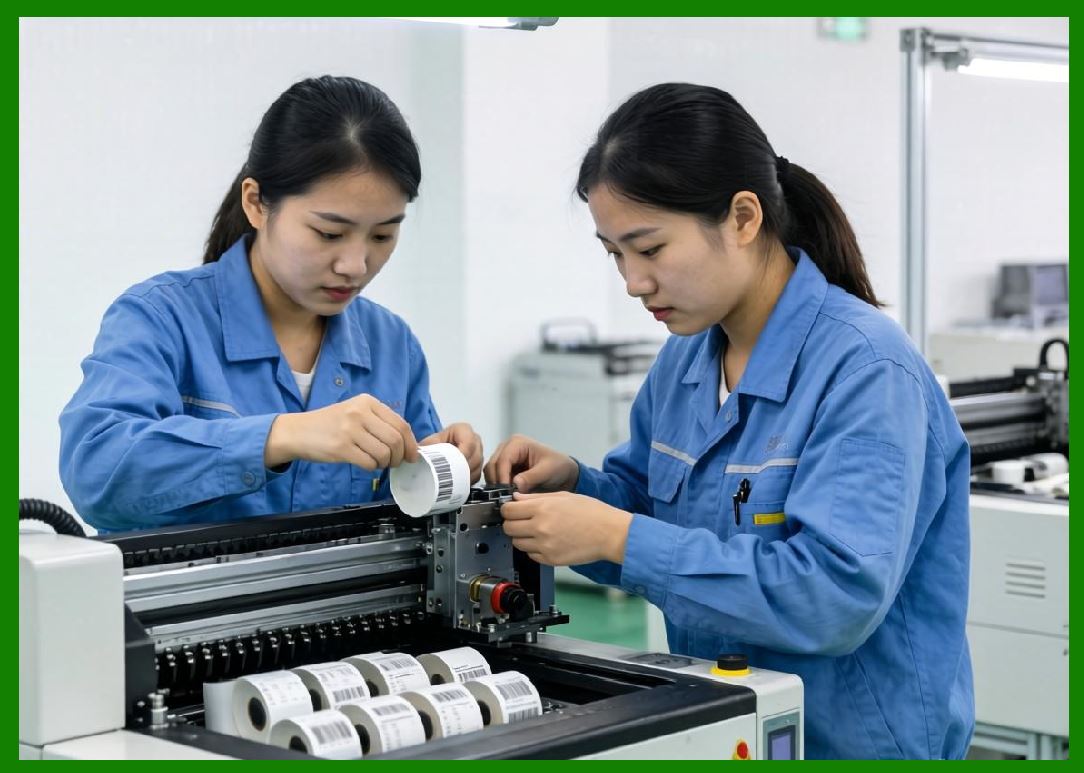
Honeywell also introduced compact desktop printer families for retail stores, healthcare facilities, laboratories, offices, and small business environments. These printers focused on affordability, simplicity, and reliable daily operation. |
5.6 |
Mobile printers became another important product category. Honeywell portable printing systems support warehouse mobility, transportation operations, retail floor workflows, healthcare bedside labeling, and field service applications. |
5.7 |
Print-and-apply automation systems represented an additional industrial specialization. These systems integrate directly into manufacturing and packaging lines for automated labeling operations. |
5.8 |
The company also developed RFID-enabled printer models supporting advanced supply chain visibility and enterprise asset tracking applications. |
|
6. Printer Languages, Enterprise Connectivity, and Automation Integration |
6.1 |
Enterprise integration became one of Honeywell most important competitive strengths. Large organizations require barcode printers capable of integrating seamlessly into warehouse management systems, ERP platforms, transportation systems, and industrial automation infrastructure. |
6.2 |
Honeywell printers support sophisticated command languages and multiple emulation modes for compatibility with existing enterprise software systems. This flexibility simplifies deployment in complex operational environments. |
6.3 |
Networking capabilities became increasingly advanced over time. Modern Honeywell printers support Ethernet, USB, Wi-Fi, Bluetooth, serial communication, cloud platforms, and industrial networking interfaces. |
6.4 |
Remote printer management systems allow centralized monitoring, diagnostics, firmware updates, configuration management, and operational analytics across distributed enterprise printer fleets. |

|
6.5 |
The company also invested heavily in software development kits, APIs, middleware platforms, and enterprise integration frameworks supporting multiple operating systems and industrial automation platforms. |
6.6 |
Cloud-based management infrastructure became increasingly important as multinational corporations sought centralized visibility into global printer operations spanning warehouses, factories, hospitals, and logistics centers. |
6.7 |
Honeywell additionally emphasized industrial automation integration through support for programmable logic controllers, manufacturing execution systems, conveyor systems, robotics platforms, and warehouse automation infrastructure. |
6.8 |
Cybersecurity features became increasingly critical as industrial printers evolved into network-connected enterprise IoT devices. Honeywell invested in secure firmware systems, encrypted communications, authentication technologies, and enterprise-grade device management. |

|
7. RFID Printing Systems and Intelligent Tracking Technologies |
7.1 |
Honeywell became a major provider of RFID-enabled barcode printing systems following the acquisition of Intermec and the expansion of its enterprise mobility portfolio. |
7.2 |
RFID printer-encoders simultaneously print visible labels while encoding embedded RFID chips. These systems support automated inventory management, asset visibility, logistics tracking, and intelligent supply chain operations. |
7.3 |
RFID printing requires highly accurate synchronization between media movement, print operations, antenna positioning, and radio-frequency communication. Honeywell engineers developed sophisticated calibration and verification systems to improve encoding reliability. |
7.4 |
The company introduced industrial RFID printers supporting EPC standards, UHF RFID encoding, serialization systems, and compliance labeling workflows. |

|
7.5 |
RFID verification technologies automatically identify defective tags and prevent faulty labels from entering operational workflows. This improves supply chain accuracy and reduces inventory errors. |
7.6 |
Retail apparel became one of the largest RFID application areas. Honeywell RFID systems helped retailers improve stock accuracy, accelerate inventory counting, reduce shrinkage, and support omnichannel commerce operations. |
7.7 |
Warehouse automation systems also increasingly adopted RFID technologies for pallet tracking, shipment verification, asset visibility, and automated logistics workflows. |
7.8 |
Honeywell continues integrating RFID technologies with IoT analytics, cloud infrastructure, warehouse robotics, and enterprise intelligence platforms. |
|
8. Honeywell Enterprise Mobility and Warehouse Automation Ecosystem |
8.1 |
One major characteristic distinguishing Honeywell from many traditional printer manufacturers is its deep integration of barcode printing with enterprise mobility systems and warehouse automation technologies. |
8.2 |
Honeywell developed rugged mobile computers, wearable scanning systems, vehicle-mounted terminals, voice-directed workflow systems, and industrial tablets designed for logistics and manufacturing environments. |
8.3 |
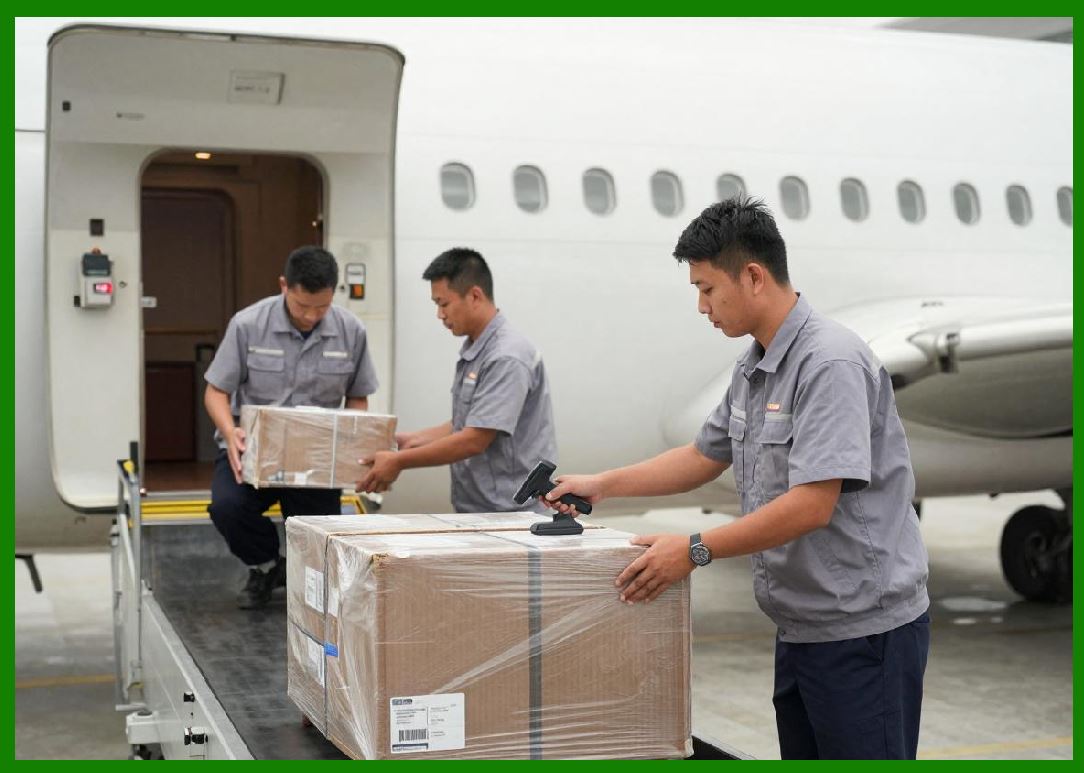
These enterprise mobility platforms frequently integrate directly with Honeywell barcode printers and RFID systems. Workers can print labels, scan inventory, manage shipments, and update enterprise databases in real time. |
8.4 |
The company also developed warehouse execution systems, voice-picking technologies, and intelligent workflow optimization platforms improving operational efficiency in distribution centers. |
|
8.5 |
Machine vision systems became another major growth area. Honeywell integrated barcode verification, OCR technologies, AI-based inspection systems, and automated quality control platforms into industrial operations. |
8.6 |
The company increasingly positions itself as a complete warehouse automation provider rather than only a hardware vendor. This includes robotics integration, conveyor automation, intelligent sorting systems, and predictive operational analytics. |
8.7 |
Cloud connectivity and IoT integration allow Honeywell customers to monitor operational performance across entire logistics networks and manufacturing infrastructures. |
8.8 |
This systems-level approach gives Honeywell a strong competitive advantage in large enterprise environments requiring tightly integrated operational ecosystems. |

|
9. Applications Across Major Industries |
9.1 |
Honeywell barcode printers and mobility systems became deeply integrated into global logistics operations. Warehouses use Honeywell technologies for shipping labels, pallet tracking, inventory management, returns processing, and freight automation. |
9.2 |
Manufacturing industries rely on Honeywell systems for component traceability, compliance labeling, work-in-progress tracking, production monitoring, and industrial automation integration. |
9.3 |
Healthcare organizations use Honeywell printers for patient identification wristbands, medication labeling, laboratory specimen tracking, blood bank management, and hospital asset tracking. |

|
9.4 |
Retail businesses employ Honeywell systems for price labeling, RFID inventory management, mobile point-of-sale operations, shelf labeling, and omnichannel fulfillment workflows. |
9.5 |
Transportation companies use Honeywell technologies for route management, baggage handling, cargo tracking, proof-of-delivery systems, and fleet logistics. |
9.6 |
Government agencies and defense organizations deploy Honeywell equipment for secure asset tracking, logistics coordination, field mobility systems, and identification management. |
9.7 |
Food production companies utilize Honeywell systems for expiration labeling, traceability management, allergen identification, and cold chain logistics. |
9.8 |
Honeywell technologies are additionally used in aviation, energy infrastructure, pharmaceuticals, chemicals, automotive manufacturing, and large-scale industrial automation environments. |

|
10. Future Prospects and Strategic Technological Direction |
10.1 |
Honeywell continues investing heavily in industrial IoT systems, AI-driven automation, cloud analytics, robotics integration, and digital supply chain infrastructure. |
10.2 |
Future Honeywell barcode printers will likely become even more integrated with intelligent warehouse ecosystems, autonomous mobile robots, predictive maintenance systems, and enterprise analytics platforms. |
10.3 |
Artificial intelligence is expected to play a growing role in printer diagnostics, workflow optimization, barcode verification, RFID encoding validation, and automated operational decision-making. |
10.4 |
RFID technologies remain strategically important as retailers, manufacturers, logistics companies, and healthcare providers increasingly adopt real-time asset visibility systems. |

|
10.5 |
The company is also researching sustainability technologies including energy-efficient devices, recyclable media support, reduced-waste printing systems, and environmentally optimized logistics operations. |
10.6 |
Cybersecurity will remain a critical focus area because industrial printers increasingly function as network-connected IoT endpoints within enterprise infrastructures. |
10.7 |
Honeywell long-term strategy increasingly emphasizes complete operational intelligence ecosystems combining printers, scanners, mobile devices, AI analytics, robotics, and cloud-based enterprise management systems. |
10.8 |
As Industry 4.0, smart warehousing, and intelligent supply chain technologies continue expanding globally, Honeywell is expected to remain one of the most important enterprise automation and barcode technology providers in the world. |

|
Detailed Technical Content Summary |
This part provided a detailed technical and historical overview of Honeywell barcode printer and enterprise mobility business. The article explained Honeywell industrial origins, its expansion into automatic identification technologies, and the major strategic importance of acquiring Intermec. |
The discussion covered Honeywell thermal barcode printing technologies, industrial printer engineering, media handling systems, printhead technologies, and rugged industrial printer families such as the PM and PX series. The article also analyzed enterprise integration systems, networking capabilities, cloud infrastructure, printer management platforms, and cybersecurity technologies. |
Significant attention was given to Honeywell RFID printer technologies, intelligent tracking systems, and industrial RFID workflows. The article additionally explored Honeywell broader enterprise mobility ecosystem involving rugged mobile computers, voice-directed workflows, warehouse automation systems, robotics integration, and AI-based operational intelligence platforms. |
Finally, the article examined Honeywell applications across logistics, healthcare, manufacturing, retail, transportation, government, and industrial automation industries, along with future strategic directions involving IoT, AI, robotics, sustainability, cloud analytics, and Industry 4.0 infrastructure. |
 cs@easiersoft.com