Part 50 Final Synthesis of the Global Barcode Label Printer Manufacturer Ecosystem (Industry Architecture, Technology Convergence, and Future Direction) |
1. Overview of the Global Barcode Printing Industry Structure |
1.1 |
Across Parts 19, the global barcode label printer industry can be understood as a multi-layer industrial ecosystem composed of hardware manufacturers, industrial coding companies, software platforms, and supply chain integration providers. Companies such as Zebra Technologies Corporation, Honeywell International Inc., SATO Holdings Corporation, and others form the core technological backbone of global identification systems. |
1.2 |
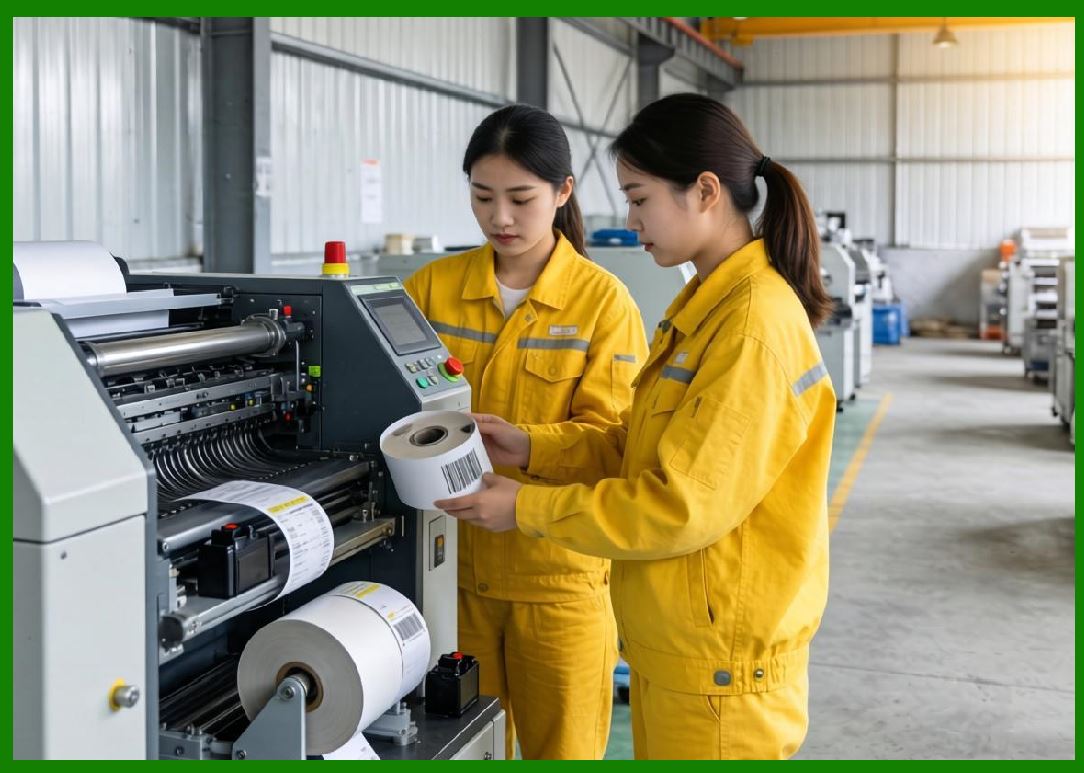
The industry is no longer limited to printers but has evolved into complete digital identification infrastructures, combining printing hardware, RFID encoding, scanning systems, mobile computing, and cloud software. |
|
1.3 |
At the same time, companies like Videojet Technologies Inc. and Markem-Imaje represent a parallel ecosystem focused on direct product marking rather than label-based printing, showing how barcode technology has diversified into multiple technical branches. |
1.4 |
Mid-tier manufacturers such as TSC Auto ID Technology Co., Ltd. and Godex International Co., Ltd. provide cost-efficient industrial printing systems that democratize access to barcode automation. |
1.5 |
Meanwhile, Japanese and Korean manufacturers such as SATO Holdings Corporation, Brother Industries, Ltd., Toshiba Tec Corporation, and BIXOLON Co., Ltd. specialize in hybrid ecosystems combining retail POS, mobile printing, and industrial labeling. |
|
2. Technological Architecture of Barcode Label Printing Systems |
2.1 |
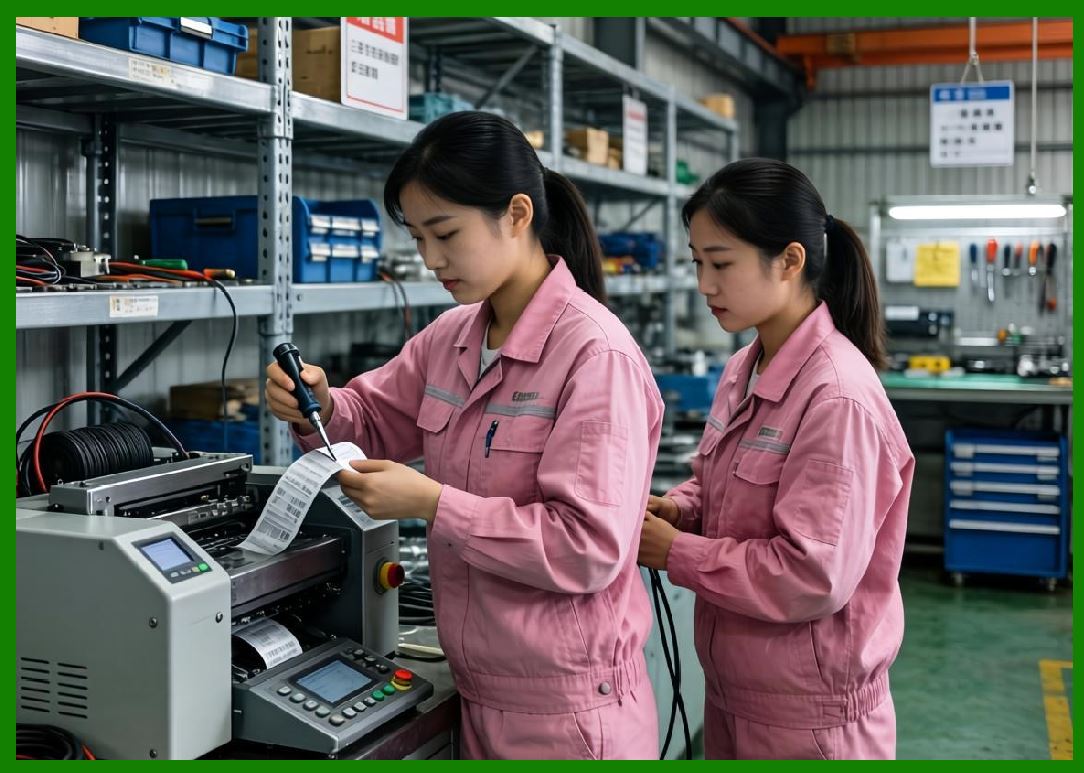
Modern barcode label printers are built on two dominant thermal technologies: direct thermal printing and thermal transfer printing, both of which remain foundational across nearly all manufacturers. |
2.2 |
Direct thermal printing is widely used for short-life applications such as shipping labels, retail receipts, and logistics tracking labels due to its simplicity and low consumable requirements. |
2.3 |
Thermal transfer printing, in contrast, is used for durable labeling in manufacturing, healthcare, automotive, and chemical industries where resistance to heat, abrasion, and chemicals is required. |
2.4 |
Industrial systems from companies like Zebra Technologies Corporation and Honeywell International Inc. emphasize rugged mechanical design, high-duty cycles, and deep enterprise integration. |

|
2.5 |
Mid-tier manufacturers such as TSC Auto ID Technology Co., Ltd. and Godex International Co., Ltd. focus on optimizing cost-performance balance while maintaining compatibility with global barcode standards. |
2.6 |
Office and SMB-focused systems from Brother Industries, Ltd. and POS-integrated systems from BIXOLON Co., Ltd. emphasize usability, compact design, and fast deployment. |
2.7 |
Industrial coding companies such as Videojet Technologies Inc. and Markem-Imaje extend the concept beyond labels into direct substrate marking systems, including inkjet, laser, and hybrid coding technologies. |
2.8 |
Together, these technologies form a unified global identification infrastructure that enables traceability across every stage of the supply chain. |

|
3. RFID Integration and Intelligent Labeling Evolution |
3.1 |
RFID (Radio Frequency Identification) has become a defining evolution in barcode printing systems, transforming static printed labels into dynamic data carriers capable of wireless tracking. |
3.2 |
Companies such as Zebra Technologies Corporation and SATO Holdings Corporation are leading global RFID adoption through integrated print-and-encode systems. |
3.3 |
RFID-enabled printers combine thermal printing with embedded chip encoding systems, allowing simultaneous visual labeling and electronic identification. |
3.4 |
In logistics and retail, RFID enables real-time inventory visibility, reducing human scanning errors and improving supply chain efficiency. |
3.5 |
In healthcare, RFID systems improve patient safety, equipment tracking, and medication management. |
3.6 |
Industrial manufacturers use RFID to track production stages, parts movement, and compliance data. |
3.7 |
Mid-tier manufacturers such as TSC Auto ID Technology Co., Ltd. and Godex International Co., Ltd. are making RFID adoption more accessible to SMEs. |
3.8 |
RFID is evolving into a core pillar of Industry 4.0 smart factory ecosystems. |

|
4. Software, Cloud Systems, and Digital Transformation |
4.1 |
Modern barcode printing ecosystems are no longer hardware-centric; they are increasingly driven by software platforms and cloud-based management systems. |
4.2 |
Enterprise providers like Honeywell International Inc. and Zebra Technologies Corporation integrate printing systems into ERP, WMS, MES, and supply chain intelligence platforms. |
4.3 |
Cloud-based device management allows centralized control of global printer fleets, enabling real-time diagnostics, firmware updates, and performance monitoring. |
4.4 |
Software-driven label design tools support standardized barcode formats such as QR Code, Data Matrix, and GS1 Digital Link structures. |
4.5 |
Mobile printing ecosystems from companies like Brother Industries, Ltd. and BIXOLON Co., Ltd. extend labeling capabilities to field operations. |
4.6 |
APIs and SDKs have become essential, enabling integration of barcode printing into e-commerce, logistics, and manufacturing software systems. |
4.7 |
Cybersecurity has emerged as a critical requirement as printers become connected IoT endpoints within enterprise networks. |
4.8 |
This shift represents the transformation of barcode printers into networked intelligent industrial devices. |

|
5. Industrial Coding vs Label Printing Convergence |
5.1 |
A major architectural divergence exists between label-based printing systems and direct product coding systems. |
5.2 |
Label-based systems (Zebra, SATO, Honeywell, TSC, Godex, Brother, Toshiba Tec, BIXOLON) rely on adhesive labels as carriers of information. |
5.3 |
Direct coding systems (Videojet, Markem-Imaje, Domino) eliminate labels entirely by printing directly onto packaging or products. |
5.4 |
This convergence reflects two parallel technological philosophies: flexible labeling vs permanent marking. |
5.5 |
Industries often combine both systems or example, cartons may use label printers while bottles use inkjet coding. |
5.6 |
Hybrid production environments increasingly require interoperability between both ecosystems. |
5.7 |
Sustainability trends are pushing more industries toward laser marking and label reduction strategies. |
5.8 |
This dual-system architecture defines modern industrial traceability infrastructure. |

|
6. Market Stratification and Global Competitive Layers |
6.1 |
The global market is stratified into three primary tiers: premium enterprise systems, mid-tier industrial systems, and SMB-focused solutions. |
6.2 |
Premium enterprise leaders such as Zebra Technologies Corporation and Honeywell International Inc. dominate mission-critical logistics, healthcare, and global supply chains. |
6.3 |
Industrial specialists such as SATO Holdings Corporation and Toshiba Tec Corporation occupy strong positions in regulated industries and retail integration. |
6.4 |
Mid-tier manufacturers such as TSC Auto ID Technology Co., Ltd. and Godex International Co., Ltd. provide scalable, cost-efficient alternatives. |
6.5 |
SMB-focused systems like Brother Industries, Ltd. and BIXOLON Co., Ltd. dominate office, retail, and mobile printing markets. |
6.6 |
Industrial coding leaders like Videojet Technologies Inc. and Markem-Imaje control direct product marking ecosystems. |
6.7 |
Each tier serves different cost structures, reliability requirements, and integration depths. |
6.8 |
Together, they form a complete global identification technology hierarchy. |

|
7. Future Direction of Barcode Printing Ecosystems |
7.1 |
The future of barcode printing is moving toward fully intelligent, cloud-connected, AI-optimized labeling ecosystems. |
7.2 |
AI will increasingly optimize label placement, print quality, predictive maintenance, and supply chain traceability. |
7.3 |
RFID and hybrid barcode systems will become standard in global logistics. |
7.4 |
Sustainability trends will accelerate adoption of linerless labels, laser marking, and consumable reduction systems. |
7.5 |
Edge computing will enable real-time decision-making within printers and production lines. |
7.6 |
Interoperability between labeling systems and enterprise software platforms will deepen. |
7.7 |
Cybersecurity will become a defining requirement for industrial printing devices. |
7.8 |
Ultimately, barcode printers will evolve into intelligent identity nodes in global digital supply chains. |

|
Final Comprehensive Technical Summary (Parts 10 Consolidation) |
Across all 50 parts, the global barcode label printer industry was analyzed as a complete technological ecosystem spanning hardware manufacturing, industrial coding systems, RFID intelligence, software platforms, and supply chain integration. |
The analysis covered major enterprise leaders such as Zebra, Honeywell, SATO, and Toshiba Tec; mid-tier manufacturers such as TSC and Godex; SMB-oriented providers such as Brother and BIXOLON; and industrial coding specialists such as Videojet and Markem-Imaje. |
Technological foundations included thermal printing (direct thermal and thermal transfer), RFID encoding systems, inkjet coding, laser marking, and hybrid production line integration. |
The industry has evolved from simple barcode label printing into a fully connected digital identity infrastructure that supports global logistics, manufacturing automation, healthcare tracking, retail intelligence, and smart factory systems. |

|
Future trends emphasize AI-driven optimization, cloud-connected devices, RFID expansion, sustainability transformation, and deep integration into Industry 4.0 ecosystems - ultimately redefining barcode printers as intelligent nodes in global supply chain networks. |
 cs@easiersoft.com