Part 6 The History, Technologies, Product Systems, and Industrial Contributions of Toshiba Tec Corporation |
1. Introduction to Toshiba Tec Corporation |
1.1 |
Toshiba Tec Corporation is one of the world most important manufacturers of barcode label printers, point-of-sale systems, automatic identification technologies, multifunction printing systems, and retail automation equipment. The company occupies a unique position in the barcode printer industry because it combines expertise in industrial thermal printing with deep experience in retail systems, enterprise electronics, precision engineering, and information technology infrastructure. |
1.2 |
Toshiba Tec became especially respected for its high-quality thermal barcode printers, advanced printhead technologies, industrial reliability, and strong integration with retail and logistics systems. The company barcode printers are widely deployed in warehousing, manufacturing, transportation, healthcare, retail distribution, food labeling, and industrial automation environments. |
|
1.3 |
Unlike some manufacturers that focus exclusively on barcode printing, Toshiba Tec developed broad expertise across multiple technology sectors including POS terminals, self-checkout systems, retail automation, office equipment, multifunction printers, and enterprise information systems. This diversification allowed the company to integrate barcode technologies into comprehensive operational ecosystems. |
1.4 |
The company engineering philosophy reflects many traditional Japanese manufacturing principles emphasizing precision, reliability, quality control, miniaturization, operational stability, and long-term durability. These qualities helped Toshiba Tec establish strong reputations in demanding enterprise environments. |

|
1.5 |
Toshiba Tec also became one of the leading developers of thermal printhead technology itself. Thermal printheads represent one of the most technically critical components within barcode printers because they directly determine print quality, durability, speed, and barcode readability. |
1.6 |
Today, Toshiba Tec products are used globally across retail stores, factories, logistics centers, airports, hospitals, warehouses, government agencies, and transportation networks. The company continues investing heavily in IoT infrastructure, RFID systems, cloud connectivity, retail automation, and smart supply chain technologies. |
|
2. Historical Development of Toshiba Tec |
2.1 |
The origins of Toshiba Tec are closely connected with the broader history of Toshiba Corporation, one of Japan most influential industrial and electronics conglomerates. |
2.2 |
Toshiba itself emerged from the merger of two major Japanese engineering firms: Shibaura Engineering Works and Tokyo Electric Company. Over time, Toshiba expanded into numerous sectors including semiconductors, computing, industrial equipment, consumer electronics, power systems, and information technology. |
2.3 |
Toshiba Tec evolved as a specialized subsidiary focused primarily on office automation equipment, retail systems, printing technologies, and information processing systems. The company gradually developed expertise in barcode labeling and thermal printing as retail automation and logistics systems expanded globally. |
2.4 |
During the 1970s and 1980s, barcode technology adoption accelerated rapidly across retail and logistics industries. Toshiba Tec recognized the strategic importance of barcode identification systems and began investing heavily in thermal printing technologies and automatic identification infrastructure. |
|
2.5 |
The company strong background in electronics engineering and precision manufacturing enabled it to develop sophisticated barcode printing systems relatively quickly. Toshiba Tec engineers focused heavily on thermal printhead technology, media handling precision, and enterprise integration capabilities. |
2.6 |
As global supply chains expanded during the 1980s and 1990s, Toshiba Tec strengthened its international market presence through overseas subsidiaries, reseller partnerships, technical support networks, and manufacturing expansion. |
2.7 |
The company increasingly targeted enterprise customers requiring reliable industrial barcode printers integrated with retail automation, warehouse management, and logistics systems. |
2.8 |
Over time, Toshiba Tec became one of the world most respected manufacturers of industrial barcode printers and retail automation technologies. |
|
3. Thermal Printhead Technology and Engineering Expertise |
3.1 |
One of Toshiba Tec most important technological strengths lies in thermal printhead engineering. Thermal printheads are the core image-generation components in thermal barcode printers. Their performance directly affects barcode readability, print speed, resolution, durability, and operational reliability. |
3.2 |
Toshiba Tec became internationally recognized for manufacturing high-quality thermal printheads featuring precise heat distribution, long operational life, and high-resolution output capabilities. |
3.3 |
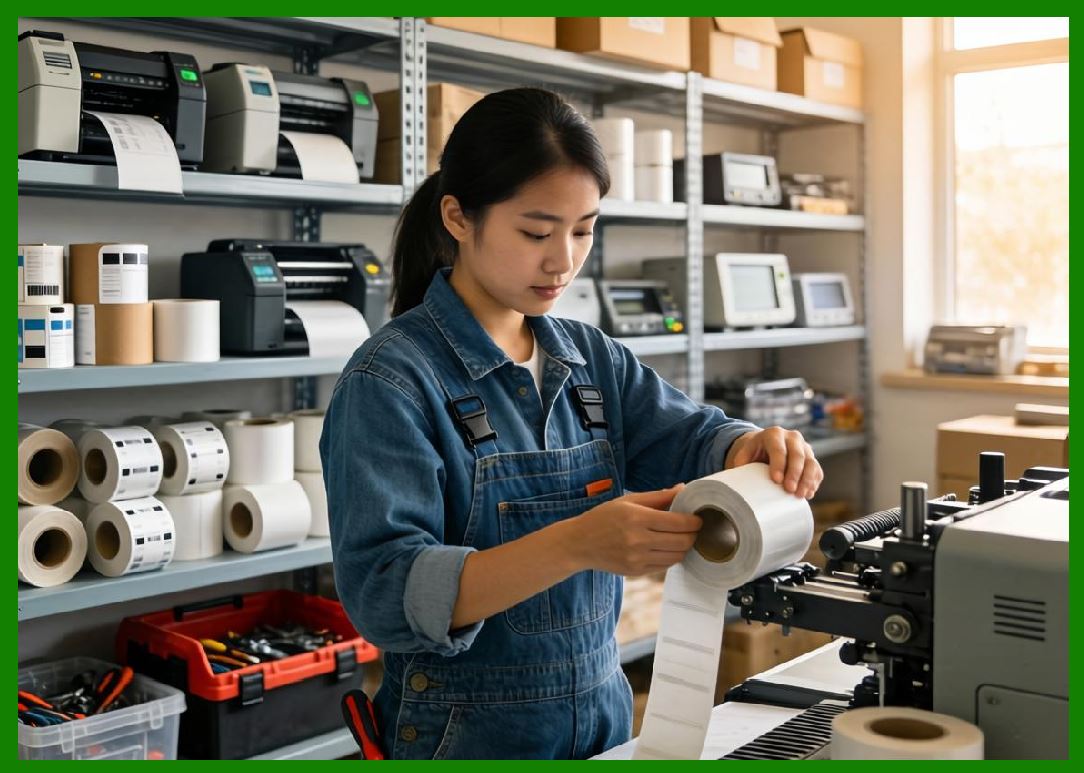
Thermal printing works by selectively heating microscopic elements across the printhead surface. In direct thermal systems, heat activates chemically coated thermal paper. In thermal transfer systems, heat melts ribbon ink onto label media. |
3.4 |
Accurate thermal control is critically important because barcode scanners depend on highly precise barcode geometry. Small distortions in bar widths, edge sharpness, or print contrast can significantly reduce scan reliability. |
|
3.5 |
Toshiba Tec engineers focused extensively on improving thermal element uniformity, heat dissipation, power efficiency, and print consistency. These improvements allowed the company printers to maintain stable barcode quality during long industrial production runs. |
3.6 |
The company also developed high-resolution printhead systems supporting 300 dpi, 406 dpi, and 600 dpi printing applications. High-resolution output became increasingly important in electronics manufacturing, pharmaceuticals, healthcare, laboratory systems, and miniature product labeling. |
3.7 |
Durability represented another major engineering priority. Industrial barcode printers often operate continuously in warehouses, factories, ports, and distribution centers. Toshiba Tec therefore designed printheads capable of long service life under demanding operating conditions. |
3.8 |
The company expertise in thermal printhead technology also benefited its broader product portfolio including receipt printers, POS systems, kiosk printers, and multifunction printing systems. |

|
4. Barcode Printer Technologies and Product Design Philosophy |
4.1 |
Toshiba Tec barcode printers are designed around several core engineering priorities including reliability, print precision, operational efficiency, industrial durability, and enterprise scalability. |
4.2 |
The company produces both direct thermal and thermal transfer barcode printers. Direct thermal systems are commonly used for shipping labels, receipts, temporary logistics labels, and food packaging applications. Thermal transfer systems support long-life industrial labels requiring environmental resistance. |
4.3 |
Media transport precision became one of Toshiba Tec major engineering focuses. Accurate media handling is essential for maintaining barcode alignment, RFID encoding reliability, and automated label application accuracy. |
4.4 |
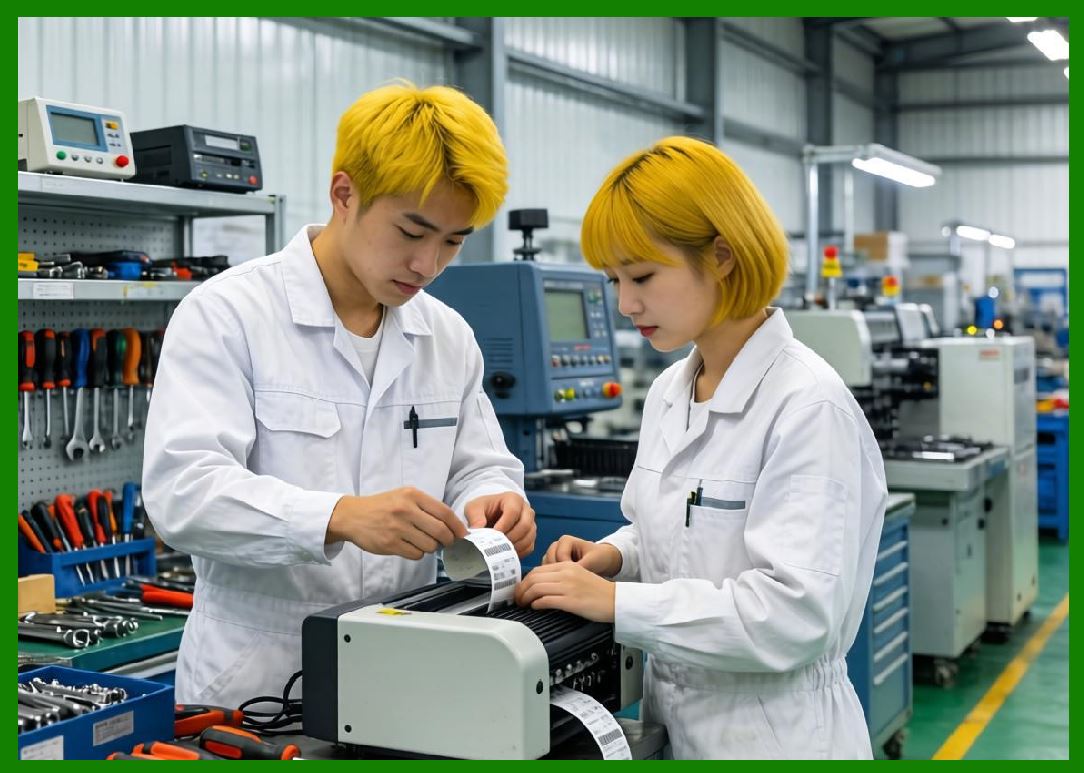
The company developed advanced media sensing technologies including transmissive gap sensing, reflective black mark sensing, continuous media calibration, and automated label positioning systems. |
|
4.5 |
Toshiba Tec printers also emphasize mechanical stability and low vibration operation. Stable media transport reduces print distortion and improves barcode consistency during high-speed industrial printing. |
4.6 |
Industrial models frequently incorporate reinforced metal frames, industrial-grade motors, ruggedized electronics, and high-capacity ribbon systems designed for continuous enterprise operation. |
4.7 |
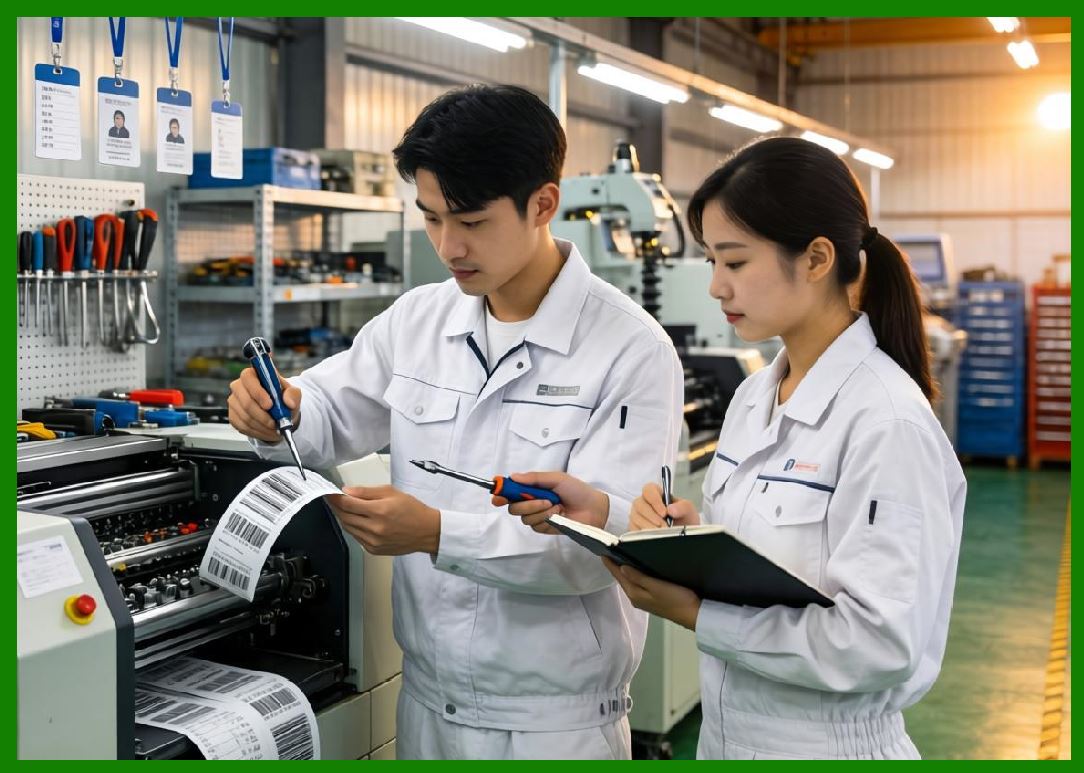
User-friendly operation became another important design goal. Toshiba Tec introduced simplified media loading systems, intuitive interfaces, automatic calibration functions, and graphical display panels improving operational efficiency. |
4.8 |
The company additionally optimized many printer models for compact industrial footprints, allowing deployment in space-constrained warehouses, retail environments, factories, and healthcare facilities. |
|
5. Toshiba Tec Industrial Barcode Printer Product Families |
5.1 |
Toshiba Tec developed multiple barcode printer families serving industrial, commercial, healthcare, logistics, and retail sectors. The company printers range from compact desktop systems to large industrial high-volume printing platforms. |
5.2 |
The B-EX series became one of Toshiba Tec flagship industrial barcode printer families. These printers are known for high-speed operation, strong industrial durability, advanced connectivity, and excellent print quality. |
5.3 |
B-EX printers support demanding manufacturing and logistics environments requiring continuous operation, large-volume label generation, and integration with warehouse automation systems. |
5.4 |
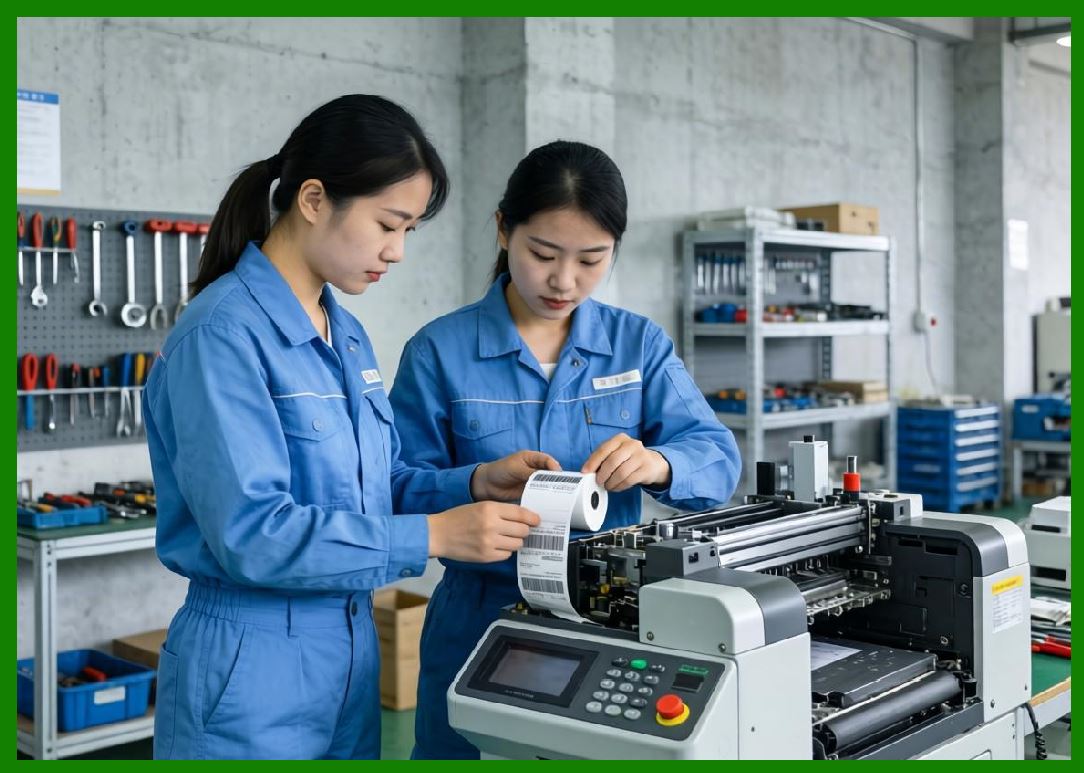
The B-SX series represented another important industrial product line emphasizing reliability, flexible connectivity, and RFID integration capabilities. |
|
5.5 |
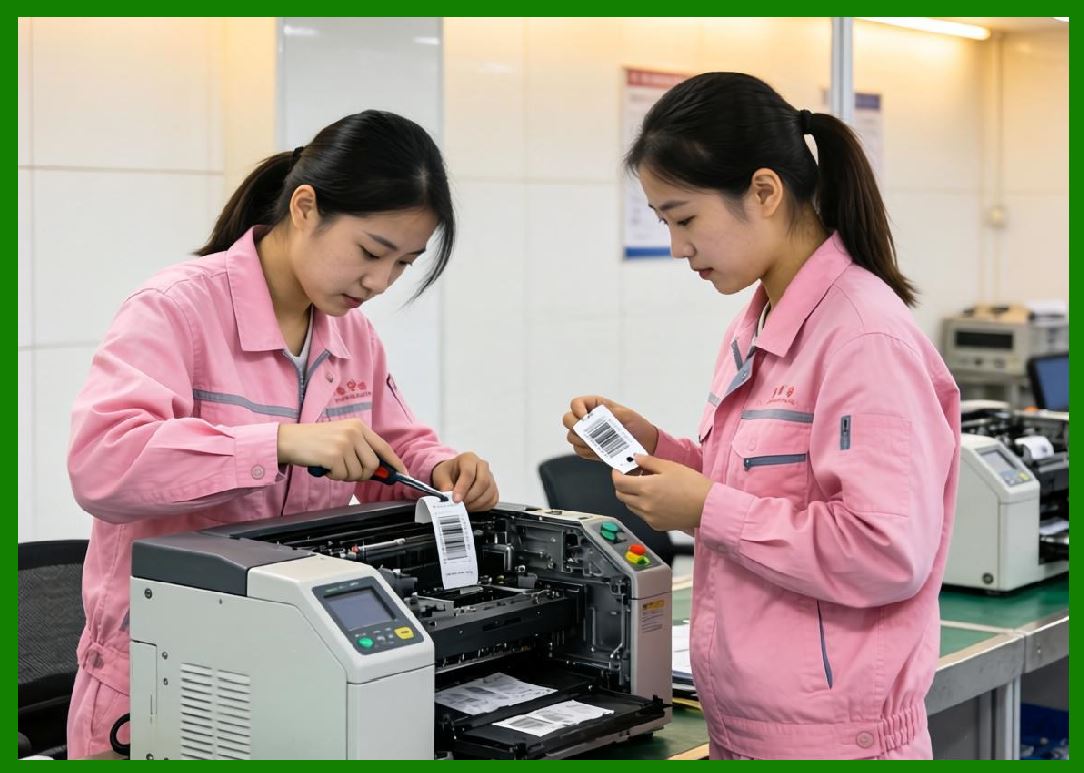
Desktop printer systems such as the B-FV series targeted retail stores, healthcare clinics, offices, laboratories, and smaller businesses requiring compact yet professional barcode printing capabilities. |
5.6 |
Mobile printing systems became increasingly important as transportation, warehouse mobility, field service, and healthcare applications expanded. Toshiba Tec developed portable wireless printers supporting real-time mobile operations. |
5.7 |
The company also produced OEM print engines designed for automated packaging systems, industrial production lines, and print-and-apply automation equipment. |
5.8 |
Healthcare-focused systems were optimized for patient identification, specimen labeling, pharmacy workflows, and hospital asset tracking operations. |
|
6. Printer Languages, Enterprise Integration, and Connectivity |
6.1 |
Enterprise integration became critically important as global supply chains and warehouse management systems expanded. Toshiba Tec developed advanced printer command systems enabling dynamic automated label generation. |
6.2 |
The company introduced TPCL, or Toshiba Printer Command Language, allowing enterprise software systems to control barcode formatting, variable data generation, serialization, graphics rendering, and RFID operations. |
6.3 |
TPCL supported manufacturing execution systems, ERP platforms, warehouse management software, transportation systems, and retail automation applications. |
6.4 |
Toshiba Tec also recognized the importance of compatibility with existing enterprise infrastructures. Many printers therefore support multiple emulation modes for compatibility with widely used industry printer languages. |
|
6.5 |
Networking technologies became increasingly sophisticated over time. Modern Toshiba Tec printers support Ethernet, Wi-Fi, Bluetooth, USB, serial communication, cloud integration, and industrial automation interfaces. |
6.6 |
The company introduced remote printer management systems supporting diagnostics, firmware deployment, operational analytics, and centralized fleet administration. |
6.7 |
Cloud-connected printing infrastructure became especially important for multinational retailers and logistics companies operating distributed printer fleets across multiple countries and facilities. |
6.8 |
Cybersecurity features also became increasingly significant. Toshiba Tec invested in authentication systems, encrypted communication protocols, secure firmware architectures, and enterprise device management technologies. |
|
7. RFID Printer Systems and Smart Labeling Technologies |
7.1 |
Toshiba Tec became one of the major developers of RFID-enabled barcode printers as RFID adoption expanded globally across retail, logistics, healthcare, and manufacturing sectors. |
7.2 |
RFID printer-encoders combine visible barcode printing with embedded RFID tag programming within a single operational workflow. These systems improve operational efficiency and enable intelligent asset tracking. |
7.3 |
RFID integration requires highly precise synchronization between media movement, thermal printing, RFID antenna positioning, and radio-frequency communication systems. |
7.4 |
Toshiba Tec engineers developed advanced RFID calibration and verification technologies improving encoding accuracy and operational reliability. |
|
7.5 |
The company introduced industrial RFID printers supporting UHF RFID standards, EPC encoding, serialization systems, and enterprise inventory management applications. |
7.6 |
RFID technologies became especially important in apparel retail where real-time inventory visibility dramatically improves stock accuracy and omnichannel fulfillment operations. |
7.7 |
Warehouse automation systems also increasingly relied on RFID technologies for pallet tracking, logistics verification, shipment monitoring, and automated inventory management. |
7.8 |
Toshiba Tec continues integrating RFID systems with IoT infrastructure, cloud analytics, smart retail platforms, and digital supply chain management technologies. |
|
8. Retail Automation and Point-of-Sale Integration |
8.1 |
One characteristic that distinguishes Toshiba Tec from many barcode printer competitors is its strong integration with retail automation and point-of-sale systems. |
8.2 |
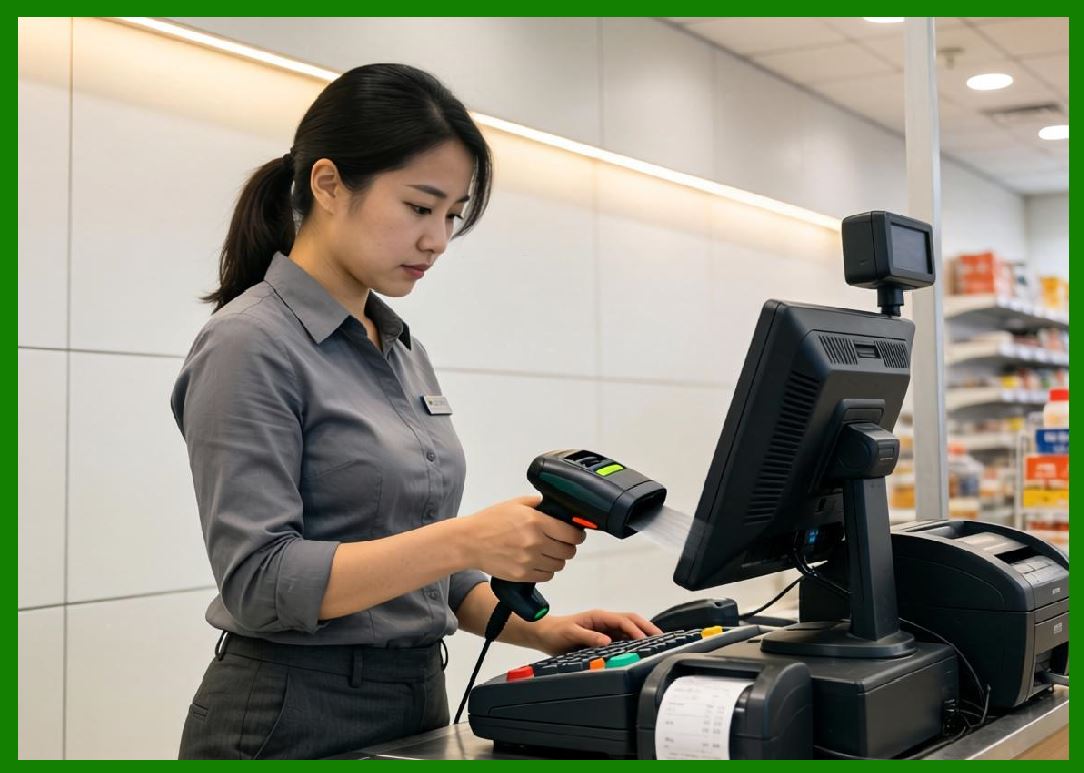
The company became a major supplier of retail POS terminals, self-checkout systems, receipt printers, price verification systems, and retail information infrastructure. |
8.3 |
This retail expertise allowed Toshiba Tec to integrate barcode printers seamlessly into complete retail operational ecosystems including inventory management, shelf labeling, checkout operations, and omnichannel commerce workflows. |
8.4 |
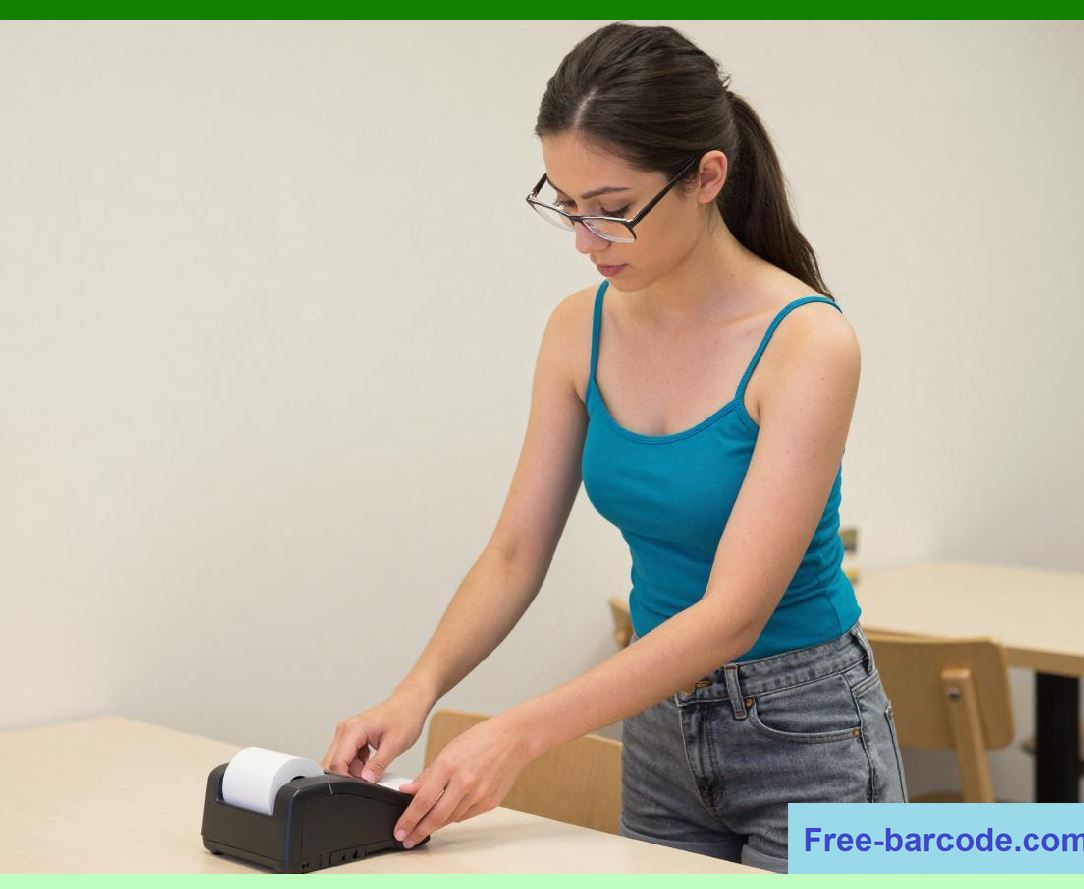
Retail shelf labeling became an especially important application area. Toshiba Tec barcode printers support pricing updates, promotional labeling, inventory tracking, and retail compliance management. |
|
8.5 |
The company also developed electronic shelf labeling systems and digital retail technologies supporting modern smart store operations. |
8.6 |
Self-checkout systems increasingly rely on barcode identification and label printing infrastructure. Toshiba Tec integrated these technologies into comprehensive retail automation platforms. |
8.7 |
The rise of omnichannel commerce further expanded demand for barcode labeling systems integrated with online order fulfillment, curbside pickup, warehouse logistics, and retail delivery systems. |
8.8 |
Toshiba Tec combination of barcode printing expertise and retail systems engineering gave the company strong advantages within large retail enterprise environments. |

|
9. Industrial Applications Across Global Markets |
9.1 |
Toshiba Tec barcode printers became widely used throughout manufacturing industries for serialization, compliance labeling, work-in-progress tracking, and component traceability. |
9.2 |
Logistics and warehouse operations rely heavily on Toshiba Tec systems for shipping labels, pallet identification, inventory tracking, freight management, and automated warehouse workflows. |
9.3 |
Retail businesses use Toshiba Tec printers for shelf labels, RFID inventory management, receipts, promotional labeling, omnichannel fulfillment, and store automation systems. |
9.4 |
Healthcare organizations employ Toshiba Tec printers for patient wristbands, specimen tracking, medication labeling, laboratory operations, and medical asset management. |

|
9.5 |
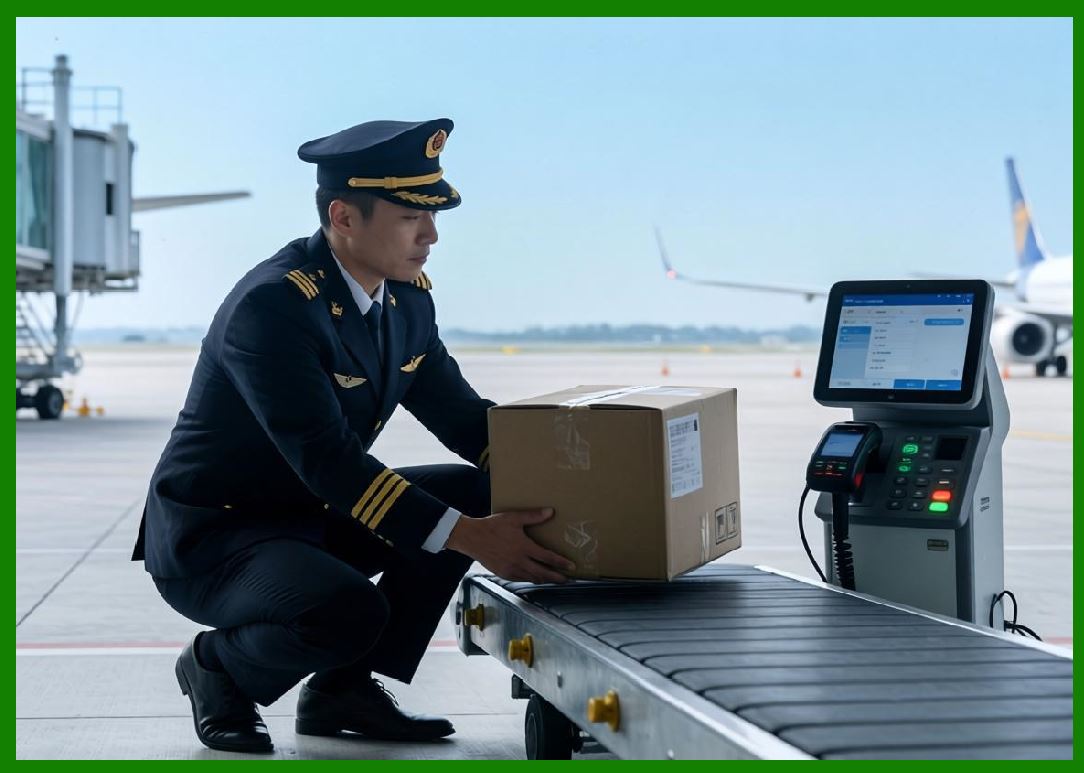
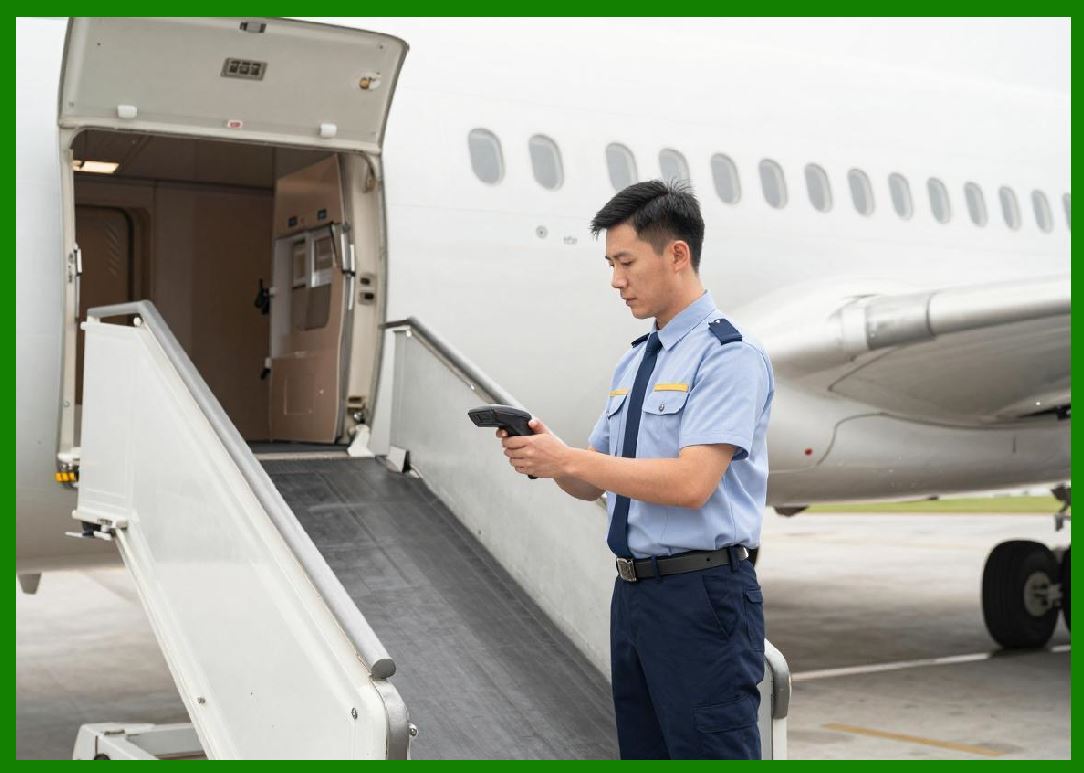
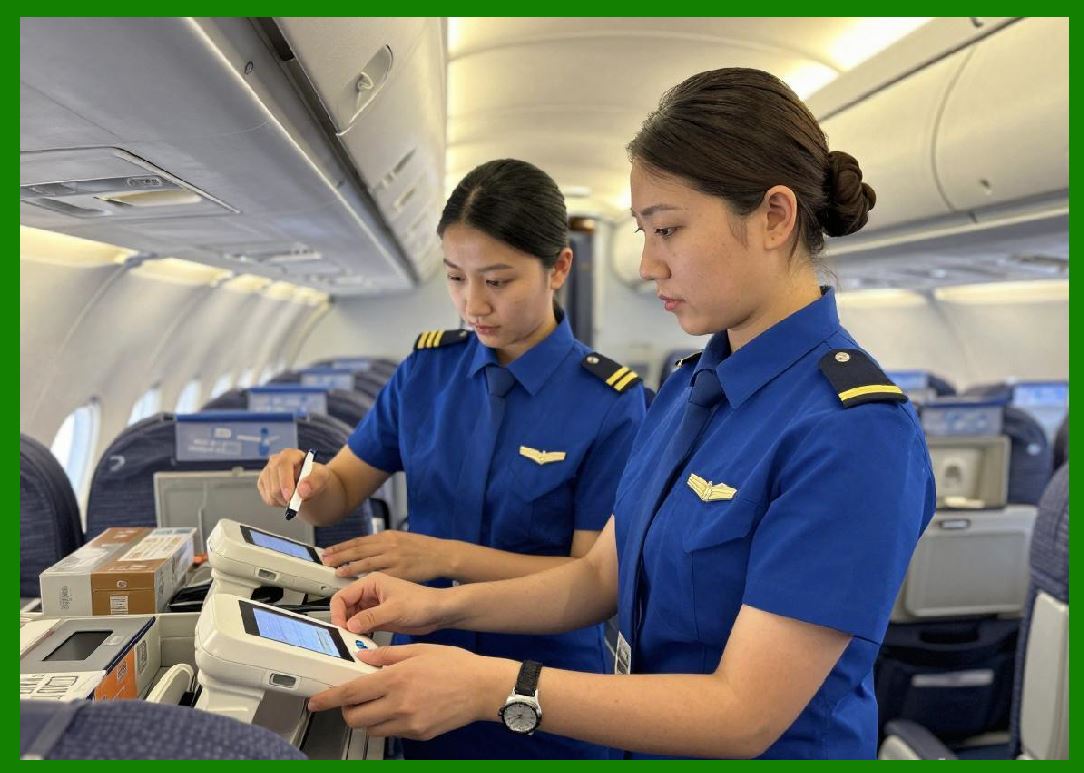
Transportation companies utilize Toshiba Tec technologies for baggage labeling, cargo management, route operations, warehouse logistics, and proof-of-delivery systems. |
9.6 |
Food production companies use Toshiba Tec printers for expiration labeling, allergen tracking, traceability management, and regulatory compliance operations. |
9.7 |
Electronics manufacturing industries frequently require Toshiba Tec high-resolution printers for circuit board labels, semiconductor packaging, miniature component identification, and anti-counterfeiting serialization systems. |
9.8 |
Government agencies, industrial laboratories, pharmaceuticals manufacturers, and distribution centers also rely extensively on Toshiba Tec barcode printing systems. |
|
10. Future Development Directions and Strategic Outlook |
10.1 |
Toshiba Tec continues investing heavily in smart retail systems, industrial IoT technologies, AI-assisted automation, cloud-connected infrastructure, and digital supply chain management. |
10.2 |
The company increasingly focuses on intelligent operational visibility systems combining barcode printers, RFID infrastructure, analytics platforms, and enterprise automation technologies. |
10.3 |
Artificial intelligence may play a growing role in future Toshiba Tec systems through predictive maintenance, automated diagnostics, print quality analysis, inventory optimization, and workflow automation. |
10.4 |
RFID technologies remain strategically important as retailers, manufacturers, healthcare providers, and logistics companies continue expanding real-time asset visibility systems. |

|
10.5 |
Sustainability has become another major corporate priority. Toshiba Tec researches energy-efficient hardware, recyclable labeling materials, reduced-waste printing technologies, and environmentally optimized operational systems. |
10.6 |
The company is also expected to continue expanding cloud-based printer fleet management and remote enterprise monitoring capabilities. |
10.7 |
Cybersecurity will remain increasingly important as industrial printers evolve into connected IoT devices integrated directly into enterprise operational networks. |
10.8 |
As global retail automation, warehouse digitization, and industrial traceability systems continue expanding, Toshiba Tec is expected to remain one of the world leading barcode printing and retail automation technology companies. |

|
Detailed Technical Content Summary |
This part provided a detailed technical and historical overview of Toshiba Tec Corporation and its role in the global barcode printer industry. The article examined the company relationship with Toshiba Corporation, its development into a specialist retail and printing technology company, and its expansion into barcode printing and automatic identification systems. |
The discussion covered Toshiba Tec advanced thermal printhead technologies, thermal printing systems, industrial engineering methods, media handling precision, and high-resolution barcode generation capabilities. Major industrial printer product families such as the B-EX and B-SX series were analyzed in detail. |
The article also explored TPCL printer language, enterprise connectivity systems, cloud infrastructure, cybersecurity technologies, and RFID-enabled barcode printing systems. Significant attention was given to Toshiba Tec integration of barcode printers with retail automation, POS systems, self-checkout infrastructure, and omnichannel commerce platforms. |
Finally, the article discussed Toshiba Tec applications across manufacturing, logistics, retail, healthcare, transportation, food production, electronics manufacturing, and government industries, along with future directions involving AI, IoT, RFID, sustainability, cloud analytics, and smart retail automation. |
 cs@easiersoft.com