Part 7 The History, Technologies, Printing Innovations, and Barcode Labeling Systems of Seiko Epson Corporation |
1. Introduction to Seiko Epson Corporation |
1.1 |
Seiko Epson Corporation is one of the world most influential printing and electronics manufacturers. Although the company is widely recognized internationally for inkjet printers, precision electronics, watches, robotics, semiconductor technologies, and projection systems, Epson also became an important participant in the barcode label printer and automatic identification industry. |
1.2 |
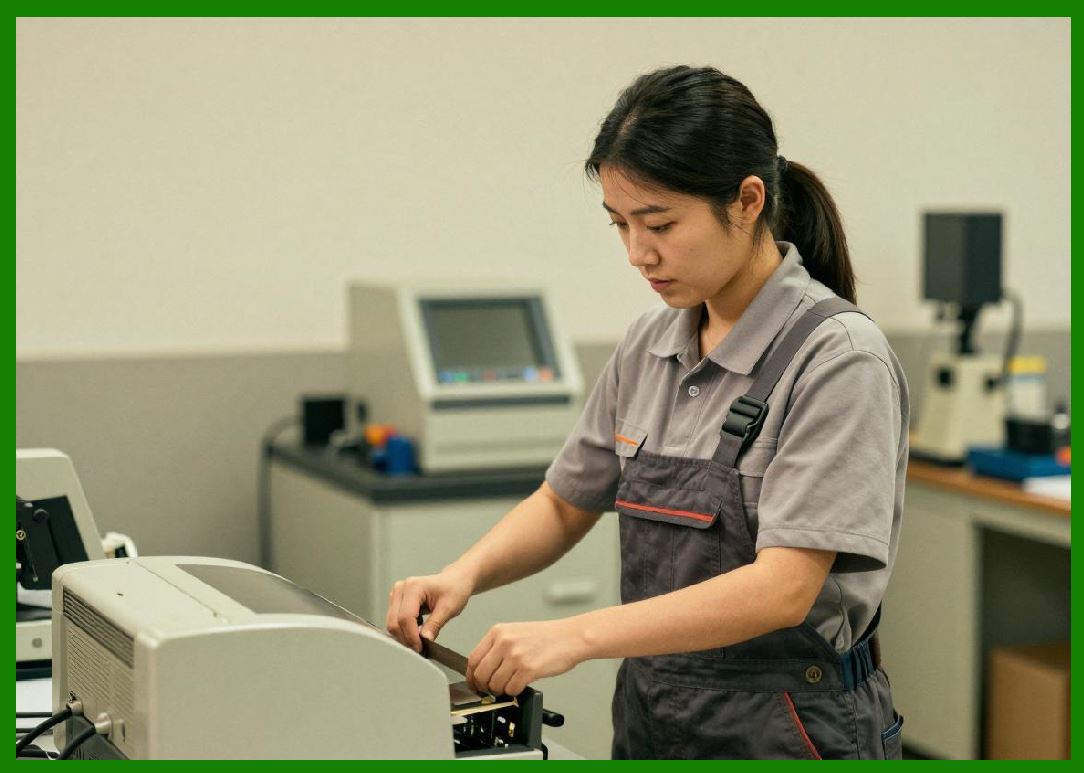
Epson occupies a somewhat unique position among barcode label printer manufacturers because of its deep expertise in precision printing technologies, microelectromechanical systems, semiconductor engineering, and compact industrial electronics. The company leveraged these technological capabilities to develop thermal printers, label printers, point-of-sale printers, color label printing systems, industrial inkjet labeling technologies, and automatic identification products. |
|
1.3 |
Unlike some manufacturers focused primarily on monochrome industrial thermal barcode printing, Epson became especially influential in color label printing technologies, high-precision compact printing systems, and retail-oriented labeling infrastructure. The company also played an important role in receipt printing, point-of-sale systems, and retail transaction automation. |
1.4 |
Epson expertise in precision engineering allowed the company to develop advanced printhead technologies, compact mechanical systems, high-resolution printing architectures, and efficient media transport mechanisms. These capabilities supported both traditional barcode labeling and newer generations of industrial color label production systems. |

|
1.5 |
The company barcode and label printing solutions are widely used in retail, healthcare, logistics, manufacturing, food labeling, pharmaceuticals, ticketing systems, transportation, and commercial packaging operations. |
1.6 |
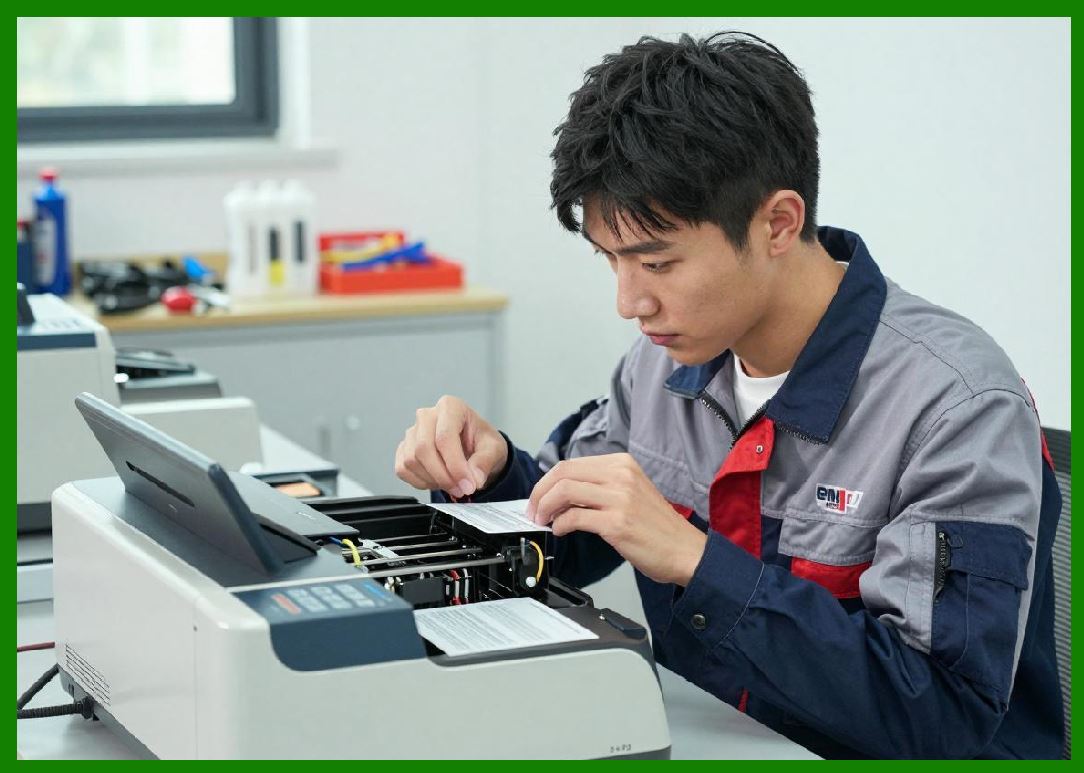
Today, Epson continues investing heavily in industrial automation, sustainable printing technologies, digital labeling systems, cloud connectivity, IoT integration, and advanced color printing platforms for industrial identification applications. |
|
2. Historical Origins and Corporate Development |
2.1 |
The history of Epson is closely connected to Japan watchmaking and precision engineering industries. The company traces its origins back to 1942 when a company called Daiwa Kogyo Ltd. was established in Suwa, Nagano Prefecture, Japan. |
2.2 |
Daiwa Kogyo later became associated with the Seiko Group, one of Japan most famous precision manufacturing organizations. The company initially specialized in watch component manufacturing and precision mechanical engineering. |
2.3 |
Japan postwar industrial growth created favorable conditions for electronics innovation, miniaturization, precision manufacturing, and semiconductor development. Epson benefited significantly from this technological environment. |
2.4 |
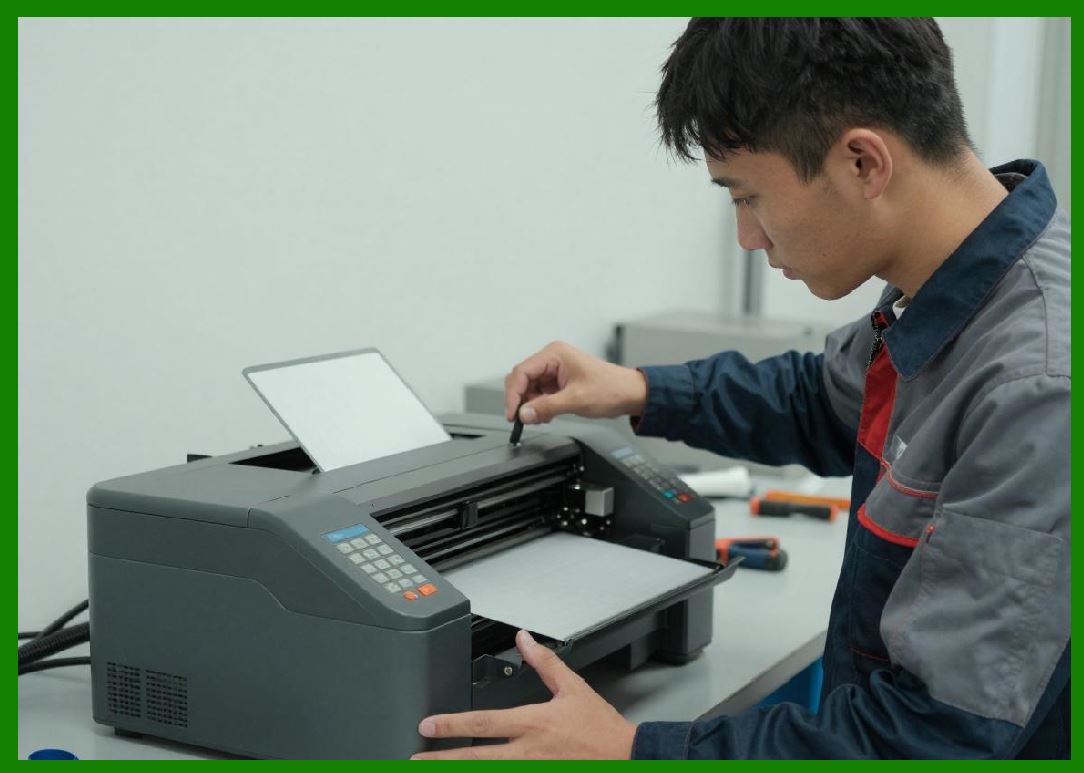
A major turning point occurred during the 1964 Tokyo Olympic Games. Seiko developed highly advanced timing systems for the event, including compact electronic printers capable of recording timing results. These technologies laid important foundations for Epson later printing expertise. |
|
2.5 |
In 1968, the company introduced the EP-101, considered one of the world first compact digital printers. The name Epson later emerged from the concept of Son of EP, reflecting the technological lineage originating from the EP printer series. |
2.6 |
Over the following decades, Epson became globally famous for compact printers, dot matrix systems, inkjet technologies, receipt printers, and high-precision imaging systems. The company extensive experience in miniature mechanics and printhead engineering eventually supported its expansion into barcode and label printing. |
2.7 |
As barcode technology expanded globally during the 1980s and 1990s, Epson increasingly entered automatic identification and retail labeling markets. The company thermal printing technologies became widely used in POS systems, ticketing systems, receipt printing, and compact label generation. |
2.8 |
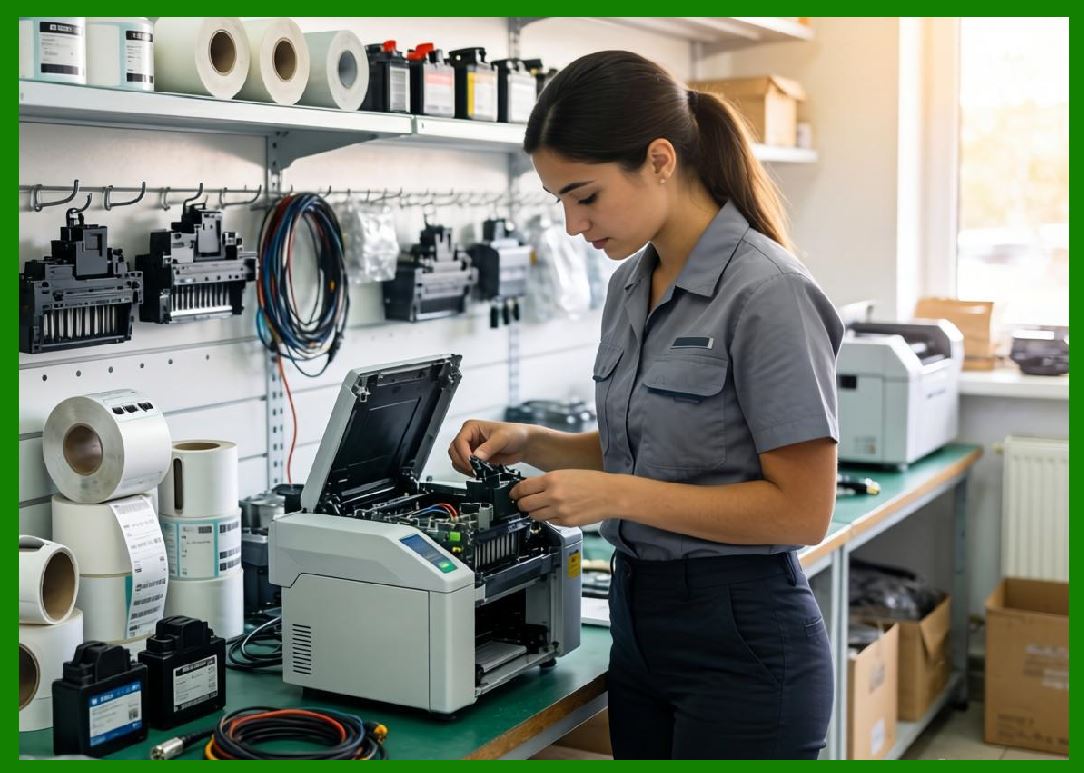
Today, Epson operates globally with manufacturing facilities, research centers, sales organizations, and technical support infrastructure spanning Asia, Europe, North America, Latin America, and other international markets. |
|
3. Epson Core Printing Technologies |
3.1 |
Epson became internationally respected for its sophisticated printing technologies, especially in precision printhead engineering. The company developed expertise across multiple printing methods including thermal printing, inkjet printing, piezoelectric printing, and compact impact printing systems. |
3.2 |
Thermal printing became especially important in Epson barcode and labeling operations. Thermal systems provide fast, quiet, reliable, and low-maintenance operation suitable for retail environments, ticketing systems, logistics operations, and healthcare workflows. |
3.3 |
Epson developed direct thermal printing systems widely used in receipts, tickets, food labels, shipping labels, and temporary logistics applications. These systems use heat-sensitive media without requiring ink ribbons. |
3.4 |
The company also developed thermal transfer printing systems supporting more durable industrial labels resistant to abrasion, chemicals, moisture, and environmental exposure. |

|
3.5 |
One of Epson greatest technological strengths involved printhead engineering. Epson engineers became world leaders in microscopic precision manufacturing, nozzle design, thermal control, and semiconductor-based print technologies. |
3.6 |
The company Micro Piezo inkjet technology represented one of its most important innovations. Unlike thermal inkjet systems that rely on heat to eject ink droplets, Epson piezoelectric systems use mechanical deformation of piezoelectric crystals to control ink output. |
3.7 |
This technology became especially important for industrial color label printing because it allowed highly accurate droplet placement, excellent color precision, lower heat stress, and compatibility with multiple ink formulations. |
3.8 |
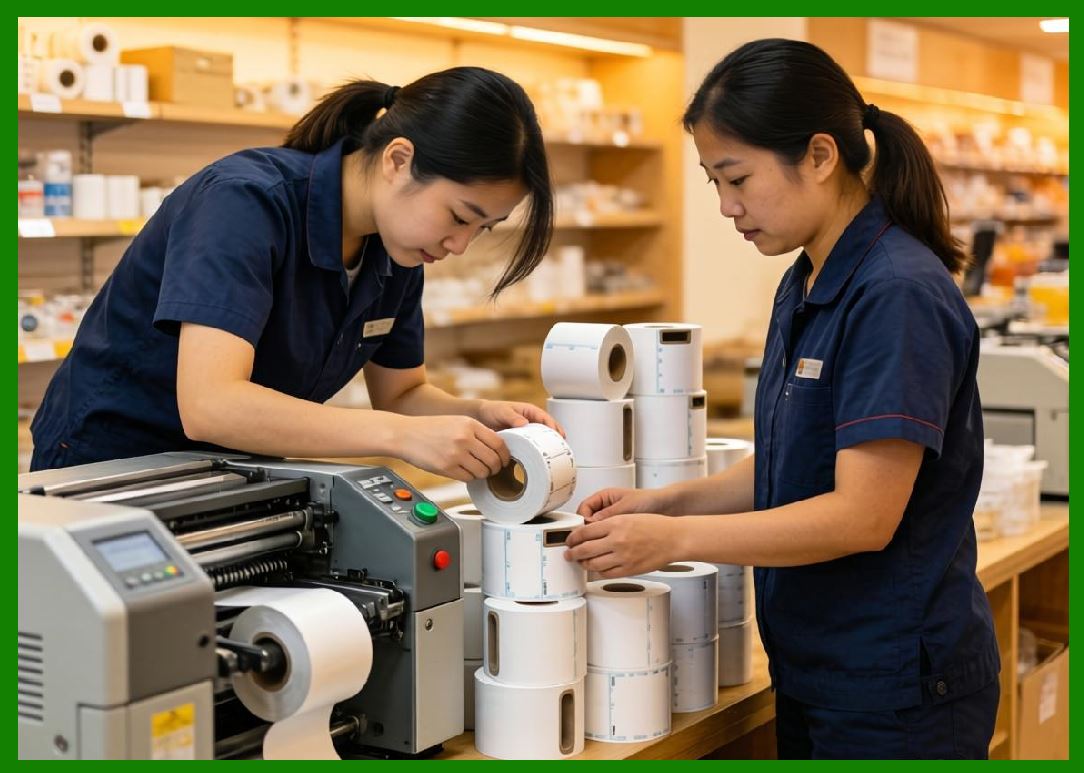
Epson expertise in compact electronics and precision mechanics also enabled the company to develop highly reliable media transport systems, miniature motors, and compact industrial printing architectures. |
|
4. Epson and the Evolution of Color Barcode Label Printing |
4.1 |
One of Epson most distinctive contributions to the barcode labeling industry involved the expansion of color label printing technologies. Traditional industrial barcode printers primarily focused on monochrome black thermal output, but many industries increasingly required full-color product labels and packaging identification. |
4.2 |
Color labels became especially important in food production, beverage packaging, healthcare, chemicals, retail branding, pharmaceuticals, cosmetics, and specialty manufacturing industries. |
4.3 |
Epson recognized that many businesses required on-demand full-color label printing rather than outsourcing label production to external printing companies. This demand created opportunities for compact industrial color label printers. |
4.4 |
The company introduced color label printing systems capable of generating both barcode information and full-color graphics simultaneously. These systems combined industrial identification functionality with commercial product labeling capabilities. |

|
4.5 |
Epson ColorWorks printer series became one of the company most important industrial labeling product families. These printers gained strong reputations for high-quality color output, precision printing, reliability, and flexible media support. |
4.6 |
ColorWorks printers became widely used in food labeling, pharmaceutical packaging, chemical labeling, horticulture, retail product packaging, and GHS compliance labeling systems. |
4.7 |
On-demand color printing provided several operational advantages. Businesses could reduce inventory of preprinted labels, improve labeling flexibility, accelerate product changes, and reduce waste associated with obsolete packaging materials. |
4.8 |
Epson color printing expertise helped differentiate the company from many traditional thermal barcode printer manufacturers focused mainly on monochrome industrial labeling. |

|
5. Thermal Barcode Printers and POS Printing Systems |
5.1 |
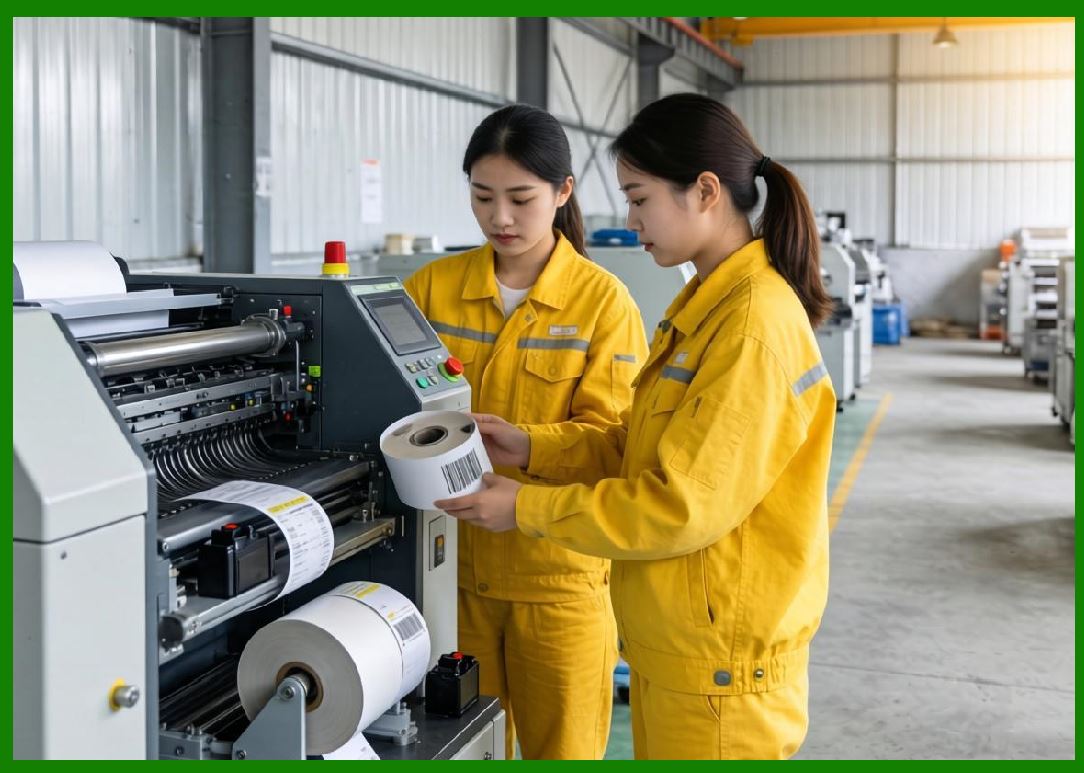
Epson became one of the world leading manufacturers of thermal receipt printers and point-of-sale printing systems. These technologies strongly influenced the company development within barcode and retail labeling markets. |
5.2 |
Retail POS printers require high-speed operation, compact size, reliability, low maintenance, and excellent integration with transaction systems. Epson successfully optimized its thermal technologies for these requirements. |
5.3 |
Many Epson receipt printers support barcode generation directly on receipts, tickets, coupons, and transaction documents. Retailers frequently print QR codes, promotional barcodes, loyalty information, and mobile payment identifiers. |
5.4 |
The company TM series became one of the most successful POS printer families globally. These printers are widely used in supermarkets, restaurants, convenience stores, hotels, transportation systems, and retail chains. |

|
5.5 |
Epson POS printers often support Ethernet, USB, Bluetooth, Wi-Fi, cloud integration, and mobile device connectivity. This flexibility enabled integration with modern retail infrastructure and omnichannel commerce systems. |
5.6 |
The company also developed compact label printers for retail shelf labeling, pharmacy labeling, ticketing systems, and healthcare workflows. |
5.7 |
Mobile printing became another important area. Epson portable printers support transportation operations, field service, ticketing, retail mobility, and warehouse workflows. |
5.8 |
Epson POS expertise provided the company with strong relationships across retail industries, helping expand adoption of its barcode and labeling technologies. |
|
6. Industrial Label Printing and Enterprise Integration |
6.1 |
Although Epson is widely associated with retail and office printing, the company also developed important industrial labeling technologies supporting manufacturing, warehousing, logistics, and healthcare applications. |
6.2 |
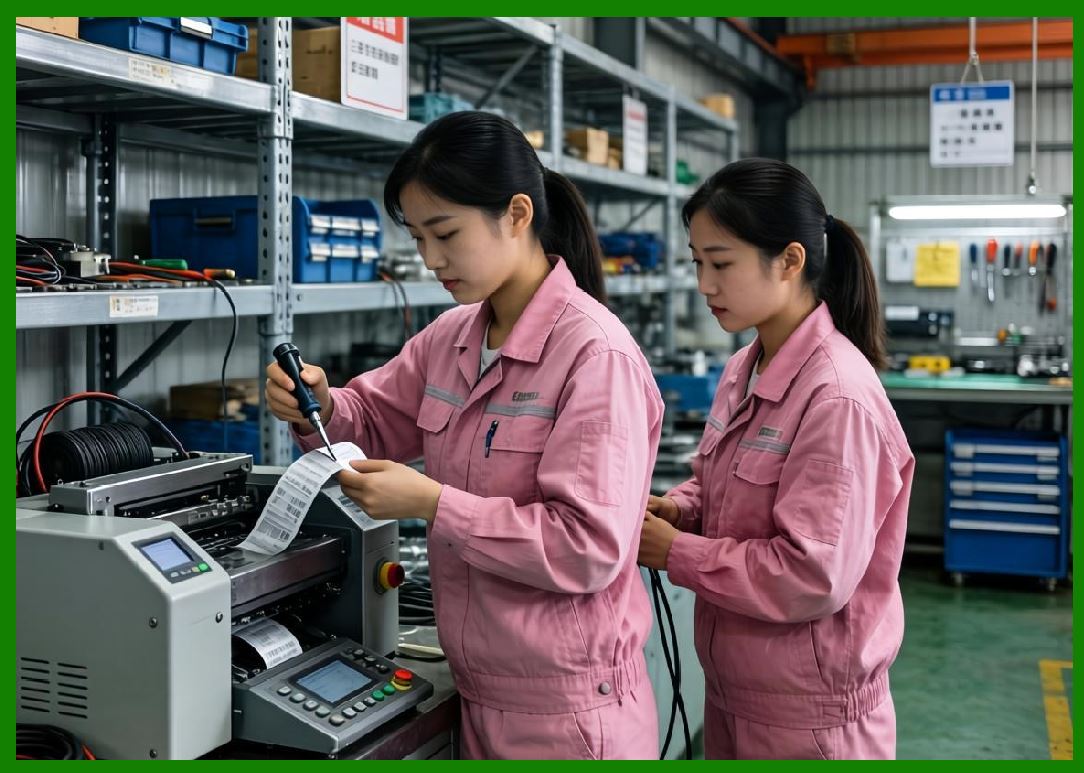
Industrial label printing requires high reliability, media flexibility, enterprise connectivity, and support for automated workflows. Epson integrated these capabilities into many of its label printing systems. |
6.3 |
The company developed enterprise integration tools supporting ERP systems, warehouse management software, retail inventory platforms, and manufacturing traceability systems. |
6.4 |
Networking technologies became increasingly important as distributed enterprise environments expanded globally. Epson printers support Ethernet, wireless communication, cloud services, mobile platforms, and remote device management. |

|
6.5 |
Cloud-based printing infrastructure became another major development area. Epson increasingly supports centralized fleet management, remote diagnostics, firmware updates, and operational analytics. |
6.6 |
The company also introduced APIs, software development kits, printer drivers, and mobile development tools simplifying integration with third-party enterprise applications. |
6.7 |
Barcode generation support expanded to include linear barcodes, two-dimensional codes, QR Codes, Data Matrix symbols, GS1 standards, and mobile payment identification systems. |
6.8 |
Epson integration capabilities became especially important in modern retail operations where barcode labeling interacts closely with inventory management, e-commerce fulfillment, digital payments, and customer engagement systems. |
|
7. Epson Role in Healthcare and Pharmaceutical Labeling |
7.1 |
Healthcare became an increasingly important application sector for Epson printing systems. Hospitals, pharmacies, laboratories, and medical manufacturers require highly accurate identification systems to support patient safety and regulatory compliance. |
7.2 |
Epson printers are widely used for specimen labeling, pharmacy operations, patient identification, prescription labeling, laboratory workflows, and medical packaging identification. |
7.3 |
Color label printing became particularly useful in healthcare because color coding can improve medication identification, specimen differentiation, hazard labeling, and workflow organization. |
7.4 |
Pharmaceutical industries also increasingly adopted Epson color labeling technologies for serialization, compliance labeling, anti-counterfeiting measures, and product traceability systems. |

|
7.5 |
Laboratory environments require high-resolution printing for small specimen labels and compact barcode generation. Epson precision print technologies proved especially valuable in these applications. |
7.6 |
The company additionally developed durable media support for refrigerated storage, chemical exposure, and sterilization-resistant labeling applications. |
7.7 |
Healthcare organizations increasingly require integration between labeling systems and electronic medical records, laboratory information systems, and hospital management platforms. Epson invested heavily in these integration capabilities. |
7.8 |
Patient safety regulations and pharmaceutical traceability requirements continue driving demand for reliable healthcare barcode labeling technologies. |

|
8. Sustainability and Environmental Engineering |
8.1 |
Environmental sustainability became one of Epson most important corporate priorities. The company invested heavily in reducing energy consumption, minimizing waste, and improving environmental efficiency across its printing technologies. |
8.2 |
Epson promoted the concept of heat-free printing technologies through its piezoelectric inkjet systems. Compared with some thermal or laser technologies, piezoelectric systems can reduce power consumption and thermal stress. |
8.3 |
The company also focused on reducing consumable waste associated with traditional label production methods. On-demand color label printing reduces the need for large inventories of preprinted labels that may become obsolete. |
8.4 |
Epson researched recyclable media support, reduced packaging waste, lower-emission manufacturing methods, and energy-efficient printer architectures. |

|
8.5 |
The company additionally explored linerless label technologies, which reduce backing material waste in logistics and retail labeling operations. |
8.6 |
Environmental regulations and corporate sustainability goals increasingly influence purchasing decisions across industries. Epson positioned many of its products around energy efficiency and environmental optimization. |
8.7 |
The company also invested in long-life components and durable engineering to reduce hardware replacement frequency and electronic waste generation. |
8.8 |
Sustainability is expected to remain a major strategic focus area for Epson future industrial labeling and printing technologies. |
|
9. Industrial Applications Across Global Markets |
9.1 |
Epson barcode and label printers are widely used throughout retail industries for shelf labels, receipts, product packaging, QR code generation, loyalty systems, and omnichannel commerce operations. |
9.2 |
Food and beverage industries rely heavily on Epson color label printers for product branding, expiration labeling, ingredient identification, allergen warnings, and regulatory compliance labeling. |
9.3 |
Healthcare and pharmaceutical sectors use Epson systems for specimen tracking, patient identification, prescription labeling, laboratory operations, and pharmaceutical packaging. |
9.4 |
Transportation systems employ Epson printers for ticketing, boarding passes, baggage tags, parking systems, and logistics workflows. |

|
9.5 |
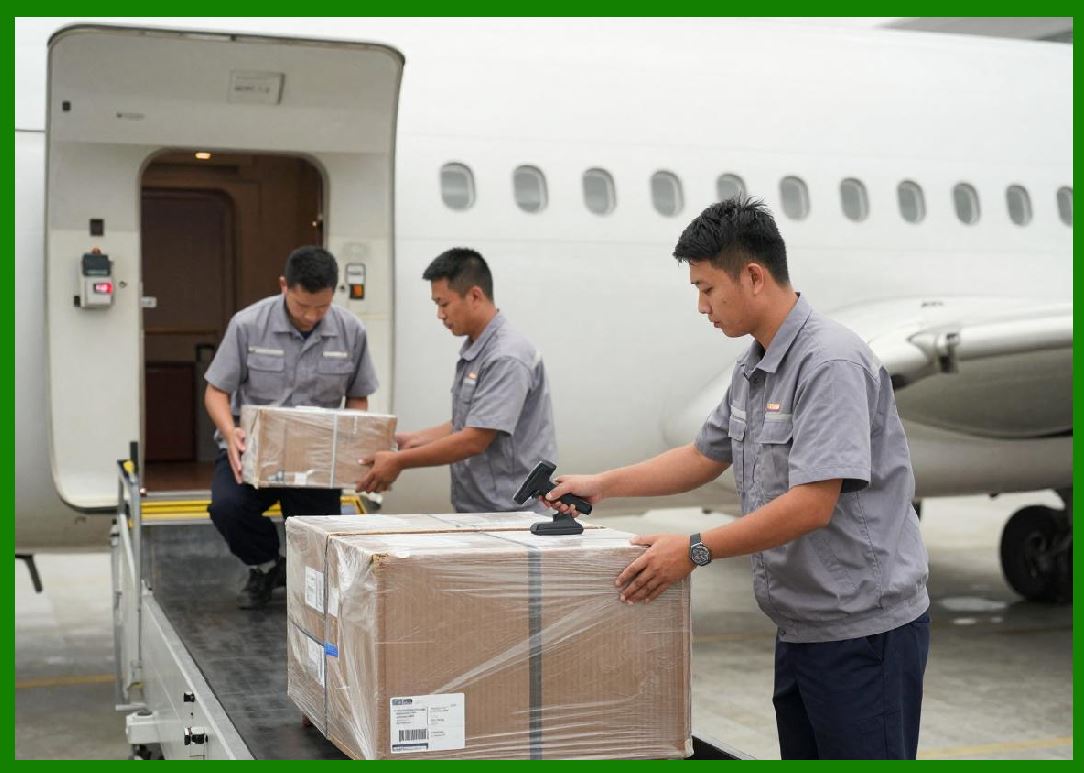
Warehouse and logistics operations use Epson labeling systems for shipping labels, inventory management, warehouse identification, and barcode-based operational tracking. |
9.6 |
Manufacturing companies utilize Epson printers for compliance labeling, serialization, component identification, and product packaging operations. |
9.7 |
Government agencies, educational institutions, entertainment venues, and hospitality businesses also depend extensively on Epson printing technologies. |
9.8 |
Epson strong international distribution and support networks enabled the company to establish broad global market penetration across diverse industries. |

|
10. Future Prospects and Technological Development |
10.1 |
Epson continues investing heavily in industrial inkjet technologies, digital labeling systems, cloud infrastructure, robotics, AI-assisted printing systems, and IoT-connected operational platforms. |
10.2 |
Color label printing is expected to remain one of the company most important strategic growth areas as businesses increasingly demand flexible on-demand packaging and product identification systems. |
10.3 |
Artificial intelligence may increasingly support automated diagnostics, print quality optimization, predictive maintenance, workflow management, and intelligent label generation systems. |
10.4 |
Cloud-connected printer fleets will likely become more common, enabling centralized management of distributed enterprise printing infrastructure. |

|
10.5 |
The company is also expected to continue improving mobile integration, smartphone connectivity, cloud APIs, and digital commerce compatibility. |
10.6 |
RFID technologies may play a growing role in Epson future industrial labeling systems, particularly as retail inventory automation and IoT infrastructure expand globally. |
10.7 |
Sustainability and energy efficiency will remain major engineering priorities as governments and corporations strengthen environmental requirements. |
10.8 |
As digital labeling, smart retail, industrial automation, and connected supply chains continue expanding worldwide, Seiko Epson Corporation is expected to remain one of the most important innovators in industrial and commercial printing technologies. |

|
Detailed Technical Content Summary |
This part provided a detailed historical and technical analysis of Seiko Epson Corporation and its role within the barcode label printing industry. The article examined Epson origins in precision engineering and watchmaking, its development of compact printing technologies, and its expansion into barcode labeling and retail printing systems. |
The discussion explored Epson thermal printing technologies, Micro Piezo inkjet systems, printhead engineering, and compact industrial printing architectures. Significant attention was given to Epson major contribution to industrial color barcode label printing through the ColorWorks product family. |
The article also analyzed Epson POS printing systems, enterprise integration infrastructure, healthcare labeling applications, pharmaceutical identification systems, and cloud-connected printing platforms. Environmental sustainability, energy-efficient printing, linerless labeling, and reduced-waste production methods were discussed extensively. |
Finally, the article examined Epson applications across retail, healthcare, food production, transportation, warehousing, manufacturing, and government sectors, along with future directions involving AI, IoT, RFID integration, cloud analytics, robotics, and sustainable industrial printing technologies. |
 cs@easiersoft.com