Part 8 The History, Industrial Printing Technologies, RFID Systems, and Enterprise Barcode Solutions of SATO Holdings Corporation |
1. Introduction to SATO Holdings Corporation |
1.1 |
SATO Holdings Corporation is one of the world most historically important and technologically influential barcode printer manufacturers. The company is widely recognized as a pioneer in automatic identification and data capture technologies, especially within barcode labeling, thermal printing, RFID systems, and industrial traceability infrastructure. |
1.2 |
SATO occupies a particularly significant position in barcode printing history because the company played a direct role in the early commercialization and practical industrial deployment of barcode labeling technologies. Over several decades, SATO became internationally respected for innovation, reliability, industrial engineering excellence, and integrated enterprise labeling systems. |

|
1.3 |
Unlike some companies that initially entered barcode printing from broader office printing or electronics sectors, SATO focused strongly and consistently on industrial identification technologies. The company specialized in barcode printers, label design systems, RFID solutions, print-and-apply automation, industrial traceability platforms, and enterprise workflow integration. |
1.4 |
SATO products are widely used in manufacturing, logistics, transportation, retail, healthcare, food production, automotive industries, electronics manufacturing, chemical processing, and government operations. Many industries rely heavily on SATO systems for compliance labeling, serialization, inventory tracking, and supply chain visibility. |

|
1.5 |
One of SATO most important characteristics is its strong emphasis on practical industrial workflow optimization. Rather than viewing barcode printing merely as an isolated hardware product, SATO increasingly developed complete operational solutions integrating printers, software, RFID systems, automation infrastructure, and enterprise management platforms. |
1.6 |
Today, SATO remains one of the world leading providers of industrial barcode printing and RFID technologies, continuing to invest heavily in IoT systems, cloud integration, smart factories, sustainability technologies, and intelligent supply chain automation. |
|
2. Founding History and Corporate Origins |
2.1 |
SATO was founded in Japan in 1940 by Yo Sato. Initially, the company focused on manufacturing and processing machinery rather than barcode technologies, since barcode systems did not yet exist commercially at that time. |
2.2 |
Japan industrial expansion during the mid-twentieth century created strong demand for manufacturing efficiency, logistics coordination, packaging systems, and industrial automation technologies. SATO gradually evolved alongside these broader industrial trends. |
2.3 |
The company major transformation began during the postwar decades as industrial production, retail systems, and distribution networks became increasingly complex. Efficient product identification and inventory management emerged as critical operational challenges. |
2.4 |
SATO recognized early that automated labeling technologies could dramatically improve productivity, reduce human error, and strengthen industrial traceability. This insight became foundational to the company long-term strategy. |
|
2.5 |
In the 1960s, SATO developed one of the world earliest practical hand-labeling machines, helping automate retail pricing and inventory management operations. This invention became highly influential within retail industries. |
2.6 |
As barcode technology expanded internationally during the 1970s and 1980s, SATO aggressively invested in thermal barcode printing systems, label production technologies, and industrial automation infrastructure. |
2.7 |
The company expanded internationally through subsidiaries, distributors, technical support centers, and manufacturing operations spanning Asia, Europe, North America, and other global regions. |
2.8 |
Over time, SATO became recognized not only as a hardware manufacturer but also as a systems integration company providing comprehensive automatic identification solutions for complex enterprise environments. |

|
3. SATO Early Innovations and Hand Labeling Systems |
3.1 |
One of SATO earliest major innovations involved the development of practical hand-labeling devices used for retail pricing and inventory marking. These systems became highly influential in retail automation history. |
3.2 |
Before widespread barcode adoption, retailers often marked products manually using handwritten labels or simple pricing tools. This process was labor-intensive, inconsistent, and prone to human error. |
3.3 |
SATO introduced hand-labeling systems allowing workers to apply standardized pricing labels quickly and efficiently. These devices improved operational speed and pricing consistency in retail environments. |
3.4 |
The company hand labelers became especially popular in supermarkets, department stores, warehouses, and distribution operations. These systems represented an important step toward broader retail automation. |

|
3.5 |
SATO early experience with labeling ergonomics, media handling, and operational workflows later influenced the company thermal barcode printer designs. |
3.6 |
The company also developed consumable labeling materials, adhesive technologies, and industrial label production expertise supporting its expanding hardware portfolio. |
3.7 |
As barcode systems became commercially viable, SATO transitioned from simple labeling tools toward sophisticated automatic identification infrastructure. |
3.8 |
This early leadership in labeling technology helped establish SATO as one of the foundational companies within the global barcode industry. |

|
4. Thermal Barcode Printing Technologies |
4.1 |
SATO became one of the world leading developers of thermal barcode printing technologies. Thermal systems offered major advantages including low maintenance, quiet operation, excellent barcode precision, and compatibility with industrial automation. |
4.2 |
The company developed both direct thermal and thermal transfer printing systems. Direct thermal systems became widely used for shipping labels, logistics labels, receipts, tickets, and temporary warehouse identification. |
4.3 |
Thermal transfer printing supported durable industrial labeling applications requiring resistance to chemicals, abrasion, ultraviolet exposure, moisture, heat, and harsh environmental conditions. |
4.4 |
SATO engineers focused extensively on printhead performance because barcode readability depends critically on print precision and thermal consistency. |

|
4.5 |
The company developed sophisticated thermal control systems optimizing print darkness, edge sharpness, barcode geometry, and media compatibility. |
4.6 |
Media transport engineering became another major focus area. SATO designed highly accurate label positioning systems supporting automated print-and-apply workflows and industrial production line integration. |
4.7 |
Industrial durability represented another important engineering principle. Many SATO industrial printers incorporate reinforced metal structures, industrial-grade motors, rugged electronics, and high-capacity ribbon systems. |
4.8 |
The company additionally emphasized operational efficiency through simplified maintenance procedures, user-friendly interfaces, automated calibration systems, and enterprise management tools. |

|
5. SATO Industrial Barcode Printer Product Families |
5.1 |
SATO developed a broad range of industrial and commercial barcode printer product families serving manufacturing, logistics, healthcare, transportation, retail, and food production industries. |
5.2 |
The CL4NX and CL6NX series became among SATO most respected industrial printer platforms. These systems are widely recognized for rugged reliability, advanced connectivity, industrial durability, and enterprise scalability. |
5.3 |
CLNX printers support high-volume industrial environments requiring continuous operation, fast print speeds, sophisticated media handling, and remote management capabilities. |
5.4 |
The company also introduced compact desktop printers targeting offices, laboratories, healthcare facilities, retail stores, and smaller commercial operations. |

|
5.5 |
Mobile printer systems became increasingly important as warehouse mobility, transportation logistics, retail floor operations, and field service applications expanded globally. |
5.6 |
SATO additionally developed print-and-apply systems designed for automated packaging lines and industrial production infrastructure. |
5.7 |
OEM print engines represented another important product category. These systems integrate directly into industrial automation equipment, conveyor systems, and packaging machinery. |
5.8 |
Healthcare-specific printer models were optimized for patient wristbands, laboratory specimen labeling, pharmacy operations, and hospital workflow integration. |

|
6. Printer Languages, Enterprise Software, and Systems Integration |
6.1 |
SATO recognized early that barcode printers must integrate seamlessly with enterprise software systems rather than function as isolated devices. |
6.2 |
The company developed SBPL, or SATO Barcode Printer Language, enabling enterprise systems to control barcode generation, graphics rendering, serialization, variable data printing, RFID encoding, and automation workflows. |
6.3 |
SBPL supported integration with warehouse management systems, ERP platforms, manufacturing execution systems, transportation management software, and healthcare information systems. |
6.4 |
SATO also emphasized compatibility with other major printer languages and enterprise infrastructures. This flexibility simplified migration and deployment in mixed-printer environments. |

|
6.5 |
Networking technologies became increasingly advanced over time. Modern SATO printers support Ethernet, Wi-Fi, Bluetooth, USB, serial communication, cloud integration, and industrial automation interfaces. |
6.6 |
The company introduced centralized fleet management systems allowing remote diagnostics, firmware updates, printer monitoring, configuration management, and operational analytics. |
6.7 |
Cloud-based infrastructure became increasingly important as multinational organizations required centralized visibility into globally distributed printing operations. |
6.8 |
Cybersecurity features also became strategically important. SATO invested in secure communication protocols, authentication systems, firmware protection, and enterprise-grade device security management. |

|
7. RFID Printing Technologies and Intelligent Labeling Systems |
7.1 |
SATO became one of the world leading developers of RFID-enabled barcode printers and smart labeling systems. The company invested heavily in RFID technologies as supply chains demanded greater visibility and automation. |
7.2 |
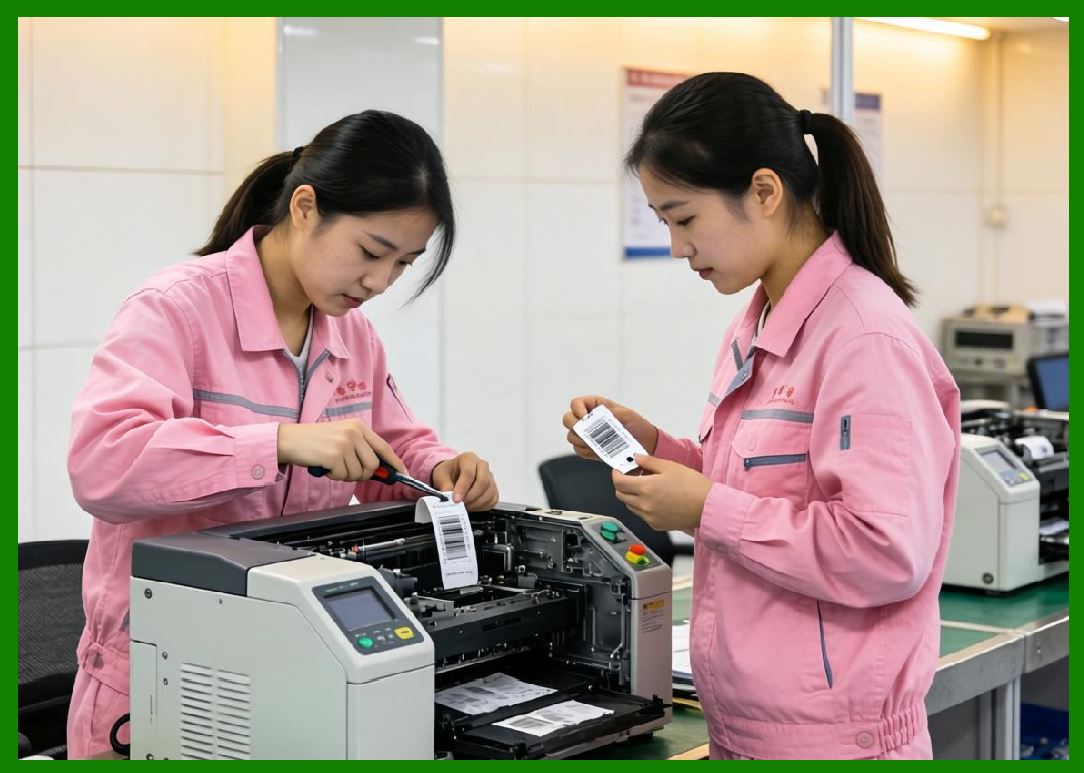
RFID printer-encoders simultaneously print visible barcode information while programming embedded RFID transponders. These systems support automated inventory management and real-time asset tracking. |
7.3 |
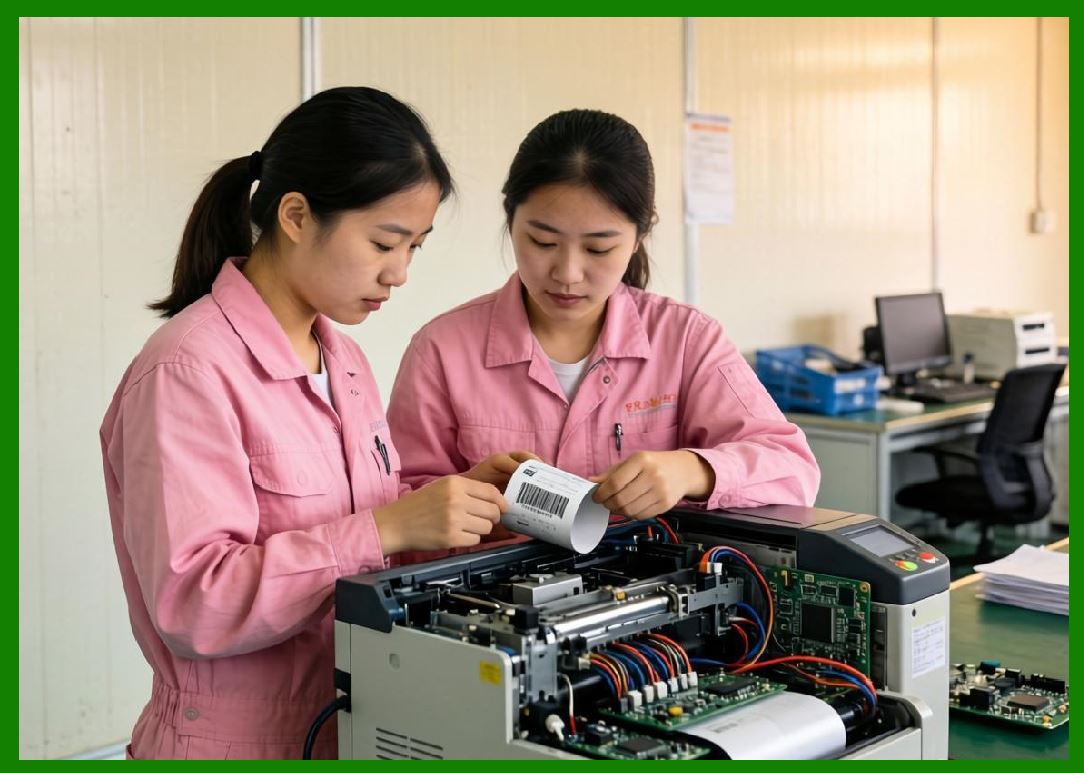
RFID integration presents substantial engineering challenges because media movement, antenna alignment, print timing, and radio-frequency communication must remain precisely synchronized. |
7.4 |
SATO engineers developed sophisticated RFID calibration and verification systems improving encoding reliability and reducing operational errors. |
|
7.5 |
The company introduced RFID printers supporting EPC standards, UHF RFID encoding, serialization workflows, and industrial traceability systems. |
7.6 |
Retail apparel became one of the largest RFID application sectors. RFID-enabled inventory systems dramatically improved stock visibility, inventory accuracy, and omnichannel retail fulfillment operations. |
7.7 |
Manufacturing and logistics companies increasingly adopted RFID systems for pallet tracking, warehouse automation, shipment verification, and supply chain visibility. |
7.8 |
SATO continues integrating RFID infrastructure with IoT platforms, cloud analytics, smart factory systems, and industrial automation technologies. |
|
8. Healthcare and Pharmaceutical Labeling Technologies |
8.1 |
Healthcare became one of SATO most important strategic industries. Hospitals, laboratories, pharmacies, and medical manufacturers require highly accurate identification systems supporting patient safety and regulatory compliance. |
8.2 |
SATO developed specialized healthcare printers optimized for wristband printing, specimen tracking, medication labeling, blood bank management, and laboratory workflows. |
8.3 |
Patient identification systems became especially important because accurate barcode labeling helps reduce medication errors, specimen mix-ups, and treatment mistakes. |
8.4 |
Healthcare environments also require specialized materials capable of resisting moisture, disinfectants, sterilization procedures, refrigeration, and long-term storage conditions. |
8.5 |
SATO invested heavily in healthcare integration systems supporting electronic medical records, laboratory information systems, pharmacy management platforms, and hospital enterprise software. |
8.6 |
Pharmaceutical industries increasingly adopted SATO systems for serialization, anti-counterfeiting technologies, regulatory compliance labeling, and global traceability initiatives. |
8.7 |
The company also developed antimicrobial printer housings and healthcare-friendly operational designs suitable for clinical environments. |
8.8 |
Healthcare and pharmaceutical traceability regulations continue driving strong global demand for advanced barcode and RFID identification systems. |

|
9. Industrial Applications and Global Market Deployment |
9.1 |
SATO barcode printers became deeply integrated into manufacturing industries for component tracking, compliance labeling, work-in-progress management, and product serialization. |
9.2 |
Logistics and warehouse operations use SATO systems extensively for shipping labels, pallet identification, inventory management, and warehouse automation workflows. |
9.3 |
Retail industries employ SATO technologies for price labeling, RFID inventory management, omnichannel commerce operations, shelf labeling, and distribution logistics. |
9.4 |
Food production companies rely heavily on SATO printers for expiration labeling, allergen identification, traceability systems, and regulatory compliance operations. |
9.5 |
Transportation companies utilize SATO systems for baggage tracking, freight operations, route logistics, and cargo management workflows. |
9.6 |
Electronics manufacturers frequently require SATO high-resolution printers for miniature labels, semiconductor packaging, circuit board tracking, and anti-counterfeiting systems. |
9.7 |
Chemical industries use specialized SATO labeling systems supporting hazardous material identification and GHS compliance standards. |
9.8 |
Government agencies, defense contractors, laboratories, and industrial automation facilities also depend heavily on SATO identification technologies. |

|
10. Future Prospects and Strategic Technological Direction |
10.1 |
SATO continues investing heavily in Industry 4.0 infrastructure, smart factory technologies, RFID expansion, cloud-connected systems, and industrial IoT platforms. |
10.2 |
Artificial intelligence may increasingly support predictive maintenance, workflow optimization, automated diagnostics, and print quality analysis within future SATO systems. |
10.3 |
The company is expected to continue expanding cloud-based enterprise visibility platforms integrating printers, RFID systems, analytics infrastructure, and supply chain intelligence. |
10.4 |
RFID technologies remain a major strategic growth area as real-time inventory visibility becomes increasingly important across retail, logistics, manufacturing, and healthcare industries. |
10.5 |
Sustainability also became an important corporate priority. SATO researches recyclable labeling materials, linerless labels, reduced-waste operations, and energy-efficient hardware systems. |
10.6 |
Cybersecurity will remain increasingly critical because industrial barcode printers function as network-connected IoT devices integrated directly into enterprise infrastructures. |
10.7 |
The company additionally focuses on labor efficiency technologies supporting workforce shortages and increasing warehouse automation demands. |
10.8 |
As industrial traceability, digital supply chains, and intelligent automation systems continue expanding globally, SATO Holdings Corporation is expected to remain one of the most influential barcode and RFID technology providers in the world. |

|
Detailed Technical Content Summary |
This part provided a detailed historical and technical overview of SATO Holdings Corporation and its major role in the development of the global barcode printer industry. The article explored SATO founding history, early hand-labeling innovations, and transformation into a global leader in thermal barcode printing and RFID technologies. |
The discussion covered SATO thermal printing systems, printhead engineering, industrial printer architectures, media handling technologies, and enterprise-oriented product families such as the CLNX series. The article also analyzed SATO Barcode Printer Language (SBPL), enterprise software integration systems, networking infrastructure, cloud management platforms, and cybersecurity technologies. |
Significant attention was given to SATO RFID printer technologies, intelligent labeling systems, healthcare workflows, pharmaceutical serialization, and hospital identification systems. The article further examined SATO industrial applications across manufacturing, logistics, retail, transportation, food production, electronics, and chemical industries. |
Finally, the article discussed SATO future strategic directions involving Industry 4.0, IoT infrastructure, AI-assisted automation, sustainability technologies, cloud analytics, RFID expansion, and intelligent supply chain management systems. |
 cs@easiersoft.com