1. Introduction: The Importance of Choosing the Right Barcode Label Printer |
1.1 Purpose of Barcode Label Printers in ERP Systems |
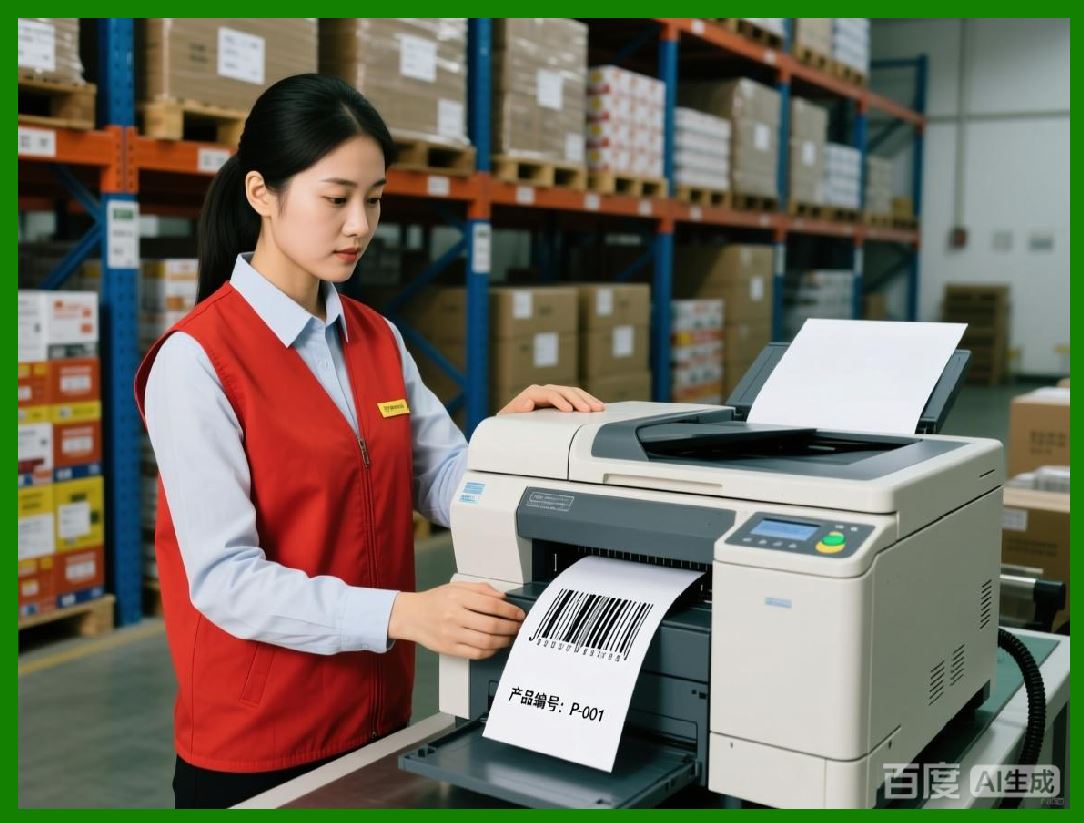
Barcode label printers play an essential role in modern enterprise resource planning (ERP) systems because they bridge physical objects and digital data. When integrated correctly with an ERP system, barcode label printers allow products, assets, inventory, and documents to be tracked accurately throughout the entire business operation. The printer is not just a device that prints labels; it is the physical endpoint of data that originates in your ERP. |
1.2 Consequences of Choosing Incorrect Hardware |
Selecting the wrong printer can have far-reaching negative effects: |
* Frequent breakdowns or malfunctions |
* Misprints that cause scanning failures |
* System incompatibilities with the ERP |
* Higher long-term costs due to repair and replacement |
* Inaccurate tracking and reporting |
* Loss of productivity from manual interventions |
1.3 Primary Objective of This Guide |
The aim here is to ensure your organization selects the right barcode label printer by understanding: |
* Business needs |
* Technical requirements |
* Integration considerations |
* Operational workflows |
* Total cost (not just initial purchase price) |

|
2. Fundamental Concepts of Barcode Printing and ERP Integration |
2.1 What Is a Barcode |
Barcodes are machine-readable patterns that encode data. They are read by scanners and translated into digital values that your ERP system processes. Barcodes can be 1D (linear) or 2D (matrix), and each type has different printing requirements. |
2.2 How Barcode Label Printers Work |
Barcode label printers receive digital data (e.g., product SKU) and translate it into a visual barcode image on a label medium. The process involves: |
* Connecting to the ERP or middleware |
* Receiving the data string |
* Rendering a barcode symbology |
* Printing onto media using a print mechanism |
2.3 Barcode Printers vs. Standard Paper Printers |
Barcode label printers are fundamentally different from standard office printers (e.g., laser or inkjet): |
* Durability of prints: Barcode printers use thermal or direct thermal technology to create lasting codes |
* Precision: Barcode printing demands precise control of dot placement |
* Integration: Barcode printers are designed to interface with ERP systems directly |
2.4 ERP Systems and Printing Data Streams |
Your ERP system may send print commands directly or through middleware. Typical data formats include: |
* Plain text instructions |
* ZPL (Zebra Programming Language) |
* EPL (Eltron Programming Language) |
* CPCL (Comtec Printer Control Language) |
Understanding the data format your ERP uses is critical. |
2.5 Middleware Considerations |
Sometimes middleware (software between ERP and printer) is recommended, especially for: |
* Large deployments |
* Printers from multiple vendors |
* Complex label formats |
Middleware enhances flexibility but adds complexity and cost. |

|
3. Assessing Business and Operational Requirements |
3.1 Identify Labeling Use Cases |
Start by clarifying what you will print: |
* Shipping labels |
* Inventory tags |
* Serial number labels |
* Asset tags |
* Compliance labels |
Each use case has unique demands on label size, content, and print volume. |
3.2 Estimate Print Volume |
Determine how many labels you print per day, week, month, and year. Print volume directly affects: |
* Printer selection (desktop vs. industrial) |
* Maintenance schedule |
* Consumable costs |
3.3 Determine Label Size and Complexity |
Consider: |
* Label dimensions |
* Number of data fields |
* Presence of human-readable text |
* Graphics or logos |
Smaller, dense labels require higher print resolution. |
3.4 Environmental Conditions |
Where will the printer be used |
* Clean office environment |
* Warehouse floor |
* Cold storage/freezer area |
* Shipping dock |
Environmental conditions influence printer durability and suitable models. |
3.5 Mobility Requirements |
Will labels be printed only at fixed locations, or do workers need mobile printers |
Mobile printers are typically lighter, battery-powered, and connect via Wi-Fi or Bluetooth. |
3.6 Compliance and Regulatory Needs |
Certain industries (pharmaceuticals, medical devices, food) have labeling standards (e.g., GS1). Your printer must support high-quality prints and approved symbologies. |
3.7 Integration with Existing Equipment |
Consider how the printer will fit with: |
* Scanners |
* Scales |
* ERP modules |
* Warehouse control systems |
Compatibility ensures smooth operation. |
|
4. Technical Printer Specifications and Features |
4.1 Printing Technology Types |
4.1.1 Direct Thermal Printing |
Uses heat-sensitive paper. No ribbon needed, but prints fade over time. Suitable for short-term use, such as: |
* Shipping labels |
* Temporary tags |
4.1.2 Thermal Transfer Printing |
Uses a ribbon to transfer ink. Produces durable and high-quality prints. Best for: |
* Asset tags |
* Long-term inventory labels |
* Harsh environments |
4.1.3 Impact/Inkjet/Other Types |
Less common for barcodes; usually not recommended for industrial barcode printing. |
4.2 Print Resolution (DPI) |
Dots per inch (DPI) determines how finely the barcode is printed. Typical values: |
* 203 dpi basic barcodes |
* 300 dpi smaller barcodes and detailed text |
* 600 dpi high density printing (e.g., tiny labels) |
Choose higher DPI for small or dense barcodes. |
4.3 Print Speed |
Measured in inches per second (IPS). Important if: |
* High volume printing is expected |
* Time-sensitive operations (e.g., shipping deadlines) |
Higher speed can be better, but must match label size and resolution. |
4.4 Label Width and Size Support |
Printers support certain minimum and maximum label widths. Ensure the printer can accommodate: |
* Small labels for tags |
* Large labels for freight |
4.5 Media Handling Capabilities |
Consider if you need: |
* Peel-off/liner rewind |
* Cutter module |
* External label roll mounting |
* RFID printing |
4.6 Connectivity Options |
4.6.1 USB Simple, local connection |
4.6.2 Ethernet Networked printing |
4.6.3 Wi-Fi Wireless printing in warehouse/office |
4.6.4 Bluetooth For mobile printing from devices |
4.6.5 Serial/Parallel Older legacy systems |
Match connectivity to ERP architecture. |
4.7 Memory and Processing Power |
Complex labels with many fields, graphics, or fonts require more memory and stronger processing capabilities. |
4.8 Supported Printer Languages |
Your ERP or middleware often expects a particular printer language (ZPL, EPL, etc.). Ensure language compatibility. |
4.9 Internal Sensors and Calibration |
Good printers have sensors that: |
* Detect label gaps |
* Detect black marks |
* Automatically calibrate for consistent printing |
Sensor accuracy improves first-time printing quality. |

|
5. Categories of Barcode Label Printers and Selection Criteria |
5.1 Desktop Printers |
Good for: |
* Low to medium print volume |
* Offices or light warehouse use |
Pros: |
* Lower cost |
* Compact design |
* Easy to use |
Cons: |
* Less durable |
* Limited speed and capacity |
Ideal for: |
* Small businesses |
* Office labeling |
* Occasional printing |
5.2 Industrial Printers |
Used in: |
* High-volume warehouses |
* Continuous shift operations |
Pros: |
* High durability |
* High speed |
* Advanced media handling |
Cons: |
* Higher cost |
* Larger footprint |
Best for: |
* Manufacturing |
* Distribution centers |
* Heavy labeling |
5.3 Mobile Printers |
Used for: |
* On-the-go printing |
* Scanning and printing in one workflow |
Pros: |
* Portability |
* Flexibility |
Cons: |
* Lower volume |
* Smaller label sizes |
Best for: |
* Retail |
* Field service |
* Inventory cycle counting |
5.4 Specialized Printers (RFID) |
Used for printing and encoding RFID tags. Must be supported by ERP and middleware. |
Pros: |
* Advanced tracking |
* Supports RFID workflows |
Cons: |
* More expensive |
* Requires RFID labels and setup |

|
6. Integration with ERP: Technical and Software Considerations |
6.1 Direct Integration vs. Middleware |
6.1.1 Direct Integration |
Printer connects directly to ERP. Requires: |
* Printer language compatibility |
* Data formatting |
* Driver support |
Advantages: |
* Fewer components |
* Lower complexity |
Disadvantages: |
* Less flexibility for label design |
6.1.2 Middleware Integration |
Middleware can translate ERP data into printer-specific language and manage multiple printers. |
Advantages: |
* Centralized control |
* Easy to update label formats |
* Supports multiple printer brands |
Disadvantages: |
* Adds complexity |
* Requires configuration and maintenance |
6.2 ERP Printer Drivers and Support |
Confirm that your ERP supports the printer model through: |
* Native driver |
* Vendor-provided driver |
* Middleware |
6.3 Label Format Templates and Design |
ERP may provide tools or require external design tools such as: |
* NiceLabel |
* BarTender |
* Adobe Barcode Plugins |
Ensure your team can design labels and maintain them. |
6.4 Security and User Access Control |
ERP integration must enforce: |
* User authentication |
* Permission control |
Only authorized personnel can trigger printing. |
6.5 Error Handling and Logging |
Poor integration leads to silent failures. Ensure that: |
* Errors are logged |
* Alerts are raised |
* Retries are supported |
6.6 Testing and Validation Plans |
Before deployment: |
* Conduct test prints |
* Validate scans |
* Verify ERP updates |

|
7. Printer Operating Systems and Firmware |
7.1 Importance of Firmware Updates |
Firmware controls printer behavior, bug fixes, security, and performance. Plan for: |
* Scheduled firmware updates |
* Compatibility with ERP and middleware |
7.2 Printer Operating Systems (Linux/Proprietary) |
Some printers run embedded operating systems. Compatibility matters because: |
* Drivers must match OS |
* Updates may affect API/driver behavior |
7.3 Remote Management and Monitoring |
Large deployments require centralized tools to monitor: |
* Printer status |
* Consumable levels |
* Error states |
* Firmware versions |

|
8. Support, Warranty, and Maintenance Costs |
8.1 Warranty Coverage |
Key elements: |
* Duration (1 year, 3 years, etc.) |
* On-site support vs. return-to-vendor |
* Coverage of parts and labor |
8.2 Service Level Agreements (SLAs) |
If your business depends on constant printing, consider SLAs that guarantee: |
* Response times |
* Replacement equipment |
* Priority support |
8.3 Consumables and Replacement Parts |
Costs vary widely for: |
* Print heads |
* Ribbons |
* Labels |
8.4 Planned Preventive Maintenance |
High-use environments may require scheduled maintenance: |
* Cleaning print heads |
* Replacing rollers |
Include maintenance plans in total cost calculations. |

|
9. Total Cost of Ownership (TCO) |
9.1 Initial Purchase Cost |
Printers range from affordable desktop models to expensive industrial units. |
9.2 Operational Costs |
Includes: |
* Label materials |
* Printer ribbons |
* Power consumption |
* Repairs |
9.3 Training Costs |
Staff must learn: |
* Printer operation |
* Label design |
* Troubleshooting |
9.4 Down-Time Costs |
Printer failures can halt critical workflows. Account for: |
* Lost productivity |
* Missed shipments |
* Manual workarounds |
9.5 Scalability Costs |
Future expansion may require: |
* Additional printers |
* More advanced models |
Choose a solution that scales with growth. |

|
10. Brand Comparisons and Ecosystem Considerations |
10.1 Major Printer Brands |
Trusted manufacturers typically provide: |
* Better quality |
* Stronger support |
* Longer lifecycle |
10.2 Ecosystem Support |
A brand ecosystem might offer: |
* Label design software |
* Printer management tools |
* Integration modules |
10.3 Vendor Reputation and Reviews |
Review experiences from businesses similar to yours for insight into: |
* Reliability |
* Support responsiveness |

|
11. Workflow Case Studies |
11.1 Small Business Warehouse |
Challenges: |
* Low to mid print volume |
* Limited IT staff |
Solution: |
* Mid-range desktop printers |
* Direct ERP integration |
* Minimal middleware |
11.2 Large Enterprise Distribution Center |
Challenges: |
* High volume |
* Multiple printer locations |
Solution: |
* Industrial printers |
* Middleware integration |
* Centralized printing infrastructure |
11.3 Retail Store Chain |
Challenges: |
* On-site price tag printing |
* Frequent updates |
Solution: |
* Mobile or small desktop printers |
* Wireless connectivity |
* Integration with POS systems |
11.4 Manufacturing Plant |
Challenges: |
* Asset tagging |
* Harsh environment printing |
Solution: |
* Rugged industrial printers |
* High DPI and RFID when needed |

|
12. Implementation and Deployment Roadmap |
12.1 Phase 1 Requirements Gathering |
Involve stakeholders to collect: |
* Use cases |
* Print volumes |
* Environmental conditions |
12.2 Phase 2 Technical Evaluation |
Identify: |
* Candidate printer models |
* Software tools (design, middleware) |
* Connectivity infrastructure |
12.3 Phase 3 Pilot Testing |
Implement a pilot: |
* Small number of printers |
* Representative workflows |
* Track performance and issues |
12.4 Phase 4 Training |
Train users and IT staff. |
12.5 Phase 5 Full Deployment |
Roll out across departments. |
12.6 Phase 6 Monitoring and Optimization |
Regularly: |
* Measure performance |
* Collect feedback |
* Update workflows and templates |

|
13. Common Pitfalls and How to Avoid Them |
13.1 Ignoring Environmental Factors |
Result: Printer failures |
Solution: Choose models designed for your environment. |
13.2 Underestimating Future Needs |
Result: Need replacements sooner |
Solution: Choose scalable options. |
13.3 Skipping Pilot Testing |
Result: Unanticipated issues |
Solution: Always pilot. |
13.4 Poor Integration Planning |
Result: Printing errors or data mismatch |
Solution: Coordinate with ERP experts early. |
13.5 Neglecting Consumable Costs |
Result: Higher operational costs |
Solution: Evaluate ribbons and label costs before selection. |

|
14. Future Trends in Barcode Printing and ERP Integration |
14.1 Cloud-Based Printing Services |
Print from cloud-connected ERP systems. |
14.2 IoT and Predictive Maintenance |
Printers report health data to predict failures. |
14.3 Advanced RFID and Labeling Standards |
RFID integration with ERP for deeper tracking. |
14.4 Smart Manufacturing (Industry 4.0) |
Barcode printing becomes part of a larger automated ecosystem. |

|
15. Final Checklist Before Purchase |
15.1 Business Requirements Documented |
15.2 Print Volume Confirmed |
15.3 ERP Integration Requirements Defined |
15.4 Printer Models Shortlisted |
15.5 Pilot Plan Established |
15.6 Budget and TCO Calculated |
15.7 Training Plan Prepared |
15.8 Rollout Strategy Ready |
15.9 Support and Maintenance Plan in Place |

|
16. Conclusion |
Choosing the right barcode label printer for your company ERP system requires careful consideration of technical requirements, business needs, integration complexity, total cost, support strategies, and future scalability. |
By following the structured guidance above, your organization can minimize risk, optimize workflows, and ensure that your barcode labeling infrastructure supports the accuracy, speed, and reliability needed for modern operations. |
 cs@easiersoft.com